
HAMPTON NEWPORT NEWS COMMUNITY SERVICES BOARD BRIGHT BEGINNINGS

HAMPTON NEWPORT NEWS COMMUNITY SERVICES BOARD – BRIGHT BEGINNINGS Caitlin Kelly

AGENCY AND PROGRAM HNNCSB serves Hampton and Newport News in Virginia. 26 programs including CM, PCP, PACT, Project Link, adolescent and geriatric services, TDT, PSR Bright Beginnings-Psychosocial Rehabilitation Day Program Adults with SMI, ID NGRI

SOCIAL HISTORYCLIENT “S” Presenting Problem: S is a 55 -year-old, Caucasian woman with a diagnosis of bipolar d/o, depression, anxiety, substance abuse and PTSD. Client states her main symptoms are low self-esteem, auditory hallucinations (command, derogatory in nature), visual hallucinations, paranoia, social isolation and suicidal ideations. Her first hospitalization was at 13 y/o for alcohol intoxication, since many other hospitalizations for SI, substance/drug abuse and OD. S has had 11 pregnancies, 7 live births, 3 still born, 1 abortion (13 y/o) History of post-partum depression
SOCIAL HISTORYCONTINUED Long history of trauma Raped by uncle 8 -11 Raped by brother 10 -17 Physical abuse by stepfather Physical abuse, holding in house by mother All family members died before or while she was in prison Guilty of rape, indecent liberties, registered sex offender Husband raped children, S was aware of actions, took plea deal On probation, reports to PO in Hampton 1 x per month Client has history of drug and alcohol abuse, is not currently using any, last use was May 2019. Smoke cigarettes 1 pack per day.
S- “Stand on my own, solve my own problems” N- “Counseling, to get better than I am” A- “draw, ASL, crosswords” STRENGTHS, NEEDS, ABILITIES, PREFERENCE P- “To learn to do those (draw, ASL, crosswords) things”
Client does not seem not be a reliable historian, insight into MI is unclear(recent diagnosis) Client dresses appropriate for the weather, moderately groomed, appears stated age Client is future oriented and wants to stay in program to gain skills (cooking, coping, reading, vocational) S was released from Fluvanna State Correctional Facility in May 2019, after serving 18 years. She is attending Bright Beginnings on conditional release from the facility and reports to a PO once a month. She states she has nothing to do during the day which results in social isolation. Her AH and VH worsen as she is isolated. S states her interests as drawing, learning American Sign Language and completing crossword puzzles. She is currently living at a boarding home in Hampton, VA with roommates. S pays $300/month for rent and is having issues with roommates. IMPRESSIONS/ASSESSMENT OF CLIENT

Working with case management to organize services in the community Working with discharge planning to find housing Getting involved in group activities, talking with other clients Primary care and dental Attend PSR Program 5 days/ week Exploring interests to find new hobbies RECOMMENDATIONS
Presenting Problem: S is describing signs of anxiety in social and isolated environments. Her anxiety is interfering with daily functioning and communication with others. Goal: S will work with her counselor on developing coping skills when anxiety symptoms override normal function. S will work on finding activities she enjoys to reduce anxiety and increase engagement and happiness. Objective: S agrees to vent to staff members about causes of anxiety symptoms (life events, AH, VH, isolated stressors). Objective: As S learns and grows within the PSR program, S will talk with her counselor about the activities she enjoys, and the counselor will arrange further activities within that field. S currently reports wanting to learn ASL, painting and how to read. Intervention: Staff members will provide S with worksheets and personal coping skills to use when feeling symptoms of anxiety. Intervention: Staff members will praise S for working with other clients one on one and in groups activities. Timeline: Goal set 10/25/19, goal reviewed 11/25/19 TREATMENT PLAN
Presenting Problem: S is on probation and is feeling extreme social isolation. S would like to make friends in the program. Goal: S will be able to interact with 1 staff member or client per day and attend the PSR program regularly. Objective: Staff members will encourage S in morning meetings to set goals of talking to people or participating activities. Objective: S will engage in 1 non- required group per week to engage with classmates. Intervention: Staff will encourage and praise S for using coping skills and goals achieved. Intervention: Staff members will provide a schedule of classes to S and remind her about specific ones that may interest her. Timeline: Goal set 10/25/19, goal reviewed 11/25/19 TREATMENT PLAN CONTINUED
Presenting Problem: S has a history of suicidal ideations and attempts. Goal: S will utilize the crisis plan when feeling onset of suicidal thoughts. Objective: S will use coping skills (deep breathing, going for a walk, talking to friends/staff, listening to music) to deter thoughts. Objective: If not at PSR Program and coping skills fail, S will call suicide hotline or 911. Intervention: Staff will encourage S to vent about issues and frustrations to avoid building up and hiding emotions. Intervention: Staff will check in with S about the use and success of coping skills. Timeline 10/25/19 - 11/25/19 TREATMENT PLAN – CRISIS PLAN
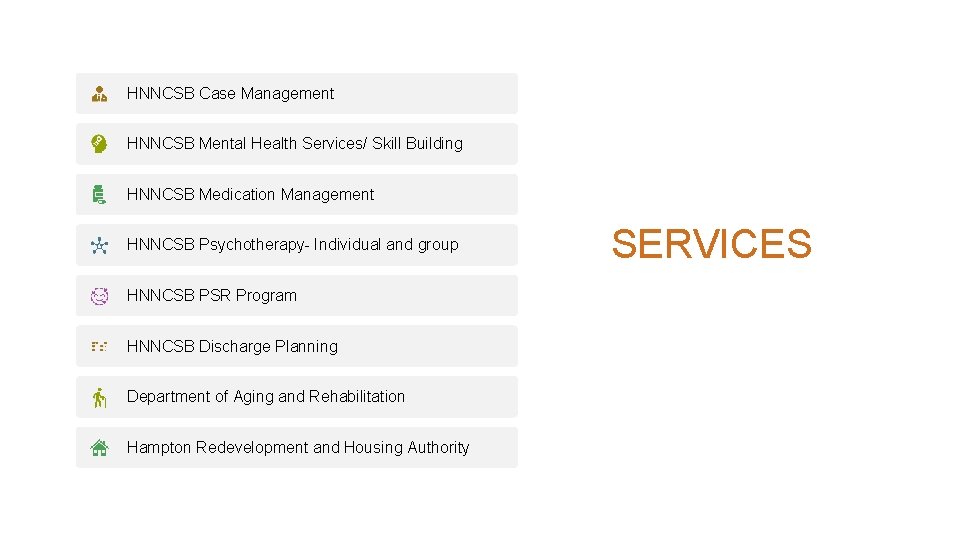
HNNCSB Case Management HNNCSB Mental Health Services/ Skill Building HNNCSB Medication Management HNNCSB Psychotherapy- Individual and group HNNCSB PSR Program HNNCSB Discharge Planning Department of Aging and Rehabilitation Hampton Redevelopment and Housing Authority SERVICES
THEORETICAL APPROACHES Client-Centered Theory Intervention: Staff members will praise S for being involved in group activities. Intervention: Staff will encourage and praise S for using coping skills and goals achieved. Intervention: Staff members will provide a schedule of classes to S and remind her about specific ones that may interest her. Caretakers should focus on a client-centered approach for treatment to focus on individual needs and goals. Each client has unique problems and needs and should be given the care they deserve. With S, CSB understands her extreme history of trauma and cooccurring disorders that require praise, support and individual care.
BARRIERS TO SUCCESS Sex Offender Status (Housing, group programs, jobs) Risk of Homelessness Risk of Hospitalization Risk of Re-Incarceration S requires stability and support in the community for these barriers.
Building rapport Remembering details Psycho-educational groups (goal-setting, confidence building, women’s group, social anxiety-activity) Self-disclosure when appropriate STRENGTHS
Breaking down the wall to get “nitty-gritty” details Learning more about the legal side of mental health/ NGRI AREAS OF IMPROVEMENT Building confidence in my skills in group settings
Countertransference Learning client’s individual needs- she is quiet, sometimes difficult to engage in conversation CHALLENGES AND LEARNING POINTS
- Slides: 16