
HALOGEN DERIVATIVES SN 1 substitution SN 2 substitution
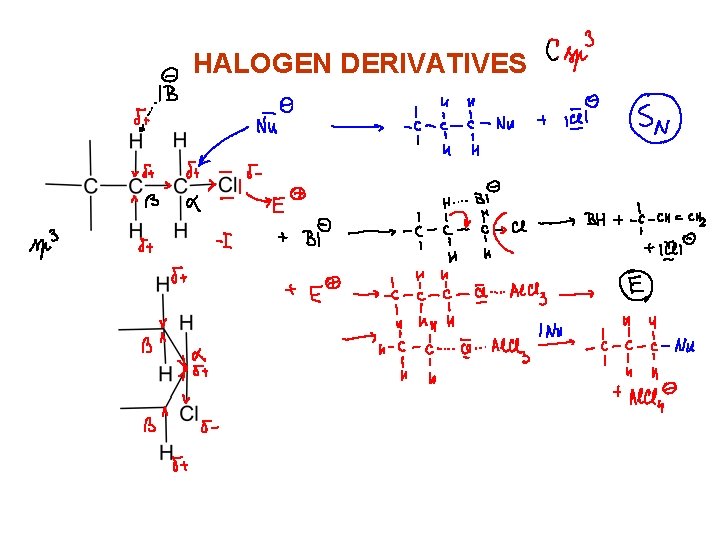
HALOGEN DERIVATIVES
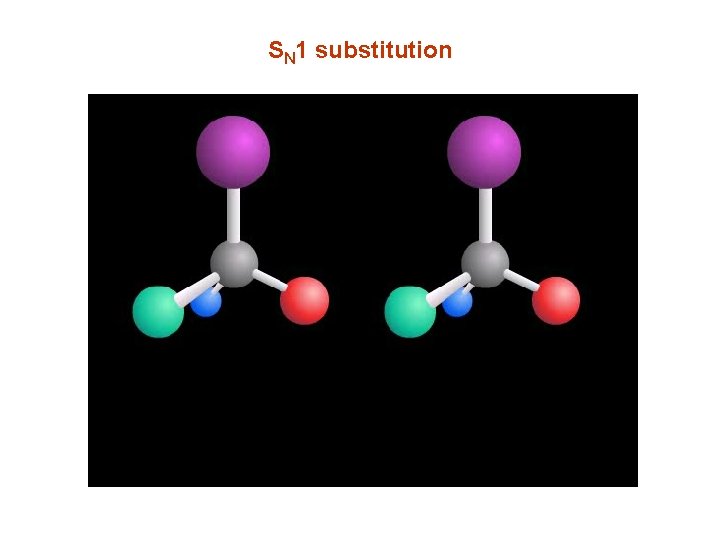
SN 1 substitution
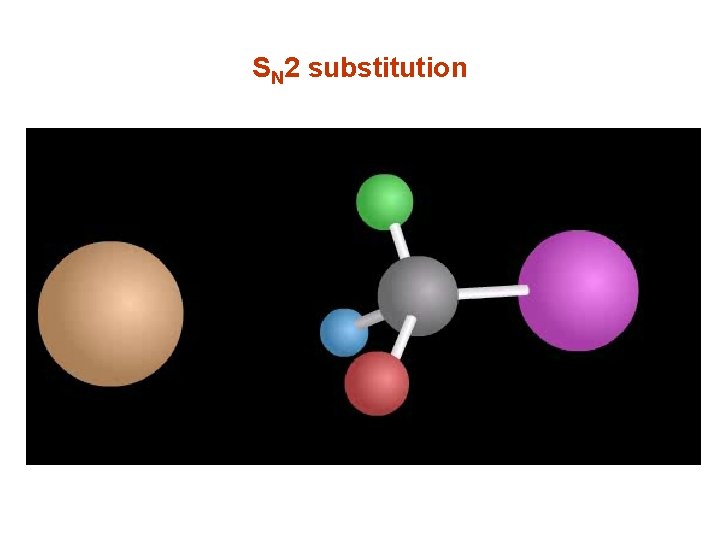
SN 2 substitution
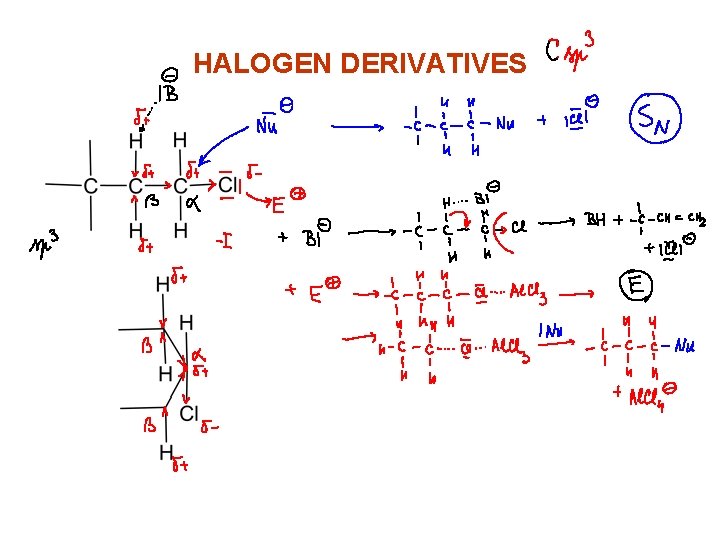
HALOGEN DERIVATIVES
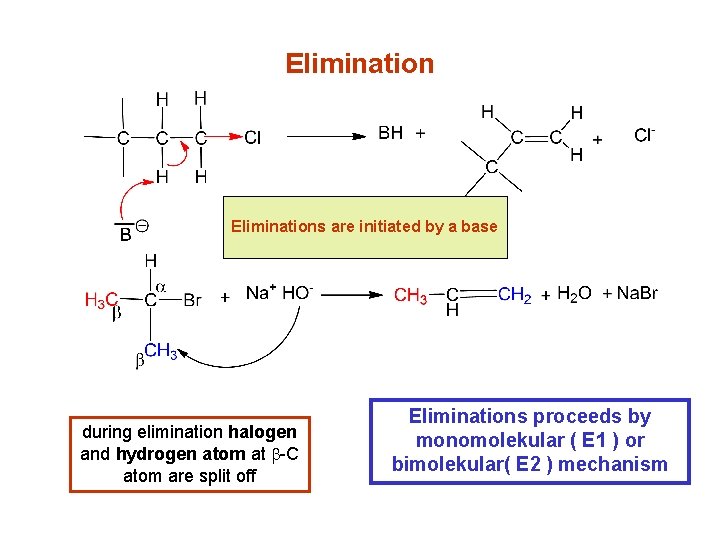
Elimination eliminace jsou vyvolánybybází Eliminations are initiated a base during elimination halogen and hydrogen atom at b-C atom are split off Eliminations proceeds by monomolekular ( E 1 ) or bimolekular( E 2 ) mechanism
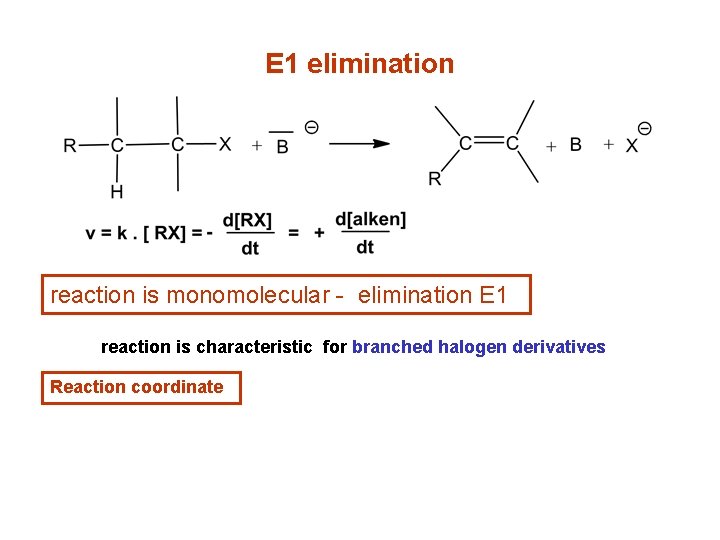
E 1 elimination reaction is monomolecular - elimination E 1 reaction is characteristic for branched halogen derivatives Reaction coordinate
Substituce SN 1 substitution and similarity with E 1
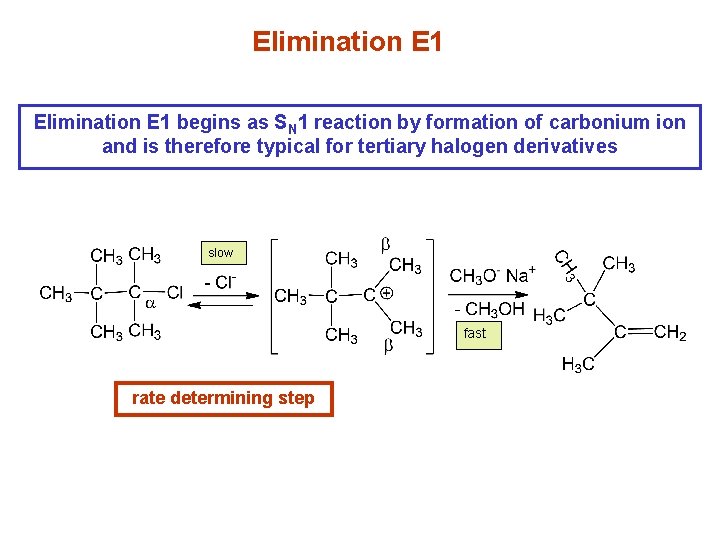
Elimination E 1 begins as SN 1 reaction by formation of carbonium ion and is therefore typical for tertiary halogen derivatives slow fast rate determining step
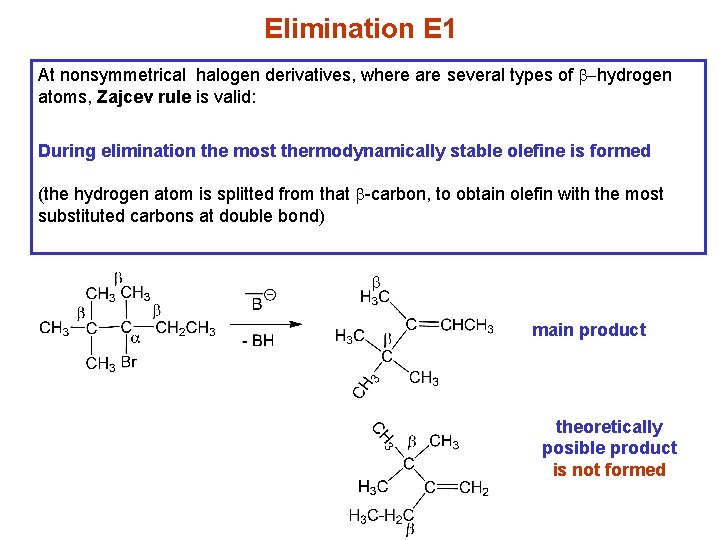
Elimination E 1 At nonsymmetrical halogen derivatives, where are several types of b-hydrogen atoms, Zajcev rule is valid: During elimination the most thermodynamically stable olefine is formed (the hydrogen atom is splitted from that b-carbon, to obtain olefin with the most substituted carbons at double bond) main product theoretically posible product is not formed
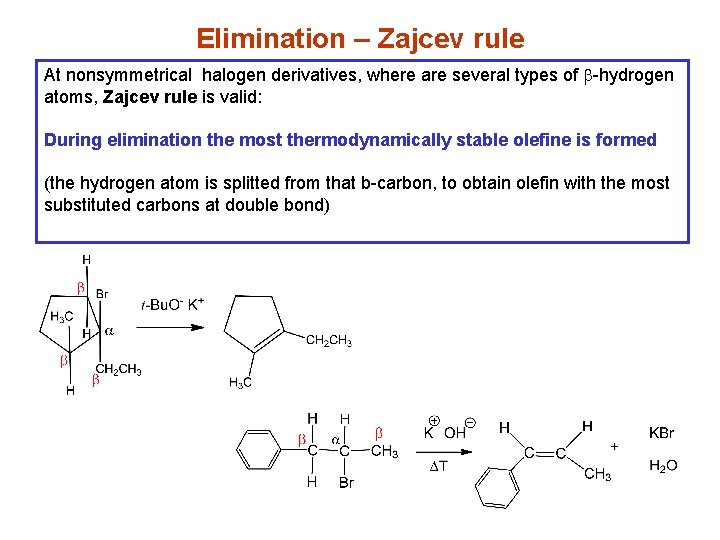
Elimination – Zajcev rule At nonsymmetrical halogen derivatives, where are several types of b-hydrogen atoms, Zajcev rule is valid: During elimination the most thermodynamically stable olefine is formed (the hydrogen atom is splitted from that b-carbon, to obtain olefin with the most substituted carbons at double bond)
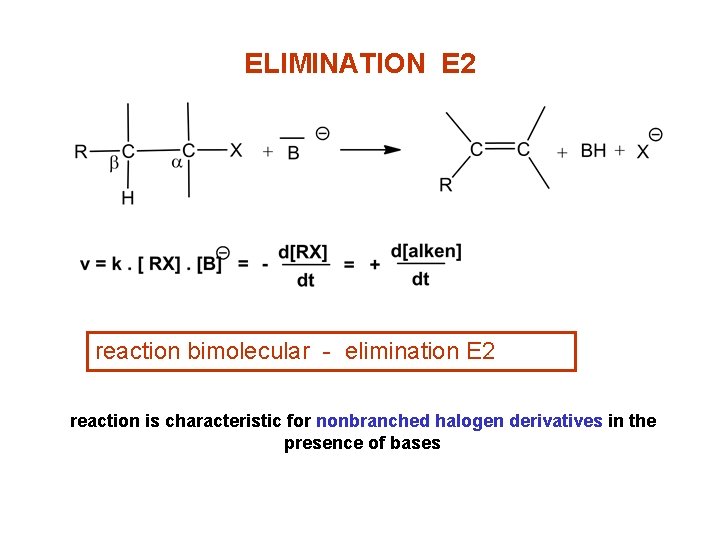
ELIMINATION E 2 reaction bimolecular - elimination E 2 reaction is characteristic for nonbranched halogen derivatives in the presence of bases
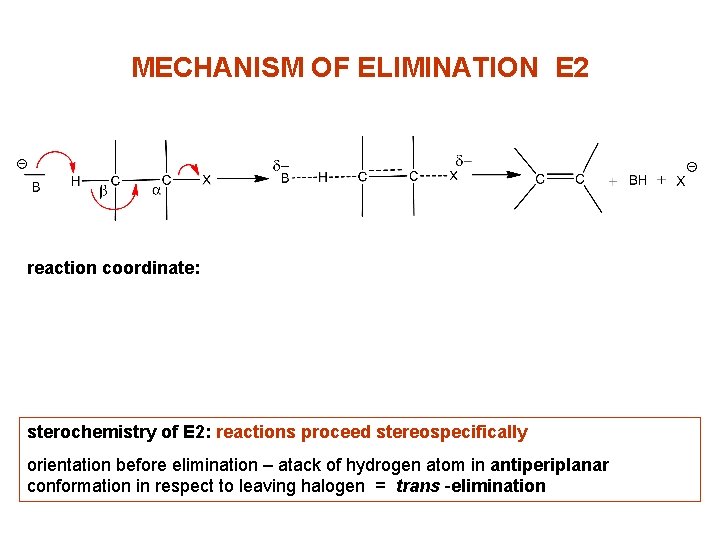
MECHANISM OF ELIMINATION E 2 reaction coordinate: sterochemistry of E 2: reactions proceed stereospecifically orientation before elimination – atack of hydrogen atom in antiperiplanar conformation in respect to leaving halogen = trans -elimination
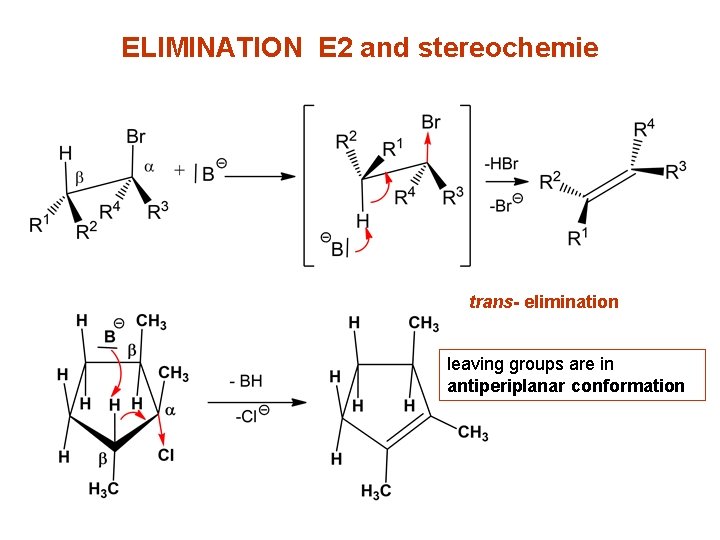
ELIMINATION E 2 and stereochemie trans- elimination leaving groups are in antiperiplanar conformation
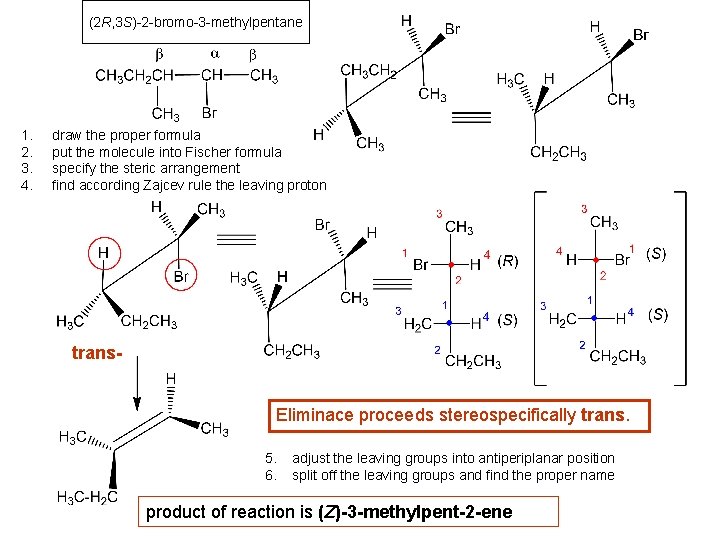
(2 R, 3 S)-2 -bromo-3 -methylpentane 1. 2. 3. 4. draw the proper formula put the molecule into Fischer formula specify the steric arrangement find according Zajcev rule the leaving proton trans. Eliminace proceeds stereospecifically trans. 5. 6. adjust the leaving groups into antiperiplanar position split off the leaving groups and find the proper name product of reaction is (Z)-3 -methylpent-2 -ene
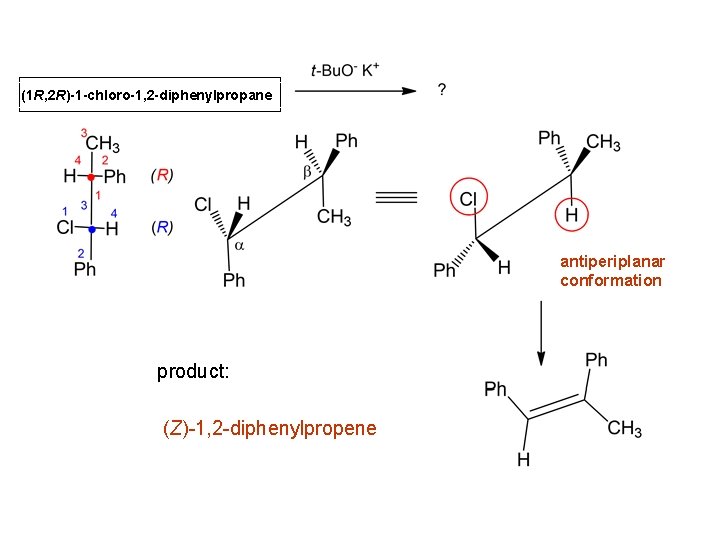
(1 R, 2 R)-1 -chloro-1, 2 -diphenylpropane antiperiplanar conformation product: (Z)-1, 2 -diphenylpropene
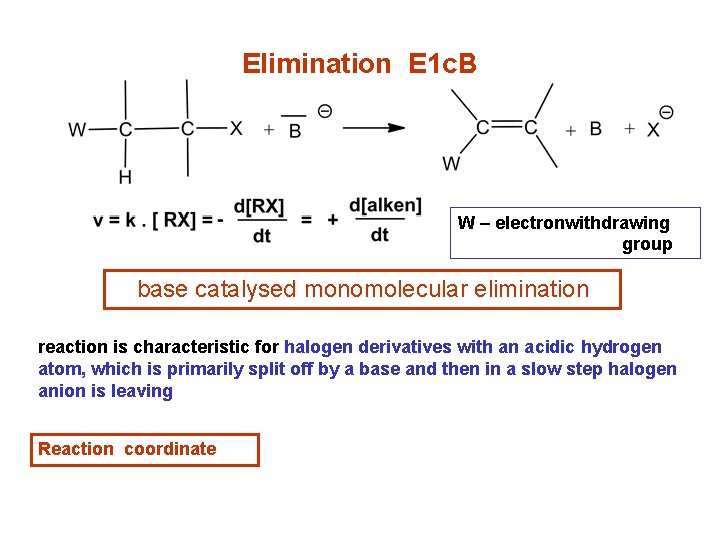
Elimination E 1 c. B W – electronwithdrawing group base catalysed monomolecular elimination reaction is characteristic for halogen derivatives with an acidic hydrogen atom, which is primarily split off by a base and then in a slow step halogen anion is leaving Reaction coordinate
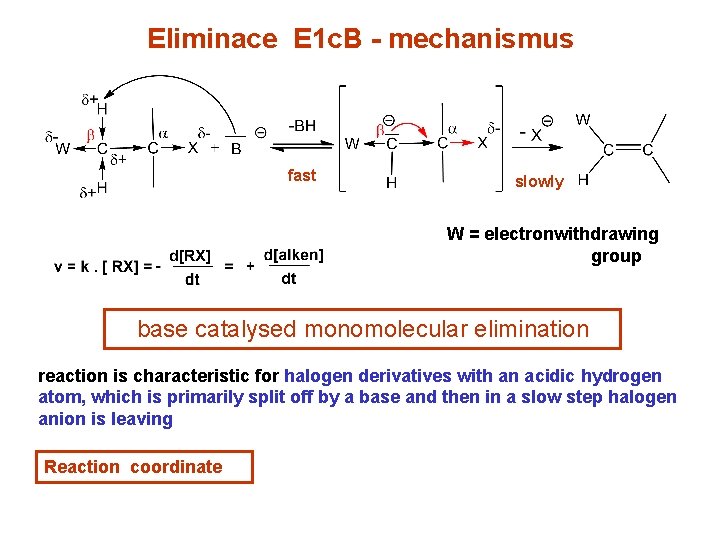
Eliminace E 1 c. B - mechanismus W – je elektronakceptor fast slowly W = electronwithdrawing group base catalysed monomolecular elimination reaction is characteristic for halogen derivatives with an acidic hydrogen atom, which is primarily split off by a base and then in a slow step halogen anion is leaving Reaction coordinate
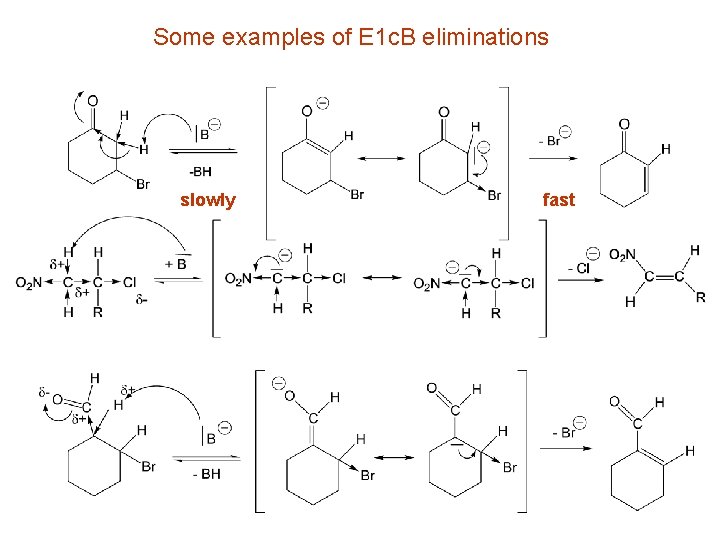
Some examples of E 1 c. B eliminations slowly fast
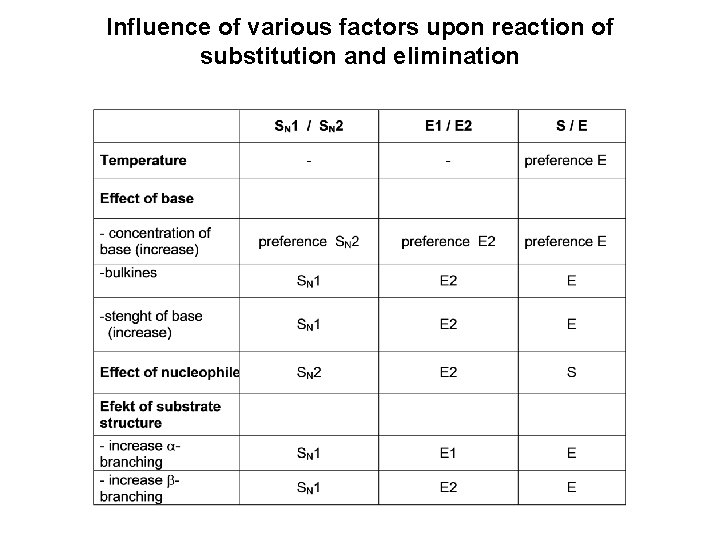
Influence of various factors upon reaction of substitution and elimination
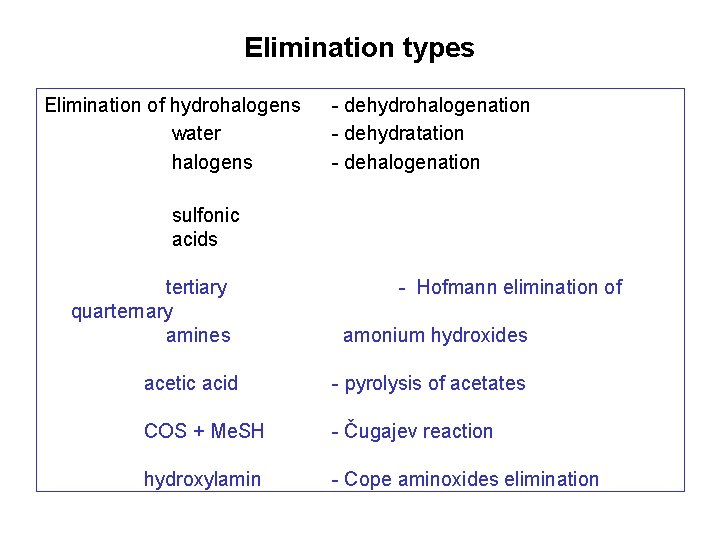
Elimination types Elimination of hydrohalogens water halogens - dehydrohalogenation - dehydratation - dehalogenation sulfonic acids tertiary quarternary amines - Hofmann elimination of amonium hydroxides acetic acid - pyrolysis of acetates COS + Me. SH - Čugajev reaction hydroxylamin - Cope aminoxides elimination
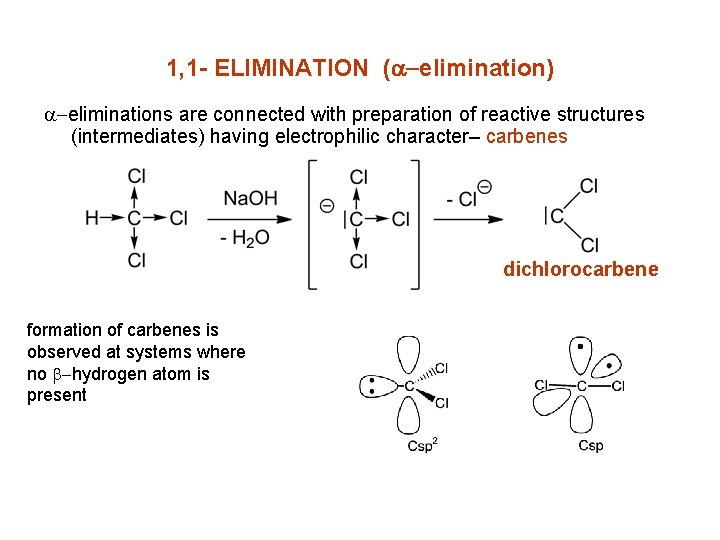
1, 1 - ELIMINATION (a-elimination) a-eliminations are connected with preparation of reactive structures (intermediates) having electrophilic character– carbenes dichlorocarbene formation of carbenes is observed at systems where no b-hydrogen atom is present
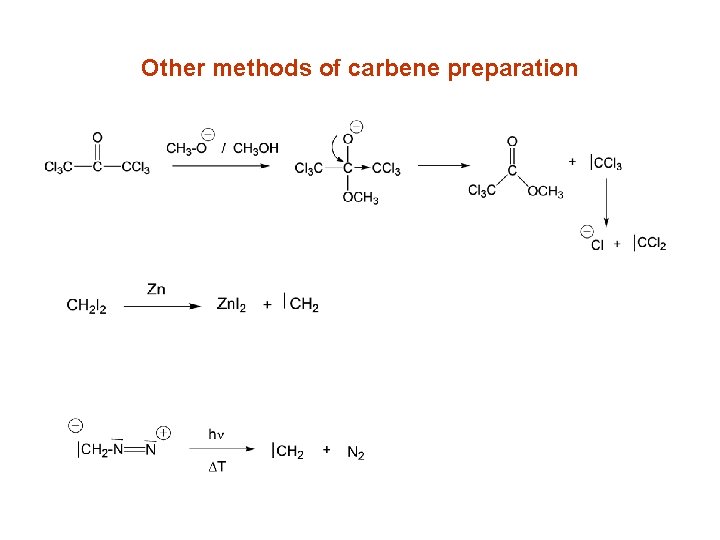
Other methods of carbene preparation
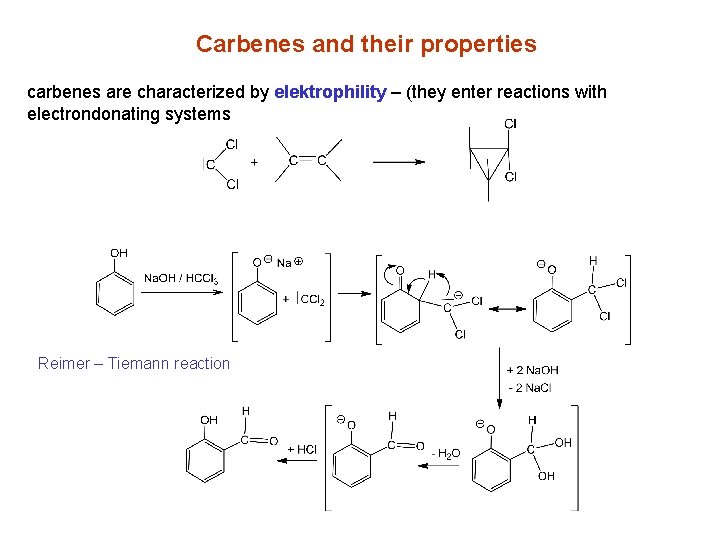
Carbenes and their properties carbenes are characterized by elektrophility – (they enter reactions with electrondonating systems Reimer – Tiemann reaction
- Slides: 24