
Hall effect at the Superconductor Insulator Transition V
- Slides: 26
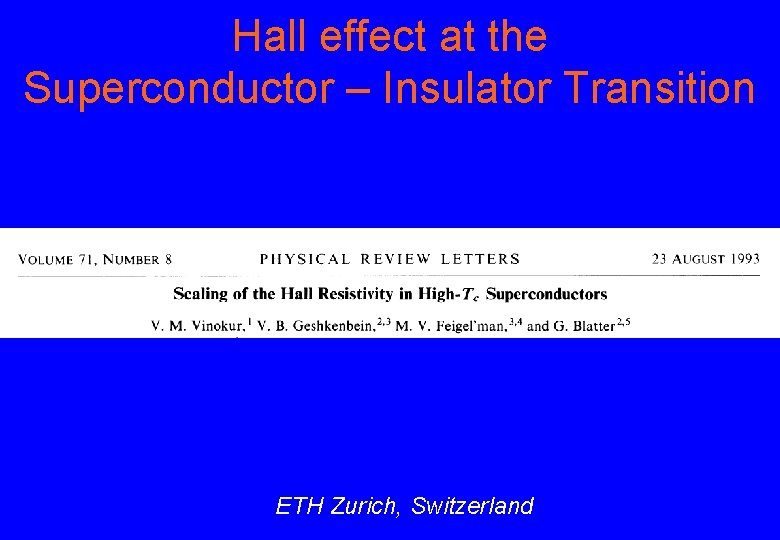
Hall effect at the Superconductor – Insulator Transition V. M. Vinokur. V. B. Geshkenbein, M. V. Feigel’man and G. Blatter ETH Zurich, Switzerland
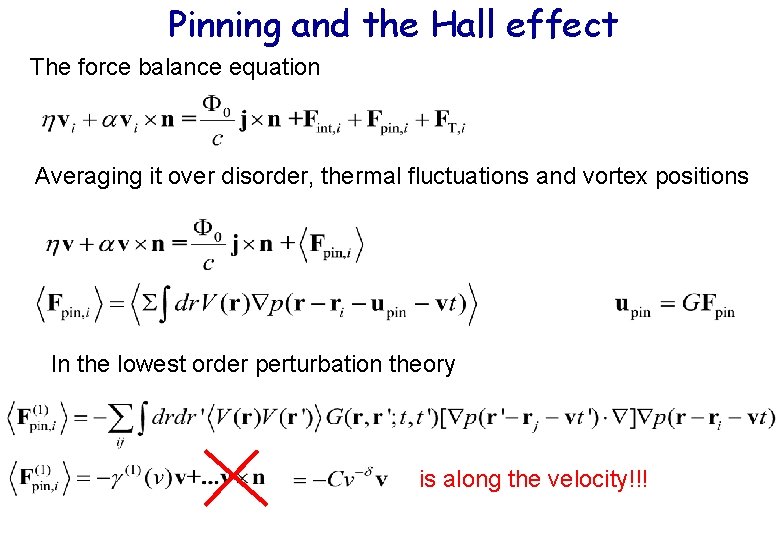
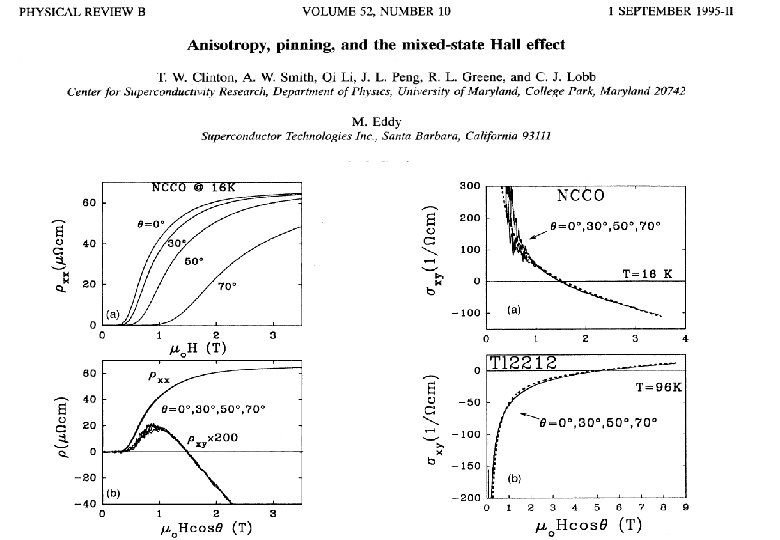
Pinning and the Hall effect The force balance equation Averaging it over disorder, thermal fluctuations and vortex positions In the lowest order perturbation theory is along the velocity!!!
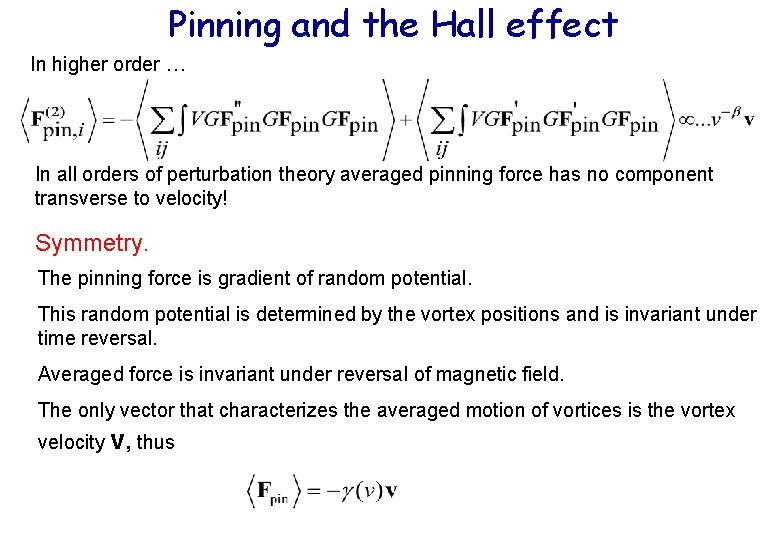
Pinning and the Hall effect In higher order … In all orders of perturbation theory averaged pinning force has no component transverse to velocity! Symmetry. The pinning force is gradient of random potential. This random potential is determined by the vortex positions and is invariant under time reversal. Averaged force is invariant under reversal of magnetic field. The only vector that characterizes the averaged motion of vortices is the vortex velocity v, thus
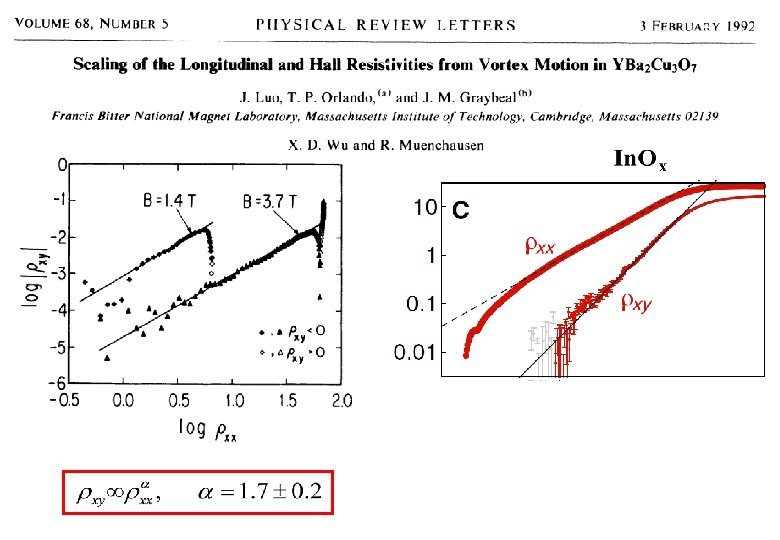
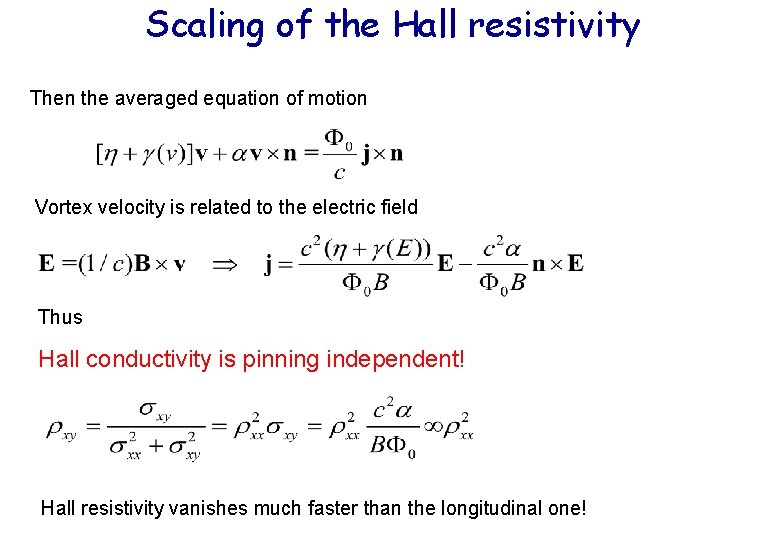
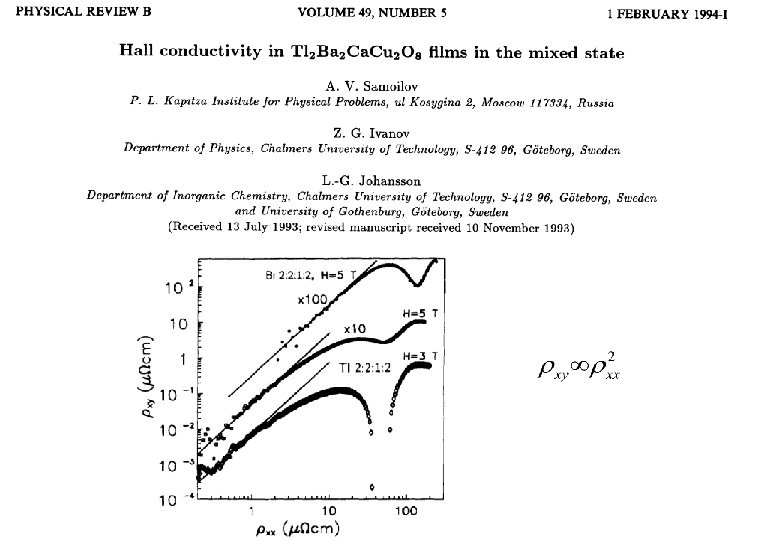
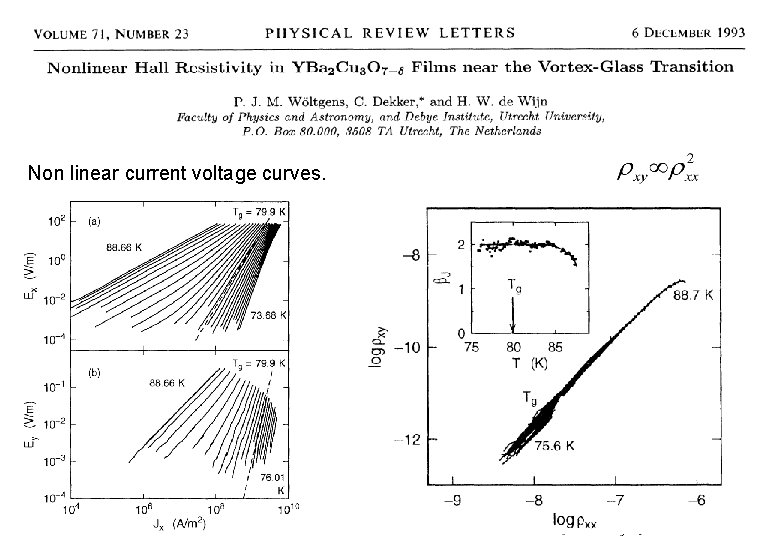
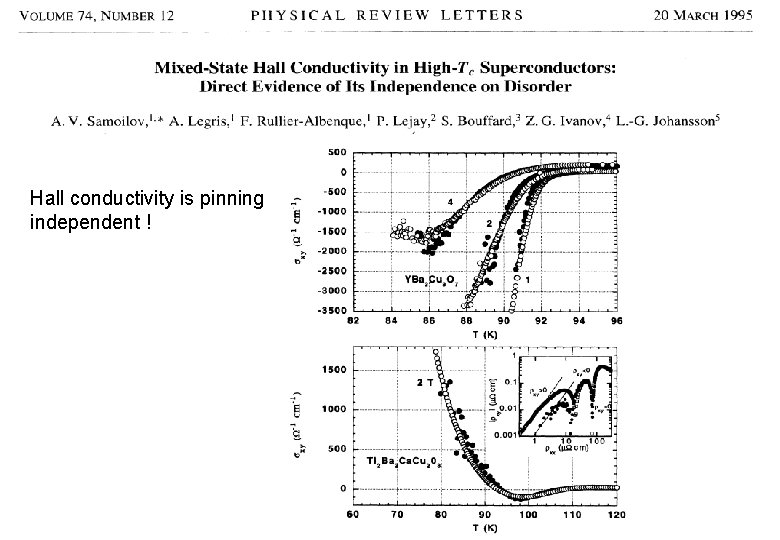
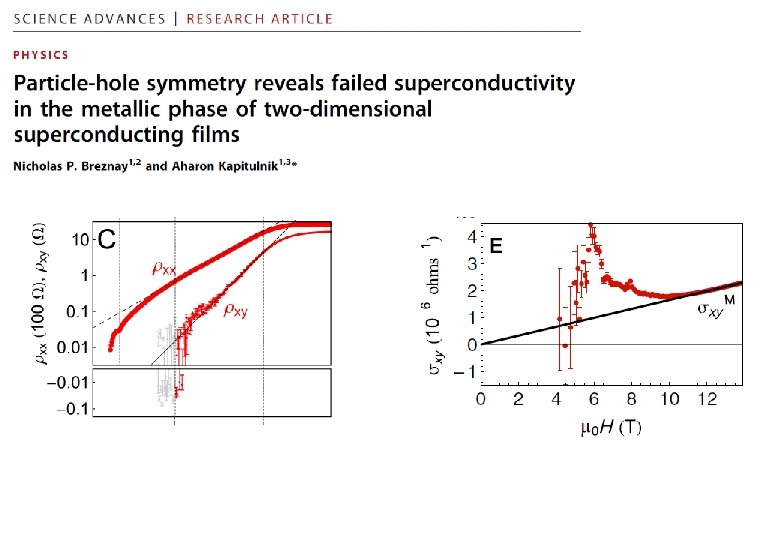
Scaling of the Hall resistivity Then the averaged equation of motion Vortex velocity is related to the electric field Thus Hall conductivity is pinning independent! Hall resistivity vanishes much faster than the longitudinal one!
Non linear current voltage curves.
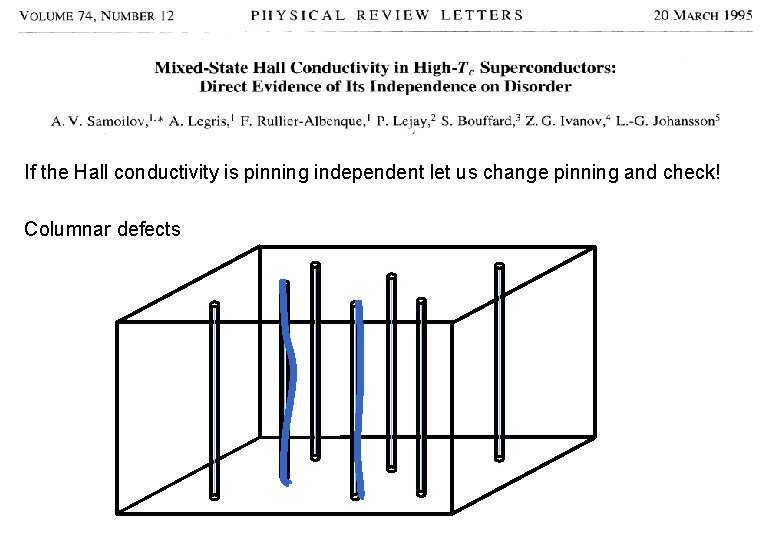
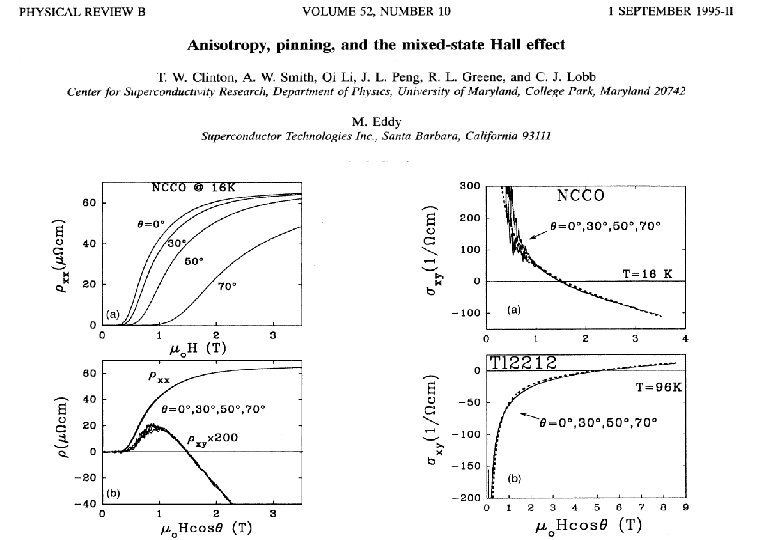
If the Hall conductivity is pinning independent let us change pinning and check! Columnar defects
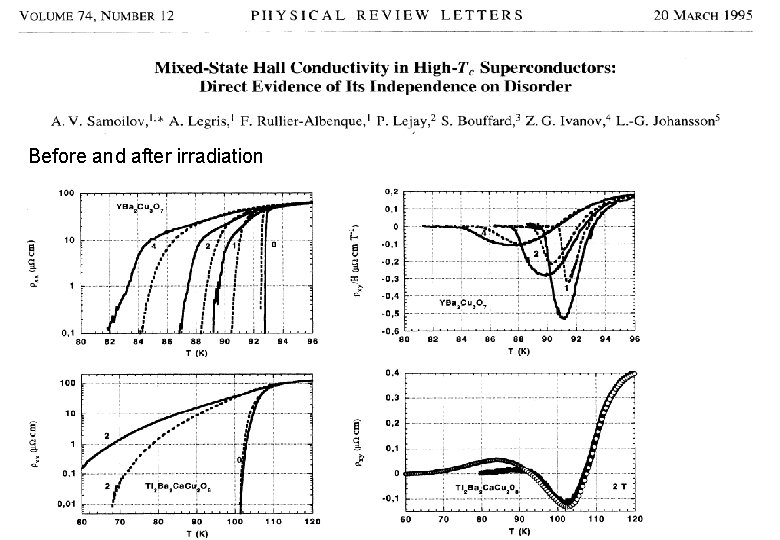
Before and after irradiation
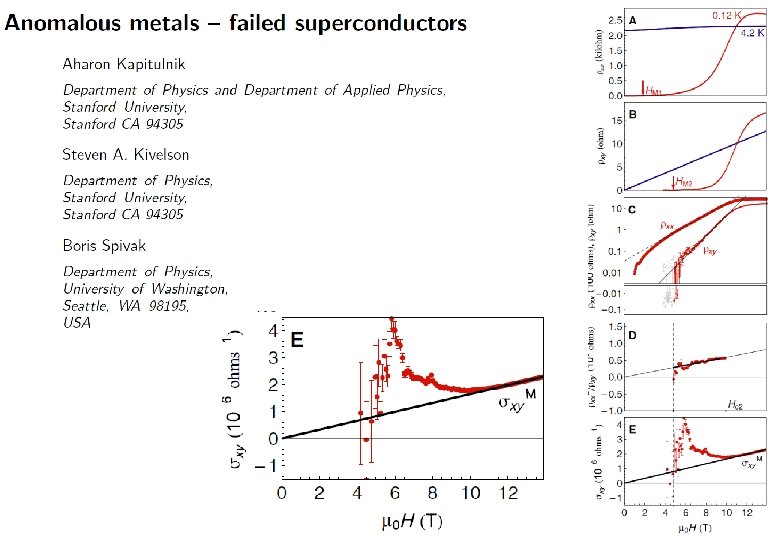
Hall conductivity is pinning independent !
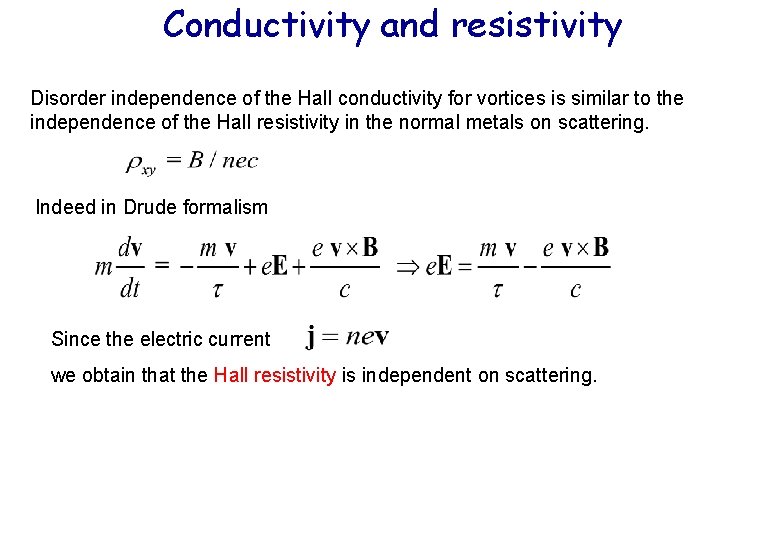
Conductivity and resistivity Disorder independence of the Hall conductivity for vortices is similar to the independence of the Hall resistivity in the normal metals on scattering. Indeed in Drude formalism Since the electric current we obtain that the Hall resistivity is independent on scattering.
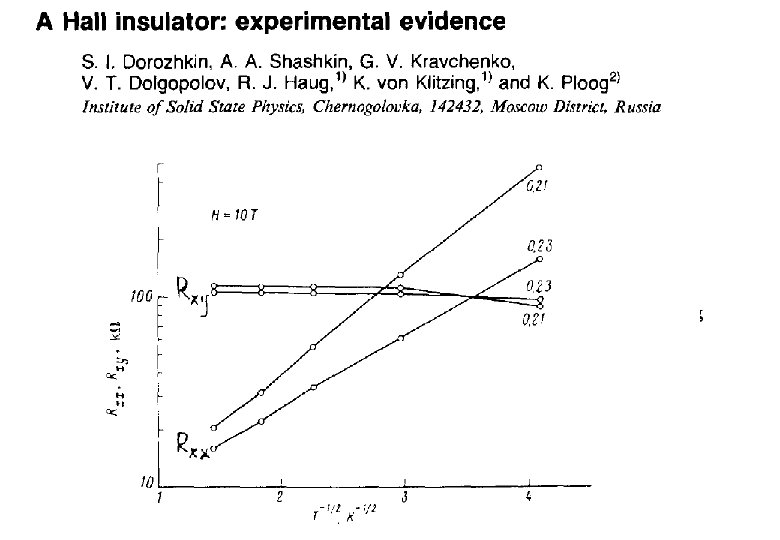
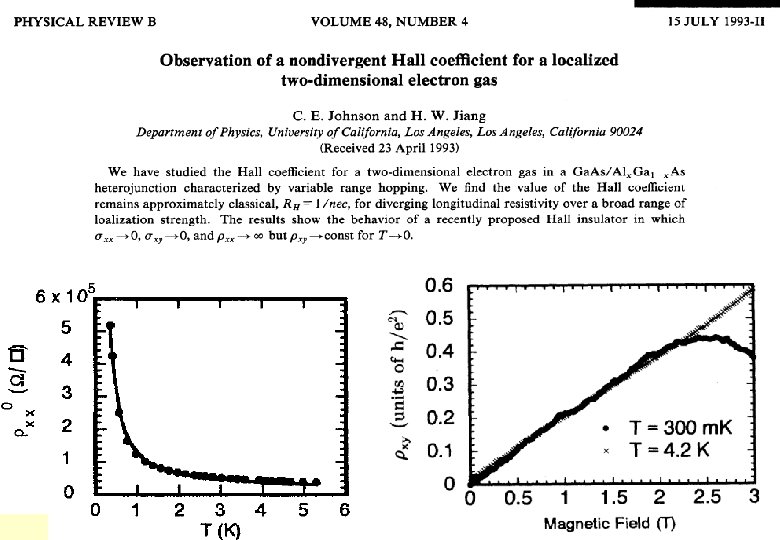
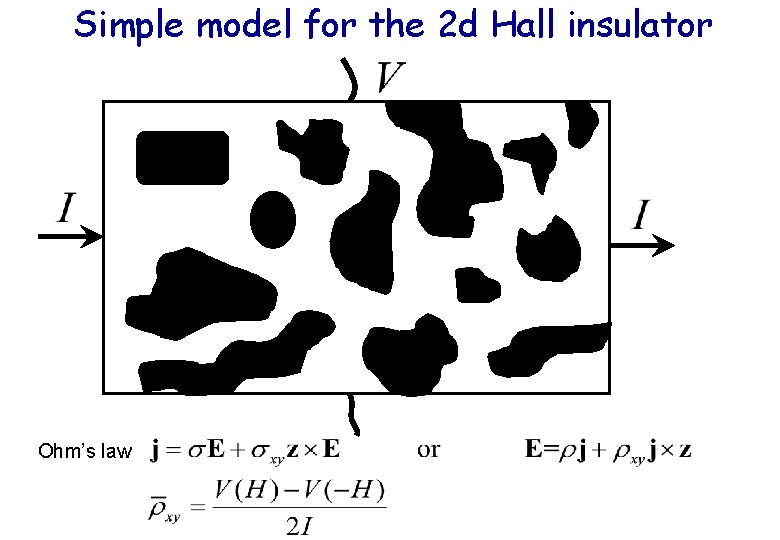
Simple model for the 2 d Hall insulator Ohm’s law
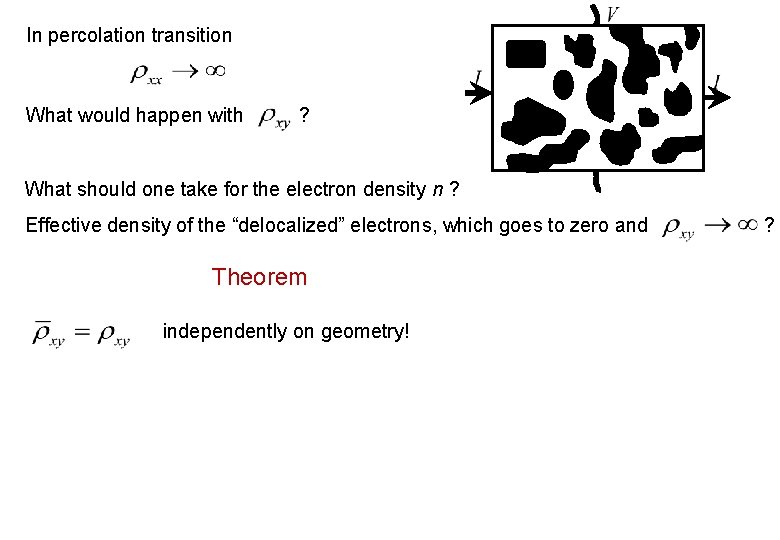
In percolation transition What would happen with ? What should one take for the electron density n ? Effective density of the “delocalized” electrons, which goes to zero and Theorem independently on geometry! ?
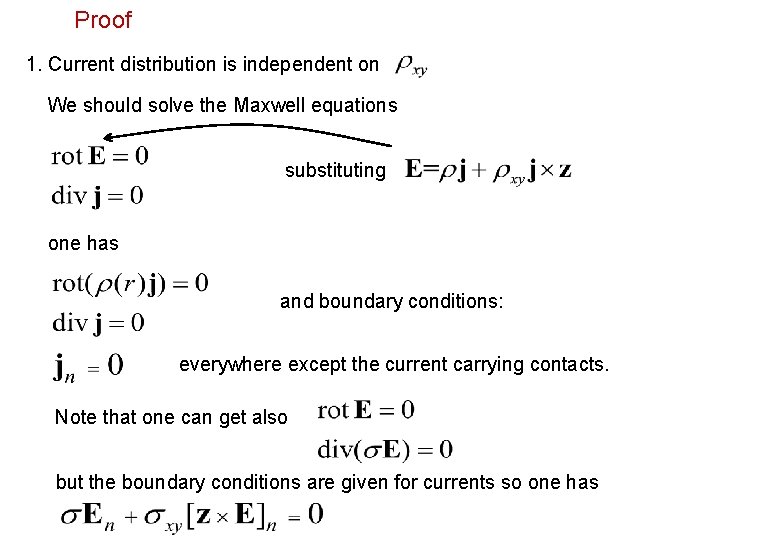
Proof 1. Current distribution is independent on We should solve the Maxwell equations substituting one has and boundary conditions: everywhere except the current carrying contacts. Note that one can get also but the boundary conditions are given for currents so one has
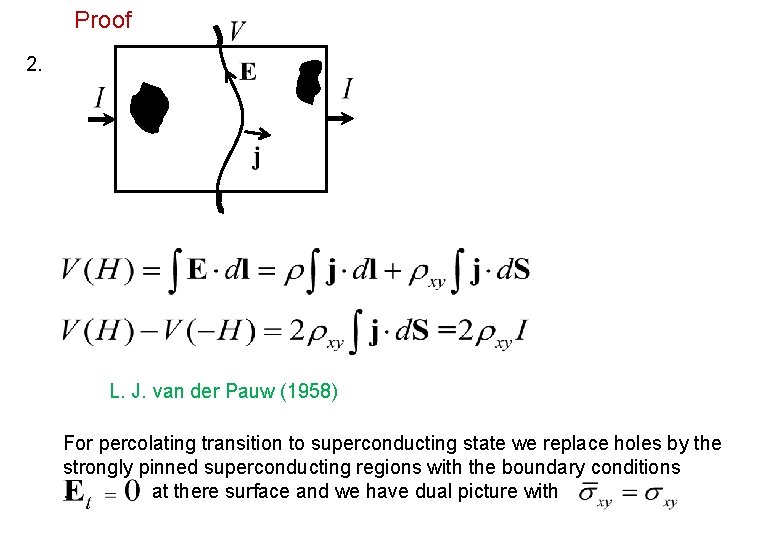
Proof 2. L. J. van der Pauw (1958) For percolating transition to superconducting state we replace holes by the strongly pinned superconducting regions with the boundary conditions. at there surface and we have dual picture with
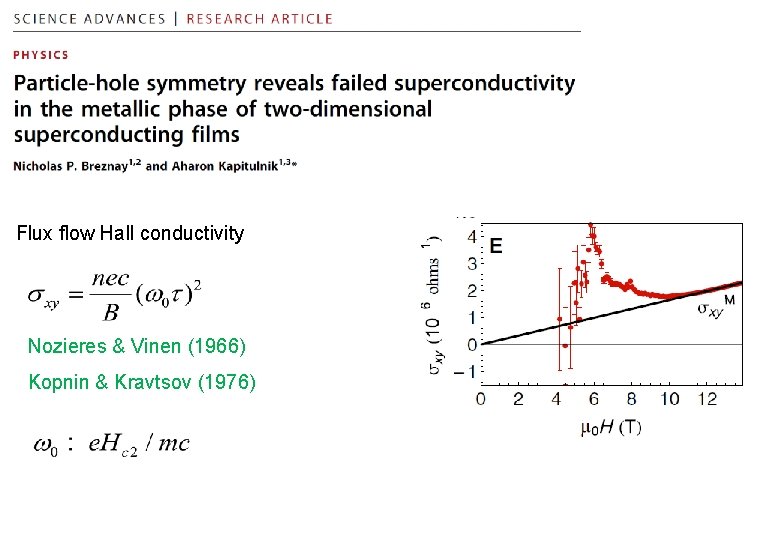
Flux flow Hall conductivity Nozieres & Vinen (1966) Kopnin & Kravtsov (1976)
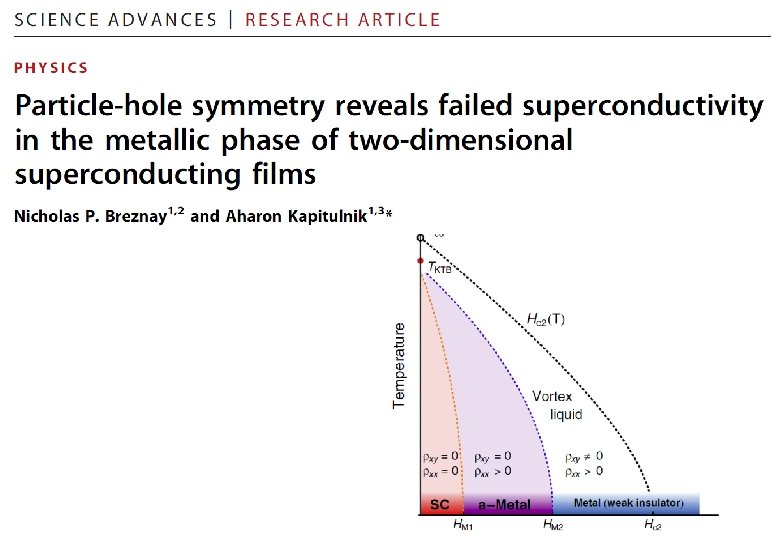
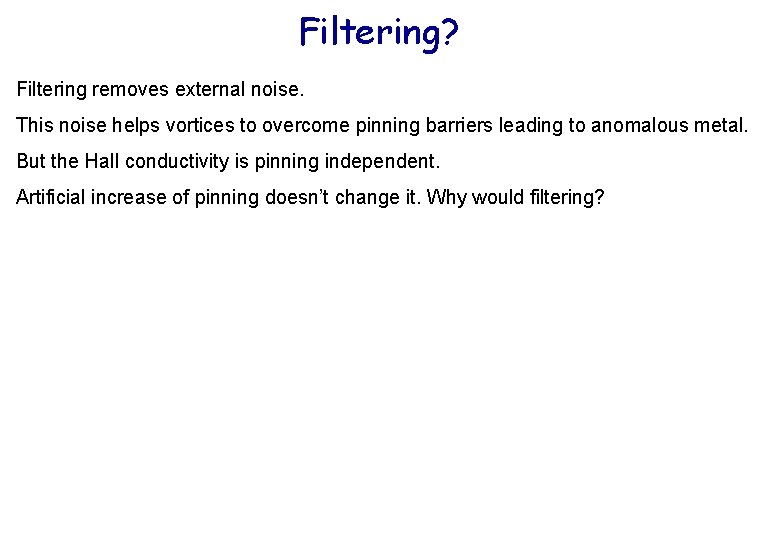
Filtering? Filtering removes external noise. This noise helps vortices to overcome pinning barriers leading to anomalous metal. But the Hall conductivity is pinning independent. Artificial increase of pinning doesn’t change it. Why would filtering?
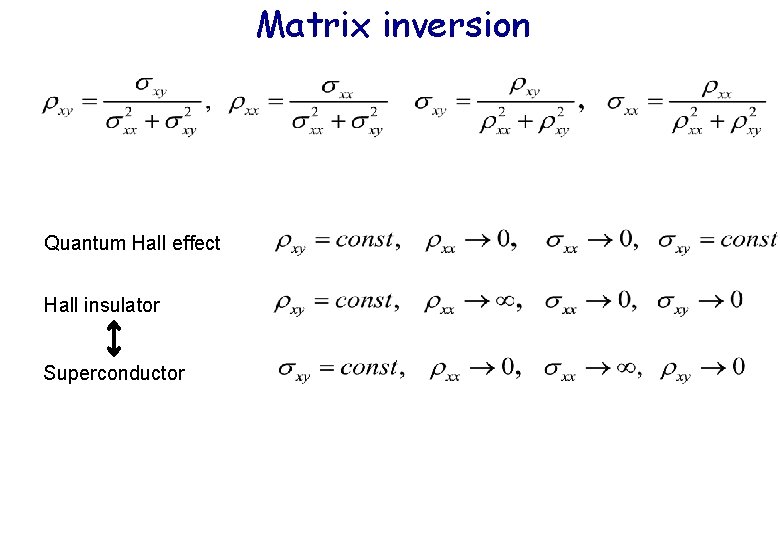
Matrix inversion Quantum Hall effect Hall insulator Superconductor
Conclusions Good that something can be understood.