
Haiti Slave Rebellion BY Kevin Mc Donald Michael
Haiti Slave Rebellion BY: Kevin Mc. Donald & Michael Nickaboine
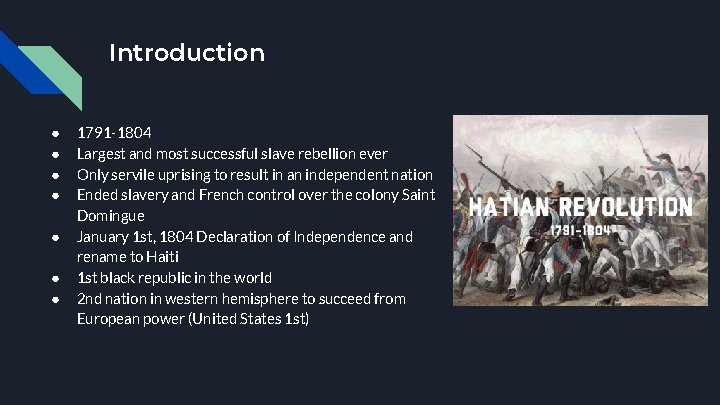
Introduction ● ● ● ● 1791 -1804 Largest and most successful slave rebellion ever Only servile uprising to result in an independent nation Ended slavery and French control over the colony Saint Domingue January 1 st, 1804 Declaration of Independence and rename to Haiti 1 st black republic in the world 2 nd nation in western hemisphere to succeed from European power (United States 1 st)
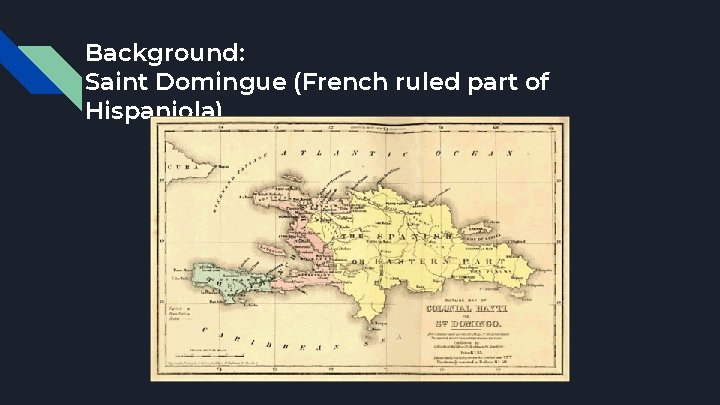
Background: Saint Domingue (French ruled part of Hispaniola)
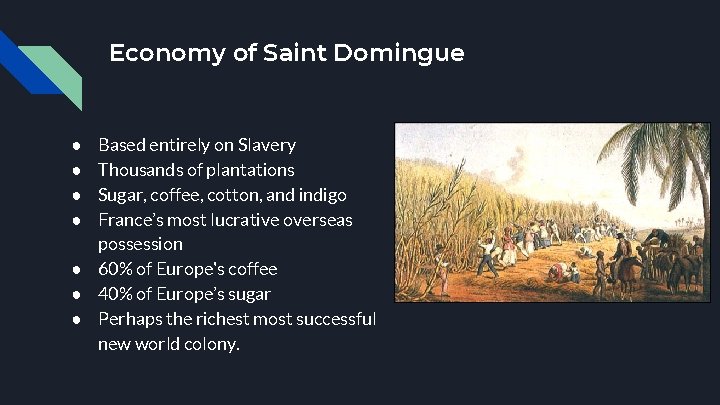
Economy of Saint Domingue Based entirely on Slavery Thousands of plantations Sugar, coffee, cotton, and indigo France’s most lucrative overseas possession ● 60% of Europe's coffee ● 40% of Europe’s sugar ● Perhaps the richest most successful new world colony. ● ●
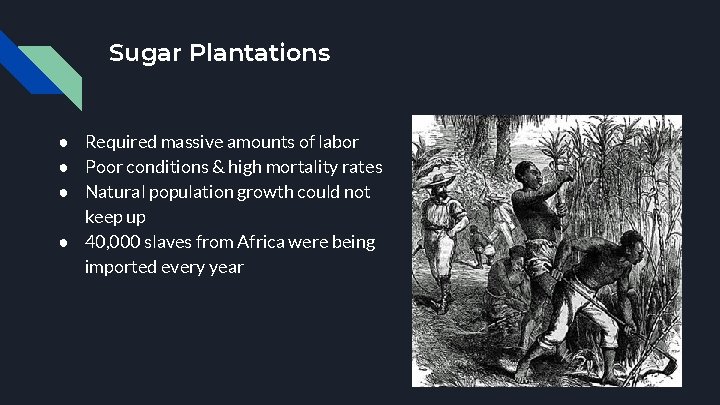
Sugar Plantations ● Required massive amounts of labor ● Poor conditions & high mortality rates ● Natural population growth could not keep up ● 40, 000 slaves from Africa were being imported every year

Societal Structure in Saint Domingue (1790) ● ● ● 40, 000 white French settlers Grand Blancs & Petits Blancs 30, 000 free people of color Gens de couleur, owners of small plots 500, 000 black slaves High mortality, many fled to mountains (Maroons)
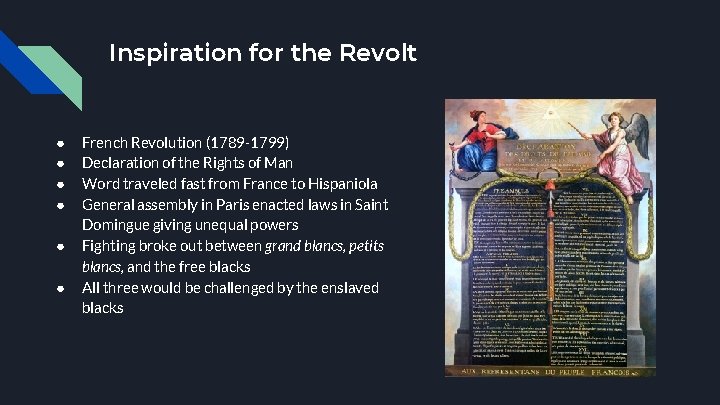
Inspiration for the Revolt ● ● ● French Revolution (1789 -1799) Declaration of the Rights of Man Word traveled fast from France to Hispaniola General assembly in Paris enacted laws in Saint Domingue giving unequal powers Fighting broke out between grand blancs, petits blancs, and the free blacks All three would be challenged by the enslaved blacks

Toussiant L’Overture ● ● ● Born a slave May 20 th, 1743 Eldest son of African prince Gaou Guinon kidnapped by slavers Learned how to read and write Gained his freedom, continued to manage former owners property Known as the “The Black Napolean” “The Black George Washington” and “The Black Sparticus” Although free, started as a soldier for the slaves and worked way up to their leader
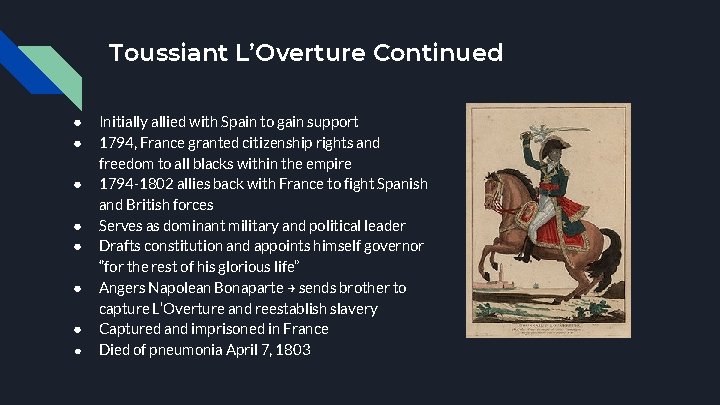
Toussiant L’Overture Continued ● ● ● ● Initially allied with Spain to gain support 1794, France granted citizenship rights and freedom to all blacks within the empire 1794 -1802 allies back with France to fight Spanish and British forces Serves as dominant military and political leader Drafts constitution and appoints himself governor “for the rest of his glorious life” Angers Napolean Bonaparte → sends brother to capture L’Overture and reestablish slavery Captured and imprisoned in France Died of pneumonia April 7, 1803

The Confusing Power Dynamic https: //www. youtube. com/watch? v=5 A_o-n. U 5 s 2 U 5: 35 -7: 05
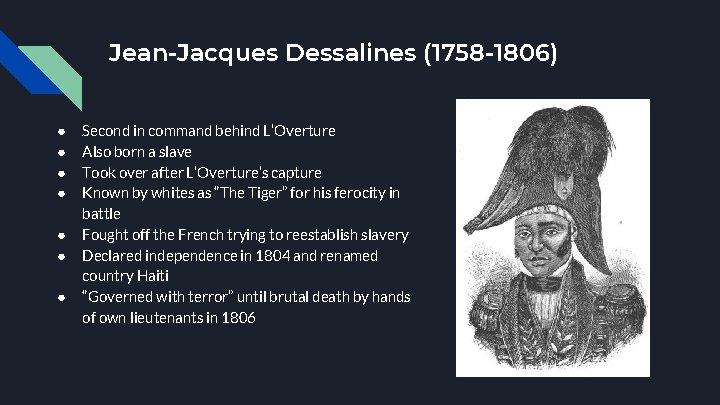
Jean-Jacques Dessalines (1758 -1806) ● ● ● ● Second in command behind L’Overture Also born a slave Took over after L’Overture’s capture Known by whites as “The Tiger” for his ferocity in battle Fought off the French trying to reestablish slavery Declared independence in 1804 and renamed country Haiti “Governed with terror” until brutal death by hands of own lieutenants in 1806
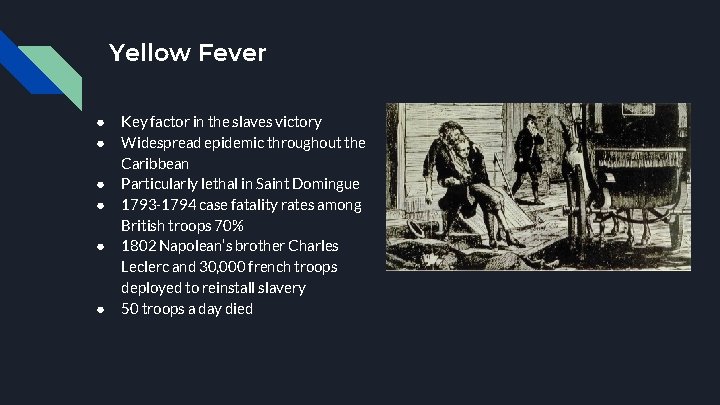
Yellow Fever ● ● ● Key factor in the slaves victory Widespread epidemic throughout the Caribbean Particularly lethal in Saint Domingue 1793 -1794 case fatality rates among British troops 70% 1802 Napolean’s brother Charles Leclerc and 30, 000 french troops deployed to reinstall slavery 50 troops a day died
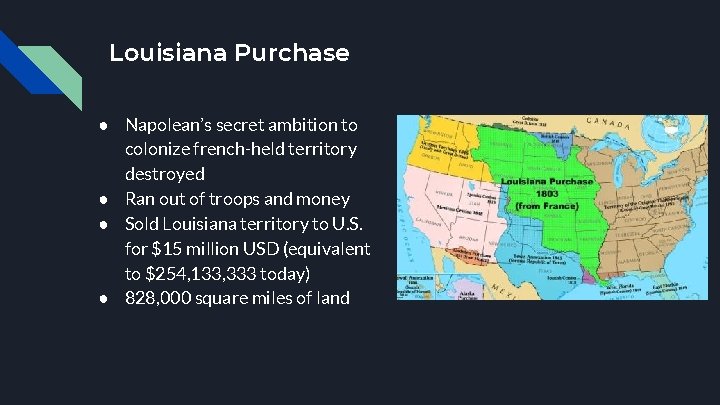
Louisiana Purchase ● Napolean’s secret ambition to colonize french-held territory destroyed ● Ran out of troops and money ● Sold Louisiana territory to U. S. for $15 million USD (equivalent to $254, 133, 333 today) ● 828, 000 square miles of land
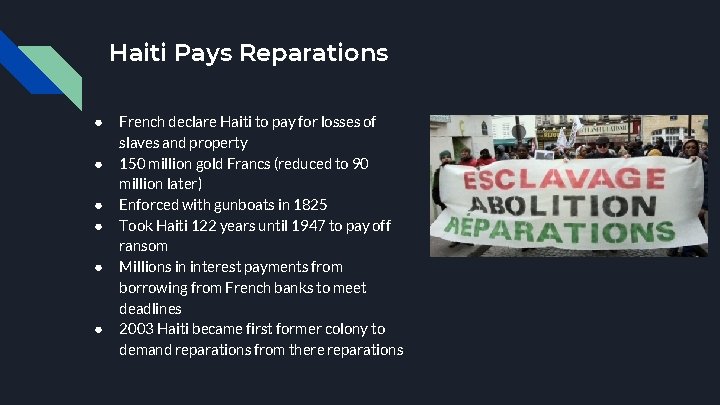
Haiti Pays Reparations ● ● ● French declare Haiti to pay for losses of slaves and property 150 million gold Francs (reduced to 90 million later) Enforced with gunboats in 1825 Took Haiti 122 years until 1947 to pay off ransom Millions in interest payments from borrowing from French banks to meet deadlines 2003 Haiti became first former colony to demand reparations from there reparations

Haitian Inspiration https: //www. youtube. com/watch? v=Lc. V 6 NTqoy. Ac 4: 40 -6: 40
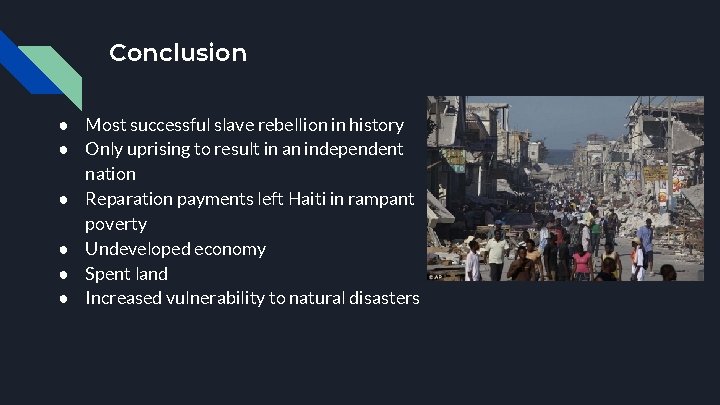
Conclusion ● Most successful slave rebellion in history ● Only uprising to result in an independent nation ● Reparation payments left Haiti in rampant poverty ● Undeveloped economy ● Spent land ● Increased vulnerability to natural disasters
Questions for Discussion 1. What do you think about the reparations that Haiti was forced to pay, and how that has impacted how they are perceived as a country today? 2. Why do you think that the Haitian revolution is not talked about as much as other famous revolutions?
- Slides: 17