
Hairy Cell Leukaemia The Basics Dr Dima ElSharkawi
Hairy Cell Leukaemia: The Basics Dr Dima El-Sharkawi Haematology Consultant Royal Marsden Hosptial
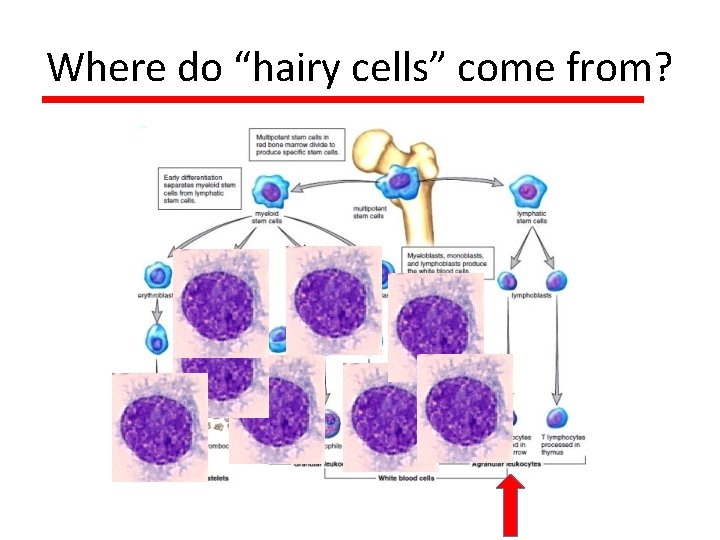
Where do “hairy cells” come from?
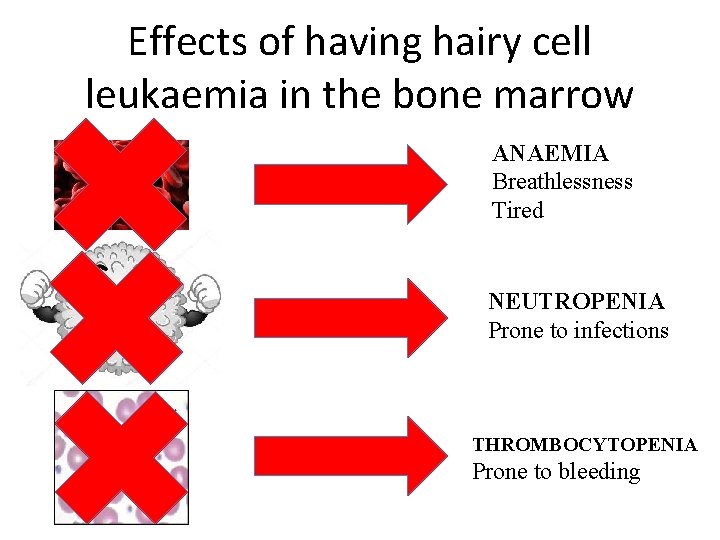
Effects of having hairy cell leukaemia in the bone marrow ANAEMIA Breathlessness Tired NEUTROPENIA Prone to infections THROMBOCYTOPENIA Prone to bleeding
Infections in patients with HCL • Neutropenia and monocytopenia • Treatment can also suppress immune system • Optimal not to treat HCL when there is an active infection
Other symptoms/signs of HCL • Splenomegaly • Paraneoplastic phenomena – Increased likelihood of allergies – Vascuilitis – Rashes/ skin conditions
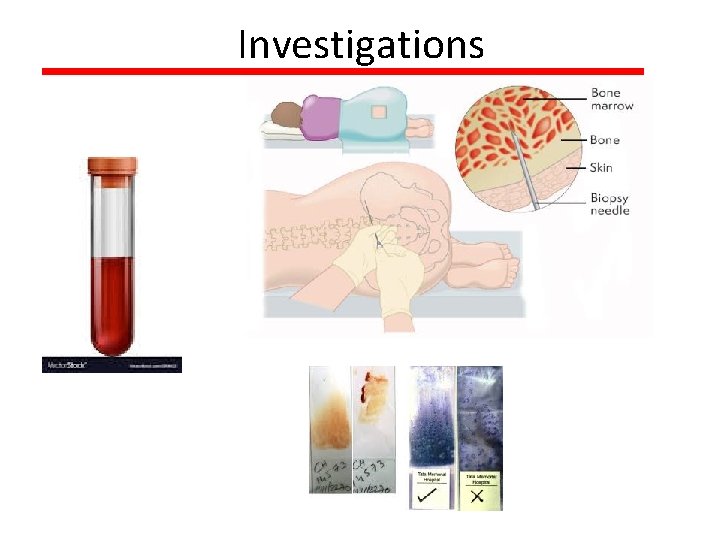
Investigations
Centre for Molecular Pathology
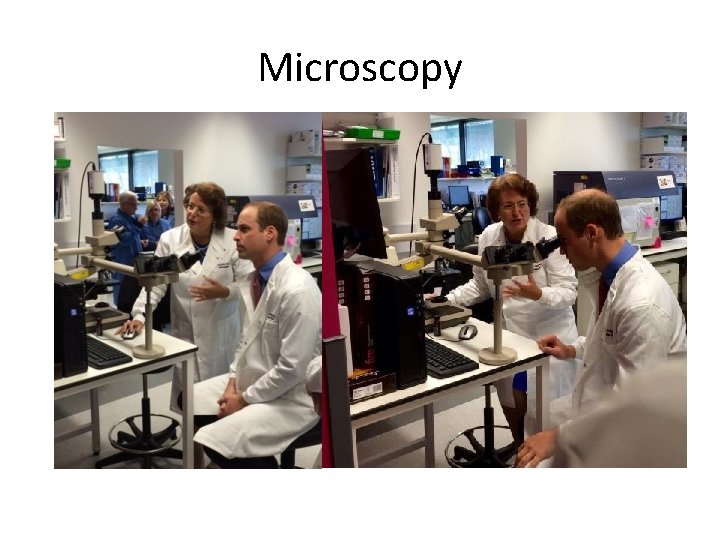
Microscopy
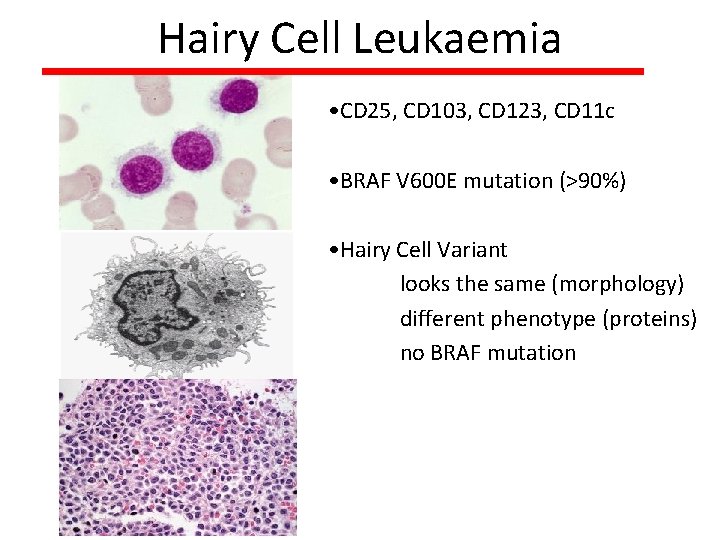
Hairy Cell Leukaemia • CD 25, CD 103, CD 123, CD 11 c • BRAF V 600 E mutation (>90%) • Hairy Cell Variant looks the same (morphology) different phenotype (proteins) no BRAF mutation
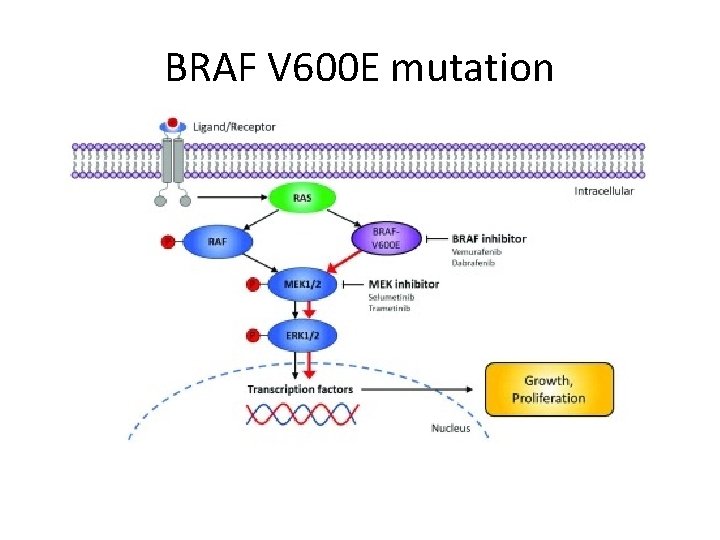
BRAF V 600 E mutation
This is a rare leukaemia……. . • 200 people diagnosed with HCL in UK annually • 1 patient for every 200 GPs • Population data: • Male: Female 4: 1 • Median age 54 • Why me? No known risk factors. • How long have I got?
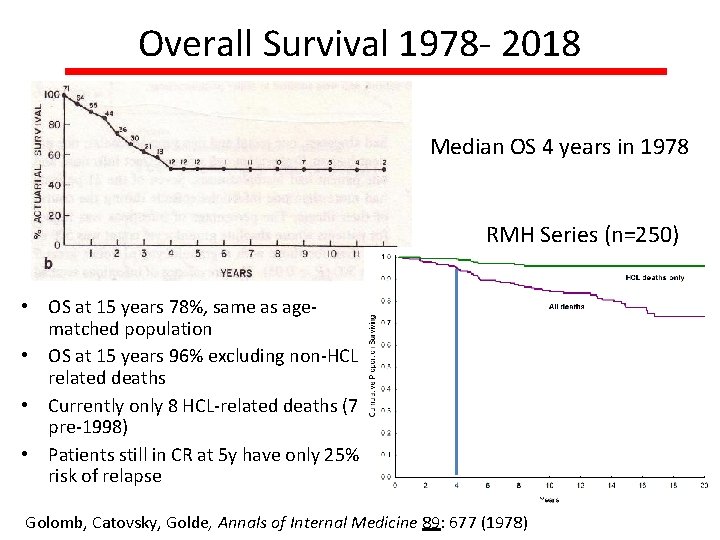
Overall Survival 1978 - 2018 Median OS 4 years in 1978 RMH Series (n=250) • OS at 15 years 78%, same as agematched population • OS at 15 years 96% excluding non-HCL related deaths • Currently only 8 HCL-related deaths (7 pre-1998) • Patients still in CR at 5 y have only 25% risk of relapse Golomb, Catovsky, Golde, Annals of Internal Medicine 89: 677 (1978)
Treatment of hairy cell leukaemia • When to treat? – Symptoms – Falling normal blood counts • What to treat with? – Nucleoside analogue therapy • Cladribine • Pentostatin
Assessing outcome in trials • Response rate • Progression Free survival • Overall Survival
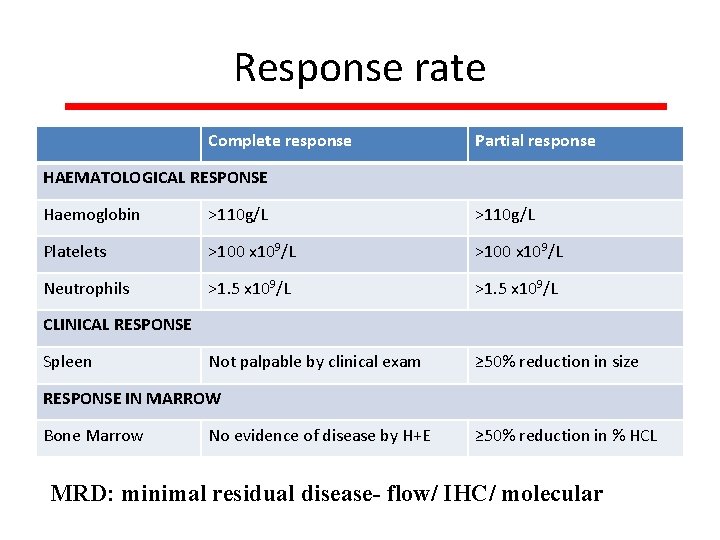
Response rate Complete response Partial response HAEMATOLOGICAL RESPONSE Haemoglobin >110 g/L Platelets >100 x 109/L Neutrophils >1. 5 x 10⁹/L Not palpable by clinical exam ≥ 50% reduction in size CLINICAL RESPONSE Spleen RESPONSE IN MARROW Bone Marrow No evidence of disease by H+E ≥ 50% reduction in % HCL MRD: minimal residual disease- flow/ IHC/ molecular
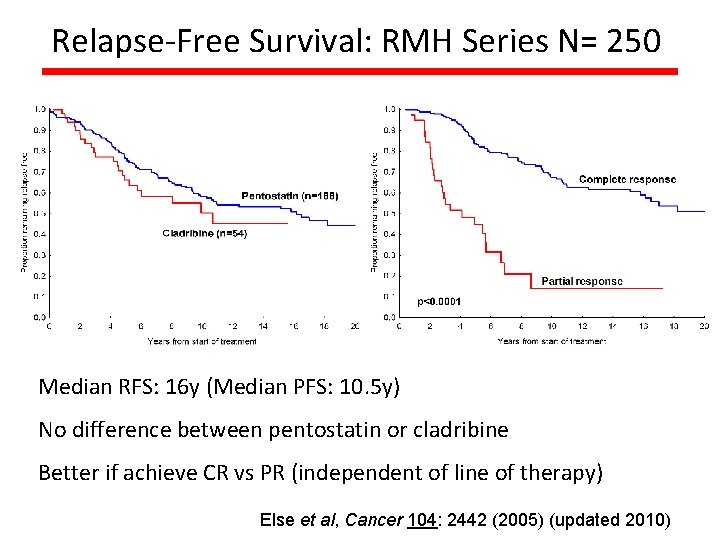
Relapse-Free Survival: RMH Series N= 250 Not significant (p=0. 2) Median RFS: 16 y (Median PFS: 10. 5 y) No difference between pentostatin or cladribine Better if achieve CR vs PR (independent of line of therapy) Else et al, Cancer 104: 2442 (2005) (updated 2010)
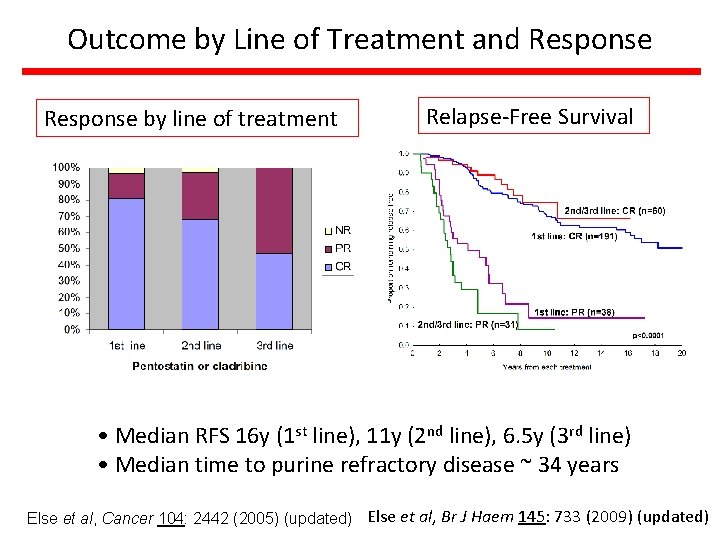
Outcome by Line of Treatment and Response by line of treatment Relapse-Free Survival • Median RFS 16 y (1 st line), 11 y (2 nd line), 6. 5 y (3 rd line) • Median time to purine refractory disease ~ 34 years Else et al, Cancer 104: 2442 (2005) (updated) Else et al, Br J Haem 145: 733 (2009) (updated)
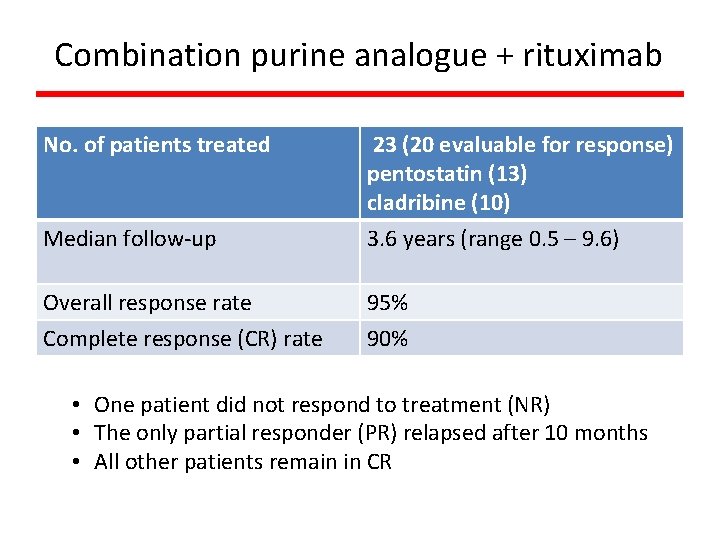
Combination purine analogue + rituximab No. of patients treated Median follow-up 23 (20 evaluable for response) pentostatin (13) cladribine (10) 3. 6 years (range 0. 5 – 9. 6) Overall response rate Complete response (CR) rate 95% 90% • One patient did not respond to treatment (NR) • The only partial responder (PR) relapsed after 10 months • All other patients remain in CR
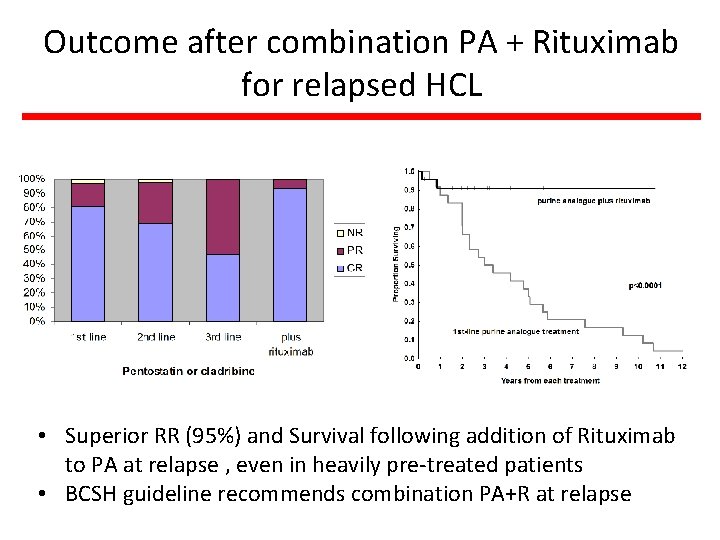
Outcome after combination PA + Rituximab for relapsed HCL • Superior RR (95%) and Survival following addition of Rituximab to PA at relapse , even in heavily pre-treated patients • BCSH guideline recommends combination PA+R at relapse
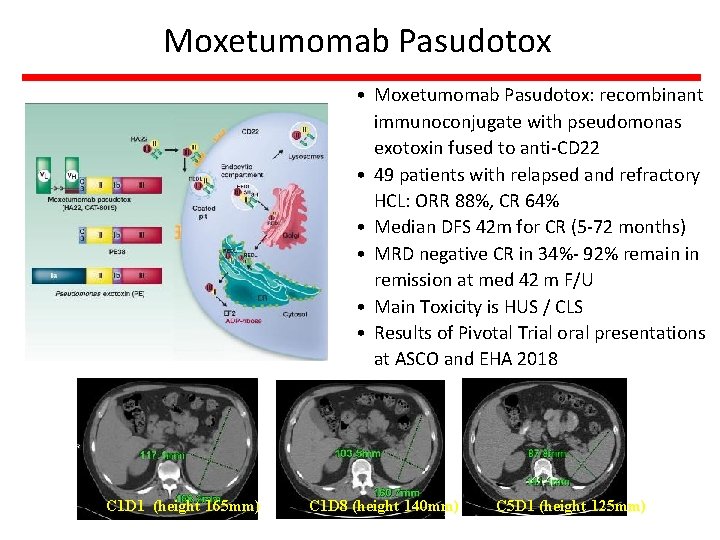
Moxetumomab Pasudotox • Moxetumomab Pasudotox: recombinant immunoconjugate with pseudomonas exotoxin fused to anti-CD 22 • 49 patients with relapsed and refractory HCL: ORR 88%, CR 64% • Median DFS 42 m for CR (5 -72 months) • MRD negative CR in 34%- 92% remain in remission at med 42 m F/U • Main Toxicity is HUS / CLS • Results of Pivotal Trial oral presentations at ASCO and EHA 2018 C 1 D 1 (height 165 mm) C 1 D 8 (height 140 mm) C 5 D 1 (height 125 mm)
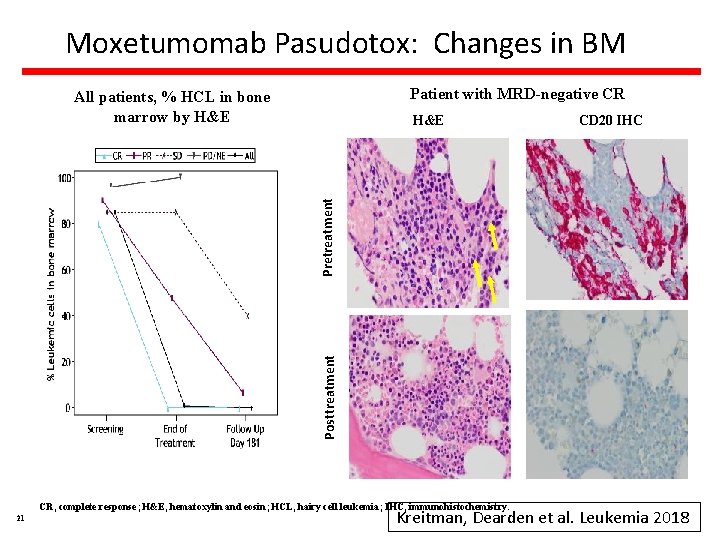
Moxetumomab Pasudotox: Changes in BM Patient with MRD-negative CR All patients, % HCL in bone marrow by H&E CD 20 IHC Posttreatment Pretreatment H&E CR, complete response; H&E, hematoxylin and eosin; HCL, hairy cell leukemia; IHC, immunohistochemistry. 21 Kreitman, Dearden et al. Leukemia 2018
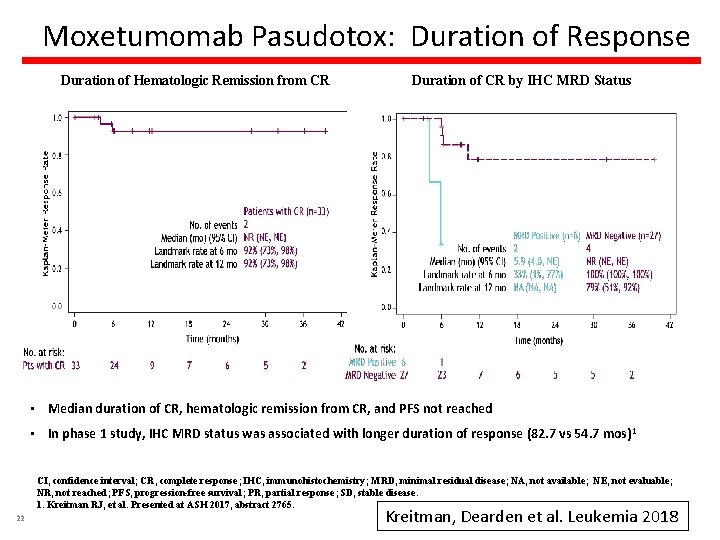
Moxetumomab Pasudotox: Duration of Response Duration of Hematologic Remission from CR Duration of CR by IHC MRD Status • Median duration of CR, hematologic remission from CR, and PFS not reached • In phase 1 study, IHC MRD status was associated with longer duration of response (82. 7 vs 54. 7 mos) 1 CI, confidence interval; CR, complete response; IHC, immunohistochemistry; MRD, minimal residual disease; NA, not available; NE, not evaluable; NR, not reached; PFS, progression-free survival; PR, partial response; SD, stable disease. 1. Kreitman RJ, et al. Presented at ASH 2017, abstract 2765. 22 Kreitman, Dearden et al. Leukemia 2018
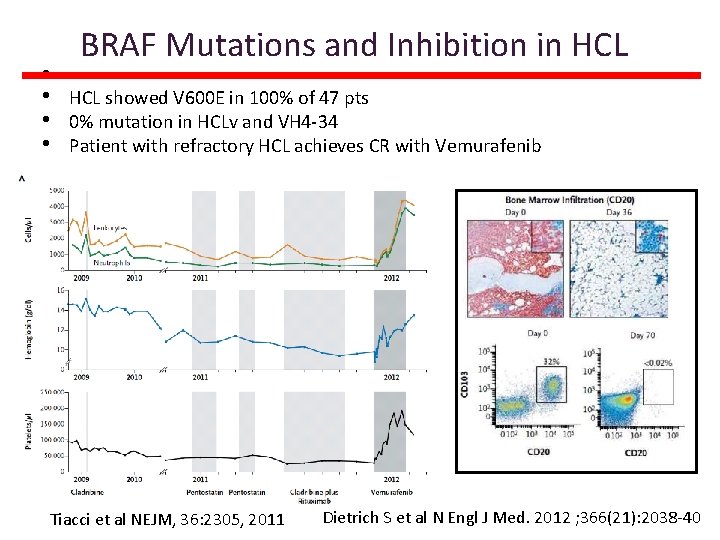
• • BRAF Mutations and Inhibition in HCL showed V 600 E in 100% of 47 pts 0% mutation in HCLv and VH 4 -34 Patient with refractory HCL achieves CR with Vemurafenib Tiacci et al NEJM, 36: 2305, 2011 Dietrich S et al N Engl J Med. 2012 ; 366(21): 2038 -40
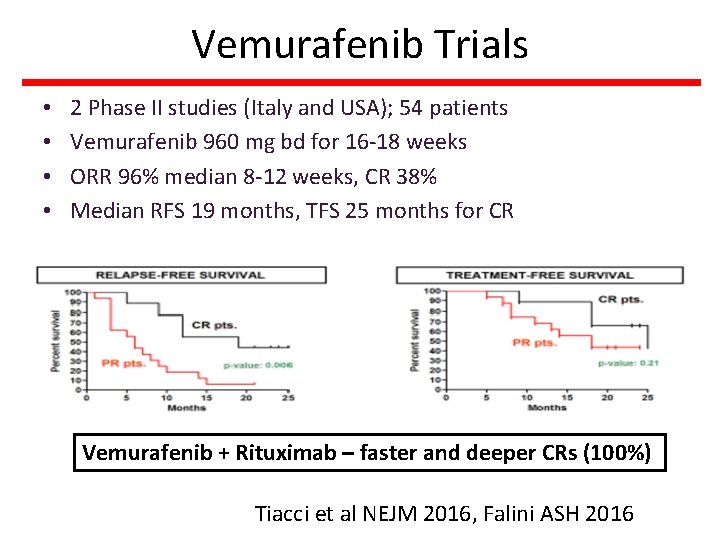
Vemurafenib Trials • • 2 Phase II studies (Italy and USA); 54 patients Vemurafenib 960 mg bd for 16 -18 weeks ORR 96% median 8 -12 weeks, CR 38% Median RFS 19 months, TFS 25 months for CR Vemurafenib + Rituximab – faster and deeper CRs (100%) Tiacci et al NEJM 2016, Falini ASH 2016
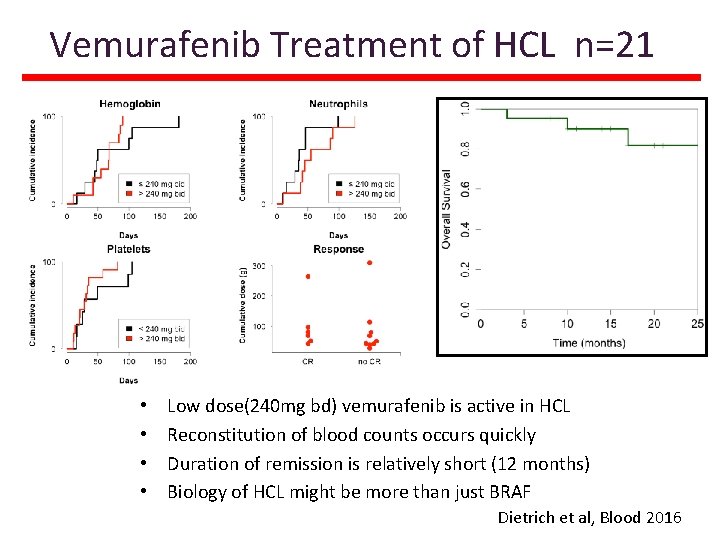
Vemurafenib Treatment of HCL n=21 • • Low dose(240 mg bd) vemurafenib is active in HCL Reconstitution of blood counts occurs quickly Duration of remission is relatively short (12 months) Biology of HCL might be more than just BRAF Dietrich et al, Blood 2016
Dabrafenib + Trametinib in Refractory HCL • • • Phase 2 trial 43 HCL patients, 38 M, med age 67 years 21 had received >4 prior therapies Oral D+T until intolerance, progression or death 35 (81%) remain on treatment (median 17 months) 5 discontinued for AEs, 1 PD ORR 78%, 49% CR 50% responses lasted >18 months G 3/4 Aes: hyperglycaemia, anaemia, neutropenia Kreitman et al ASH 2018
Treatment of infections • Vaccinations – May not be as effective – Avoid live vaccines • Vaccination/ Prophylaxis if splenectomy performed
Holistic treatment of the patient • Many groups to support you. – Medical management • Disease • Complications of the disease and treatment – Psychological support – Health and well-being – Family support – Financial support
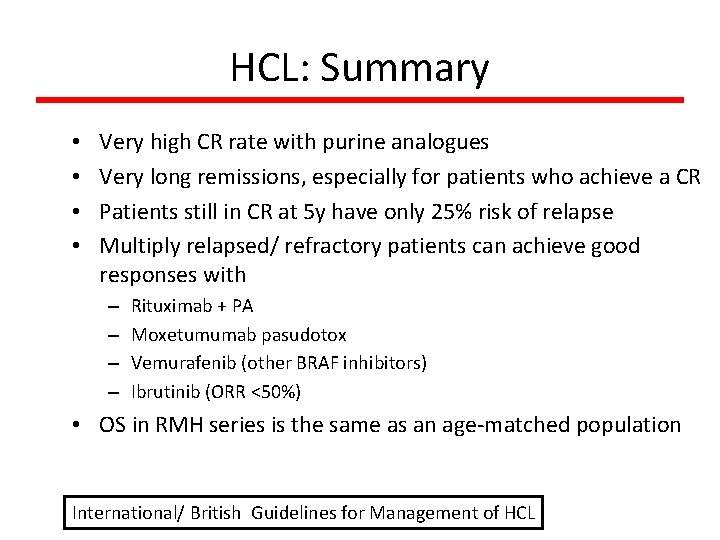
HCL: Summary • • Very high CR rate with purine analogues Very long remissions, especially for patients who achieve a CR Patients still in CR at 5 y have only 25% risk of relapse Multiply relapsed/ refractory patients can achieve good responses with – – Rituximab + PA Moxetumumab pasudotox Vemurafenib (other BRAF inhibitors) Ibrutinib (ORR <50%) • OS in RMH series is the same as an age-matched population International/ British Guidelines for Management of HCL
- Slides: 29