
Hairs Trace Evidence Hair as Physical Evidence Class
- Slides: 21
Hairs Trace Evidence
Hair as Physical Evidence Class evidence n Removal indicates physical contact between victim and perpetrator n Strong evidence to place individual at crime scene n Compare hairs by color and structure n Extract DNA from root for comparison n
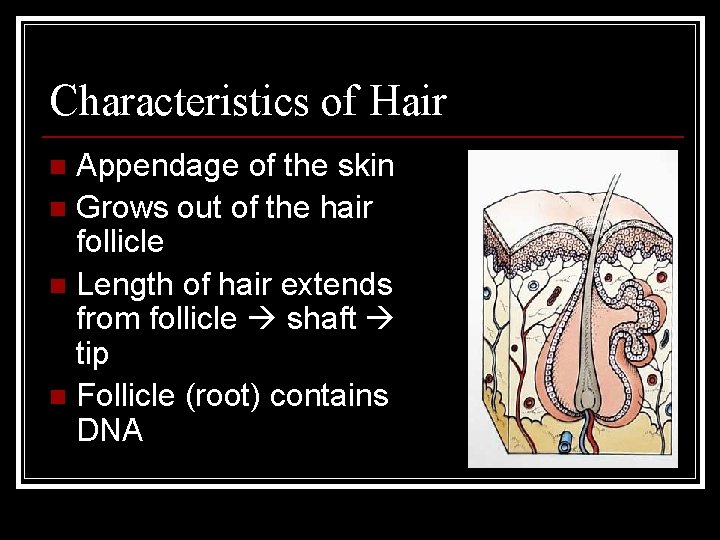
Characteristics of Hair Appendage of the skin n Grows out of the hair follicle n Length of hair extends from follicle shaft tip n Follicle (root) contains DNA n
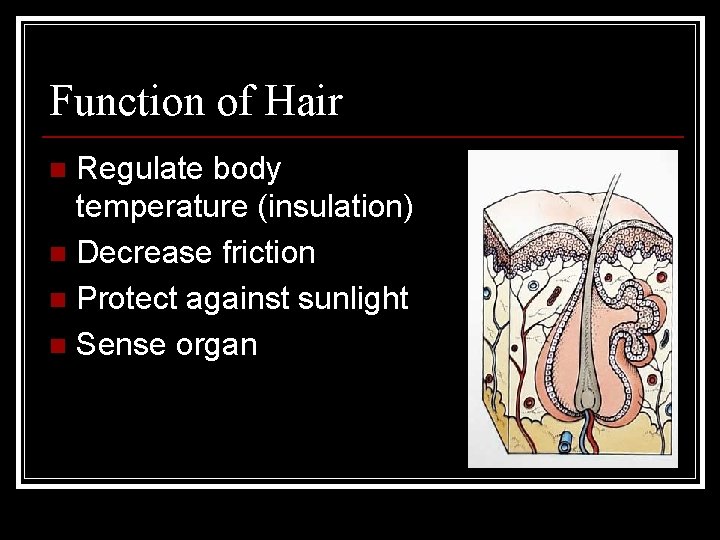
Function of Hair Regulate body temperature (insulation) n Decrease friction n Protect against sunlight n Sense organ n
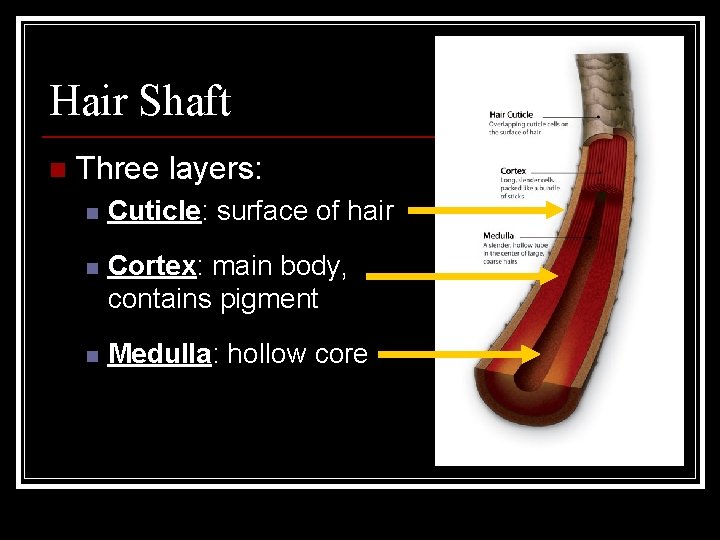
Hair Shaft n Three layers: n Cuticle: surface of hair n Cortex: main body, contains pigment n Medulla: hollow core
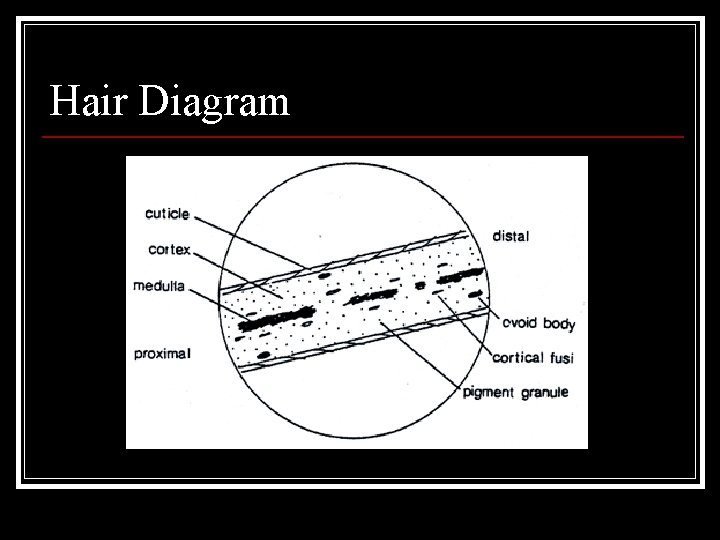
Hair Diagram
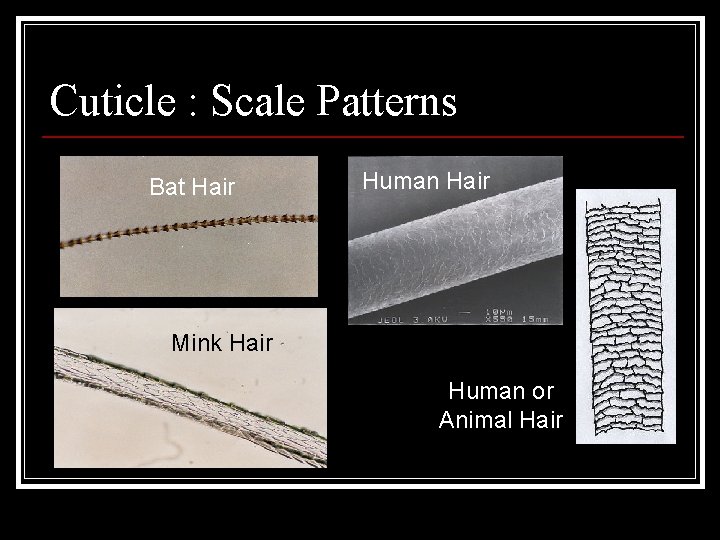
Cuticle : Outer Layer Transparent, outer layer n Scales point down from younger end towards older ends of hair n
Cuticle : Scale Patterns Bat Hair Human Hair Mink Hair Human or Animal Hair
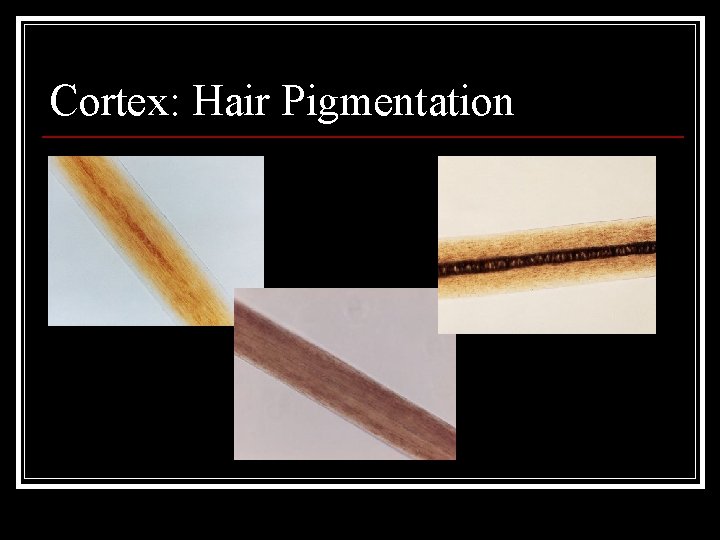
Cortex: Color Layer Largest part of hair shaft n Melanin = pigment granules n
Cortex: Hair Pigmentation
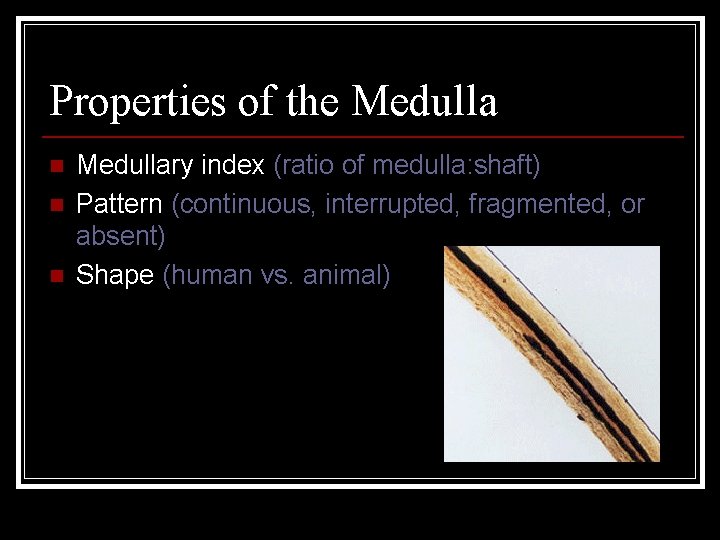
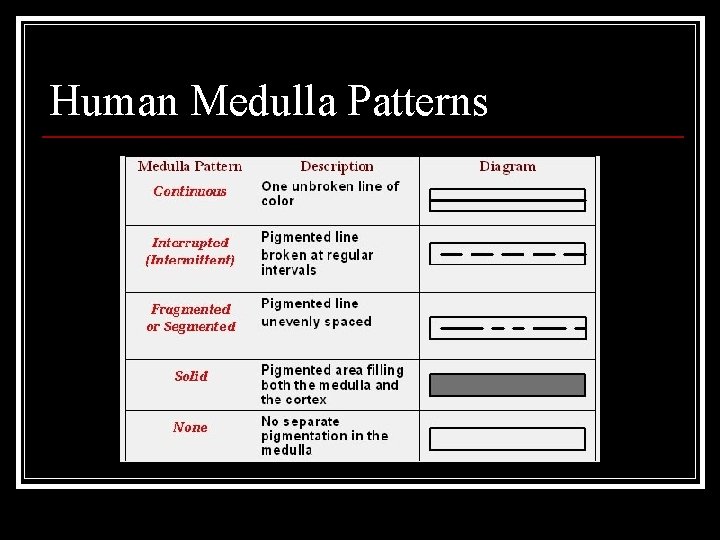
Properties of the Medulla n n n Medullary index (ratio of medulla: shaft) Pattern (continuous, interrupted, fragmented, or absent) Shape (human vs. animal)
Human Medulla Patterns
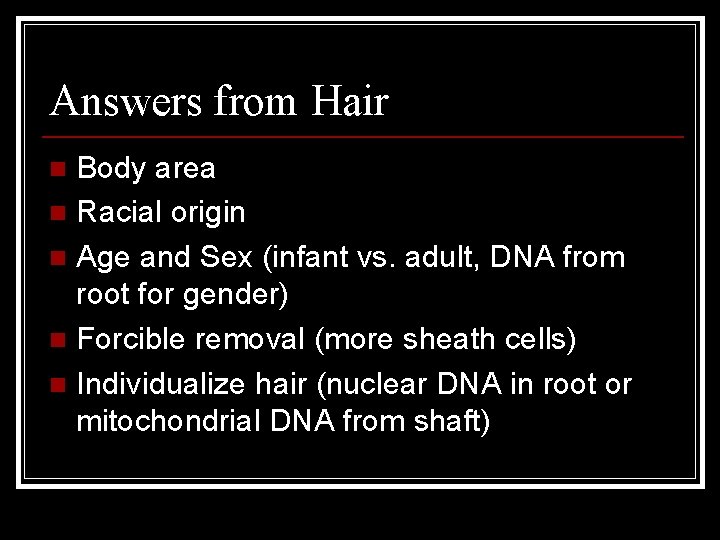
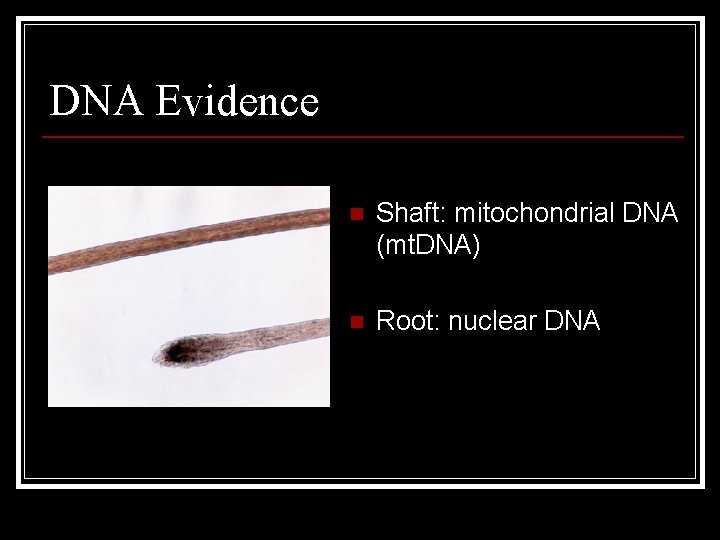
Answers from Hair Body area n Racial origin n Age and Sex (infant vs. adult, DNA from root for gender) n Forcible removal (more sheath cells) n Individualize hair (nuclear DNA in root or mitochondrial DNA from shaft) n
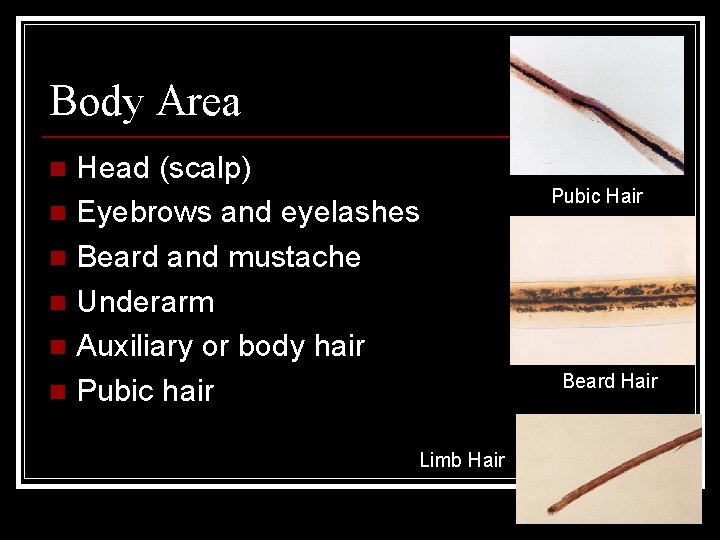
Body Area Head (scalp) n Eyebrows and eyelashes n Beard and mustache n Underarm n Auxiliary or body hair n Pubic hair n Limb Hair Pubic Hair Beard Hair
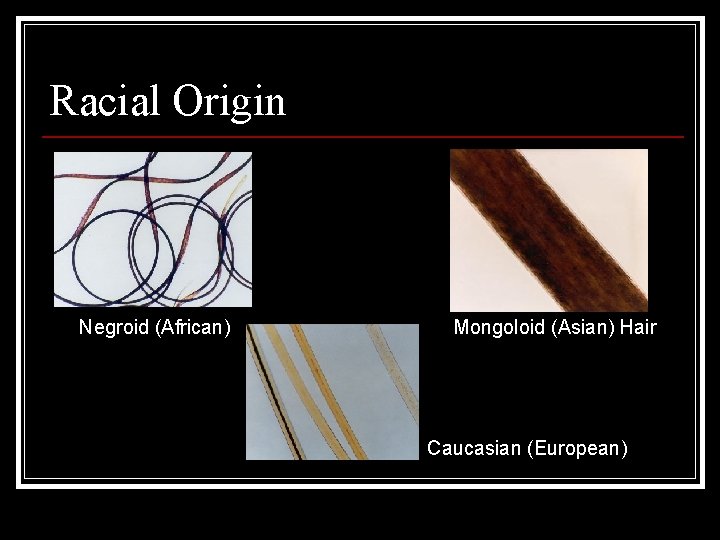
Racial Origin Negroid (African) Mongoloid (Asian) Hair Caucasian (European)
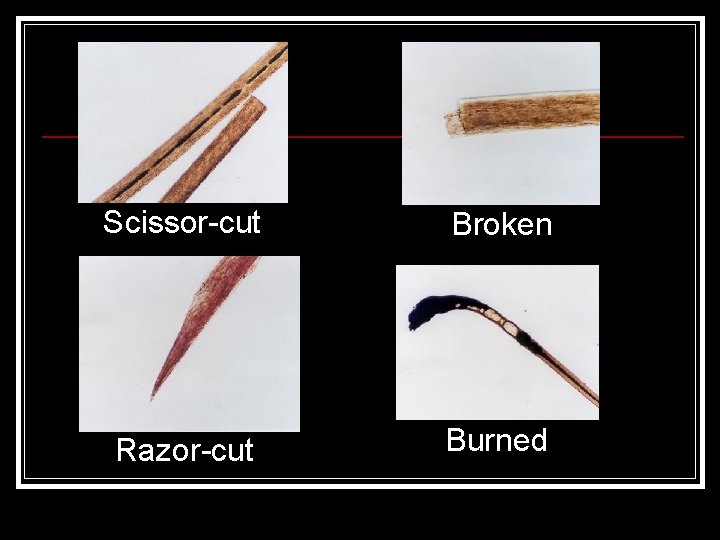
Scissor-cut Broken Razor-cut Burned
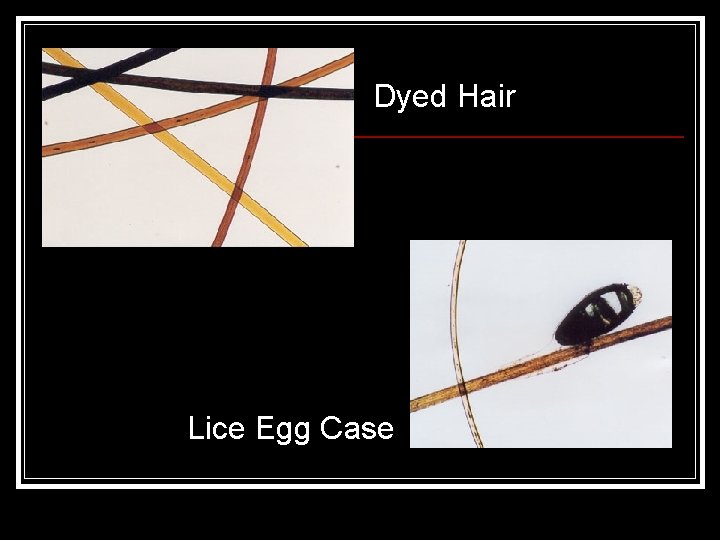
Dyed Hair Lice Egg Case
DNA Evidence n Shaft: mitochondrial DNA (mt. DNA) n Root: nuclear DNA
Hair as Forensic Evidence
Hair Collection Collected from crime scene by plucking, shaking and scraping surfaces n Use tape over small surfaces n Vacuum large surfaces n Initial analysis performed under compound microscope n
Testing For Chemicals n Neutron activation analysis (NAA) – identify 14 different elements in hair n n Antimony, argon, bromine, copper, gold, manganese, silver, sodium, zinc Hair grows about 1. 3 cm per month – calculate timeline for exposure to toxins or poison