
Hair Health Conditioners Lauren Thaman Hodges Associate Director
- Slides: 32
Hair Health & Conditioners Lauren Thaman Hodges Associate Director Procter & Gamble 1
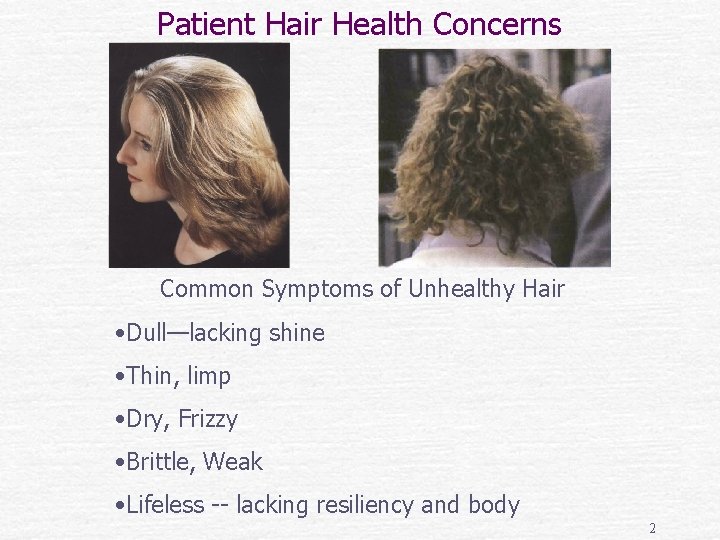
Patient Hair Health Concerns Common Symptoms of Unhealthy Hair • Dull—lacking shine • Thin, limp • Dry, Frizzy • Brittle, Weak • Lifeless -- lacking resiliency and body 2
Causes of Cosmetic Hair Disorders Common Causes of Unhealthy Hair Medical vitamin deficiency, thyroid imbalance, hormonal changes, etc. Aging graying, thinning, loss of pigment Non-medical result of damage 3
Hair Health and Conditioners 1. Hair Physical Changes to Aging 2. Mechanism of Non-medical hair health issues --i. e. Damage 3. Use of Conditioner to improve cosmetic appearance of medical and non-medical hair health issues • How Conditioners Work • Benefits of Conditioning 4. P&G Proprietary Conditioner Technology 4
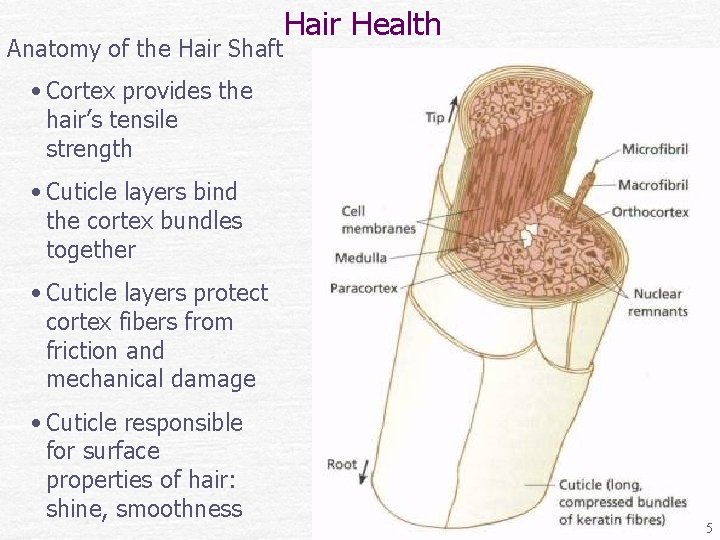
Anatomy of the Hair Shaft Hair Health • Cortex provides the hair’s tensile strength • Cuticle layers bind the cortex bundles together • Cuticle layers protect cortex fibers from friction and mechanical damage • Cuticle responsible for surface properties of hair: shine, smoothness 5
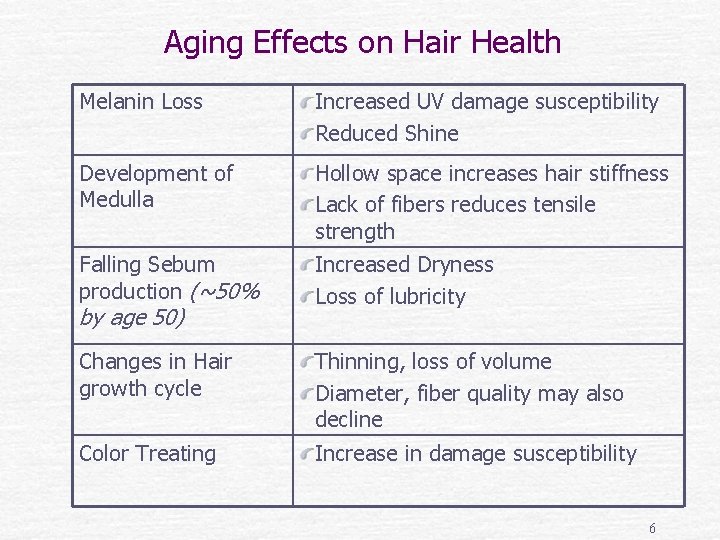
Aging Effects on Hair Health Melanin Loss Increased UV damage susceptibility Reduced Shine Development of Medulla Hollow space increases hair stiffness Lack of fibers reduces tensile strength Falling Sebum production (~50% Increased Dryness Loss of lubricity Changes in Hair growth cycle Thinning, loss of volume Diameter, fiber quality may also decline Color Treating Increase in damage susceptibility by age 50) 6
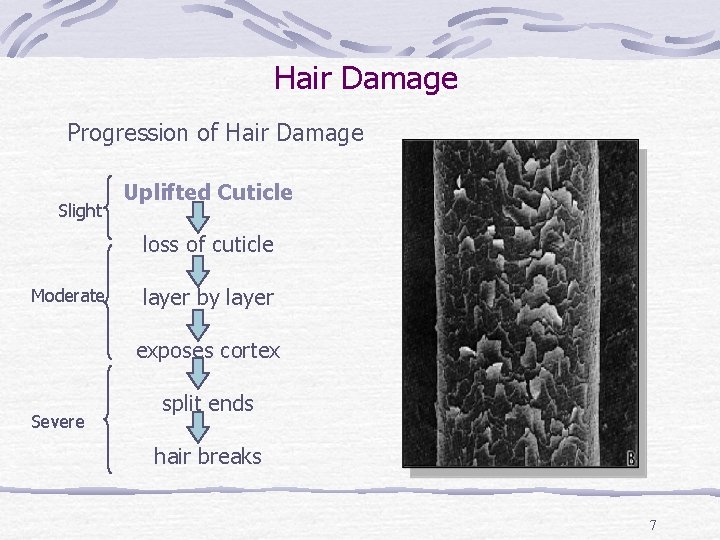
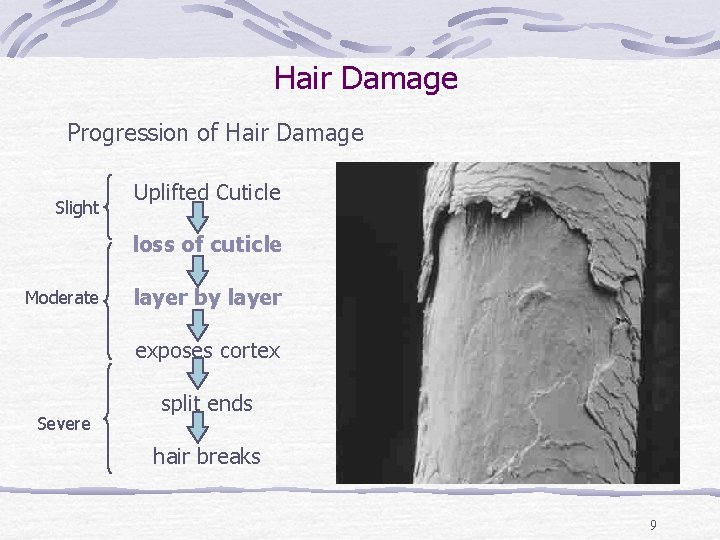
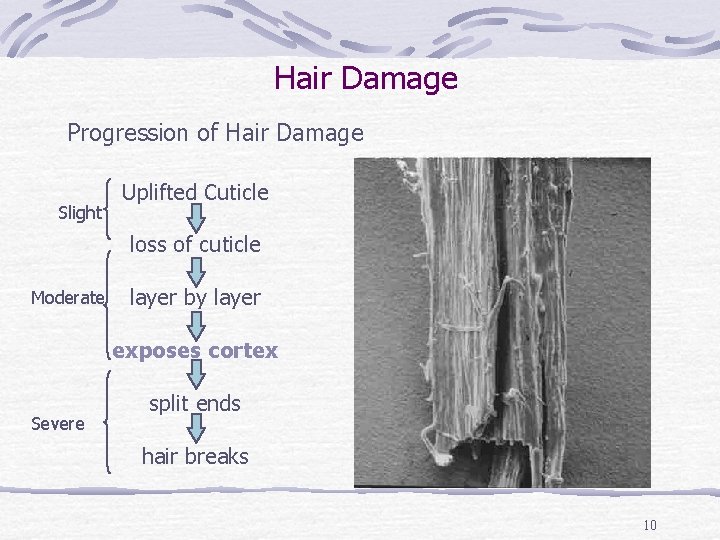
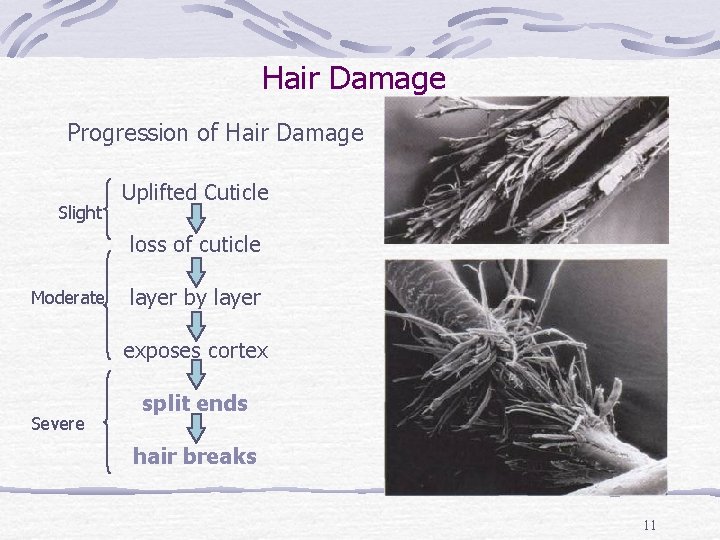
Hair Damage Progression of Hair Damage Slight Uplifted Cuticle loss of cuticle Moderate layer by layer exposes cortex Severe split ends hair breaks 7
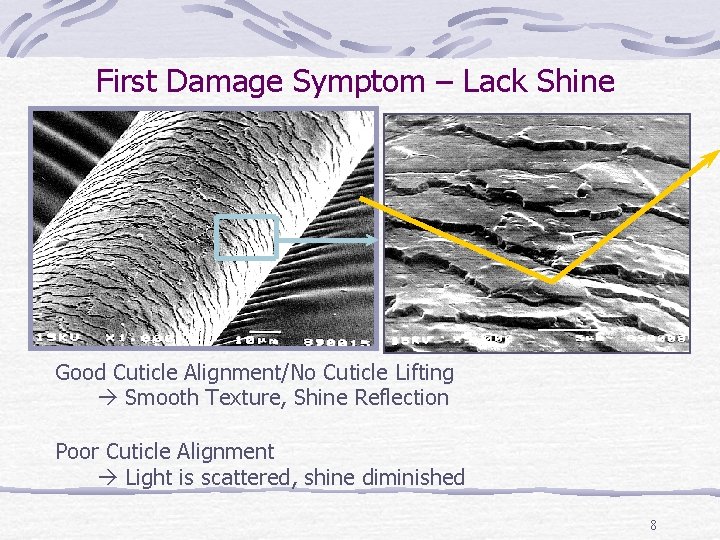
First Damage Symptom – Lack Shine Good Cuticle Alignment/No Cuticle Lifting Smooth Texture, Shine Reflection Poor Cuticle Alignment Light is scattered, shine diminished 8
Hair Damage Progression of Hair Damage Slight Uplifted Cuticle loss of cuticle Moderate layer by layer exposes cortex Severe split ends hair breaks 9
Hair Damage Progression of Hair Damage Slight Uplifted Cuticle loss of cuticle Moderate layer by layer exposes cortex Severe split ends hair breaks 10
Hair Damage Progression of Hair Damage Slight Uplifted Cuticle loss of cuticle Moderate layer by layer exposes cortex Severe split ends hair breaks 11
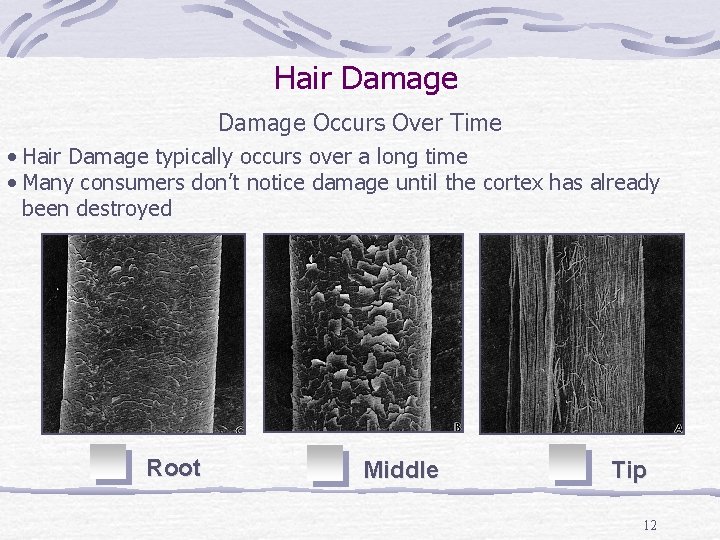
Hair Damage Occurs Over Time • Hair Damage typically occurs over a long time • Many consumers don’t notice damage until the cortex has already been destroyed Root Middle Tip 12
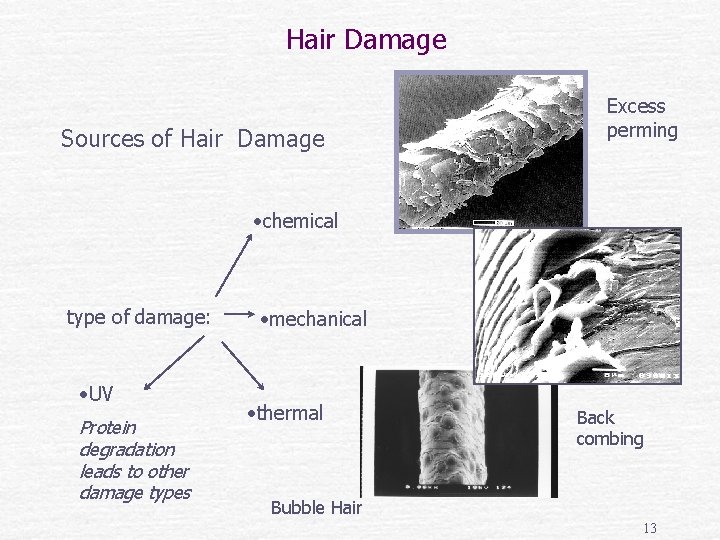
Hair Damage Sources of Hair Damage Excess perming • chemical type of damage: • UV Protein degradation leads to other damage types • mechanical • thermal Back combing Bubble Hair 13
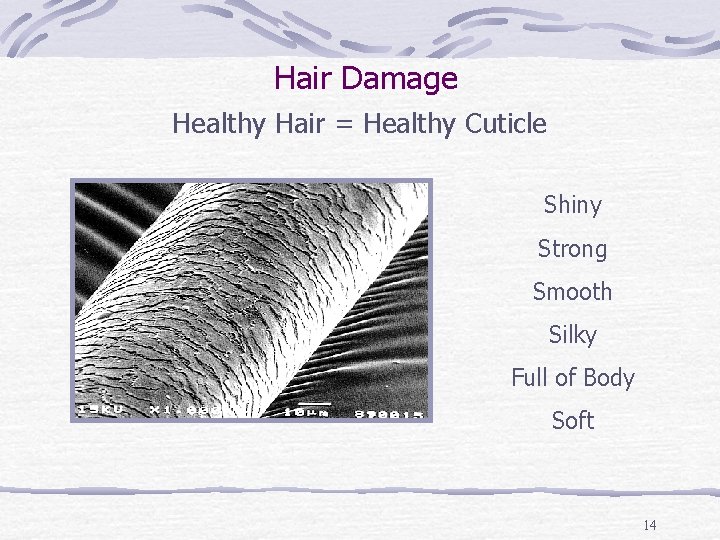
Hair Damage Healthy Hair = Healthy Cuticle Shiny Strong Smooth Silky Full of Body Soft 14
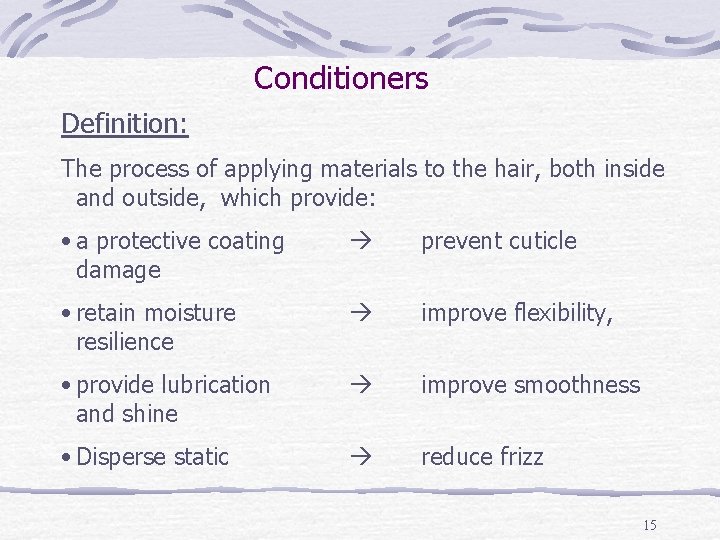
Conditioners Definition: The process of applying materials to the hair, both inside and outside, which provide: • a protective coating damage prevent cuticle • retain moisture resilience improve flexibility, • provide lubrication and shine improve smoothness • Disperse static reduce frizz 15
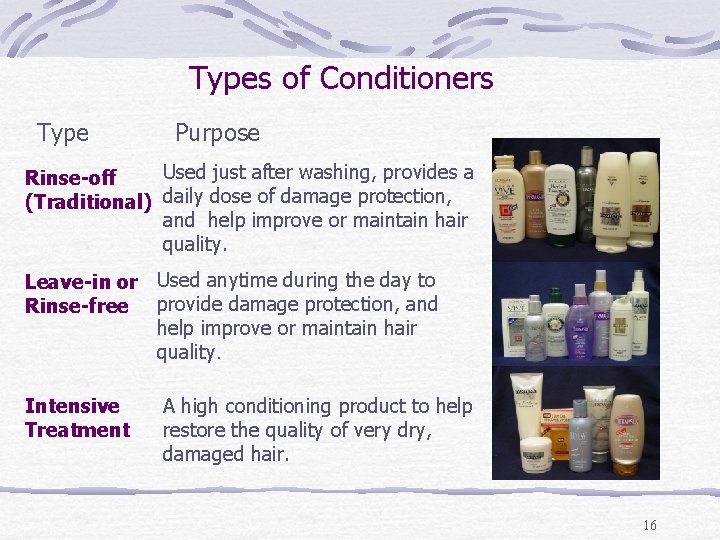
Types of Conditioners Type Purpose Used just after washing, provides a Rinse-off (Traditional) daily dose of damage protection, and help improve or maintain hair quality. Leave-in or Used anytime during the day to Rinse-free provide damage protection, and help improve or maintain hair quality. Intensive Treatment A high conditioning product to help restore the quality of very dry, damaged hair. 16
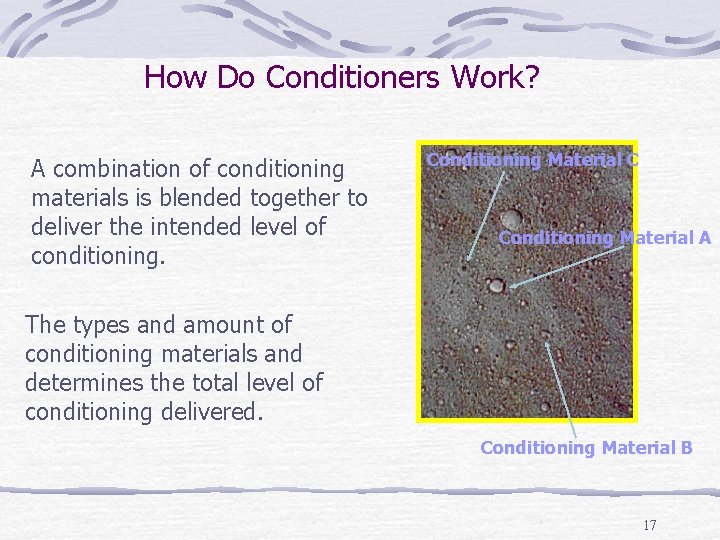
How Do Conditioners Work? A combination of conditioning materials is blended together to deliver the intended level of conditioning. Conditioning Material C Conditioning Material A The types and amount of conditioning materials and determines the total level of conditioning delivered. Conditioning Material B 17
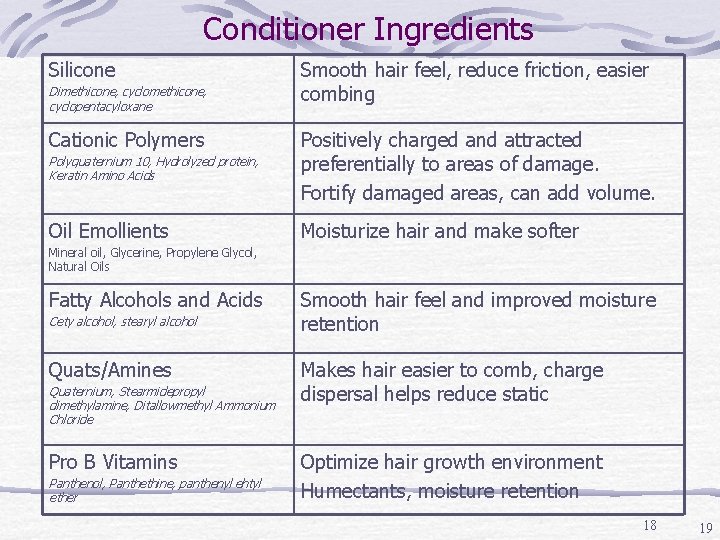
Conditioner Ingredients Silicone Dimethicone, cyclopentacyloxane Cationic Polymers Smooth hair feel, reduce friction, easier combing Polyquaternium 10, Hydrolyzed protein, Keratin Amino Acids Positively charged and attracted preferentially to areas of damage. Fortify damaged areas, can add volume. Oil Emollients Moisturize hair and make softer Mineral oil, Glycerine, Propylene Glycol, Natural Oils Fatty Alcohols and Acids Cety alcohol, stearyl alcohol Quats/Amines Quaternium, Stearmidepropyl dimethylamine, Ditallowmethyl Ammonium Chloride Pro B Vitamins Panthenol, Panthethine, panthenyl ehtyl ether Smooth hair feel and improved moisture retention Makes hair easier to comb, charge dispersal helps reduce static Optimize hair growth environment Humectants, moisture retention 18 19
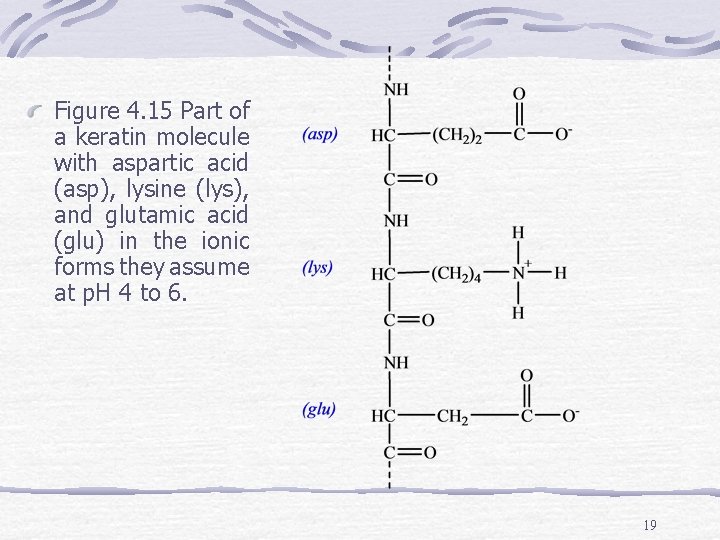
Figure 4. 15 Part of a keratin molecule with aspartic acid (asp), lysine (lys), and glutamic acid (glu) in the ionic forms they assume at p. H 4 to 6. 19
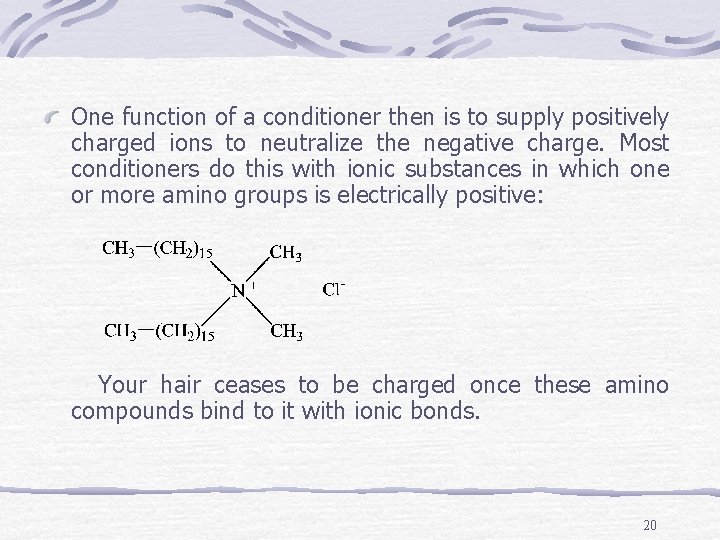
One function of a conditioner then is to supply positively charged ions to neutralize the negative charge. Most conditioners do this with ionic substances in which one or more amino groups is electrically positive: Your hair ceases to be charged once these amino compounds bind to it with ionic bonds. 20
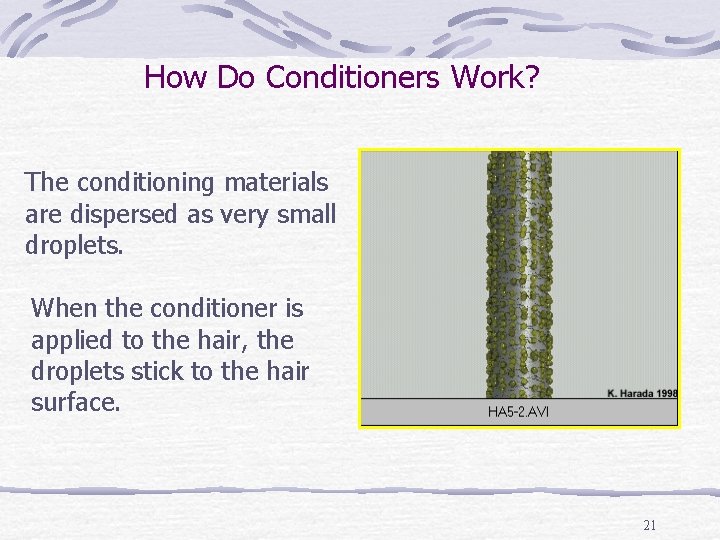
How Do Conditioners Work? The conditioning materials are dispersed as very small droplets. When the conditioner is applied to the hair, the droplets stick to the hair surface. 21
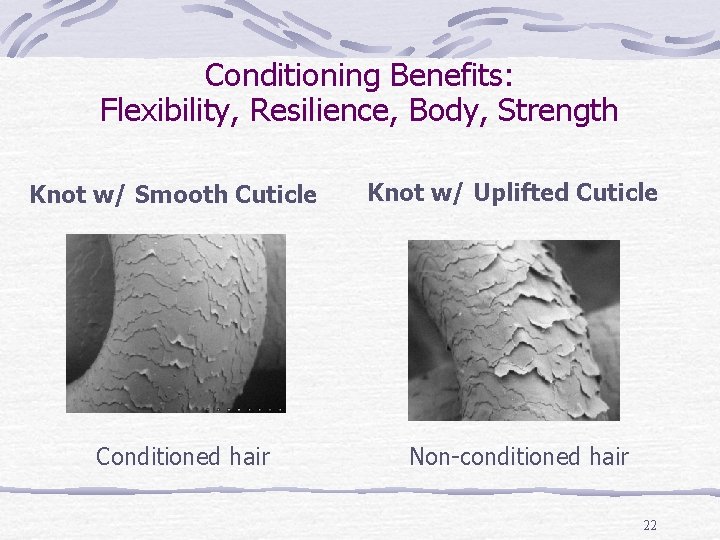
Conditioning Benefits: Flexibility, Resilience, Body, Strength Knot w/ Smooth Cuticle Conditioned hair Knot w/ Uplifted Cuticle Non-conditioned hair 22
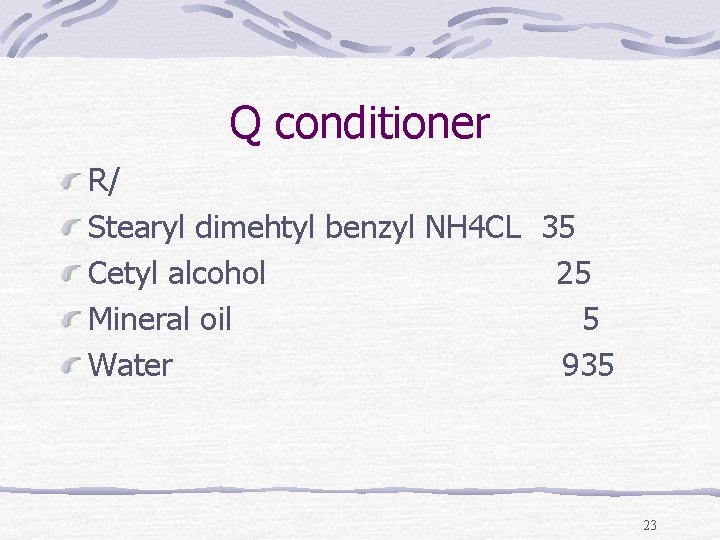
Q conditioner R/ Stearyl dimehtyl benzyl NH 4 CL 35 Cetyl alcohol 25 Mineral oil 5 Water 935 23
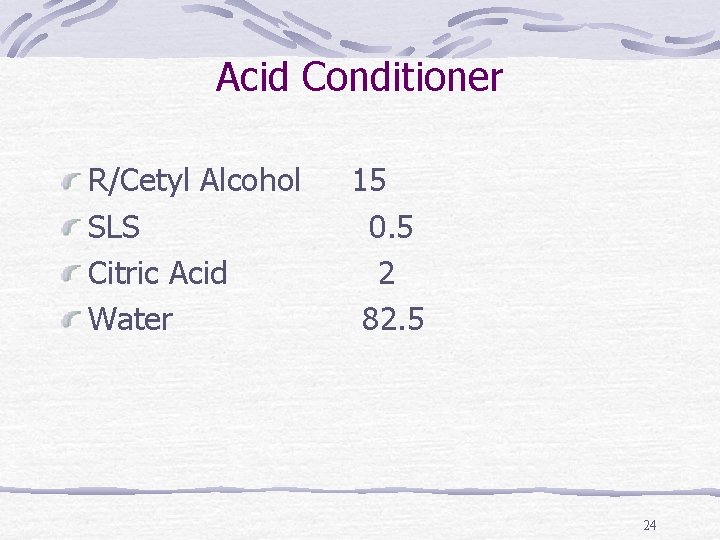
Acid Conditioner R/Cetyl Alcohol SLS Citric Acid Water 15 0. 5 2 82. 5 24
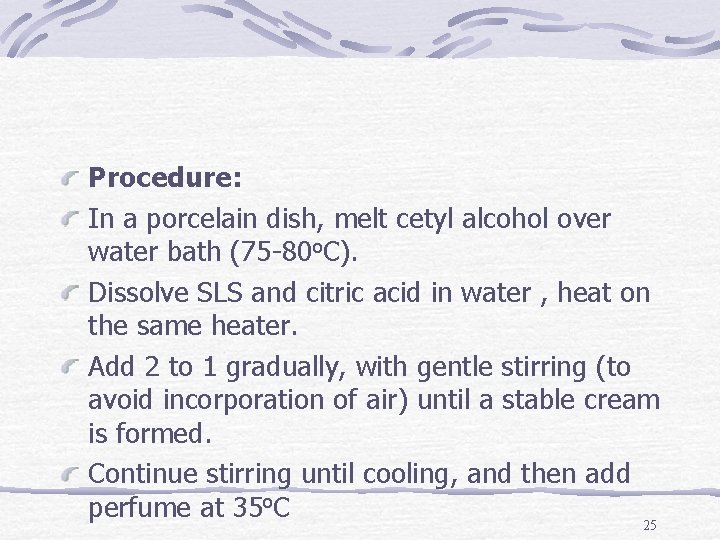
Procedure: In a porcelain dish, melt cetyl alcohol over water bath (75 -80 o. C). Dissolve SLS and citric acid in water , heat on the same heater. Add 2 to 1 gradually, with gentle stirring (to avoid incorporation of air) until a stable cream is formed. Continue stirring until cooling, and then add perfume at 35 o. C 25
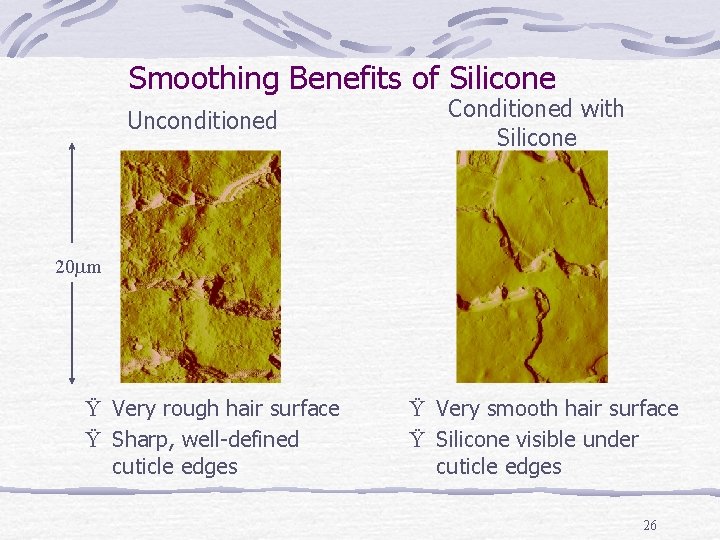
Smoothing Benefits of Silicone Unconditioned Conditioned with Silicone 20 mm Ÿ Very rough hair surface Ÿ Sharp, well-defined cuticle edges Ÿ Very smooth hair surface Ÿ Silicone visible under cuticle edges 26
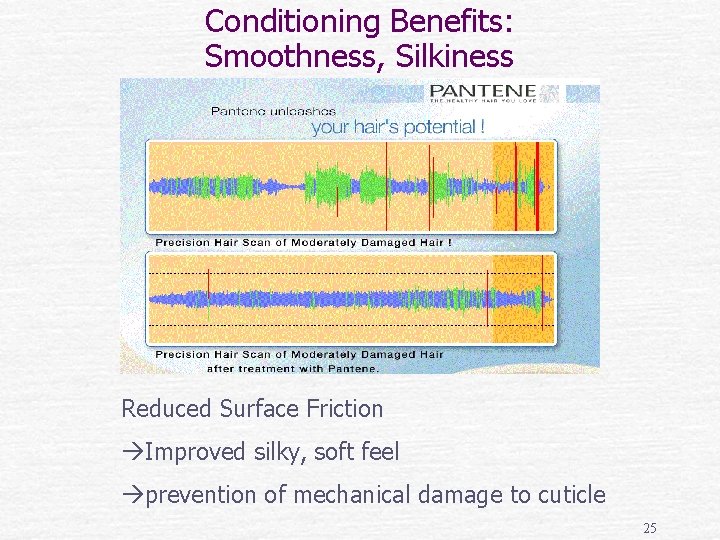
Conditioning Benefits: Smoothness, Silkiness Reduced Surface Friction Improved silky, soft feel prevention of mechanical damage to cuticle 25
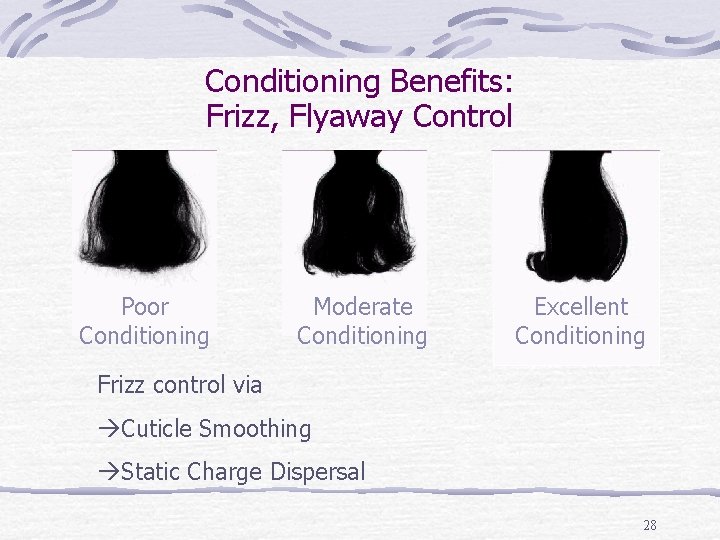
Conditioning Benefits: Frizz, Flyaway Control Poor Conditioning Moderate Conditioning Excellent Conditioning Frizz control via Cuticle Smoothing Static Charge Dispersal 28
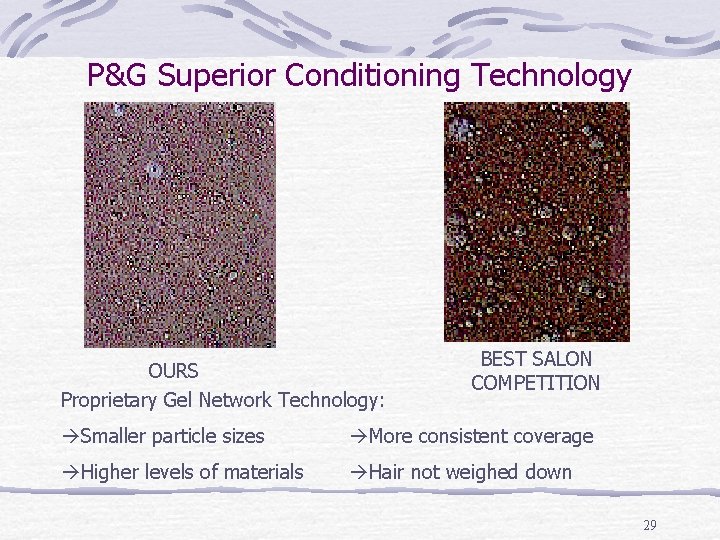
P&G Superior Conditioning Technology OURS Proprietary Gel Network Technology: BEST SALON COMPETITION Smaller particle sizes More consistent coverage Higher levels of materials Hair not weighed down 29
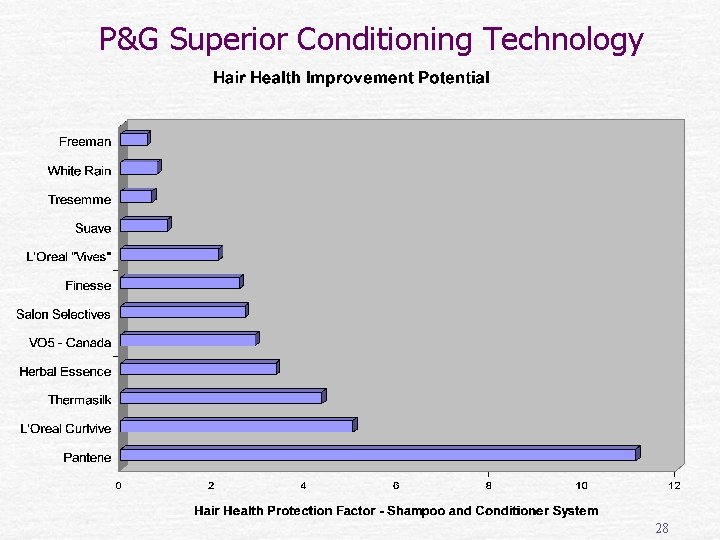
P&G Superior Conditioning Technology 28
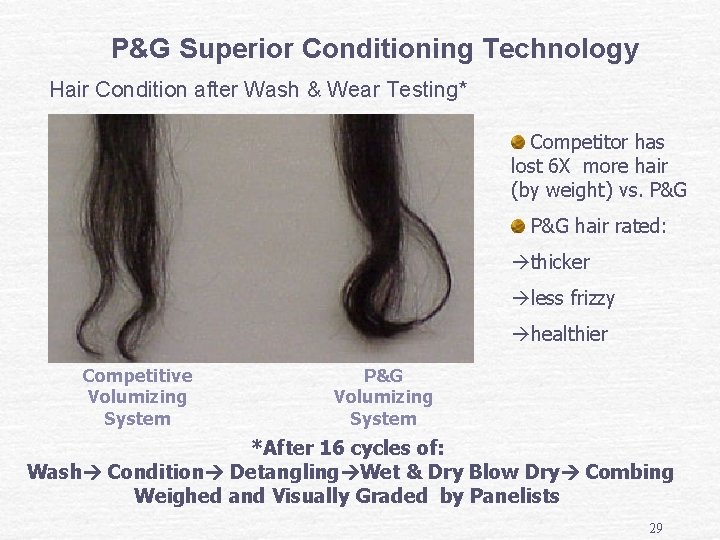
P&G Superior Conditioning Technology Hair Condition after Wash & Wear Testing* Competitor has lost 6 X more hair (by weight) vs. P&G hair rated: thicker less frizzy healthier Competitive Volumizing System P&G Volumizing System *After 16 cycles of: Wash Condition Detangling Wet & Dry Blow Dry Combing Weighed and Visually Graded by Panelists 29
Hair Health and Conditioners: Key Take Away for Patients • Damage and medical hair health symptoms are very similar • Damage you see now actually began months or years ago • Reduce damage by reducing friction • Avoid double processing • Prevent Damage by frequent conditioner use • Improve cosmetic appearance of damaged and unhealthy hair by using conditioner 32