
HAIR ANALYSIS OCTOBER 19 2018 WHY STUDY HAIR
HAIR ANALYSIS OCTOBER 19, 2018
WHY STUDY HAIR? • People naturally shed ~100 hairs every day, so hair are frequently left behind at crime scenes • Hair is often ripped out during violent struggles, leaving even more evidence • Hair has a number of class characteristics to rule out or link suspects to a crime; sometimes it can also be individualized by isolating DNA.
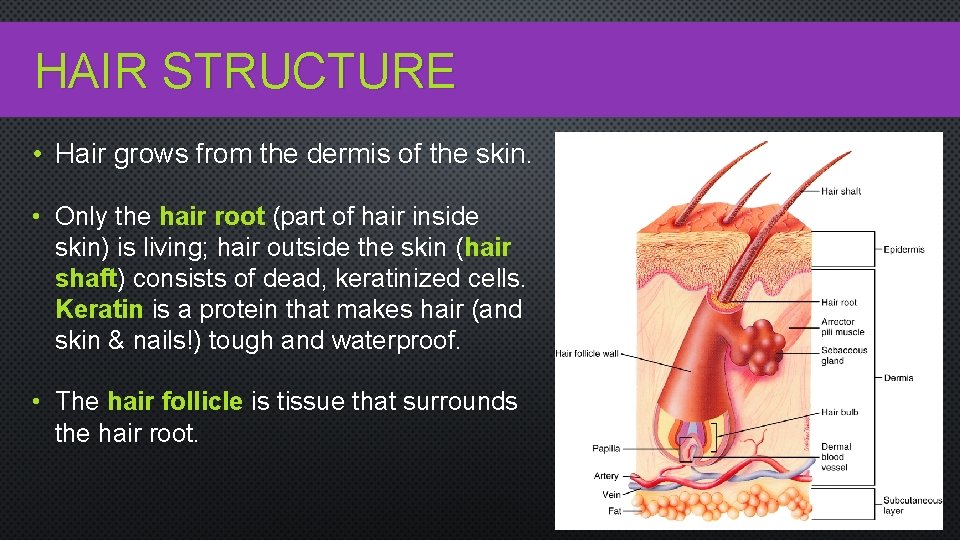
HAIR STRUCTURE • Hair grows from the dermis of the skin. • Only the hair root (part of hair inside skin) is living; hair outside the skin (hair shaft) consists of dead, keratinized cells. Keratin is a protein that makes hair (and skin & nails!) tough and waterproof. • The hair follicle is tissue that surrounds the hair root.
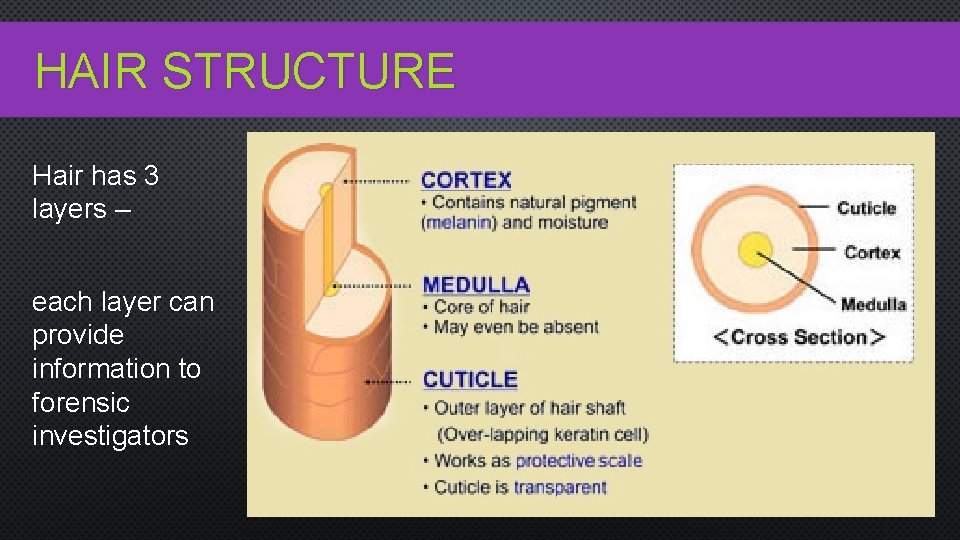
HAIR STRUCTURE Hair has 3 layers – each layer can provide information to forensic investigators
MATCHING HAIR SAMPLES Note: When trying to match In order to match hair evidence found at theevidence crime scene to a suspect, investigators will first examine the visible characteristics of the hair, investigators need to collect including: reference samples from the victim / suspects / other people in the • Length environment. • Color (even throughout? Dyed or bleached? ) Usually, investigators will usually • Nature of ends (recently cut or frayed/split) collect 25 strands of hair from each • Texture (wavy, straight, curly) person to provide a complete reference some • Hair texture comes from the shape of the hair shaft. sample Flat orsince ribbon like shafts make hair curly, oval shaped shaftscharacteristics make hair wavy, may and vary round from hair shafts make hair straight. strand to hair strand.
MATCHING HAIR SAMPLES Many more characteristics can be observed microscopically, including: Are these class • Hair diameter characteristics or individualized evidence? • Cuticle scale pattern (determine whether human or animal hair) • Number, size, and distribution of pigment granules in cortex Class, but if all characteristics match, the • Medulla pattern and size evidence is compelling – • Root characteristics (determines whether theand hair wasenough shed naturally strong to or was ripped out; also indicates likelihood ofconvict. successful DNA analysis)
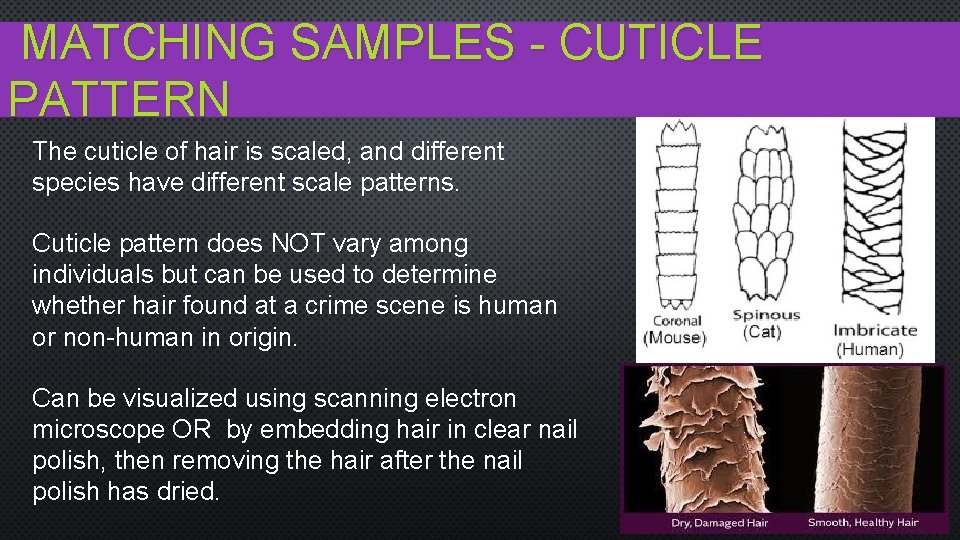
MATCHING SAMPLES - CUTICLE PATTERN The cuticle of hair is scaled, and different species have different scale patterns. Cuticle pattern does NOT vary among individuals but can be used to determine whether hair found at a crime scene is human or non-human in origin. Can be visualized using scanning electron microscope OR by embedding hair in clear nail polish, then removing the hair after the nail polish has dried.
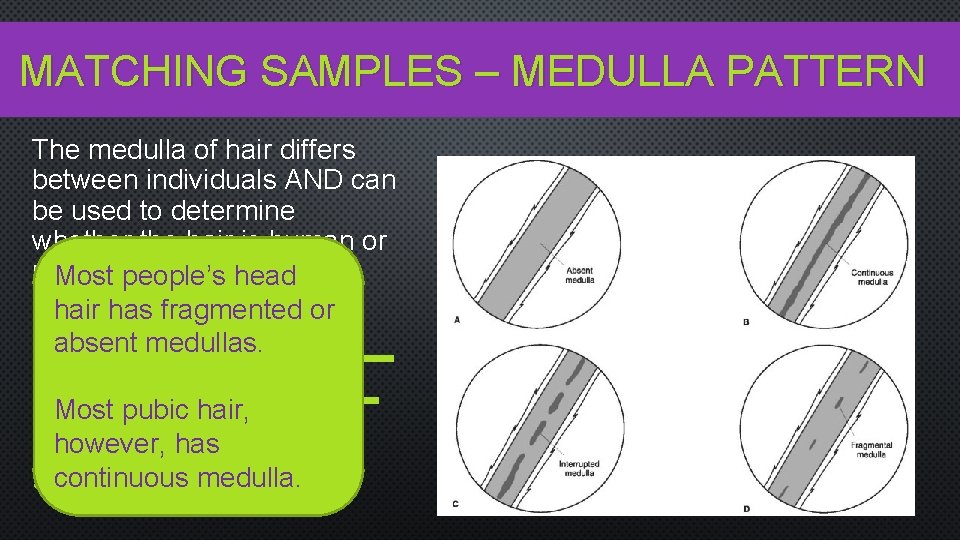
MATCHING SAMPLES – MEDULLA PATTERN The medulla of hair differs between individuals AND can be used to determine whether the hair is human or non-human. Most people’s head hair has fragmented or Human medullas can be medullas. • absent Continuous • • Interrupted Most pubic hair, Fragmented however, has medulla. • continuous Absent
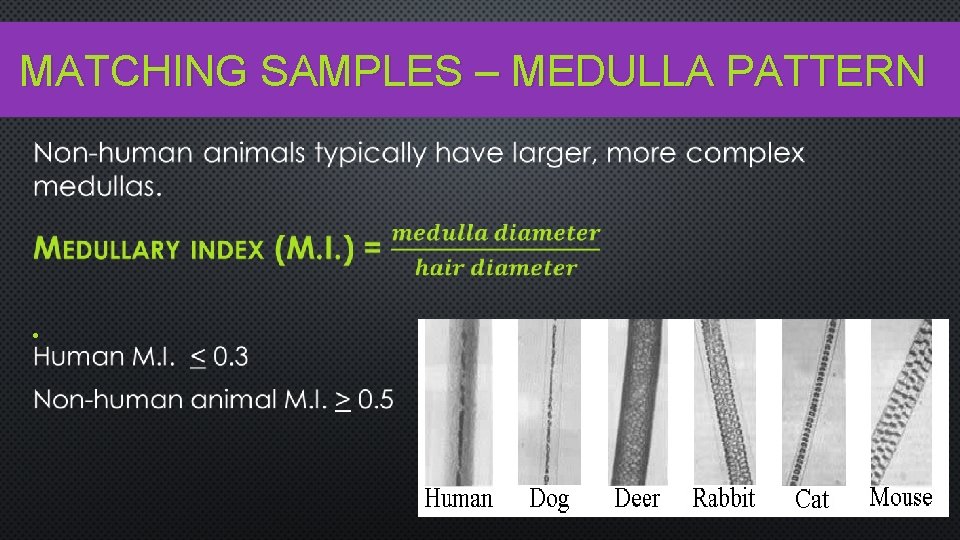
MATCHING SAMPLES – MEDULLA PATTERN •
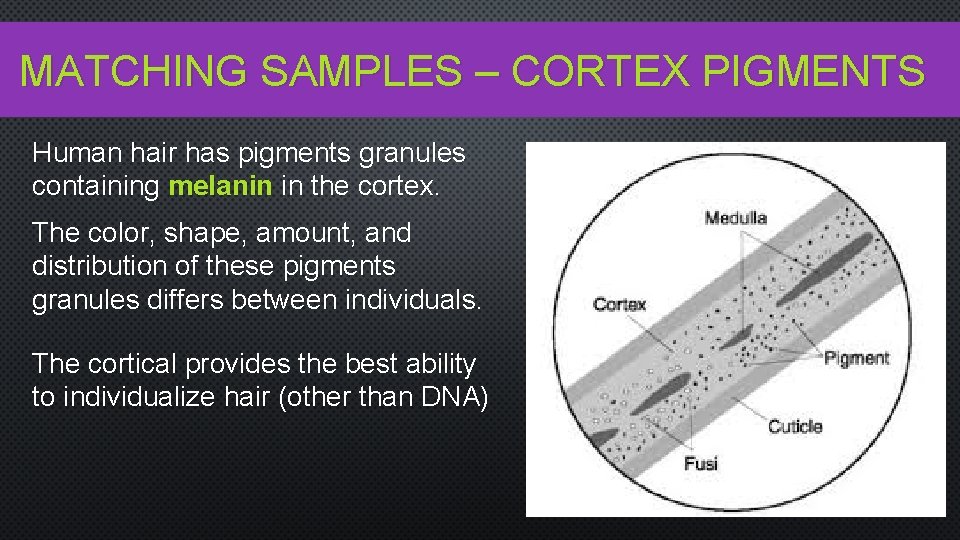
MATCHING SAMPLES – CORTEX PIGMENTS Human hair has pigments granules containing melanin in the cortex. The color, shape, amount, and distribution of these pigments granules differs between individuals. The cortical provides the best ability to individualize hair (other than DNA)
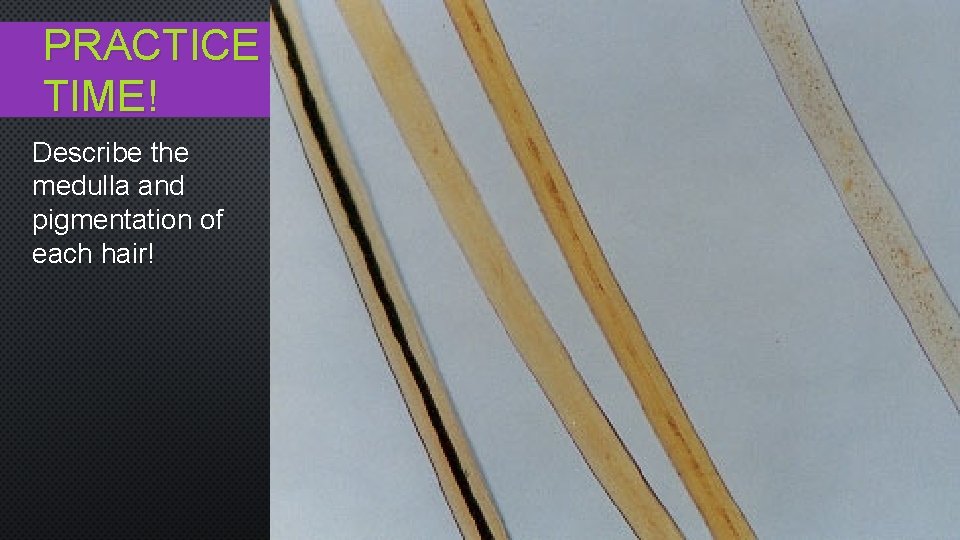
PRACTICE TIME! Describe the medulla and pigmentation of each hair!
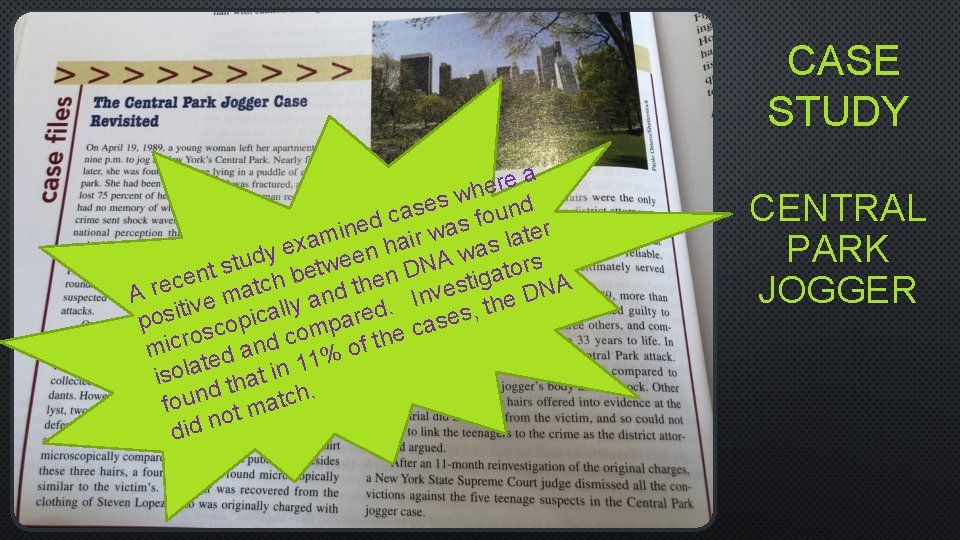
CASE STUDY a e r e h w s se nd a u c o f d e as r n i e w t m r a i l a a s h ex a n y w e d tu rs we n DNA s t o t t e n a b ig e h ce t h c A s e t t r e N a d v A D n m n I he ve ically a red. t i t , i s s e a s p po p a o c c m e os co h r t c d i f n o m a % d 1 e t 1 isola that in. d h n c u t o a f tm o n did CENTRAL PARK JOGGER

WHY NOT JUST TEST THE DNA? • The human hair shaft has little to no DNA. • The hair root has some DNA, but not always enough to isolate. • The hair follicle, which sometimes sticks to hair that is violently ripped out, does usually have sufficient DNA to analyze.
- Slides: 13