
Haiku A Japanese form of poetry Haiku LI
- Slides: 11
Haiku A Japanese form of poetry
Haiku LI: To understand that poets choose words very carefully to create images. SC: To complete a well-crafted haiku poem.
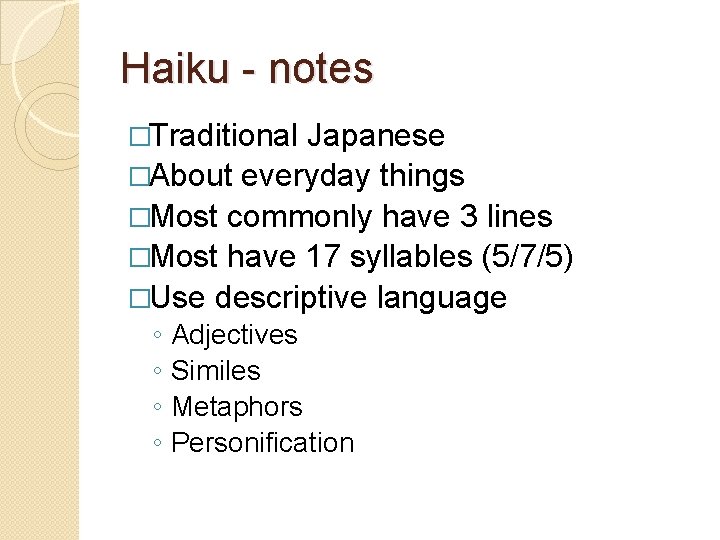
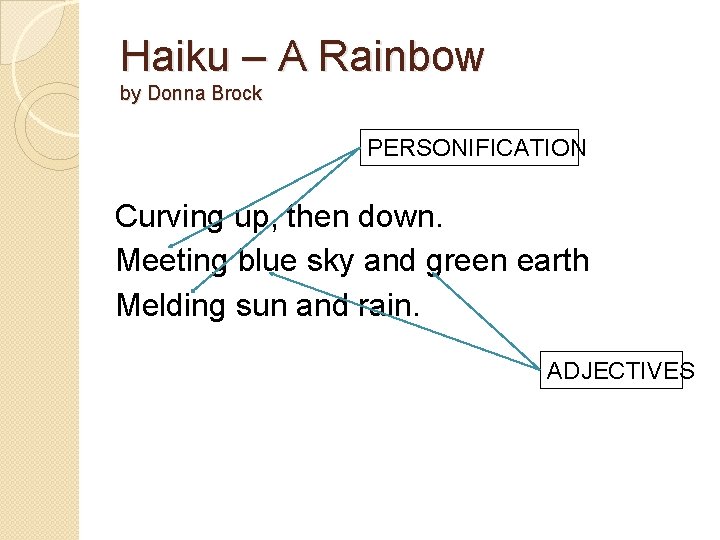
Haiku - notes �Traditional Japanese �About everyday things �Most commonly have 3 lines �Most have 17 syllables (5/7/5) �Use descriptive language ◦ ◦ Adjectives Similes Metaphors Personification
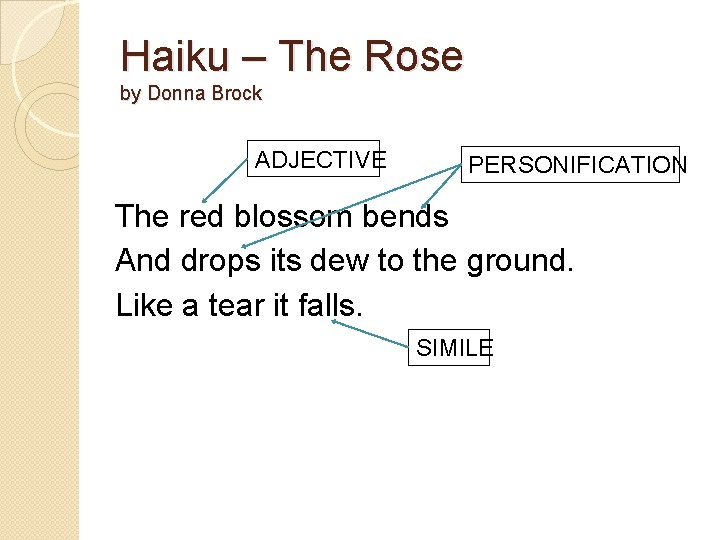
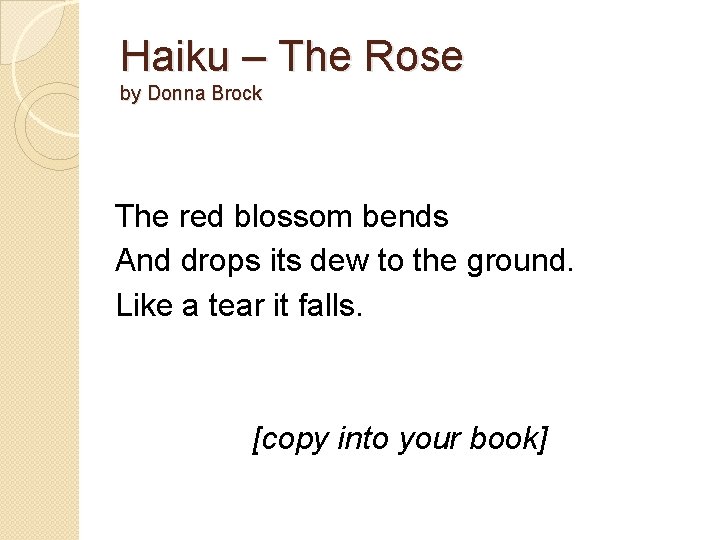
Haiku – The Rose by Donna Brock ADJECTIVE PERSONIFICATION The red blossom bends And drops its dew to the ground. Like a tear it falls. SIMILE
Haiku – The Rose by Donna Brock The red blossom bends And drops its dew to the ground. Like a tear it falls. [copy into your book]
Haiku – A Rainbow by Donna Brock PERSONIFICATION Curving up, then down. Meeting blue sky and green earth Melding sun and rain. ADJECTIVES
Haiku – A Rainbow by Donna Brock Curving up, then down. Meeting blue sky and green earth Melding sun and rain. [copy into your book]
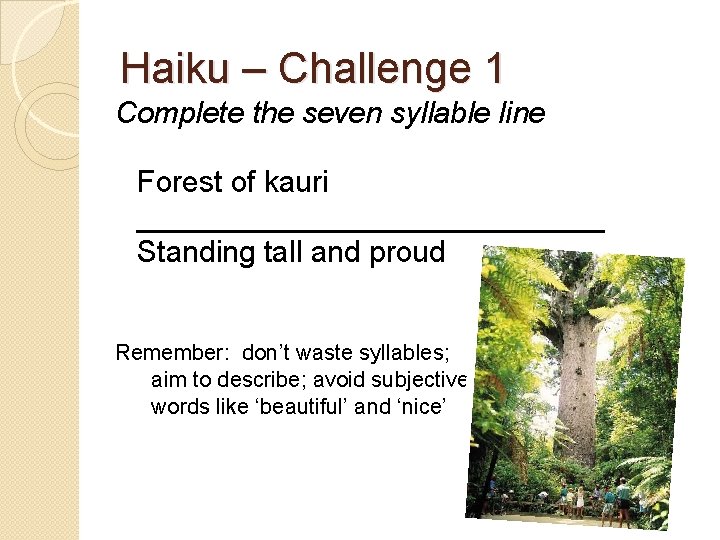
Haiku – Challenge 1 Complete the seven syllable line Forest of kauri ______________ Standing tall and proud Remember: don’t waste syllables; aim to describe; avoid subjective words like ‘beautiful’ and ‘nice’
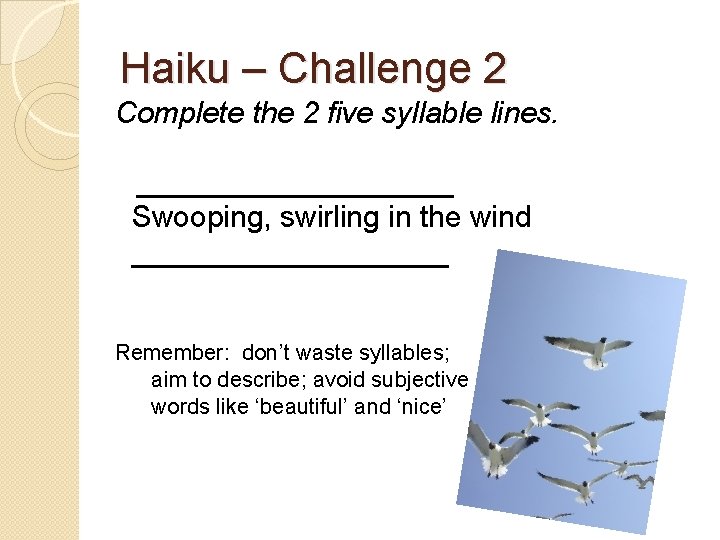
Haiku – Challenge 2 Complete the 2 five syllable lines. __________ Swooping, swirling in the wind __________ Remember: don’t waste syllables; aim to describe; avoid subjective words like ‘beautiful’ and ‘nice’
Haiku – Challenge 3 a Your teacher will take you on a mini field trip somewhere around the school. Once there sit quietly and record things that you can see, hear, feel and smell. List things separately that are natural and man-made. Concentrate on DETAILS – try to note down things that you think no one else will notice. Try and think of adjectives, similes, metaphors and personification as well as nouns. THE FINISHED PRODUCT>>>>>
Haiku – Challenge 3 b THE FINISHED PRODUCT You will create a poem that comprises 3 verses – each one a different haiku. VERSE 1 – a haiku about a natural element (e. g. birds, grass, trees, wind…) VERSE 2 – a haiku about a man-made element (e. g. cars, buildings, people…) VERSE 3 – a haiku with a personal thought (e. g. feeling hungry/tired, wishing you weren’t doing poetry…) [Do a draft, then share it with a peer. Do they have any suggestions to improve your imagery or make better use of your syllables? ]