
Hagan el matching j bueno deportista i impaciente
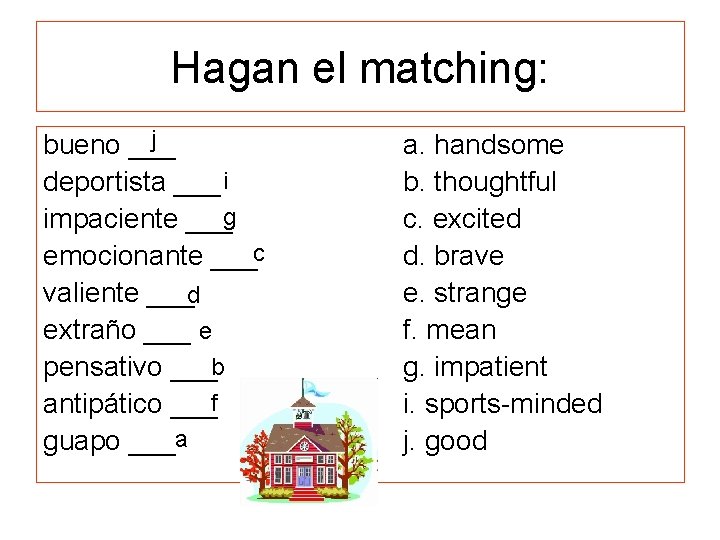
Hagan el matching: j bueno ___ deportista ___ i impaciente ___g emocionante ___c valiente ___d extraño ___ e pensativo ___b antipático ___f guapo ___a a. handsome b. thoughtful c. excited d. brave e. strange f. mean g. impatient i. sports-minded j. good
martes 24/9/10 Noun/Adjective Agreement ¡Estudien los adjetivos!
Repasamos la tarea
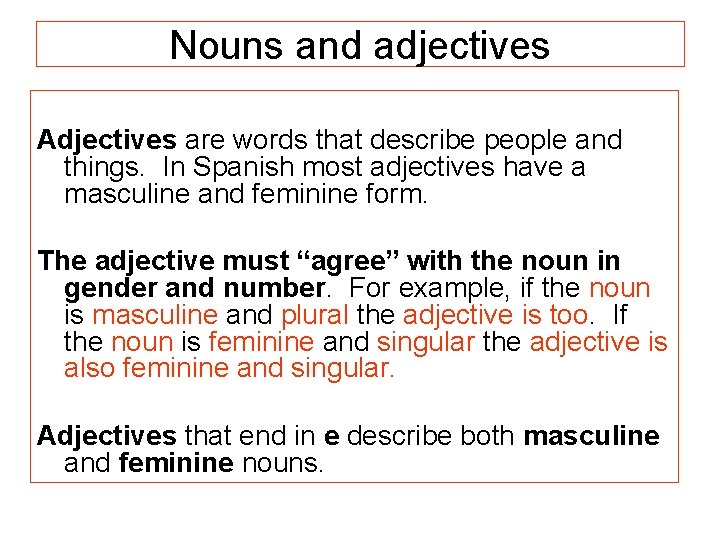
Nouns and adjectives Adjectives are words that describe people and things. In Spanish most adjectives have a masculine and feminine form. The adjective must “agree” with the noun in gender and number. For example, if the noun is masculine and plural the adjective is too. If the noun is feminine and singular the adjective is also feminine and singular. Adjectives that end in e describe both masculine and feminine nouns.
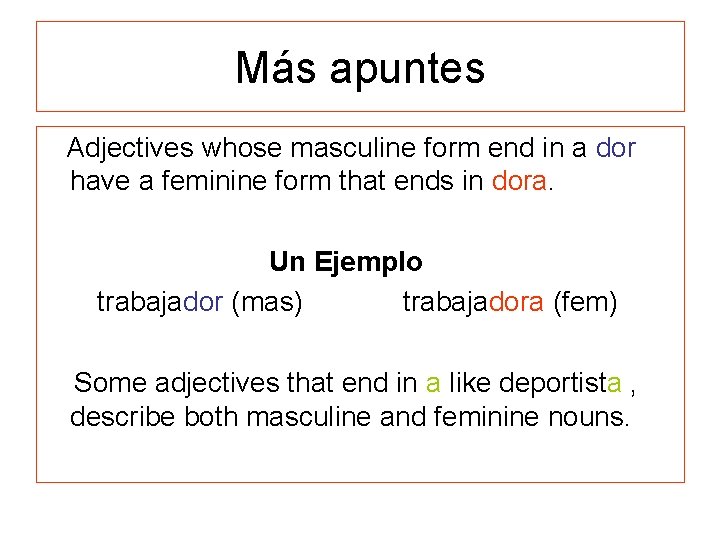
Más apuntes Adjectives whose masculine form end in a dor have a feminine form that ends in dora. Un Ejemplo trabajador (mas) trabajadora (fem) Some adjectives that end in a like deportista , describe both masculine and feminine nouns.
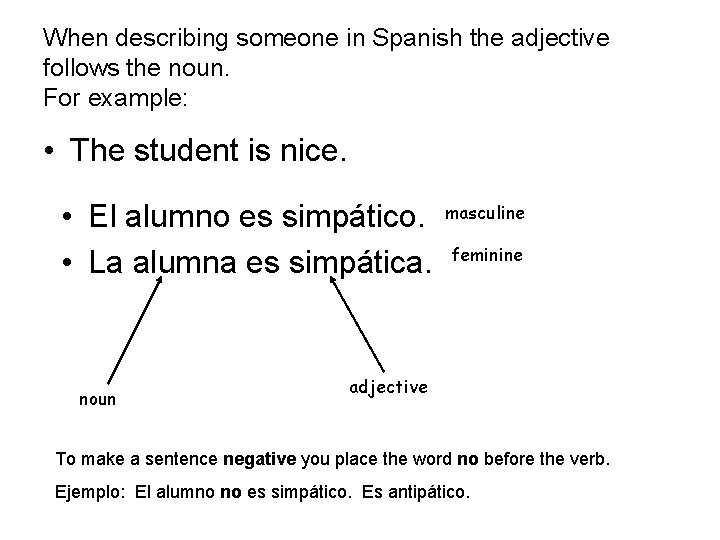
When describing someone in Spanish the adjective follows the noun. For example: • The student is nice. • El alumno es simpático. • La alumna es simpática. noun masculine feminine adjective To make a sentence negative you place the word no before the verb. Ejemplo: El alumno no es simpático. Es antipático.
Los adjetivos • Adjectives usually go after the noun in Spanish. – el chico inteligente – la familia grande – el gato loco – el estudiante estudioso
Adjectives + Gender Adjectives take on the gender of the noun they are describing. el muchacho artístico la muchcha hermosa
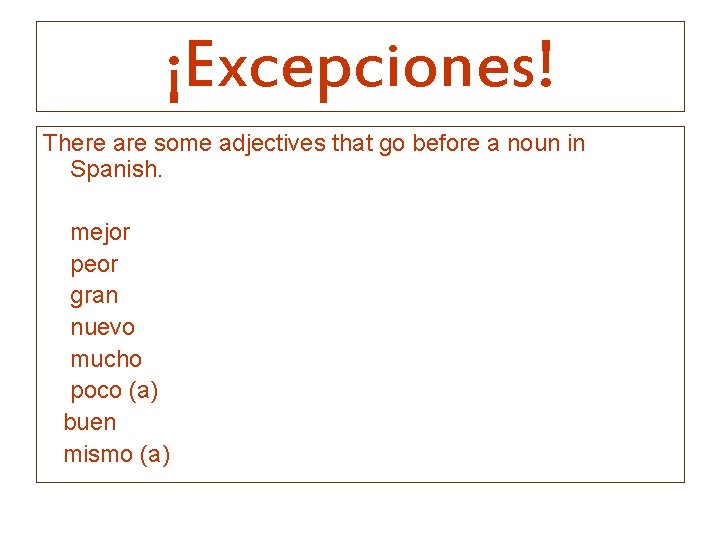
¡Excepciones! There are some adjectives that go before a noun in Spanish. mejor peor gran nuevo mucho poco (a) buen mismo (a)
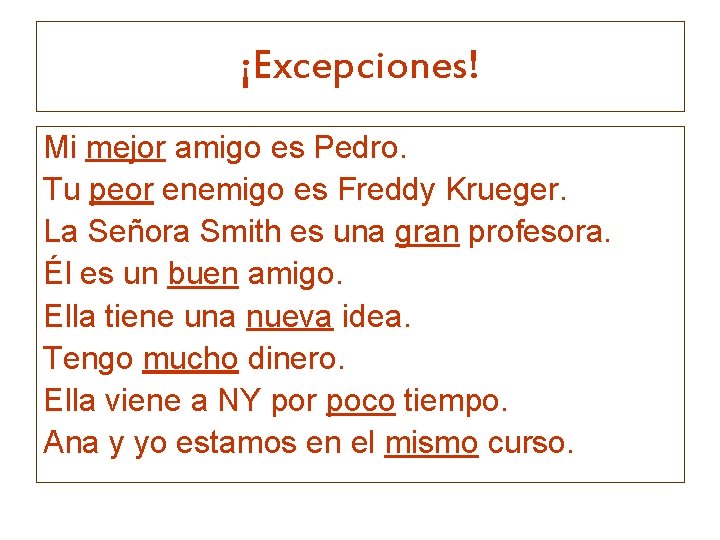
¡Excepciones! Mi mejor amigo es Pedro. Tu peor enemigo es Freddy Krueger. La Señora Smith es una gran profesora. Él es un buen amigo. Ella tiene una nueva idea. Tengo mucho dinero. Ella viene a NY por poco tiempo. Ana y yo estamos en el mismo curso.
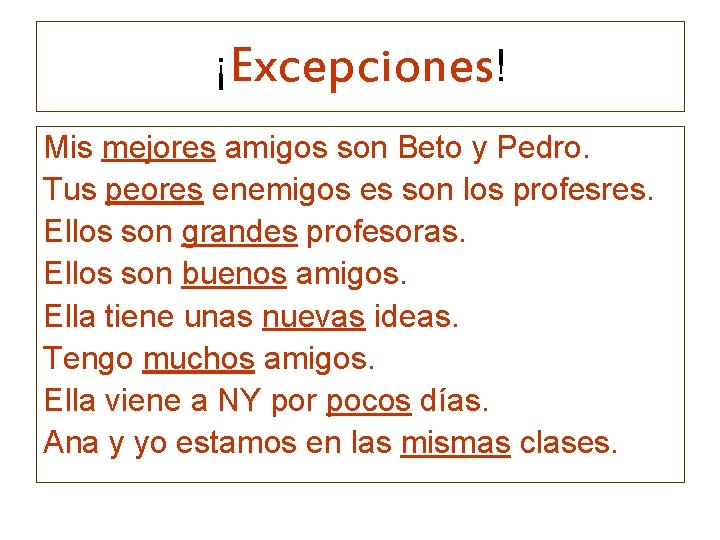
¡Excepciones! Mis mejores amigos son Beto y Pedro. Tus peores enemigos es son los profesres. Ellos son grandes profesoras. Ellos son buenos amigos. Ella tiene unas nuevas ideas. Tengo muchos amigos. Ella viene a NY por pocos días. Ana y yo estamos en las mismas clases.
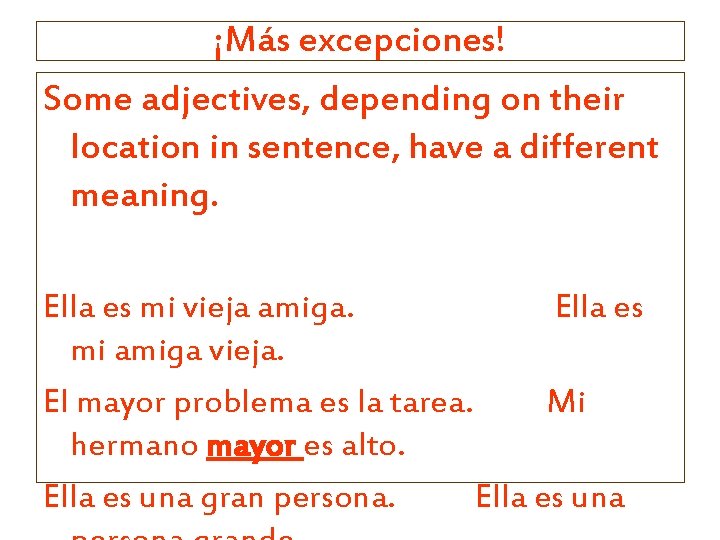
¡Más excepciones! Some adjectives, depending on their location in sentence, have a different meaning. Ella es mi vieja amiga. Ella es mi amiga vieja. El mayor problema es la tarea. Mi hermano mayor es alto. Ella es una gran persona. Ella es una
Práctica • Escribe una frase con cada adjetivo. – fuerte – viejo (a) – mayor – difícil – trabajador (a) -débil -joven -tacaño(a) -popular -privado
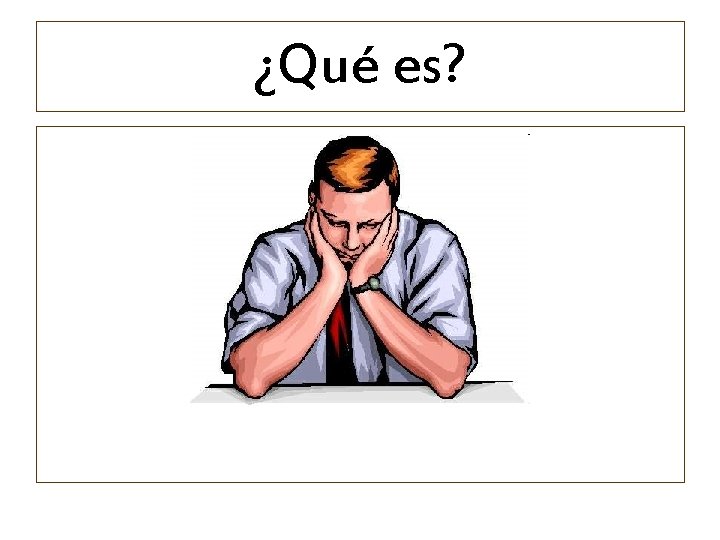
¿Qué es?
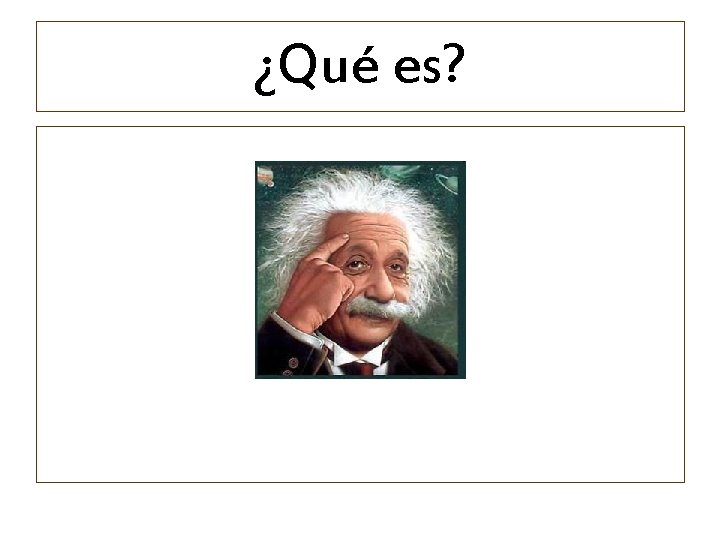
¿Qué es?
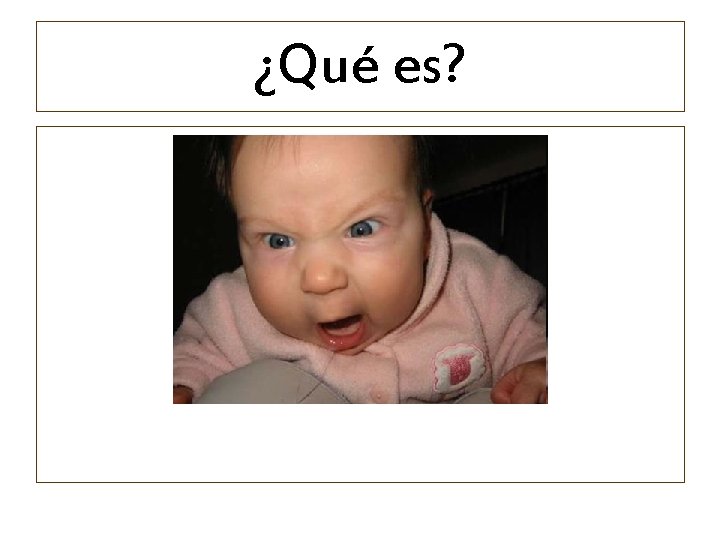
¿Qué es?
¿Qué es?
¿Qué es?
¿Qué es?
¿Qué es?
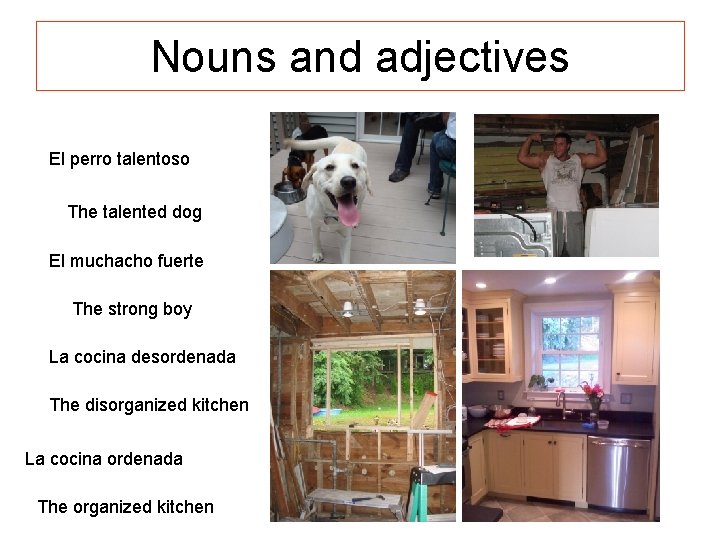
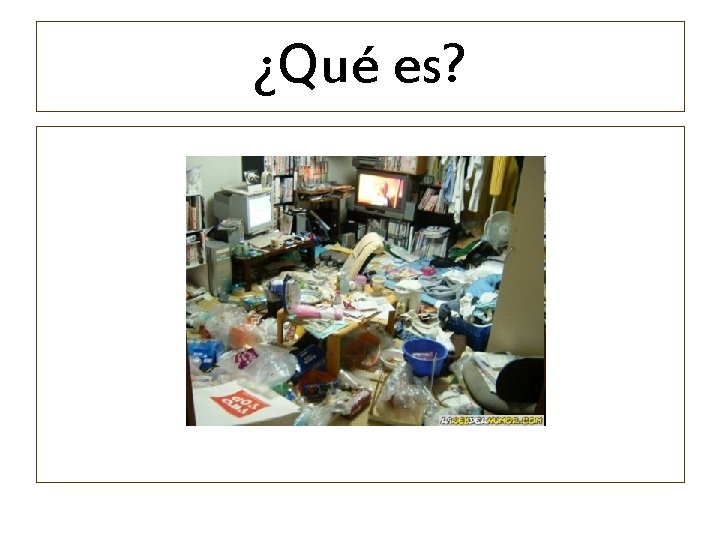
Nouns and adjectives El perro talentoso The talented dog El muchacho fuerte The strong boy La cocina desordenada The disorganized kitchen La cocina ordenada The organized kitchen
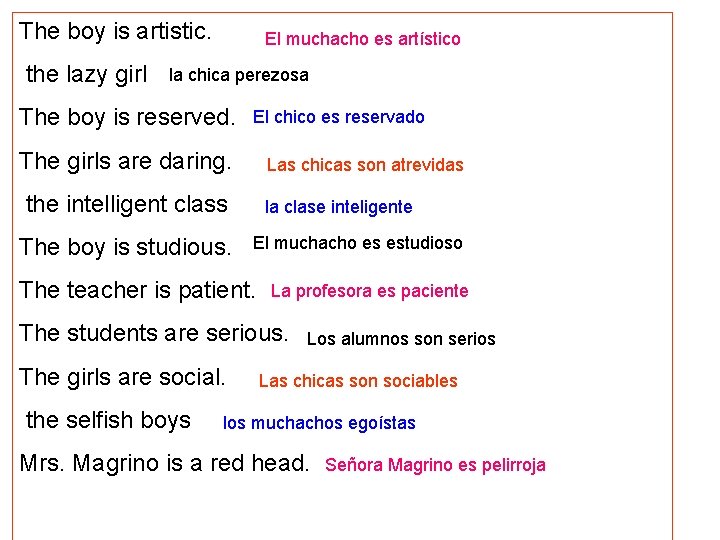
The boy is artistic. the lazy girl El muchacho es artístico la chica perezosa The boy is reserved. El chico es reservado The girls are daring. Las chicas son atrevidas the intelligent class The boy is studious. la clase inteligente El muchacho es estudioso The teacher is patient. La profesora es paciente The students are serious. The girls are social. the selfish boys Los alumnos son serios Las chicas son sociables los muchachos egoístas Mrs. Magrino is a red head. Señora Magrino es pelirroja
Unas Listas • Normal Adjectives • “Special Adjectives” • Neutral Adjectives • Adjectives that change meaning
- Slides: 23