
Haemophilus influenzae Most Common Species of Haemophilus Haemophilus



- Slides: 26
Haemophilus influenzae
Most Common Species of Haemophilus • Haemophilus influenzae • Haemophilus parainfluenzae • Haemophilus aphrophilus • Haemophilus ducreyi
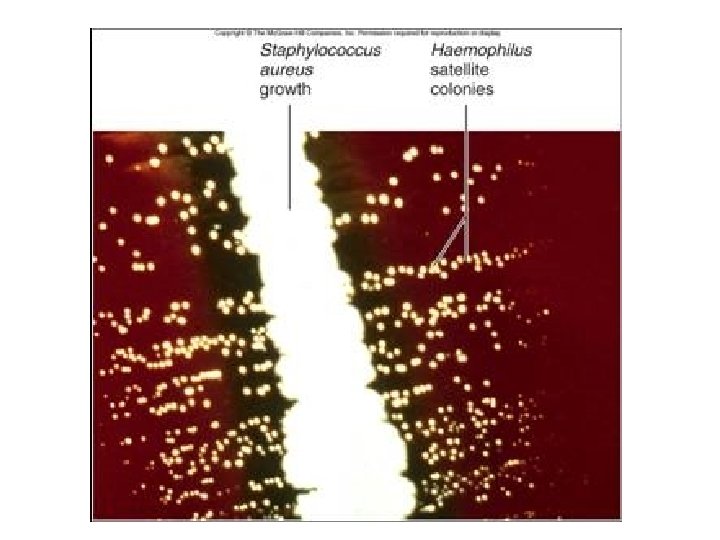
GENERAL CHARACTERISTICS • • Small non-motile Nonsporing Non-acid fast Capsulated Gram-negative coccobacillus. It may occur singly or in chains Growth in culture requires exogenous hemin (oxidized ferroprotoporphyrin) (X factor) and/or nicotinamide adenine dinucleotide (NAD) (V factor )
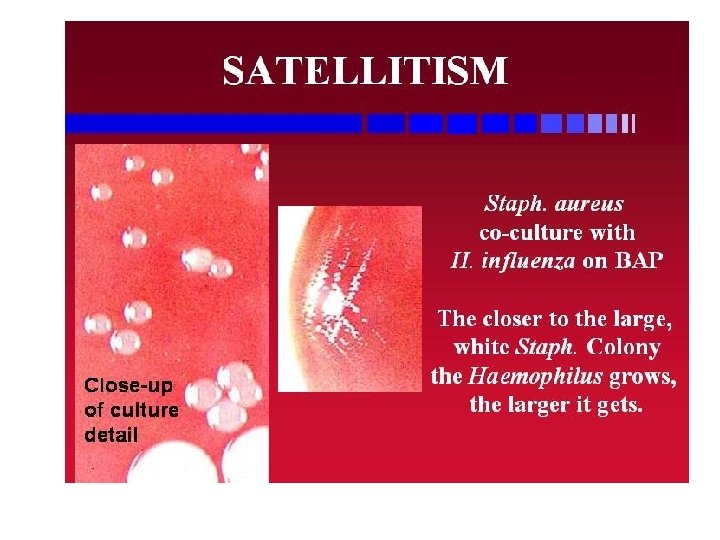
Characteristics of Haemophilus • Sheep blood contains NADase, a V factordestroying enzyme, and consequently clinical strains of Haemophilus do not grow on standard 5% sheep blood agar • Heating sheep blood agar at 80 o. C denatures NADase and heat-lysis of red cells releases free NAD (chocolate agar)
Characteristics of Haemophilus • Growth of Haemophilus on chocolate agar in the presence of 5 -10% CO 2 (capnophilia) • Contemporary chocolate agar is a synthetic “mix” of NAD, hemoglobin, vitamins (cobalamin, thiamine hydrochloride), minerals (iron, magnesium), cysteine, glutamine, and glucose
Haemophilus influenzae: Biotypes I II IV V VI VIII Indole + + – – + – Urease + + – – Ornithine + – – + + + – –
Antigenic structure • Smooth capsulated strains can be classified into six types (a-f) depending on the capsular polysaccharide. H. influenzae type b is the most pathogenic. • Most H. influenzae organisms in the normal flora of the upper respiratory tract are not encapsulated. • Encapsulated strains can be typed by a – capsule swelling test with specific antiserum (quelling reaction ) – immunofluorescence
Haemophilus: Natural Habitats • Normal inhabitant of the upper respiratory, gastrointestinal, and genital tracts of humans except Haemophilus ducreyi • Haemophilus ducreyi found only in humans during disease (not normal microbial flora)
Pathogenicity: • H. influenzae produce no toxin. • The capsule is antiphagocytic The polyribose phosphate capsule of type b H. influenzae is the major virulence factor. • The organism produces Ig. A protease that degrade s. Ig. A
Haemophilus: Types of Infectious Disease • Encapsulated (types a-f) strains of H. influenzae produce invasive infection (pneumonia, meningitis, epiglottitis, and bacteremia)
• Unencapsulated (non-typeable) strains of H. influenzae cause otitis media in children, and lower respiratory tract infections (acute tracheobronchitis, pneumonia) in children and adults • Respiratory infection by non-typeable H. influenzae associated with underlying conditions (cystic fibrosis, chronic obstructive pulmonary disease, malignancy)
Mode of transmission • Hib disease is spread through – contact with discharges or droplets from the nose or throat of an infected person. – Hib disease can spread from person to person through sneezing, coughing, or speaking closely with an infected person.
• Capsulated strains (predominantly type b) – cause infections mainly in children aged from 2 months to 3 years • The most common and severe manifestation of Hib disease is meningitis (inflammation and swelling in the coverings of the brain and spinal cord). Symptoms of meningitis include fever, weakness, vomiting, and a stiff neck. • Hib can also cause infection of the lungs, blood, joints, bones, throat, and covering of the heart. Symptoms depend on the part of the body affect • Non-typeable H. influenzae tend to cause – chronic bronchitis, otitis media sinusitis and conjunctivitis following breakdown of normal host defense mechanisms.
Haemophilus influenzae biogroup aegyptius (formerly H. aegyptius) lacks a capsule but capable of invasive infection, including: • Purulent conjunctivitis (Pink eye) • Sepsis syndrome in children (1 -4 years of age) following purulent conjunctivitis with mortality as high as 70% (Brazil and Australia)
• H. parainfluenzae of low virulence with sporadic cases of endocarditis and bacteremia
• Haemophilus aphrophilus an uncommon cause of slowly progressive (subacute) endocaridits and brain abscess (member of the HACEK group) • Haemophilus ducreyi causes chancroid, a sexually transmitted disease (~400 cases annually in the US) with shallow and painful genital ulcers associated with inguinal lymphadenitis (bubo formation)
HACEK Organisms H=Haemophilus aphrophilus A=Actinobacillus actinomycetemcomitans C=Cardiobacterium hominis E=Eikenella corrodens K=Kingella kingae
HACEK Organisms • Slow growing, capnophilic, gramnegative bacteria that cause endocarditis • Clinical suspicion of endocarditis with negative blood cultures after standard 5 days of incubation (incubate blood cultures for 2 weeks)
Diagnosis of H. influenzae infections • Specimens: – Nasopharyngeal swabs, – CSF, – sputum and – blood • 1. Microscopic examination: Gram stain smear reveal large number of gram negative coccobacilli
2. Direct identification of organisms in specimens : • H. influenzae may be identified by immunofluoresence. • Mixed with specific rabbit antiserum (type b) for a capsule-swelling test. • Detection of H. influenzae antigen in spinal fluid by commercial kit. (Latex aggl)
Culture: • Plates of chocolate agar are inoculated with suspected materials. Characteristic colonies appearing in culture are identified by – their morphology, – their requirement of X and V factors and – by inability to grow except on blood containing media and – serologically typed with specific antisera
Treatment • Many strains of H. influenzae type b are susceptible to ampicillin, but up to 25% produce β lactamase under control of transmissible plasmid and are resistant. Most strain are susceptible to chloramphenicol and newer cephalosporins (Cefotaxime, Ceftazidime)
Prevention • A vaccine containing the capsular polysaccharide of H. influenzae type b conjugated to diphtheria toxoid or other carrier protein is given to children between the age of 2 and 15 months. – The vaccine has reduced the incidence of meningitis caused by this organisms to 90% in immunized children. – Meningitis can be prevented by giving rifampin to children in close contact with patients