
Haemoflagellates Leishmania Trypanosomes Dr MONA BADR Different stages
Haemoflagellates Leishmania & Trypanosomes Dr MONA BADR
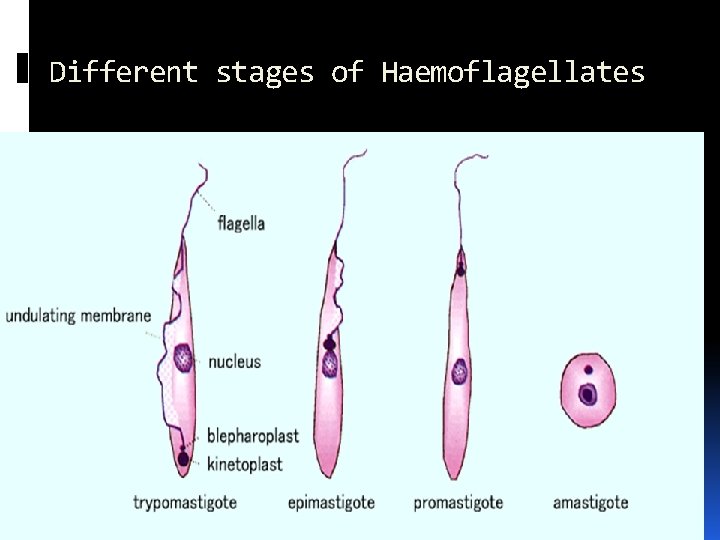
Different stages of Haemoflagellates
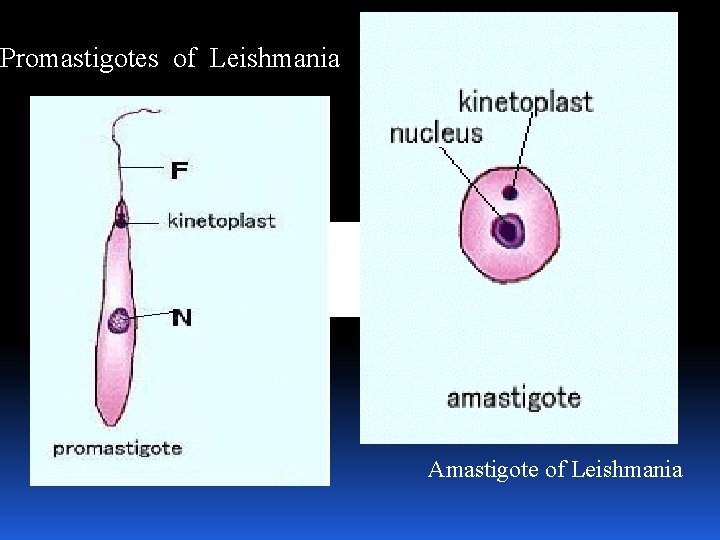
Promastigotes of Leishmania Amastigote of Leishmania
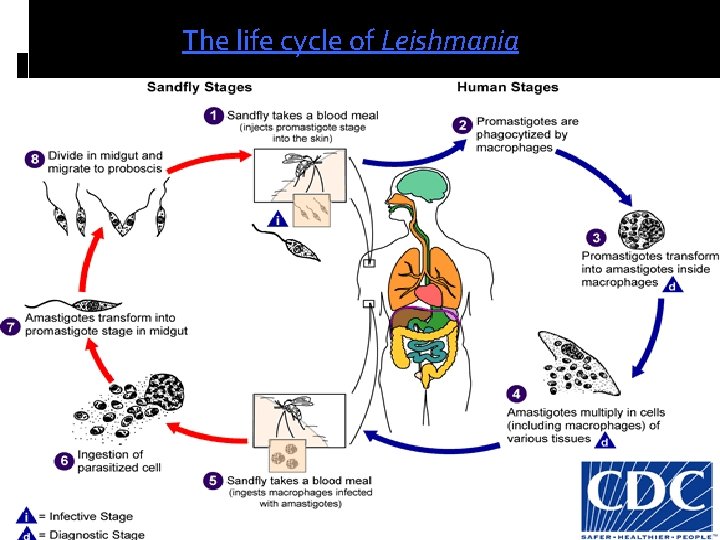
The life cycle of Leishmania
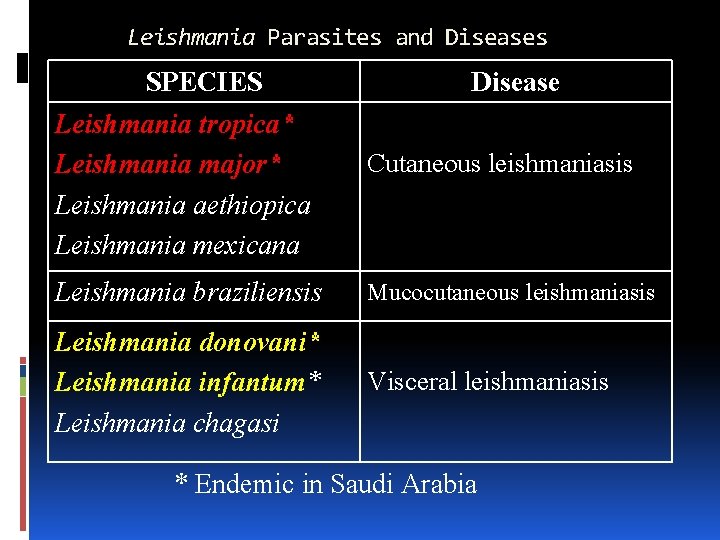
Leishmania Parasites and Diseases SPECIES Leishmania tropica* Leishmania major* Leishmania aethiopica Leishmania mexicana Disease Cutaneous leishmaniasis Leishmania braziliensis Mucocutaneous leishmaniasis Leishmania donovani* Leishmania infantum* Leishmania chagasi Visceral leishmaniasis * Endemic in Saudi Arabia
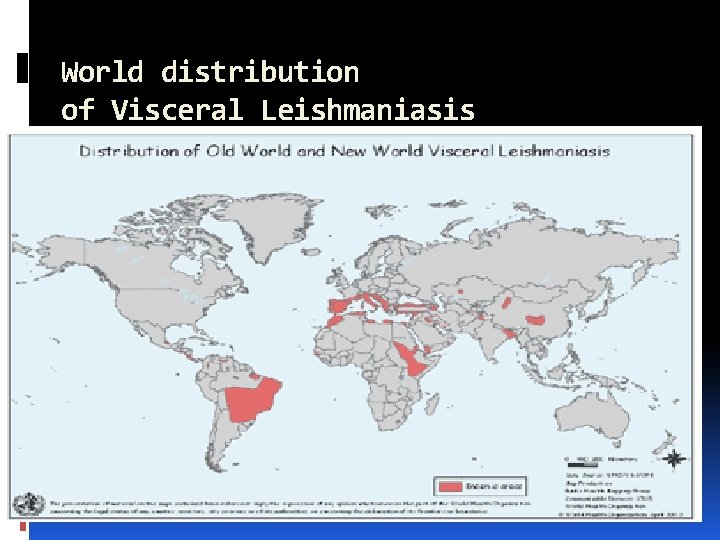
World distribution of Visceral Leishmaniasis
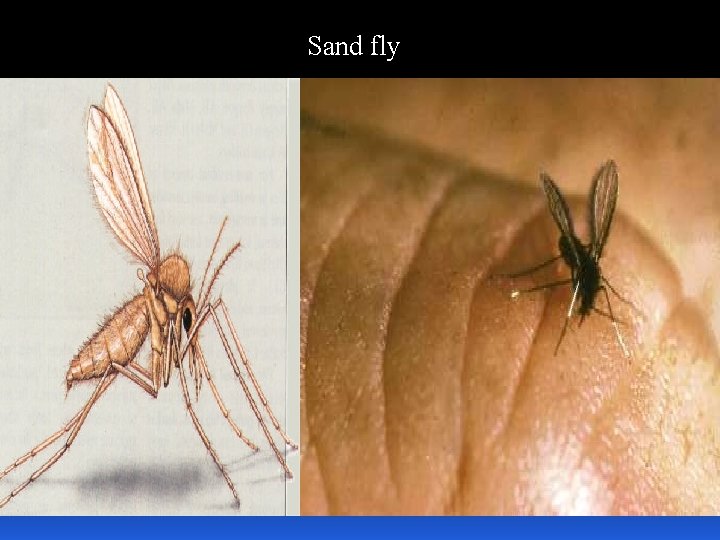
Sand fly
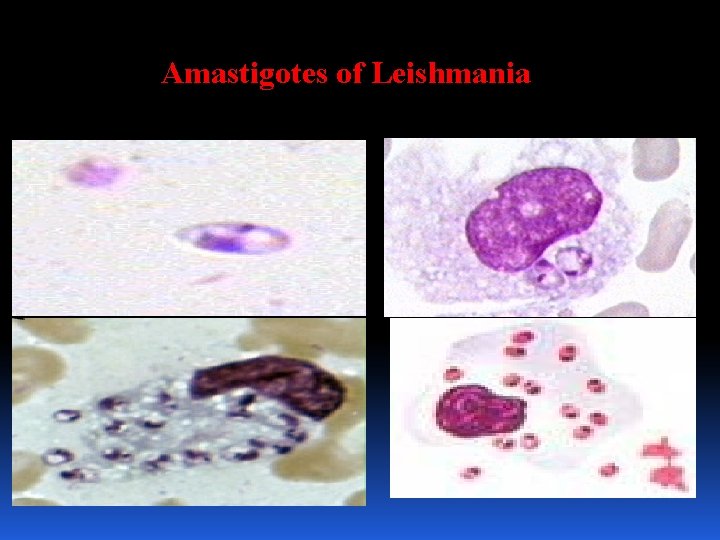
Amastigotes of Leishmania
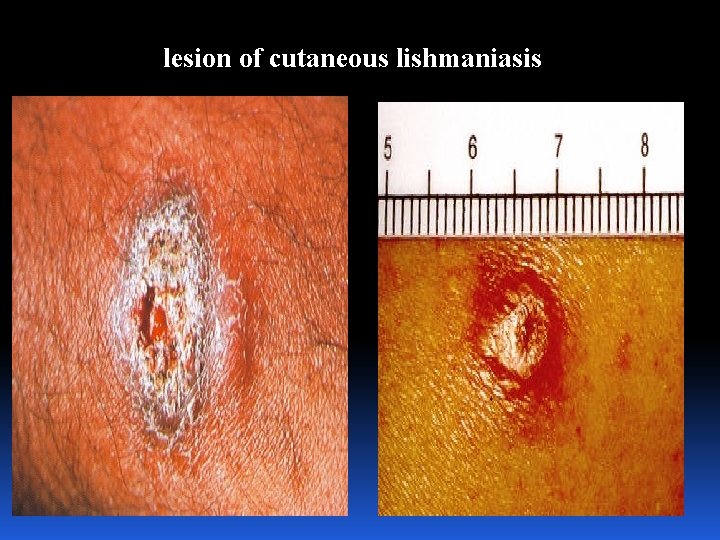
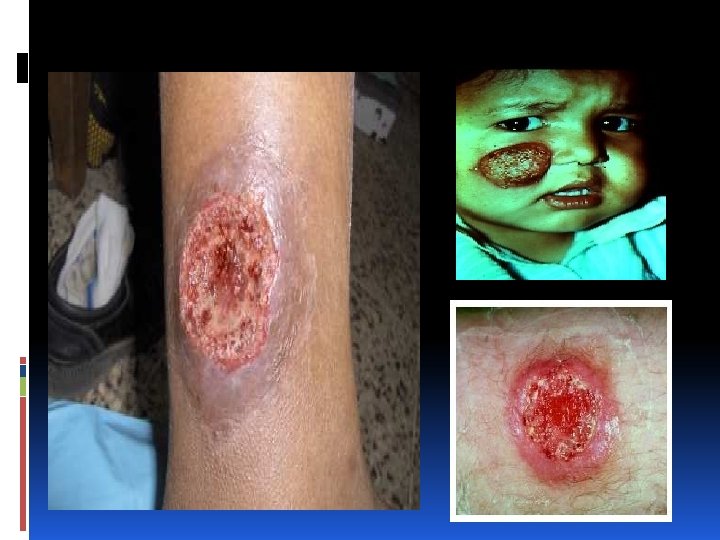
lesion of cutaneous lishmaniasis
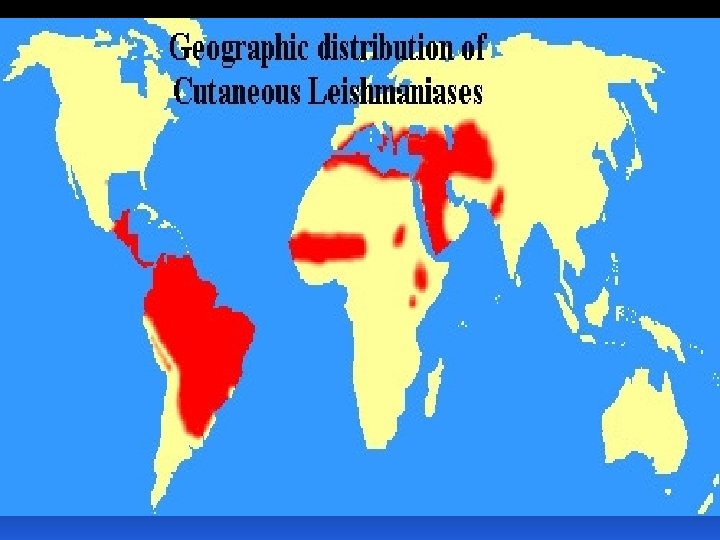
Clinical types of cutaneous leishmaniasis Leishmania major: Zoonotic (animal to human) cutaneous leishmaniasis: wet lesions with severe reaction Leishmania tropica: Anthroponotic (human to human) cutaneous leishmaniasis: Dry lesions with minimal ulceration Oriental sore (most common) classical self-limited ulcer
CUTANEOUS LISHMANIASIS THE COMMON TYPE This starts as a painless papule on exposed parts of the body , generally the face. The lesion ulcerates after a few months producing an ulcer with an indurate margin. In some cases the ulcer remains dry and heals readily (dry-type-lesion). In some other cases the ulcer may spread with an inflammatory zone around , these known as (wet -type-lesion) which heal slowly.
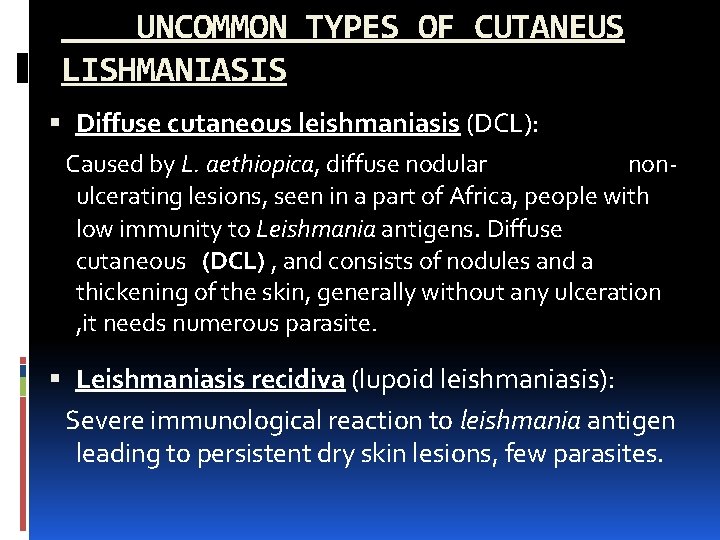
UNCOMMON TYPES OF CUTANEUS LISHMANIASIS Diffuse cutaneous leishmaniasis (DCL): Caused by L. aethiopica, diffuse nodular nonulcerating lesions, seen in a part of Africa, people with low immunity to Leishmania antigens. Diffuse cutaneous (DCL) , and consists of nodules and a thickening of the skin, generally without any ulceration , it needs numerous parasite. Leishmaniasis recidiva (lupoid leishmaniasis): Severe immunological reaction to leishmania antigen leading to persistent dry skin lesions, few parasites.
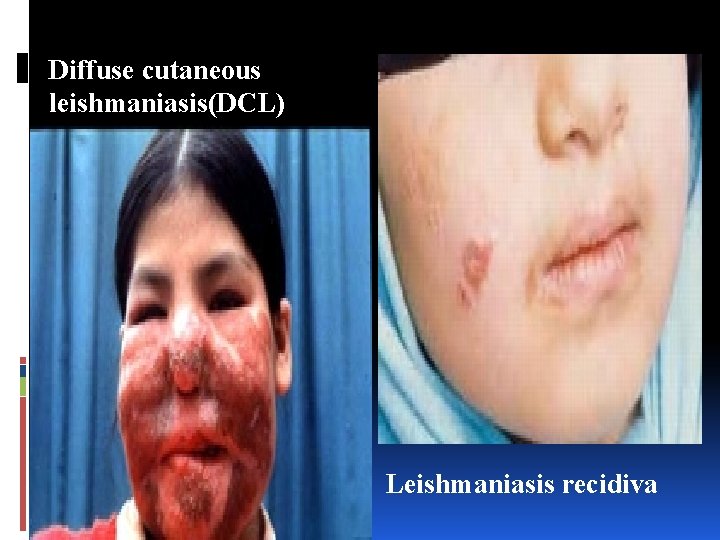
Diffuse cutaneous leishmaniasis(DCL) Leishmaniasis recidiva
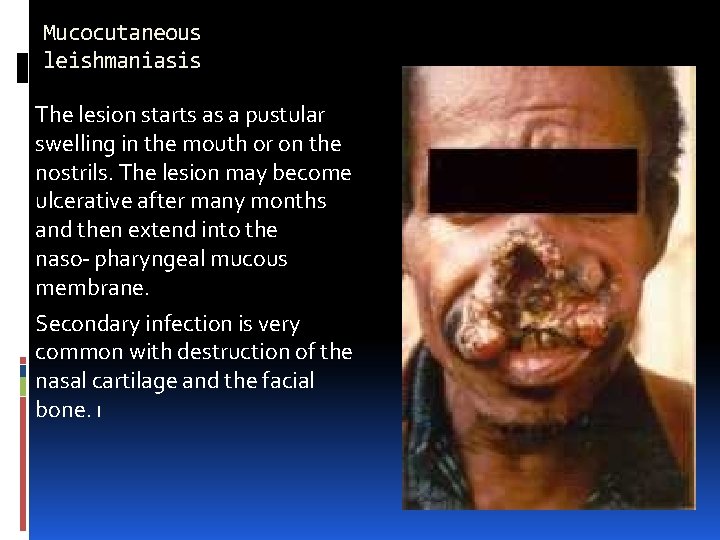
Mucocutaneous leishmaniasis The lesion starts as a pustular swelling in the mouth or on the nostrils. The lesion may become ulcerative after many months and then extend into the naso- pharyngeal mucous membrane. Secondary infection is very common with destruction of the nasal cartilage and the facial bone. l
cutaneous & muco-cutaneous leishmaniasis Diagnosis: The parasite can be isolated from the margin of the ulcer. Smear: Giemsa stain – microscopy for LD bodies (amastigotes). Biopsy: microscopy for LD bodies or culture in NNN medium for promastigotes.
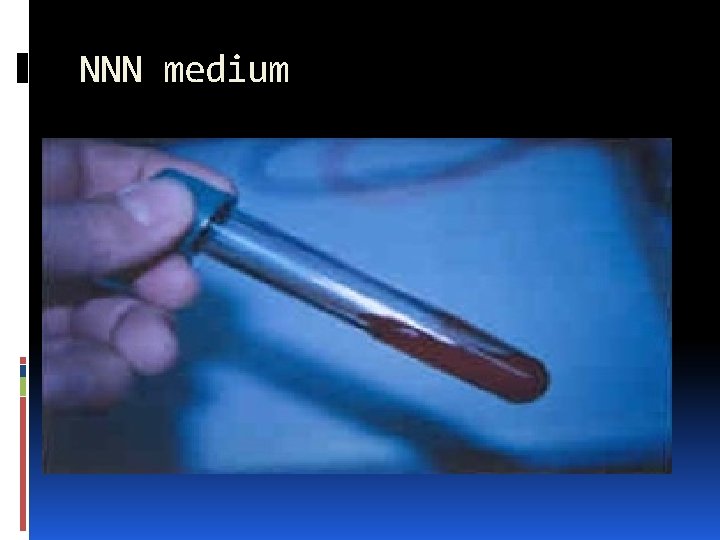
NNN medium
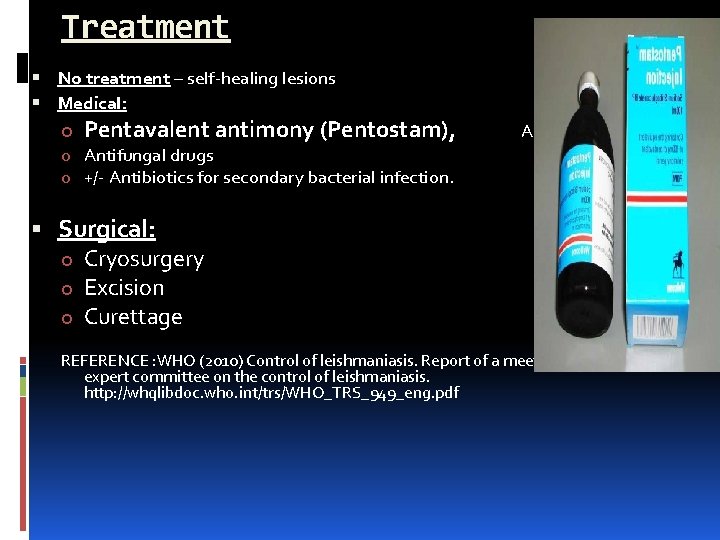
Treatment No treatment – self-healing lesions Medical: o Pentavalent antimony (Pentostam), Amphotericin B o Antifungal drugs o +/- Antibiotics for secondary bacterial infection. Surgical: o Cryosurgery o Excision o Curettage REFERENCE : WHO (2010) Control of leishmaniasis. Report of a meeting 571 of the WHO expert committee on the control of leishmaniasis. http: //whqlibdoc. who. int/trs/WHO_TRS_949_eng. pdf
Visceral leishmaniasis There are geographical variations. The diseases is called kala-azar Leishmania infantum mainly affect children Leishmania donovani mainly affects adults The incubation period is usually 4 -10 months. The early symptoms are generally low grade fever with malaise and sweating. In later stages , the fever becomes intermittent and their can be liver enlargement or spleen enlargement or hepatosplenomegally because of the hyperplasia of the lymphoid –macrophage system.
Presentation Fever Splenomegaly, hepatosplenomegaly Weight loss Anaemia Epistaxis Cough Diarrhoea
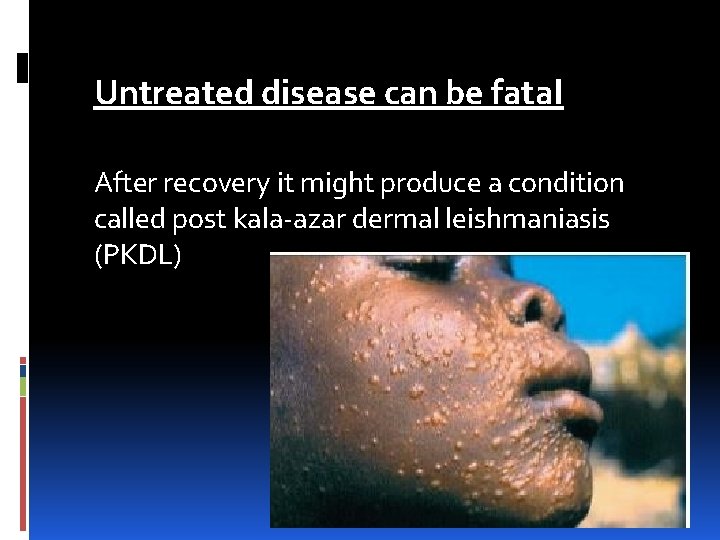
Untreated disease can be fatal After recovery it might produce a condition called post kala-azar dermal leishmaniasis (PKDL)
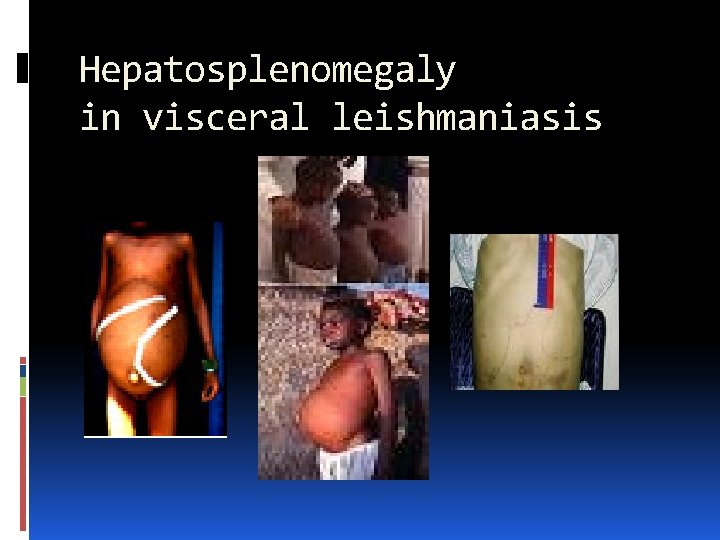
Hepatosplenomegaly in visceral leishmaniasis
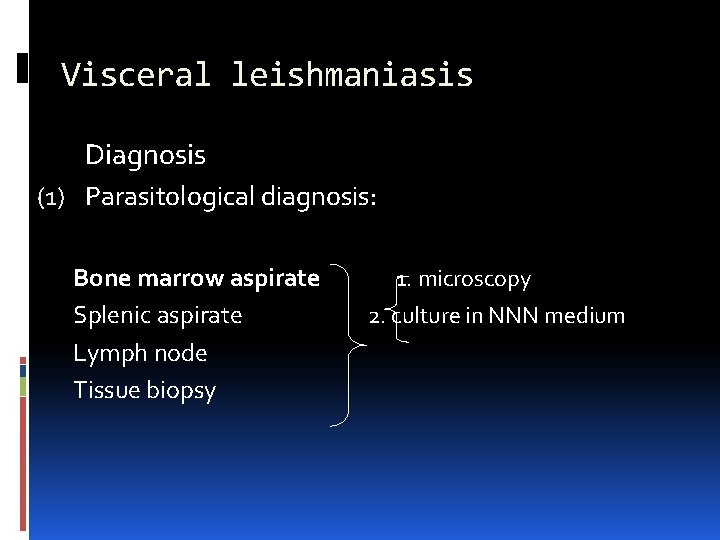
Visceral leishmaniasis Diagnosis (1) Parasitological diagnosis: Bone marrow aspirate Splenic aspirate Lymph node Tissue biopsy 1. microscopy 2. culture in NNN medium
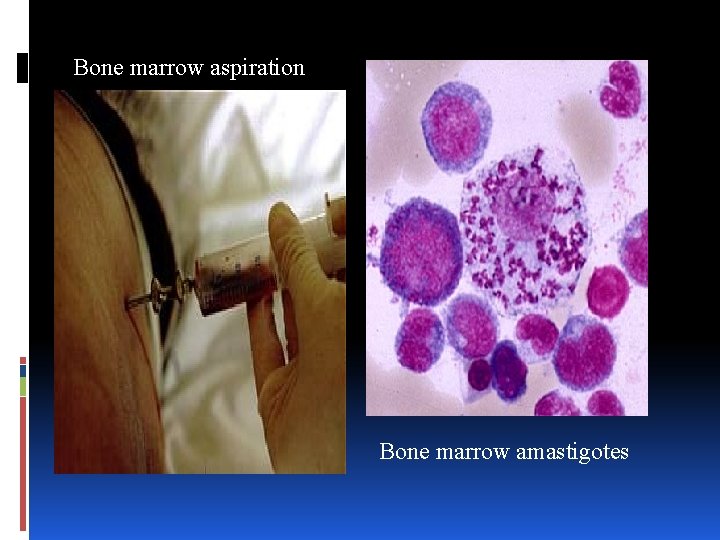
Bone marrow aspiration Bone marrow amastigotes
(2) Immunological Diagnosis: Specific serologic tests: Direct Agglutination Test (DAT), ELISA, IFAT Skin test (leishmanin test) for survey of populations and follow-up after treatment.
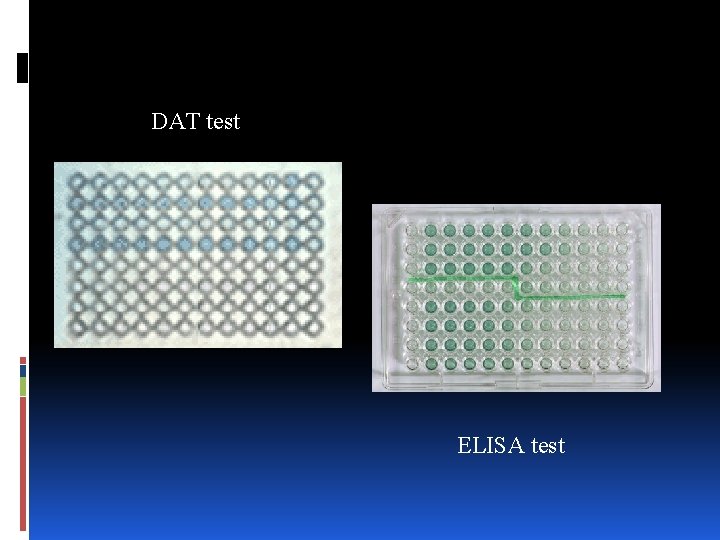
DAT test ELISA test
Treatment of visceral leishmanisis Recommended treatment varies in different endemic areas: Pentavalent antimony- sodium stibogluconate (Pentostam) Amphotericin B Treatment of complications: Anaemia Bleeding Infections etc. REFERENCE : WHO (2010) Control of leishmaniasis. Report of a meeting 571 of the WHO expert committee on the control of leishmaniasis. http: //whqlibdoc. who. int/trs/WHO_TRS_949_eng. pdf
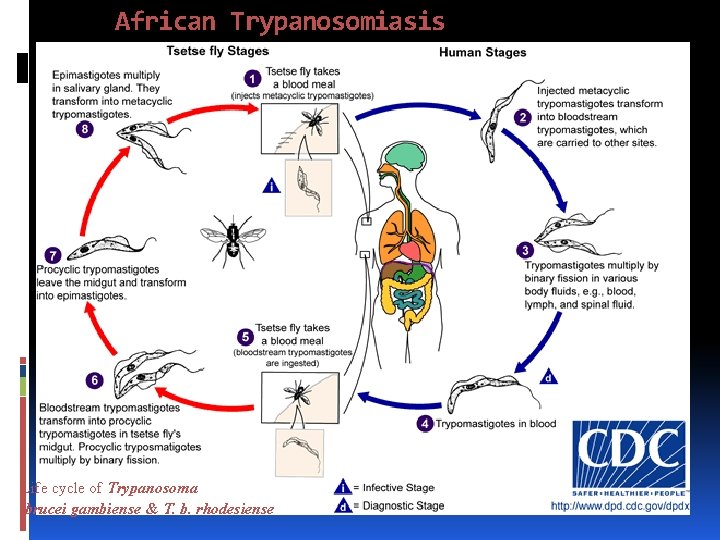
African Trypanosomiasis Life cycle of Trypanosoma brucei gambiense & T. b. rhodesiense
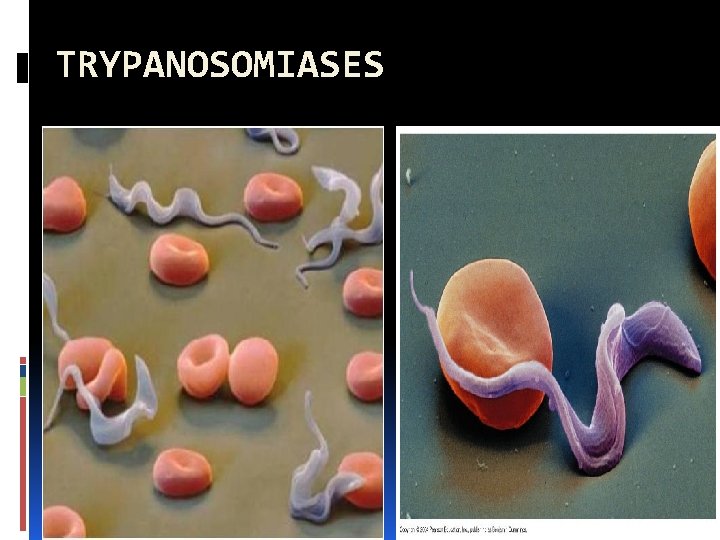
TRYPANOSOMIASES
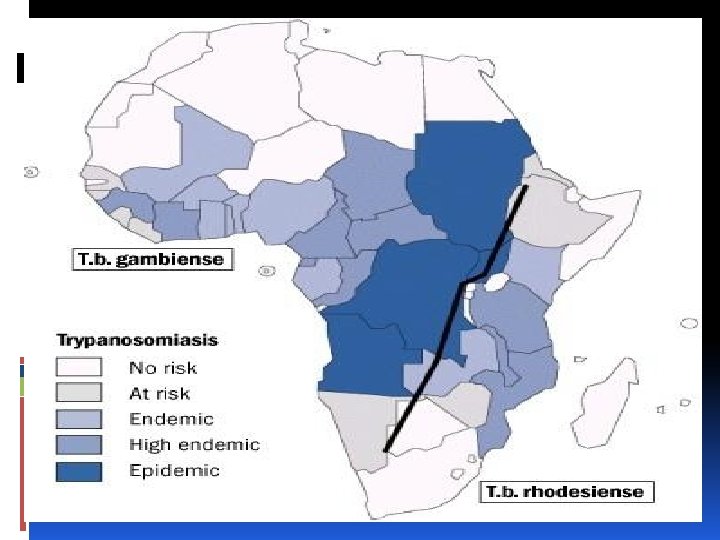
1 -African sleeping sickness Trypanosoma brucei rhodesiense: East Africa, wild and domestic animal reservoirs Trypanosoma brucei gambiense: West and Central Africa, mainly human infection
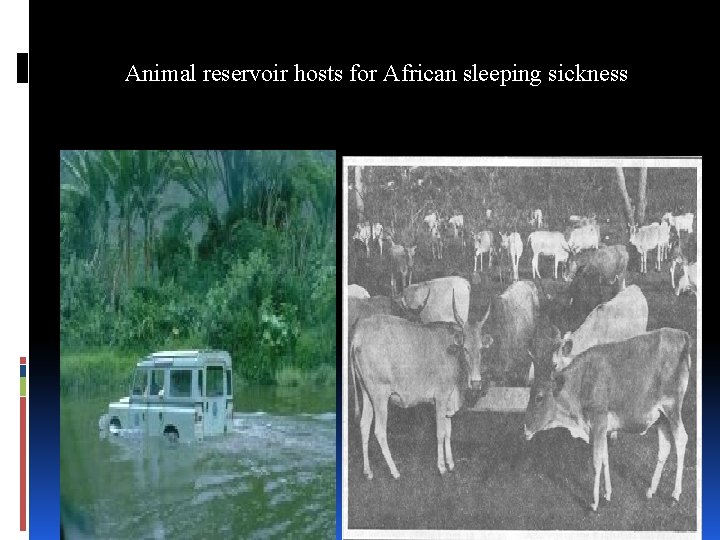
Animal reservoir hosts for African sleeping sickness
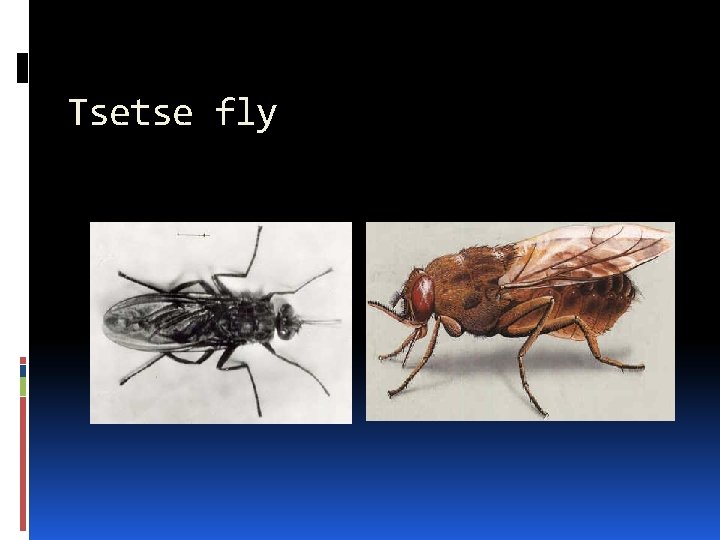
Tsetse fly
Pathology and clinical picture 1. A primary reaction occurs at the site of inoculation of Trypanosoma , skin stage: chancre which resolve in 2 -3 weeks. 2. Systemic Haemato-lymphatic stage: fever intermittent fever, headache and generalized lymphadenopathy mainly in the cervical and sub occipital region (Winterbottom’sign), anaemia, generalized organ involvement. 3. Central nervous system stage (CNS): Meningoencephalitis. (Development of the disease more rapid in Trypanosoma brucei rhodesiense)

Chancre skin stage
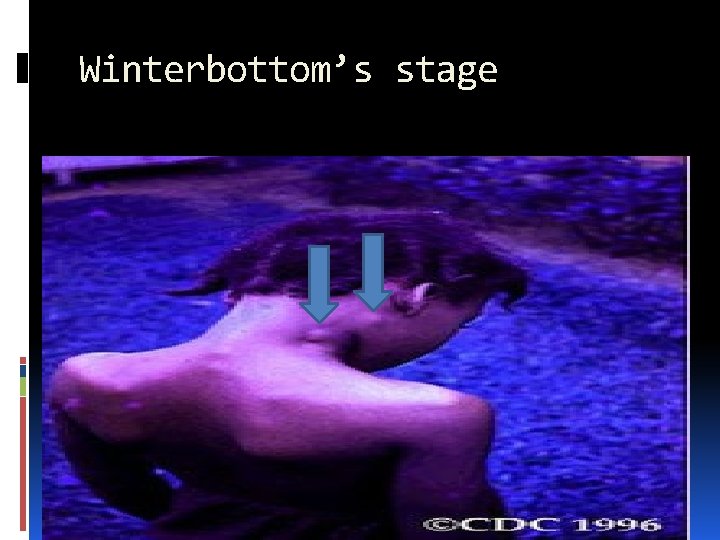
Winterbottom’s stage
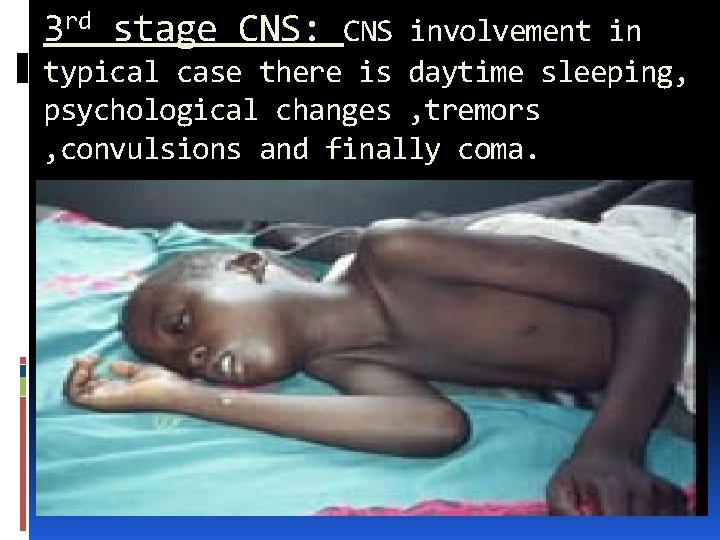
3 rd stage CNS: CNS involvement in typical case there is daytime sleeping, psychological changes , tremors , convulsions and finally coma.
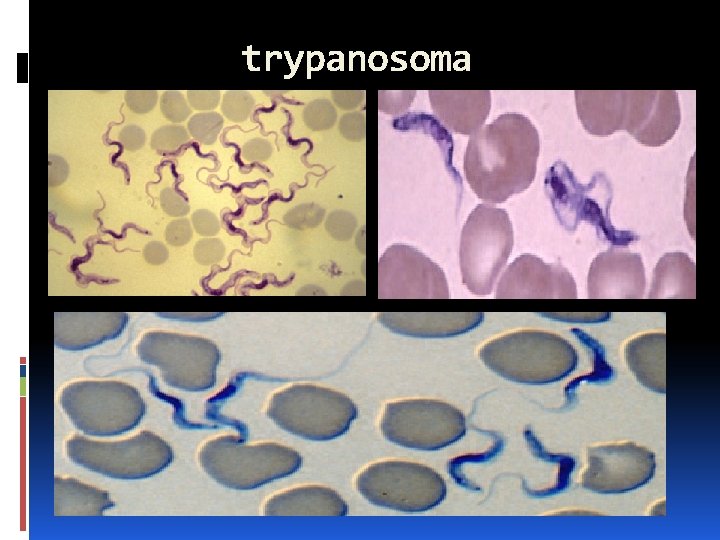
trypanosoma
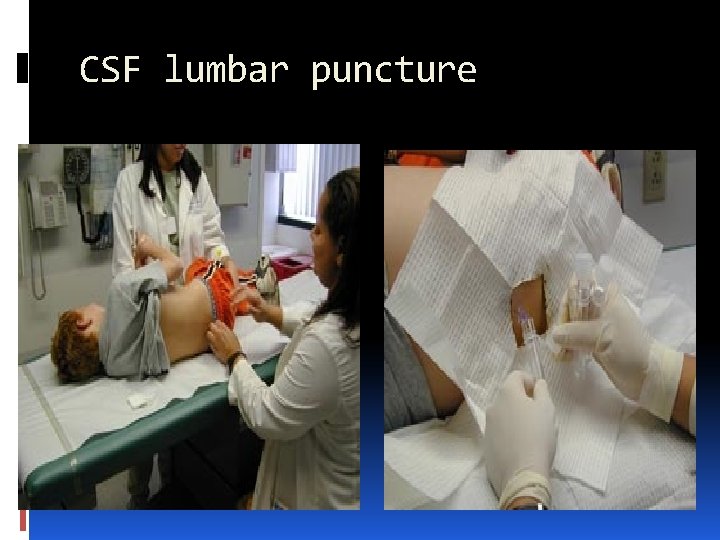
CSF lumbar puncture
Laboratory test for African Trypanosomaiasis The gold standard for is identification of trypanosomes in patient sample by microscopic examination. Samples as blood or tissue biopsy or fluid from (chancre), lymph node aspirate , bone marrow and cerebrospinal fluid in neurological stage. SEROLOGICAL TEST NOT WIDELY AVAILABLE. All patients diagnosed with African Trypanosome must have their cerebrospinal fluid examined to determine whethere is involvement of the central nervous system , since the choice of he treatment drugs will depend on the stage of the disease. CNS involvement include increased protein and WBC count more than 5. and we see trypanosome in. CSF
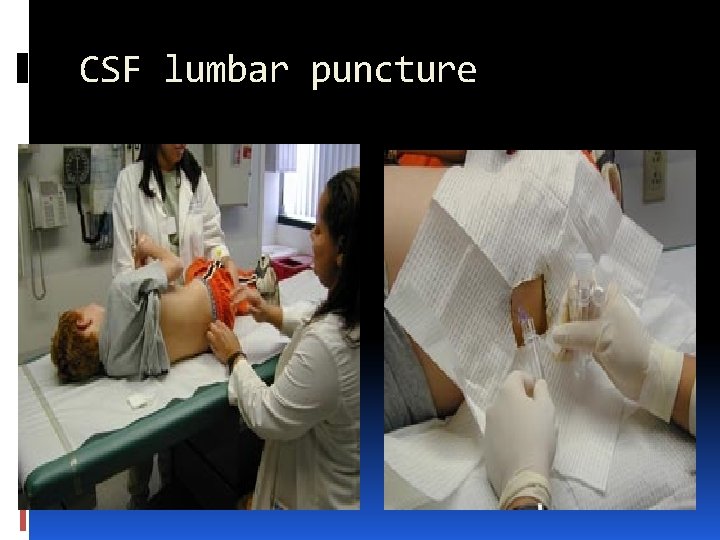
CSF lumbar puncture
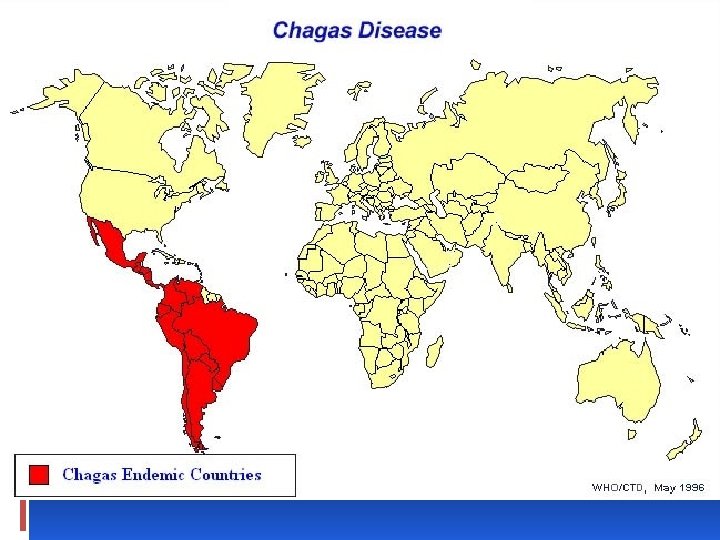
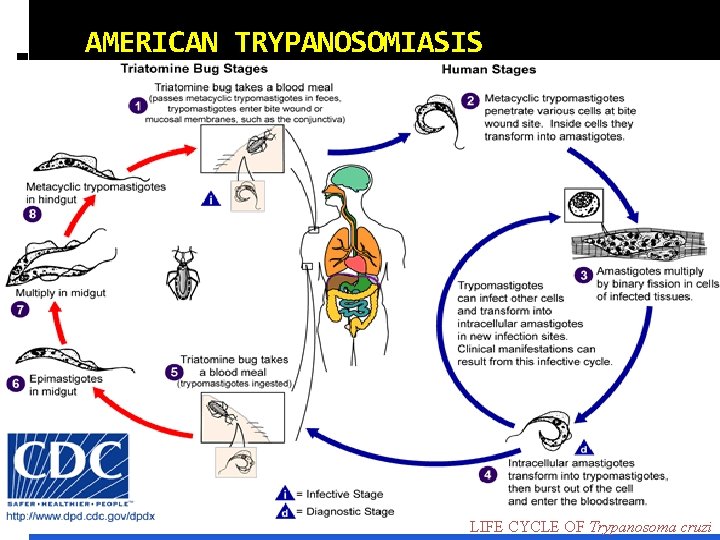
AMERICAN TRYPANOSOMIASIS LIFE CYCLE OF Trypanosoma cruzi
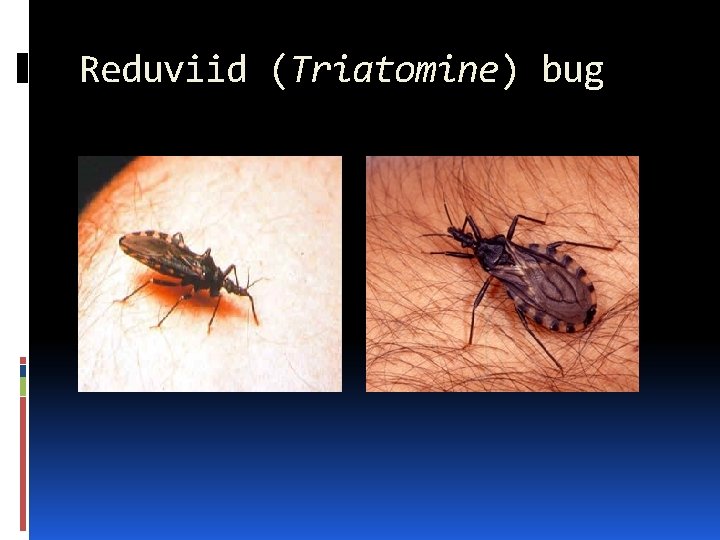
Reduviid (Triatomine) bug
American trypanosomes (Chaga’s disease) The parasites produce focal lymphangitis and oedema at the site of parasites entry (chagoma). mainly on the face near the eyelids , it produces a swelling of the eye and temporal region with conjunctivitis (ROMANA’S sign) , after that parasites ( trypomastigote) enter the blood stream and find there way into cells mainly the cardiac muscles cells become (amastigote). The most constant feature of the cardiac disease is cardiomyopathy , in severe cases can lead to partal or complete heart block which may lead to cardiac failure.
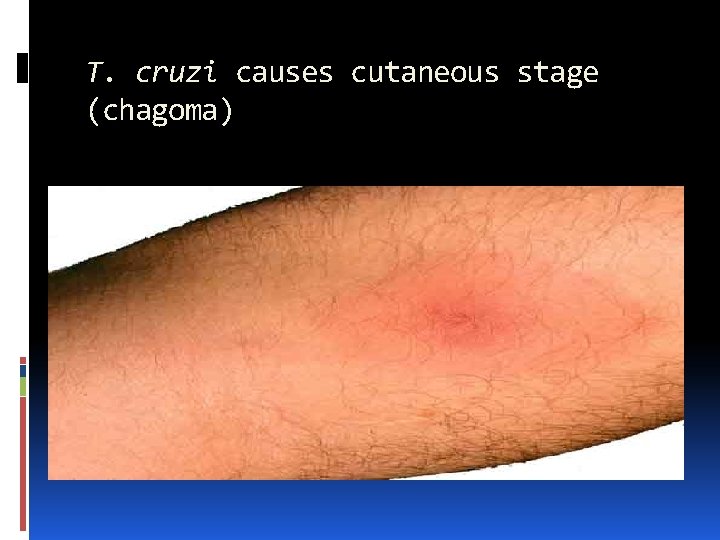
T. cruzi causes cutaneous stage (chagoma)
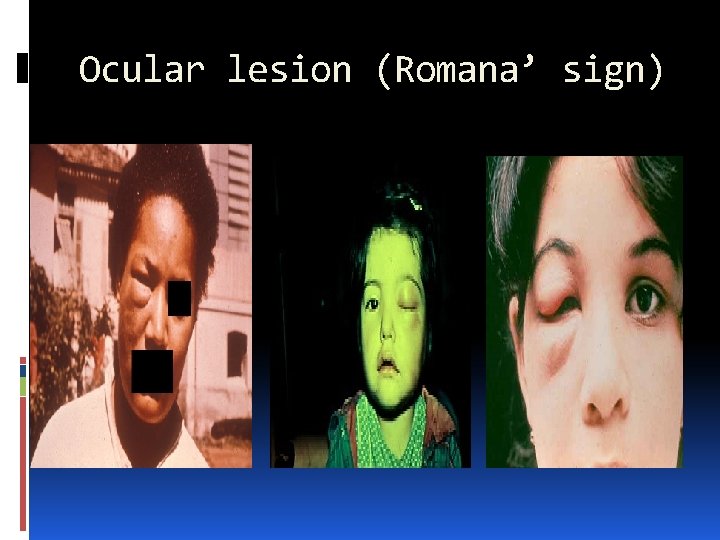
Ocular lesion (Romana’ sign)
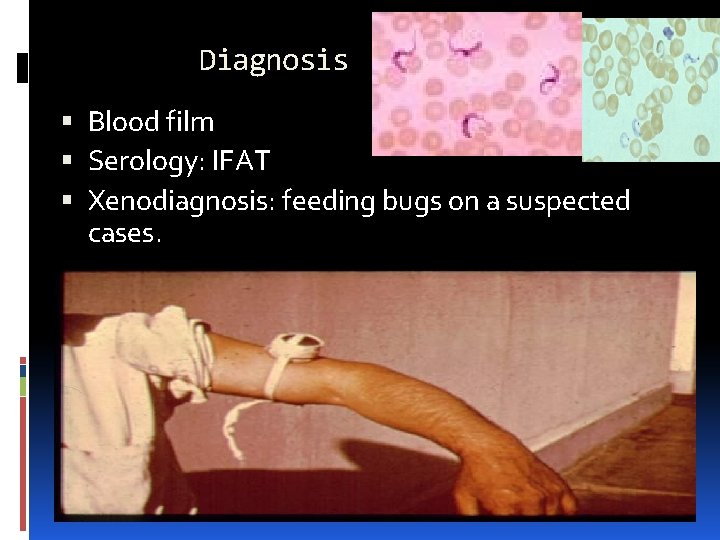
Diagnosis Blood film Serology: IFAT Xenodiagnosis: feeding bugs on a suspected cases.
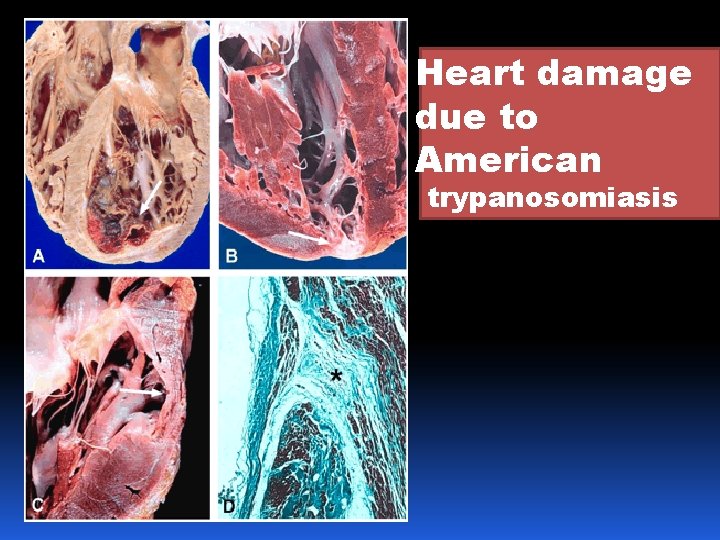
Heart damage due to American trypanosomiasis
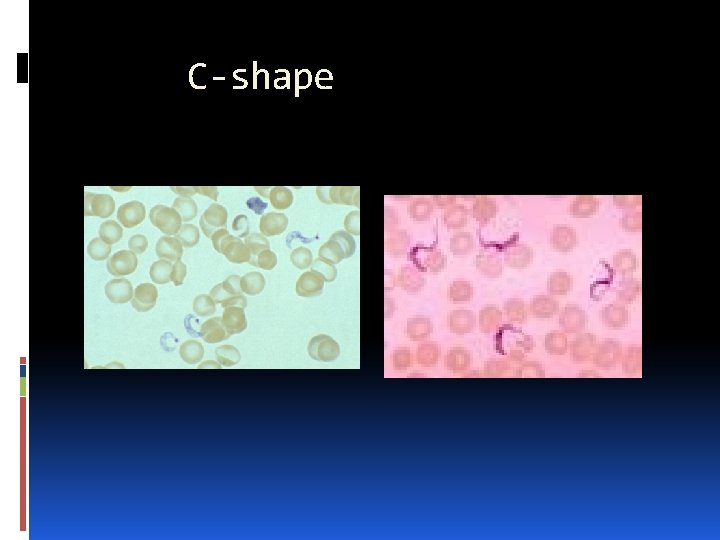
C-shape
TREATMENT OF TRYPANOSOMIASIS African trypanosomiasis For early infection pentamidine suramin For late infection eflornithine (Diflouromethylornithine- DFMO) American trypanosomiasis (Chaga’s disease) benznidazole nifurtimox
- Slides: 52