
Haemodialysis machine o principles of operation function use

- Slides: 21
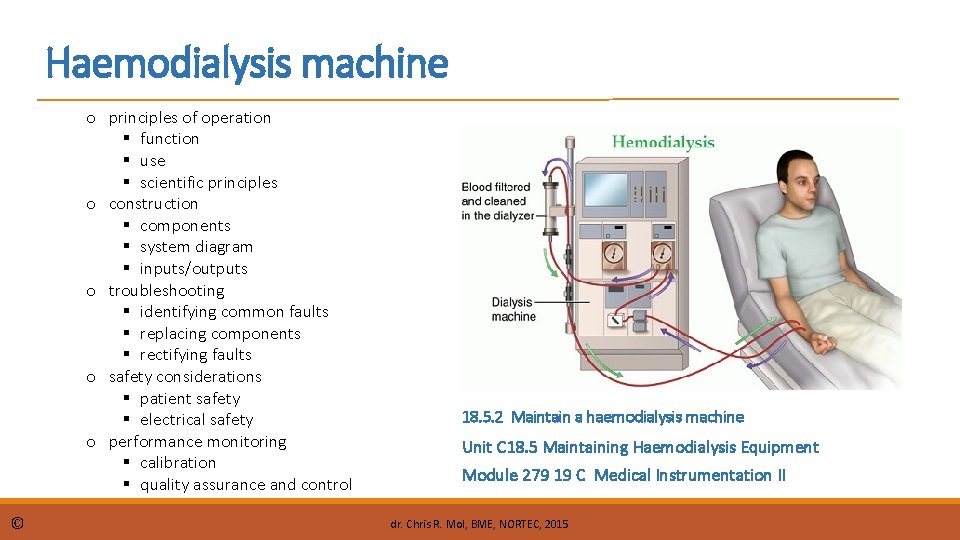
Haemodialysis machine o principles of operation function use scientific principles o construction components system diagram inputs/outputs o troubleshooting identifying common faults replacing components rectifying faults o safety considerations patient safety electrical safety o performance monitoring calibration quality assurance and control © 18. 5. 2 Maintain a haemodialysis machine Unit C 18. 5 Maintaining Haemodialysis Equipment Module 279 19 C Medical Instrumentation II dr. Chris R. Mol, BME, NORTEC, 2015
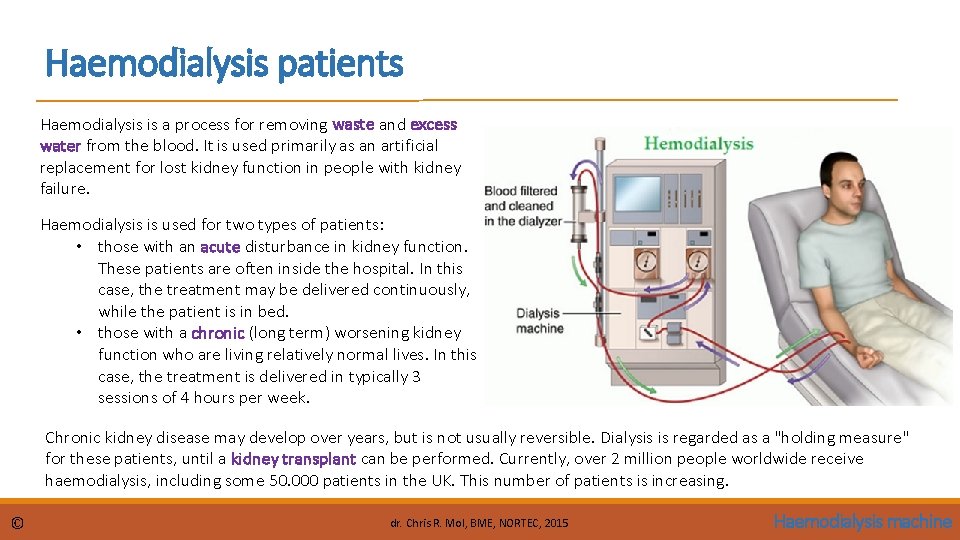
Haemodialysis patients Haemodialysis is a process for removing waste and excess water from the blood. It is used primarily as an artificial replacement for lost kidney function in people with kidney failure. Haemodialysis is used for two types of patients: • those with an acute disturbance in kidney function. These patients are often inside the hospital. In this case, the treatment may be delivered continuously, while the patient is in bed. • those with a chronic (long term) worsening kidney function who are living relatively normal lives. In this case, the treatment is delivered in typically 3 sessions of 4 hours per week. Chronic kidney disease may develop over years, but is not usually reversible. Dialysis is regarded as a "holding measure" for these patients, until a kidney transplant can be performed. Currently, over 2 million people worldwide receive haemodialysis, including some 50. 000 patients in the UK. This number of patients is increasing. © dr. Chris R. Mol, BME, NORTEC, 2015 Haemodialysis machine
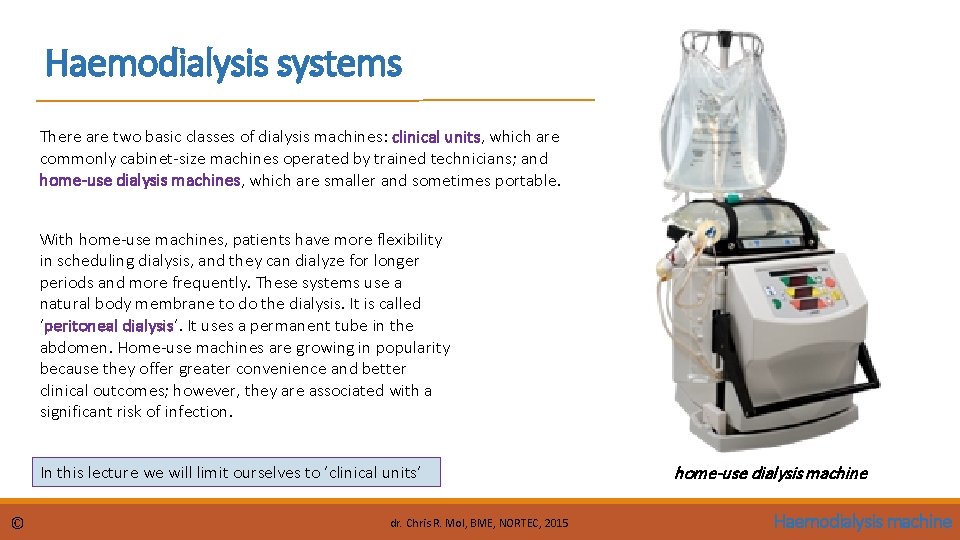
Haemodialysis systems There are two basic classes of dialysis machines: clinical units, which are commonly cabinet-size machines operated by trained technicians; and home-use dialysis machines, which are smaller and sometimes portable. With home-use machines, patients have more flexibility in scheduling dialysis, and they can dialyze for longer periods and more frequently. These systems use a natural body membrane to do the dialysis. It is called ‘peritoneal dialysis’. It uses a permanent tube in the abdomen. Home-use machines are growing in popularity because they offer greater convenience and better clinical outcomes; however, they are associated with a significant risk of infection. In this lecture we will limit ourselves to ‘clinical units’ © dr. Chris R. Mol, BME, NORTEC, 2015 home-use dialysis machine Haemodialysis machine
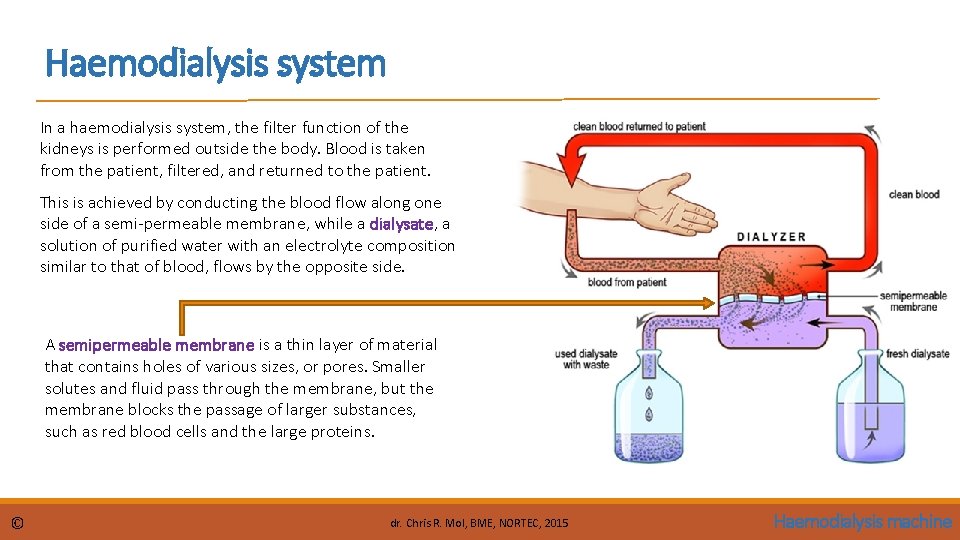
Haemodialysis system In a haemodialysis system, the filter function of the kidneys is performed outside the body. Blood is taken from the patient, filtered, and returned to the patient. This is achieved by conducting the blood flow along one side of a semi-permeable membrane, while a dialysate, a solution of purified water with an electrolyte composition similar to that of blood, flows by the opposite side. A semipermeable membrane is a thin layer of material that contains holes of various sizes, or pores. Smaller solutes and fluid pass through the membrane, but the membrane blocks the passage of larger substances, such as red blood cells and the large proteins. © dr. Chris R. Mol, BME, NORTEC, 2015 Haemodialysis machine
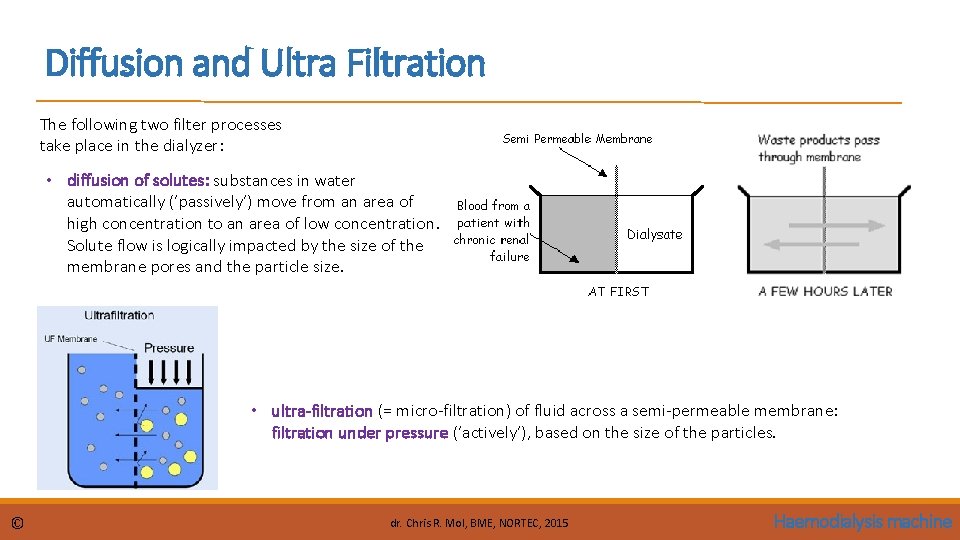
Diffusion and Ultra Filtration The following two filter processes take place in the dialyzer: • diffusion of solutes: substances in water automatically (‘passively’) move from an area of high concentration to an area of low concentration. Solute flow is logically impacted by the size of the membrane pores and the particle size. • ultra-filtration (= micro-filtration) of fluid across a semi-permeable membrane: filtration under pressure (‘actively’), based on the size of the particles. © dr. Chris R. Mol, BME, NORTEC, 2015 Haemodialysis machine
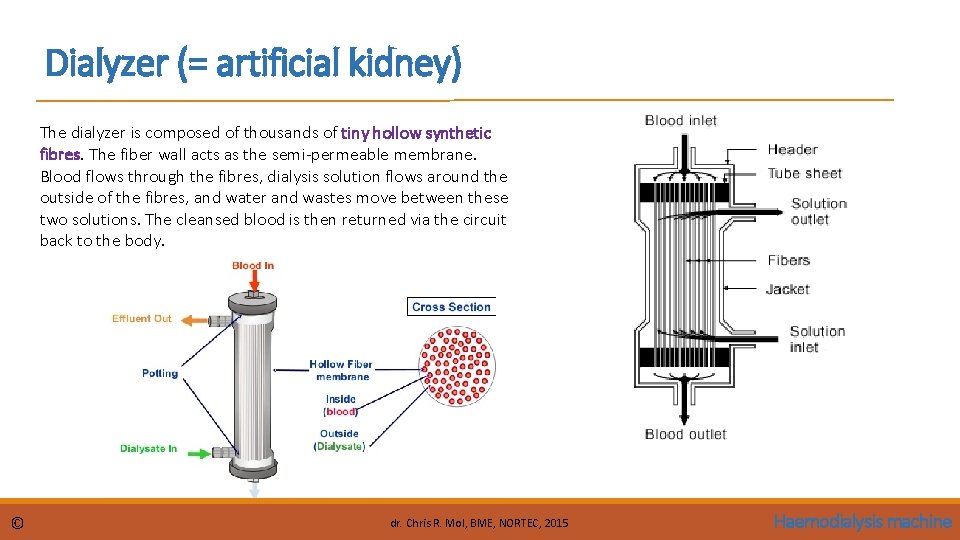
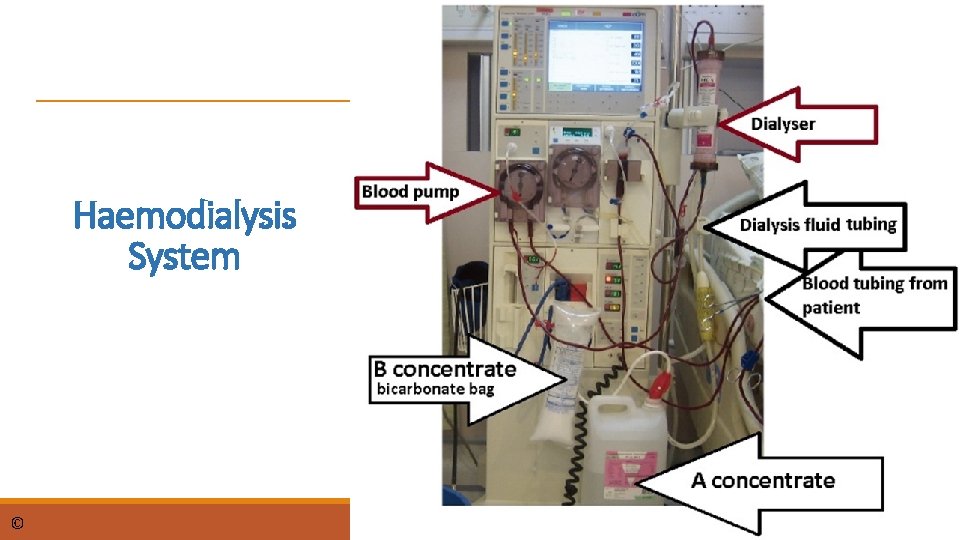
Dialyzer (= artificial kidney) The dialyzer is composed of thousands of tiny hollow synthetic fibres. The fiber wall acts as the semi-permeable membrane. Blood flows through the fibres, dialysis solution flows around the outside of the fibres, and water and wastes move between these two solutions. The cleansed blood is then returned via the circuit back to the body. © dr. Chris R. Mol, BME, NORTEC, 2015 Haemodialysis machine
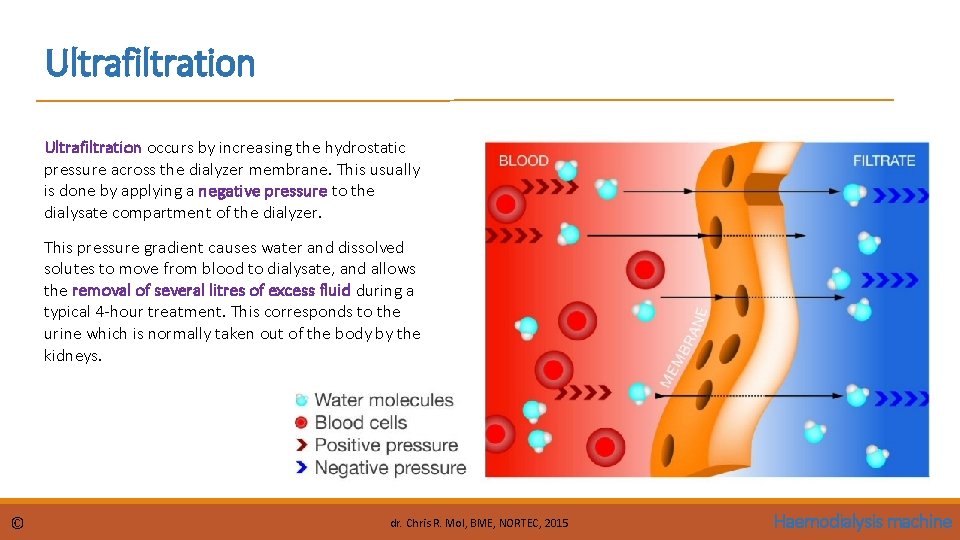
Ultrafiltration occurs by increasing the hydrostatic pressure across the dialyzer membrane. This usually is done by applying a negative pressure to the dialysate compartment of the dialyzer. This pressure gradient causes water and dissolved solutes to move from blood to dialysate, and allows the removal of several litres of excess fluid during a typical 4 -hour treatment. This corresponds to the urine which is normally taken out of the body by the kidneys. © dr. Chris R. Mol, BME, NORTEC, 2015 Haemodialysis machine
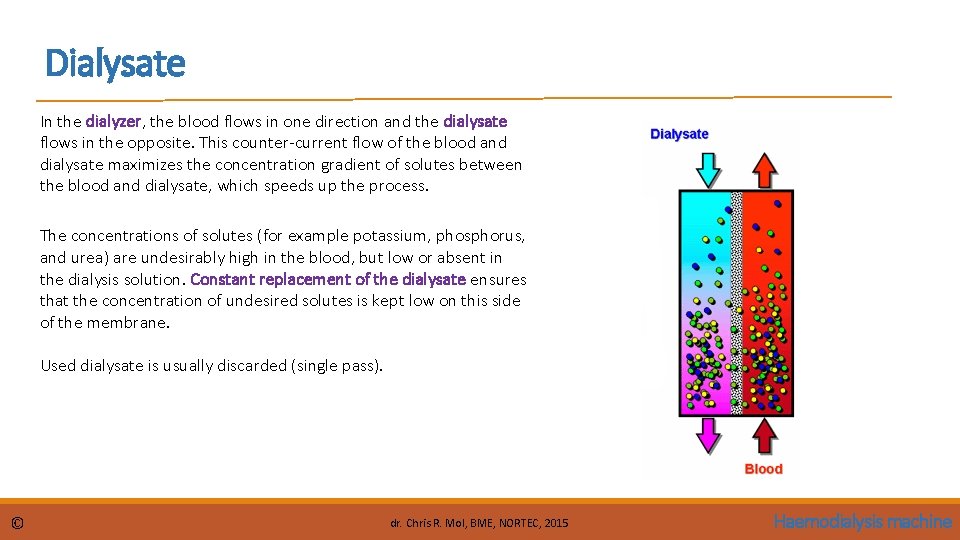
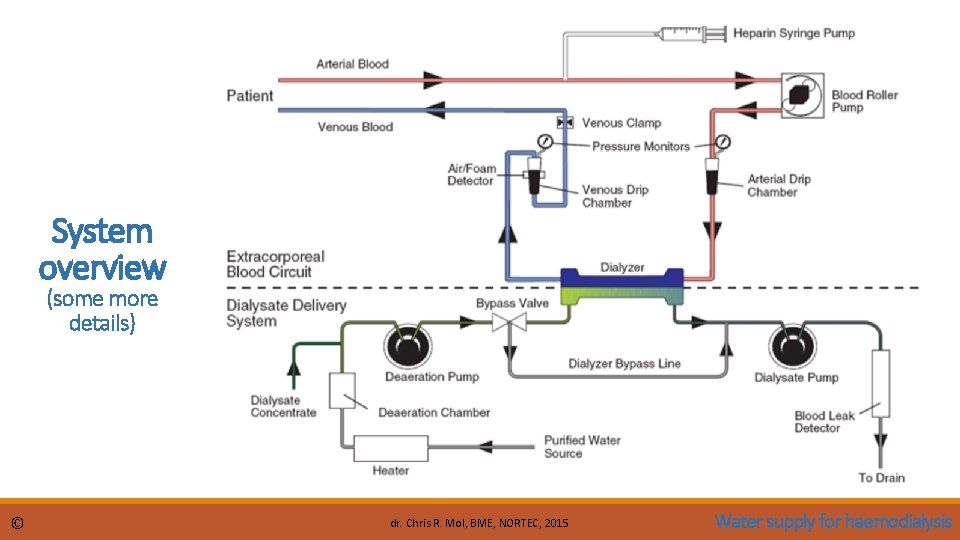
Dialysate In the dialyzer, the blood flows in one direction and the dialysate flows in the opposite. This counter-current flow of the blood and dialysate maximizes the concentration gradient of solutes between the blood and dialysate, which speeds up the process. The concentrations of solutes (for example potassium, phosphorus, and urea) are undesirably high in the blood, but low or absent in the dialysis solution. Constant replacement of the dialysate ensures that the concentration of undesired solutes is kept low on this side of the membrane. Used dialysate is usually discarded (single pass). © dr. Chris R. Mol, BME, NORTEC, 2015 Haemodialysis machine
Haemodialysis System © dr. Chris R. Mol, BME, NORTEC, 2015 Haemodialysis machine
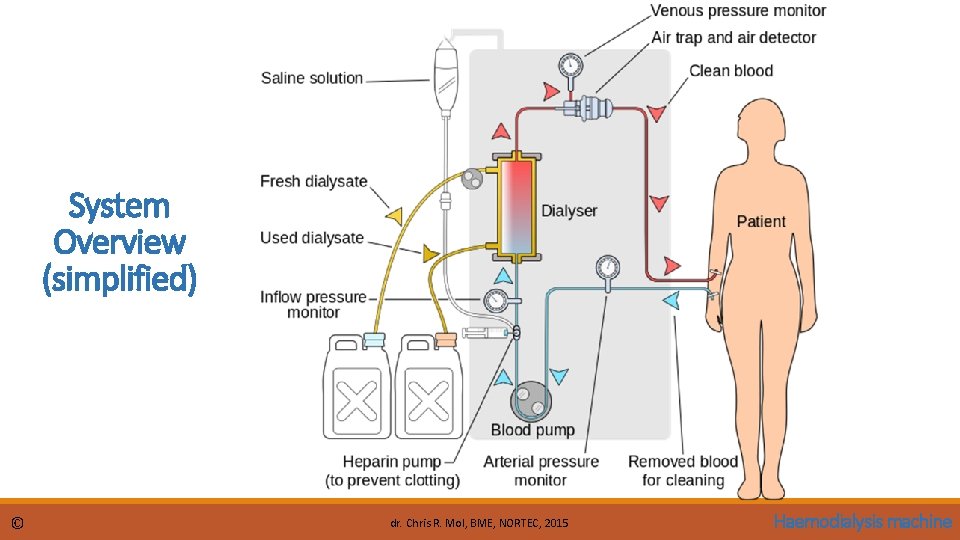
System Overview (simplified) © dr. Chris R. Mol, BME, NORTEC, 2015 Haemodialysis machine
System overview (some more details) © dr. Chris R. Mol, BME, NORTEC, 2015 Water supply for haemodialysis
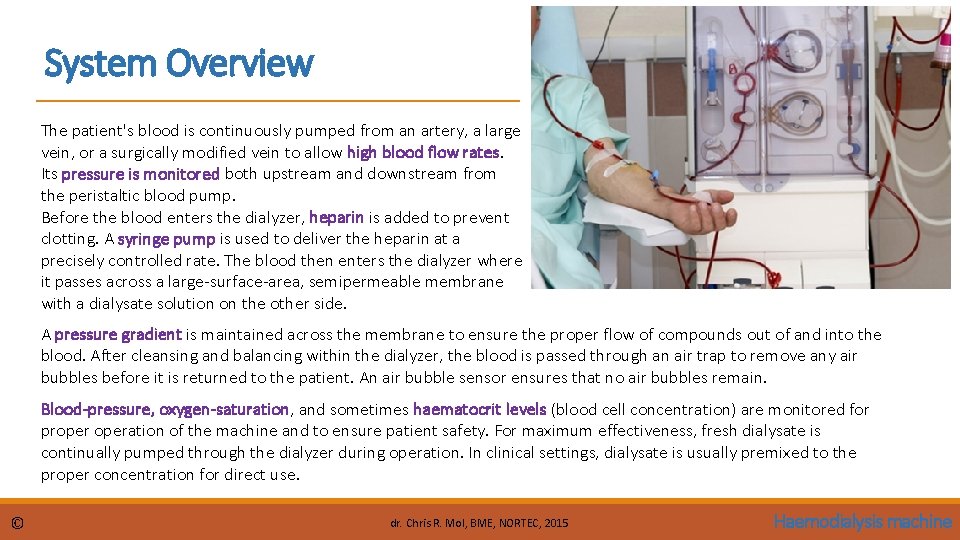
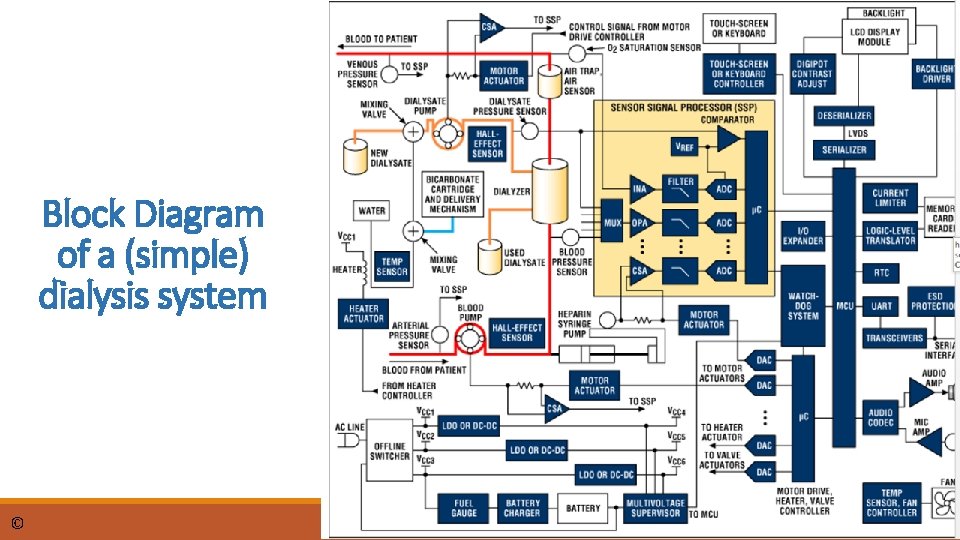
System Overview The patient's blood is continuously pumped from an artery, a large vein, or a surgically modified vein to allow high blood flow rates. Its pressure is monitored both upstream and downstream from the peristaltic blood pump. Before the blood enters the dialyzer, heparin is added to prevent clotting. A syringe pump is used to deliver the heparin at a precisely controlled rate. The blood then enters the dialyzer where it passes across a large-surface-area, semipermeable membrane with a dialysate solution on the other side. A pressure gradient is maintained across the membrane to ensure the proper flow of compounds out of and into the blood. After cleansing and balancing within the dialyzer, the blood is passed through an air trap to remove any air bubbles before it is returned to the patient. An air bubble sensor ensures that no air bubbles remain. Blood-pressure, oxygen-saturation, and sometimes haematocrit levels (blood cell concentration) are monitored for properation of the machine and to ensure patient safety. For maximum effectiveness, fresh dialysate is continually pumped through the dialyzer during operation. In clinical settings, dialysate is usually premixed to the proper concentration for direct use. © dr. Chris R. Mol, BME, NORTEC, 2015 Haemodialysis machine
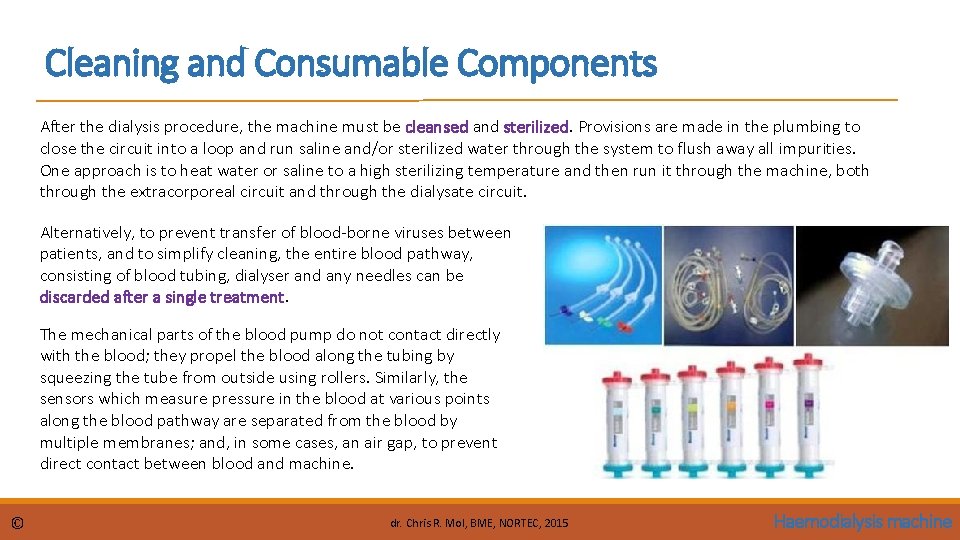
Cleaning and Consumable Components After the dialysis procedure, the machine must be cleansed and sterilized. Provisions are made in the plumbing to close the circuit into a loop and run saline and/or sterilized water through the system to flush away all impurities. One approach is to heat water or saline to a high sterilizing temperature and then run it through the machine, both through the extracorporeal circuit and through the dialysate circuit. Alternatively, to prevent transfer of blood-borne viruses between patients, and to simplify cleaning, the entire blood pathway, consisting of blood tubing, dialyser and any needles can be discarded after a single treatment. The mechanical parts of the blood pump do not contact directly with the blood; they propel the blood along the tubing by squeezing the tube from outside using rollers. Similarly, the sensors which measure pressure in the blood at various points along the blood pathway are separated from the blood by multiple membranes; and, in some cases, an air gap, to prevent direct contact between blood and machine. © dr. Chris R. Mol, BME, NORTEC, 2015 Haemodialysis machine
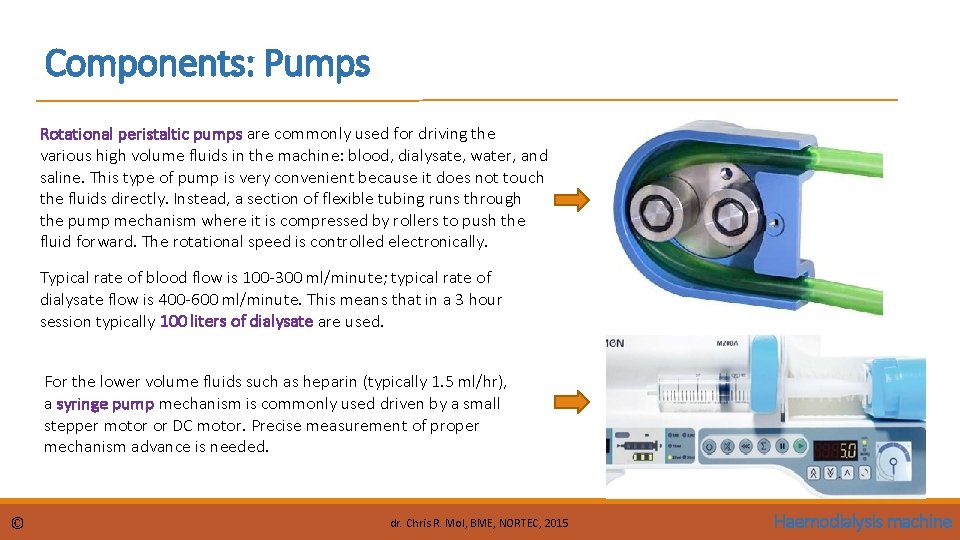
Components: Pumps Rotational peristaltic pumps are commonly used for driving the various high volume fluids in the machine: blood, dialysate, water, and saline. This type of pump is very convenient because it does not touch the fluids directly. Instead, a section of flexible tubing runs through the pump mechanism where it is compressed by rollers to push the fluid forward. The rotational speed is controlled electronically. Typical rate of blood flow is 100 -300 ml/minute; typical rate of dialysate flow is 400 -600 ml/minute. This means that in a 3 hour session typically 100 liters of dialysate are used. For the lower volume fluids such as heparin (typically 1. 5 ml/hr), a syringe pump mechanism is commonly used driven by a small stepper motor or DC motor. Precise measurement of proper mechanism advance is needed. © dr. Chris R. Mol, BME, NORTEC, 2015 Haemodialysis machine
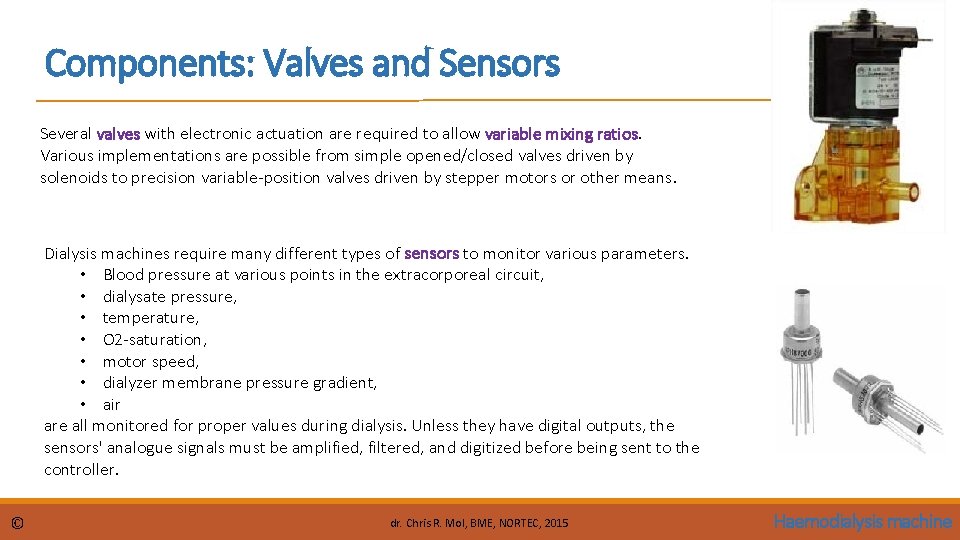
Components: Valves and Sensors Several valves with electronic actuation are required to allow variable mixing ratios. Various implementations are possible from simple opened/closed valves driven by solenoids to precision variable-position valves driven by stepper motors or other means. Dialysis machines require many different types of sensors to monitor various parameters. • Blood pressure at various points in the extracorporeal circuit, • dialysate pressure, • temperature, • O 2 -saturation, • motor speed, • dialyzer membrane pressure gradient, • air are all monitored for proper values during dialysis. Unless they have digital outputs, the sensors' analogue signals must be amplified, filtered, and digitized before being sent to the controller. © dr. Chris R. Mol, BME, NORTEC, 2015 Haemodialysis machine
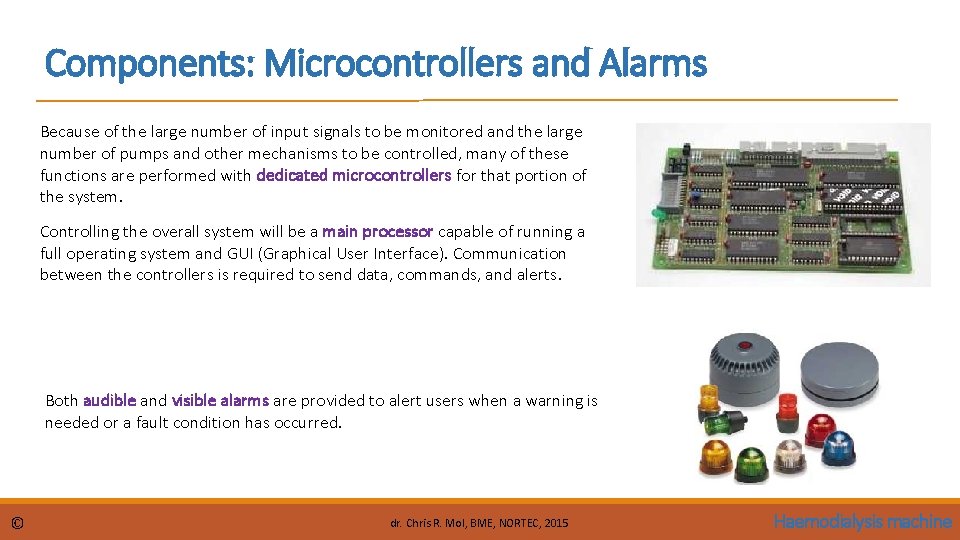
Components: Microcontrollers and Alarms Because of the large number of input signals to be monitored and the large number of pumps and other mechanisms to be controlled, many of these functions are performed with dedicated microcontrollers for that portion of the system. Controlling the overall system will be a main processor capable of running a full operating system and GUI (Graphical User Interface). Communication between the controllers is required to send data, commands, and alerts. Both audible and visible alarms are provided to alert users when a warning is needed or a fault condition has occurred. © dr. Chris R. Mol, BME, NORTEC, 2015 Haemodialysis machine
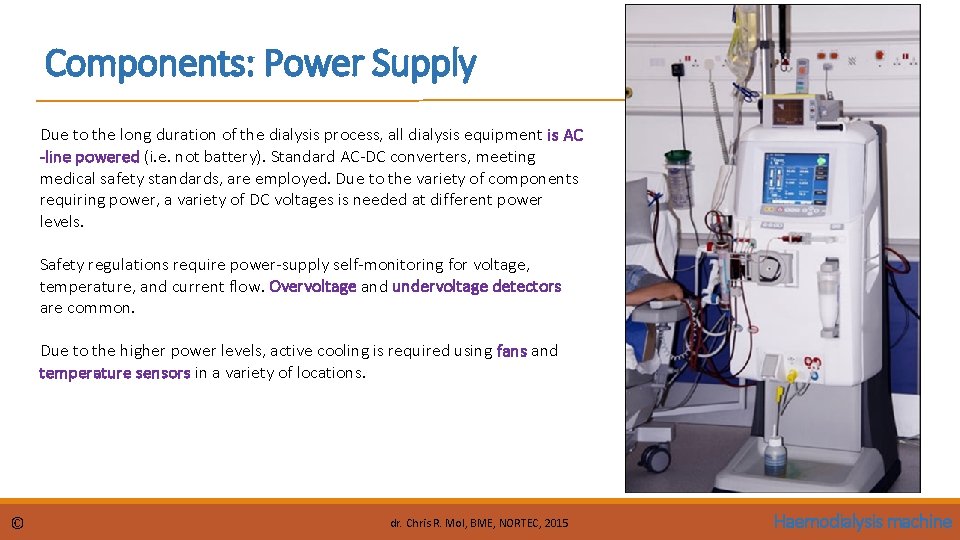
Components: Power Supply Due to the long duration of the dialysis process, all dialysis equipment is AC -line powered (i. e. not battery). Standard AC-DC converters, meeting medical safety standards, are employed. Due to the variety of components requiring power, a variety of DC voltages is needed at different power levels. Safety regulations require power-supply self-monitoring for voltage, temperature, and current flow. Overvoltage and undervoltage detectors are common. Due to the higher power levels, active cooling is required using fans and temperature sensors in a variety of locations. © dr. Chris R. Mol, BME, NORTEC, 2015 Haemodialysis machine
Block Diagram of a (simple) dialysis system © dr. Chris R. Mol, BME, NORTEC, 2015 Haemodialysis machine
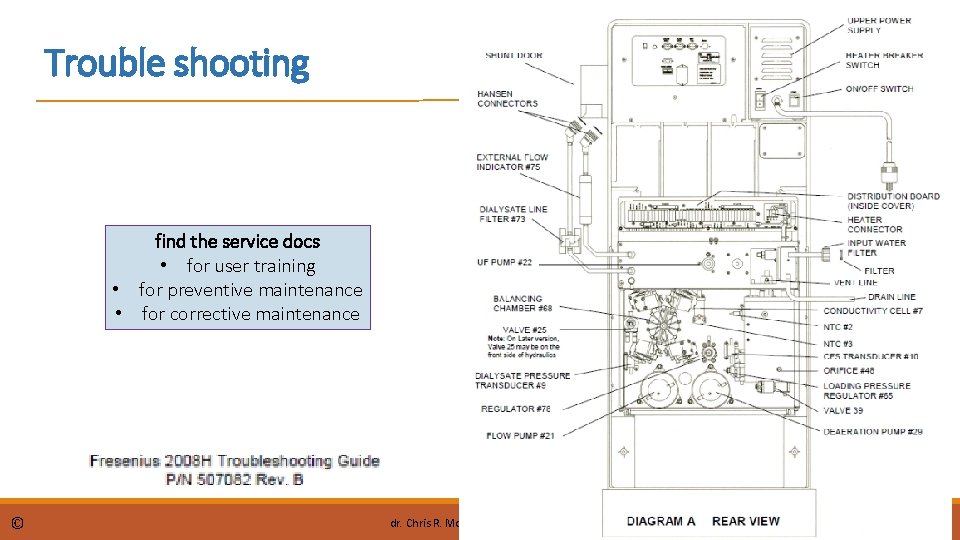
Trouble shooting find the service docs • for user training • for preventive maintenance • for corrective maintenance © dr. Chris R. Mol, BME, NORTEC, 2015 Haemodialysis machine
Safety Considerations Haemodialysis has significant risks if not extreme care is taken. The main cause of morbidity and mortality in chronic haemodialysis patients is infection. Therefore cleaning and sterilization are very important as well as the quality of the water. Strict, specific policies and procedures designed to reduce infection risks should be implemented. These policies should address issues such as sterilization and disinfection, housekeeping, laundry, maintenance, waste disposal, isolation precautions, and universal precautions. Also a top condition for the whole, complex, system is important (e. g. , sensors, pumps, alarms, calibrations, etc. ) since faulty components or settings can easily lead to patient problems. © dr. Chris R. Mol, BME, NORTEC, 2015 Haemodialysis machine
END The creation of this presentation was supported by a grant from THET: see https: //www. thet. org/