
Haematology in Primary Care Dr Josh Wright Consultant
- Slides: 47
Haematology in Primary Care Dr Josh Wright Consultant Haematologist Sheffield Teaching Hospitals
Referral Hit Parade Raised Hb Leucocytosis- neutrophilia/lymphocytosis Thrombocytosis/thrombocytopenia Paraproteins macrocytosis Low B 12 Anaemia in the elderly Microcytosis/ iron deficiency/alpha thal
Common haematological issues in primary care Lecture ► Interpreting the blood count ► Common referral issues § § § White cell problems Platelet problems Paraproteins Workshop ► Red cell issues § Erythrocytosis § Haematinics inc low B 12 Haemoglobinpathy inc alpha thal ► Anaemia in the elderly ► Any cases brought for discussion ►
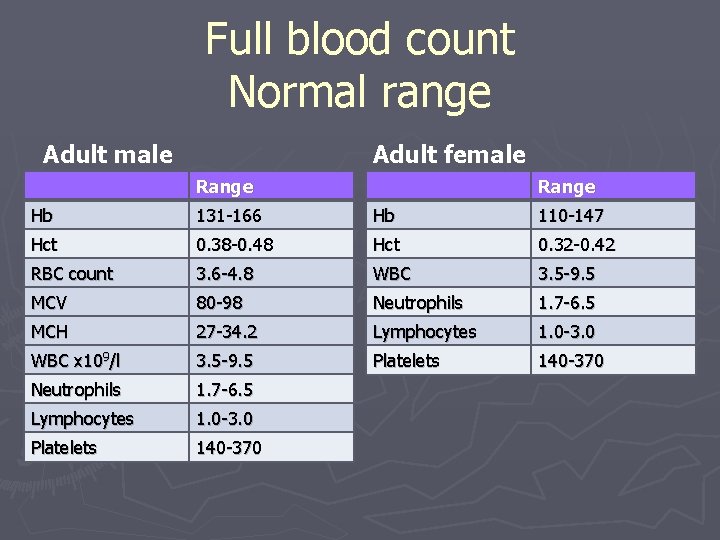
Full blood count Normal range Adult male Adult female Range Hb 131 -166 Hb 110 -147 Hct 0. 38 -0. 48 Hct 0. 32 -0. 42 RBC count 3. 6 -4. 8 WBC 3. 5 -9. 5 MCV 80 -98 Neutrophils 1. 7 -6. 5 MCH 27 -34. 2 Lymphocytes 1. 0 -3. 0 WBC x 109/l 3. 5 -9. 5 Platelets 140 -370 Neutrophils 1. 7 -6. 5 Lymphocytes 1. 0 -3. 0 Platelets 140 -370
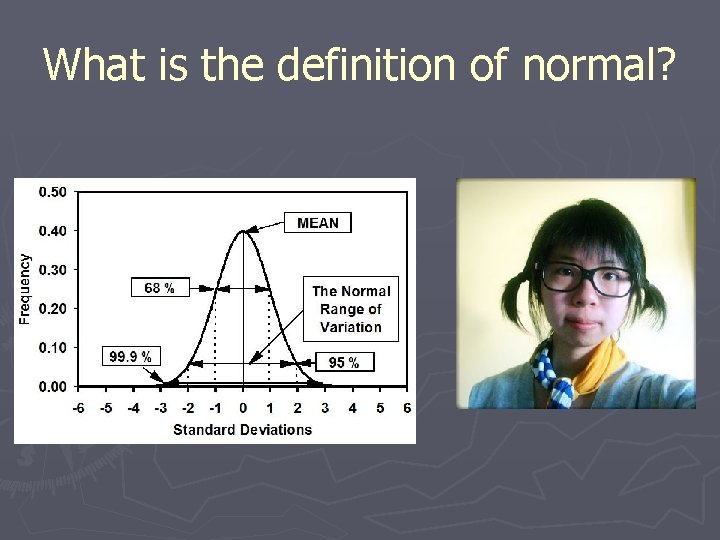
What is the definition of normal?
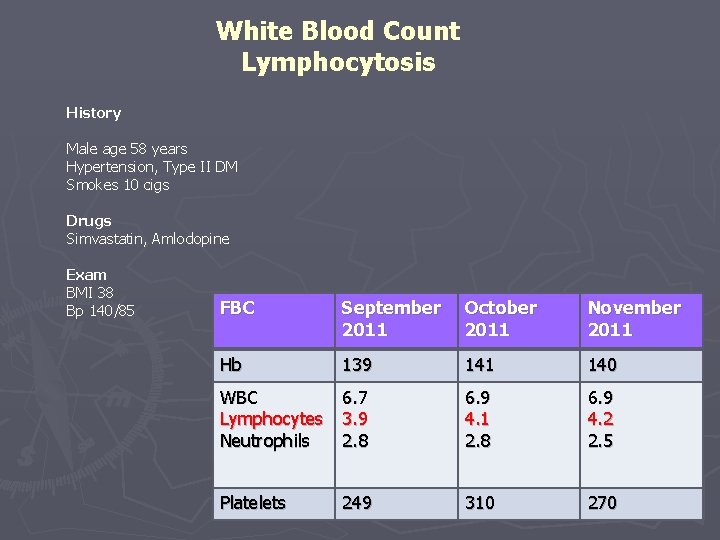
White Blood Count Lymphocytosis History Male age 58 years Hypertension, Type II DM Smokes 10 cigs Drugs Simvastatin, Amlodopine Exam BMI 38 Bp 140/85 FBC September 2011 October 2011 November 2011 Hb 139 141 140 WBC Lymphocytes Neutrophils 6. 7 3. 9 2. 8 6. 9 4. 1 2. 8 6. 9 4. 2 2. 5 Platelets 249 310 270
Lymphocytosis ► Does the patient have haematological cancer? ► Should I refer to haematology? ► Should I continue to monitor the lymphocyte count? ► Are there any other tests I should do?
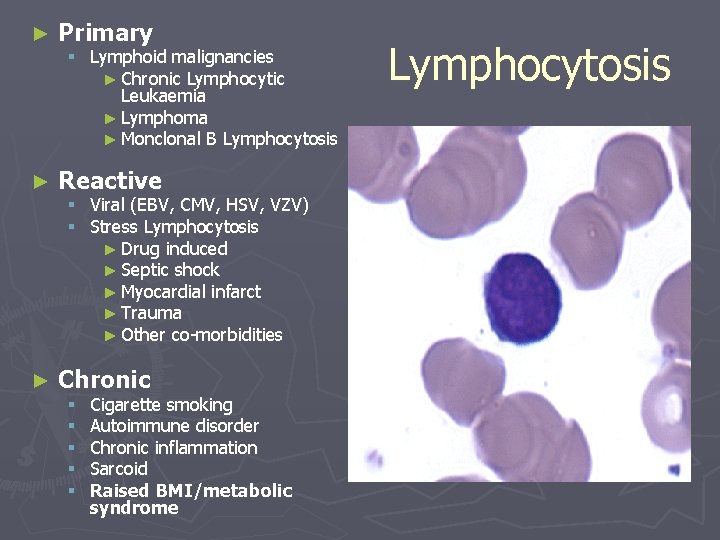
► Primary ► Reactive ► Chronic § Lymphoid malignancies ► Chronic Lymphocytic Leukaemia ► Lymphoma ► Monclonal B Lymphocytosis § Viral (EBV, CMV, HSV, VZV) § Stress Lymphocytosis ► Drug induced ► Septic shock ► Myocardial infarct ► Trauma ► Other co-morbidities § § § Cigarette smoking Autoimmune disorder Chronic inflammation Sarcoid Raised BMI/metabolic syndrome Lymphocytosis
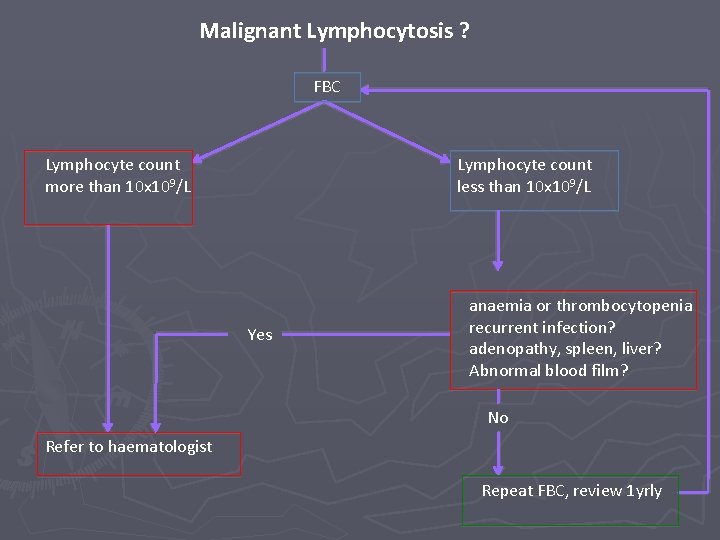
Malignant Lymphocytosis ? FBC Lymphocyte count more than 10 x 109/L Lymphocyte count less than 10 x 109/L Yes anaemia or thrombocytopenia recurrent infection? adenopathy, spleen, liver? Abnormal blood film? No Refer to haematologist Repeat FBC, review 1 yrly
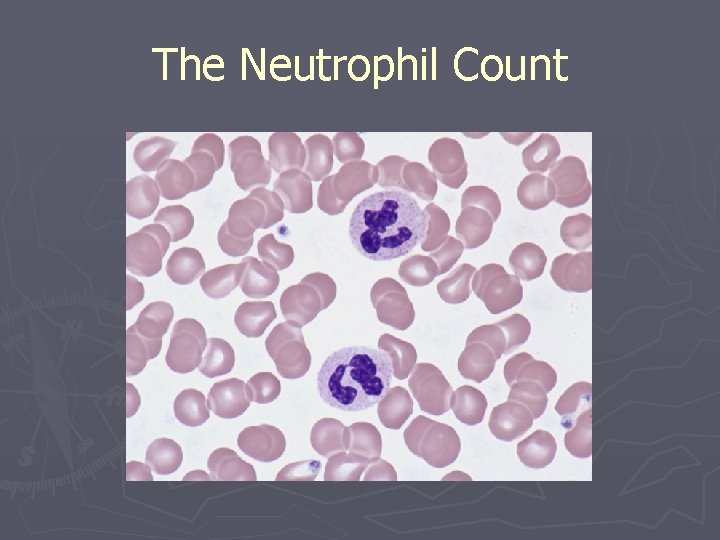
The Neutrophil Count
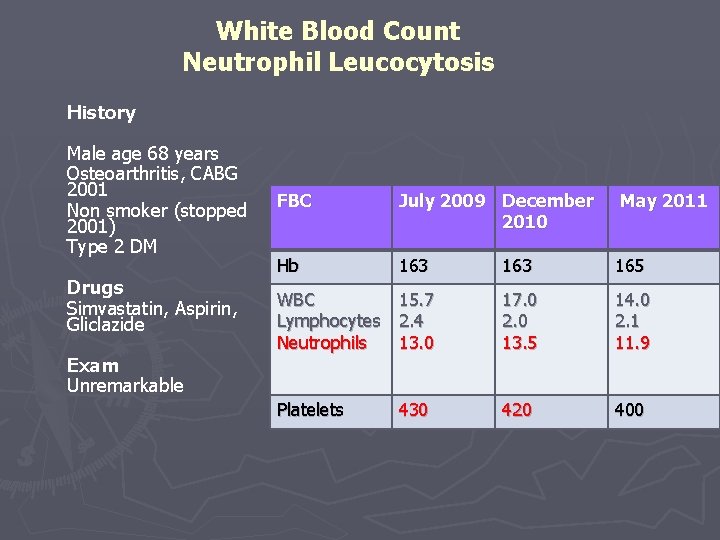
White Blood Count Neutrophil Leucocytosis History Male age 68 years Osteoarthritis, CABG 2001 Non smoker (stopped 2001) Type 2 DM Drugs Simvastatin, Aspirin, Gliclazide Exam Unremarkable FBC July 2009 December 2010 May 2011 Hb 163 165 WBC Lymphocytes Neutrophils 15. 7 2. 4 13. 0 17. 0 2. 0 13. 5 14. 0 2. 1 11. 9 Platelets 430 420 400
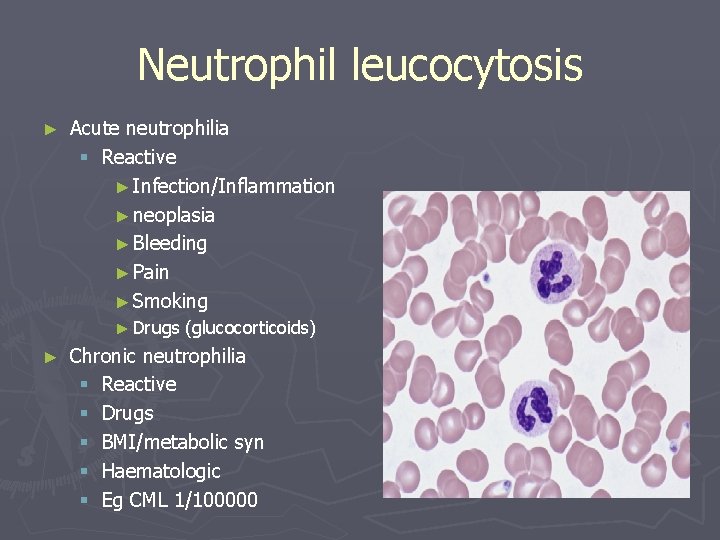
Neutrophil leucocytosis ► Acute neutrophilia § Reactive ► Infection/Inflammation ► neoplasia ► Bleeding ► Pain ► Smoking ► Drugs ► (glucocorticoids) Chronic neutrophilia § Reactive § Drugs § BMI/metabolic syn § Haematologic § Eg CML 1/100000
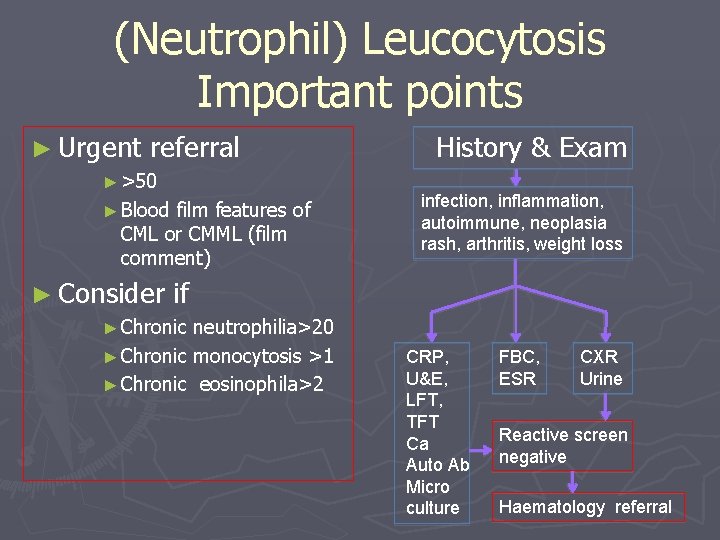
(Neutrophil) Leucocytosis Important points ► Urgent referral ► >50 ► Blood film features of CML or CMML (film comment) ► Consider History & Exam infection, inflammation, autoimmune, neoplasia rash, arthritis, weight loss if ► Chronic neutrophilia>20 ► Chronic monocytosis >1 ► Chronic eosinophila>2 CRP, U&E, LFT, TFT Ca Auto Ab Micro culture FBC, ESR CXR Urine Reactive screen negative Haematology referral
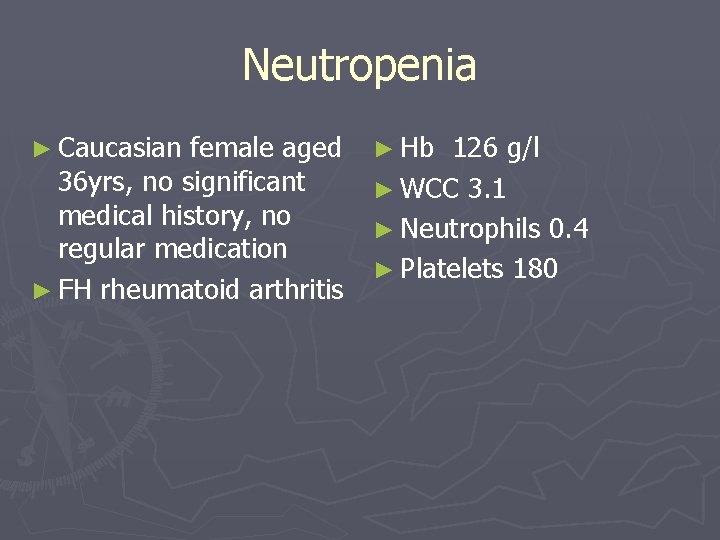
Neutropenia ► Caucasian female aged 36 yrs, no significant medical history, no regular medication ► FH rheumatoid arthritis ► Hb 126 g/l ► WCC 3. 1 ► Neutrophils 0. 4 ► Platelets 180
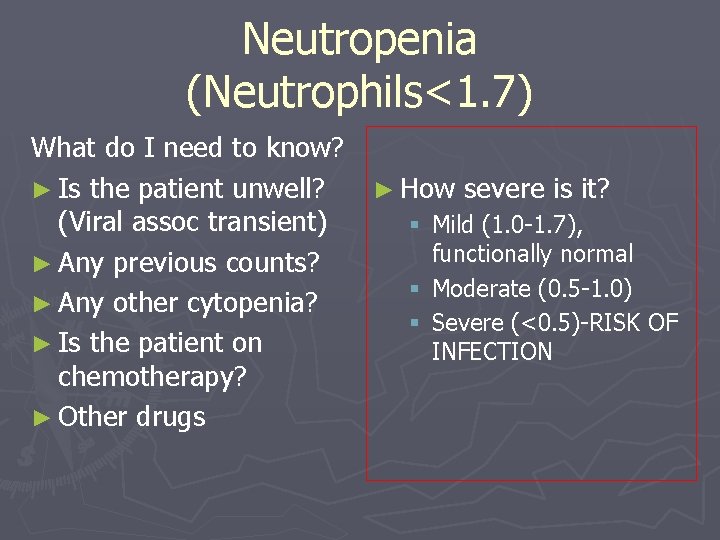
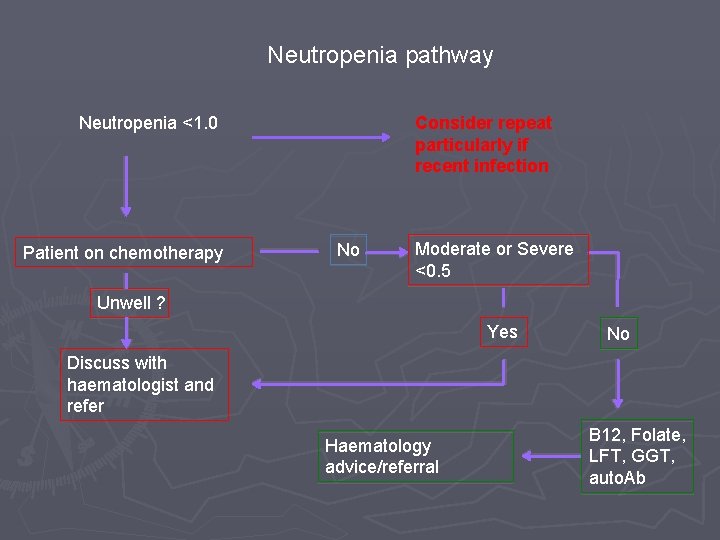
Neutropenia (Neutrophils<1. 7) What do I need to know? ► Is the patient unwell? ► How severe is it? (Viral assoc transient) § Mild (1. 0 -1. 7), functionally normal ► Any previous counts? § Moderate (0. 5 -1. 0) ► Any other cytopenia? § Severe (<0. 5)-RISK OF ► Is the patient on INFECTION chemotherapy? ► Other drugs
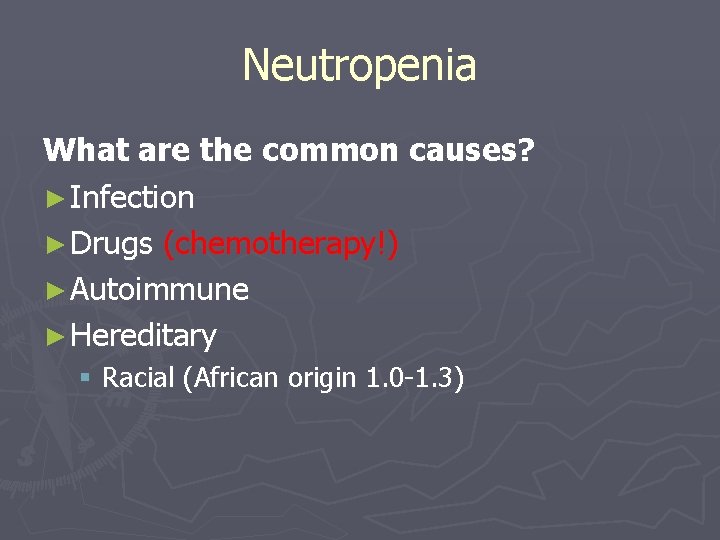
Neutropenia What are the common causes? ► Infection ► Drugs (chemotherapy!) ► Autoimmune ► Hereditary § Racial (African origin 1. 0 -1. 3)
Neutropenia pathway Neutropenia <1. 0 Patient on chemotherapy Consider repeat particularly if recent infection No Moderate or Severe <0. 5 Unwell ? Yes No Discuss with haematologist and refer Haematology advice/referral B 12, Folate, LFT, GGT, auto. Ab
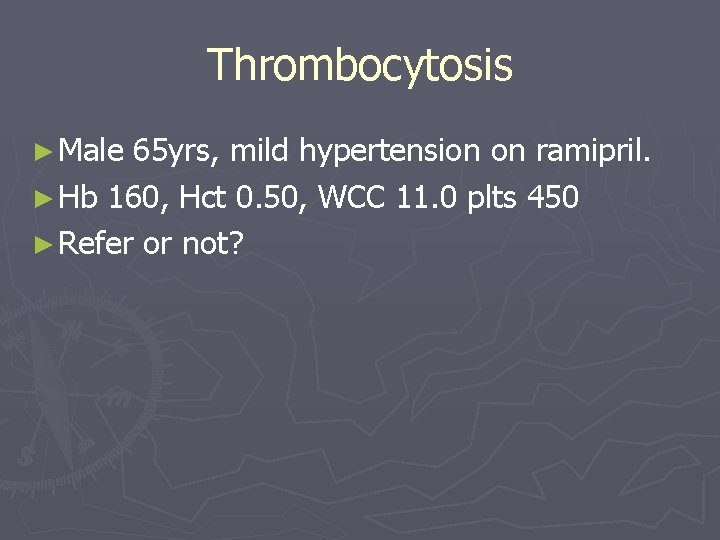
Thrombocytosis ► Male 65 yrs, mild hypertension on ramipril. ► Hb 160, Hct 0. 50, WCC 11. 0 plts 450 ► Refer or not?
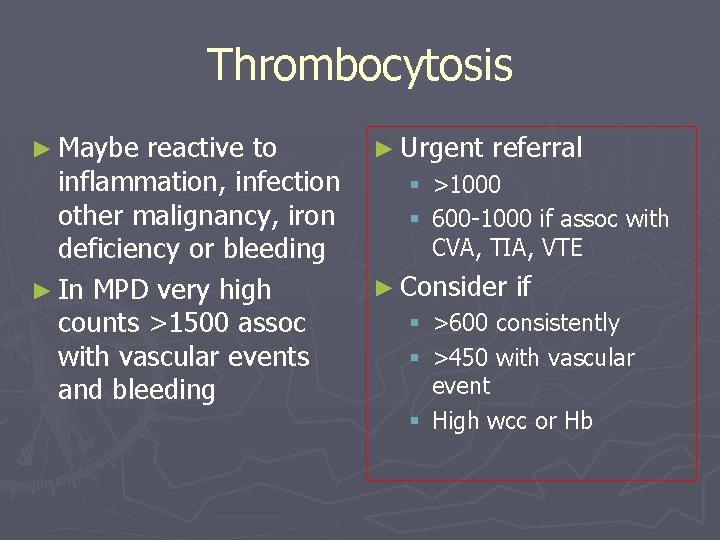
Thrombocytosis ► Maybe reactive to inflammation, infection other malignancy, iron deficiency or bleeding ► In MPD very high counts >1500 assoc with vascular events and bleeding ► Urgent referral § >1000 § 600 -1000 if assoc with CVA, TIA, VTE ► Consider if § >600 consistently § >450 with vascular event § High wcc or Hb
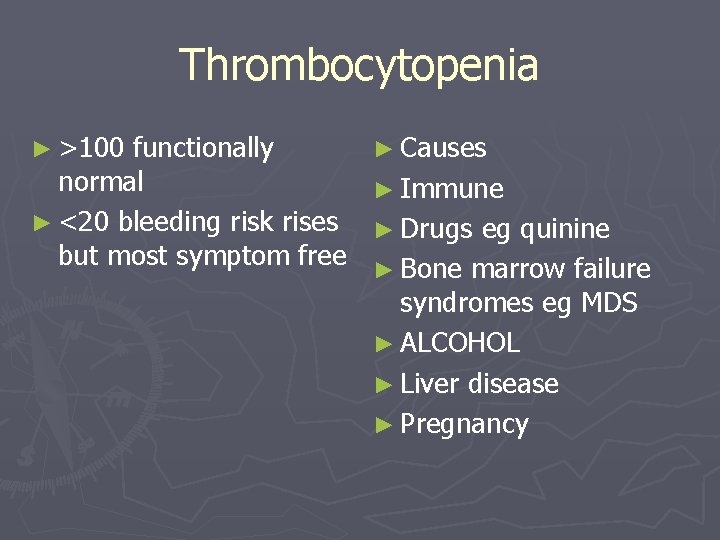
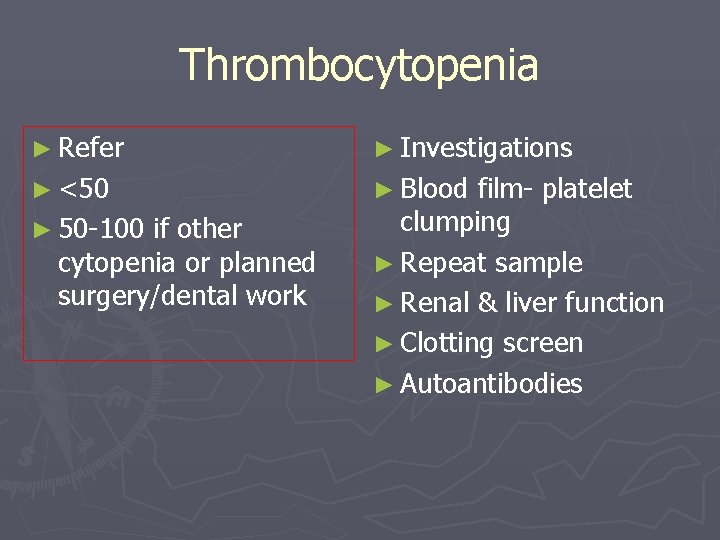
Thrombocytopenia ► >100 functionally normal ► <20 bleeding risk rises but most symptom free ► Causes ► Immune ► Drugs eg quinine ► Bone marrow failure syndromes eg MDS ► ALCOHOL ► Liver disease ► Pregnancy
Thrombocytopenia ► Refer ► Investigations ► <50 ► Blood ► 50 -100 if other cytopenia or planned surgery/dental work film- platelet clumping ► Repeat sample ► Renal & liver function ► Clotting screen ► Autoantibodies
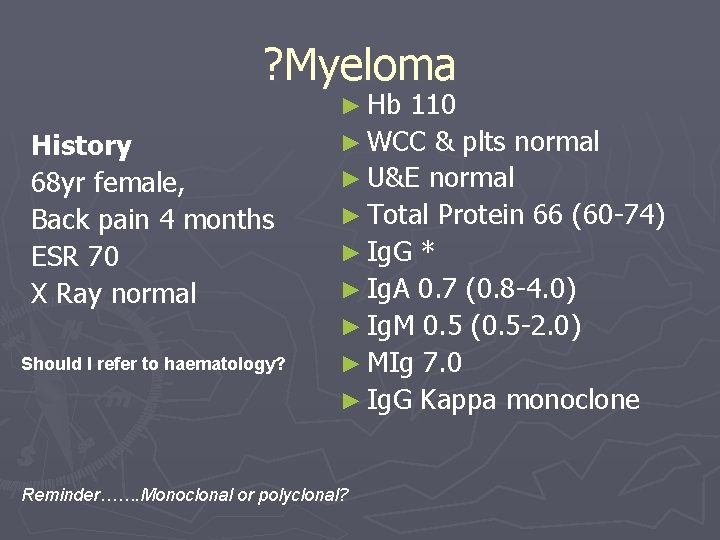
? Myeloma ► Hb History 68 yr female, Back pain 4 months ESR 70 X Ray normal Should I refer to haematology? 110 ► WCC & plts normal ► U&E normal ► Total Protein 66 (60 -74) ► Ig. G * ► Ig. A 0. 7 (0. 8 -4. 0) ► Ig. M 0. 5 (0. 5 -2. 0) ► MIg 7. 0 ► Ig. G Kappa monoclone Reminder……. Monoclonal or polyclonal?
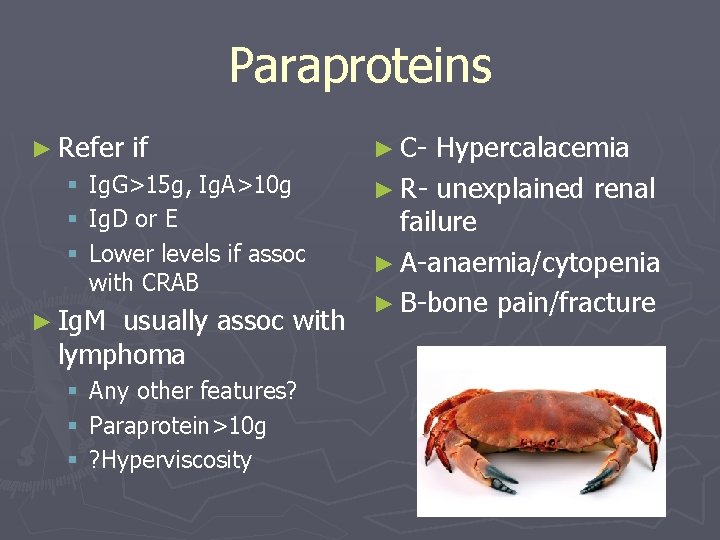
Paraproteins ► Refer § § § if Ig. G>15 g, Ig. A>10 g Ig. D or E Lower levels if assoc with CRAB ► Ig. M usually assoc with lymphoma § § § Any other features? Paraprotein>10 g ? Hyperviscosity ► C- Hypercalacemia ► R- unexplained renal failure ► A-anaemia/cytopenia ► B-bone pain/fracture
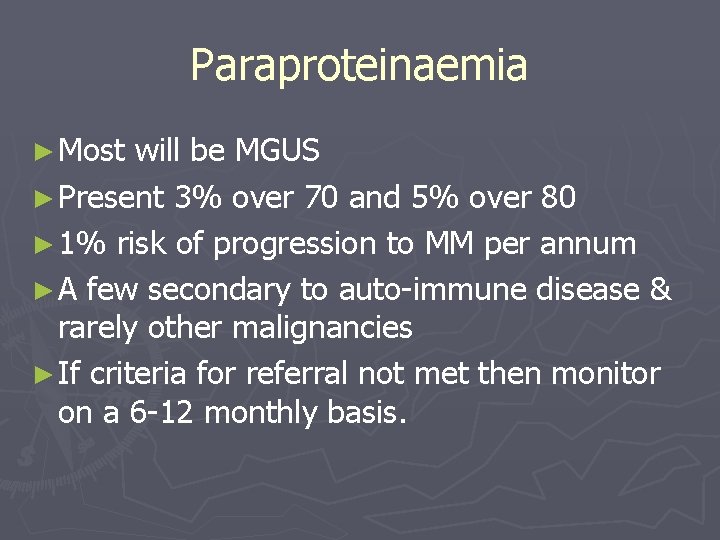
Paraproteinaemia ► Most will be MGUS ► Present 3% over 70 and 5% over 80 ► 1% risk of progression to MM per annum ► A few secondary to auto-immune disease & rarely other malignancies ► If criteria for referral not met then monitor on a 6 -12 monthly basis.
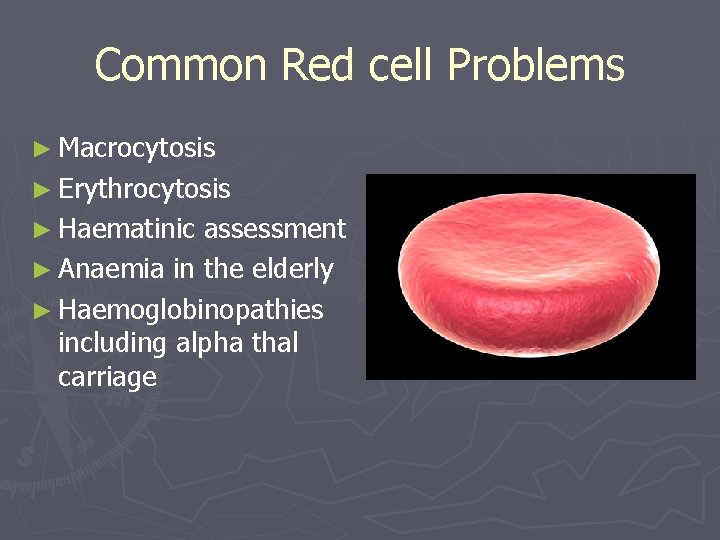
Common Red cell Problems ► Macrocytosis ► Erythrocytosis ► Haematinic assessment ► Anaemia in the elderly ► Haemoglobinopathies including alpha thal carriage
Macrocytosis ► Approx 8% population ► Commonest causes alcohol & hypothyroidism § B 12/ folate deficiency § Drugs (including those used for HIV) § Reticulocytosis § Paraprotein § Myelodysplasia (elderly population & associated with cytopenias)
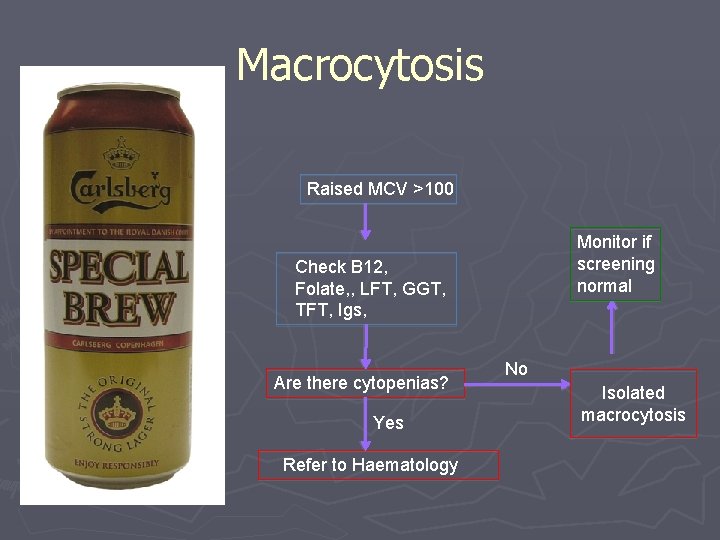
Macrocytosis Raised MCV >100 Monitor if screening normal Check B 12, Folate, , LFT, GGT, TFT, Igs, Are there cytopenias? Yes Refer to Haematology No Isolated macrocytosis
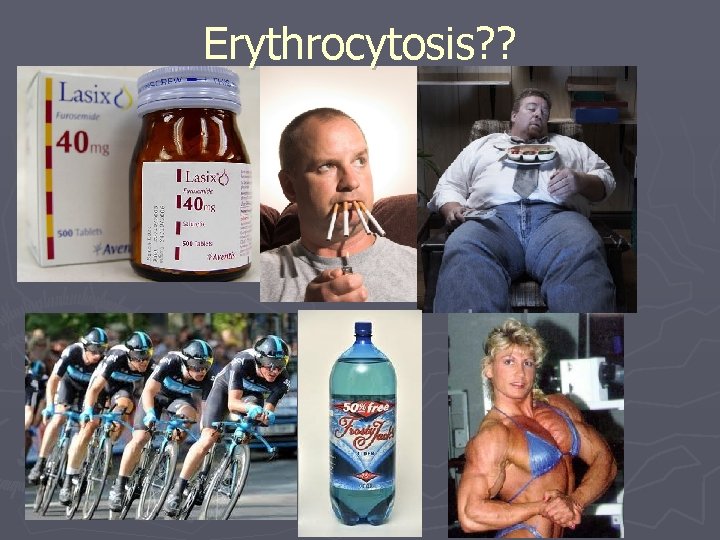
Erythrocytosis? ?
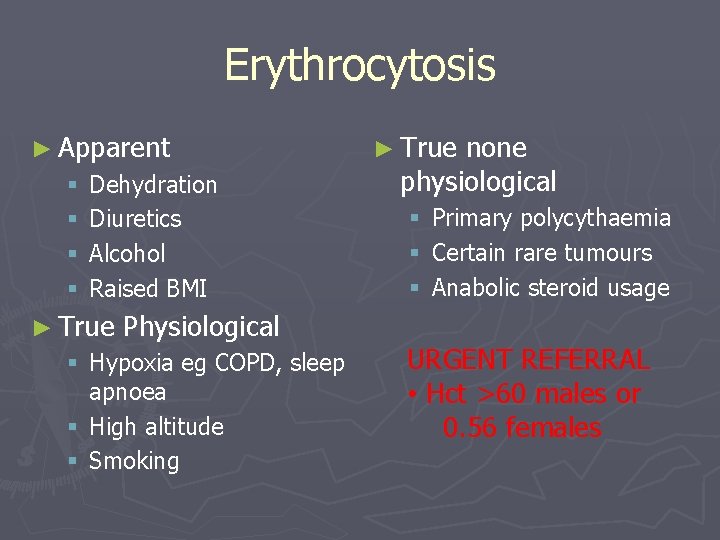
Erythrocytosis ► Apparent § § Dehydration Diuretics Alcohol Raised BMI ► True Physiological § Hypoxia eg COPD, sleep apnoea § High altitude § Smoking ► True none physiological § § § Primary polycythaemia Certain rare tumours Anabolic steroid usage URGENT REFERRAL • Hct >60 males or 0. 56 females
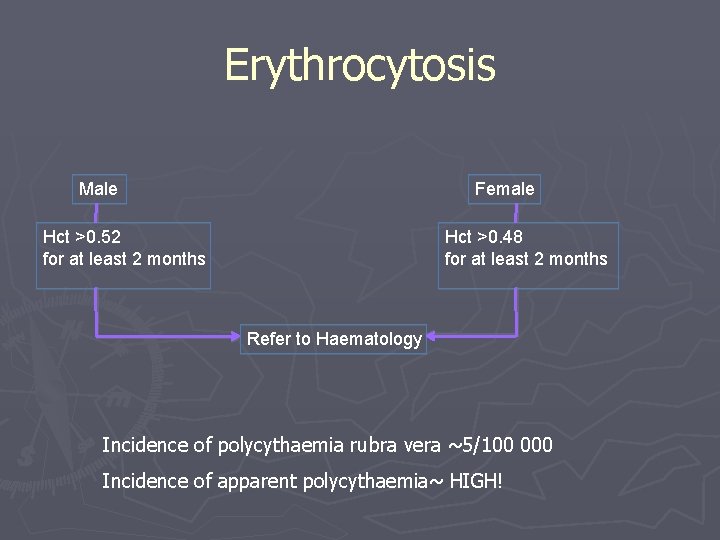
Erythrocytosis Male Female Hct >0. 52 for at least 2 months Hct >0. 48 for at least 2 months Refer to Haematology Incidence of polycythaemia rubra vera ~5/100 000 Incidence of apparent polycythaemia~ HIGH!
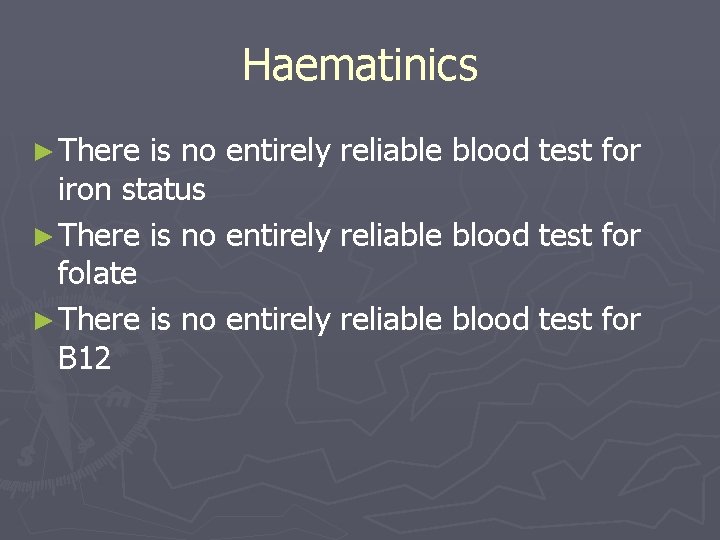
Haematinics ► There is no entirely reliable blood test for iron status ► There is no entirely reliable blood test for folate ► There is no entirely reliable blood test for B 12
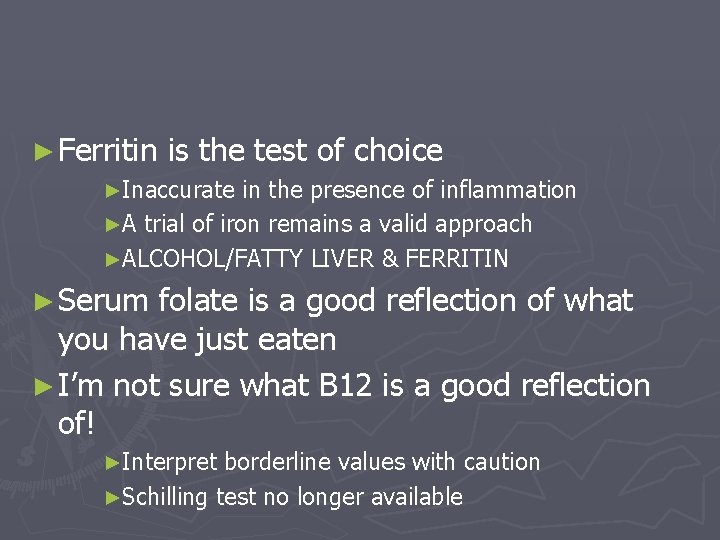
► Ferritin is the test of choice ►Inaccurate in the presence of inflammation ►A trial of iron remains a valid approach ►ALCOHOL/FATTY LIVER & FERRITIN ► Serum folate is a good reflection of what you have just eaten ► I’m not sure what B 12 is a good reflection of! ►Interpret borderline values with caution ►Schilling test no longer available
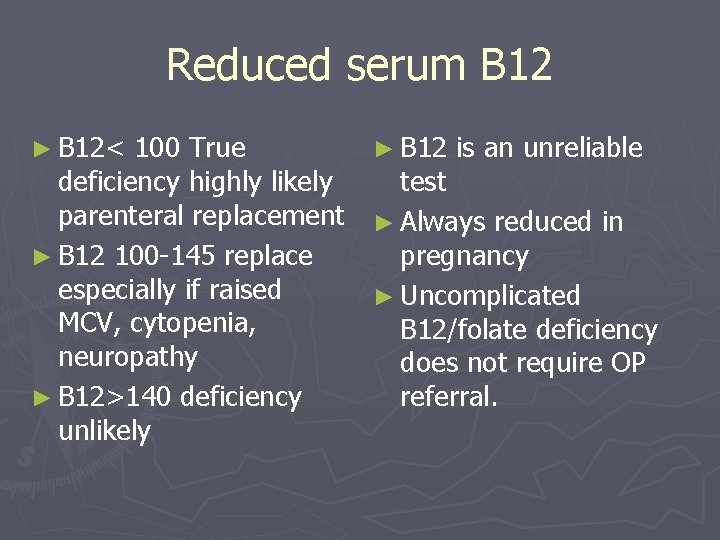
Reduced serum B 12 ► B 12< 100 True ► B 12 is an unreliable deficiency highly likely test parenteral replacement ► Always reduced in ► B 12 100 -145 replace pregnancy especially if raised ► Uncomplicated MCV, cytopenia, B 12/folate deficiency neuropathy does not require OP ► B 12>140 deficiency referral. unlikely
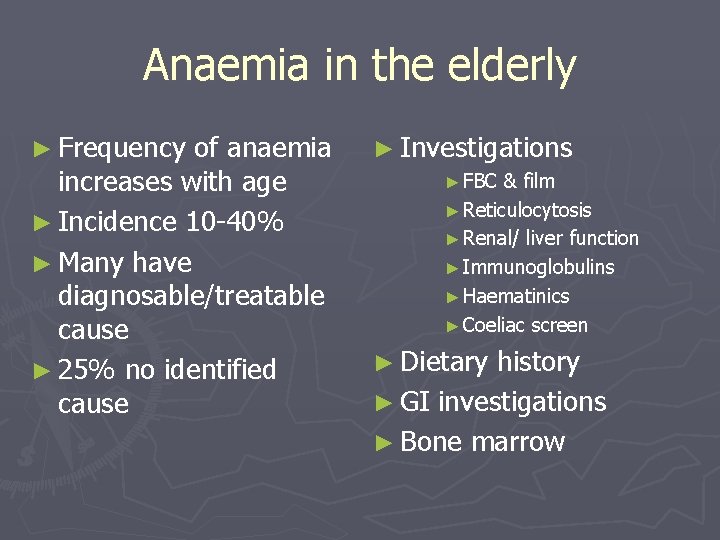
Anaemia in the elderly ► Frequency of anaemia increases with age ► Incidence 10 -40% ► Many have diagnosable/treatable cause ► 25% no identified cause ► Investigations ► FBC & film ► Reticulocytosis ► Renal/ liver function ► Immunoglobulins ► Haematinics ► Coeliac screen ► Dietary history ► GI investigations ► Bone marrow
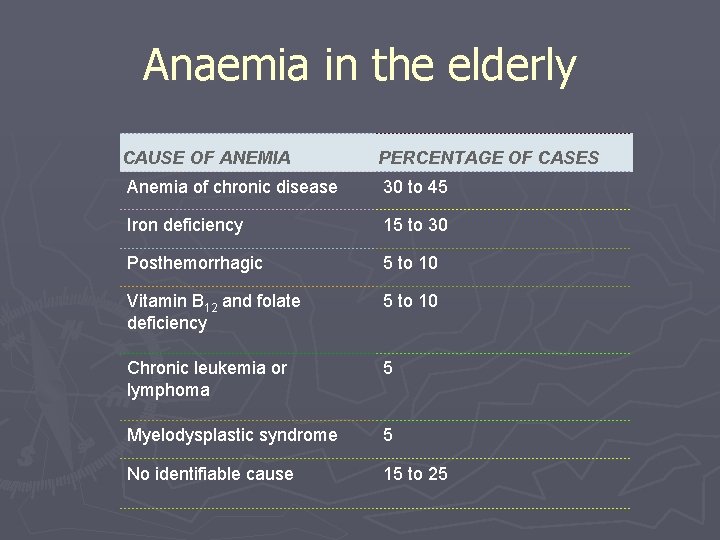
Anaemia in the elderly CAUSE OF ANEMIA PERCENTAGE OF CASES Anemia of chronic disease 30 to 45 Iron deficiency 15 to 30 Posthemorrhagic 5 to 10 Vitamin B 12 and folate deficiency 5 to 10 Chronic leukemia or lymphoma 5 Myelodysplastic syndrome 5 No identifiable cause 15 to 25
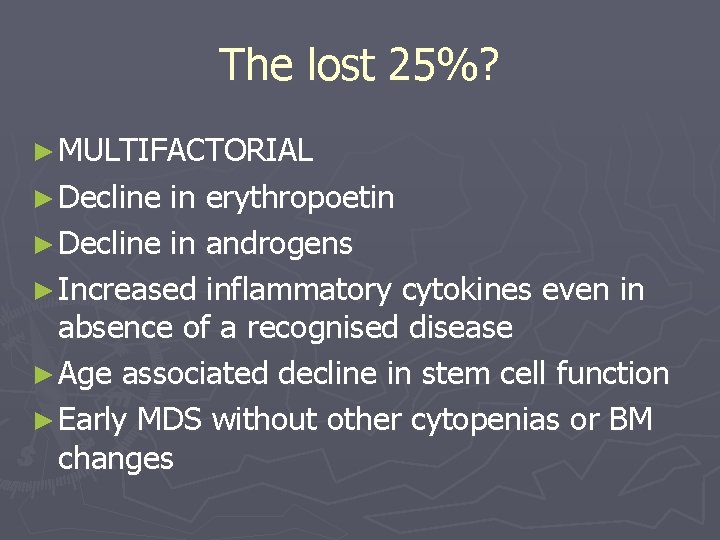
The lost 25%? ► MULTIFACTORIAL ► Decline in erythropoetin ► Decline in androgens ► Increased inflammatory cytokines even in absence of a recognised disease ► Age associated decline in stem cell function ► Early MDS without other cytopenias or BM changes
Indications for haematology referral Pancytopenia Monoclonal gammopathy Suspicion of myelodysplastic syndrome Blood smear showing immature white cells or nucleated red cells Indeterminate status of iron stores Unexplained progressive or unresponsive anemia
What are haemoglobinopathies? ► Commonest single gene disorders worldwide ► Autosomal recessive ►Disease states homozygous or combined heterozygotes ► Defects of quality or quantity of haemoglobin ►Quality ►Quantity Variant Hbs eg sickle Under production eg thals
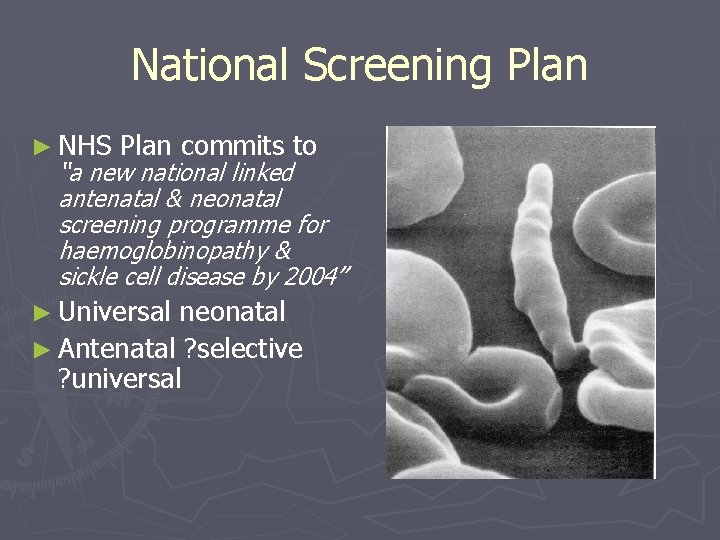
National Screening Plan ► NHS Plan commits to “a new national linked antenatal & neonatal screening programme for haemoglobinopathy & sickle cell disease by 2004” ► Universal neonatal ► Antenatal ? selective ? universal
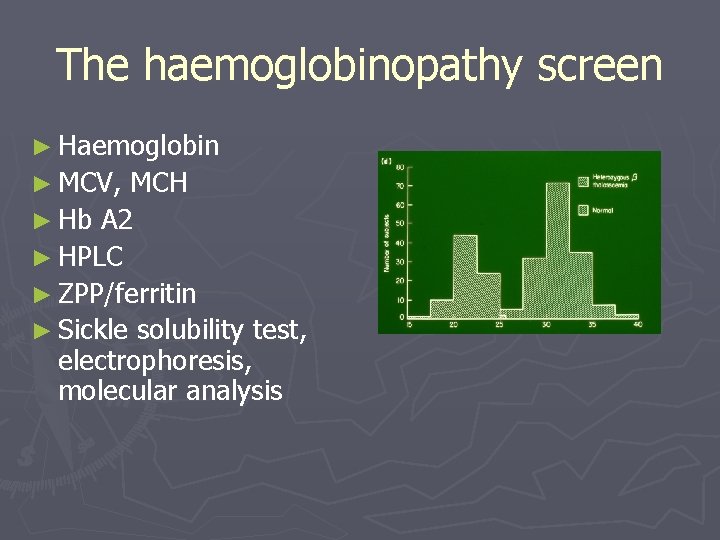
The haemoglobinopathy screen ► Haemoglobin ► MCV, MCH ► Hb A 2 ► HPLC ► ZPP/ferritin ► Sickle solubility test, electrophoresis, molecular analysis
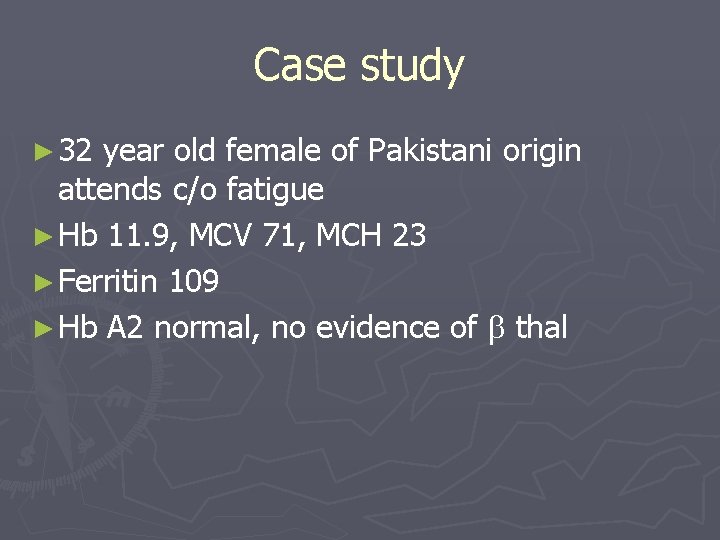
Case study ► 32 year old female of Pakistani origin attends c/o fatigue ► Hb 11. 9, MCV 71, MCH 23 ► Ferritin 109 ► Hb A 2 normal, no evidence of b thal
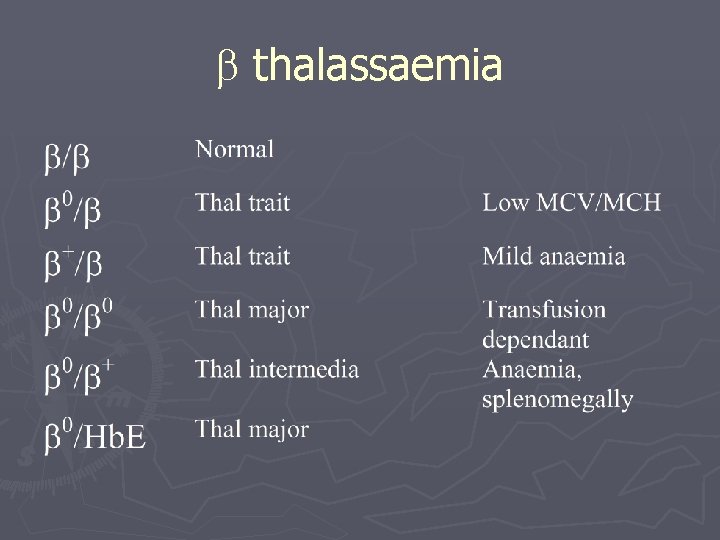
b thalassaemia
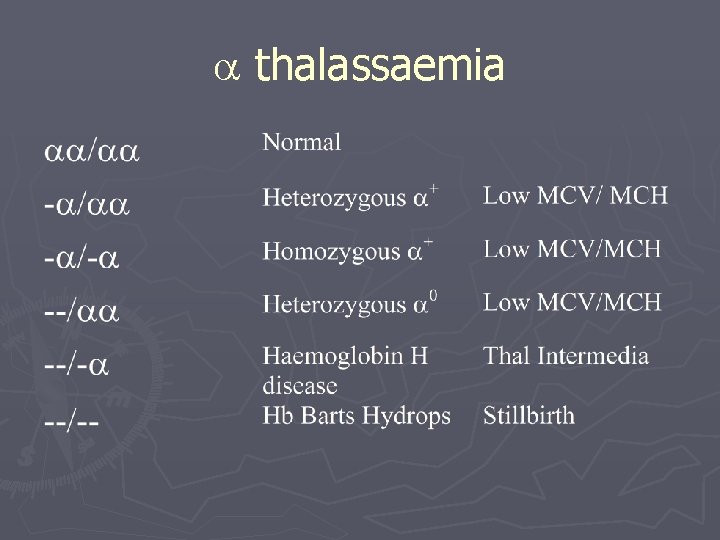
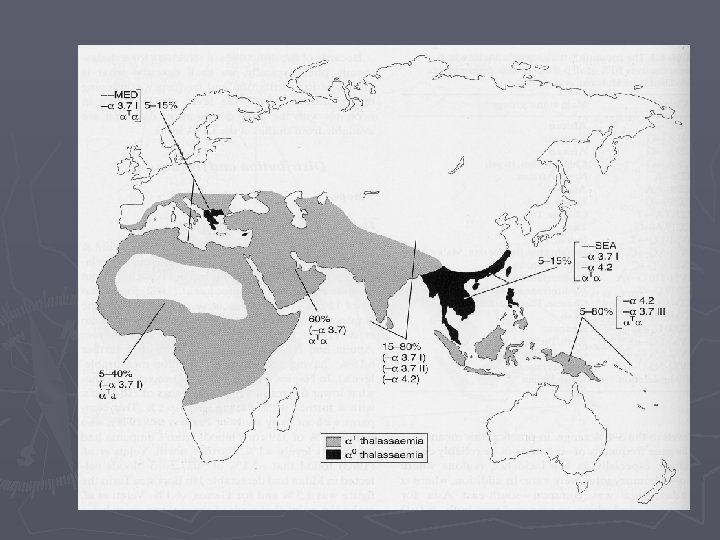
a thalassaemia
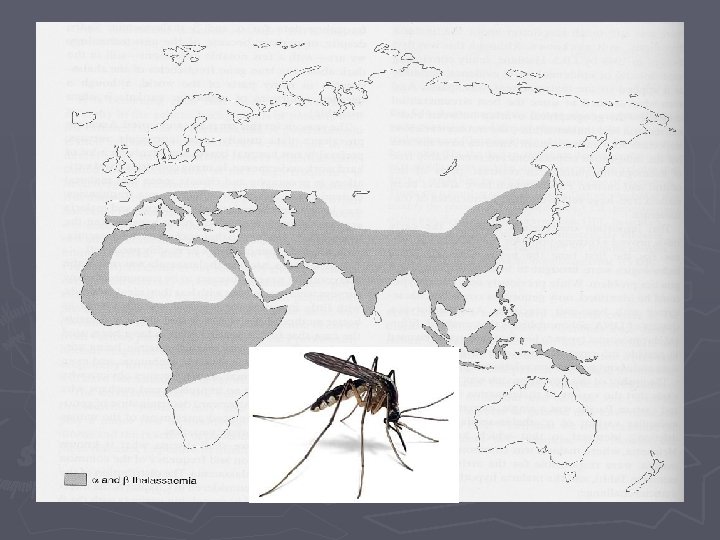
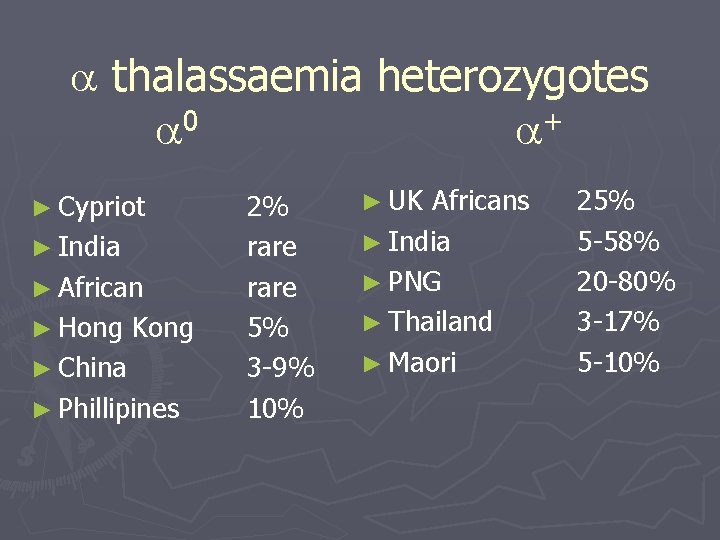
a thalassaemia heterozygotes a 0 a+ ► Cypriot ► India ► African ► Hong Kong ► China ► Phillipines 2% rare 5% 3 -9% 10% ► UK Africans ► India ► PNG ► Thailand ► Maori 25% 5 -58% 20 -80% 3 -17% 5 -10%
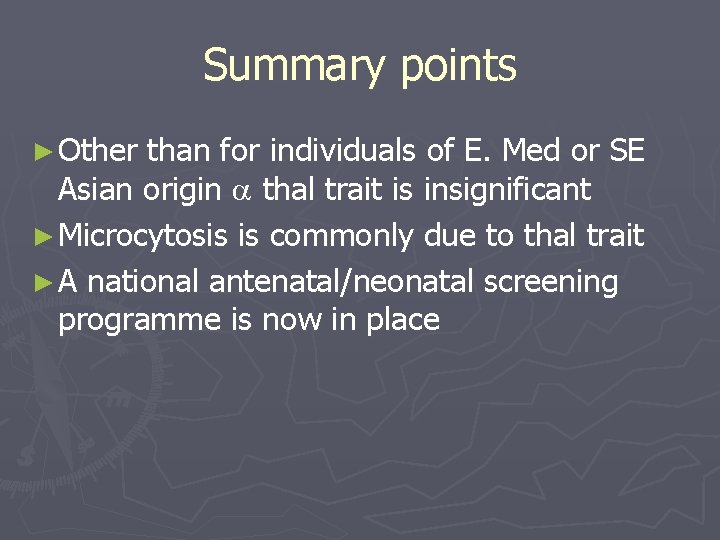
Summary points ► Other than for individuals of E. Med or SE Asian origin a thal trait is insignificant ► Microcytosis is commonly due to thal trait ► A national antenatal/neonatal screening programme is now in place