
Hadoop Pig HBase at Twitter Dmitriy Ryaboy Twitter
Hadoop, Pig, HBase at Twitter Dmitriy Ryaboy Twitter Analytics @squarecog TM
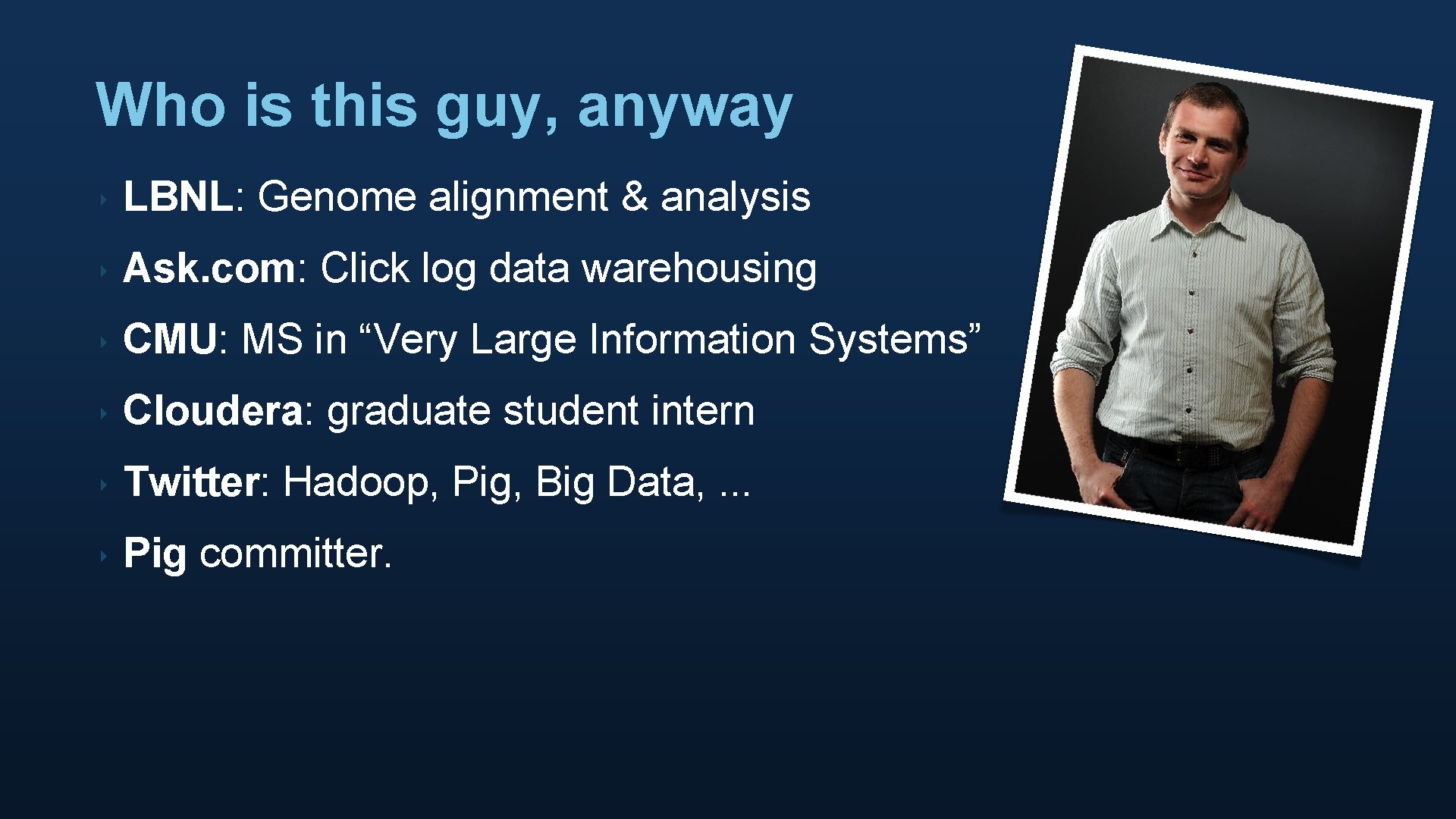
Who is this guy, anyway ‣ LBNL: Genome alignment & analysis ‣ Ask. com: Click log data warehousing ‣ CMU: MS in “Very Large Information Systems” ‣ Cloudera: graduate student intern ‣ Twitter: Hadoop, Pig, Big Data, . . . ‣ Pig committer.
In This Talk ‣ Focus on Hadoop parts of data pipeline ‣ Data movement ‣ HBase ‣ Pig ‣ A few tips
Not In This Talk ‣ Cassandra ‣ Flock. DB ‣ Gizzard ‣ Memcached ‣ Rest of Twitter’s No. SQL Bingo card
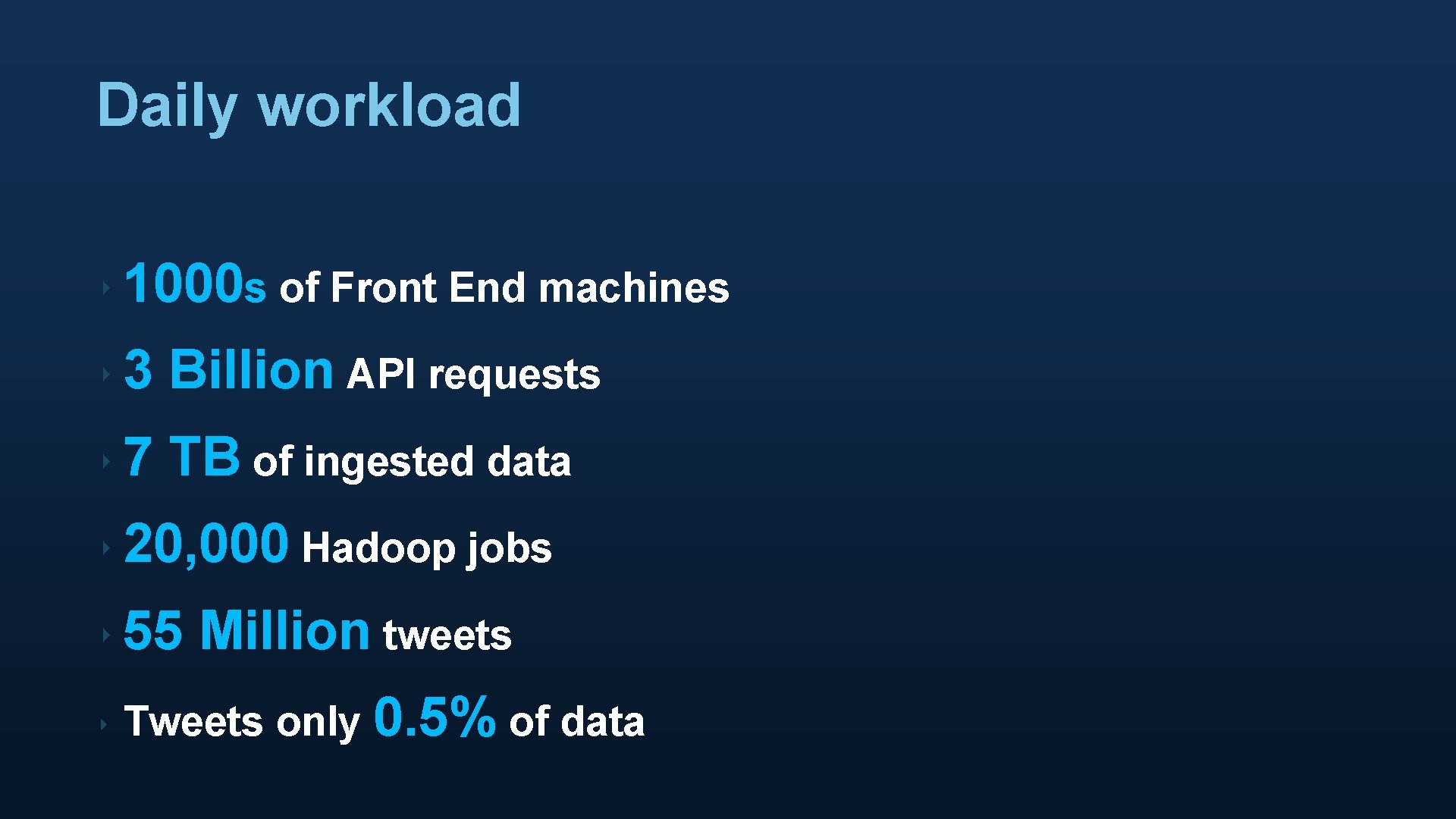
Daily workload ‣ 1000 s of Front End machines ‣ 3 Billion API requests ‣ 7 TB of ingested data ‣ 20, 000 Hadoop jobs ‣ 55 ‣ Million tweets Tweets only 0. 5% of data
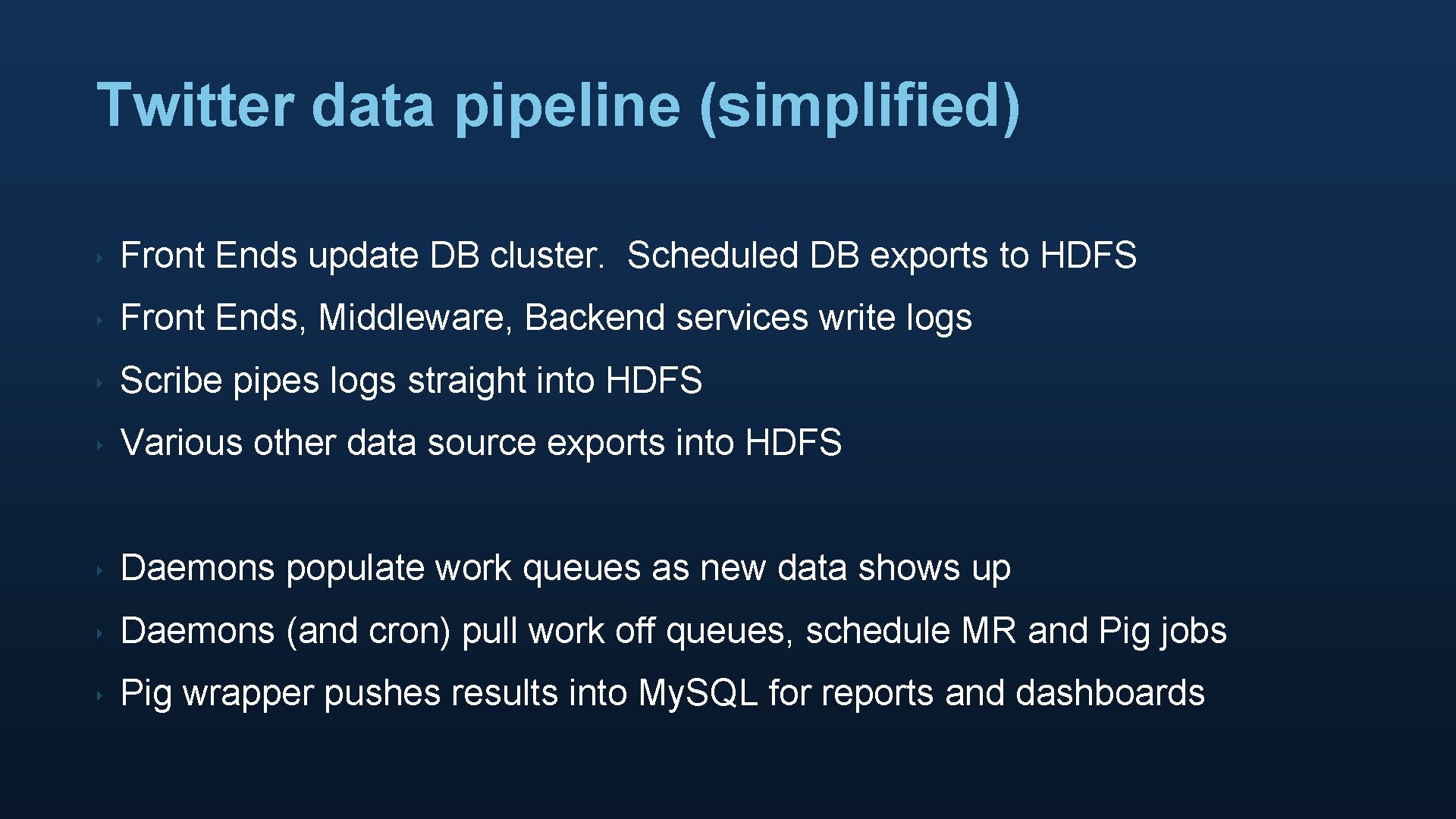
Twitter data pipeline (simplified) ‣ Front Ends update DB cluster. Scheduled DB exports to HDFS ‣ Front Ends, Middleware, Backend services write logs ‣ Scribe pipes logs straight into HDFS ‣ Various other data source exports into HDFS ‣ Daemons populate work queues as new data shows up ‣ Daemons (and cron) pull work off queues, schedule MR and Pig jobs ‣ Pig wrapper pushes results into My. SQL for reports and dashboards
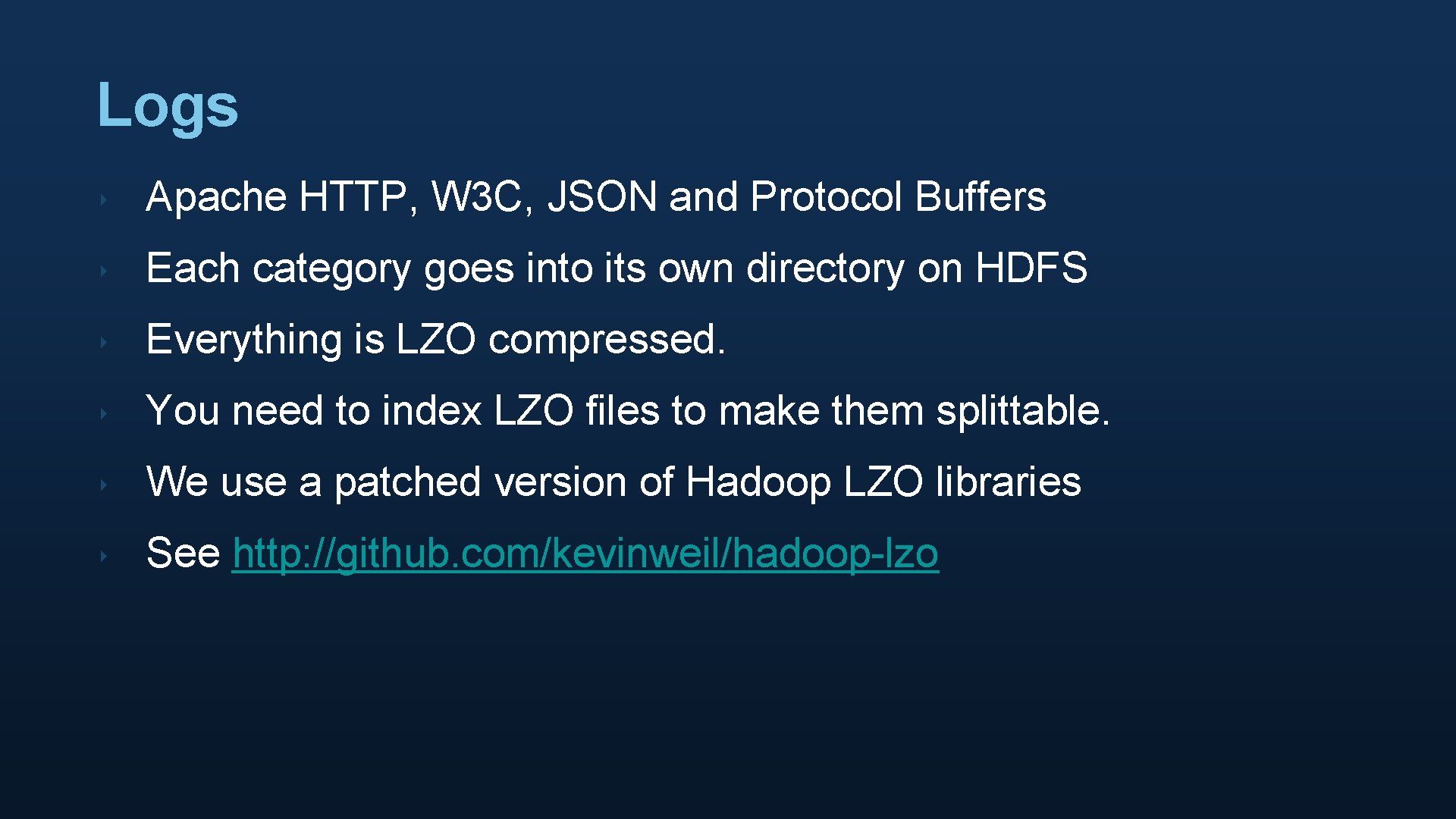
Logs ‣ Apache HTTP, W 3 C, JSON and Protocol Buffers ‣ Each category goes into its own directory on HDFS ‣ Everything is LZO compressed. ‣ You need to index LZO files to make them splittable. ‣ We use a patched version of Hadoop LZO libraries ‣ See http: //github. com/kevinweil/hadoop-lzo
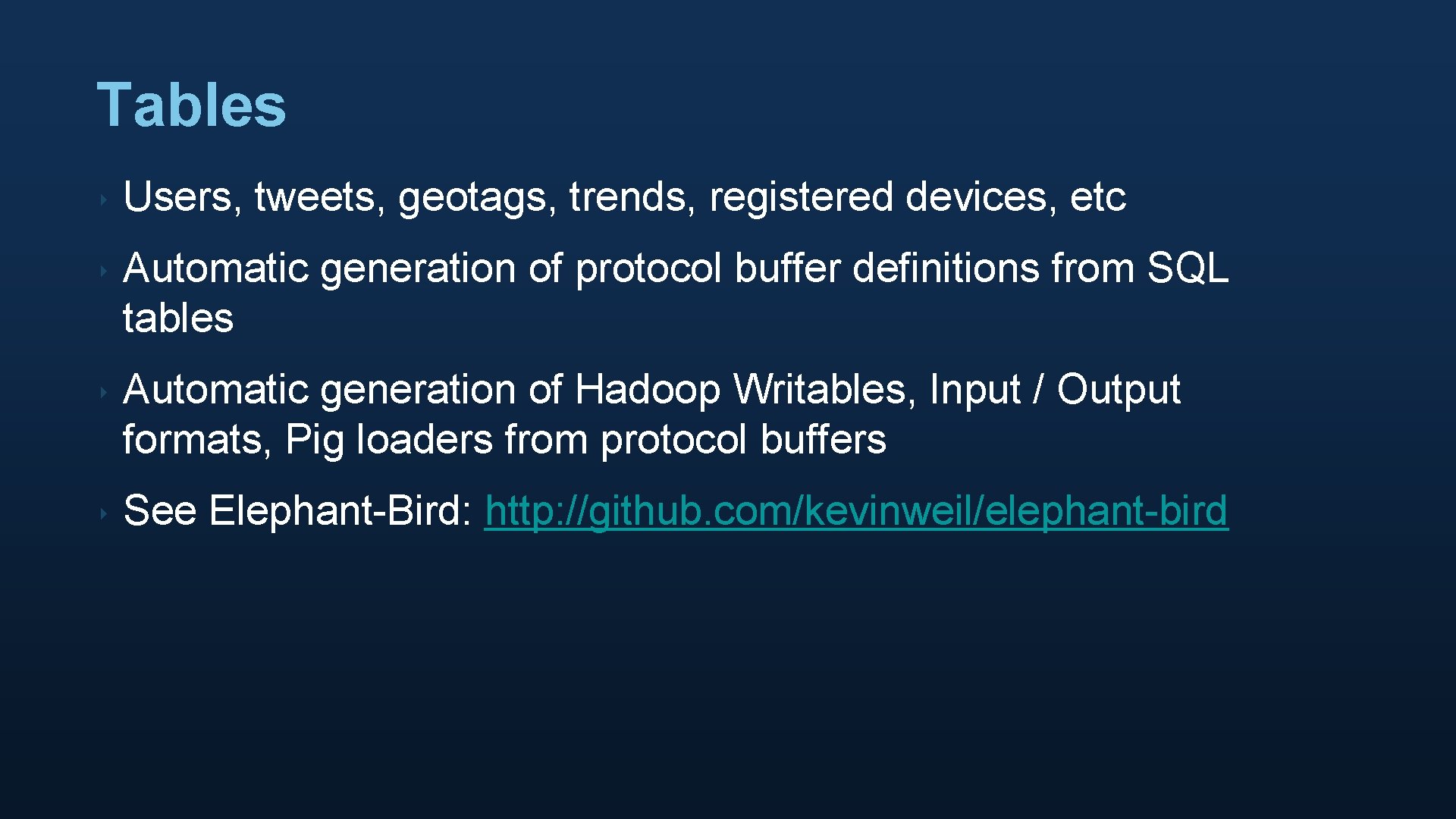
Tables ‣ Users, tweets, geotags, trends, registered devices, etc ‣ Automatic generation of protocol buffer definitions from SQL tables ‣ Automatic generation of Hadoop Writables, Input / Output formats, Pig loaders from protocol buffers ‣ See Elephant-Bird: http: //github. com/kevinweil/elephant-bird
ETL ‣ "Crane", config driven, protocol buffer powered. ‣ Sources/Sinks: HDFS, HBase, My. SQL tables, web services ‣ Protobuf-based transformations: chain sets of <input proto, output proto, transformation class>

HBase
Mutability ‣ Logs are immutable; HDFS is great. ‣ Tables have mutable data. ‣ Ignore updates? bad data ‣ Pull updates, resolve at read time? Pain, time. ‣ Pull updates, resolve in batches? Pain, time. ‣ Let someone else do the resolving? Helloooo, HBase! ‣ Bonus: various No. SQL bonuses, "not just scans". Lookups, indexes. ‣ Warning: we just started with HBase. This is all preliminary. Haven't tried indexes yet. ‣ That being said, several services rely on HBase already.
Aren't you guys Cassandra poster boys? ‣ YES but ‣ Rough analogy: Cassandra is OLTP and HBase is OLAP ‣ Cassandra used when we need low-latency, single-key reads and writes ‣ HBase scans much more powerful ‣ HBase co-locates data on the Hadoop cluster.
HBase schema for My. SQL exports, v 1. ‣ Want to query by created_at range, by updated_at range, and / or by user_id. ‣ Key: [created_at, id] ‣ CF: "columns" ‣ Configs specify which columns to pull out and store explicitly. ‣ Useful for indexing, cheap (HBase-side) filtering ‣ CF: "protobuf" ‣ A single column, contains serialized protocol buffer.
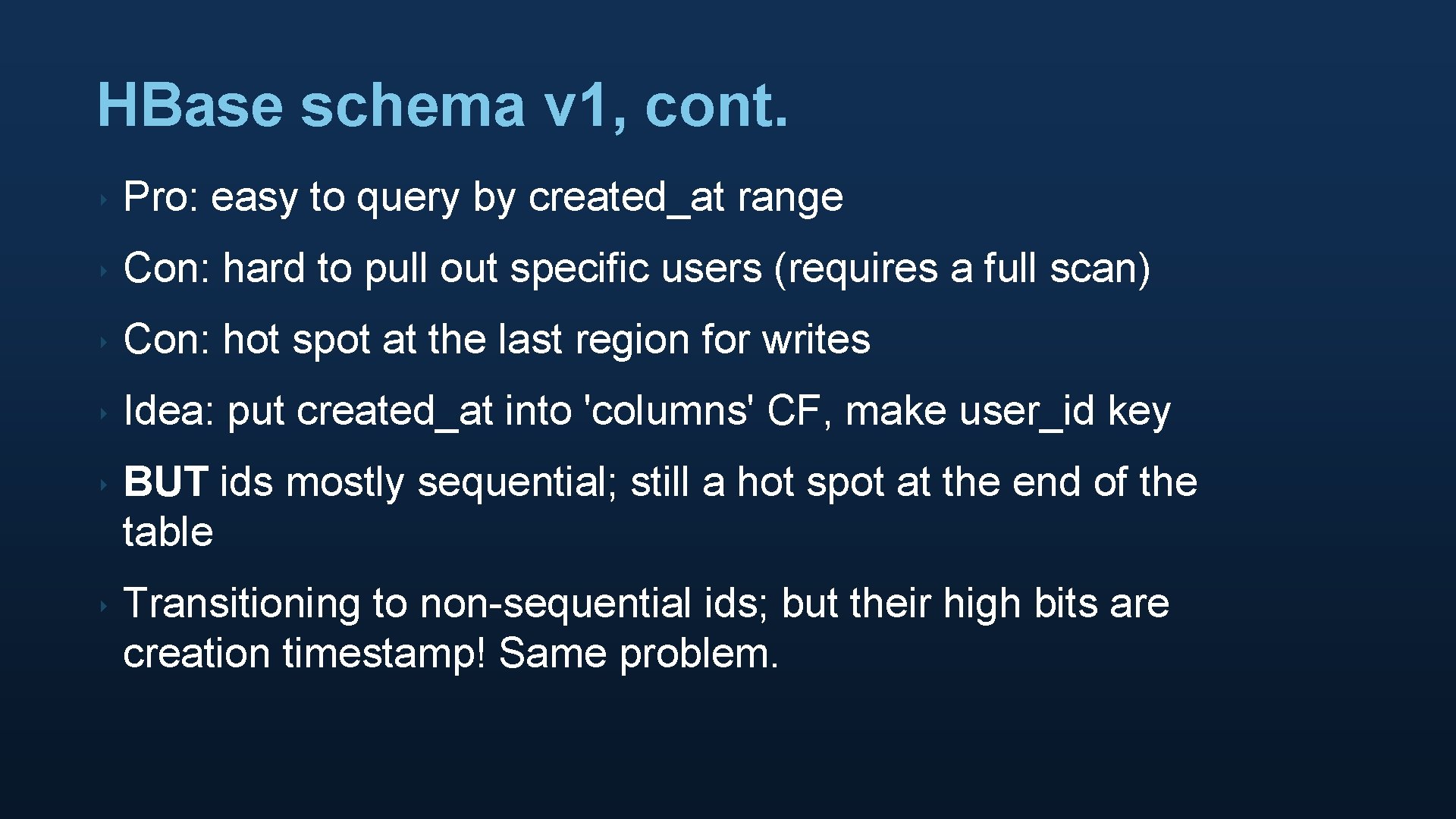
HBase schema v 1, cont. ‣ Pro: easy to query by created_at range ‣ Con: hard to pull out specific users (requires a full scan) ‣ Con: hot spot at the last region for writes ‣ Idea: put created_at into 'columns' CF, make user_id key ‣ BUT ids mostly sequential; still a hot spot at the end of the table ‣ Transitioning to non-sequential ids; but their high bits are creation timestamp! Same problem.
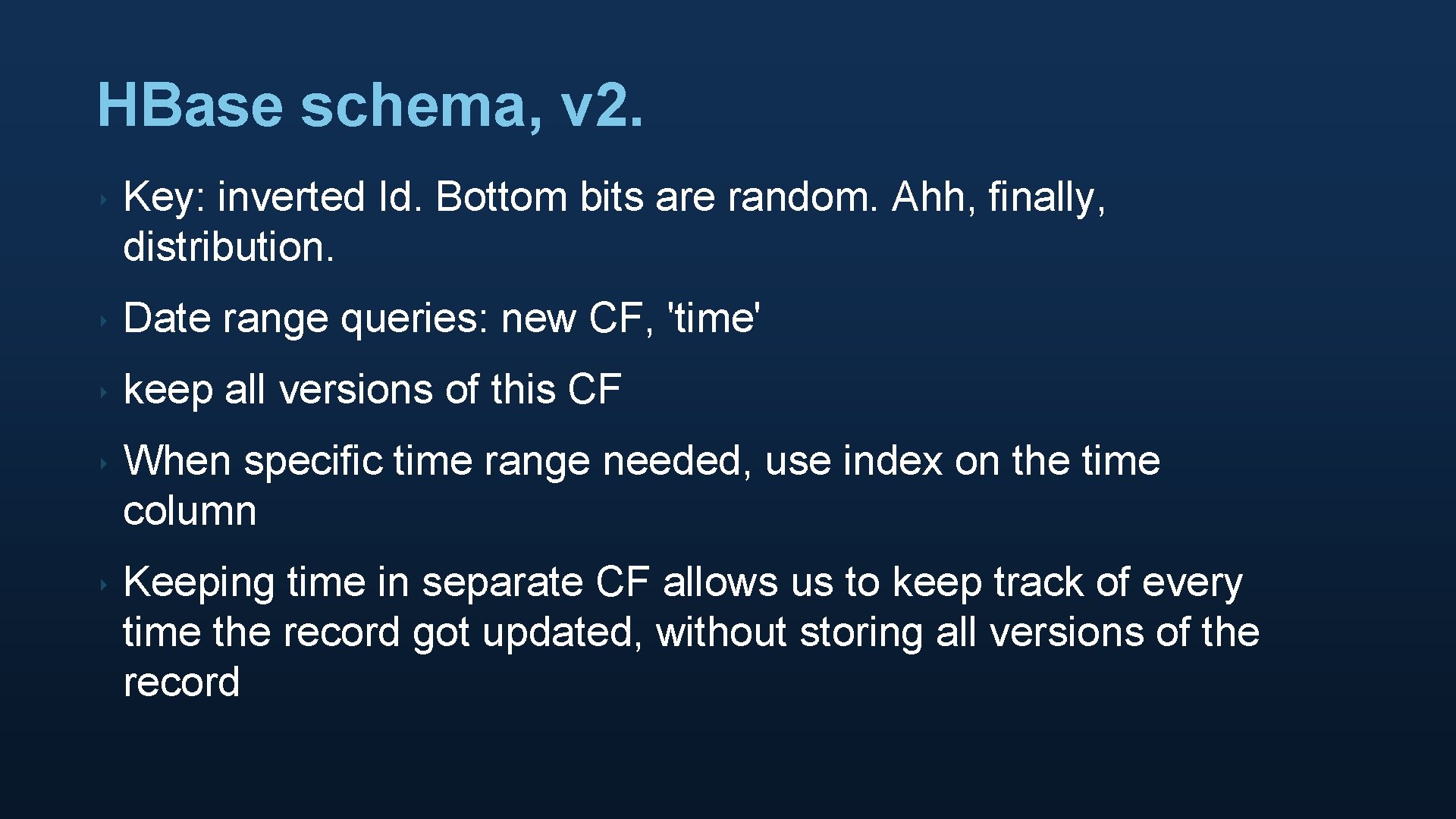
HBase schema, v 2. ‣ Key: inverted Id. Bottom bits are random. Ahh, finally, distribution. ‣ Date range queries: new CF, 'time' ‣ keep all versions of this CF ‣ When specific time range needed, use index on the time column ‣ Keeping time in separate CF allows us to keep track of every time the record got updated, without storing all versions of the record

Pig
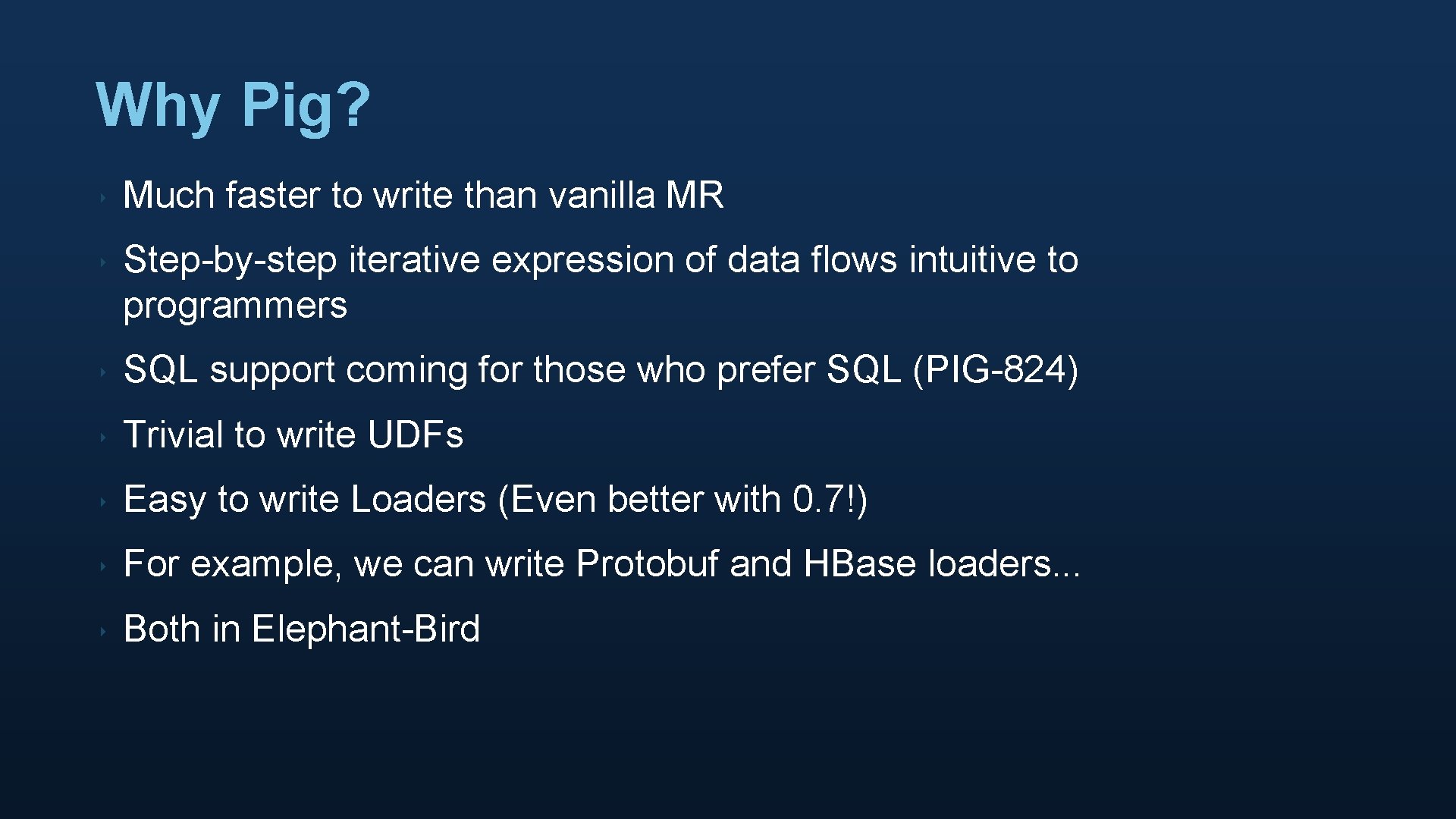
Why Pig? ‣ Much faster to write than vanilla MR ‣ Step-by-step iterative expression of data flows intuitive to programmers ‣ SQL support coming for those who prefer SQL (PIG-824) ‣ Trivial to write UDFs ‣ Easy to write Loaders (Even better with 0. 7!) ‣ For example, we can write Protobuf and HBase loaders. . . ‣ Both in Elephant-Bird
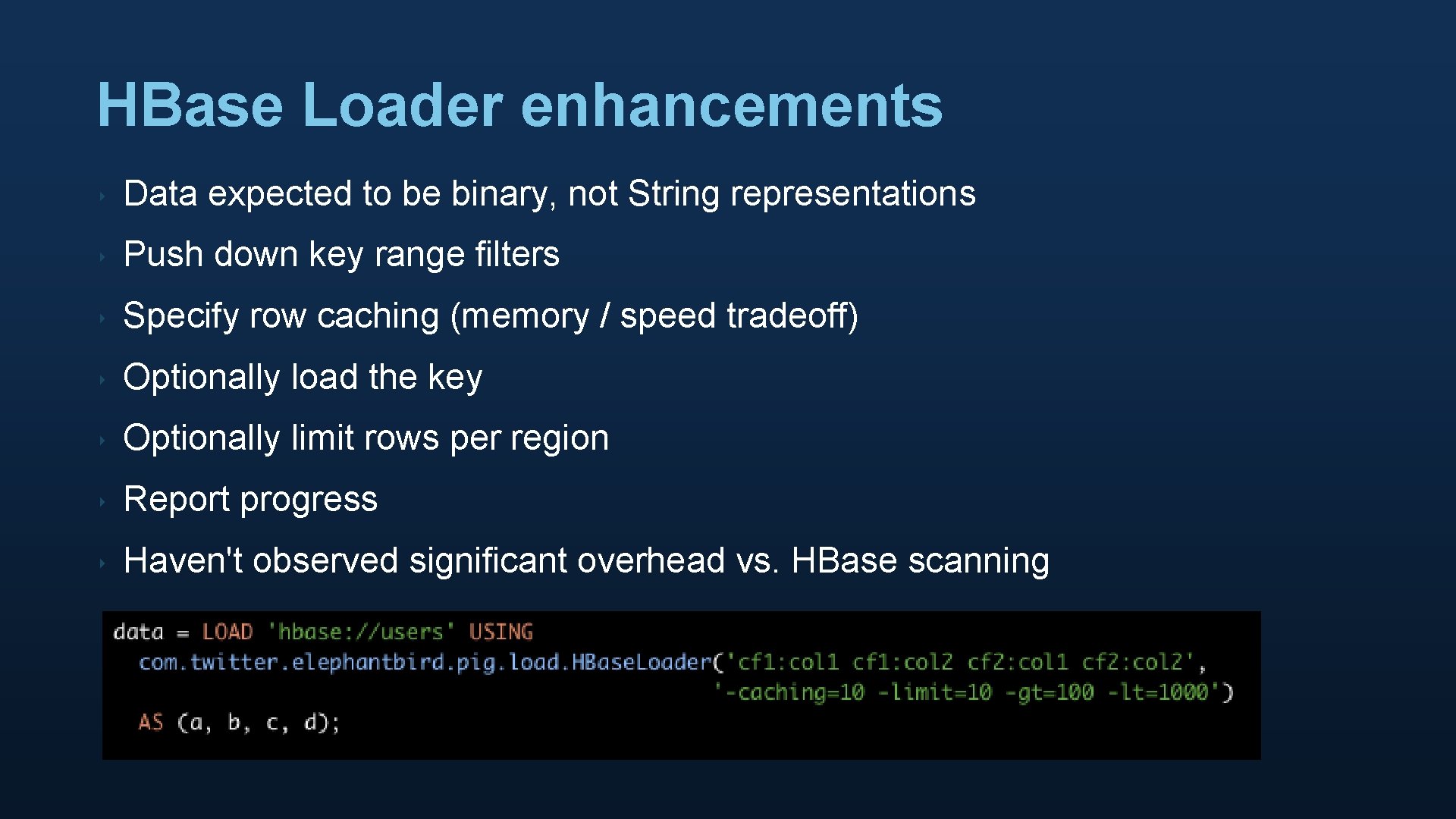
HBase Loader enhancements ‣ Data expected to be binary, not String representations ‣ Push down key range filters ‣ Specify row caching (memory / speed tradeoff) ‣ Optionally load the key ‣ Optionally limit rows per region ‣ Report progress ‣ Haven't observed significant overhead vs. HBase scanning
HBase Loader TODOs ‣ Expose better control of filters ‣ Expose timestamp controls ‣ Expose Index hints (IHBase) ‣ Automated filter and projection push-down (once on 0. 7) ‣ HBase Storage
Elephant Bird ‣ Auto-generate Hadoop Input/Output formats, Writables, Pig loaders for Protocol Buffers ‣ Starting to work on same for Thrift ‣ HBase Loader ‣ assorted UDFs ‣ http: //www. github. com/kevinweil/elephant-bird

Assorted Tips
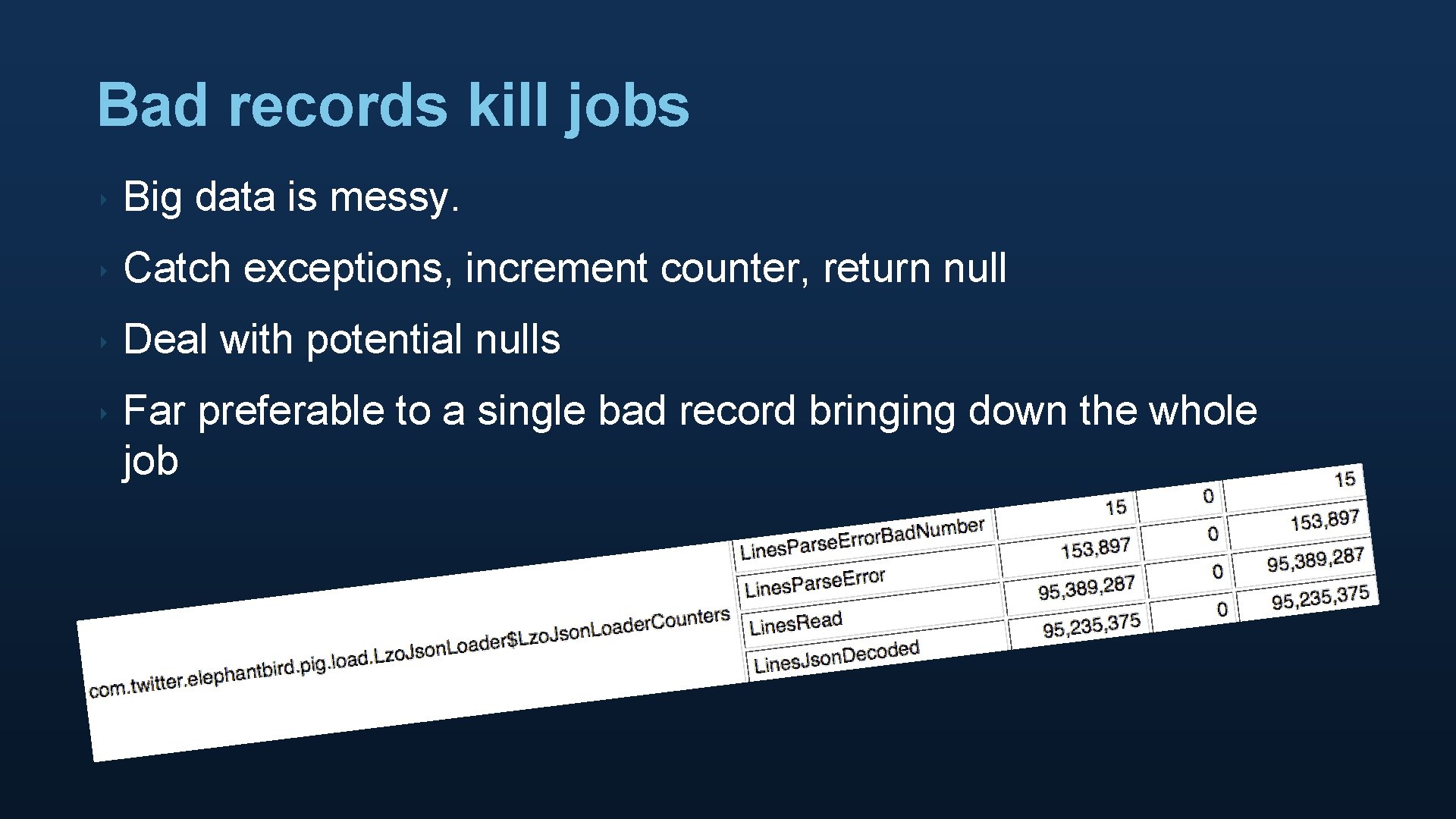
Bad records kill jobs ‣ Big data is messy. ‣ Catch exceptions, increment counter, return null ‣ Deal with potential nulls ‣ Far preferable to a single bad record bringing down the whole job
Runaway UDFs kill jobs ‣ Regex over a few billion tweets, most return in milliseconds. ‣ 8 cause the regex to take more than 5 minutes, task gets reaped. ‣ You clever twitterers, you. ‣ Monitored. UDF wrapper kicks off a monitoring thread, kills a UDF and returns a default value if it doesn't return something in time. ‣ Plan to contribute to Pig, add to Elephant. Bird. May build into Pig internals.
Use Counters ‣ Use counters. Count everything. ‣ UDF invocations, parsed records, unparsable records, timedout UDFs. . . ‣ Hook into cleanup phases and store counters to disk, next to data, for future analysis ‣ Don't have it for Pig yet, but 0. 8 adds metadata to job confs to make this possible.
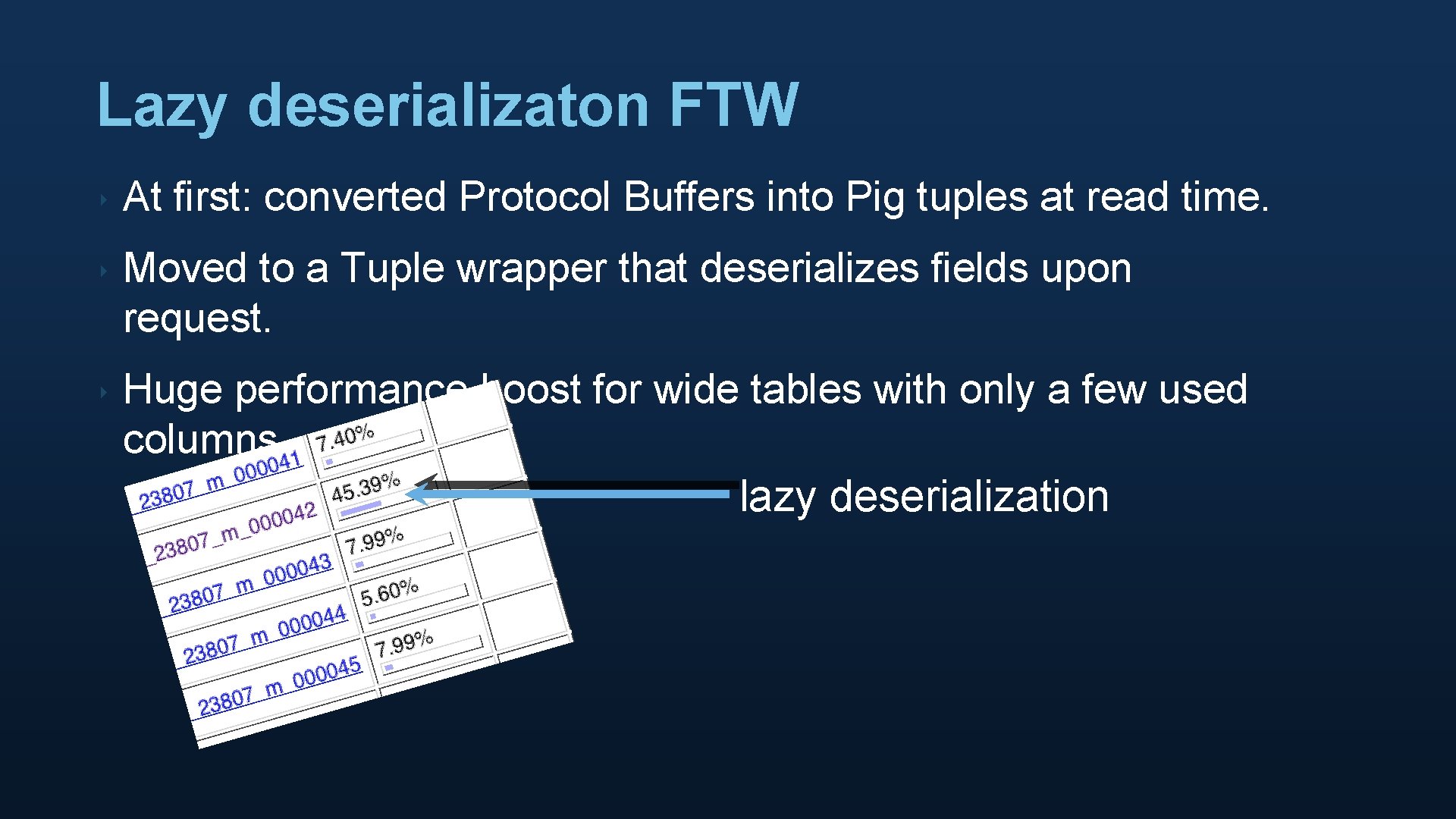
Lazy deserializaton FTW ‣ At first: converted Protocol Buffers into Pig tuples at read time. ‣ Moved to a Tuple wrapper that deserializes fields upon request. ‣ Huge performance boost for wide tables with only a few used columns lazy deserialization
Also see ‣ http: //www. slideshare. net/kevinweil/protocol-buffers-and-hadoop -at-twitter ‣ http: //www. slideshare. net/kevinweil/nosql-at-twitter-nosql-eu 2010 ‣ http: //www. slideshare. net/al 3 x/building-distributed-systems-inscala ‣ http: //www. slideshare. net/ryansking/scaling-twitter-withcassandra ‣ http: //www. slideshare. net/nkallen/q-con-3770885

Questions? Follow me at twitter. com/squarecog TM

Photo Credits ‣ Bingo: http: //www. flickr. com/photos/hownowdesign/2393662713/ ‣ Sandhill Crane: http: //www. flickr. com/photos/dianeham/123491289/ ‣ Oakland Cranes: http: //www. flickr. com/photos/clankennedy/2654213672/
- Slides: 28