
Hackney Adult Services Implementing 3 conversations An Introduction
- Slides: 19
Hackney Adult Services Implementing 3 conversations An Introduction
Adult Social Care: the story to date What has happened in adult social care over the last 10 years? ❖ ❖ Budgetary impact of austerity Care management - forms, systems and resource allocation systems Workforce impact The Care Act 2014 - new duties and a focus on ‘wellbeing’
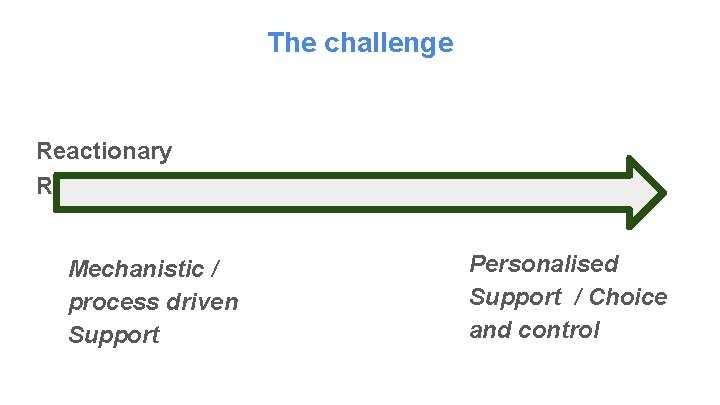
The challenge Reactionary Responsive Mechanistic / process driven Support Personalised Support / Choice and control
What are we doing? We are moving to an ‘asset based’ approach. . . ➔ ➔ Focusing on individual’s strengths rather than their needs or what they can’t do Building a picture of what a good life looks like for that individual Connecting individuals to people and community assets Growing and mobilising community networks We think this approach can. . . ➔ Enhance health, wellbeing and resilience ➔ Reduce long term pressures on higher cost health, care and support services ➔ Enable people to participate in and benefit from community resources and activities ➔ Benefit people - better outcomes for our residents and a better experience for staff
What is the 3 Conversations Approach? ● The ‘ 3 conversations’ approach is an innovative and highly personalised approach to working with individuals. ● It focuses primarily on people’s strengths ● It looks at the assets available within the local community ● It focuses on promoting independence ● It promotes prevention - supporting people to keep healthy and well ● It supports frontline professionals to have three distinct and specific conversations with residents ● It recognises that people go into crisis, and that they need different support at this time in their lives ● It moves away from traditional approaches to assessment and care planning ● It represents a complete change in the way in which we work
Why are Adult Services adopting the 3 Conversations Approach? ● Other Local Authorities have tried this approach and they tell us it works! ● Other local authorities have told us that it is better for people - our residents as it is personalised, outcomes are better and their experience of their interactions with the council is better ● Having good quality conversations with people will help us to ensure that people have the right support at the right time - which we hope will get better outcomes for people and help us to save money in the long term ● It is better for staff! Other authorities have told us that their staff get a lot of job satisfaction as they are able to ‘go back’ to professional roots
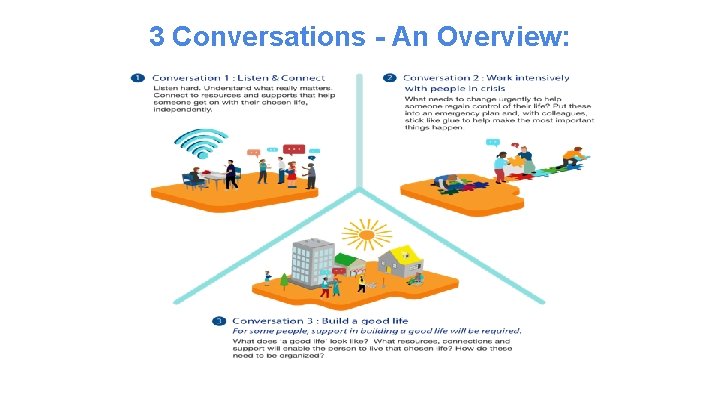
3 Conversations - An Overview:
What are the 3 Conversations? 1. The first conversation is designed to explore people’s lives, their strengths and networks, to understand what a good life looks like to them, and connect them to personal, family and community sources of support that may be available. 2. The second conversation provides immediate short-term support at the point of crisis, and ensures that the worker ‘sticks like glue’ to support the person through crisis 3. The third and final conversation focuses on long-term outcomes and planning, built around what a good life looks like to the person, and how best to mobilise the resources needed (including personal budgets), and the personal and community assets available.
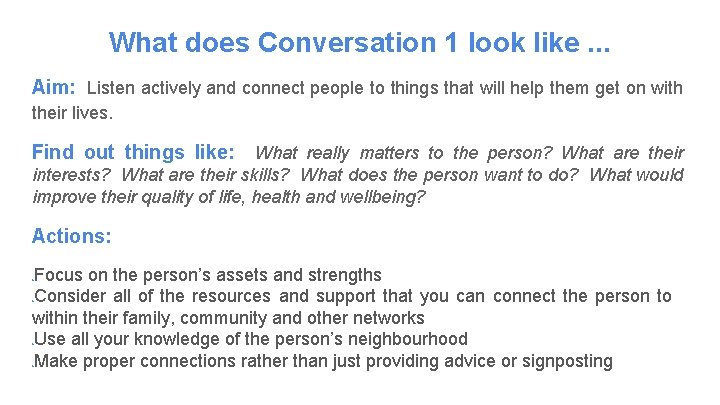
What does Conversation 1 look like. . . Aim: Listen actively and connect people to things that will help them get on with their lives. Find out things like: What really matters to the person? What are their interests? What are their skills? What does the person want to do? What would improve their quality of life, health and wellbeing? Actions: Focus on the person’s assets and strengths Consider all of the resources and support that you can connect the person to within their family, community and other networks Use all your knowledge of the person’s neighbourhood Make proper connections rather than just providing advice or signposting ★ ★
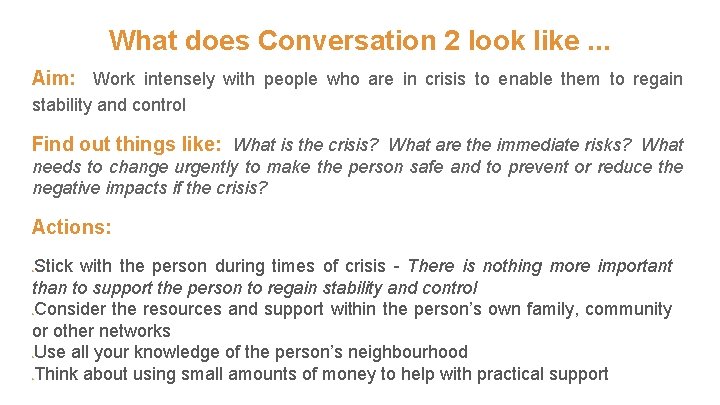
What does Conversation 2 look like. . . Aim: Work intensely with people who are in crisis to enable them to regain stability and control Find out things like: What is the crisis? What are the immediate risks? What needs to change urgently to make the person safe and to prevent or reduce the negative impacts if the crisis? Actions: Stick with the person during times of crisis - There is nothing more important than to support the person to regain stability and control Consider the resources and support within the person’s own family, community or other networks Use all your knowledge of the person’s neighbourhood Think about using small amounts of money to help with practical support ★ ★
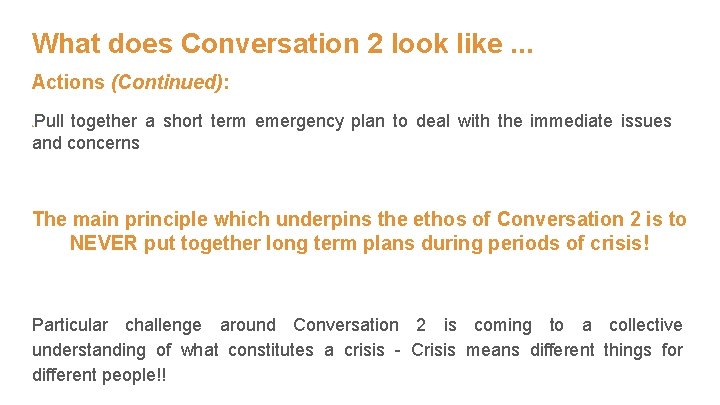
What does Conversation 2 look like. . . Actions (Continued): Pull together a short term emergency plan to deal with the immediate issues and concerns ★ The main principle which underpins the ethos of Conversation 2 is to NEVER put together long term plans during periods of crisis! Particular challenge around Conversation 2 is coming to a collective understanding of what constitutes a crisis - Crisis means different things for different people!!
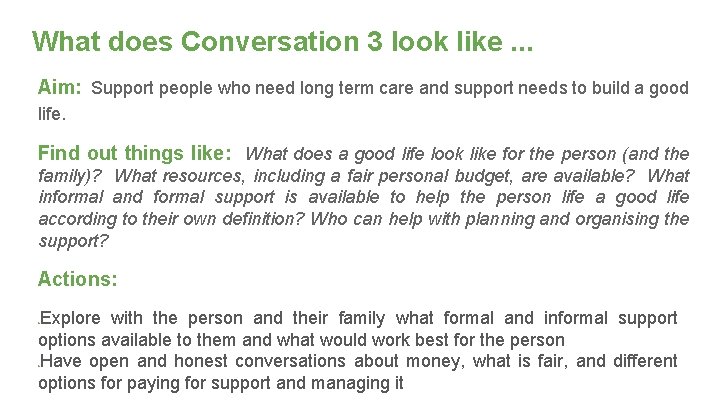
What does Conversation 3 look like. . . Aim: Support people who need long term care and support needs to build a good life. Find out things like: What does a good life look like for the person (and the family)? What resources, including a fair personal budget, are available? What informal and formal support is available to help the person life a good life according to their own definition? Who can help with planning and organising the support? Actions: Explore with the person and their family what formal and informal support options available to them and what would work best for the person Have open and honest conversations about money, what is fair, and different options for paying for support and managing it ★ ★
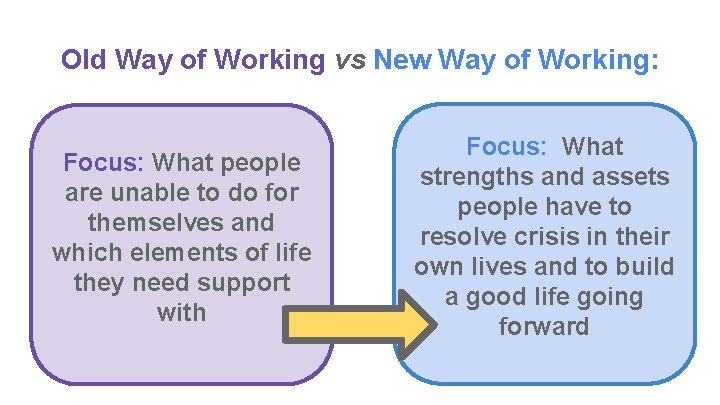
Old Way of Working vs New Way of Working: Focus: What people are unable to do for themselves and which elements of life they need support with Focus: What strengths and assets people have to resolve crisis in their own lives and to build a good life going forward
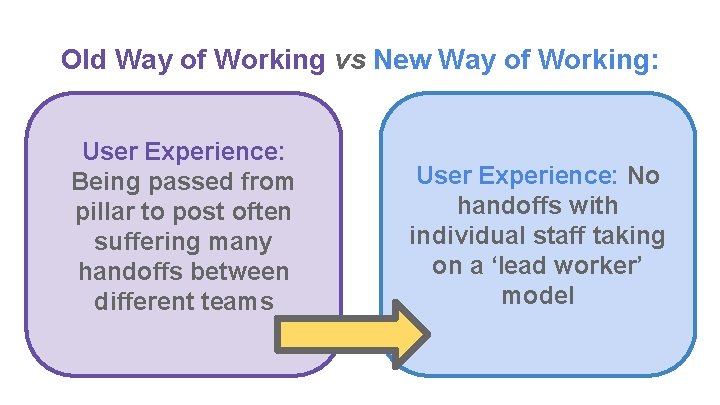
Old Way of Working vs New Way of Working: User Experience: Being passed from pillar to post often suffering many handoffs between different teams User Experience: No handoffs with individual staff taking on a ‘lead worker’ model
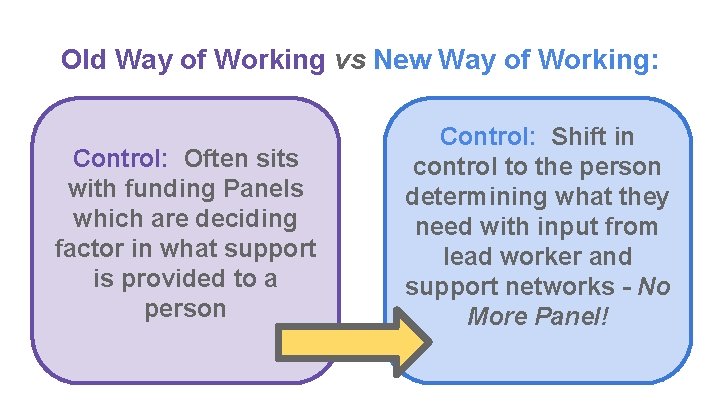
Old Way of Working vs New Way of Working: Control: Often sits with funding Panels which are deciding factor in what support is provided to a person Control: Shift in control to the person determining what they need with input from lead worker and support networks - No More Panel!
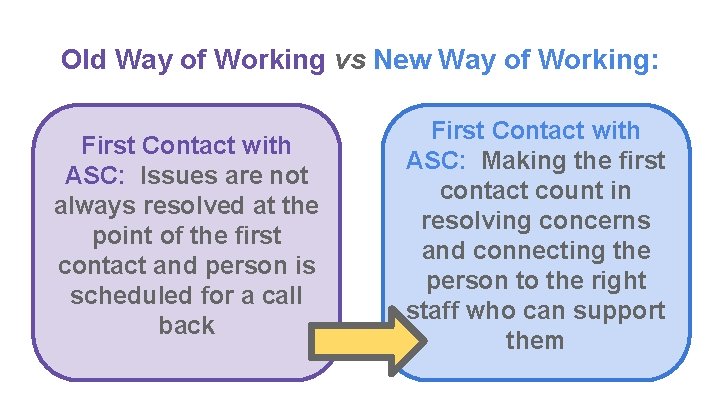
Old Way of Working vs New Way of Working: First Contact with ASC: Issues are not always resolved at the point of the first contact and person is scheduled for a call back First Contact with ASC: Making the first contact count in resolving concerns and connecting the person to the right staff who can support them
How are we doing it? ➔ Community Education Provider Funding - we successfully bid for £ 200 K ➔ We are working with a social care practice consultancy ‘Partners for Change’ who have done this in other areas ➔ We have set up an ‘innovation site’ ➔ Agile working: Fortnightly sprints and show and tells ➔ We are co-producing change with our ‘experts by experience’ i. e. people who use services
Workforce development New and innovative way of working ‘Test and learn’ through Innovation Sites Fortnightly sprints Empowering staff to shape the future model Daily Huddles and weekly reflection sessions A focus on ‘Stories of Difference’ - what has been different for individual service users compared to the old way of working ➔ Hackney Adult Services Practice Academy, our learning and development model in Adult Services, is a key enabler for change ➔ ➔ ➔
Next steps ➔ Learning and future planned developments gained from Innovation Site 1 ➔ Rolling the approach out to other teams within adult services ➔ Ongoing co-production involvement with service users and carers ➔ Evaluation and further User Research