
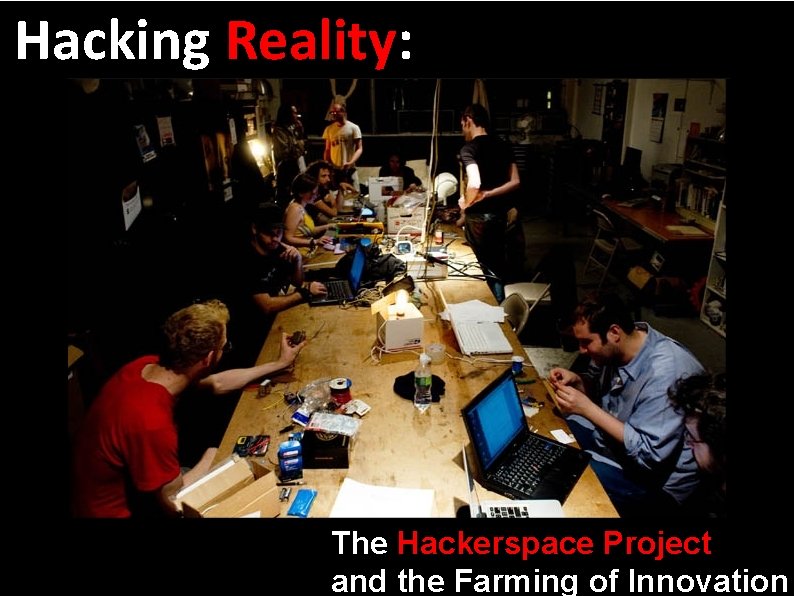
Hacking Reality The Hackerspace Project and the Farming


- Slides: 33
Hacking Reality: The Hackerspace Project and the Farming of Innovation
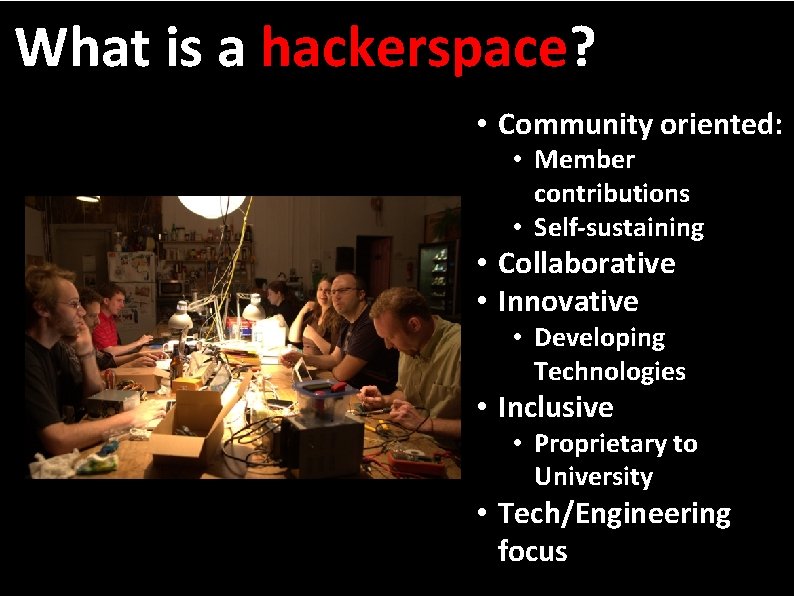
What is a hackerspace? • Community oriented: • Member contributions • Self-sustaining • Collaborative • Innovative • Developing Technologies • Inclusive • Proprietary to University • Tech/Engineering focus
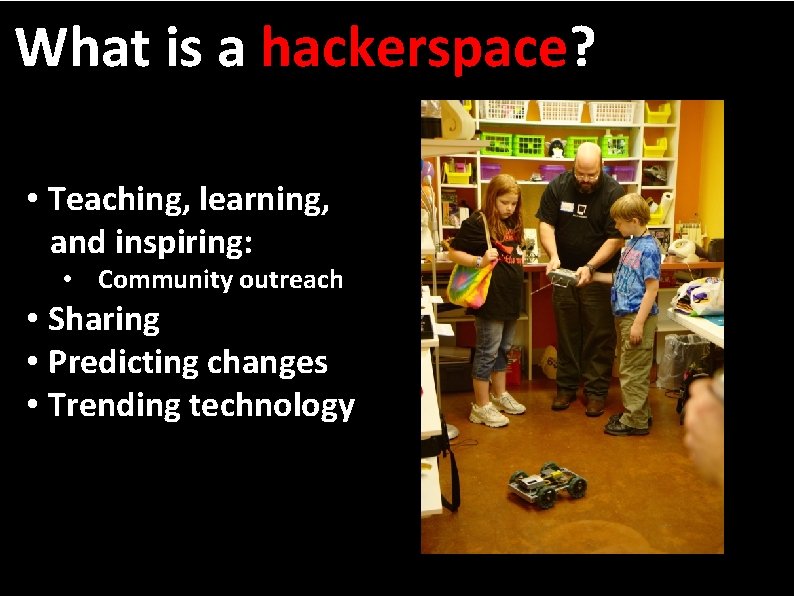
What is a hackerspace? • Teaching, learning, and inspiring: • Community outreach • Sharing • Predicting changes • Trending technology inspire, learn, teach, create, and much more!
What is is a hacker? What hacker?
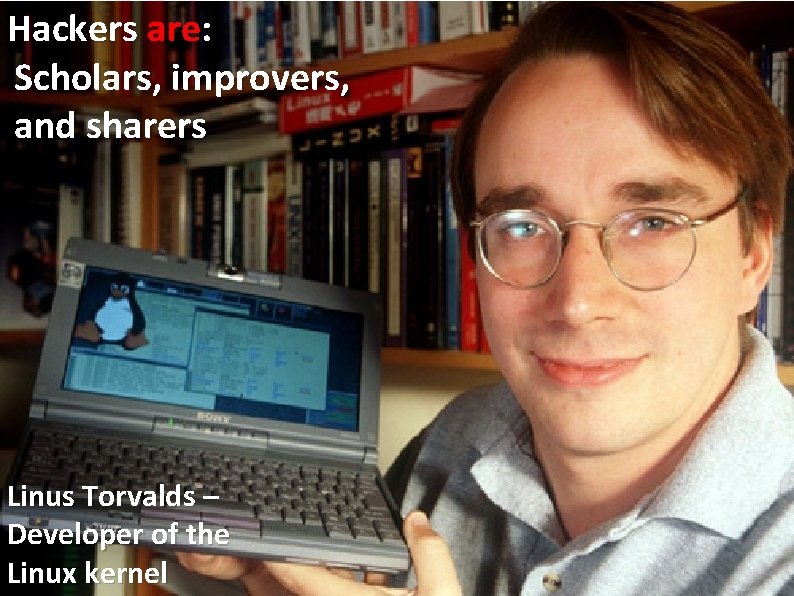
Hackers are: Scholars, improvers, and sharers Linus Torvalds – Developer of the Linux kernel
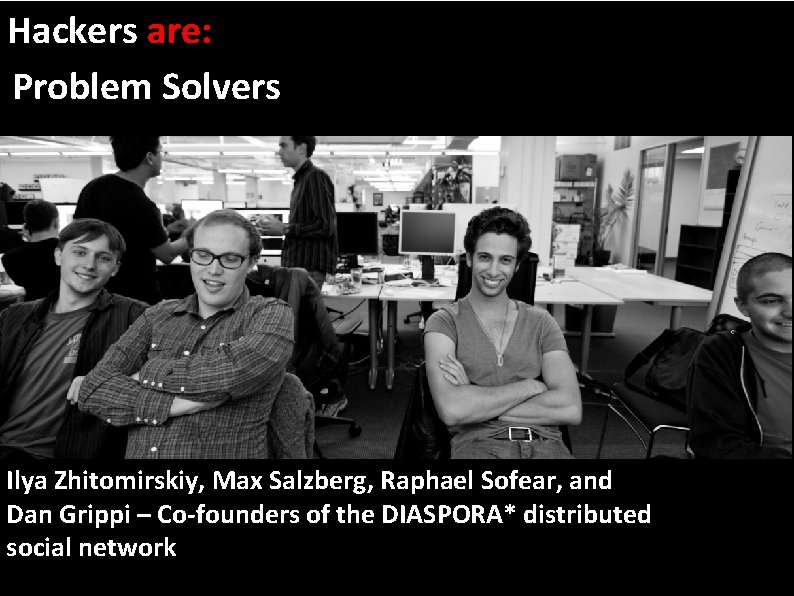
Hackers are: . Problem Solvers Ilya Zhitomirskiy, Max Salzberg, Raphael Sofear, and Dan Grippi – Co-founders distributed 2. An expert or enthusiastofofthe any. DIASPORA* kind. (i. e. an astronomy hacker) (RFC 1392, The Internet Users Glossary) social network
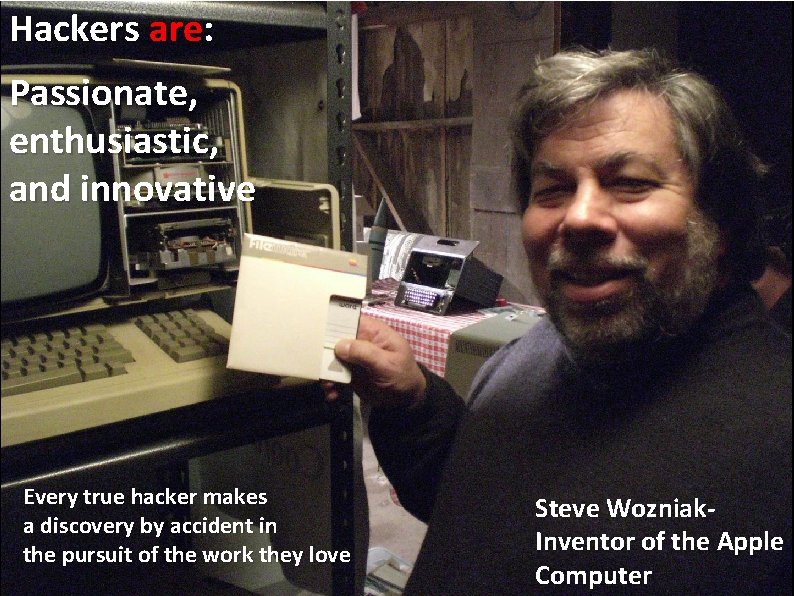
Hackers are: Passionate, enthusiastic, and innovative Every true hacker makes a discovery by accident in the pursuit of the work they love Steve Wozniak. Inventor of the Apple Computer
What hackers are not:
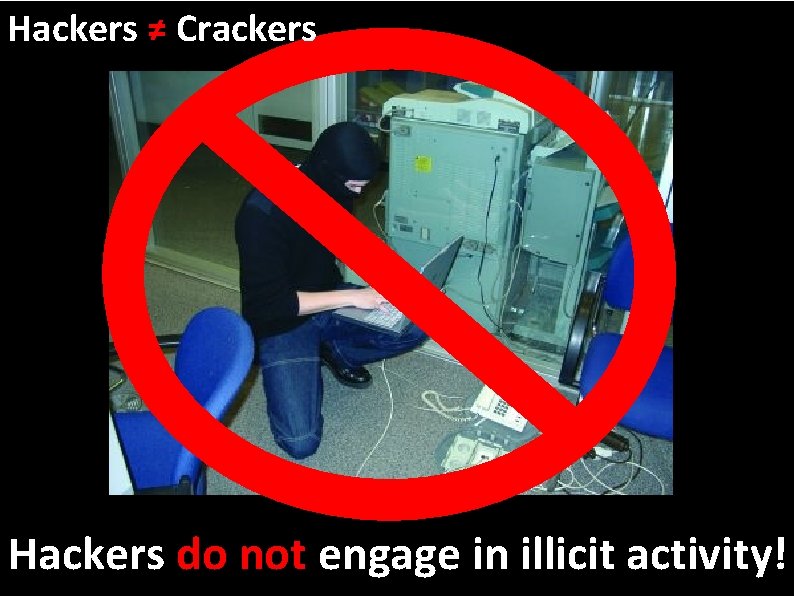
Hackers ≠ Crackers Hackers do not engage in illicit activity!
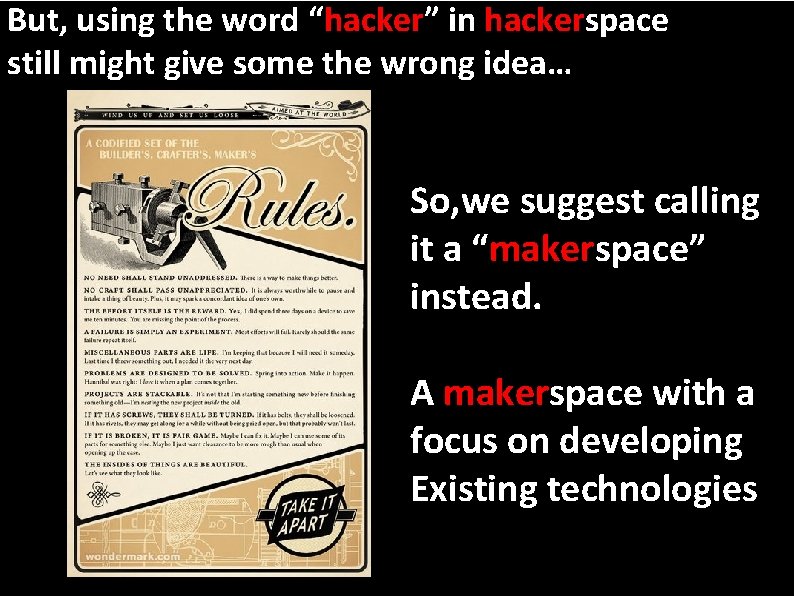
But, using the word “hacker” in hackerspace still might give some the wrong idea… So, we suggest calling it a “makerspace” instead. A makerspace with a focus on developing Existing technologies
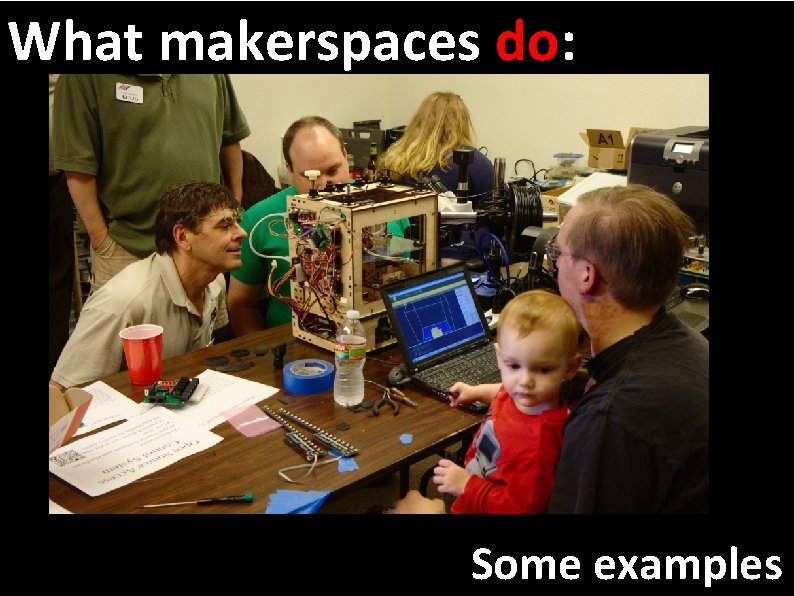
What makerspaces do: Some examples
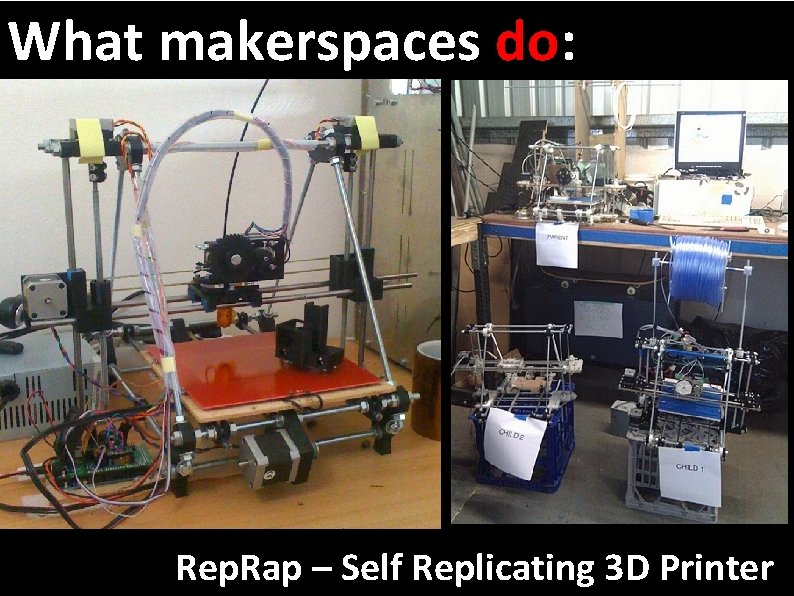
What makerspaces do: Rep. Rap – Self Replicating 3 D Printer
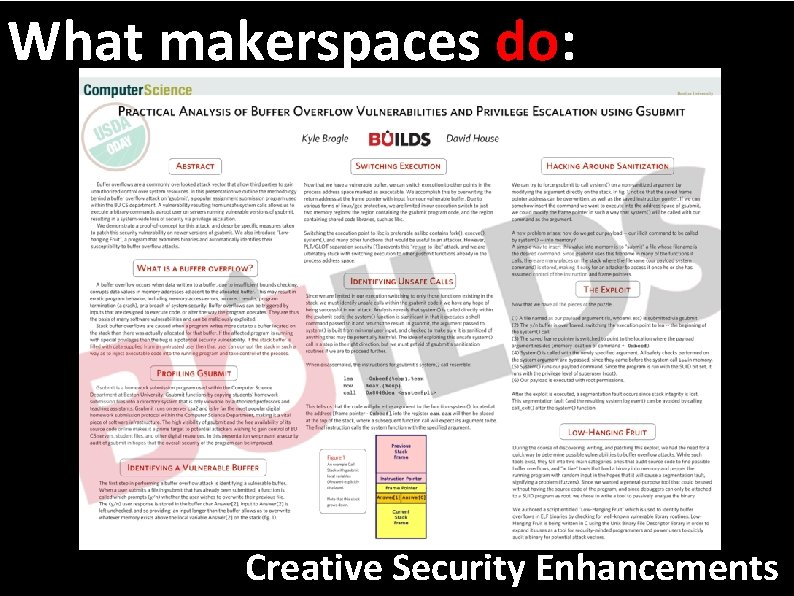
What makerspaces do: Creative Security Enhancements
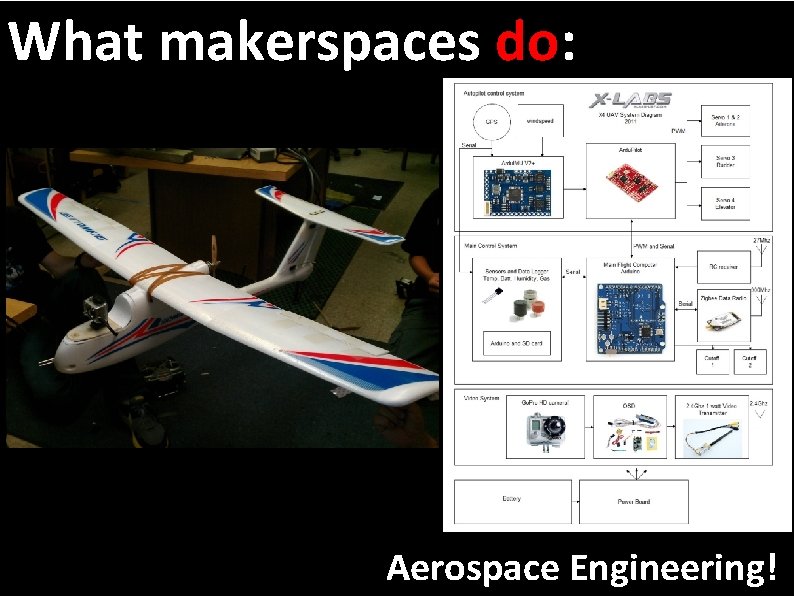
What makerspaces do: Aerospace Engineering!
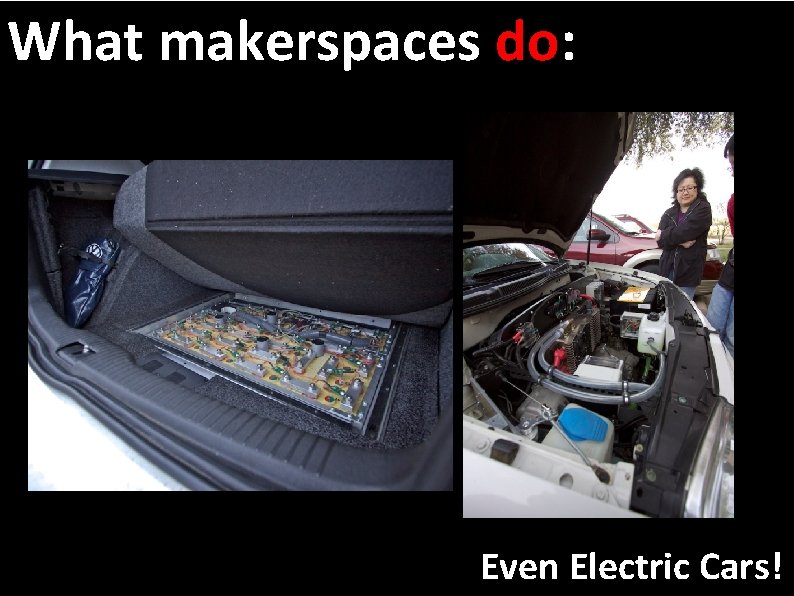
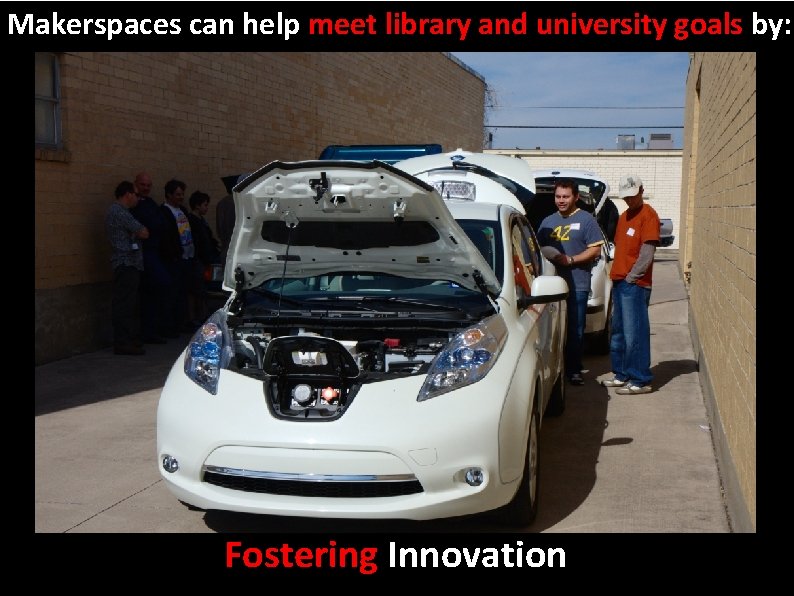
What makerspaces do: Even Electric Cars!
Can a makerspace work in a university setting?
Yes! They are already succeeding in several universities !
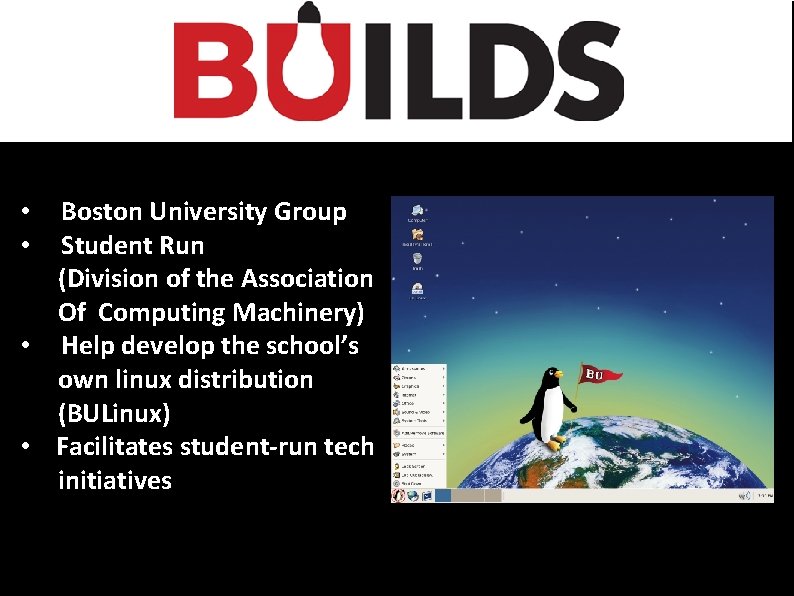
Boston University Group Student Run (Division of the Association Of Computing Machinery) • Help develop the school’s own linux distribution (BULinux) • Facilitates student-run tech initiatives • •
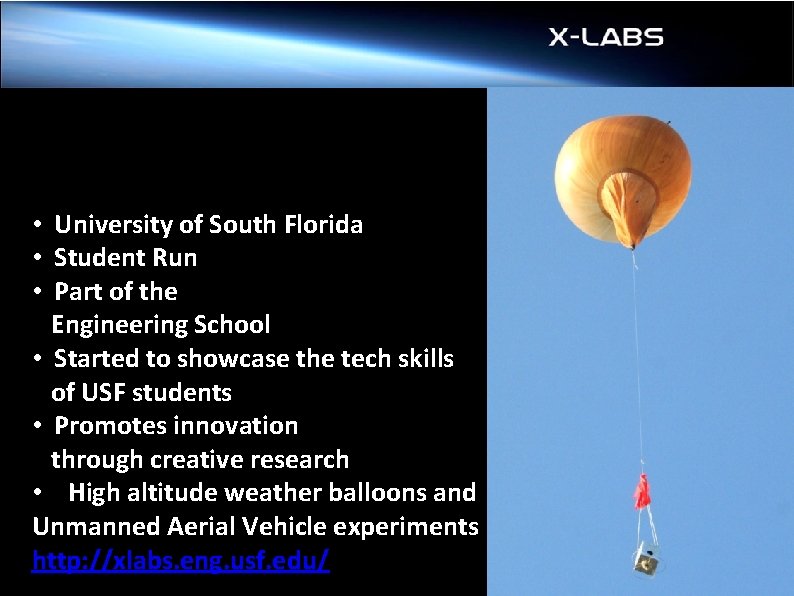
• University of South Florida • Student Run • Part of the Engineering School • Started to showcase the tech skills of USF students • Promotes innovation through creative research • High altitude weather balloons and Unmanned Aerial Vehicle experiments http: //xlabs. eng. usf. edu/
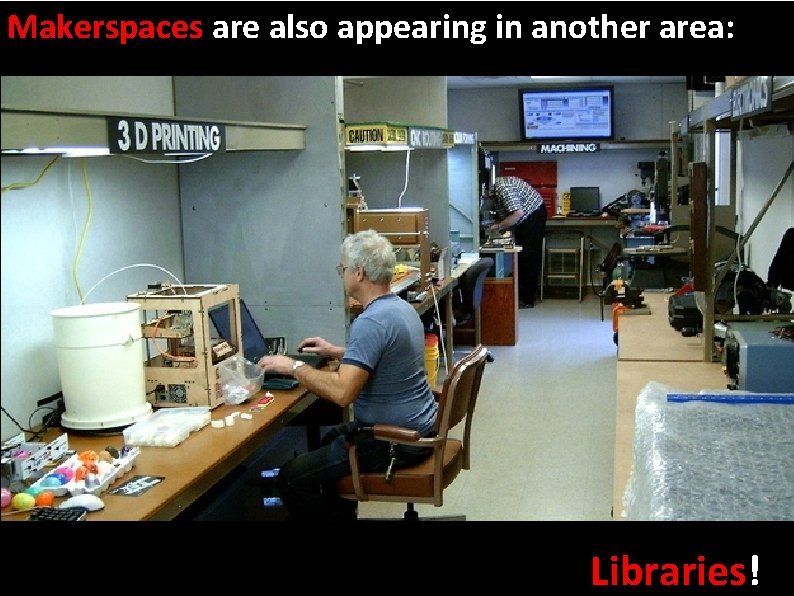
Makerspaces are also appearing in another area: Libraries!
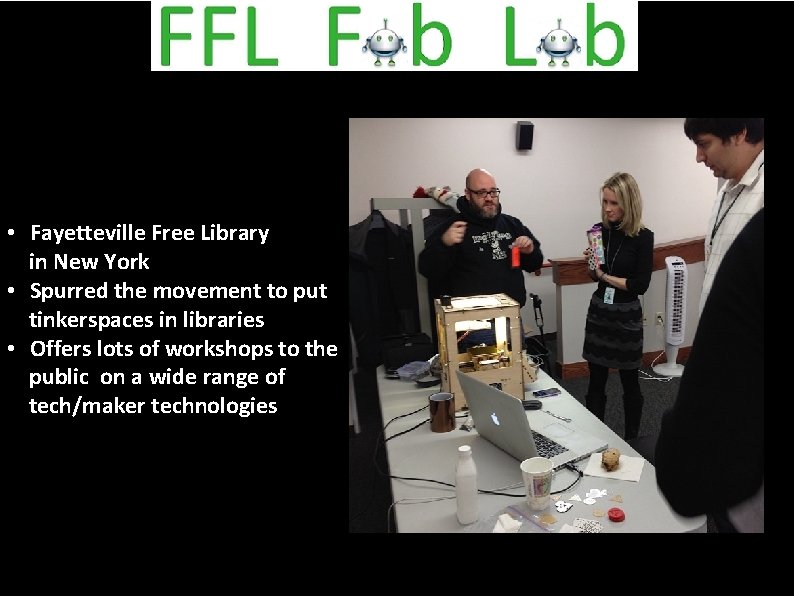
• Fayetteville Free Library in New York • Spurred the movement to put tinkerspaces in libraries • Offers lots of workshops to the public on a wide range of tech/maker technologies
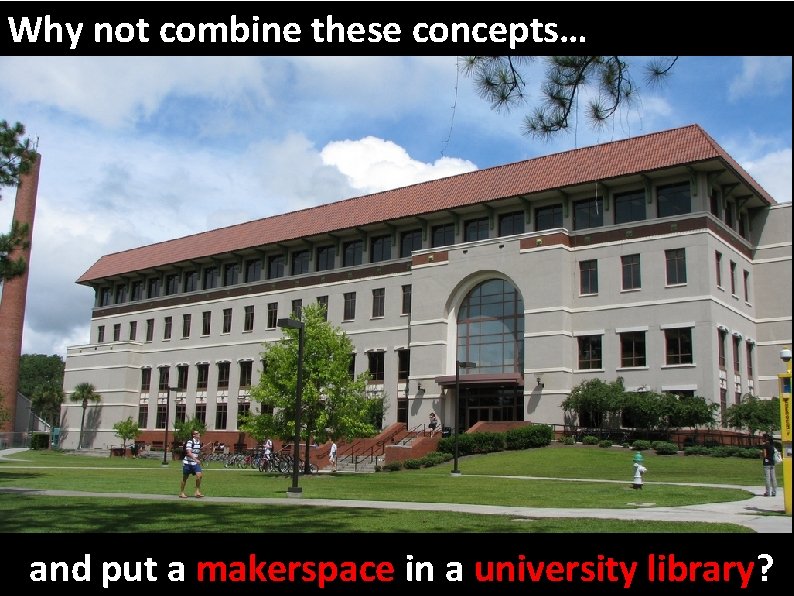
Why not combine these concepts… and put a makerspace in a university library?
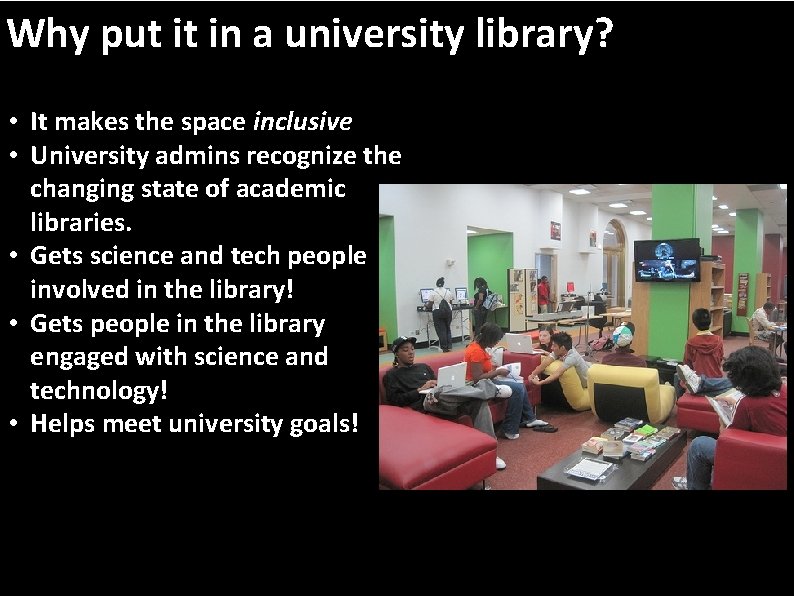
Why put it in a university library? • It makes the space inclusive • University admins recognize the changing state of academic libraries. • Gets science and tech people involved in the library! • Gets people in the library engaged with science and technology! • Helps meet university goals!
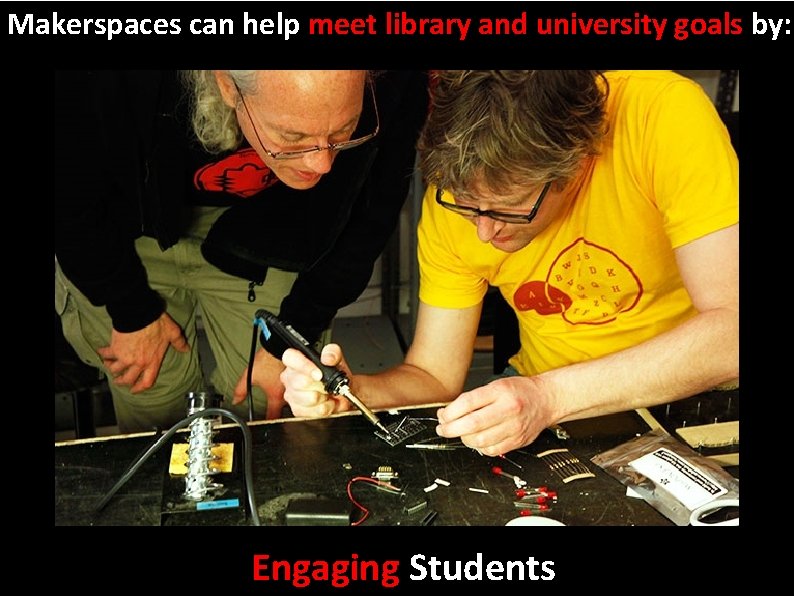
Makerspaces can help meet library and university goals by: Engaging Students
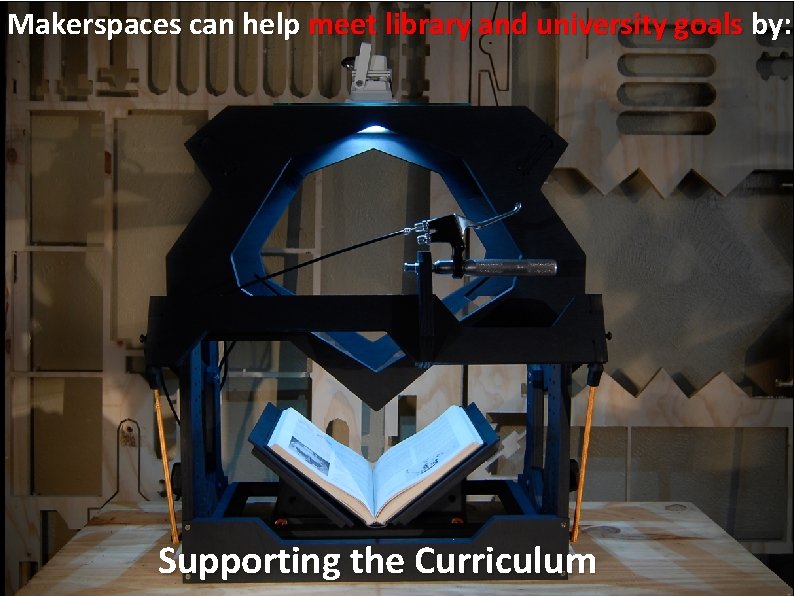
Makerspaces can help meet library and university goals by: Supporting the Curriculum
Makerspaces can help meet library and university goals by: Fostering Innovation
Makerspaces can help meet library and university goals by: Increasing Technical Awareness
Setting up a makerspace: It’s not as hard (or expensive) as you’d think
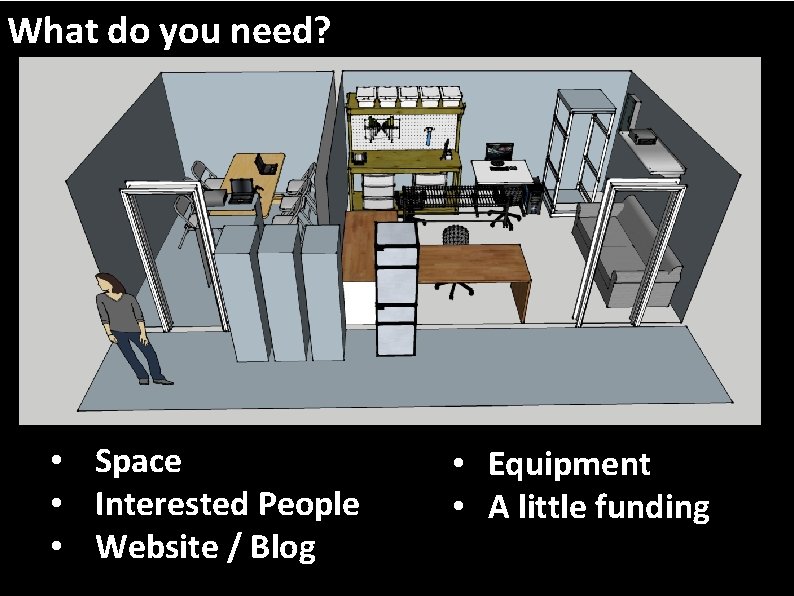
What do you need? • Space • Interested People • Website / Blog • Equipment • A little funding
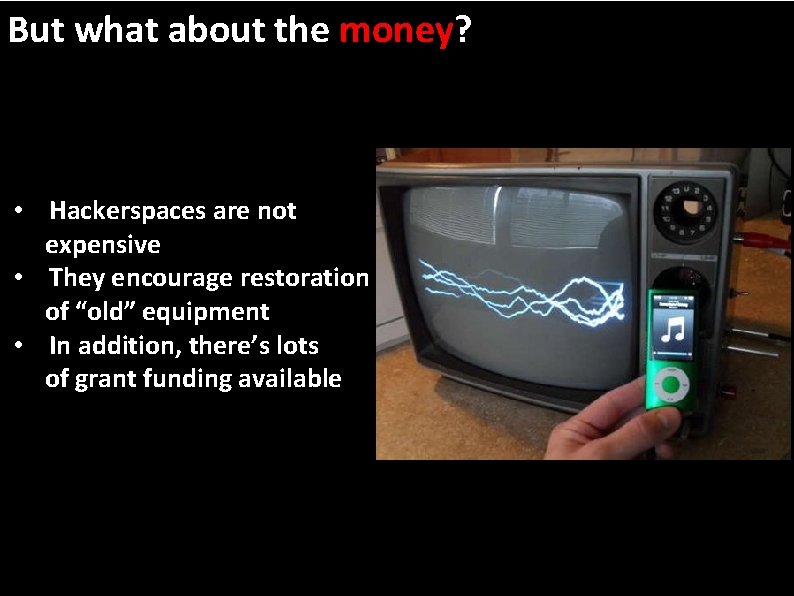
But what about the money? • Hackerspaces are not expensive • They encourage restoration of “old” equipment • In addition, there’s lots of grant funding available
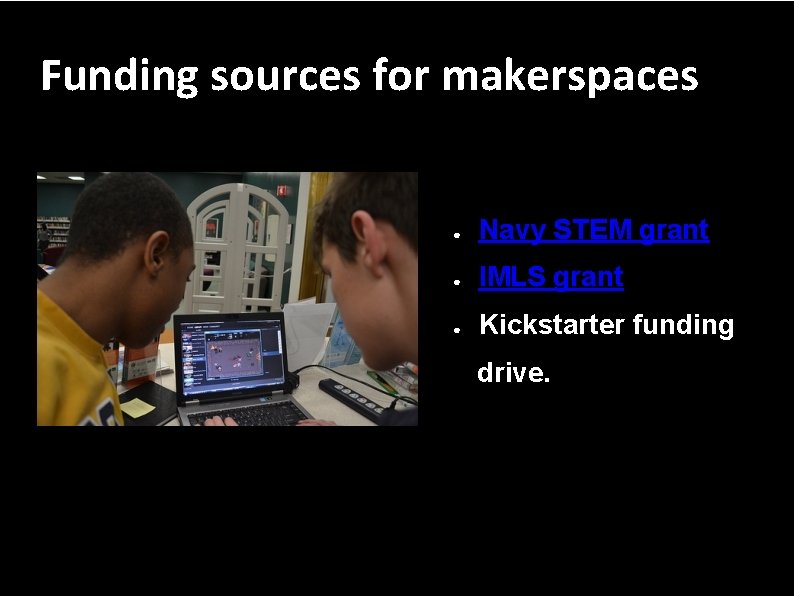
Funding sources for makerspaces ● Navy STEM grant ● IMLS grant ● Kickstarter funding drive.
Summing it all up ● Makerspaces are places that provide the opportunity for people to innovate and learn ● They aren’t difficult to start up ● They fit naturally into the university world ● ● Including them in academic libraries makes them inclusive and fits where libraries are aiming to go. Starting one at VSU would help keep the university at the head of the tech curve, where it has been for some time.
● Q Questions?