
Hacer Ahora Do Now 1 You formal tiene

- Slides: 7
Hacer Ahora (Do Now) 1. (You formal) tiene muchos libros. a. Usted b. Ella c. Él c. Yo e. Tú 2. (Blanca) es muy bonita. a. Él e. Ella b. Tú c. Yo a. Vosotros b. Ellos c. Ustedes d. Nosotros e. Ellas 4. ¿(You-group of strangers) saben dónde está el parque? a. Ellos b. Ellas d. Usted d. Nosotros 3. (Francisco y yo) tenemos dos perros. c. Vosotros e. Ustedes 5. In Spanish, the subject pronouns are often left out. Why?
Capitulo 1: Gramática Objetivo (Learning Objective): Students will be able to compare various cultural interviews in Spanish. Demonstración de aprendizaje (Demonstration of Learning): Given a prompt, students will be able to defends his or her answer by proving example on cultural greeting. Daily Greeters
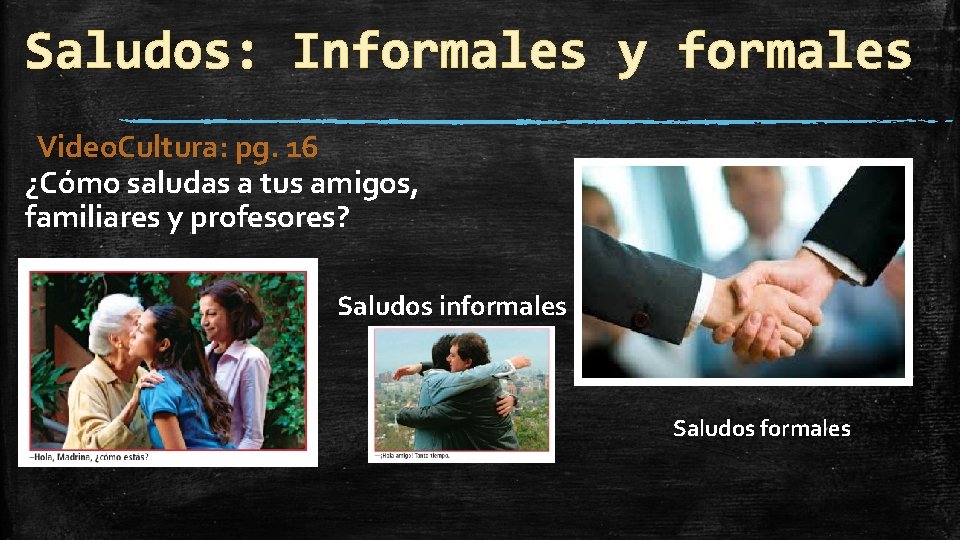
Saludos: Informales y formales Video. Cultura: pg. 16 ¿Cómo saludas a tus amigos, familiares y profesores? Saludos informales Saludos formales
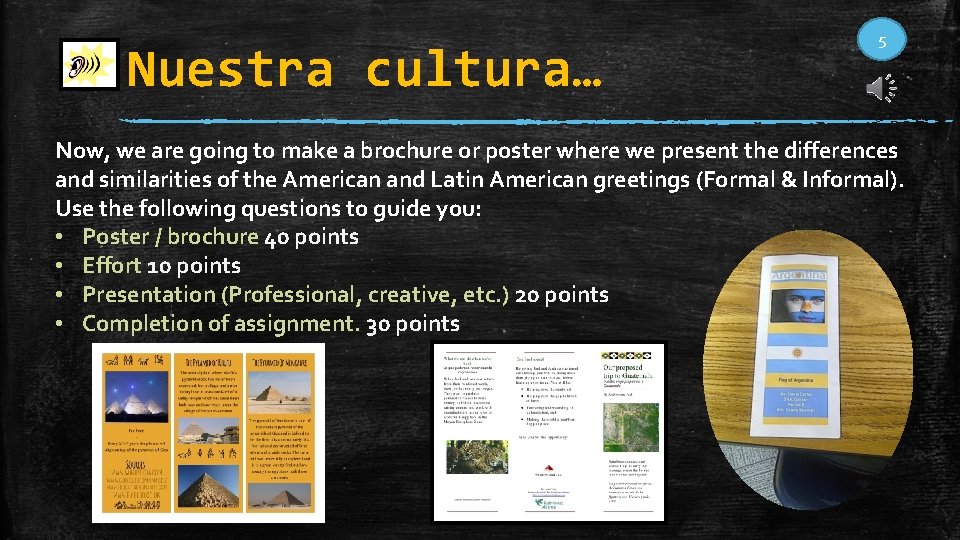
Nuestra cultura… 5 Now, we are going to make a brochure or poster where we present the differences and similarities of the American and Latin American greetings (Formal & Informal). Use the following questions to guide you: • Poster / brochure 40 points • Effort 10 points • Presentation (Professional, creative, etc. ) 20 points • Completion of assignment. 30 points
Saludos: Informales y formales Gallery Walk: Write down your questions & answer for each question. 1. Do you have any family practices for greeting someone? 2. What’s the different between your home country’s greeting and another country such as España? 3. Tell us about any greeting you may know of from other cultures. 4. Define culture in your own words. 5. How do you know what time of the day to use a particular greeting or farewell? 6. What does it mean when certain letters have accent marks over them?
Exit Ticket: Saludos Write a brief paragraph to answer the following question… Do family and close friends in your community greet each other with hugs, kisses, or handshakes? Defend your answer (Examples & /or Explanation)
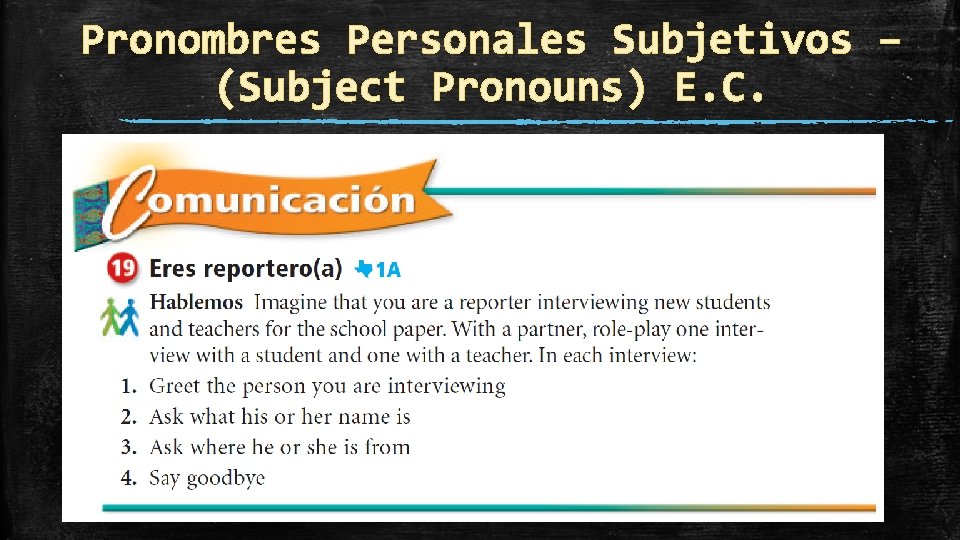
Pronombres Personales Subjetivos – (Subject Pronouns) E. C.