
Habitat the area where an organism lives Includes
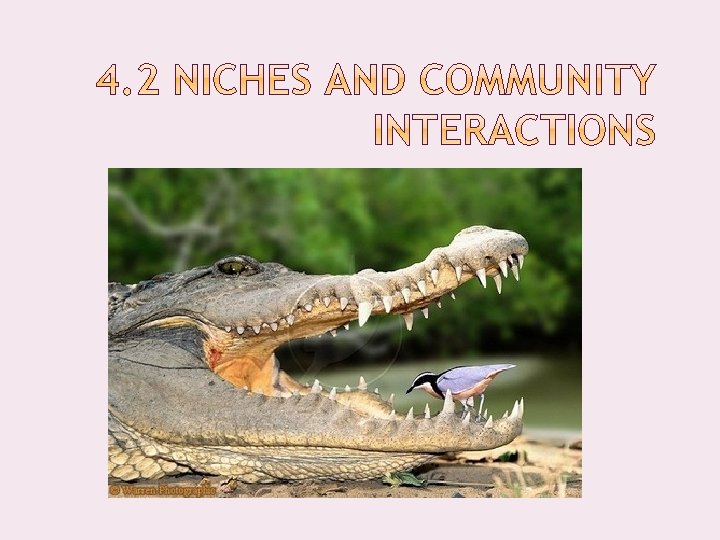

�Habitat: the area where an organism lives. Includes both the biotic & abiotic factors �Niche: the full range of physical & biological conditions in which an organism lives & the way in which the organism uses those conditions
� Tolerance to survive in that area � Amount of Resources
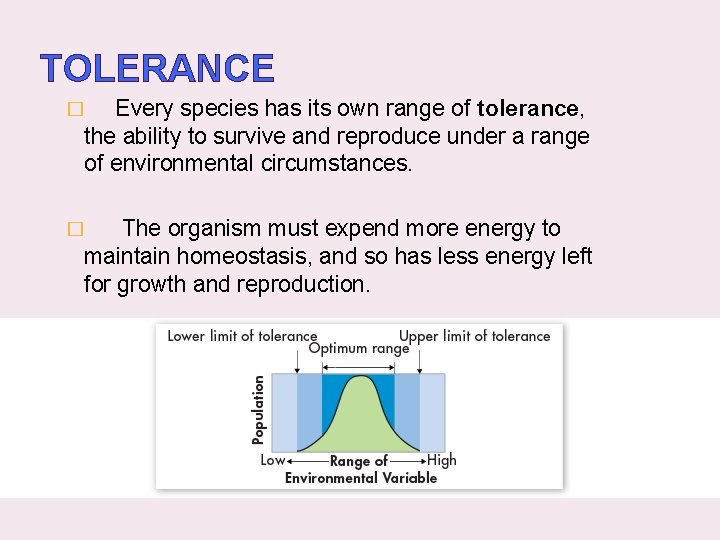
TOLERANCE Every species has its own range of tolerance, the ability to survive and reproduce under a range of environmental circumstances. � The organism must expend more energy to maintain homeostasis, and so has less energy left for growth and reproduction. �
The term resource can refer to any necessity of life, such as water, nutrients, light, food, or space. � For plants, resources can include sunlight, water, and soil nutrients. � For animals, resources can include nesting space, shelter, types of food, and places to feed. �
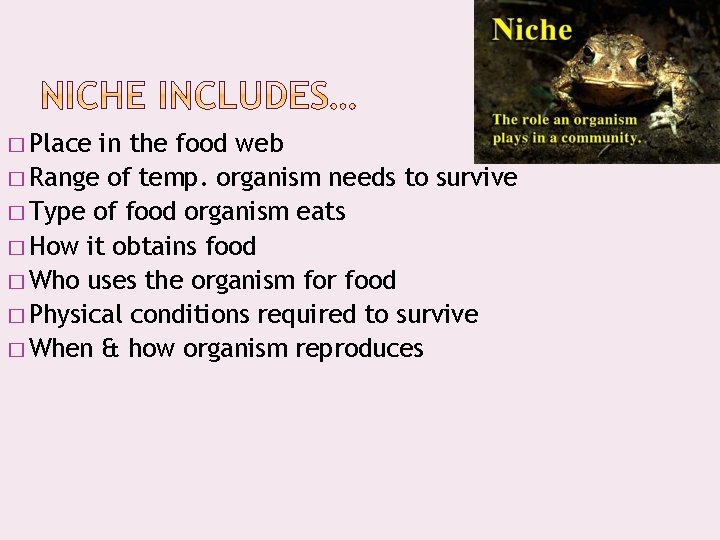
� Place in the food web � Range of temp. organism needs to survive � Type of food organism eats � How it obtains food � Who uses the organism for food � Physical conditions required to survive � When & how organism reproduces
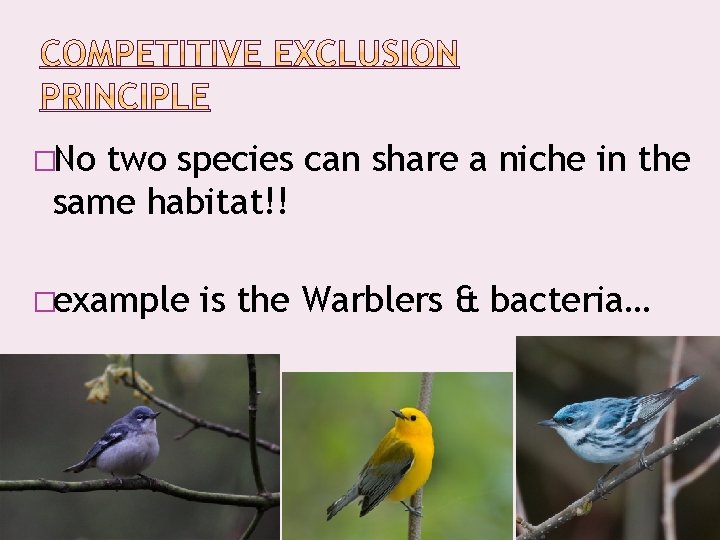
�No two species can share a niche in the same habitat!! �example is the Warblers & bacteria…
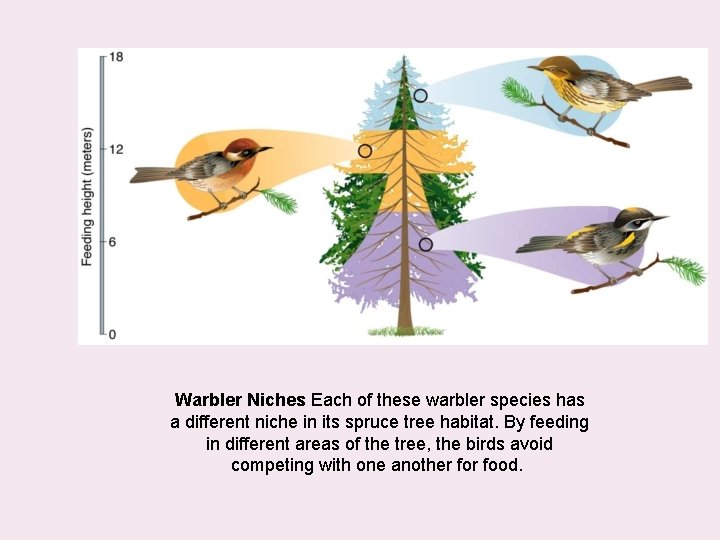
Warbler Niches Each of these warbler species has a different niche in its spruce tree habitat. By feeding in different areas of the tree, the birds avoid competing with one another food.
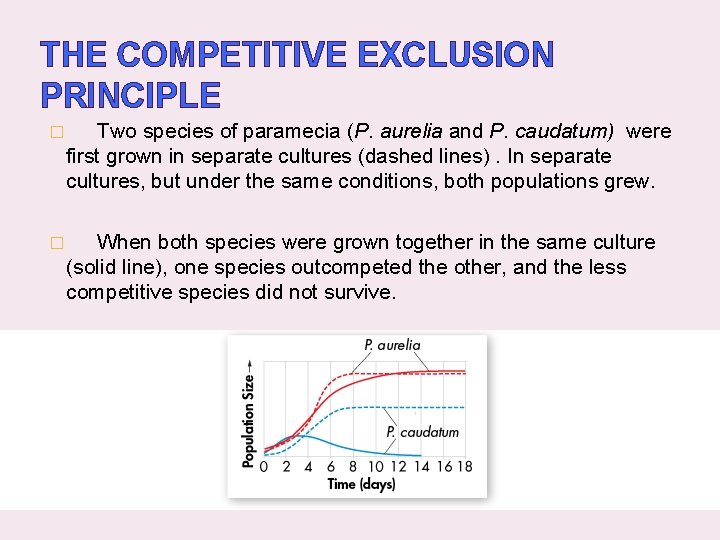
THE COMPETITIVE EXCLUSION PRINCIPLE � Two species of paramecia (P. aurelia and P. caudatum) were first grown in separate cultures (dashed lines). In separate cultures, but under the same conditions, both populations grew. � When both species were grown together in the same culture (solid line), one species outcompeted the other, and the less competitive species did not survive.
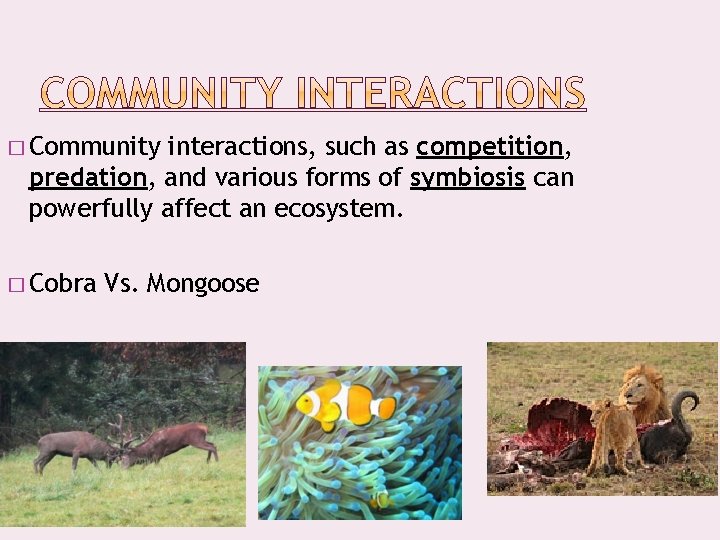
� Community interactions, such as competition, predation, and various forms of symbiosis can powerfully affect an ecosystem. � Cobra Vs. Mongoose
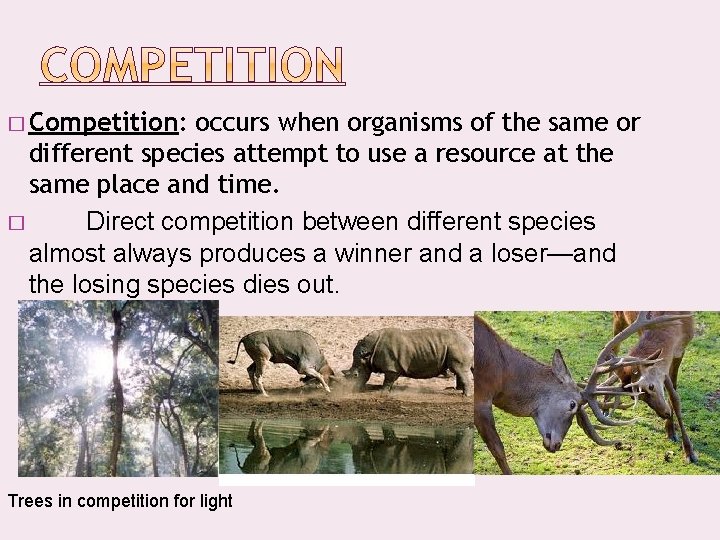
� Competition: occurs when organisms of the same or different species attempt to use a resource at the same place and time. � Direct competition between different species almost always produces a winner and a loser—and the losing species dies out. Trees in competition for light
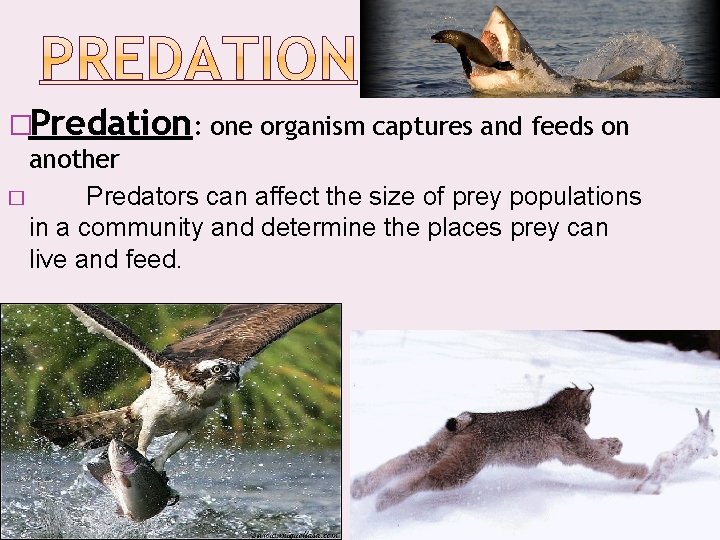
�Predation: one organism captures and feeds on another � Predators can affect the size of prey populations in a community and determine the places prey can live and feed.
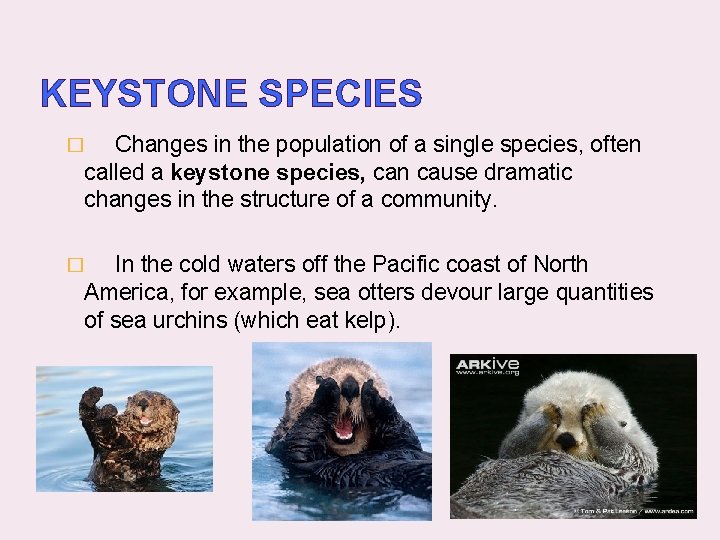
KEYSTONE SPECIES Changes in the population of a single species, often called a keystone species, can cause dramatic changes in the structure of a community. � In the cold waters off the Pacific coast of North America, for example, sea otters devour large quantities of sea urchins (which eat kelp). �
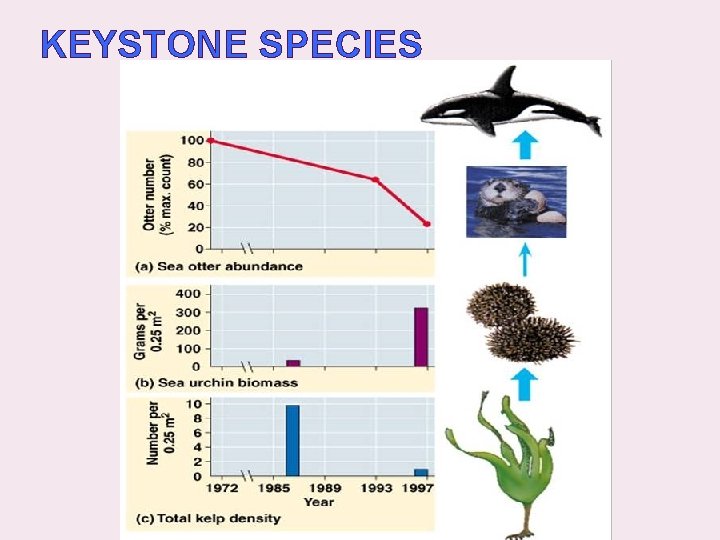
KEYSTONE SPECIES
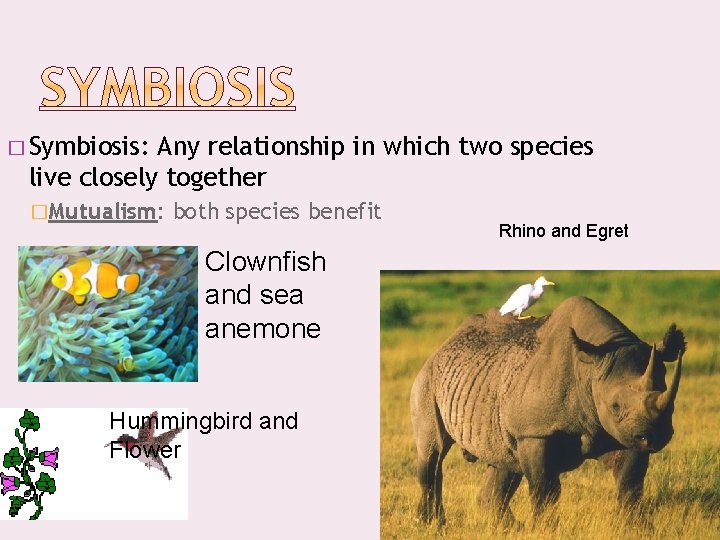
� Symbiosis: Any relationship in which two species live closely together �Mutualism: both species benefit Clownfish and sea anemone Hummingbird and Flower Rhino and Egret
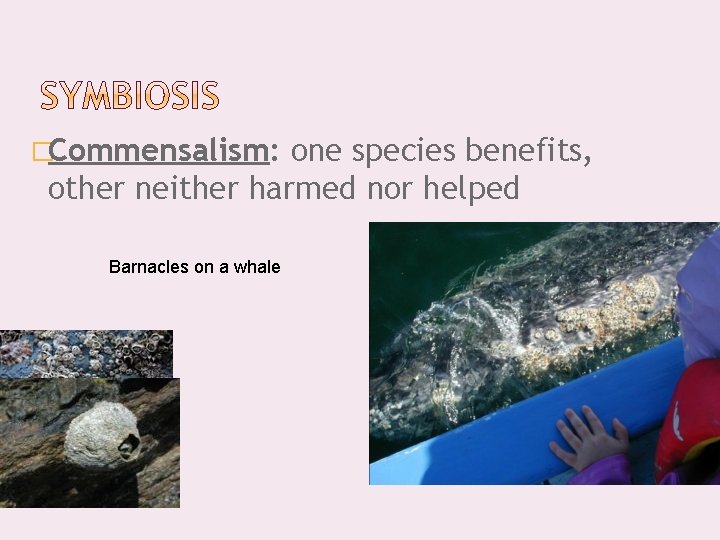
�Commensalism: one species benefits, other neither harmed nor helped Barnacles on a whale
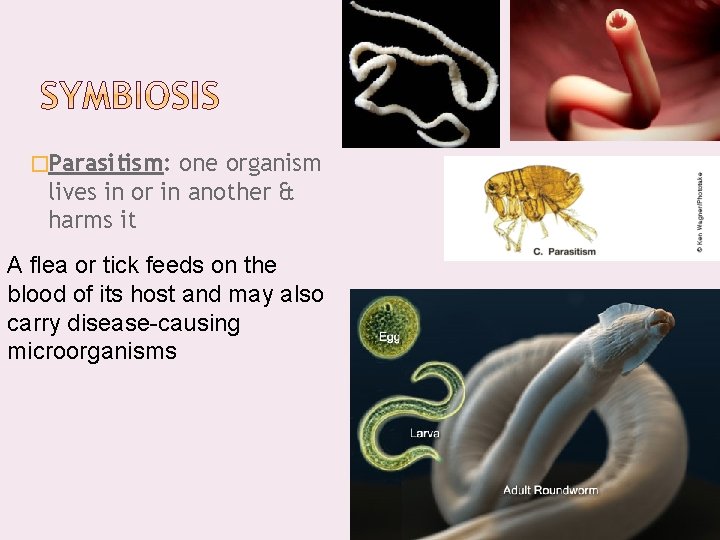
�Parasitism: one organism lives in or in another & harms it A flea or tick feeds on the blood of its host and may also carry disease-causing microorganisms
� Tolerance � Resources
� One will win and obtain the resource � The other may die off if it can’t find its resource
� Commensalism � Mutualism � Parasitism
- Slides: 20