
HA 1 1 Phase 1 Learning About Etruscan
HA 1. 1 Phase 1 Learning About Etruscan and Greek Cultures
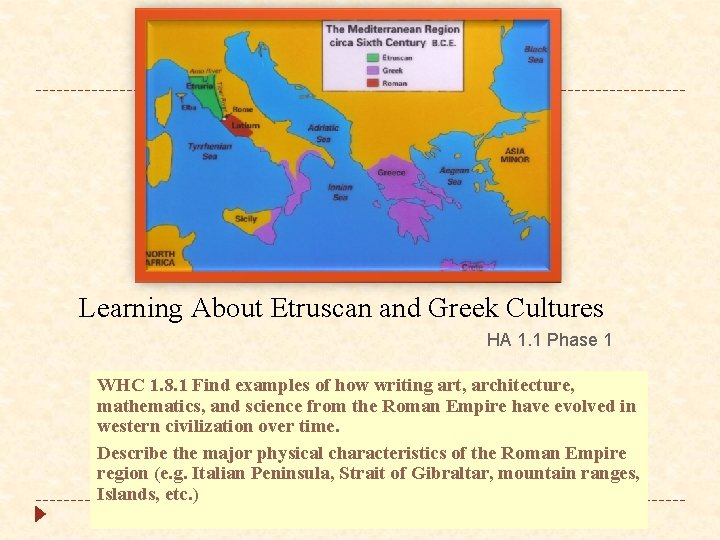
Learning About Etruscan and Greek Cultures HA 1. 1 Phase 1 WHC 1. 8. 1 Find examples of how writing art, architecture, mathematics, and science from the Roman Empire have evolved in western civilization over time. Describe the major physical characteristics of the Roman Empire region (e. g. Italian Peninsula, Strait of Gibraltar, mountain ranges, Islands, etc. )
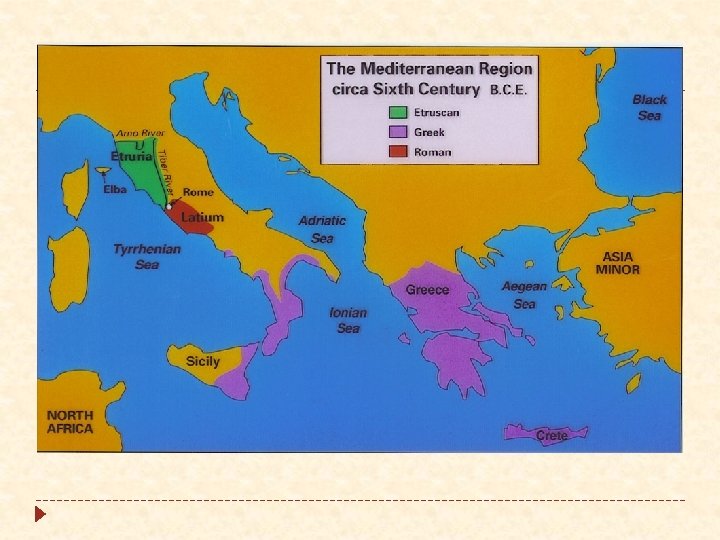
Map of Rome ISN Page 43 1. 2. 3. 4. 5. 6. 7. Read Pages 263, 264, and 265 in Journey Across Time You are a cartographer today. On a piece of white paper recreate the map on page 263 without tracing or printing off one. Color it. Be sure you have included a title, a legend/key, a compass rose, and all the information. Answer the questions found in Using Geography Skills Page 263 on the back of your map. Put your header on the back of your map. Turn the map in to Ms. Benson at the end of the hour. Tomorrow you will tape this to ISN Page 43 journal for future reference. Neatness, readability, and correctness will count!

ISN P 43 Map of Italy 500 BCE Using Geography Skills Questions In 500 BCE the Etruscans and the Greeks occupied much of Italy. 1. 2. Which civilization do you think most influenced the Latins who settled Rome? Explain your answer. How was Rome’s location advantageous for the Latin’s conquest of Italy?
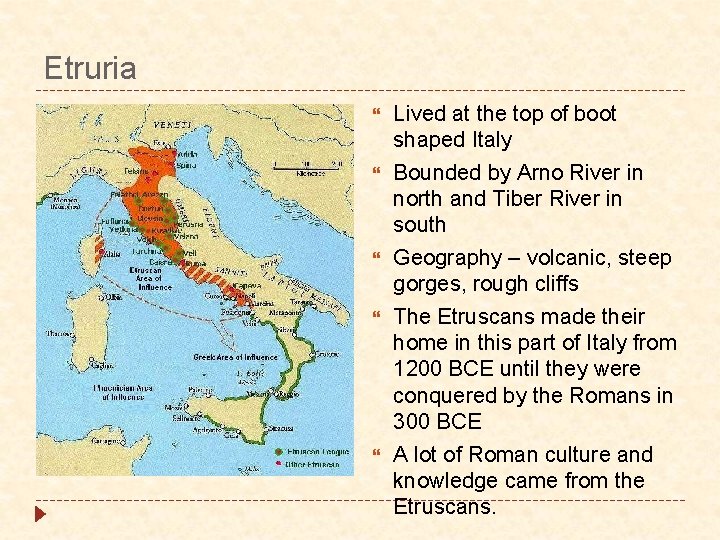
Etruria Lived at the top of boot shaped Italy Bounded by Arno River in north and Tiber River in south Geography – volcanic, steep gorges, rough cliffs The Etruscans made their home in this part of Italy from 1200 BCE until they were conquered by the Romans in 300 BCE A lot of Roman culture and knowledge came from the Etruscans.
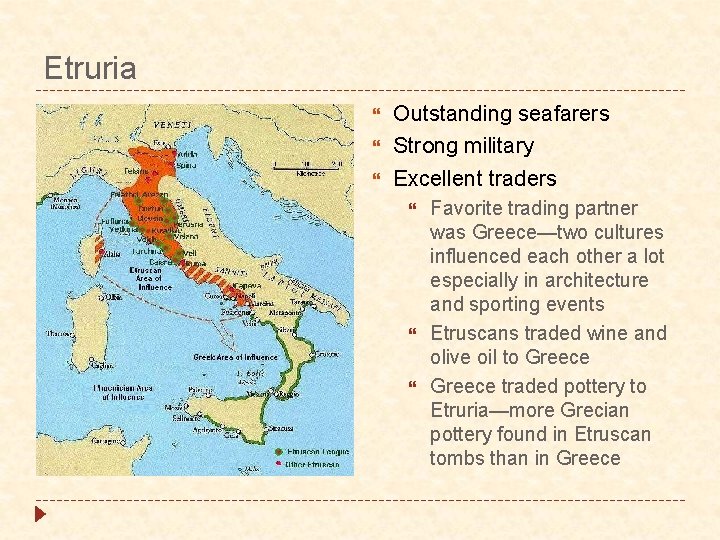
Etruria Outstanding seafarers Strong military Excellent traders Favorite trading partner was Greece—two cultures influenced each other a lot especially in architecture and sporting events Etruscans traded wine and olive oil to Greece traded pottery to Etruria—more Grecian pottery found in Etruscan tombs than in Greece
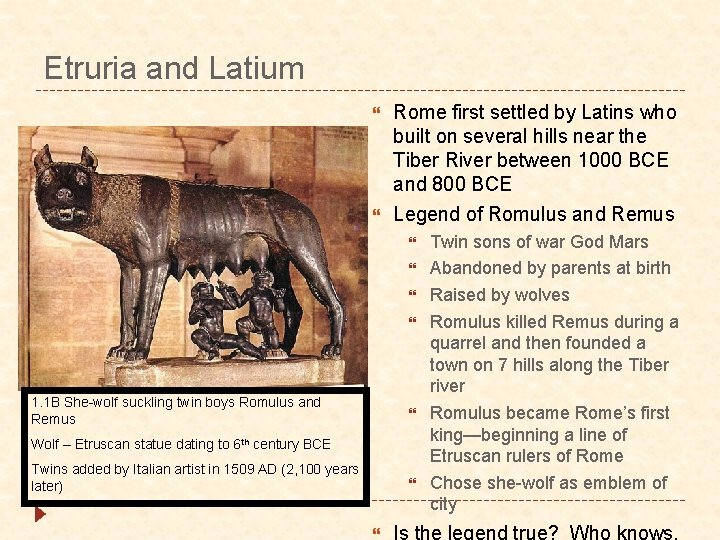
Etruria and Latium Rome first settled by Latins who built on several hills near the Tiber River between 1000 BCE and 800 BCE Legend of Romulus and Remus 1. 1 B She-wolf suckling twin boys Romulus and Remus Wolf – Etruscan statue dating to 6 th century BCE Twins added by Italian artist in 1509 AD (2, 100 years later) Twin sons of war God Mars Abandoned by parents at birth Raised by wolves Romulus killed Remus during a quarrel and then founded a town on 7 hills along the Tiber river Romulus became Rome’s first king—beginning a line of Etruscan rulers of Rome Chose she-wolf as emblem of city Is the legend true? Who knows.
HA 1. 1 A Note Cards Activity You have 4 pages of note cards. Put your name at the top of each page. You are going to examine 16 slides showing Etruscan and Greek culture. You must carefully examine the slide and LISTEN to the information that I will provide you in order to finish the drawing on your note card and fill in the blanks on your notes. You will use your notes later to identify ways in which Roman civilization was influenced by Etruscan and Greek cultures.
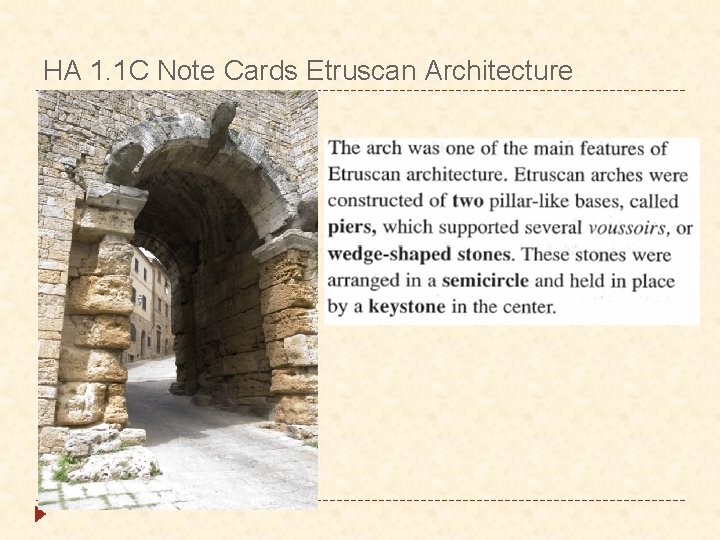
HA 1. 1 C Note Cards Etruscan Architecture
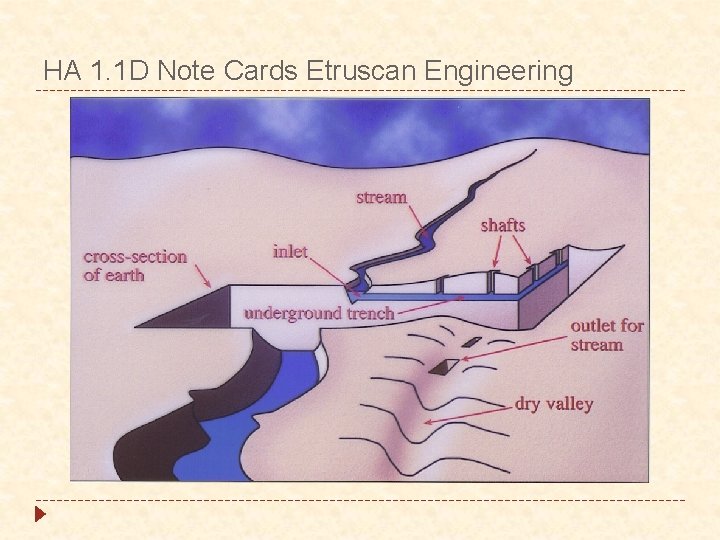
HA 1. 1 D Note Cards Etruscan Engineering
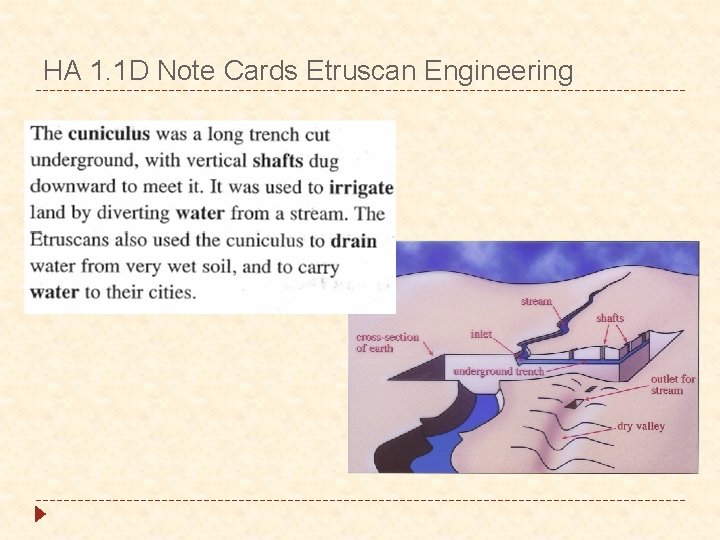
HA 1. 1 D Note Cards Etruscan Engineering
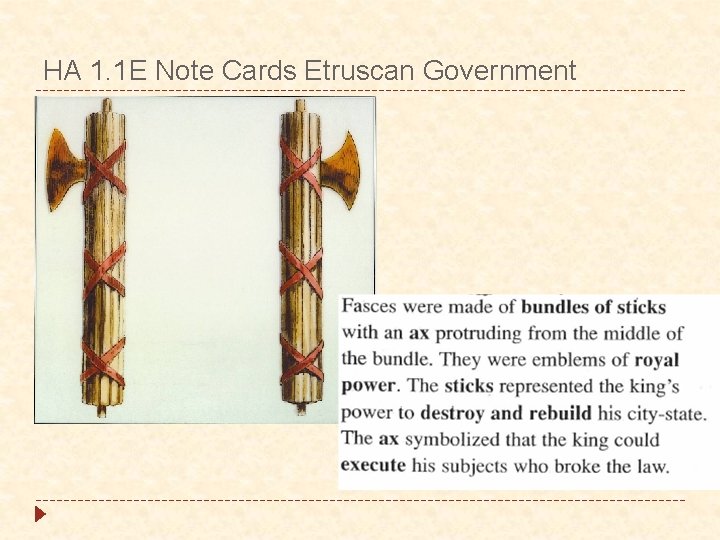
HA 1. 1 E Note Cards Etruscan Government
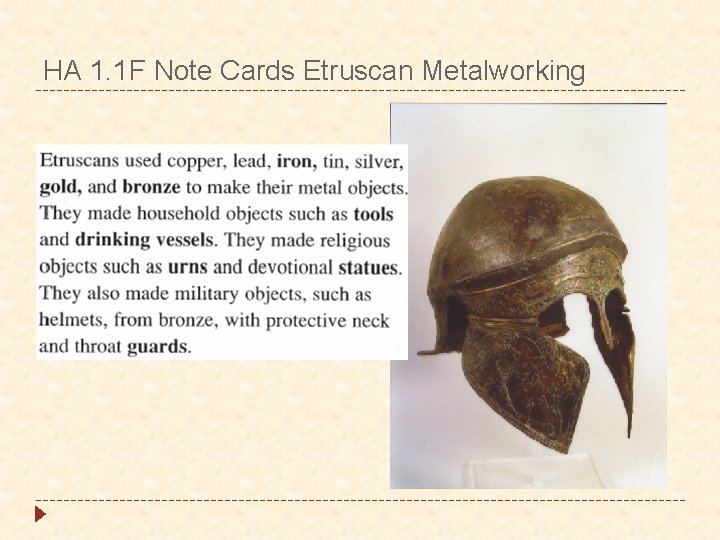
HA 1. 1 F Note Cards Etruscan Metalworking
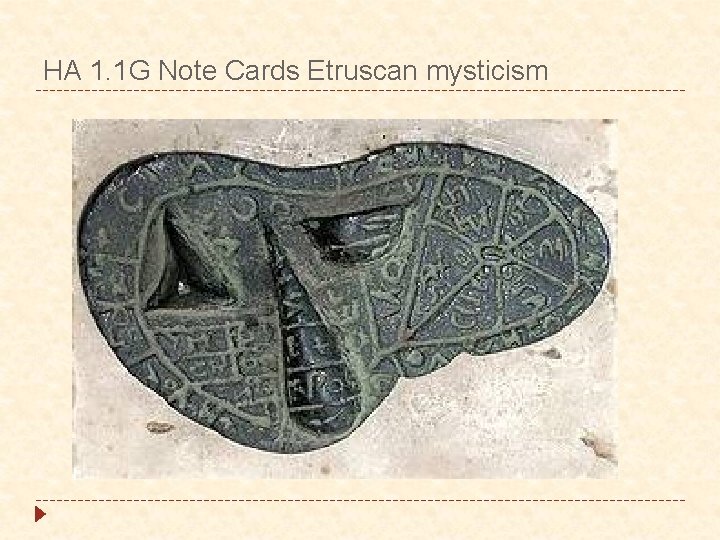
HA 1. 1 G Note Cards Etruscan mysticism
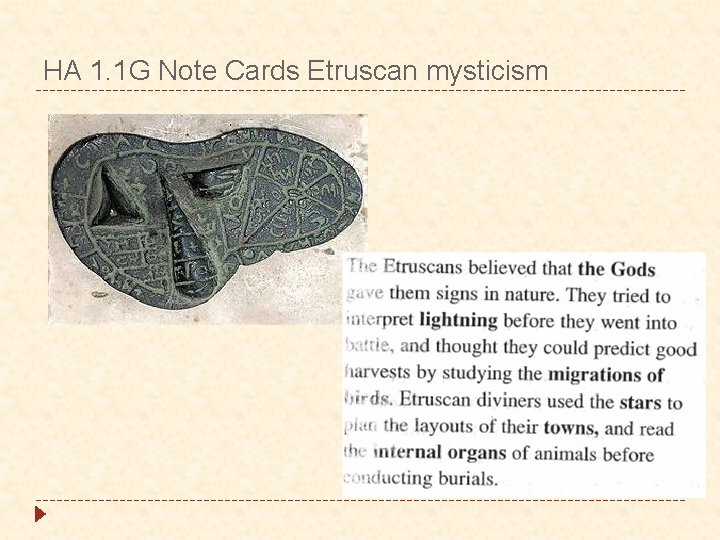
HA 1. 1 G Note Cards Etruscan mysticism
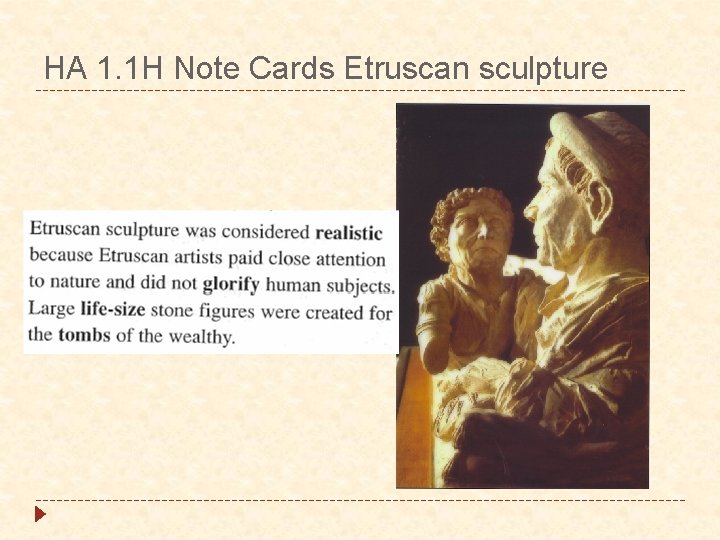
HA 1. 1 H Note Cards Etruscan sculpture
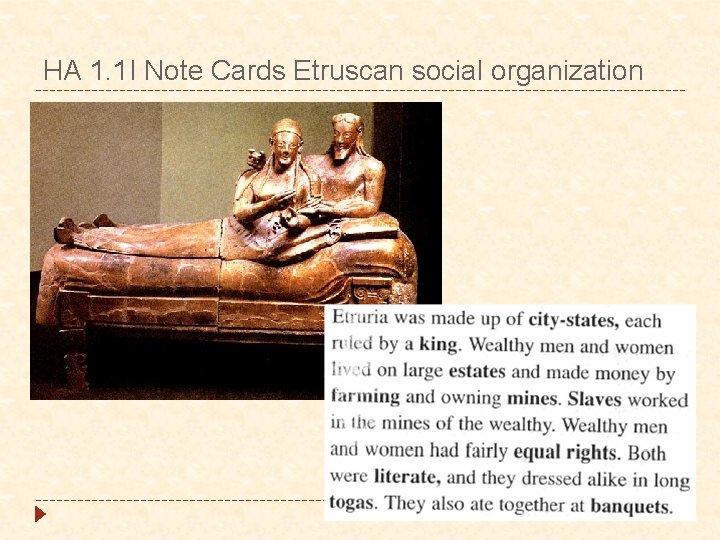
HA 1. 1 I Note Cards Etruscan social organization
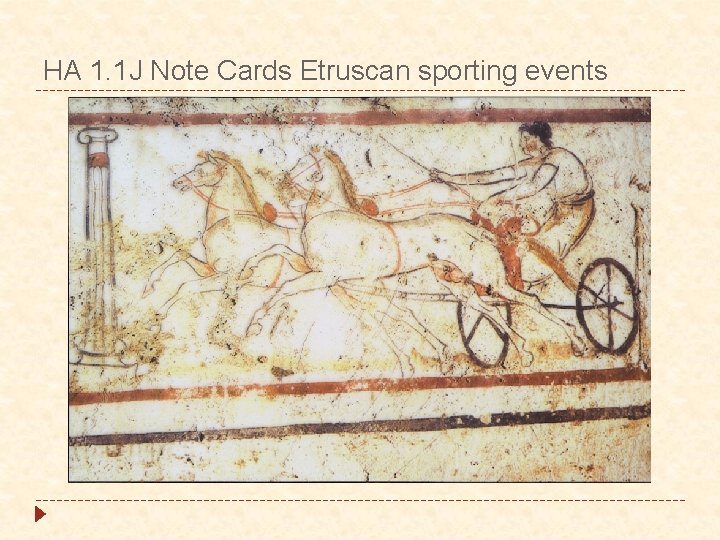
HA 1. 1 J Note Cards Etruscan sporting events
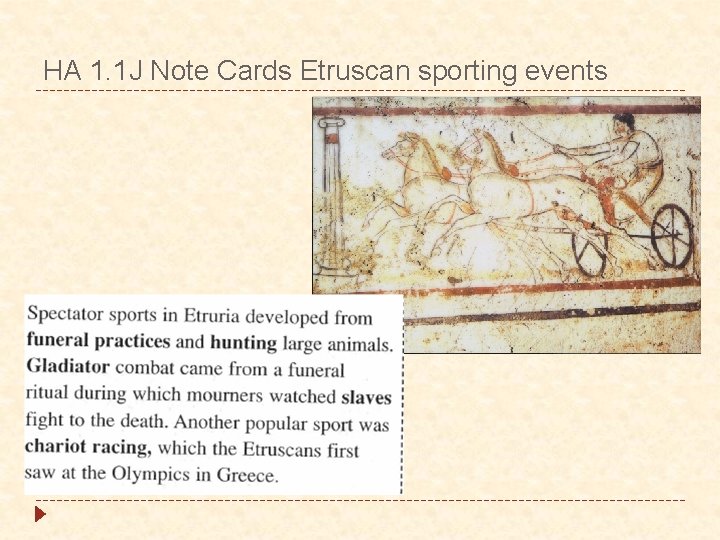
HA 1. 1 J Note Cards Etruscan sporting events
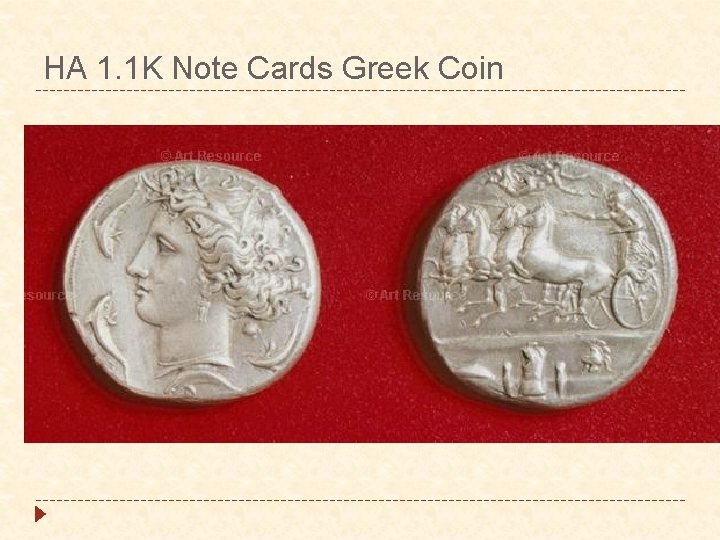
HA 1. 1 K Note Cards Greek Coin
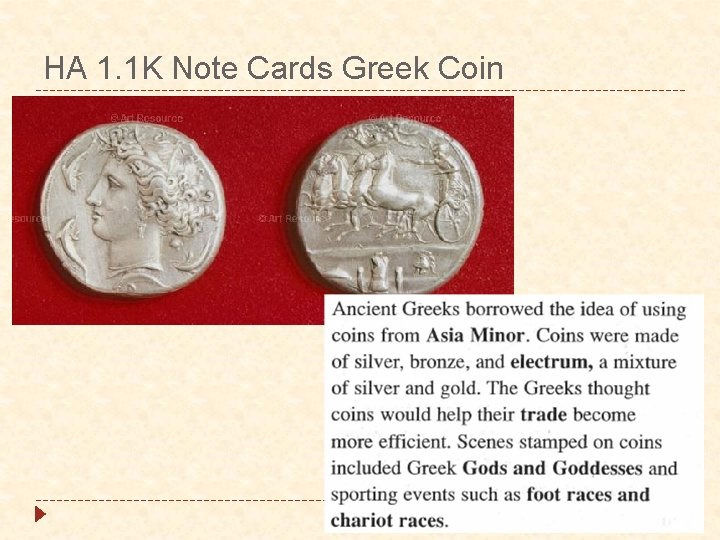
HA 1. 1 K Note Cards Greek Coin
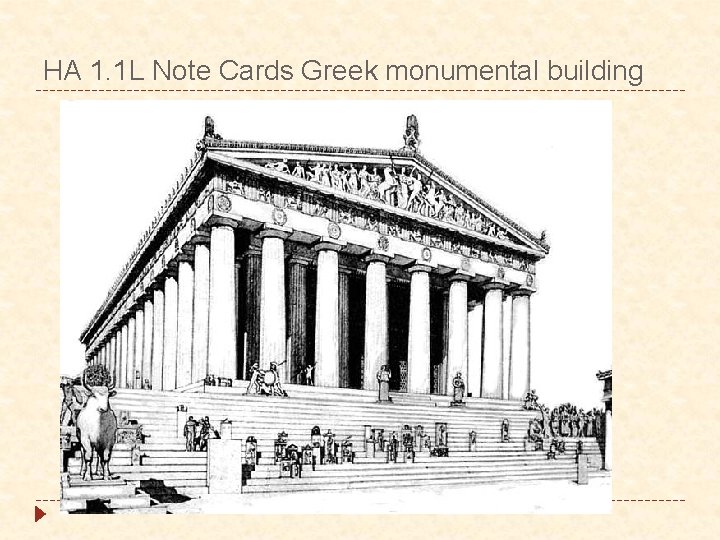
HA 1. 1 L Note Cards Greek monumental building
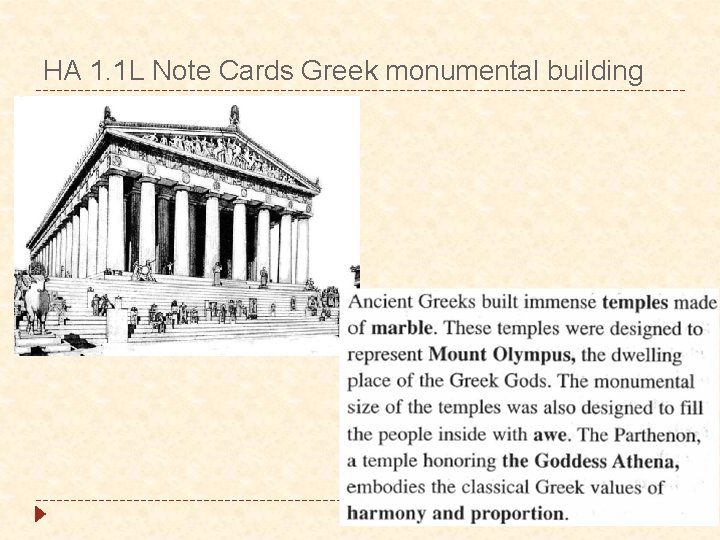
HA 1. 1 L Note Cards Greek monumental building
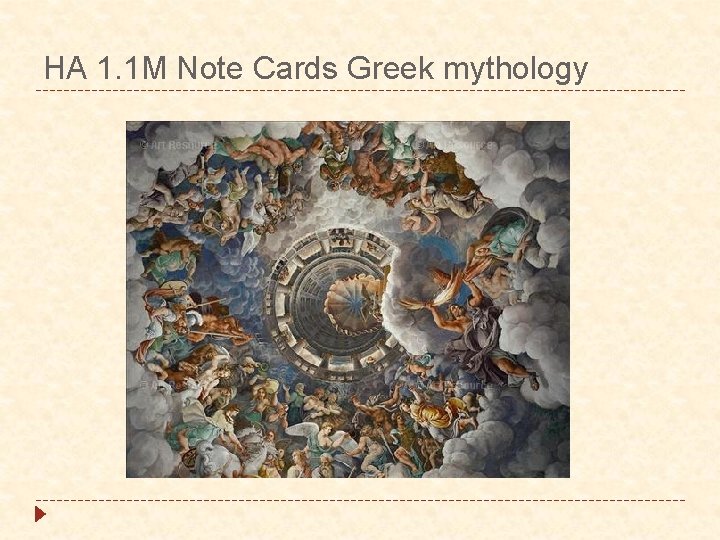
HA 1. 1 M Note Cards Greek mythology
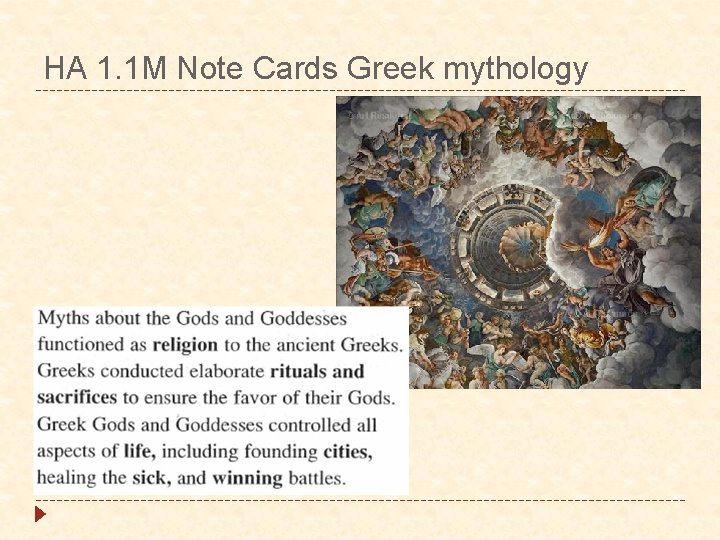
HA 1. 1 M Note Cards Greek mythology
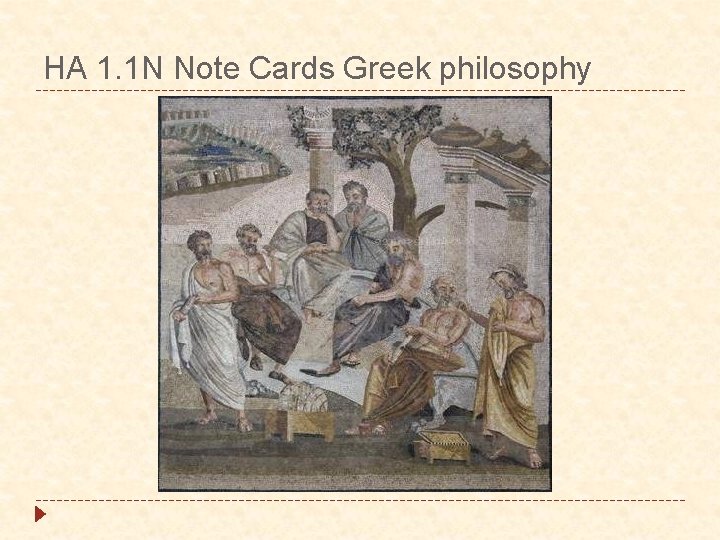
HA 1. 1 N Note Cards Greek philosophy
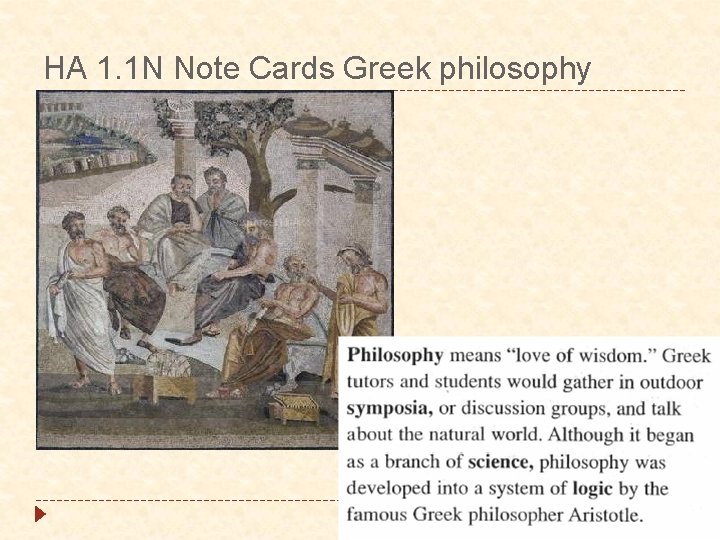
HA 1. 1 N Note Cards Greek philosophy
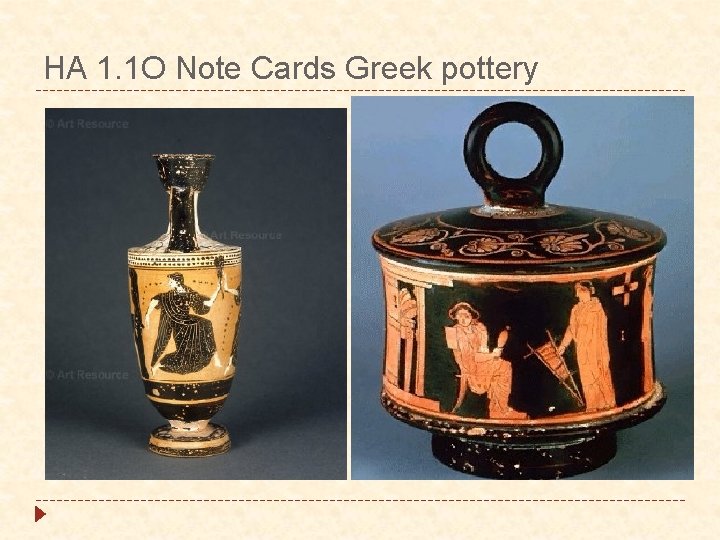
HA 1. 1 O Note Cards Greek pottery
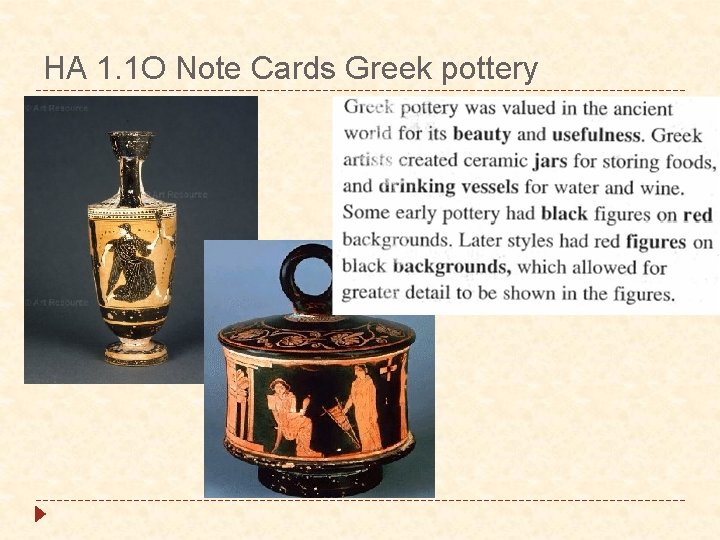
HA 1. 1 O Note Cards Greek pottery
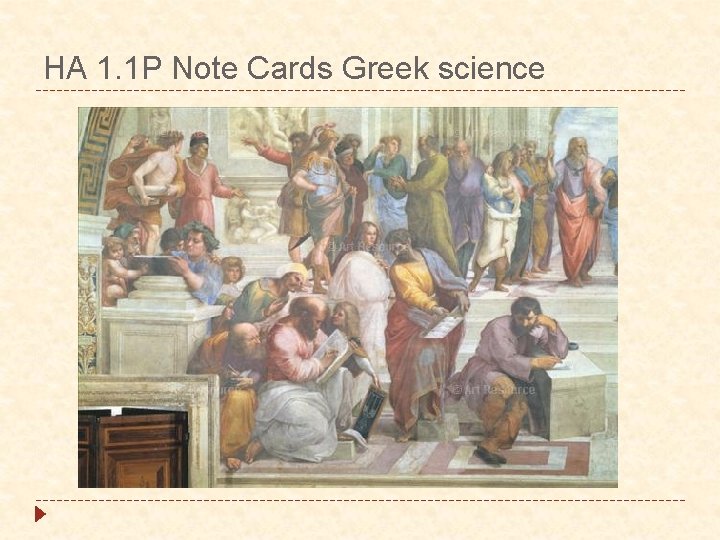
HA 1. 1 P Note Cards Greek science
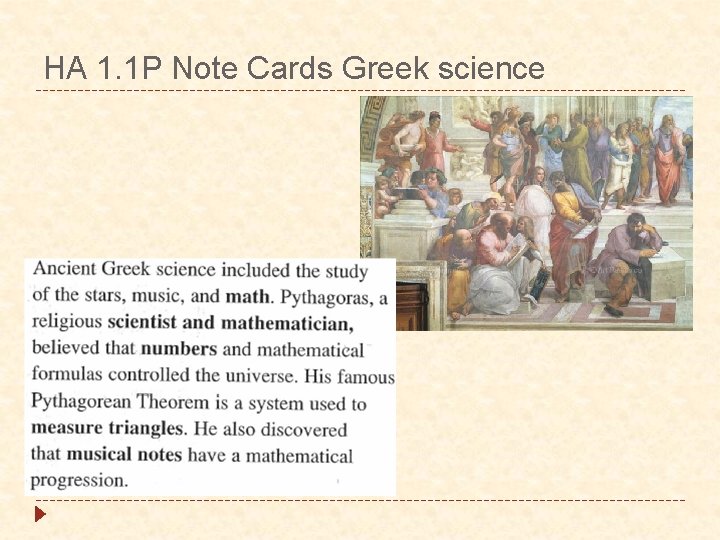
HA 1. 1 P Note Cards Greek science
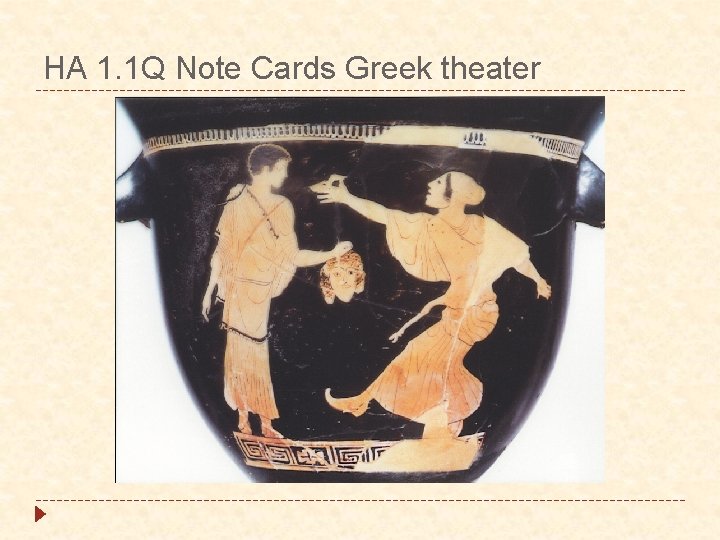
HA 1. 1 Q Note Cards Greek theater
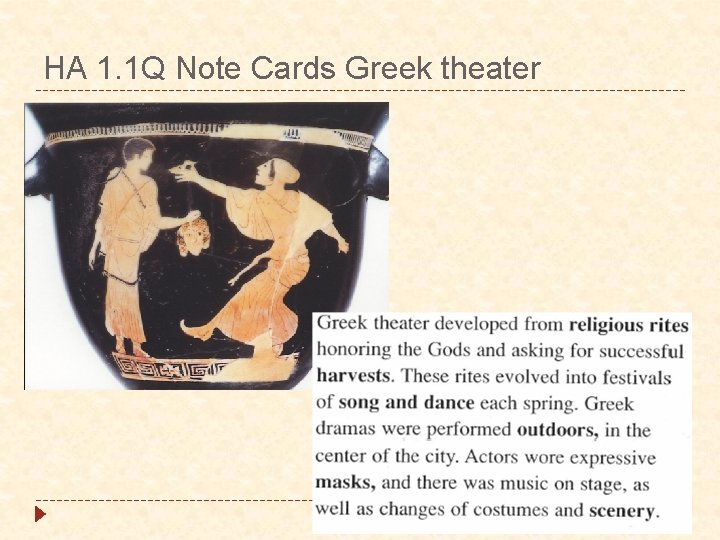
HA 1. 1 Q Note Cards Greek theater
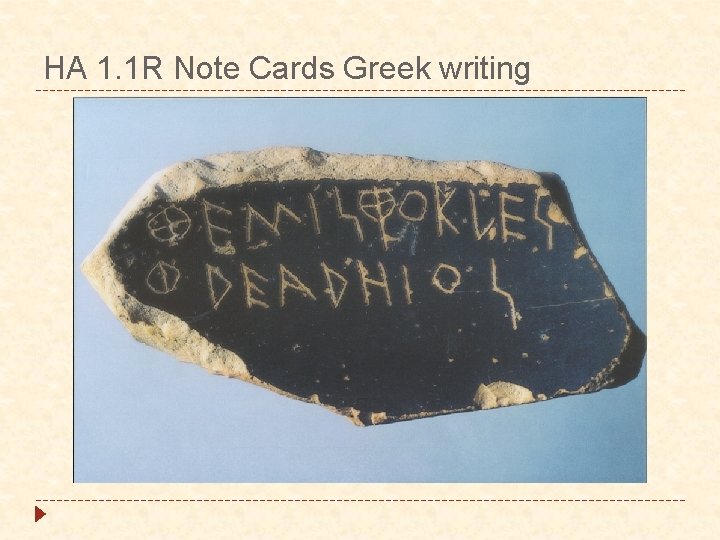
HA 1. 1 R Note Cards Greek writing
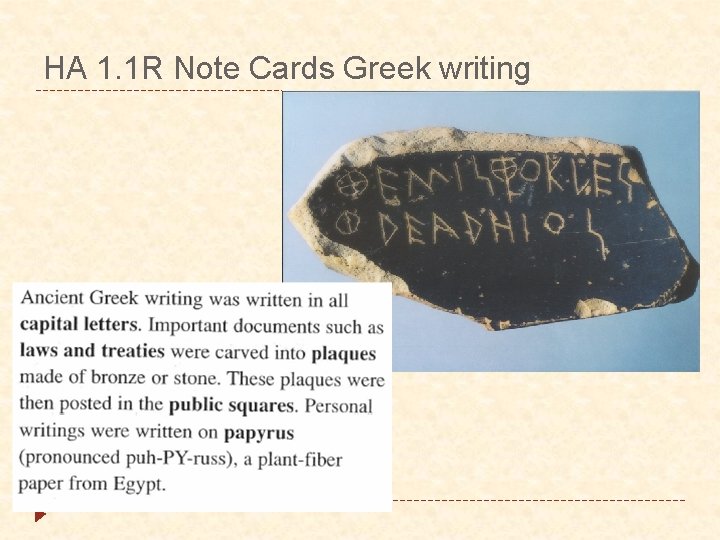
HA 1. 1 R Note Cards Greek writing
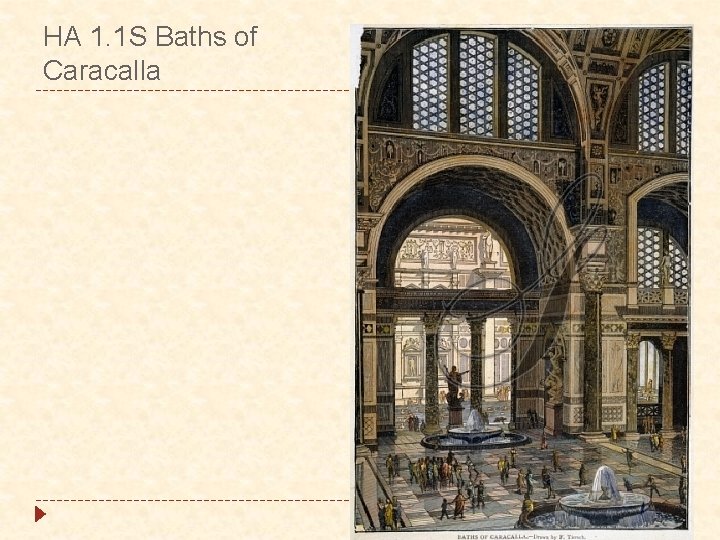
HA 1. 1 S Baths of Caracalla
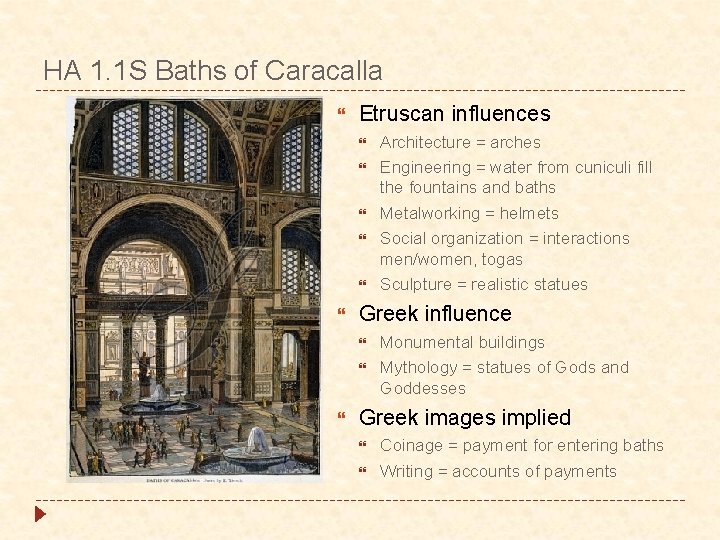
HA 1. 1 S Baths of Caracalla Etruscan influences Greek influence Architecture = arches Engineering = water from cuniculi fill the fountains and baths Metalworking = helmets Social organization = interactions men/women, togas Sculpture = realistic statues Monumental buildings Mythology = statues of Gods and Goddesses Greek images implied Coinage = payment for entering baths Writing = accounts of payments
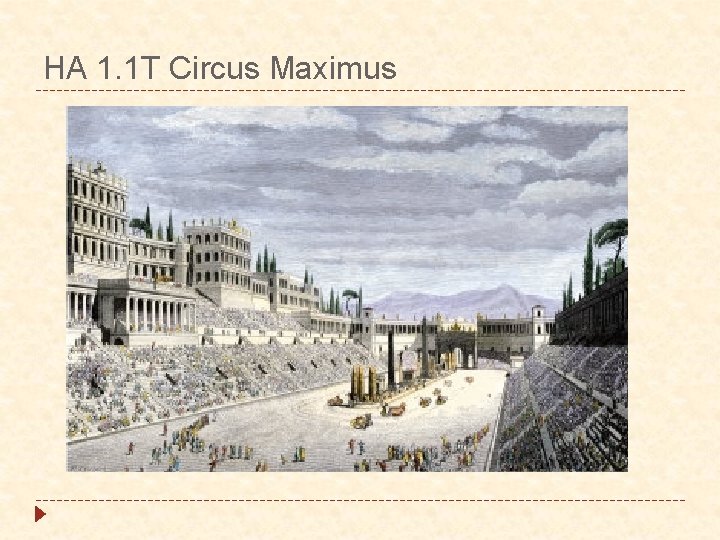
HA 1. 1 T Circus Maximus
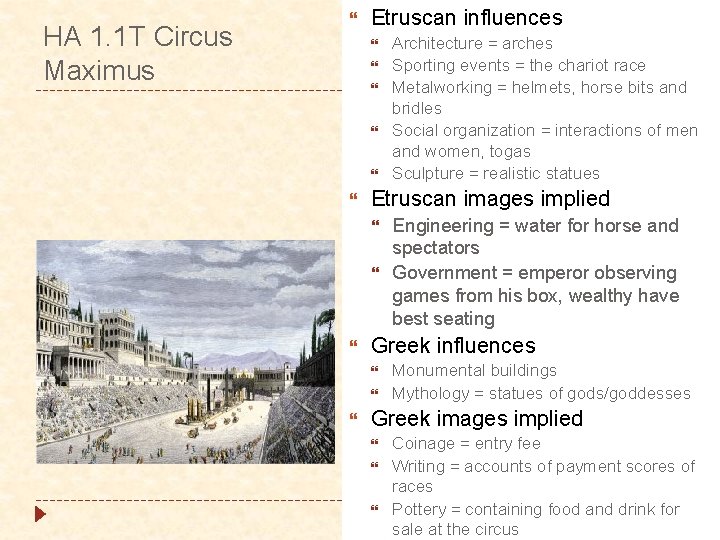
HA 1. 1 T Circus Maximus Etruscan influences Etruscan images implied Engineering = water for horse and spectators Government = emperor observing games from his box, wealthy have best seating Greek influences Architecture = arches Sporting events = the chariot race Metalworking = helmets, horse bits and bridles Social organization = interactions of men and women, togas Sculpture = realistic statues Monumental buildings Mythology = statues of gods/goddesses Greek images implied Coinage = entry fee Writing = accounts of payment scores of races Pottery = containing food and drink for sale at the circus
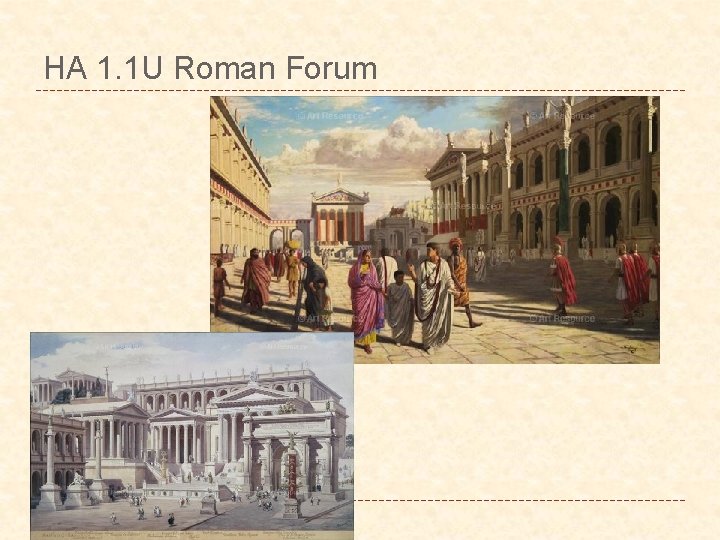
HA 1. 1 U Roman Forum
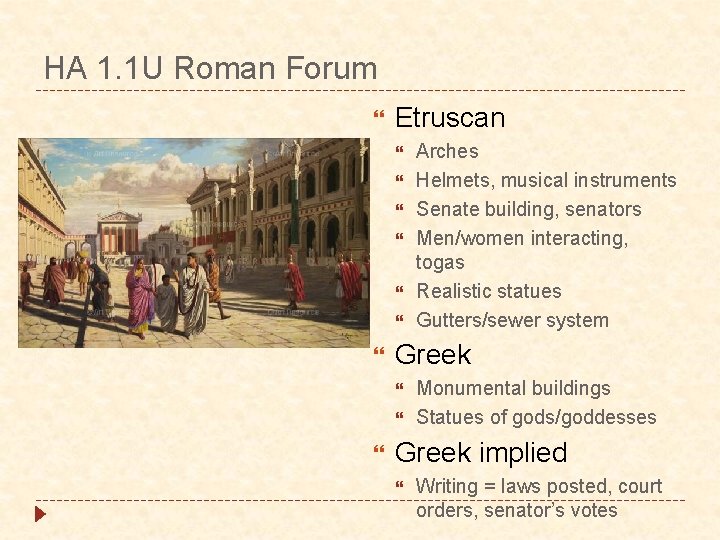
HA 1. 1 U Roman Forum Etruscan Greek Arches Helmets, musical instruments Senate building, senators Men/women interacting, togas Realistic statues Gutters/sewer system Monumental buildings Statues of gods/goddesses Greek implied Writing = laws posted, court orders, senator’s votes
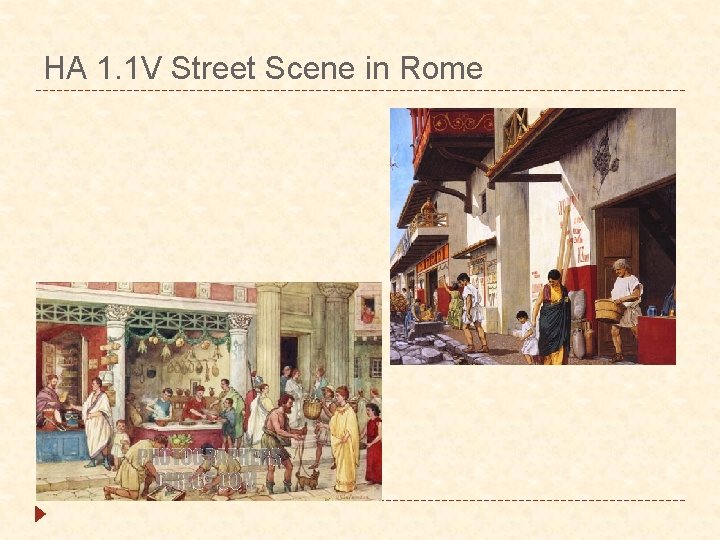
HA 1. 1 V Street Scene in Rome
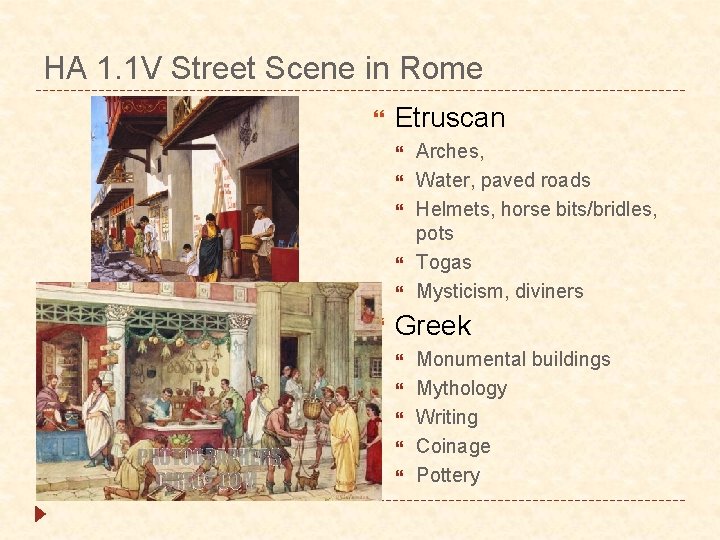
HA 1. 1 V Street Scene in Rome Etruscan Arches, Water, paved roads Helmets, horse bits/bridles, pots Togas Mysticism, diviners Greek Monumental buildings Mythology Writing Coinage Pottery
Etruscan/Greek Influences ISN Page 44 Choose three Roman aspects or items. Use the purple textbook as a source of ideas. Write the aspect down and in a bullet list explain how what Etruscan and Greek influences you can see in the picture. #1 Picture Page and Title #2 Picture Page and Title Etruscan – at least 2 things Greek – at least 2 things #3 Picture Page and Title Etruscan – at least 2 things Greek – at least 2 things
Roman Achievements Brainstorm for Etruscan/Greek Influences Poster ISN P 46 Grab a book and brainstorm with a neighbor. Record your brainstorm ideas on ISN Page 46. Add to them as we “fly” through the rest of the slides. You’ll have to write fast and think hard to keep up!
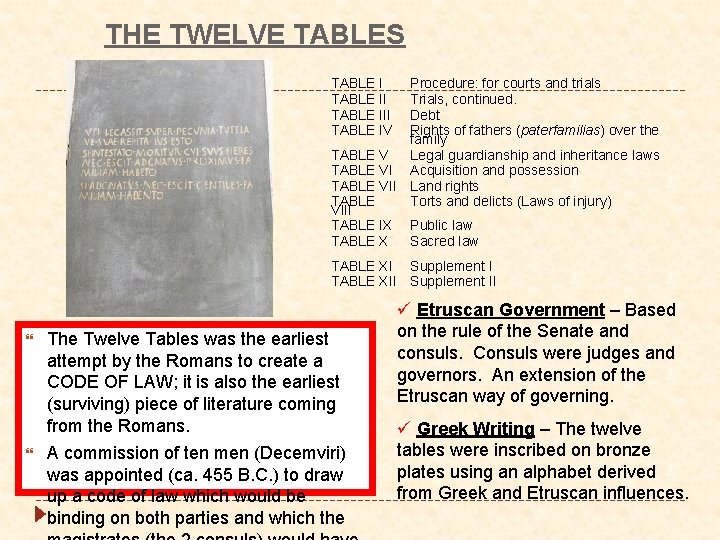
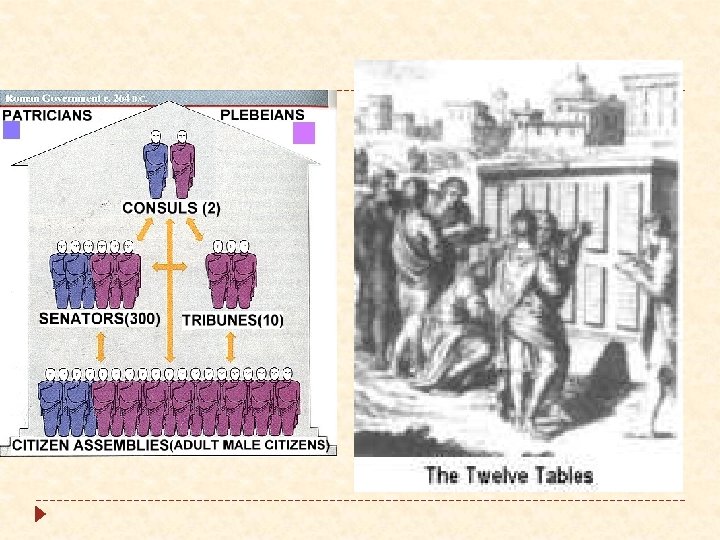
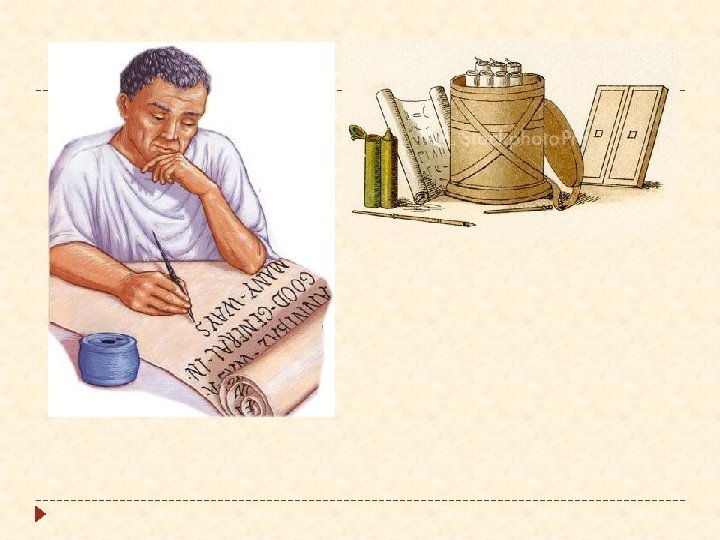
THE TWELVE TABLES TABLE III TABLE IV Procedure: for courts and trials Trials, continued. Debt Rights of fathers (paterfamilias) over the family TABLE V Legal guardianship and inheritance laws TABLE VI Acquisition and possession TABLE VII Land rights TABLE Torts and delicts (Laws of injury) VIII TABLE IX Public law TABLE X Sacred law TABLE XI Supplement I TABLE XII Supplement II The Twelve Tables was the earliest attempt by the Romans to create a CODE OF LAW; it is also the earliest (surviving) piece of literature coming from the Romans. A commission of ten men (Decemviri) was appointed (ca. 455 B. C. ) to draw up a code of law which would be binding on both parties and which the ü Etruscan Government – Based on the rule of the Senate and consuls. Consuls were judges and governors. An extension of the Etruscan way of governing. ü Greek Writing – The twelve tables were inscribed on bronze plates using an alphabet derived from Greek and Etruscan influences.
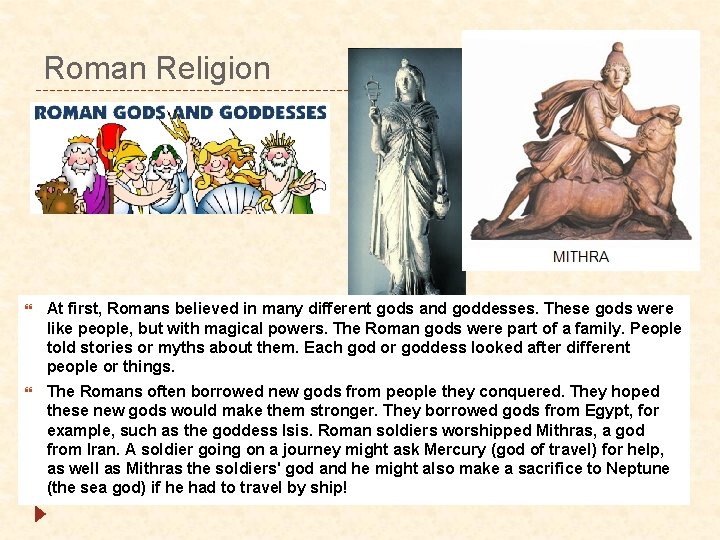
Roman Religion At first, Romans believed in many different gods and goddesses. These gods were like people, but with magical powers. The Roman gods were part of a family. People told stories or myths about them. Each god or goddess looked after different people or things. The Romans often borrowed new gods from people they conquered. They hoped these new gods would make them stronger. They borrowed gods from Egypt, for example, such as the goddess Isis. Roman soldiers worshipped Mithras, a god from Iran. A soldier going on a journey might ask Mercury (god of travel) for help, as well as Mithras the soldiers' god and he might also make a sacrifice to Neptune (the sea god) if he had to travel by ship!
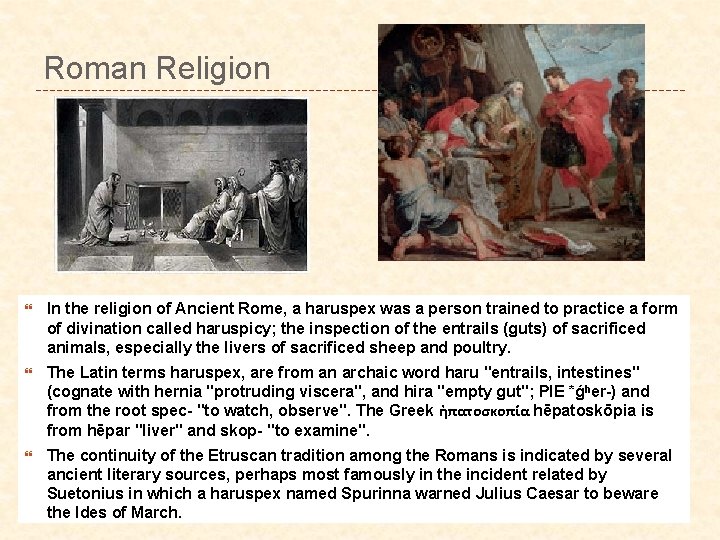
Roman Religion In the religion of Ancient Rome, a haruspex was a person trained to practice a form of divination called haruspicy; the inspection of the entrails (guts) of sacrificed animals, especially the livers of sacrificed sheep and poultry. The Latin terms haruspex, are from an archaic word haru "entrails, intestines" (cognate with hernia "protruding viscera", and hira "empty gut"; PIE *ǵʰer-) and from the root spec- "to watch, observe". The Greek ἡπατοσκοπία hēpatoskōpia is from hēpar "liver" and skop- "to examine". The continuity of the Etruscan tradition among the Romans is indicated by several ancient literary sources, perhaps most famously in the incident related by Suetonius in which a haruspex named Spurinna warned Julius Caesar to beware the Ides of March.
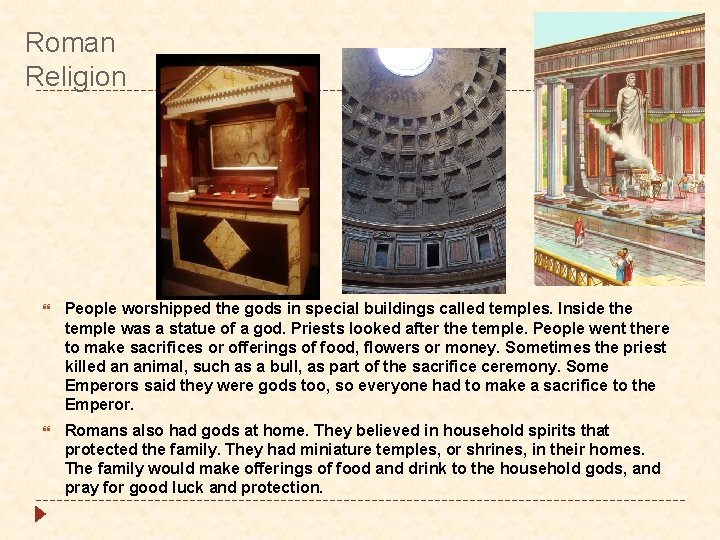
Roman Religion People worshipped the gods in special buildings called temples. Inside the temple was a statue of a god. Priests looked after the temple. People went there to make sacrifices or offerings of food, flowers or money. Sometimes the priest killed an animal, such as a bull, as part of the sacrifice ceremony. Some Emperors said they were gods too, so everyone had to make a sacrifice to the Emperor. Romans also had gods at home. They believed in household spirits that protected the family. They had miniature temples, or shrines, in their homes. The family would make offerings of food and drink to the household gods, and pray for good luck and protection.
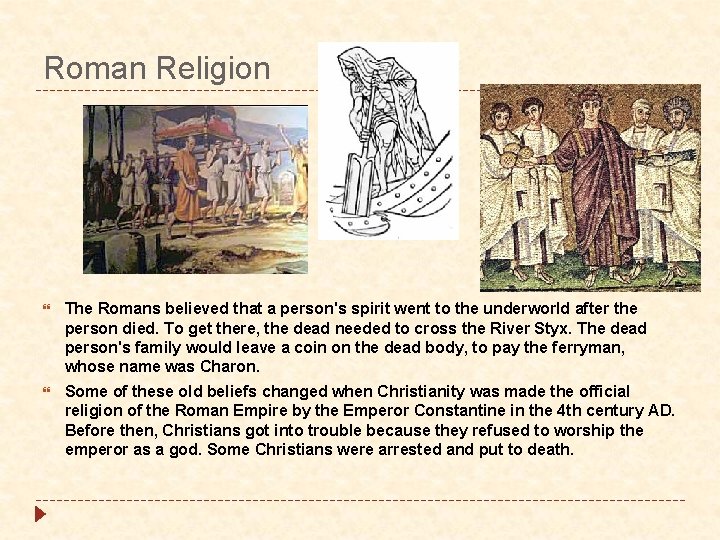
Roman Religion The Romans believed that a person's spirit went to the underworld after the person died. To get there, the dead needed to cross the River Styx. The dead person's family would leave a coin on the dead body, to pay the ferryman, whose name was Charon. Some of these old beliefs changed when Christianity was made the official religion of the Roman Empire by the Emperor Constantine in the 4 th century AD. Before then, Christians got into trouble because they refused to worship the emperor as a god. Some Christians were arrested and put to death.
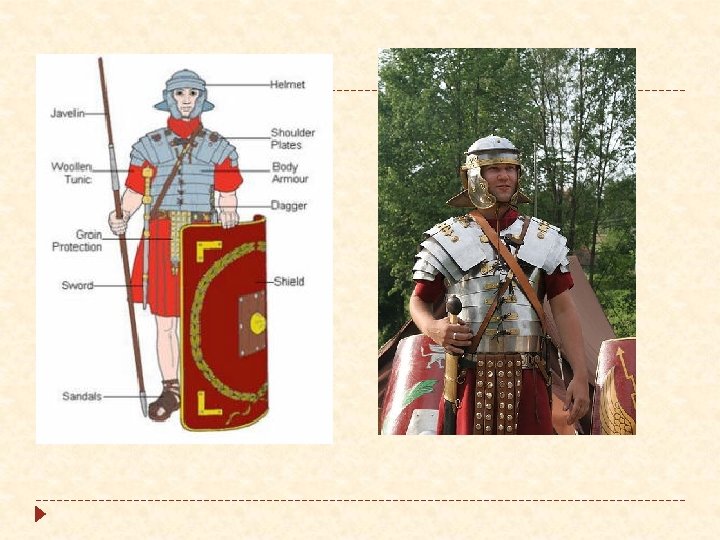
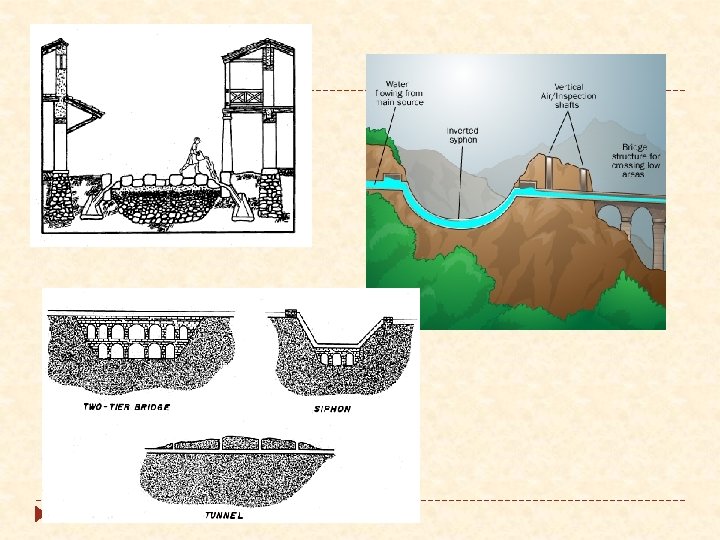
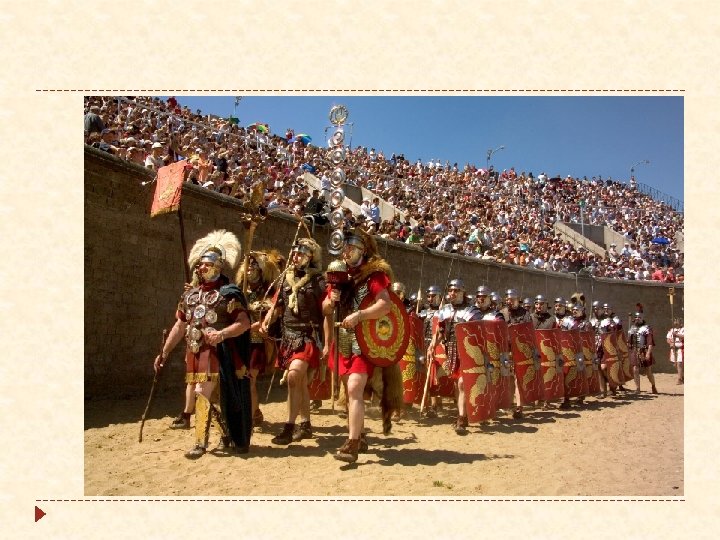
Roman Achievements Brainstorm for Etruscan/Greek Influences poster Grab a book and lets brainstorm! Roman Army Roman builders – roads, water systems, Roman religion Roman writing Roman government Roman theater Roman architecture Roman games and sports Roman science/philosophy/history Roman social organization Roman pottery Roman coin/money Roman mythology
Etruscan/Greek Contributions to Rome Poster ISN P 47 Using a piece of white paper create a COLORFUL poster showing how Romans blended (used) together what they learned from the Etruscans and the Greeks and made it their own. I’m assessing whether you can analyze Roman achievements for Etruscan and Greek influences. Neatness, readability, spelling, grammar, and completeness will also be assessed. Include A drawing of the Roman achievement An explanation of which Etruscan influences the Romans used An explanation of which Greek influences the Romans used A synopsis (summary) of how the Romans used those influences and what they did with them in your chosen Roman achievement Define any vocabulary you think that other students won’t know
- Slides: 58