
H HIV AIDS BASICS OF HIV AIDS To
+ H HIV / AIDS
+ BASICS OF HIV & AIDS To understand what HIV is, let’s break it down: H – Human I – Immunodeficiency V – Virus To understand what AIDS is, let’s break it down: A – Acquired I – Immuno. D – Deficiency S – Syndrome n Today HIV/AIDS is a Global disease n Today all populations are impacted by this disease.
+ Ø EFFECTS ON THE IMMUNE SYSTEM Immune System: Ø Gives our bodies the ability to fight infections Ø HIV finds and destroys a type of white blood cell (T-cells) that the immune system must have to fight disease. Ø Over time, infection with HIV can weaken the immune system to the point that the system has difficulty fighting off certain infections Ø Opportunistic Infections: Ø Infections that arise in individual's whose immune system are compromised or damaged.
+ WHICH BODYILY FLUIDS TRANSMIT HIV? • Blood • Vaginal Secretions (vaginal sex) • Semen/pre-seminal fluid • Breast milk • Rectal Mucus (anal sex)
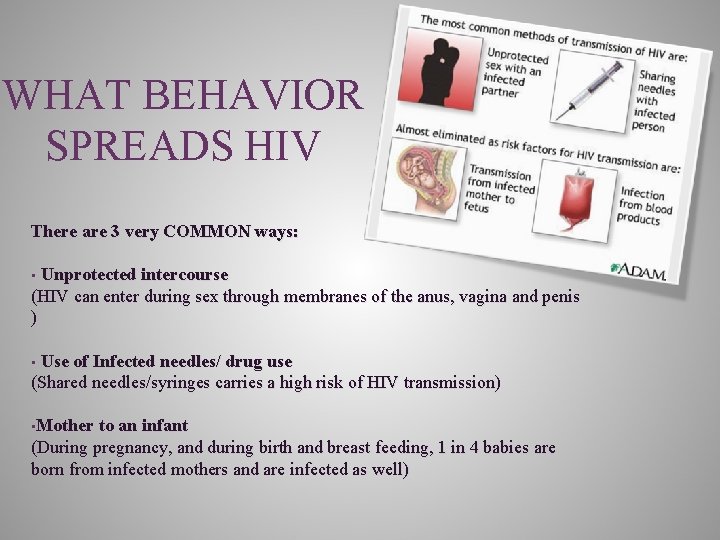
WHAT BEHAVIOR SPREADS HIV There are 3 very COMMON ways: • Unprotected intercourse (HIV can enter during sex through membranes of the anus, vagina and penis ) • Use of Infected needles/ drug use (Shared needles/syringes carries a high risk of HIV transmission) • Mother to an infant (During pregnancy, and during birth and breast feeding, 1 in 4 babies are born from infected mothers and are infected as well)
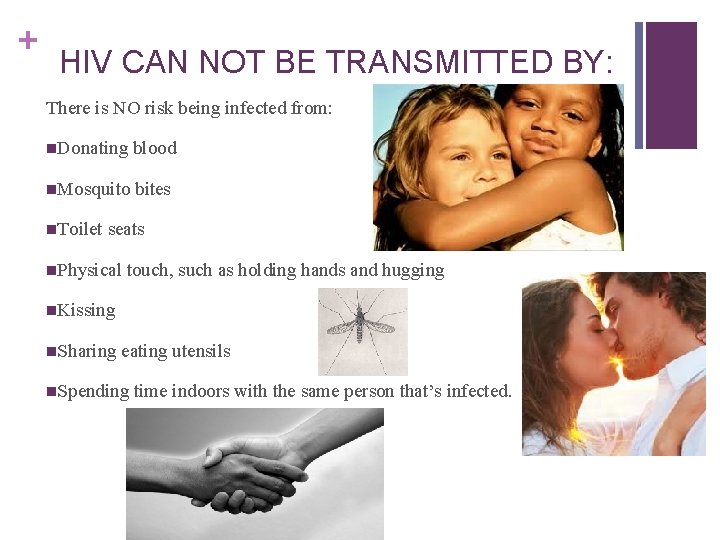
+ HIV CAN NOT BE TRANSMITTED BY: There is NO risk being infected from: n. Donating blood n. Mosquito bites n. Toilet seats n. Physical touch, such as holding hands and hugging n. Kissing n. Sharing eating utensils n. Spending time indoors with the same person that’s infected.
+ SYMPTOMS n HIV • n Within 2 -4 weeks after exposure to HIV, a person might have flulike symptoms. • Fever, • Swollen glands • Muscle aches • Diarrhea • Fatigue • Symptoms may go away after a week or two AIDS May include: • Loss of appetite • Weight loss • Fever • Night sweats • Skin rashes • Lack of resistance to infection
+ HEALTHY DECISIONS FOR PREVENTION • Practice • • Abstinence Limit sexual partners Get tested for HIV Do not have sex when taking drugs or drinking alcohol Do not inject illicit drugs REMEMBER THE ABC’s! A=Abstinence B= Be Faithful (monogamous) C= Condoms
+ HOW IS ABSTINENCE BOTH A HEALTH DECISION AND A REFLECTION OF VALUES? • Allows you to follow your GOALS -what you want to pursue • Stay focused • Maintain a low- risk life style • Reduce potential consequences • Longevity= Lead long healthy life. A bad decision one time can cost you forever!
HOW CAN AVOIDING DRUGS, ALCOHOL AND OTHER SUBSTANCES REDUCE RISK OF HIV? + • Drugs & substance abuse impair our judgment lead to high risk behavior. • and Never share needles. • Practice • The refusal skills that enable you to say “NO” National Institute of Drug Abuse research shows: • “Most young people are not concerned with becoming infected with the HIV virus, but yet face a real danger by being inebriated or under the influence and engaging in risky behavior such as unprotected sex. ”
+ COMMUNITY RESOURCES • Worldsaidday. org • Plannedparenthood. gov • Choicesmedical. com In School: n Spark office- Rm 217 Mr. Jacobs n Mr. Cascardo – HIV Coordinator n School Nurse/ School Guidance Counselors/ School Social Workers n Condom Distributors Designated by Mr. Cascardo

+ BE PART OF OUR FHHS HIV WALL BOARD!
- Slides: 12