
Gypsum By Kayla Gusikoff Physical Properties Chemical Formula
Gypsum By: Kayla Gusikoff

Physical Properties Chemical Formula Ca. SO 4· 2 H 2 O Chemical Classification Sulfate Color Translucent, white, grey, yellow, brown Streak White Luster Vitreous, pearly Cleavage Perfect Fracture Conchoidal Hardness Two Crystal System Monoclinic
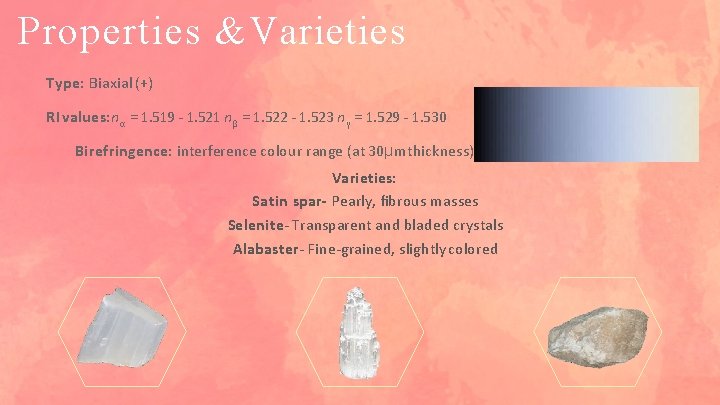
Properties & Varieties Type: Biaxial (+) RI values: nα = 1. 519 - 1. 521 nβ = 1. 522 - 1. 523 nγ = 1. 529 - 1. 530 Birefringence: interference colour range (at 30µm thickness) Varieties: Satin spar- Pearly, fibrous masses Selenite- Transparent and bladed crystals Alabaster- Fine-grained, slightly colored
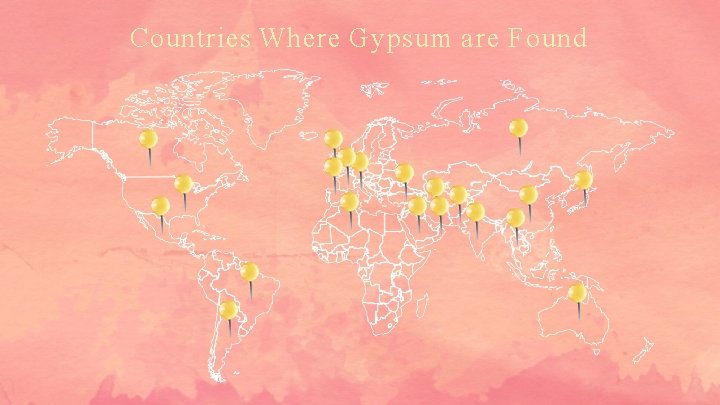
Countries Where Gypsum are Found
Uses Gypsum can be milled into a fine powder, then boiled until its moisture is removed— a process known as calcination. As water is added back to the powder, it makes a pliable material that can be molded. It will then harden and keep the shape that it was shaped into. Because of its binding abilities, the uses of gypsum include: � � � Toothpaste Plaster to crate surgical casts Additive in foods like canned vegetables, ice cream, and tofu. For brewing beer and making mead For creating drywall, wallboard or plasterboard For binding tennis court clay As a hardening element in Portland cement In roads and highways As sidewalk or classroom chalk In hair products, like shampoo, and creams As molds for dinnerware, car windows and dental impression plasters
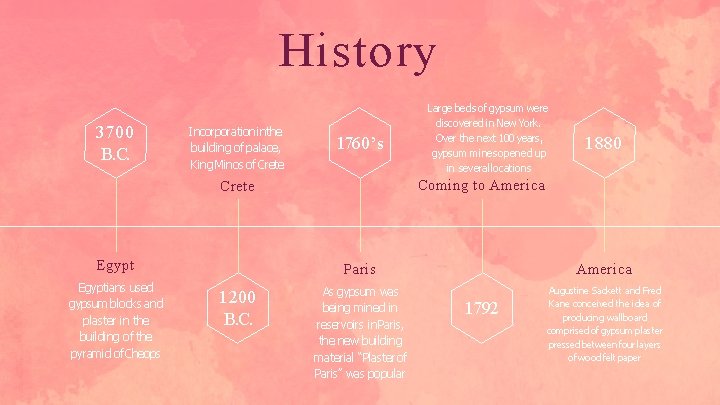
History 3700 B. C. Incorporation inthe building of palace, King Minos of Crete 1760’s Egyptians used gypsum blocks and plaster in the building of the pyramid of Cheops 1200 B. C. 1880 Coming to America Crete Egypt Large beds of gypsum were discovered in New York. Over the next 100 years, gypsum mines opened up in several locations Paris America As gypsum was being mined in reservoirs in Paris, the new building material “Plaster of Paris” was popular Augustine Sackett and Fred Kane conceived the idea of producing wallboard comprised of gypsum plaster pressed between four layers of wood felt paper 1792
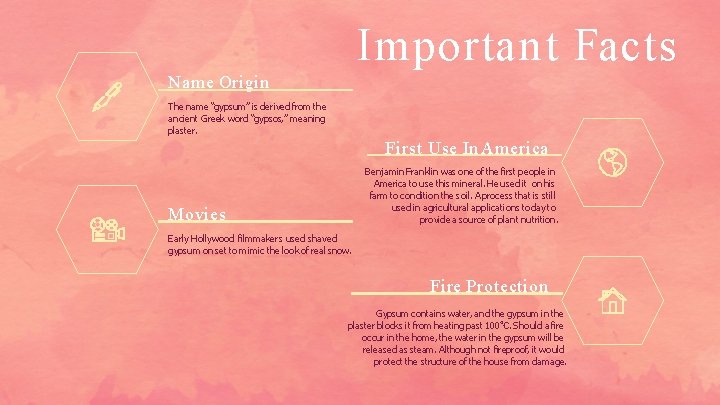
Important Facts Name Origin The name “gypsum” is derived from the ancient Greek word “gypsos, ” meaning plaster. First Use In America Benjamin Franklin was one of the first people in America to use this mineral. He used it on his farm to condition the soil. A process that is still used in agricultural applications today to provide a source of plant nutrition. Movies Early Hollywood filmmakers used shaved gypsum on set to mimic the look of real snow. Fire Protection Gypsum contains water, and the gypsum in the plaster blocks it from heating past 100℃. Should a fire occur in the home, the water in the gypsum will be released as steam. Although not fireproof, it would protect the structure of the house from damage.
References 5 Things You Didn't Know About Gypsum. (2019, November 19). Retrieved from https: //www. mclanahan. com/blog/five-things-you-didnt-know-about-gypsum. Gypsum, var. Selenite. (n. d. ). Retrieved from http: //www. mcdougallminerals. com/Gypsum-var-Selenite-15. html. Gypsum. (n. d. ). Retrieved from https: //www. mindat. org/min-1784. html.
- Slides: 8