
Gynecology External Genitalia External Genitalia Vulva n n
- Slides: 51
Gynecology
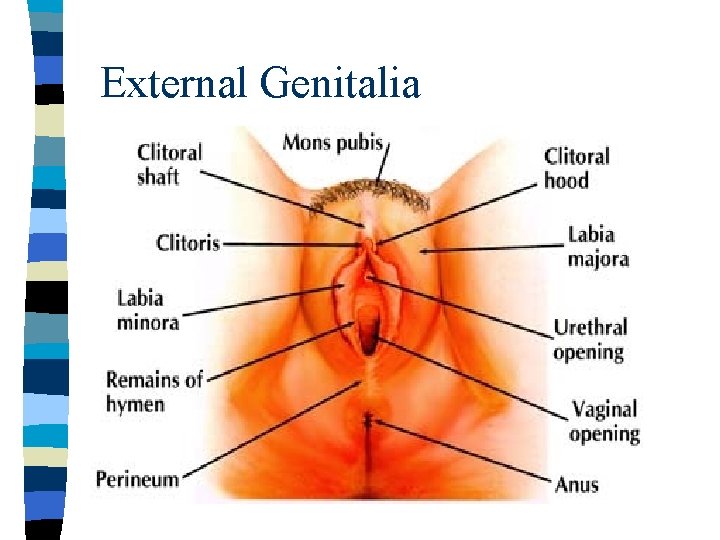
External Genitalia
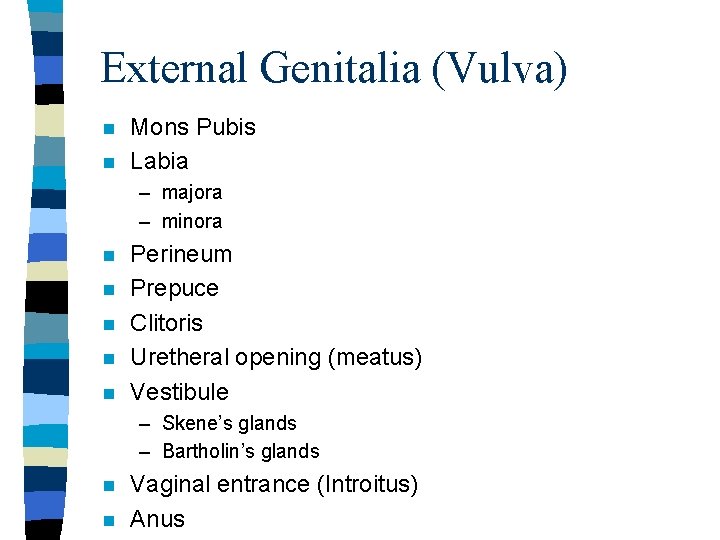
External Genitalia (Vulva) n n Mons Pubis Labia – majora – minora n n n Perineum Prepuce Clitoris Uretheral opening (meatus) Vestibule – Skene’s glands – Bartholin’s glands n n Vaginal entrance (Introitus) Anus
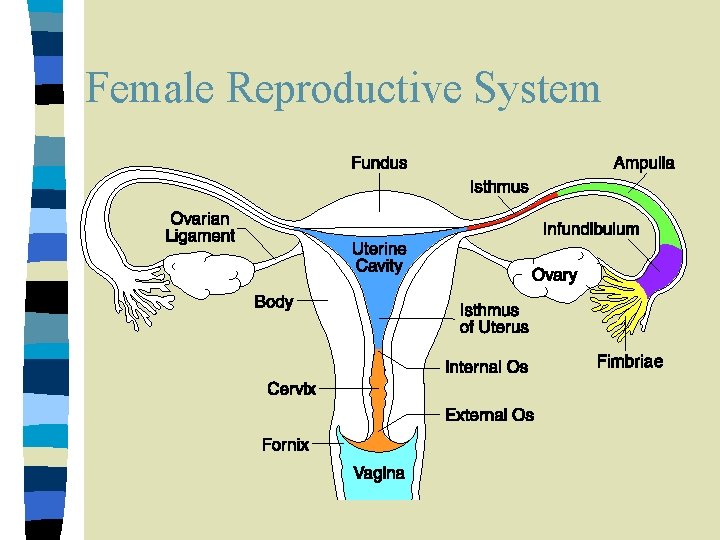
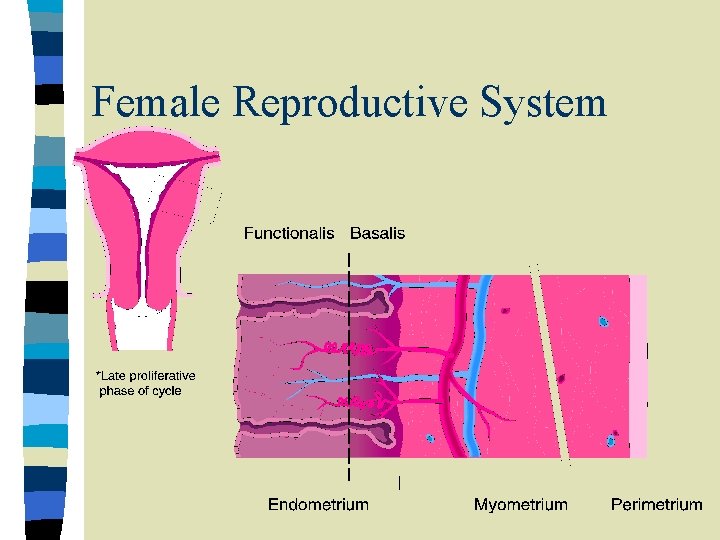
Female Reproductive System
Internal Reproductive Organs n n n Vagina Cervix Uterus – Corpus – Fundus n n Fallopian Tubes Ovary
Female Reproductive System
Female Reproductive Organs n Endometrium – Mucosal n Myometrium – Circulation – Smooth Muscles n Perimetrium – Serous – Fundus & 1/2 Corpus
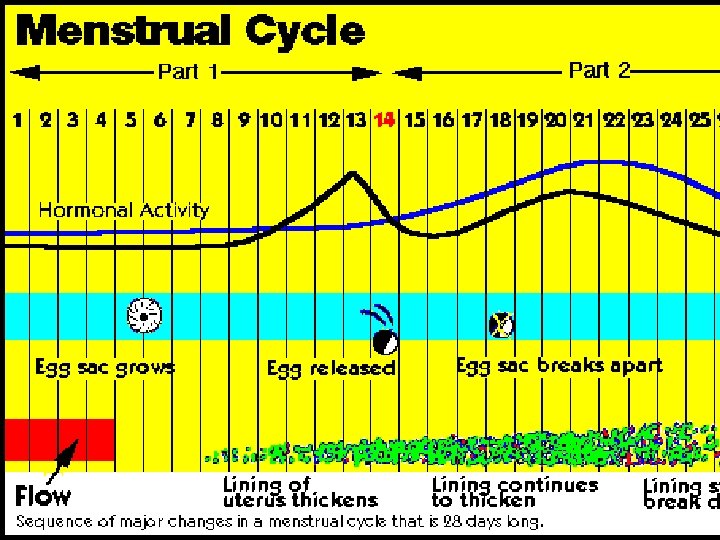
Menstrual Cycle n Menarche – usually between 9 and 13 – initially irregular n Normal – usually 28 day n Hormones – – n FSH LH Estrogen Progesterone Menopause – 45 - 55 years old
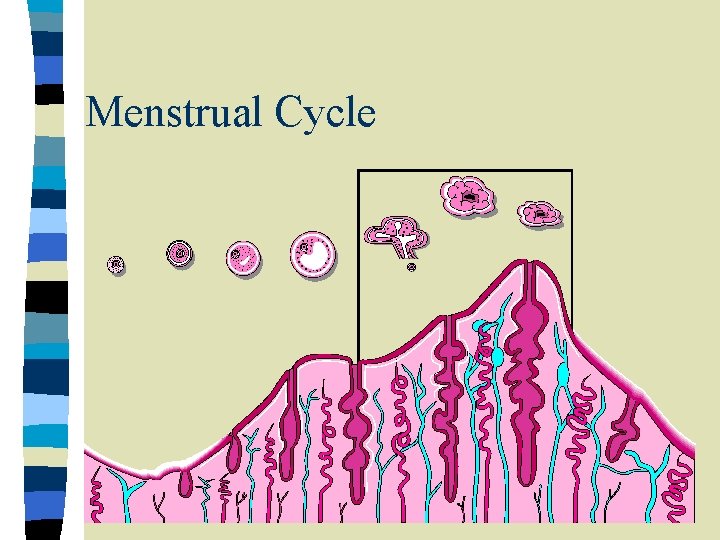
Menstrual Cycle n n n Pituitary produces follicle stimulation hormone (FSH) FSH stimulates ovarian follicle maturation Follicles mature, release estrogen Estrogen stimulates thickening of endometrium Estrogen acts on pituitary to decrease FSH release FSH levels begin to fall, LH levels rise
Menstrual Cycle n n After ovulation, luteinizing hormone (LH) acts on remains of follicle Promotes corpus luteum formation Corpus luteum produces progesterone Progesterone stabilizes, maintains uterine lining
Menstrual Cycle n If ovum is not fertilized – Corpus luteum dies – Progesterone levels drop – Endometrium deteriorates, sloughs – Menstrual period occurs
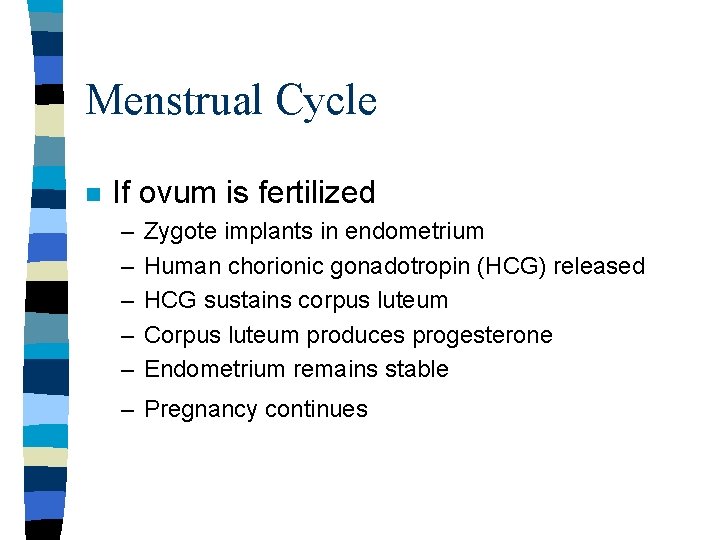
Menstrual Cycle n If ovum is fertilized – – – Zygote implants in endometrium Human chorionic gonadotropin (HCG) released HCG sustains corpus luteum Corpus luteum produces progesterone Endometrium remains stable – Pregnancy continues
Menstrual Cycle
Pelvic Inflammatory Disease n Pathophysiology – Acute or chronic infection involving female reproductive tract, associated structures: • • • Cervix (cervicitis) Uterus (endometritis) Fallopian tubes (salpingitis) Ovaries (oophoritis) Pelvic peritoneum
PID n Pathophysiology – Causative organisms include: • • • Gonorrhea Chlamydia E. coli, other gram negative bacilli Gram positive cocci Mycoplasma Viruses
PID n n Most cases sexually transmitted Risk factors include: – Previous infection – Multiple partners – Adolescence – Presence of IUD
PID n History – Moderate to severe diffuse lower abdominal pain – May localize to one quadrant or radiate to shoulders – Gradual onset over 2 -3 days beginning 1 -2 weeks after last period
PID n History – Pain worsened by intercourse (Dyspareunia) – Associated symptoms • • • Fever Chills Nausea, vomiting Vaginal discharge Erratic periods
PID n Physical Exam – Patient appears ill – Fever usually present – Tender abdomen – Rebound tenderness – Walks bent forward holding abdomen
PID n Management – Position of comfort – General supportive care (oxygen, IV) – Transport n May be at risk for rupture of pyosalpinx or tubo-ovarian abscess
Dysfunctional Uterine Bleeding n Pathophysiology – Usually younger women – Ovum not released from ovary regularly – Without ovum release/corpus luteum formation, menstrual cycle is not completed
Dysfunctional Uterine Bleeding n Pathophysiology – Endometrium continues to thicken – Outgrows blood supply, breaks down – Massive vaginal bleeding results
Dysfunctional Uterine Bleeding n History – History of “missed”, irregular periods – Continuous, profuse vaginal bleeding possibly persisting > 8 days
Dysfunctional Uterine Bleeding n Physical Exam – Signs/symptoms of hypovolemic shock – Positive tilt test – Passage of tissue with vaginal bleeding
Dysfunctional Uterine Bleeding n Management – Do not pack vagina to stop bleeding – High concentration oxygen – IV LR – MAST if indicated
Endometriosis n n Presence of normal endometrium at ectopic locations Signs, symptoms – – Pelvic pain Dysmenorrhea Pain on intercourse Lower abdominal tenderness
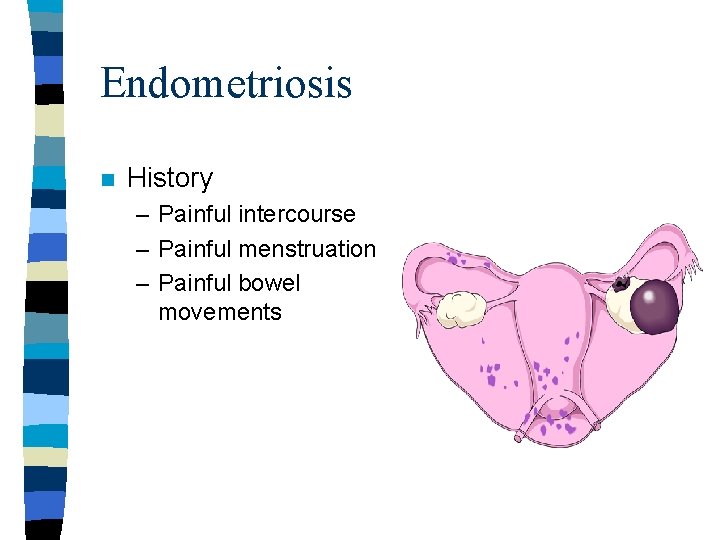
Endometriosis n History – Painful intercourse – Painful menstruation – Painful bowel movements
Endometriosis n n n Rupture of endometrial masses may cause severe pain, internal hemorrhage May require surgery Long term management is gynecologic issue
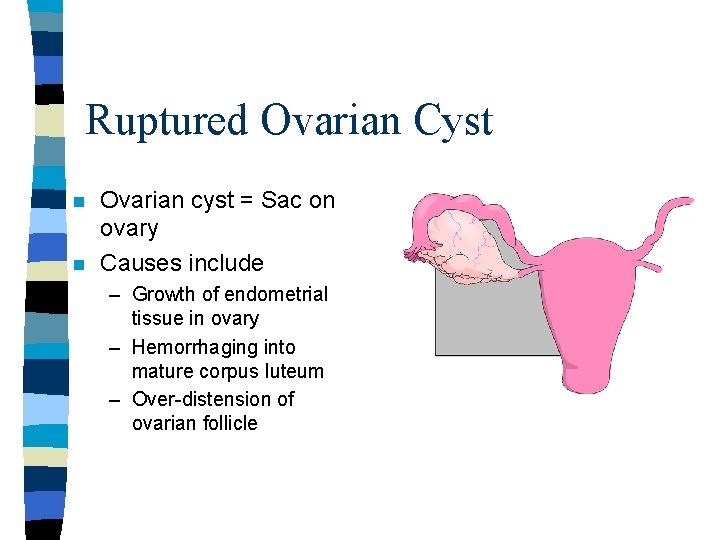
Ruptured Ovarian Cyst n n Ovarian cyst = Sac on ovary Causes include – Growth of endometrial tissue in ovary – Hemorrhaging into mature corpus luteum – Over-distension of ovarian follicle
Ruptured Ovarian Cysts rupture into peritoneal cavity – Peritonitis – Hemorrhage, shock
Ruptured Ovarian Cyst n Signs, symptoms – History of menstrual irregularities, chronic pelvic pain – Unilateral abdominal pain – Unilateral tenderness – Pallor, tachycardia, diaphoresis, hypotension
Ruptured Ovarian Cyst n Management – High concentration oxygen – IV LR – MAST if indicated – Rapid transport
Cystitis n n Inflammation of the bladder Usually bacterial Occurs frequently May lead to pyelonephritis
Cystitis n Assessment – Suprapubic tenderness – Frequent urination – Dysuria – Blood in urine
Cystitis n Management – Supportive care
Mittelschmertz n n n Pain at menstrual cycle midpoint Caused by ovulation Occurs on day 14 to 16 Unilateral, mild to moderate Lasts a day or less Possible light vaginal spotting
Mittelschmertz n Management – Rule out more serious causes of pain – Analgesia may be required – Self-limiting problem – Can be confirmed by keeping calendar
Sexual Assault n n Any sexual contact without consent Legal rather than medical diagnosis Seldom creates medical emergency If medical emergency exists, usually is from trauma secondary to assault
Sexual Assault n History – Do not question patient regarding details of event. – Do not question patient about sexual history or practices – Avoid taking lengthy histories – Do not ask questions which may lead to guilt feelings – Anticipate reactions such as anxiety, withdrawal, denial, anger, fear
Sexual Assault n Physical Exam – Examine genitalia only if severe injury present – Avoid touching without permission – Explain procedures before proceeding – Maintain the patient’s modesty
Sexual Assault n Management – Priority to immediate life threats – Psychological support is important – Limit intervention to that needed for immediate problems – Protect patient’s privacy
Sexual Assault n Crime Scene – Handle evidence as little as possible – Ask patient not to change, bathe, or douche – Do not allow patient to drink or brush their teeth – Do not clean wounds unless absolutely necessary
Sexual Assault n Management – May be preferable for female paramedic to attend patient – Honor patient’s wishes – Do not abandon patient at scene – Complete trip report carefully
Gynecological Assessment Abdominal Pain Bleeding
Gynecological PA Abdominal Pain + Female Gender = Gynecologic Problem Until Proven Otherwise
Gynecological PA n Abdominal pain – When was last period? – Was it normal? – Bleeding between periods? – Regularity?
Gynecological PA n Abdominal pain – Pregnant? • • Missed period? Urinary frequency? Breast enlargement or tenderness? N/V? – Contraception? What kind? – Vaginal discharge? • Color, amount, odor
Gynecological PA n Abdominal Pain – Aggravation/Alleviation – OPQRST – Tenderness/masses at pain’s location? – Tilt test
Gynecological PA n Vaginal bleeding – More, less heavy than normal period? – Possibility of pregnancy? – Associated pain/tenderness? – Perform tilt test
Gynecological PA n Fever/Chills