
GY 111 Physical Geology Metamorphic Rocks Lecture Metamorphism


- Slides: 23
GY 111 Physical Geology Metamorphic Rocks Lecture
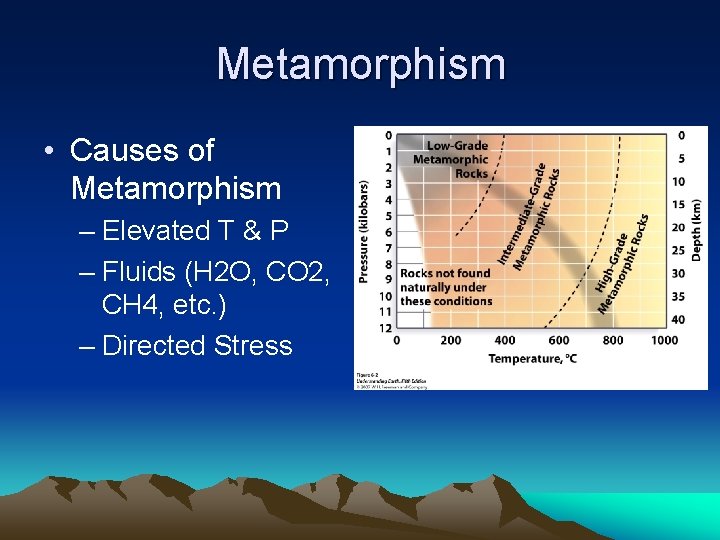
Metamorphism • Causes of Metamorphism – Elevated T & P – Fluids (H 2 O, CO 2, CH 4, etc. ) – Directed Stress
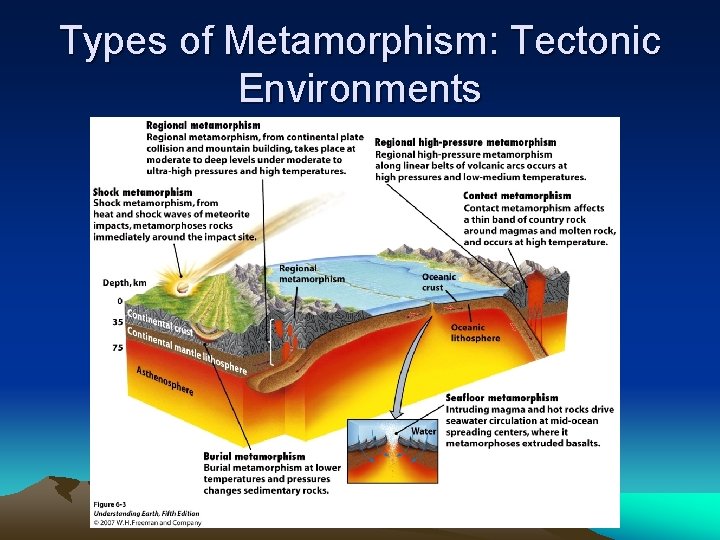
Types of Metamorphism • Regional: occur along convergent plate boundaries. • Contact: occurs along margin of a magma intrusion. • Seafloor/Hydrothermal: associated with circulating hydrothermal fluids- mostly at divergent ocean ridge systems. • Shock: meteorite impact.
Contact Metamorphic Rocks • Fine-grained because of relatively short time frame for recrystallization. • Develop low-pressure metamorphic minerals (i. e. Andalusite). • Hornfels: generic dark contact metamorphic rock. • Felsite: light-colored contact metamorphic rock. • Skarn: Ca-silicate rich contact metamorphic rock formed by intrusion of silicate magma into limestone or dolostone.
Types of Metamorphism: Tectonic Environments
Metamorphic Textures • Cleavage: tendency of a rock to break along smooth even planes • Foliation: preferred alignment of platy grains (i. e. mica) or banding (i. e. gneiss or marble) • Lineation: preferred alignment of elongated minerals (i. e. amphibole)
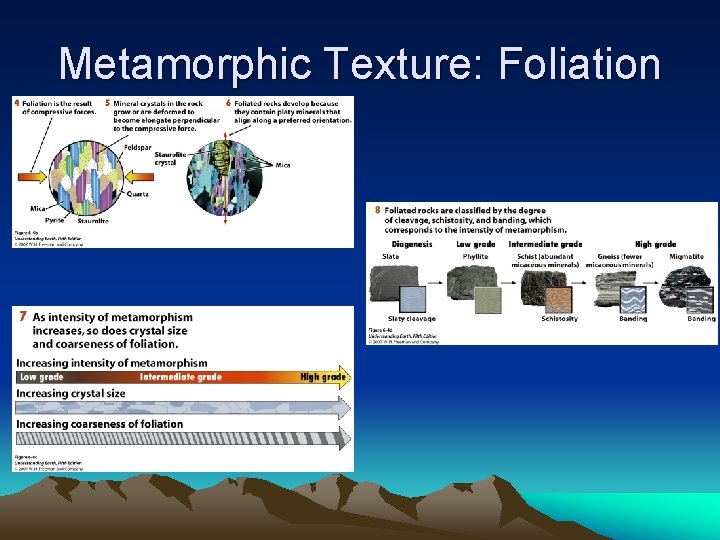
Metamorphic Texture: Foliation
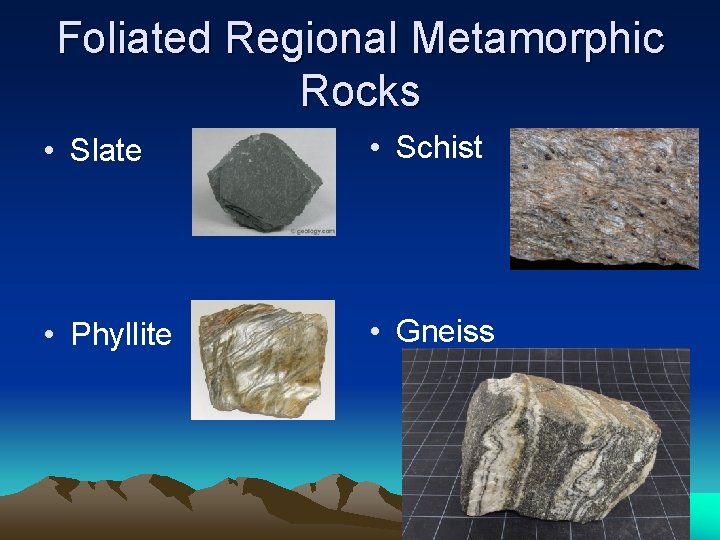
Foliated Regional Metamorphic Rocks • Slate • Schist • Phyllite • Gneiss
Foliation vs. Cleavage • All regional metamorphic rocks contain a foliation- in low grade (Low T) rocks the grains are microscopic so you can’t “see” the foliation • Cleavage in rocks is the tendency to split along smooth planes. Rocks with microscopic foliation tend to have excellent rock cleavage
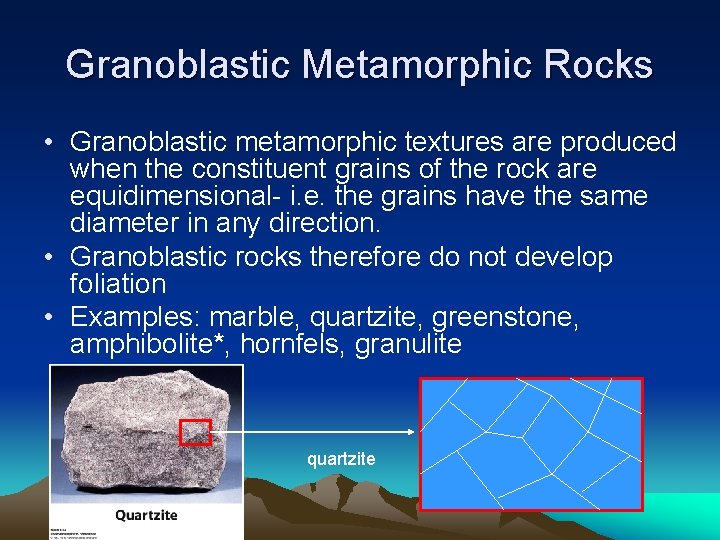
Granoblastic Metamorphic Rocks • Granoblastic metamorphic textures are produced when the constituent grains of the rock are equidimensional- i. e. the grains have the same diameter in any direction. • Granoblastic rocks therefore do not develop foliation • Examples: marble, quartzite, greenstone, amphibolite*, hornfels, granulite quartzite
Granulites • Granulites, as their name implies, have a granular texture composed of pyroxene, plagioclase and garnet • Granulites form at the highest grades of metamorphism when portions of the protolith melt and exit the rock leaving behind a “restite” that is devoid of H 2 O or other fluids
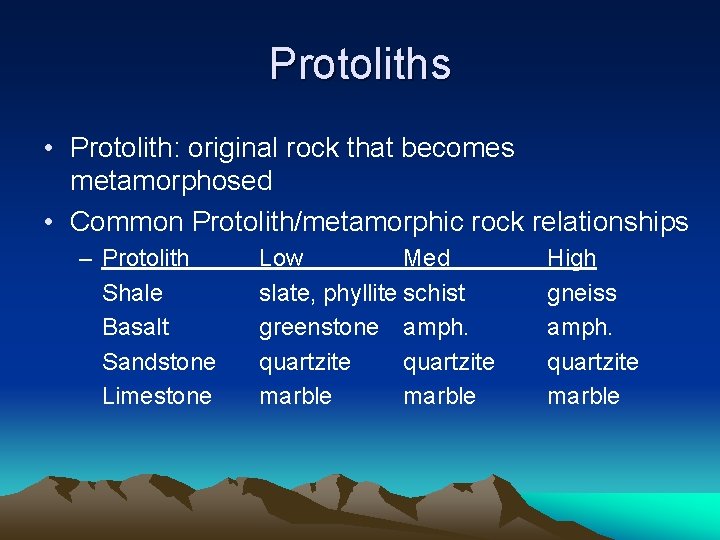
Protoliths • Protolith: original rock that becomes metamorphosed • Common Protolith/metamorphic rock relationships – Protolith Shale Basalt Sandstone Limestone Low Med slate, phyllite schist greenstone amph. quartzite marble High gneiss amph. quartzite marble
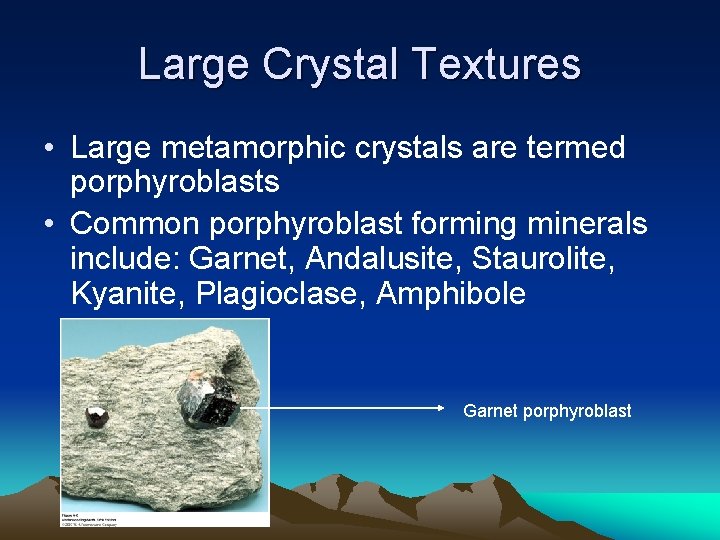
Large Crystal Textures • Large metamorphic crystals are termed porphyroblasts • Common porphyroblast forming minerals include: Garnet, Andalusite, Staurolite, Kyanite, Plagioclase, Amphibole Garnet porphyroblast
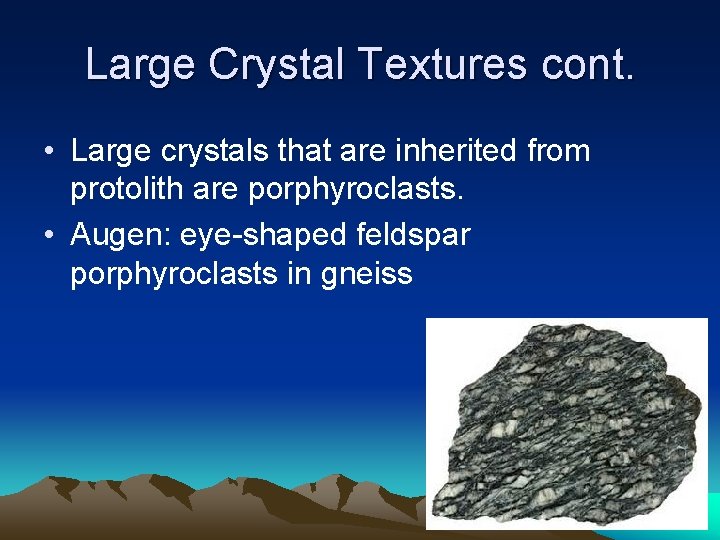
Large Crystal Textures cont. • Large crystals that are inherited from protolith are porphyroclasts. • Augen: eye-shaped feldspar porphyroclasts in gneiss
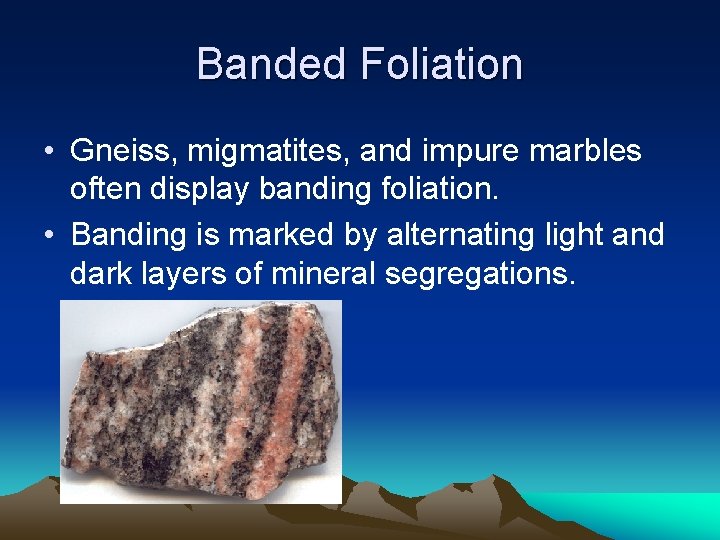
Banded Foliation • Gneiss, migmatites, and impure marbles often display banding foliation. • Banding is marked by alternating light and dark layers of mineral segregations.
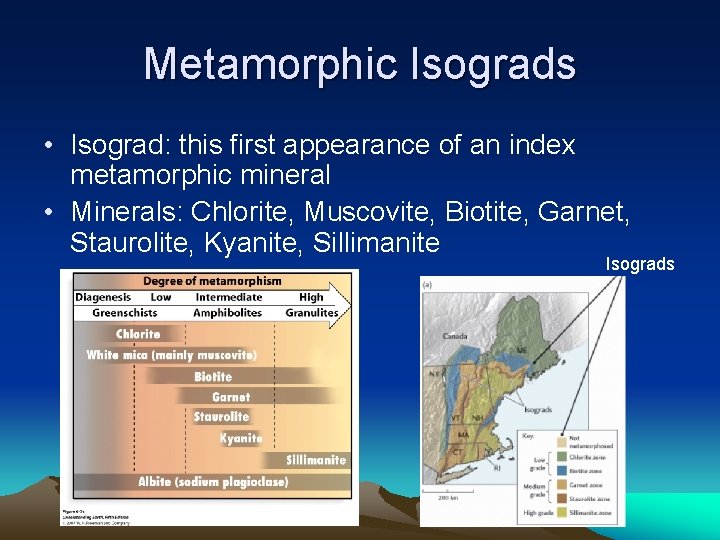
Metamorphic Isograds • Isograd: this first appearance of an index metamorphic mineral • Minerals: Chlorite, Muscovite, Biotite, Garnet, Staurolite, Kyanite, Sillimanite Isograds
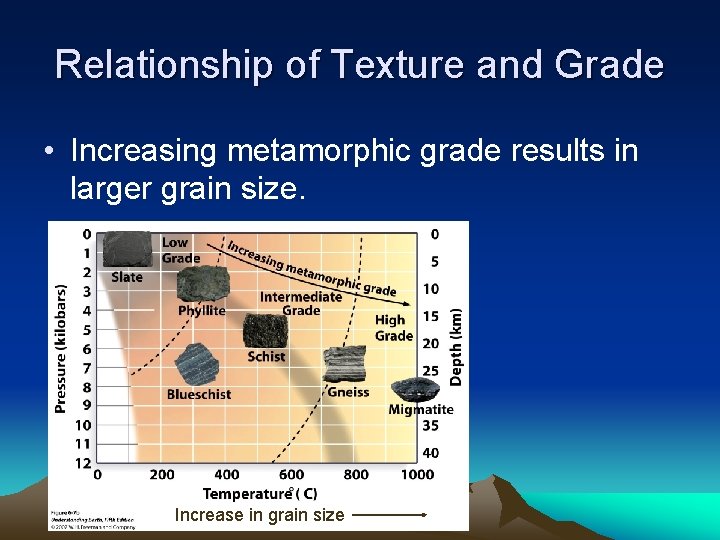
Relationship of Texture and Grade • Increasing metamorphic grade results in larger grain size. Increase in grain size
Metamorphic Facies Concept • Metamorphic Facies: regions on a T vs. P graph Very High T geotherm Facies boundary Geotherm High P geotherm High T geotherm
High Pressure Metamorphic Facies • Occur adjacent to trench where geothermal gradient is low (10 deg. C/km). • Low grade: Glaucophane + Kyanite + Jadite schist - “Blueschist”. • High grade: garnet-bearing peridotite named “Eclogite”. • Eclogites are considered to be ultra-high pressure metamorphic rocks and are only exposed at collisional plate boundaries.
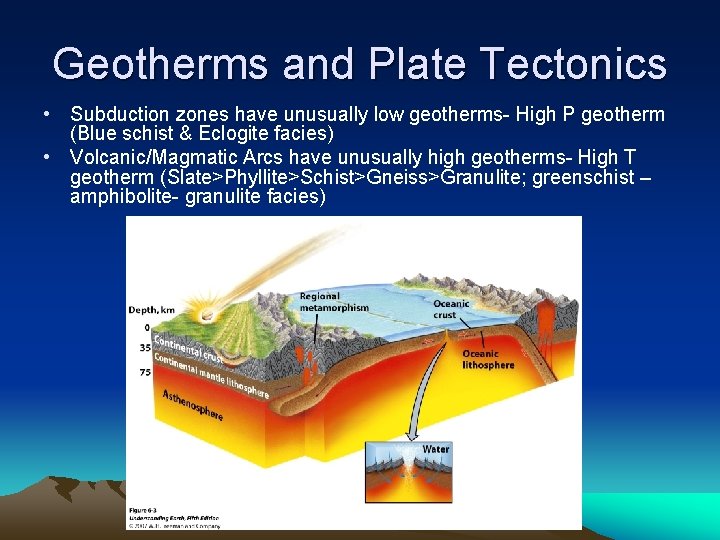
Geotherms and Plate Tectonics • Subduction zones have unusually low geotherms- High P geotherm (Blue schist & Eclogite facies) • Volcanic/Magmatic Arcs have unusually high geotherms- High T geotherm (Slate>Phyllite>Schist>Gneiss>Granulite; greenschist – amphibolite- granulite facies)
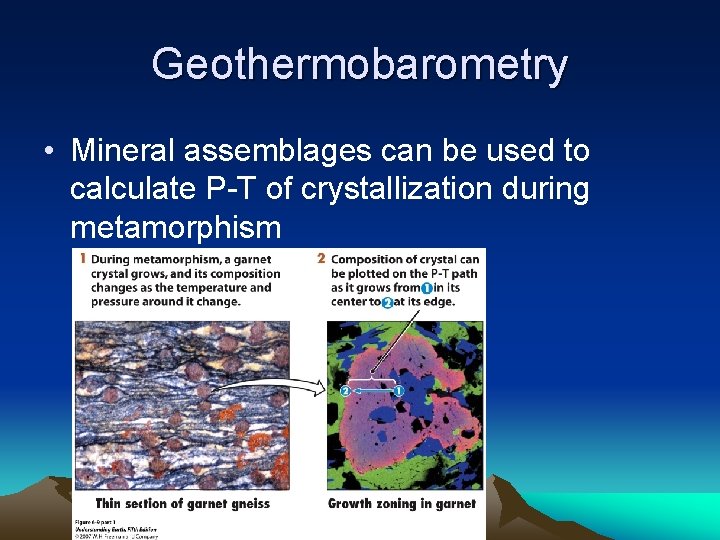
Geothermobarometry • Mineral assemblages can be used to calculate P-T of crystallization during metamorphism
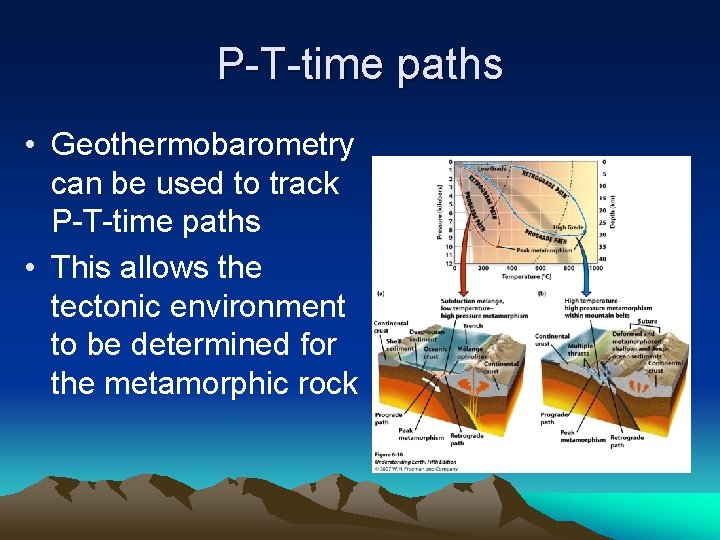
P-T-time paths • Geothermobarometry can be used to track P-T-time paths • This allows the tectonic environment to be determined for the metamorphic rock
Exam Summary • Know the causes of metamorphism. • Be able to list protoliths of common metamorphic rocks. • Be able to list metamorphic facies and draw geotherms on a P-T diagram. • Know metamorphic textural terms. • Be able to correlate geotherms with tectonic environments. • Be able to list and describe the various types of metamorphism. • Be familiar with the concept of metamorphic isograds.