
Guus Kroonen Roots of Europe Course 18 November
Guus Kroonen Roots of Europe Course 18 November 2014 Copenhagen University
A source that no longer exists “The Sanskrit language […] is of a wonderful structure, more perfect than Greek, more copious than Latin, and more exquisitely refined than either; yet bearing to both of them a stronger affinity […] that could possibly have been produced by accident; so strong, indeed, that no philologer could examine all three without believing them to have sprung from some common source which perhaps no longer exists. ”
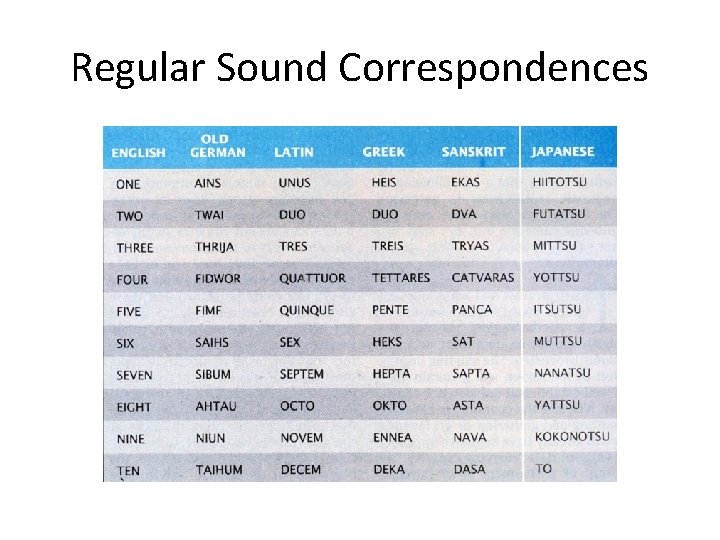
Regular Sound Correspondences
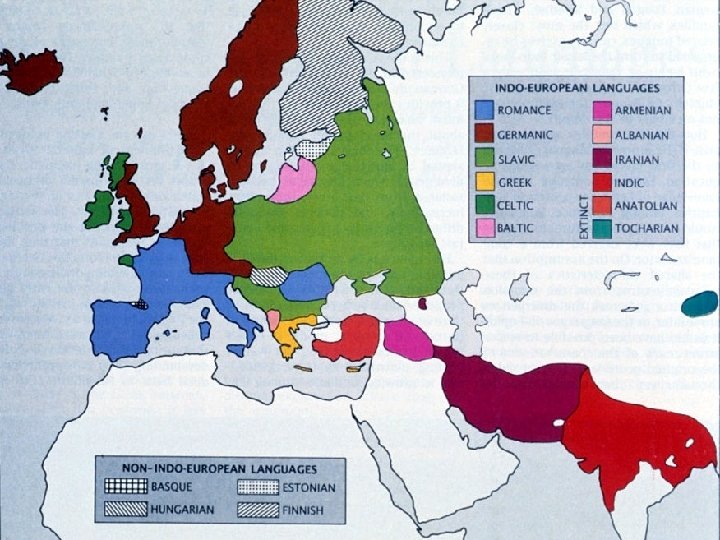
Is this the whole story? “There is a similar reason, though not quite so forcible, for supposing that both the Gothic and the Celtic, though blended with a very different idiom, had the same origin with the Sanskrit. ”(also William Jones, 1786)
Linguistic Substrates (A>Ab>a. B>B)
How Indo-European is Germanic? • 0% non-Indo-European (Schuhmann 2012): “No word that can only be explained as a substrate word. The myth that in Germanic there is a particularly high percentage of substrate words should be given up once and for all. ” • 15% without a clear IE etymology, 4 -5% non-Indo. European (Kroonen 2013) • 10 -50 % non-Indo-European (Roberge 2010) • 33% non-Indo-European (Hawkins 2009) • 60% non-Indo-European (Beekes, p. c. )
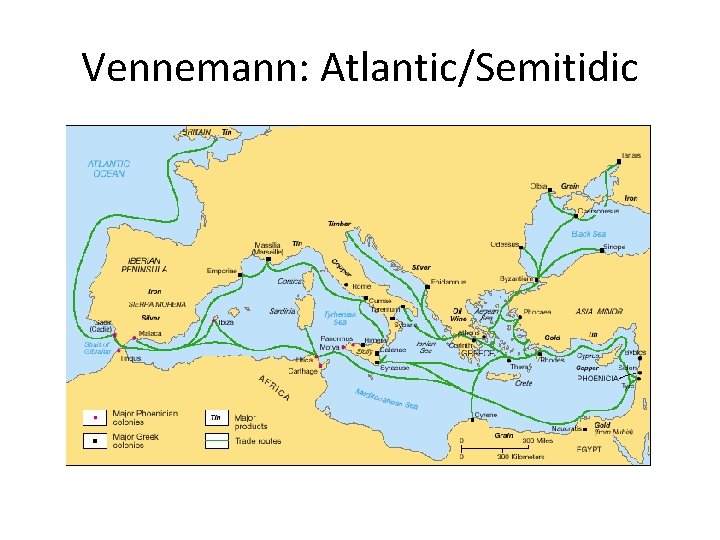
Vennemann: Atlantic/Semitidic
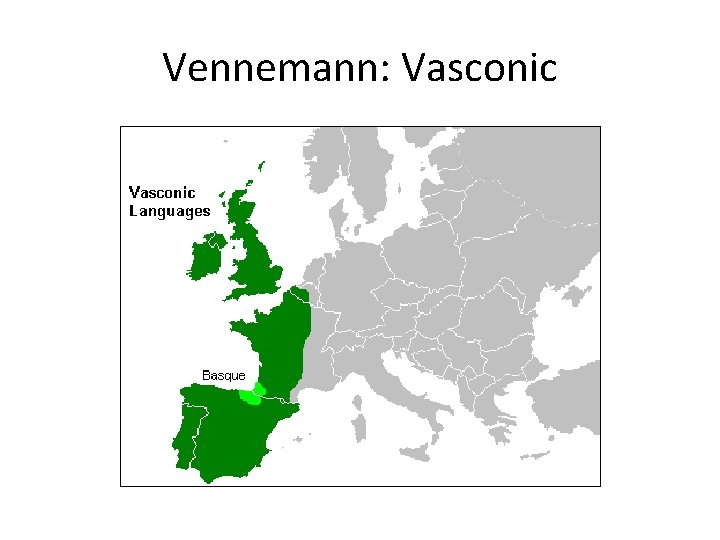
Vennemann: Vasconic
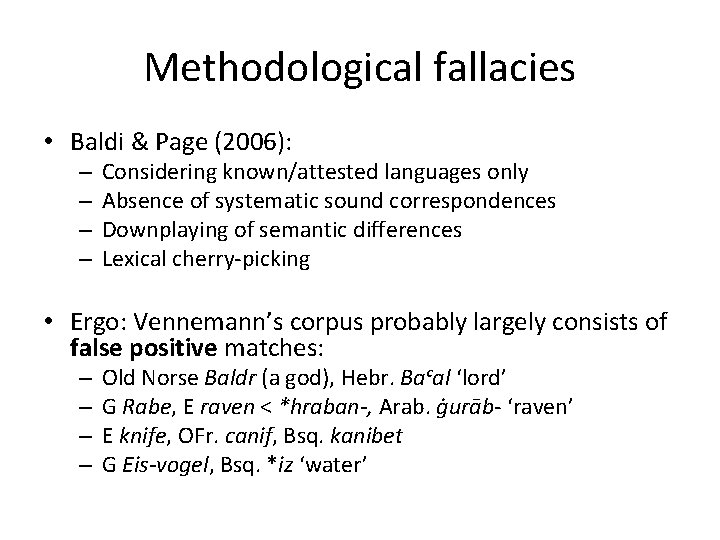
Methodological fallacies • Baldi & Page (2006): – – Considering known/attested languages only Absence of systematic sound correspondences Downplaying of semantic differences Lexical cherry-picking • Ergo: Vennemann’s corpus probably largely consists of false positive matches: – – Old Norse Baldr (a god), Hebr. Baᶜal ‘lord’ G Rabe, E raven < *hraban-, Arab. ġurāb- ‘raven’ E knife, OFr. canif, Bsq. kanibet G Eis-vogel, Bsq. *iz ‘water’
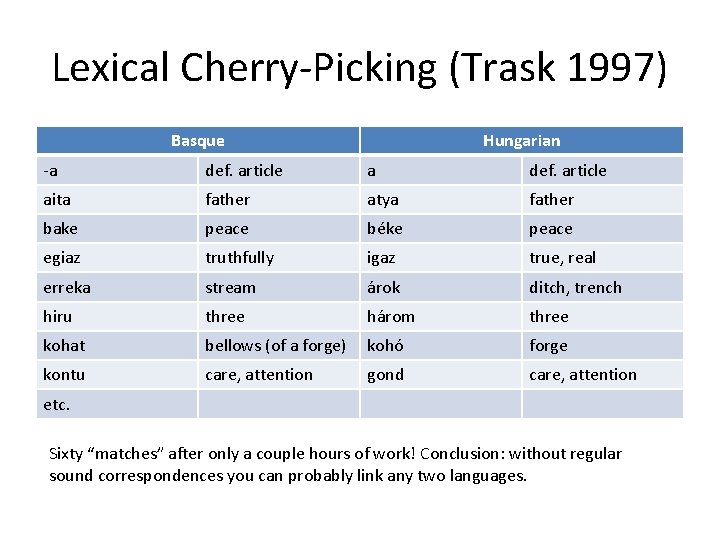
Lexical Cherry-Picking (Trask 1997) Basque Hungarian -a def. article aita father atya father bake peace béke peace egiaz truthfully igaz true, real erreka stream árok ditch, trench hiru three három three kohat bellows (of a forge) kohó forge kontu care, attention gond care, attention etc. Sixty “matches” after only a couple hours of work! Conclusion: without regular sound correspondences you can probably link any two languages.
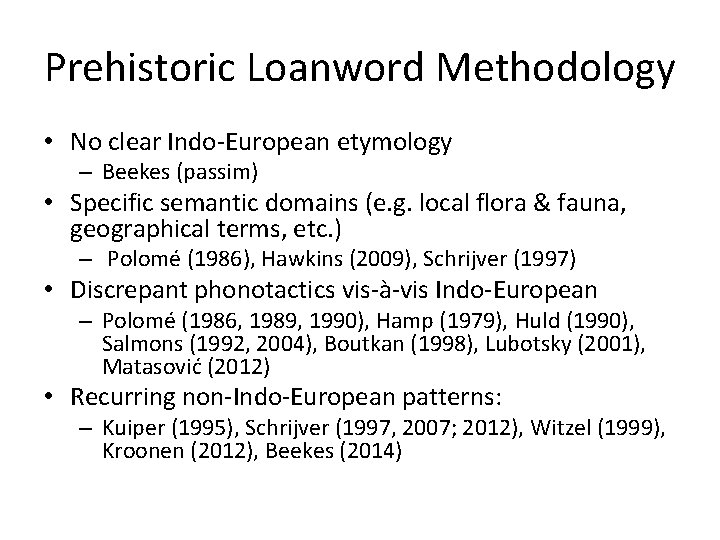
Prehistoric Loanword Methodology • No clear Indo-European etymology – Beekes (passim) • Specific semantic domains (e. g. local flora & fauna, geographical terms, etc. ) – Polomé (1986), Hawkins (2009), Schrijver (1997) • Discrepant phonotactics vis-à-vis Indo-European – Polomé (1986, 1989, 1990), Hamp (1979), Huld (1990), Salmons (1992, 2004), Boutkan (1998), Lubotsky (2001), Matasović (2012) • Recurring non-Indo-European patterns: – Kuiper (1995), Schrijver (1997, 2007; 2012), Witzel (1999), Kroonen (2012), Beekes (2014)
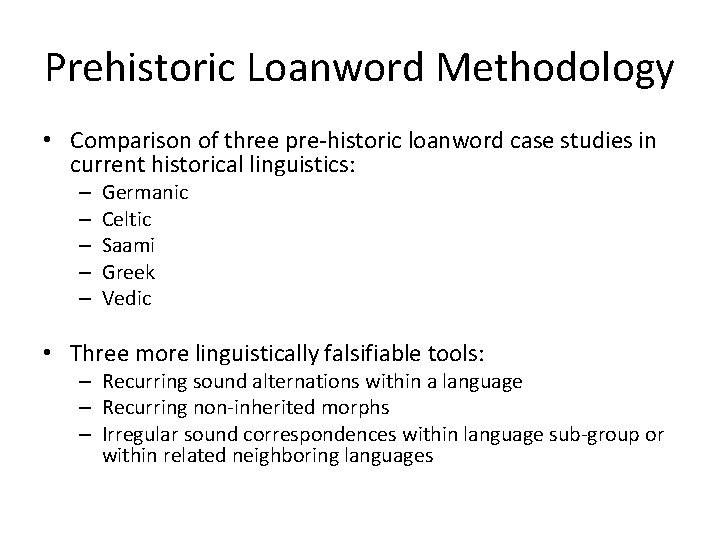
Prehistoric Loanword Methodology • Comparison of three pre-historic loanword case studies in current historical linguistics: – – – Germanic Celtic Saami Greek Vedic • Three more linguistically falsifiable tools: – Recurring sound alternations within a language – Recurring non-inherited morphs – Irregular sound correspondences within language sub-group or within related neighboring languages
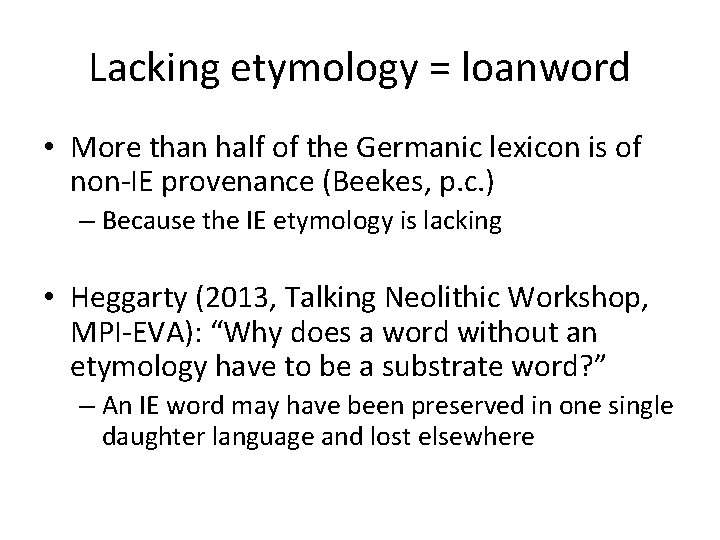
Lacking etymology = loanword • More than half of the Germanic lexicon is of non-IE provenance (Beekes, p. c. ) – Because the IE etymology is lacking • Heggarty (2013, Talking Neolithic Workshop, MPI-EVA): “Why does a word without an etymology have to be a substrate word? ” – An IE word may have been preserved in one single daughter language and lost elsewhere
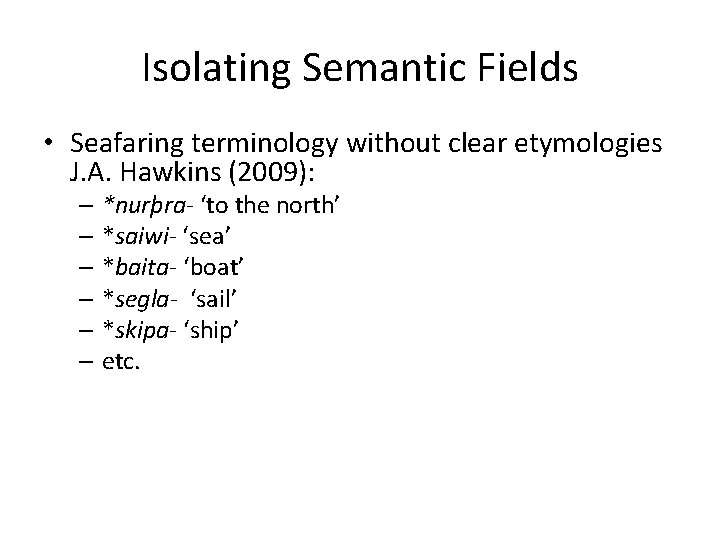
Isolating Semantic Fields • Seafaring terminology without clear etymologies J. A. Hawkins (2009): – *nurþra- ‘to the north’ – *saiwi- ‘sea’ – *baita- ‘boat’ – *segla- ‘sail’ – *skipa- ‘ship’ – etc.
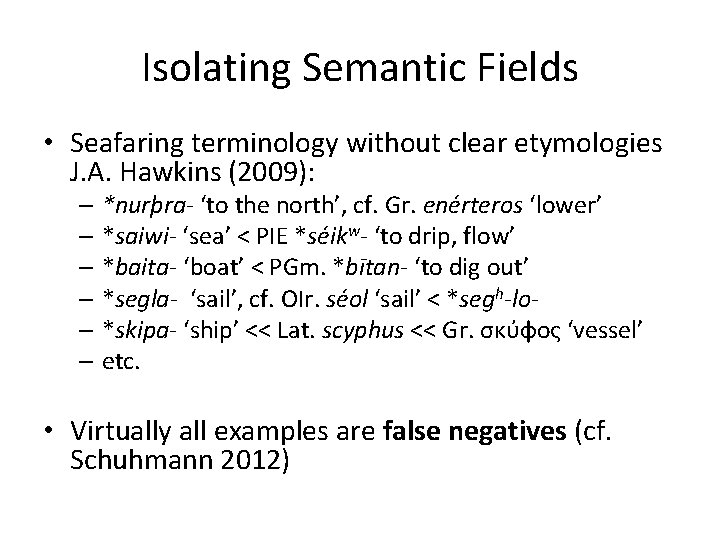
Isolating Semantic Fields • Seafaring terminology without clear etymologies J. A. Hawkins (2009): – *nurþra- ‘to the north’, cf. Gr. enérteros ‘lower’ – *saiwi- ‘sea’ < PIE *séikw- ‘to drip, flow’ – *baita- ‘boat’ < PGm. *bītan- ‘to dig out’ – *segla- ‘sail’, cf. OIr. séol ‘sail’ < *segh-lo– *skipa- ‘ship’ << Lat. scyphus << Gr. σκύφος ‘vessel’ – etc. • Virtually all examples are false negatives (cf. Schuhmann 2012)
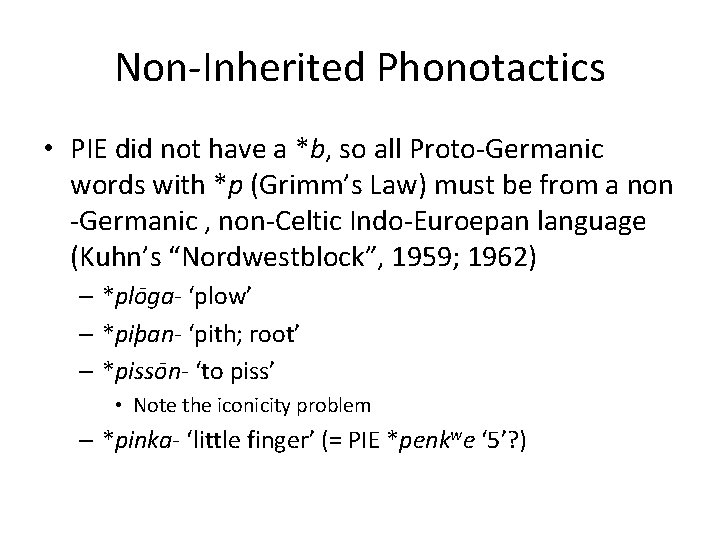
Non-Inherited Phonotactics • PIE did not have a *b, so all Proto-Germanic words with *p (Grimm’s Law) must be from a non -Germanic , non-Celtic Indo-Euroepan language (Kuhn’s “Nordwestblock”, 1959; 1962) – *plōga- ‘plow’ – *piþan- ‘pith; root’ – *pissōn- ‘to piss’ • Note the iconicity problem – *pinka- ‘little finger’ (= PIE *penkwe ‘ 5’? )
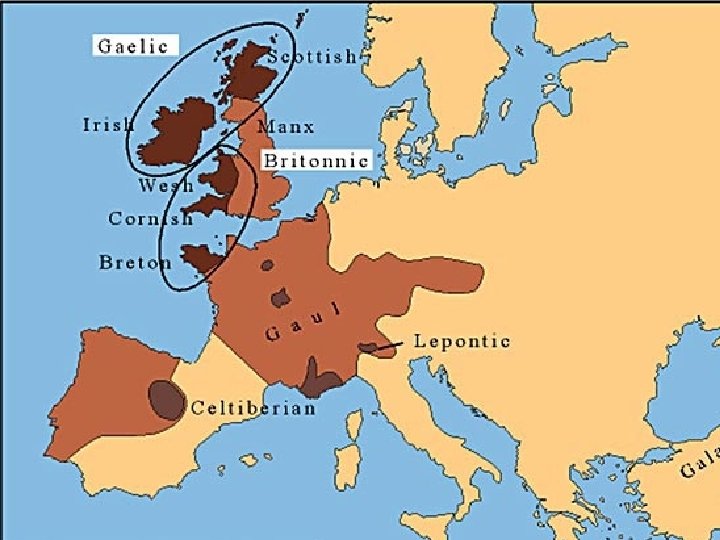
Partraige in Ireland (Schrijver 2000) • Part-raige means ”Crab People”, cf. part-án ’crab’ (with suffix as in e. g. scat-án ’herring’) • Together with Catt-raige ”Cat People”, Art-raige ”Bear People”, Gab-raige “Goat People” etc. they appear as so-called aithechthuatha, i. e. ’vassalpeoples’ = subjected tribes • The Partraige populated the infertile and mountainous region round Loch Mask which has the hallmarks of a refuge area. – NB: This is almost exactly where the last Irish speaking communities are located in our time
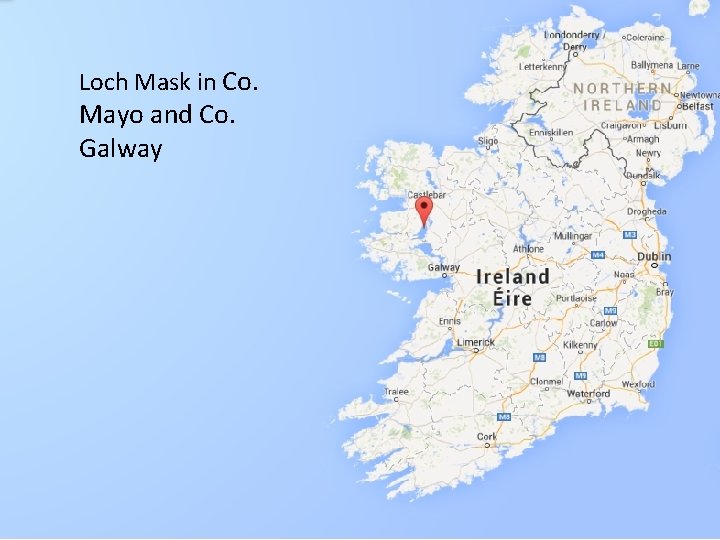
Loch Mask in Co. Mayo and Co. Galway
Words with p and unlenited stops • part-án ’crab’, pell ’horse’, petta ’pet’, pluc ’cheek’, pata ’hare’ • NB: In Latin loanwords, p is substituted by kʷ until the fifth century as Irish did not have this sound: – Lat. Pascha >> OIr. Cásc, purpura >> corcur, Patricius >> Cothriche, planta >> clann ’offspring’ • From the sixth century onwards, p is retained: – Patricius >> Pádraic ’Patrick’, pācem >> póc ’kiss’
Language of the ”Crab People” • A non-Indo-European language spoken in the marginally habitable areas of Ireland • It survived until at least the sixth century – Otherwise **cortán is expected for actual partán • It is was the source of many Irish words containing p or unlenited stops • The number of items belonging to fishing terminology is strikingly high, cf. bradán ‘salmon’, scadán ‘herring’, gliomach ‘lobster’
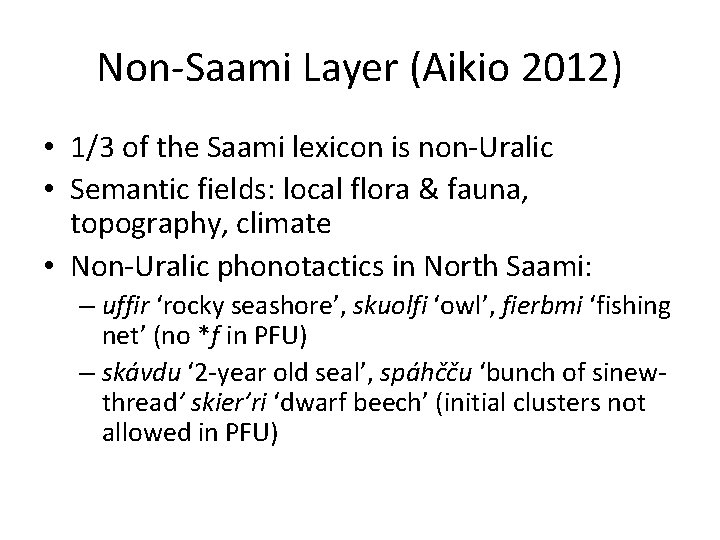
Non-Saami Layer (Aikio 2012) • 1/3 of the Saami lexicon is non-Uralic • Semantic fields: local flora & fauna, topography, climate • Non-Uralic phonotactics in North Saami: – uffir ‘rocky seashore’, skuolfi ‘owl’, fierbmi ‘fishing net’ (no *f in PFU) – skávdu ‘ 2 -year old seal’, spáhčču ‘bunch of sinewthread’ skier’ri ‘dwarf beech’ (initial clusters not allowed in PFU)
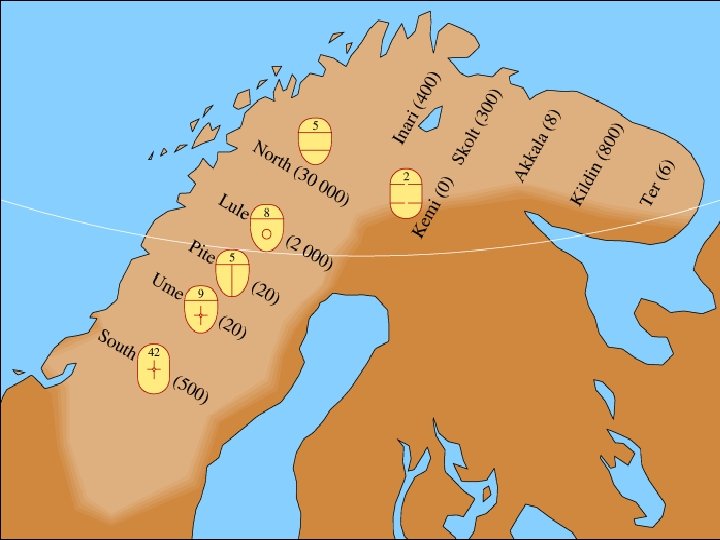
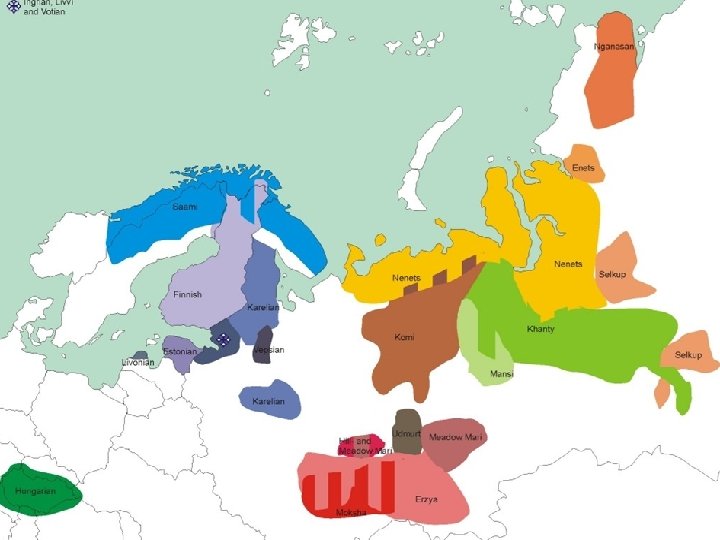
Non-Saami Layer (Aikio 2012) • Irregular simplification of clusters in the dialects: – N láhhpu vs. L sláhhpo ‘thick sinew-thread’, N liessu ‘lair of a fox’ vs. S plieasoe ‘den, lair’, etc. • Irregular alternation of s and š between West and East Saami: – S saasne ‘rotten tree’ vs. N šošnn ‘dead pine-tree’, S satnje ‘fishing net’ vs. Sk. šaannj ‘rag’, etc. • Identification of non-Saami morphs: – *-ērē ‘mountain’: N top. Gealbir, Hoalgir, Jeahkir, Nuhppir, Nussir, Ruohtir, Váhčir, etc.
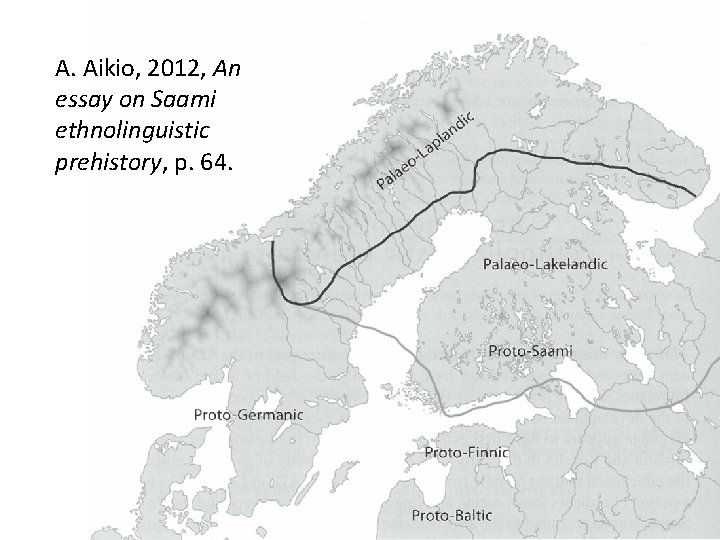
A. Aikio, 2012, An essay on Saami ethnolinguistic prehistory, p. 64.
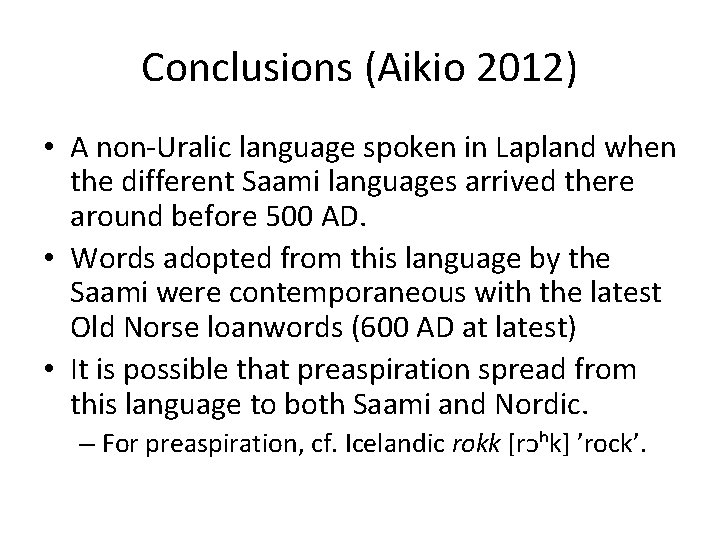
Conclusions (Aikio 2012) • A non-Uralic language spoken in Lapland when the different Saami languages arrived there around before 500 AD. • Words adopted from this language by the Saami were contemporaneous with the latest Old Norse loanwords (600 AD at latest) • It is possible that preaspiration spread from this language to both Saami and Nordic. – For preaspiration, cf. Icelandic rokk [rᴐʰk] ’rock’.
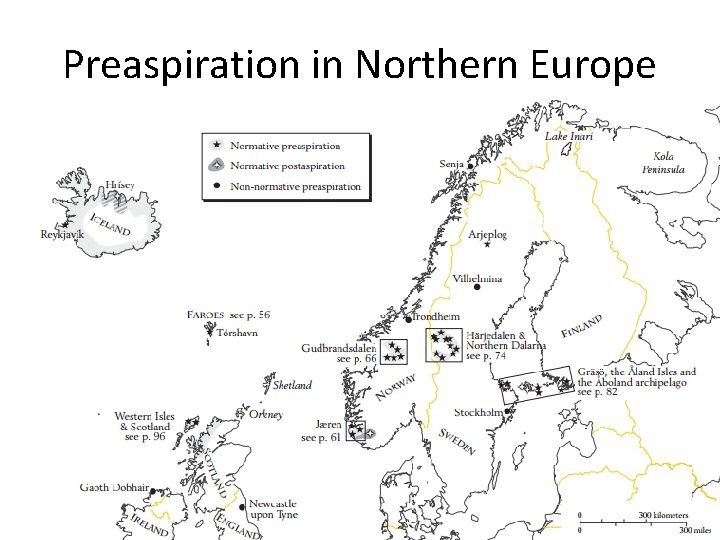
Preaspiration in Northern Europe
Non-Inherited Layer in Greek • “ 1000 Pre-Greek etyma” (Beekes 2010) • Semantic fields: local flora & fauna, “landscape terms”, agriculture, architecture, social stratification, religion, names • A wide variety of non-IE features in the phonotactics, e. g. non-IE geminates, CVCVC-root structure instead of PIE CVC-: – thálatta ‘sea’ – Odusseús ‘Ulysses’ – bélekkos ‘chickpea’
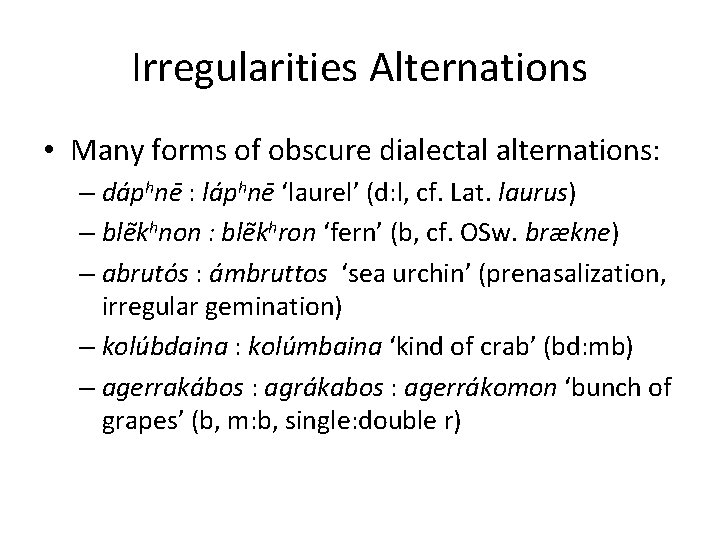
Irregularities Alternations • Many forms of obscure dialectal alternations: – dáphnē : láphnē ‘laurel’ (d: l, cf. Lat. laurus) – blẽkhnon : blẽkhron ‘fern’ (b, cf. OSw. brækne) – abrutós : ámbruttos ‘sea urchin’ (prenasalization, irregular gemination) – kolúbdaina : kolúmbaina ‘kind of crab’ (bd: mb) – agerrakábos : agrákabos : agerrákomon ‘bunch of grapes’ (b, m: b, single: double r)
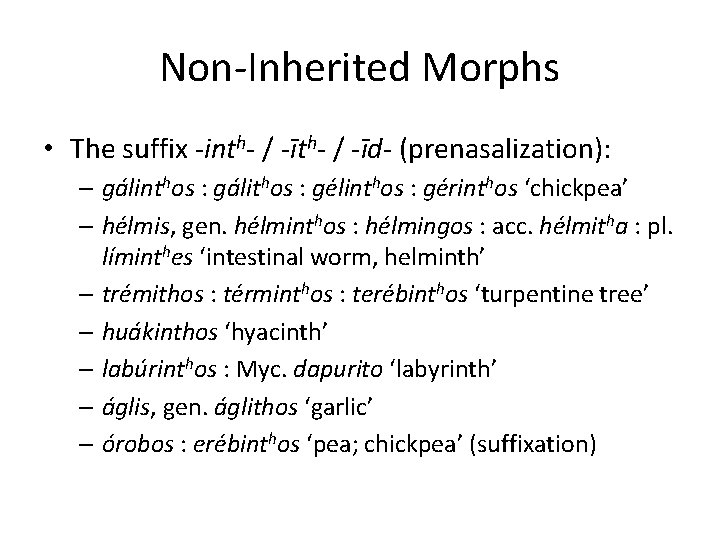
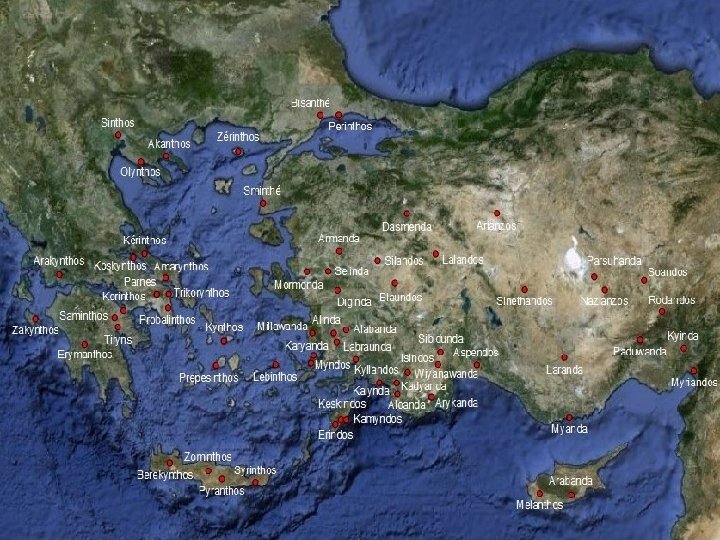
Non-Inherited Morphs • The suffix -inth- / -īd- (prenasalization): – gálinthos : gálithos : gélinthos : gérinthos ‘chickpea’ – hélmis, gen. hélminthos : hélmingos : acc. hélmitha : pl. líminthes ‘intestinal worm, helminth’ – trémithos : términthos : terébinthos ‘turpentine tree’ – huákinthos ‘hyacinth’ – labúrinthos : Myc. dapurito ‘labyrinth’ – áglis, gen. áglithos ‘garlic’ – órobos : erébinthos ‘pea; chickpea’ (suffixation)
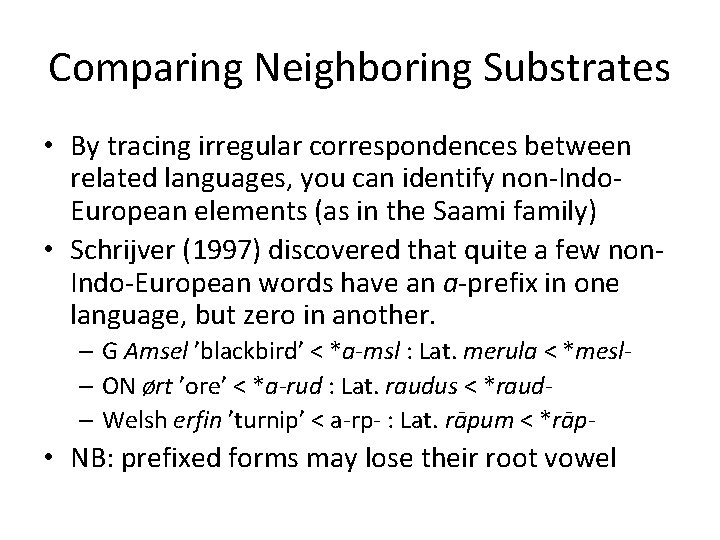
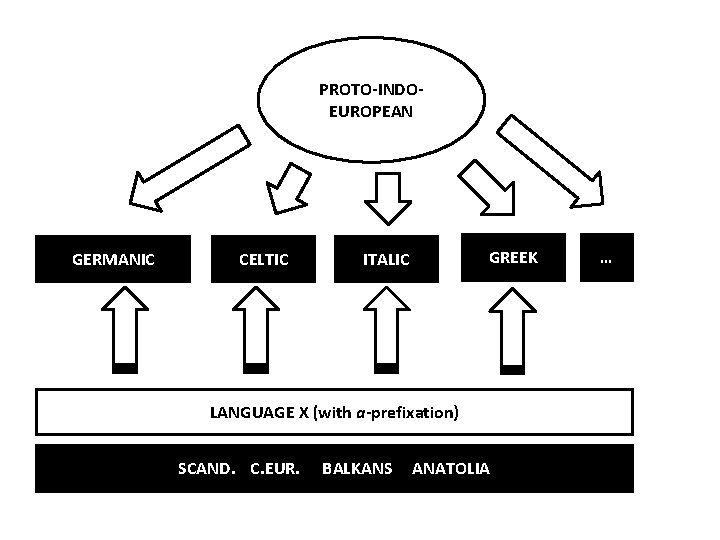
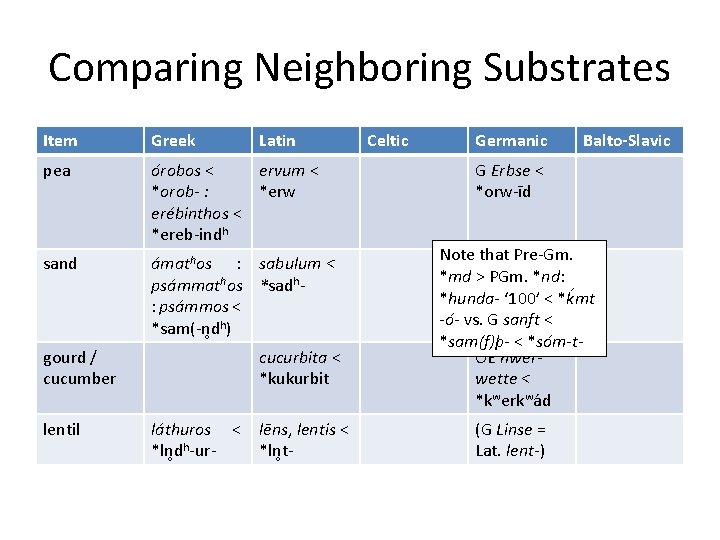
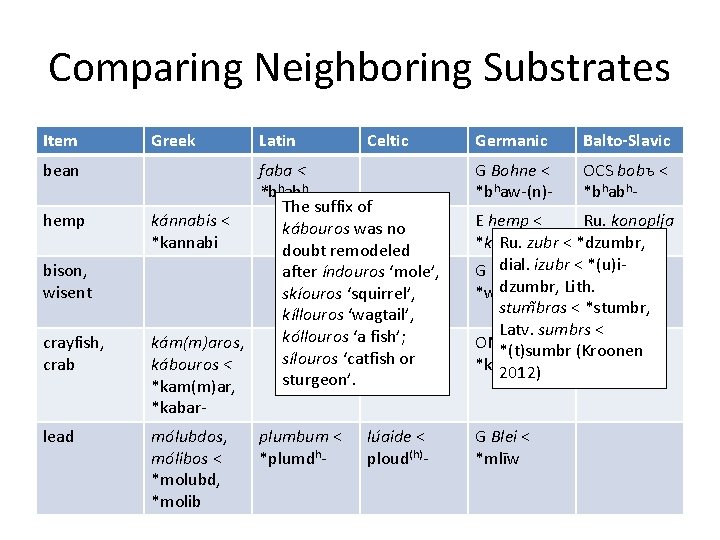
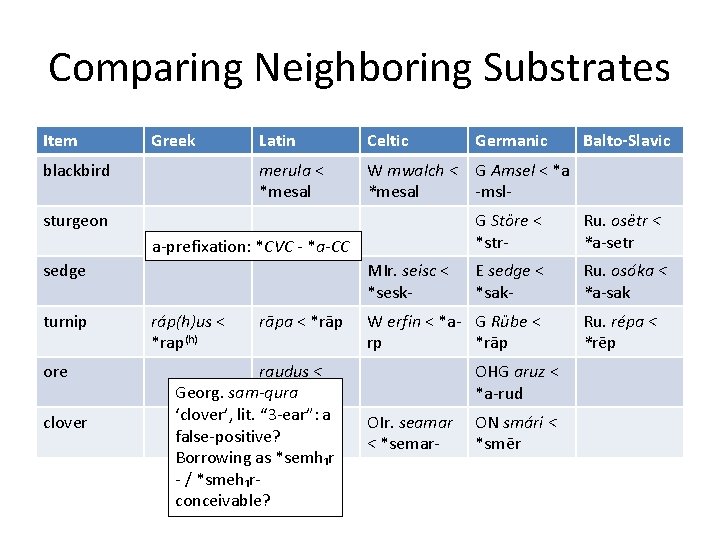
Comparing Neighboring Substrates • By tracing irregular correspondences between related languages, you can identify non-Indo. European elements (as in the Saami family) • Schrijver (1997) discovered that quite a few non. Indo-European words have an a-prefix in one language, but zero in another. – G Amsel ’blackbird’ < *a-msl : Lat. merula < *mesl- – ON ørt ’ore’ < *a-rud : Lat. raudus < *raud– Welsh erfin ’turnip’ < a-rp- : Lat. rāpum < *rāp- • NB: prefixed forms may lose their root vowel
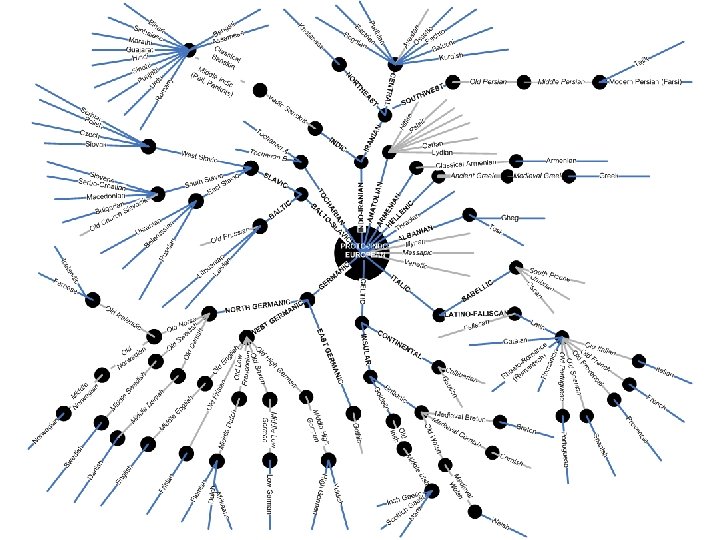
PROTO-INDOEUROPEAN GERMANIC CELTIC GREEK ITALIC LANGUAGE X (with a-prefixation) SCAND. C. EUR. BALKANS ANATOLIA …
Comparing Neighboring Substrates Item Greek pea órobos < ervum < *orob- : *erw erébinthos < *ereb-indh sand ámathos : sabulum < psámmathos *sadh: psámmos < *sam(-n dh) gourd / cucumber lentil Latin cucurbita < *kukurbit láthuros < lēns, lentis < *ln dh-ur*ln t- Celtic Germanic Balto-Slavic G Erbse < *orw-īd Note that Pre-Gm. E sand, MHG *md sampt < > PGm. *nd: *hunda- ‘ 100’ < *ḱmt *samdh-ó- vs. G sanft < *sam(f)þ- < *sóm-t. OE hwerwette < *kʷerkʷád (G Linse = Lat. lent-)
Comparing Neighboring Substrates Item Greek bean hemp bison, wisent crayfish, crab lead Latin Germanic Balto-Slavic faba < *bhabh The suffix of kánnabis < kábouros was no *kannabi doubt remodeled after índouros ‘mole’, skíouros ‘squirrel’, kíllouros ‘wagtail’, kóllouros ‘a fish’; kám(m)aros, sílouros ‘catfish or kábouros < sturgeon’. *kam(m)ar, *kabar- G Bohne < *bhaw-(n)- OCS bobъ < *bhabh- mólubdos, mólibos < *molubd, *molib G Blei < *mlīw plumbum < *plumdh- Celtic lúaide < ploud(h)- E hemp < Ru. konoplja *kanabi < *kanapi Ru. zubr < *dzumbr, dial. izubr G Wisent < < *(u)i. OPru. widzumbr, Lith. *wi-sundhssambras < stum bras < *stumbr, *wi-sombh Latv. sumbrs < ON humar < *(t)sumbr (Kroonen *kumar 2012)
Comparing Neighboring Substrates Item Greek blackbird Latin Celtic merula < *mesal W mwalch < G Amsel < *a *mesal -msl- sturgeon a-prefixation: *CVC - *a-CC sedge turnip ore clover MIr. seisc < *seskráp(h)us < *rap(h) rāpa < *rāp raudus < Georg. sam-qura *raud ‘clover’, lit. “ 3 -ear”: a false-positive? Borrowing as *semh₁r - / *smeh₁r- conceivable? Germanic G Störe < *str- Ru. osëtr < *a-setr E sedge < *sak- Ru. osóka < *a-sak W erfin < *a- G Rübe < rp *rāp OHG aruz < *a-rud OIr. seamar < *semar- Balto-Slavic ON smári < *smēr Ru. répa < *rēp
Vedic Substrate • Roughly 4% of the Vedic lexicon is non-IE (Kuiper 1955) • Semantic fields: local flora & fauna, agriculture, artisanship, names • Non-IE features in the phonotactics, e. g. non-IE syllable structure or lack of regular retroflexion of s after r, u, k, i: – busa- ‘chaff, fog? ’ – bīsa- ‘oven/pit with coals, volcanic cleft’ – musala 'pestle’ – kusīda- ‘lending money’
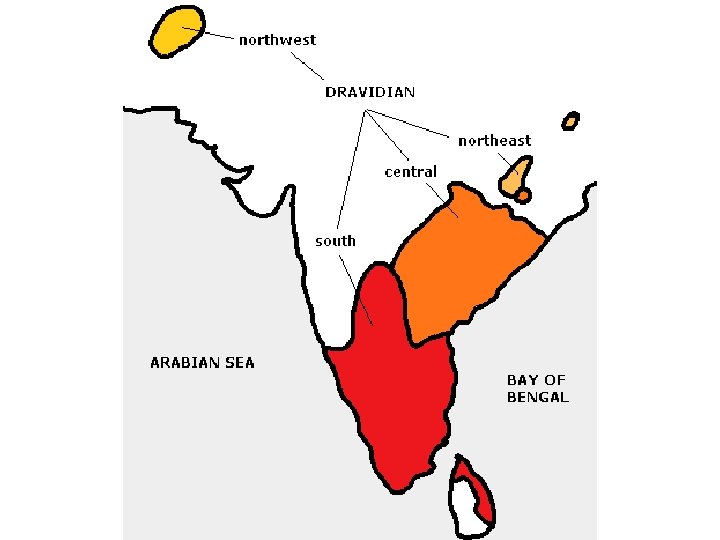
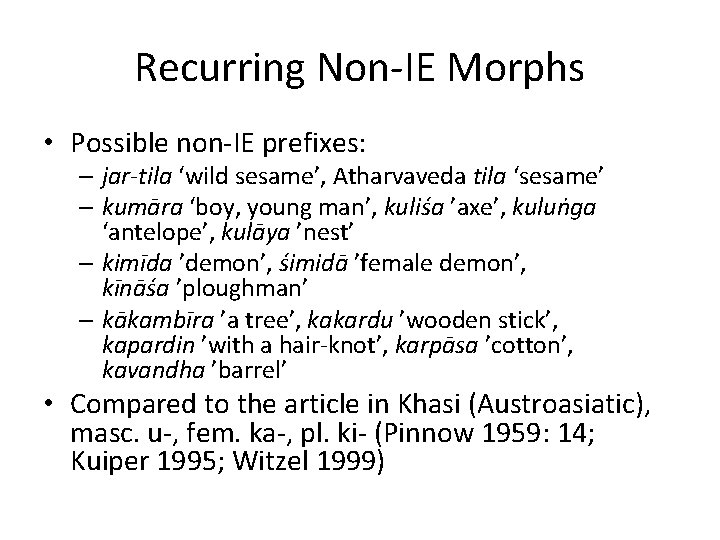
Recurring Non-IE Morphs • Possible non-IE prefixes: – jar-tila ‘wild sesame’, Atharvaveda tila ‘sesame’ – kumāra ‘boy, young man’, kuliśa ’axe’, kuluṅga ‘antelope’, kulāya ’nest’ – kimīda ’demon’, śimidā ’female demon’, kīnāśa ’ploughman’ – kākambīra ’a tree’, kakardu ’wooden stick’, kapardin ’with a hair-knot’, karpāsa ’cotton’, kavandha ’barrel’ • Compared to the article in Khasi (Austroasiatic), masc. u-, fem. ka-, pl. ki- (Pinnow 1959: 14; Kuiper 1995; Witzel 1999)
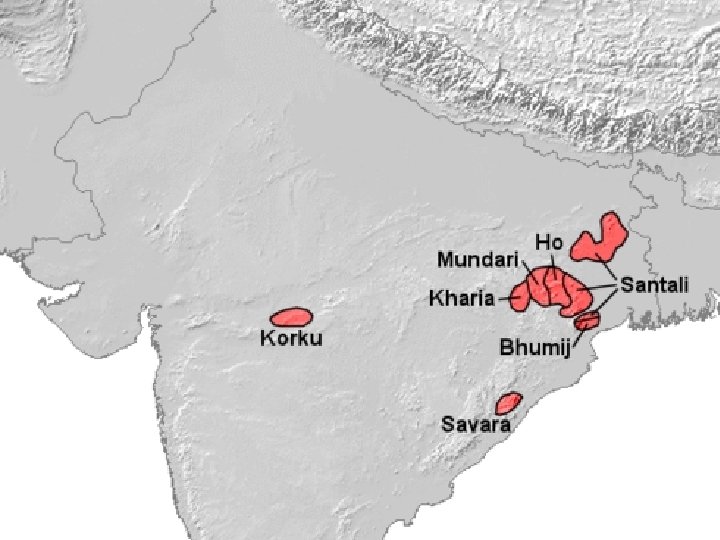
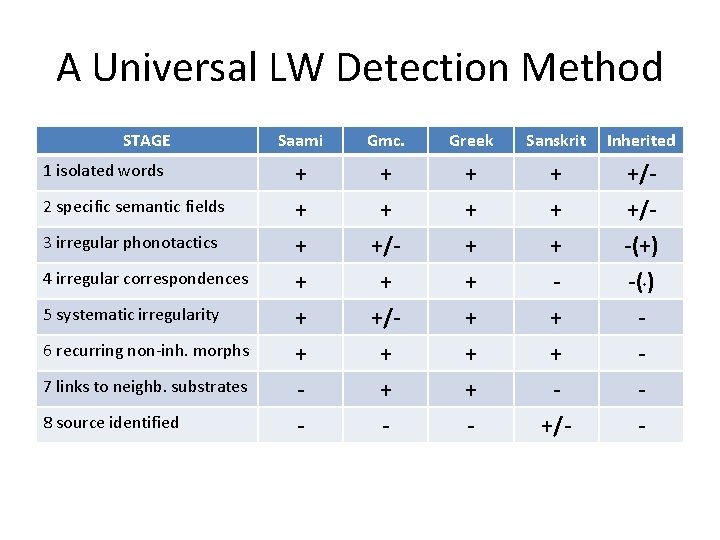
A Universal LW Detection Method STAGE 1 isolated words 2 specific semantic fields 3 irregular phonotactics 4 irregular correspondences 5 systematic irregularity 6 recurring non-inh. morphs 7 links to neighb. substrates 8 source identified Saami Gmc. Greek Sanskrit Inherited + + +/- + + + +/+/-(+) + + + - + +/+ + - + + +/- -( ) +
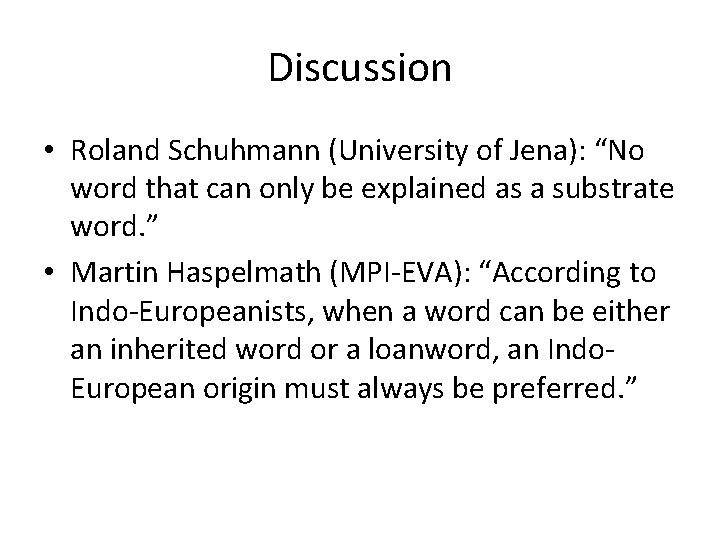
Discussion • Roland Schuhmann (University of Jena): “No word that can only be explained as a substrate word. ” • Martin Haspelmath (MPI-EVA): “According to Indo-Europeanists, when a word can be either an inherited word or a loanword, an Indo. European origin must always be preferred. ”
- Slides: 46