
GUSTAR INTERESAR ABURRIR pg 175 GUSTAR VERBS So

GUSTAR, INTERESAR, ABURRIR pág. 175
GUSTAR VERBS So far, most of the verbs we have learned are grammatically very similar to English. In Spanish, there are some verbs where the way we represent the “doer” of the action and how we determine the verb conjugation is different from English. The most common of those verbs is “gustar” (to like), so they are often referred to as “verbs like gustar” or “gustartype verbs” or just “gustar verbs. ”

STANDARD VERB CHART COPY THE CHART AND FILL IN THE ENGLISH TRANSLATION NEXT TO THE ARROWS. Yo I Nosotros We Tú You (informal) X Él/Ella He/She Ellos/Ellas They Usted You (formal) Ustedes You (plural)
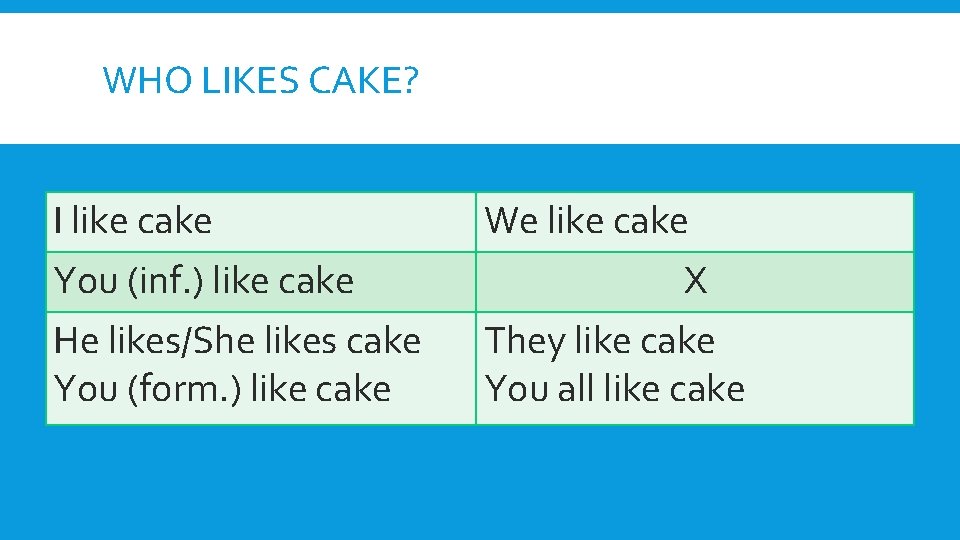
WHO LIKES CAKE? I like cake You (inf. ) like cake He likes/She likes cake You (form. ) like cake We like cake X They like cake You all like cake
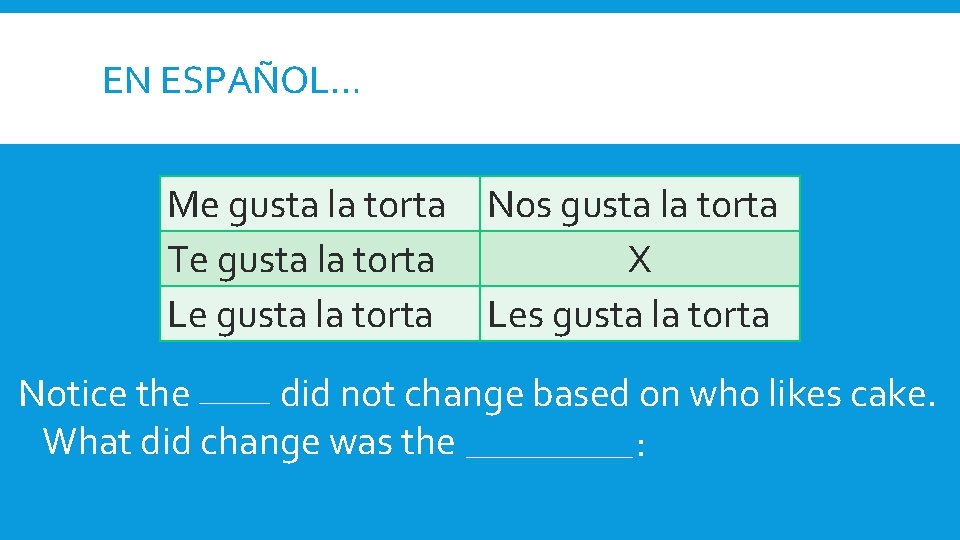
EN ESPAÑOL… Me gusta la torta Te gusta la torta Le gusta la torta Nos gusta la torta X Les gusta la torta ____ did not change based on who likes cake. Notice the verb What did change was the pronoun: me, __________ : te, le, nos, les.
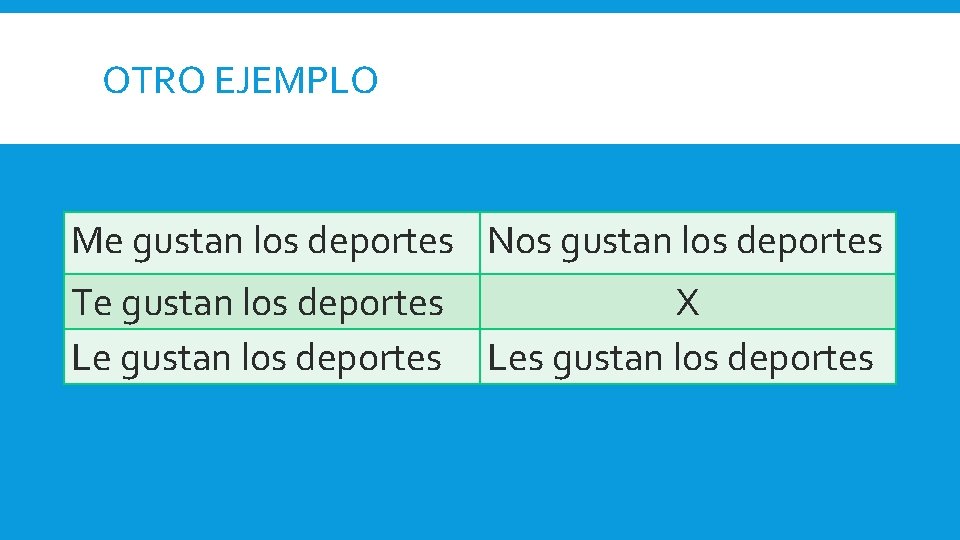
OTRO EJEMPLO Me gustan los deportes Nos gustan los deportes Te gustan los deportes Le gustan los deportes X Les gustan los deportes
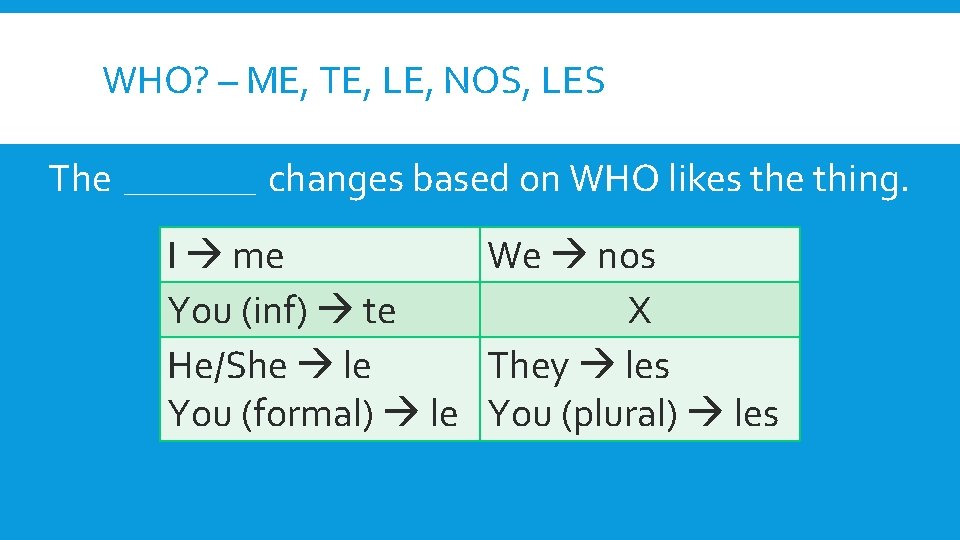
WHO? – ME, TE, LE, NOS, LES The pronoun ________ changes based on WHO likes the thing. I me We nos You (inf) te X He/She le They les You (formal) le You (plural) les
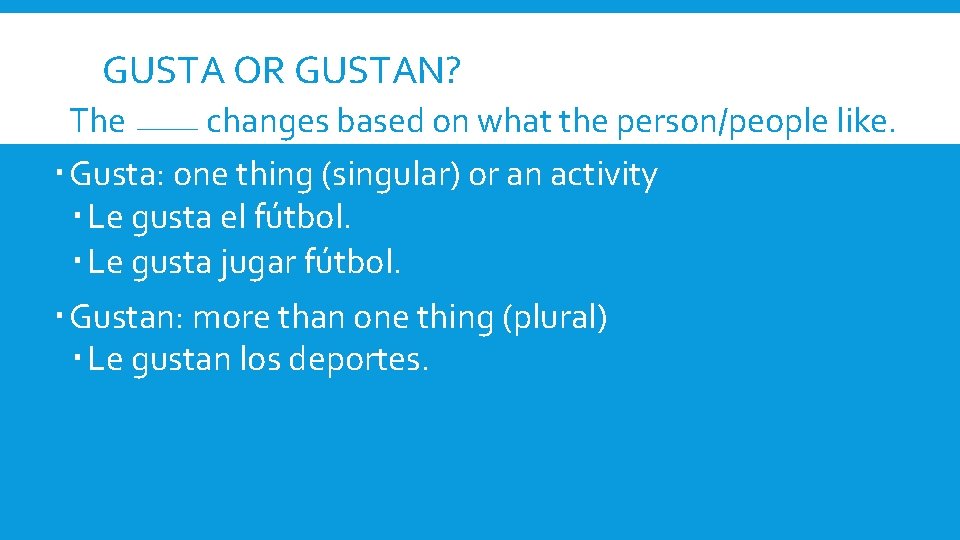
GUSTA OR GUSTAN? _______ changes based on what the person/people like. The verb Gusta: one thing (singular) or an activity Le gusta el fútbol. Le gusta jugar fútbol. Gustan: more than one thing (plural) Le gustan los deportes.
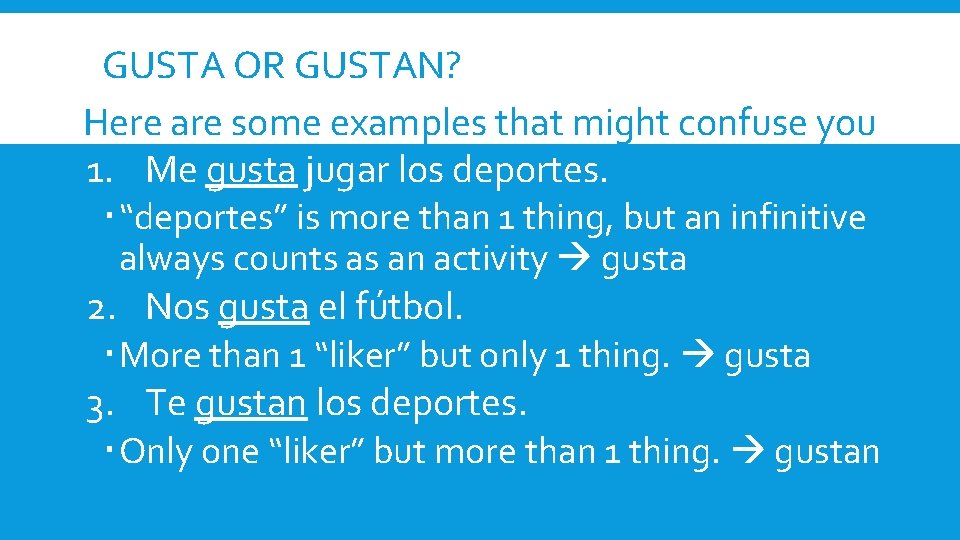
GUSTA OR GUSTAN? Here are some examples that might confuse you. 1. Me gusta jugar los deportes. “deportes” is more than 1 thing, but an infinitive always counts as an activity gusta 2. Nos gusta el fútbol. More than 1 “liker” but only 1 thing. gusta 3. Te gustan los deportes. Only one “liker” but more than 1 thing. gustan
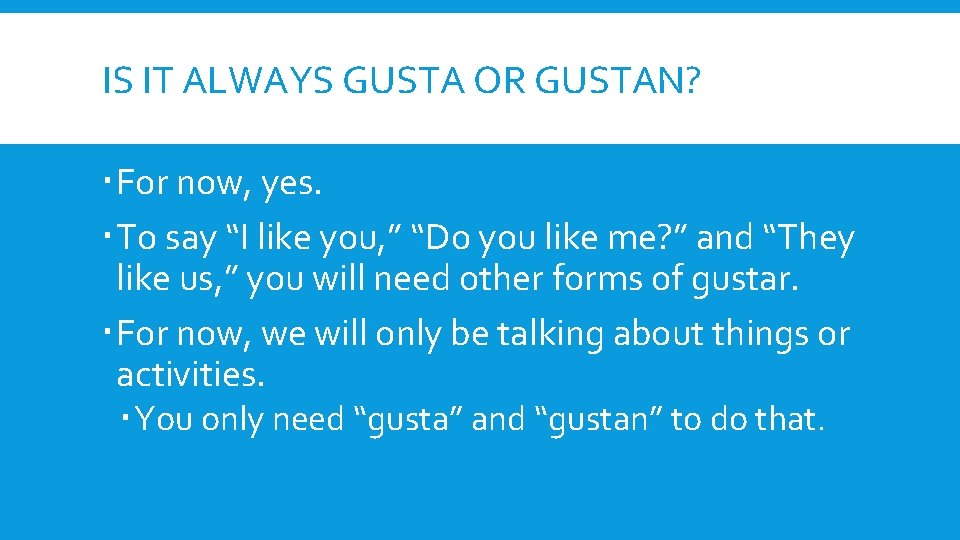
IS IT ALWAYS GUSTA OR GUSTAN? For now, yes. To say “I like you, ” “Do you like me? ” and “They like us, ” you will need other forms of gustar. For now, we will only be talking about things or activities. You only need “gusta” and “gustan” to do that.
GUSTAR, INTERESAR, ABURRIR (DAY 2 OF NOTES) pág. 175
REVIEW – GRAMMAR FOR GUSTAR VERBS For gustar verbs, there are 2 grammar points that are different from other verbs we’ve learned so far. 1. How we represent the “doer” (the person/people who like something). 2. How we determine the verb conjugation.
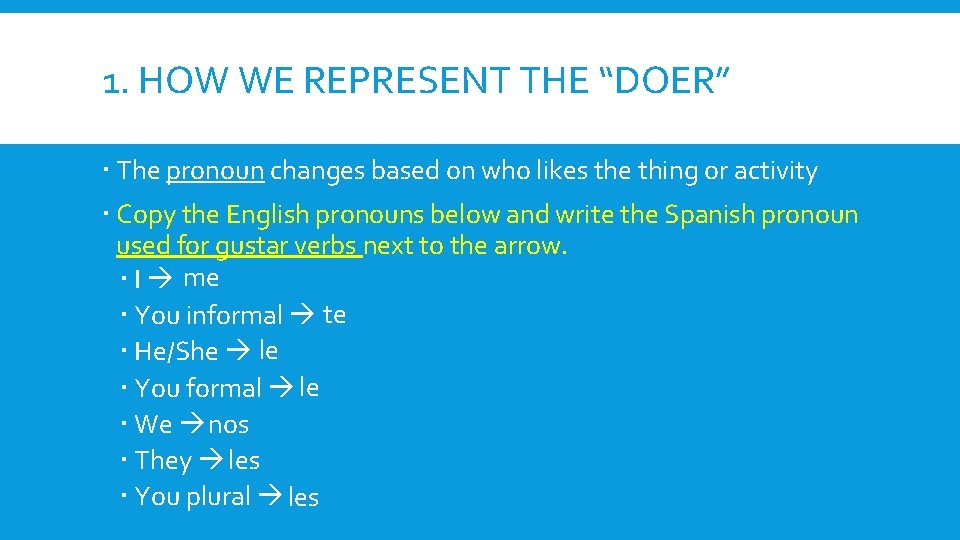
1. HOW WE REPRESENT THE “DOER” The pronoun changes based on who likes the thing or activity Copy the English pronouns below and write the Spanish pronoun used for gustar verbs next to the arrow. I me You informal te He/She le You formal le We nos They les You plural les
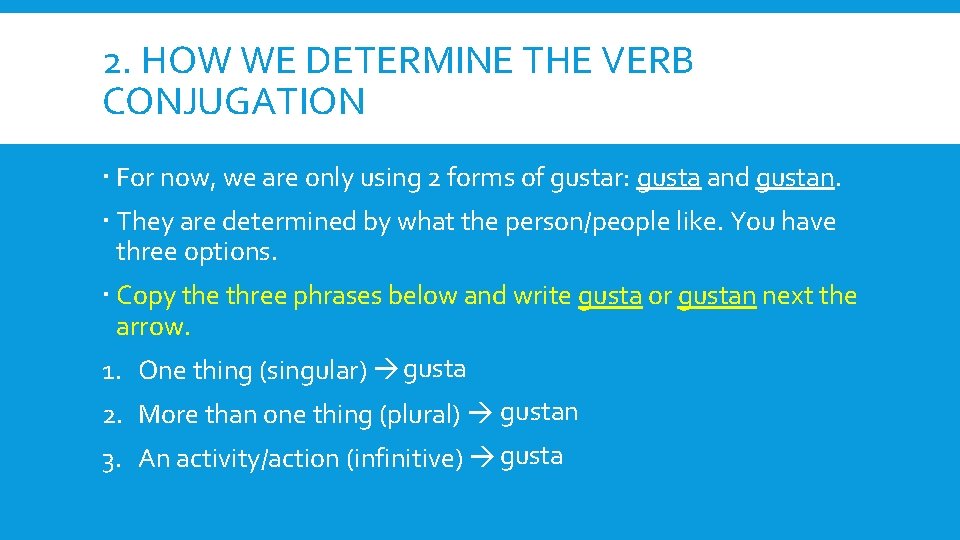
2. HOW WE DETERMINE THE VERB CONJUGATION For now, we are only using 2 forms of gustar: gusta and gustan. They are determined by what the person/people like. You have three options. Copy the three phrases below and write gusta or gustan next the arrow. 1. One thing (singular) gusta 2. More than one thing (plural) gustan 3. An activity/action (infinitive) gusta
OTHER GUSTAR VERBS There are many verbs in Spanish that work the same way as gustar For now, you only need to know two more: Aburrir – to bore / to be boring Interestar – to interest / to be interesting
FORMS OF ABURRIR AND INTERESAR For now, we will only use two forms of each verb: Aburrir aburre or aburren Interesar interesa or interesan This is determined by WHAT the person/people think is boring or interesting. One thing (singular) aburre or interesa More than one thing (plural) aburren or interesan Action/Activity (infinitive) aburre or interesa
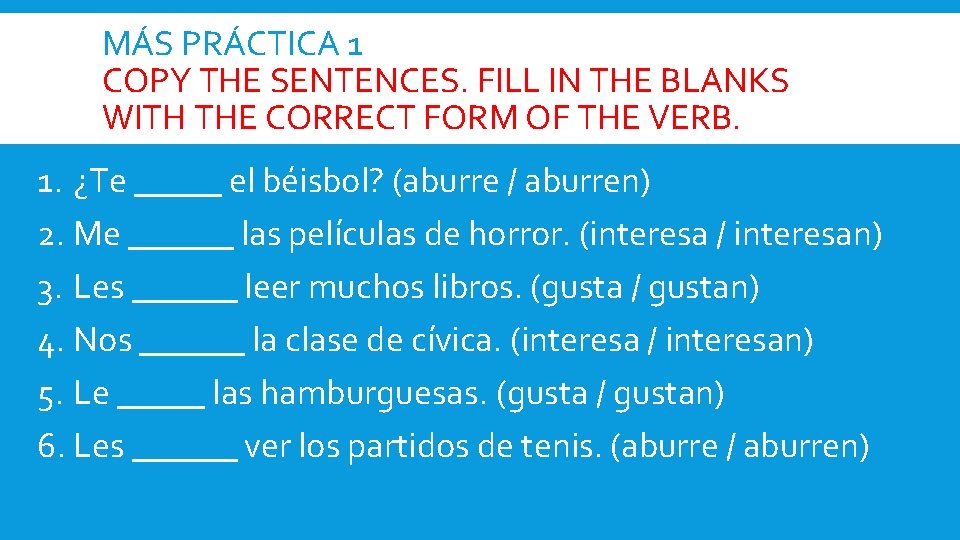
MÁS PRÁCTICA 1 COPY THE SENTENCES. FILL IN THE BLANKS WITH THE CORRECT FORM OF THE VERB. 1. ¿Te _____ el béisbol? (aburre / aburren) 2. Me ______ las películas de horror. (interesa / interesan) 3. Les ______ leer muchos libros. (gusta / gustan) 4. Nos ______ la clase de cívica. (interesa / interesan) 5. Le _____ las hamburguesas. (gusta / gustan) 6. Les ______ ver los partidos de tenis. (aburre / aburren)
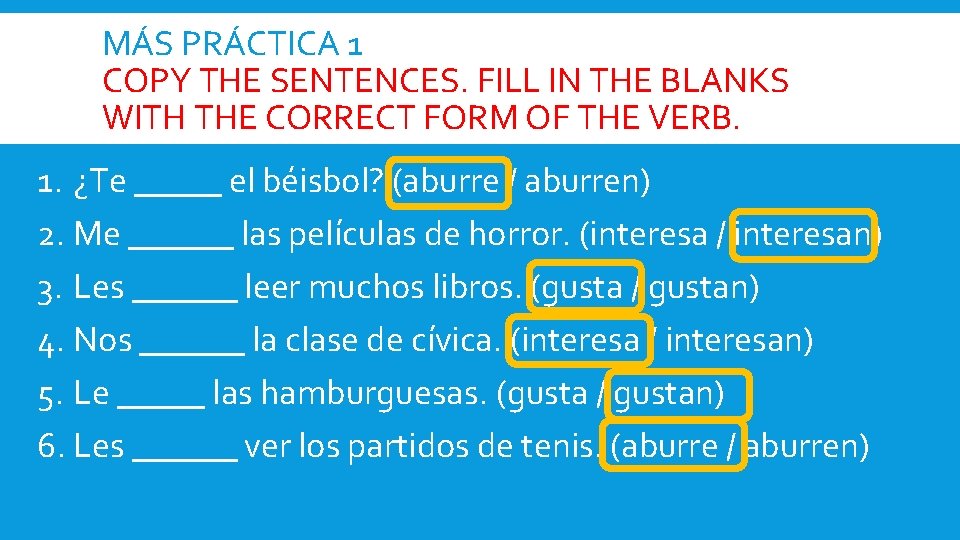
MÁS PRÁCTICA 1 COPY THE SENTENCES. FILL IN THE BLANKS WITH THE CORRECT FORM OF THE VERB. 1. ¿Te _____ el béisbol? (aburre / aburren) 2. Me ______ las películas de horror. (interesa / interesan) 3. Les ______ leer muchos libros. (gusta / gustan) 4. Nos ______ la clase de cívica. (interesa / interesan) 5. Le _____ las hamburguesas. (gusta / gustan) 6. Les ______ ver los partidos de tenis. (aburre / aburren)
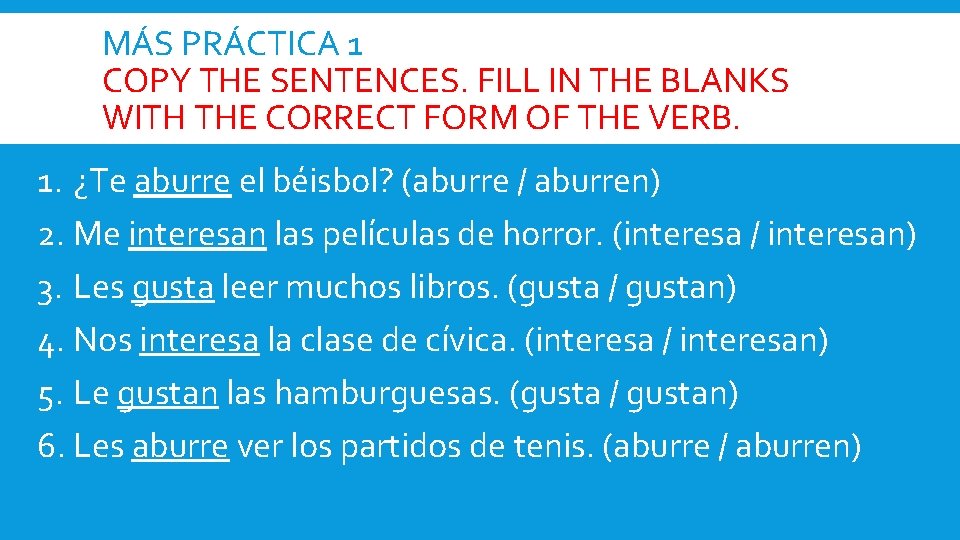
MÁS PRÁCTICA 1 COPY THE SENTENCES. FILL IN THE BLANKS WITH THE CORRECT FORM OF THE VERB. 1. ¿Te aburre el béisbol? (aburre / aburren) 2. Me interesan las películas de horror. (interesa / interesan) 3. Les gusta leer muchos libros. (gusta / gustan) 4. Nos interesa la clase de cívica. (interesa / interesan) 5. Le gustan las hamburguesas. (gusta / gustan) 6. Les aburre ver los partidos de tenis. (aburre / aburren)
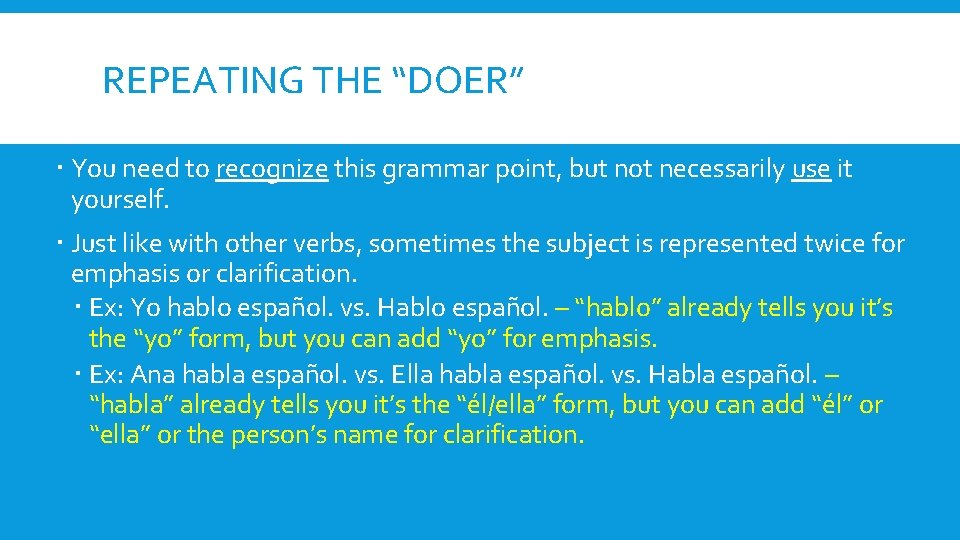
REPEATING THE “DOER” You need to recognize this grammar point, but not necessarily use it yourself. Just like with other verbs, sometimes the subject is represented twice for emphasis or clarification. Ex: Yo hablo español. vs. Hablo español. – “hablo” already tells you it’s the “yo” form, but you can add “yo” for emphasis. Ex: Ana habla español. vs. Ella habla español. vs. Habla español. – “habla” already tells you it’s the “él/ella” form, but you can add “él” or “ella” or the person’s name for clarification.
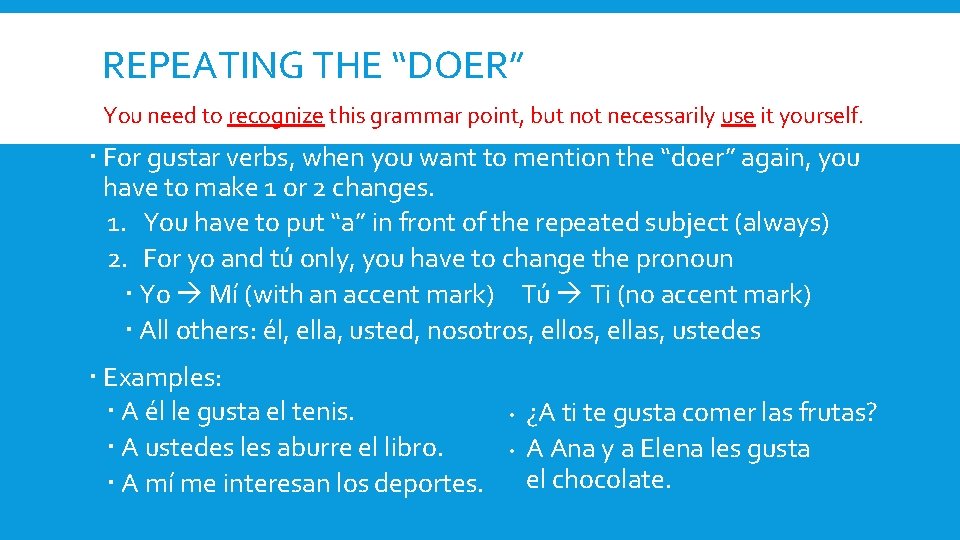
REPEATING THE “DOER” You need to recognize this grammar point, but not necessarily use it yourself. For gustar verbs, when you want to mention the “doer” again, you have to make 1 or 2 changes. 1. You have to put “a” in front of the repeated subject (always) 2. For yo and tú only, you have to change the pronoun Yo Mí (with an accent mark) Tú Ti (no accent mark) All others: él, ella, usted, nosotros, ellas, ustedes Examples: A él le gusta el tenis. A ustedes les aburre el libro. A mí me interesan los deportes. • • ¿A ti te gusta comer las frutas? A Ana y a Elena les gusta el chocolate.
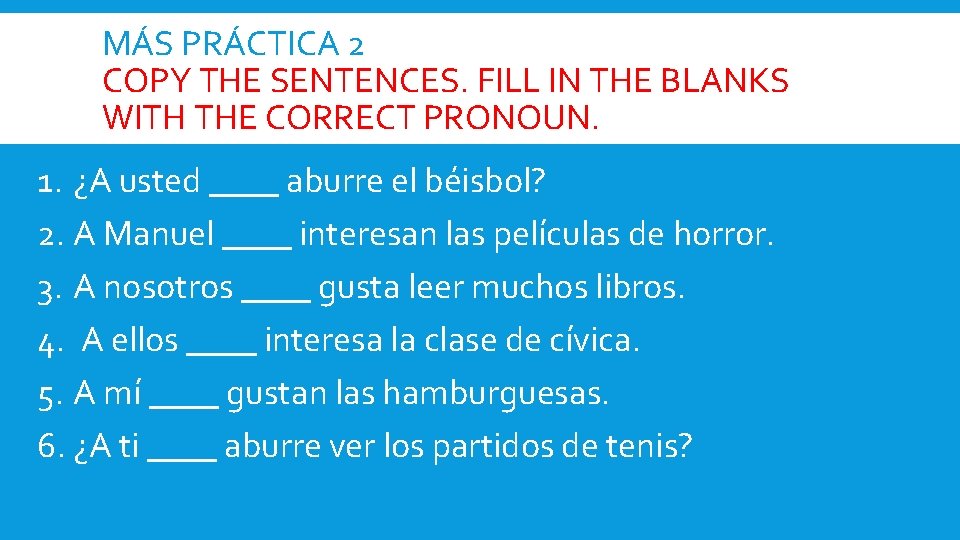
MÁS PRÁCTICA 2 COPY THE SENTENCES. FILL IN THE BLANKS WITH THE CORRECT PRONOUN. 1. ¿A usted ____ aburre el béisbol? 2. A Manuel ____ interesan las películas de horror. 3. A nosotros ____ gusta leer muchos libros. 4. A ellos ____ interesa la clase de cívica. 5. A mí ____ gustan las hamburguesas. 6. ¿A ti ____ aburre ver los partidos de tenis?
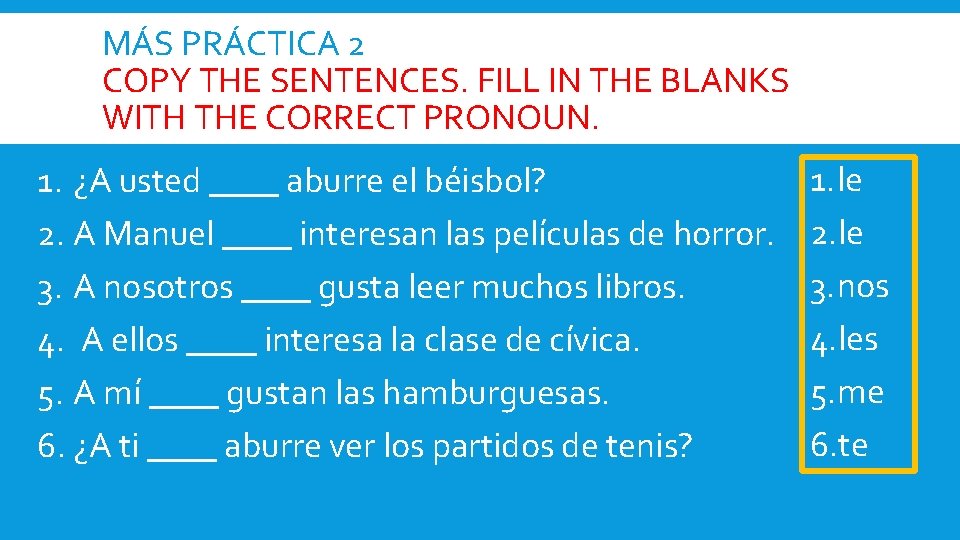
MÁS PRÁCTICA 2 COPY THE SENTENCES. FILL IN THE BLANKS WITH THE CORRECT PRONOUN. 1. ¿A usted ____ aburre el béisbol? 2. A Manuel ____ interesan las películas de horror. 3. A nosotros ____ gusta leer muchos libros. 4. A ellos ____ interesa la clase de cívica. 5. A mí ____ gustan las hamburguesas. 6. ¿A ti ____ aburre ver los partidos de tenis? 1. le 2. le 3. nos 4. les 5. me 6. te
MÁS PRÁCTICA 2 COPY THE SENTENCES. FILL IN THE BLANKS WITH THE CORRECT PRONOUN. 1. ¿A usted le aburre el béisbol? 2. A Manuel le interesan las películas de horror. 3. A nosotros nos gusta leer muchos libros. 4. A ellos les interesa la clase de cívica. 5. A mí me gustan las hamburguesas. 6. ¿A ti te aburre ver los partidos de tenis?
- Slides: 24