
Guinea Pig Cavia porcellus Biology and Anatomy Origin
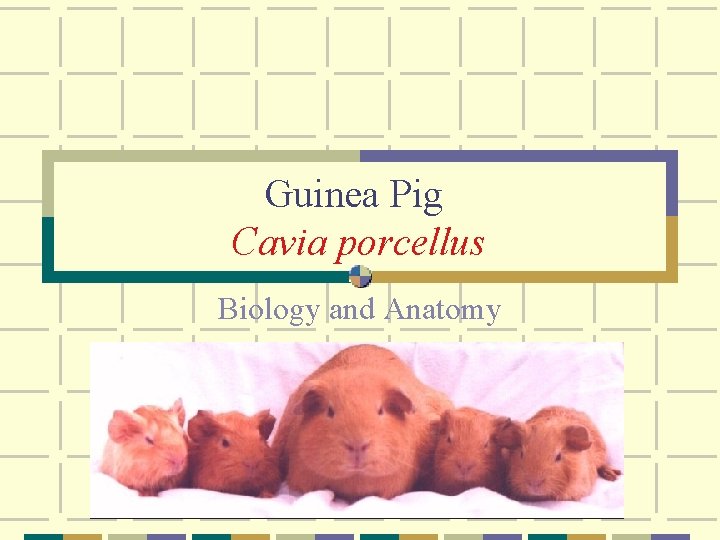
Guinea Pig Cavia porcellus Biology and Anatomy
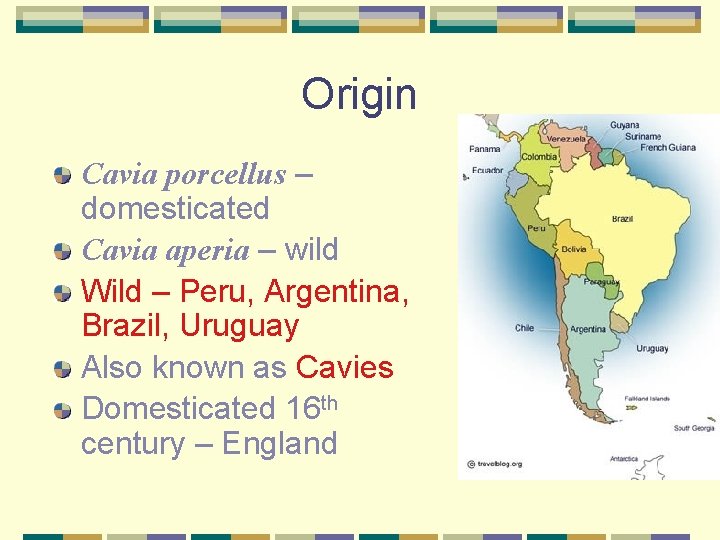
Origin Cavia porcellus – domesticated Cavia aperia – wild Wild – Peru, Argentina, Brazil, Uruguay Also known as Cavies Domesticated 16 th century – England
Uses of Guinea Pigs Pets Scientific research Food
Taxonomy The guinea pig is in the order Rodentia, the largest mammalian order, which includes rats, mice and squirrels. Guinea pigs are placed in the suborder Hystricomorpha, along with chinchillas and porcupines, and in the family Caviidae. The Caviidae, which include the capybara, are herbivorous South American rodents characterized by a stocky body, vestigial tail and long gestation.
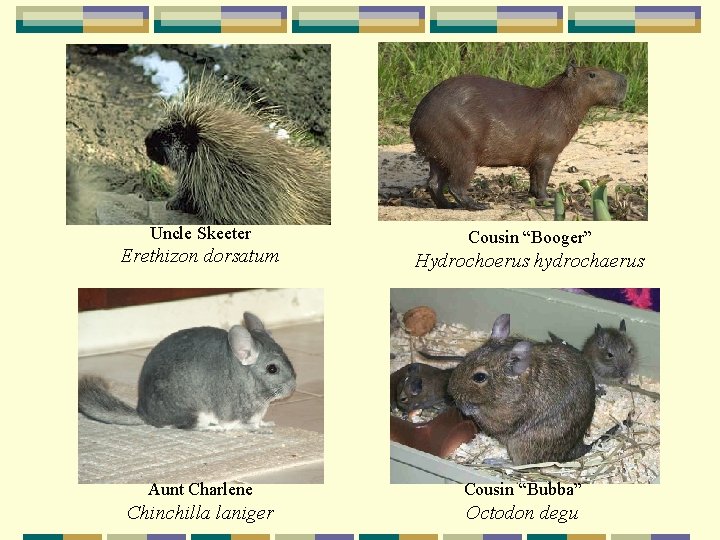
Uncle Skeeter Erethizon dorsatum Cousin “Booger” Hydrochoerus hydrochaerus Aunt Charlene Cousin “Bubba” Chinchilla laniger Octodon degu
Varieties of Guinea Pigs Traditional ❖American or English – short hair ❖Abyssinian – whorls of short rough hair ❖Peruvian – long hair
Varieties of Guinea Pigs New varieties ❖Silky – medium length soft hair ❖Teddy – short, coarse hair ❖American Crested – short hair with contrasting whorl on forehead ❖Rex – very short, soft hair ❖Hairless
Traditional varieties of guinea pigs
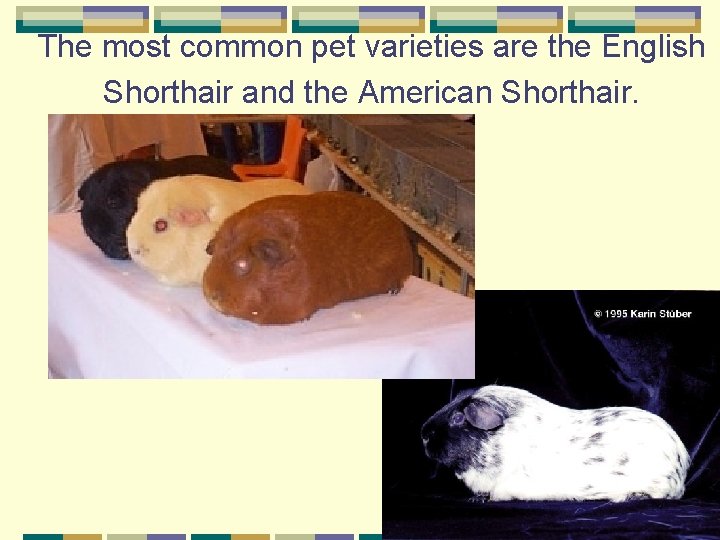
The most common pet varieties are the English Shorthair and the American Shorthair.
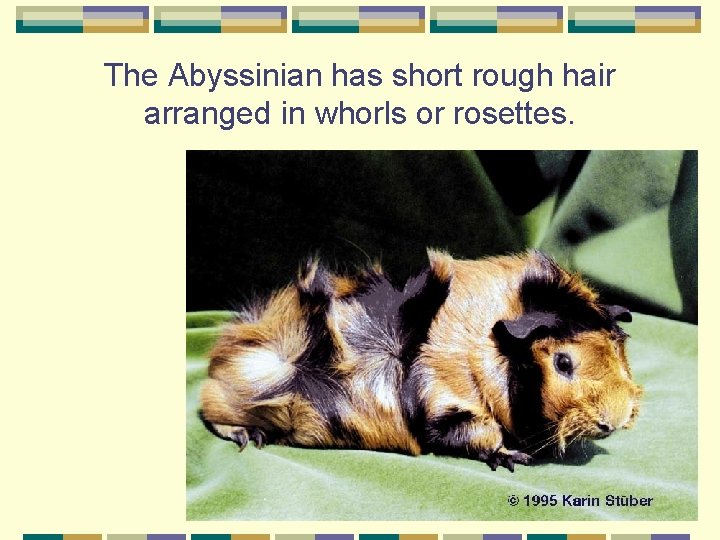
The Abyssinian has short rough hair arranged in whorls or rosettes.
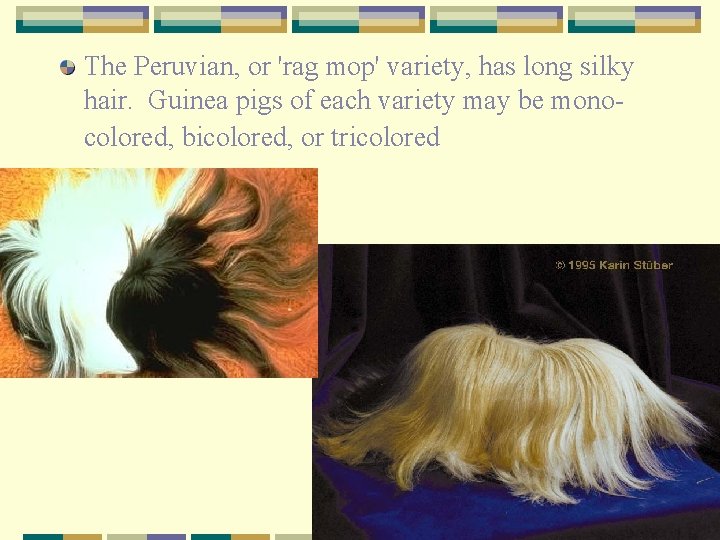
The Peruvian, or 'rag mop' variety, has long silky hair. Guinea pigs of each variety may be monocolored, bicolored, or tricolored

New varieties of guinea pigs
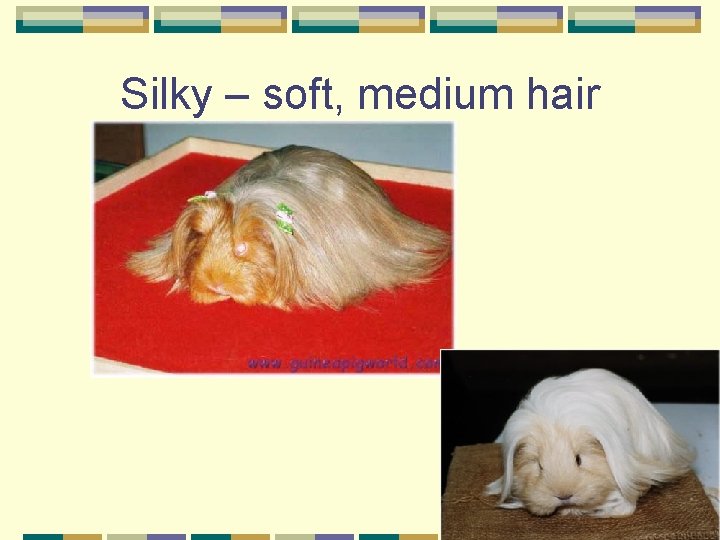
Silky – soft, medium hair
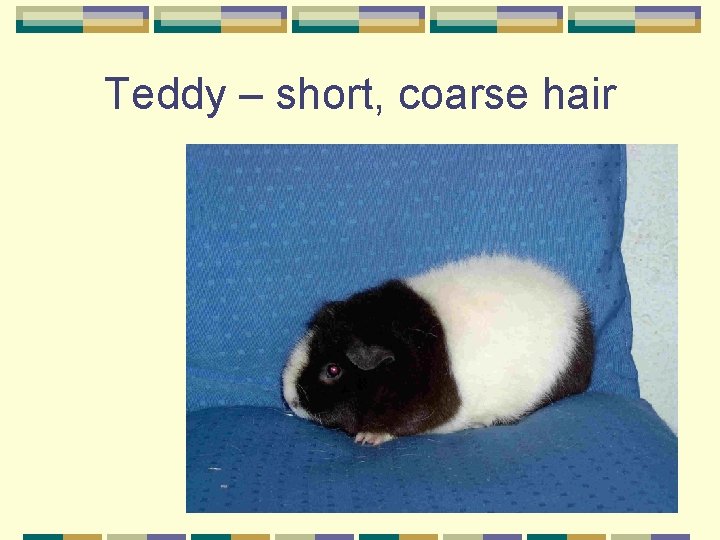
Teddy – short, coarse hair
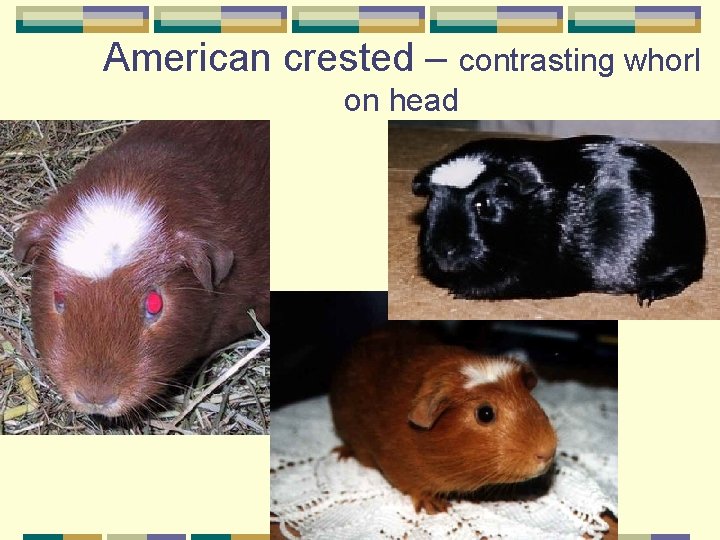
American crested – contrasting whorl on head
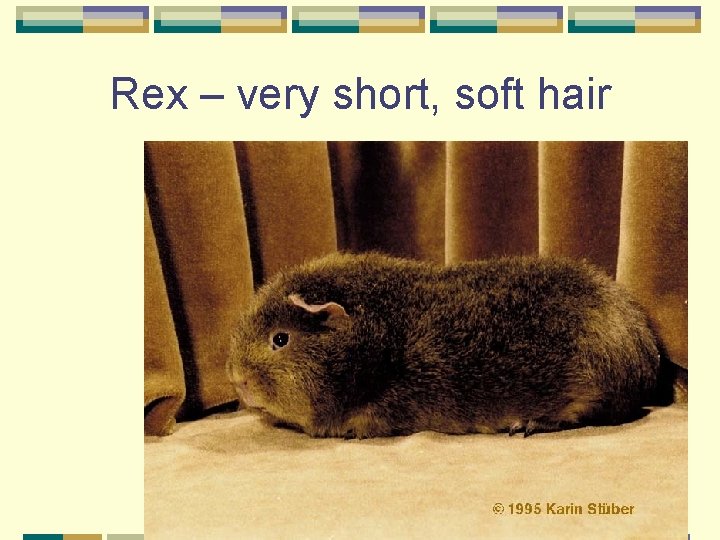
Rex – very short, soft hair
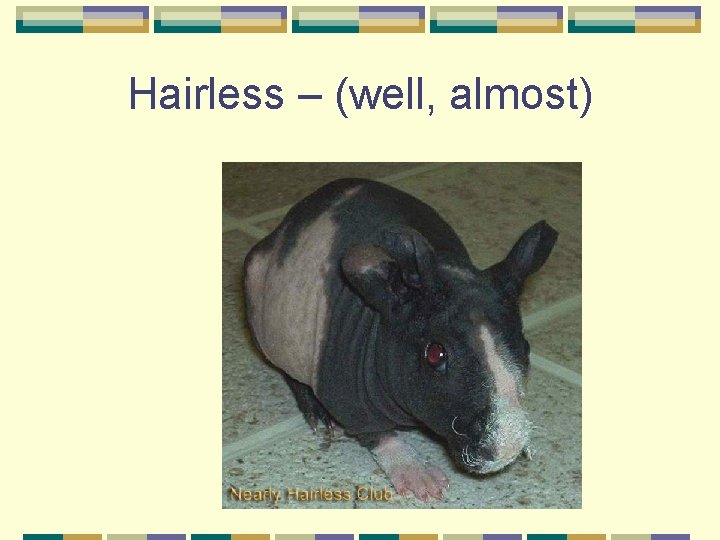
Hairless – (well, almost)
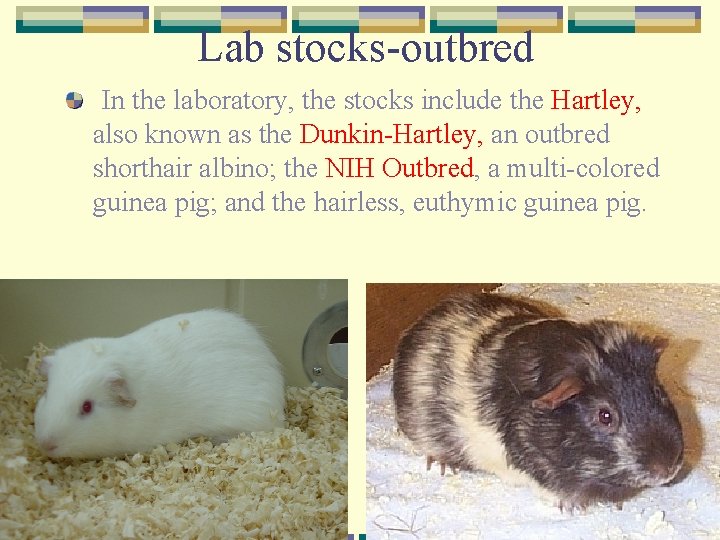
Lab stocks-outbred In the laboratory, the stocks include the Hartley, also known as the Dunkin-Hartley, an outbred shorthair albino; the NIH Outbred, a multi-colored guinea pig; and the hairless, euthymic guinea pig.
Basic Guinea Pig compact stocky body tailless diurnal – actually ❖short naps night and day sebaceous marking glands - rump open rooted teeth
Additional characteristics vocalize – at least 11 sounds http: //www. guineapigs-online. com/html/piggiesounds. html good swimmers seldom jump rarely bite or scratch need frequent handling lifespan – 4 - 5 years Group housed guinea pigs establish male-dominated hierarchies. This is often expressed by circling and vocalizations.
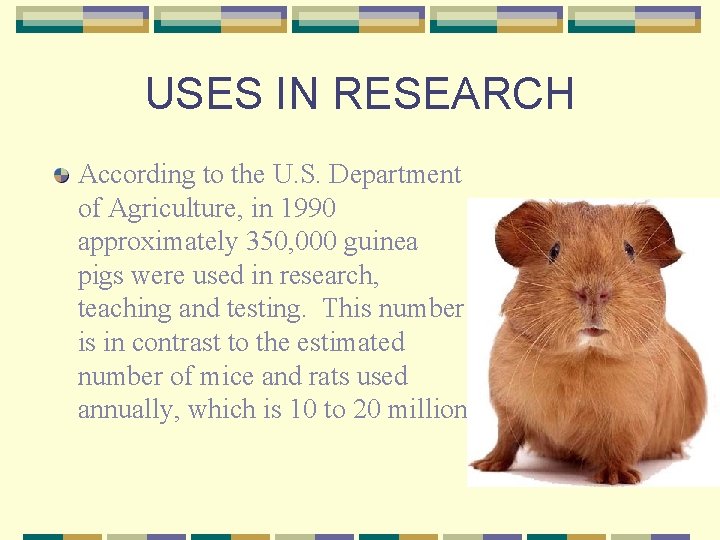
USES IN RESEARCH According to the U. S. Department of Agriculture, in 1990 approximately 350, 000 guinea pigs were used in research, teaching and testing. This number is in contrast to the estimated number of mice and rats used annually, which is 10 to 20 million.
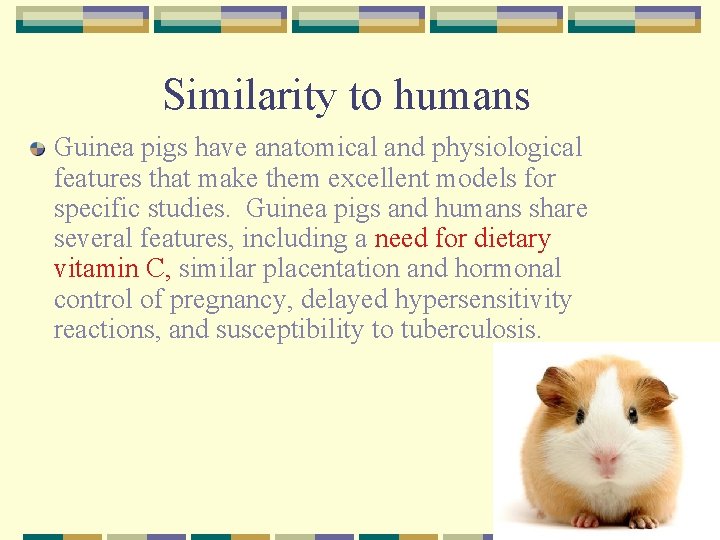
Similarity to humans Guinea pigs have anatomical and physiological features that make them excellent models for specific studies. Guinea pigs and humans share several features, including a need for dietary vitamin C, similar placentation and hormonal control of pregnancy, delayed hypersensitivity reactions, and susceptibility to tuberculosis.
Other research uses of the guinea pig include immunological studies, for which they are a source of serum complement; auditory research; teratology and toxicity research; The guinea pig is also being used as a model for spontaneous diabetes mellitus
- Slides: 23