
Guillain Barr Syndrome and the influenza vaccine Ted
Guillain Barré Syndrome and the influenza vaccine Ted M. Burns, MD Associate Professor, Neurology University of Virginia Orly Avitzur, MD Associate Professor, Neurology New York Medical College
Learning Objectives Upon completion of participation, participants will be able to: • Discuss the clinical features of GBS, its pathogenesis and treatment options • Be aware of prior associations between GBS and influenza vaccines • Know when and how to report to VAERS • Understand the risks of underreporting
Disclosures • Dr. Avitzur and Dr. Burns have nothing to disclose. Accreditation Statement • The AAN is accredited by the Accreditation Council for Continuing Medical Education to provide continuing medical education for physicians. AMA PRA Category 1 Credit • The AAN designates this educational activity for a maximum of 1 (one) AMA PRA Category 1 Credit. Physicians should only claim credit commensurate with the extent of their participation in the activity.
Outline 1. Overview of Guillain-Barre Syndrome (GBS) 2. Influenza vaccine and GBS 3. VAERS
Outline 1. Overview of Guillain-Barre Syndrome (GBS) 2. Influenza vaccine and GBS 3. VAERS
Clinical features – classic GBS Motor > sensory polyradiculoneuropathy Weakness 2. Positive neuropathic sensory symptoms 1. – tingling, pain Areflexia (or hyporeflexia) 4. Diaphragmatic and cranial nerve weakness ~ 50% 5. Autonomic involvement > 50% 3. • Acute-to-subacute onset § § Nadir within 4 weeks Monophasic illness Seminars Neurol 2008; 28: 152 -167
Clinical features – classic GBS Motor > sensory polyradiculoneuropathy Weakness 2. Positive neuropathic sensory symptoms 1. – tingling, pain Areflexia (or hyporeflexia) 4. Diaphragmatic and cranial nerve weakness ~ 50% 5. Autonomic involvement > 50% 3. • Acute-to-subacute onset § § Nadir within 4 weeks Monophasic illness Seminars Neurol 2008; 28: 152 -167
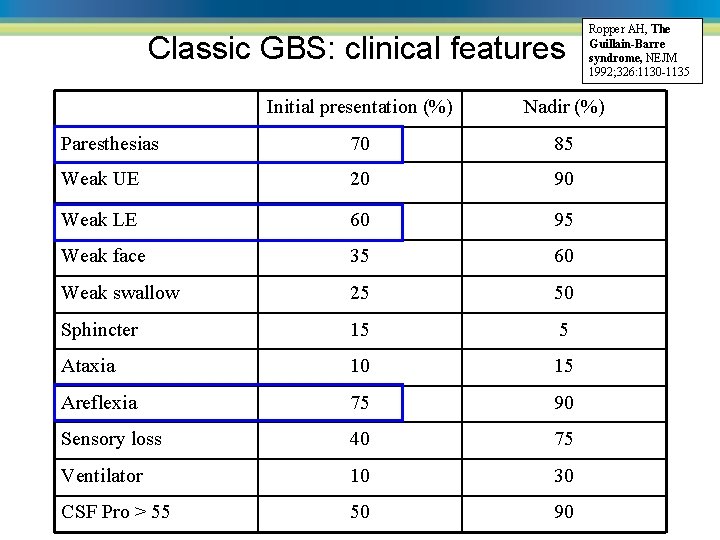
Classic GBS: clinical features Ropper AH, The Guillain-Barre syndrome, NEJM 1992; 326: 1130 -1135 Initial presentation (%) Nadir (%) Paresthesias 70 85 Weak UE 20 90 Weak LE 60 95 Weak face 35 60 Weak swallow 25 50 Sphincter 15 5 Ataxia 10 15 Areflexia 75 90 Sensory loss 40 75 Ventilator 10 30 CSF Pro > 55 50 90
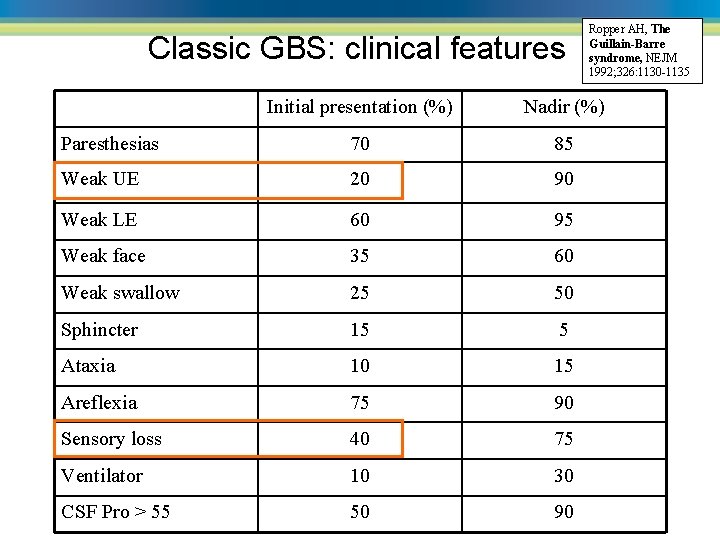
Classic GBS: clinical features Ropper AH, The Guillain-Barre syndrome, NEJM 1992; 326: 1130 -1135 Initial presentation (%) Nadir (%) Paresthesias 70 85 Weak UE 20 90 Weak LE 60 95 Weak face 35 60 Weak swallow 25 50 Sphincter 15 5 Ataxia 10 15 Areflexia 75 90 Sensory loss 40 75 Ventilator 10 30 CSF Pro > 55 50 90
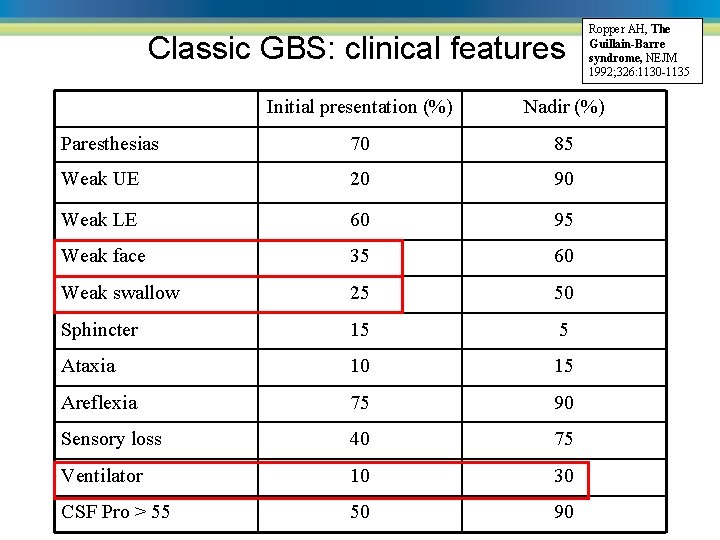
Classic GBS: clinical features Ropper AH, The Guillain-Barre syndrome, NEJM 1992; 326: 1130 -1135 Initial presentation (%) Nadir (%) Paresthesias 70 85 Weak UE 20 90 Weak LE 60 95 Weak face 35 60 Weak swallow 25 50 Sphincter 15 5 Ataxia 10 15 Areflexia 75 90 Sensory loss 40 75 Ventilator 10 30 CSF Pro > 55 50 90
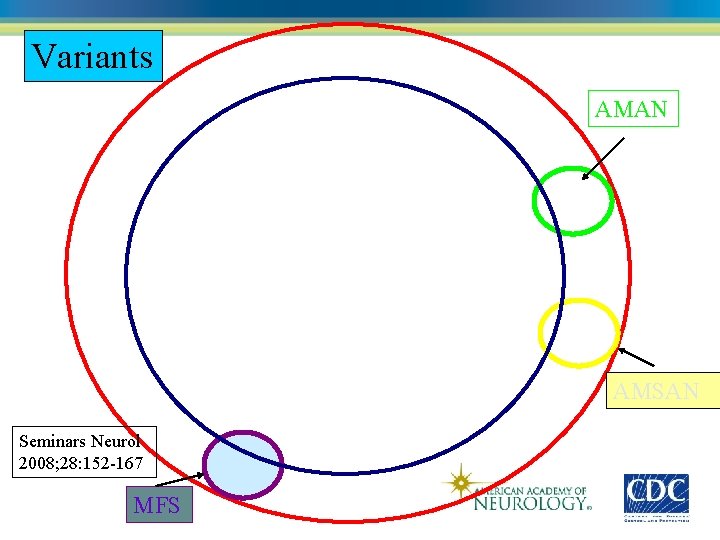
Variants AMAN AMSAN Seminars Neurol 2008; 28: 152 -167 MFS
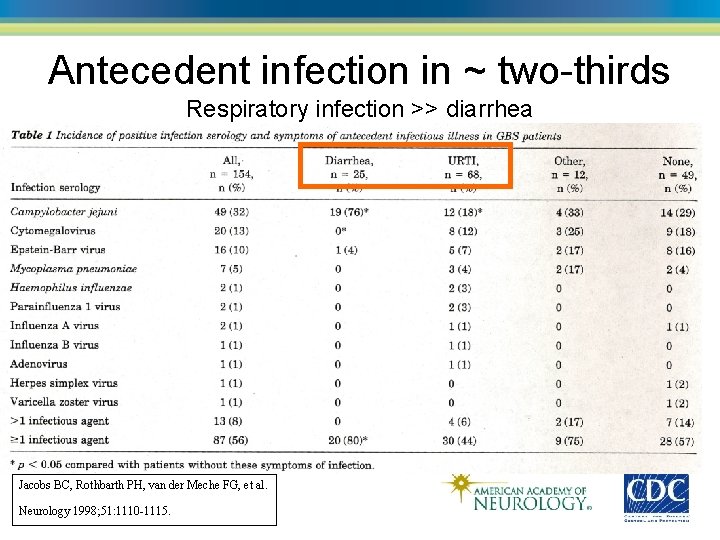
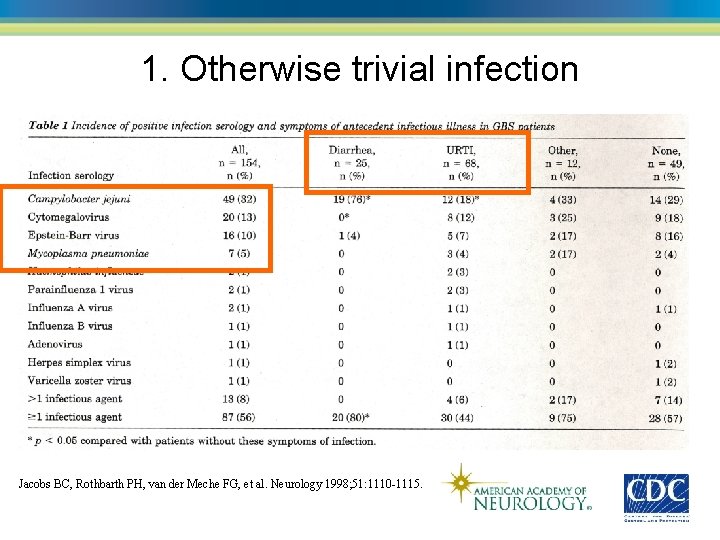
Antecedent infection in ~ two-thirds Respiratory infection >> diarrhea Jacobs BC, Rothbarth PH, van der Meche FG, et al. Neurology 1998; 51: 1110 -1115.
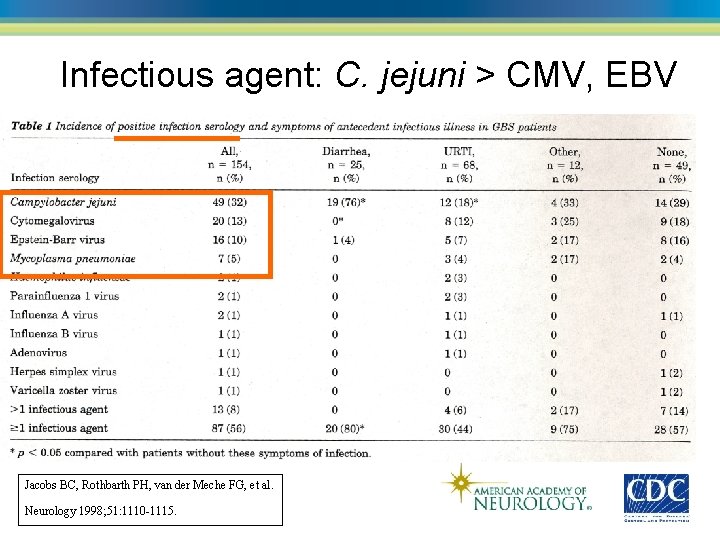
Infectious agent: C. jejuni > CMV, EBV Jacobs BC, Rothbarth PH, van der Meche FG, et al. Neurology 1998; 51: 1110 -1115.
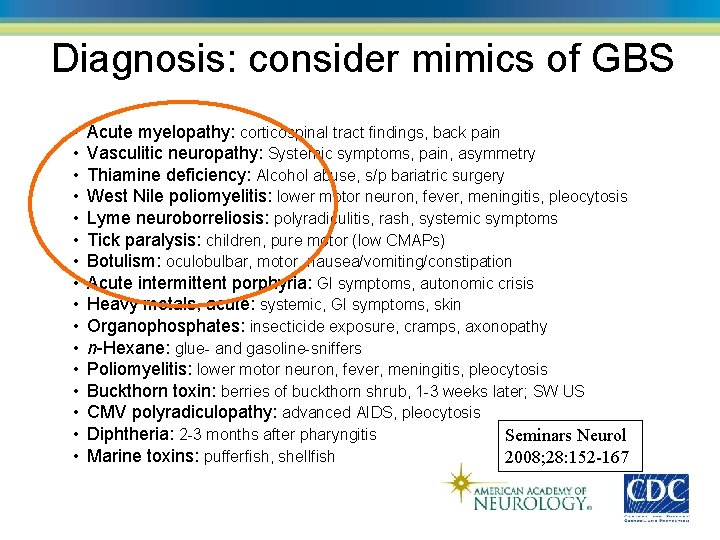
Diagnosis: consider mimics of GBS • • • • Acute myelopathy: corticospinal tract findings, back pain Vasculitic neuropathy: Systemic symptoms, pain, asymmetry Thiamine deficiency: Alcohol abuse, s/p bariatric surgery West Nile poliomyelitis: lower motor neuron, fever, meningitis, pleocytosis Lyme neuroborreliosis: polyradiculitis, rash, systemic symptoms Tick paralysis: children, pure motor (low CMAPs) Botulism: oculobulbar, motor, nausea/vomiting/constipation Acute intermittent porphyria: GI symptoms, autonomic crisis Heavy metals, acute: systemic, GI symptoms, skin Organophosphates: insecticide exposure, cramps, axonopathy n-Hexane: glue- and gasoline-sniffers Poliomyelitis: lower motor neuron, fever, meningitis, pleocytosis Buckthorn toxin: berries of buckthorn shrub, 1 -3 weeks later; SW US CMV polyradiculopathy: advanced AIDS, pleocytosis Diphtheria: 2 -3 months after pharyngitis Seminars Neurol Marine toxins: pufferfish, shellfish 2008; 28: 152 -167
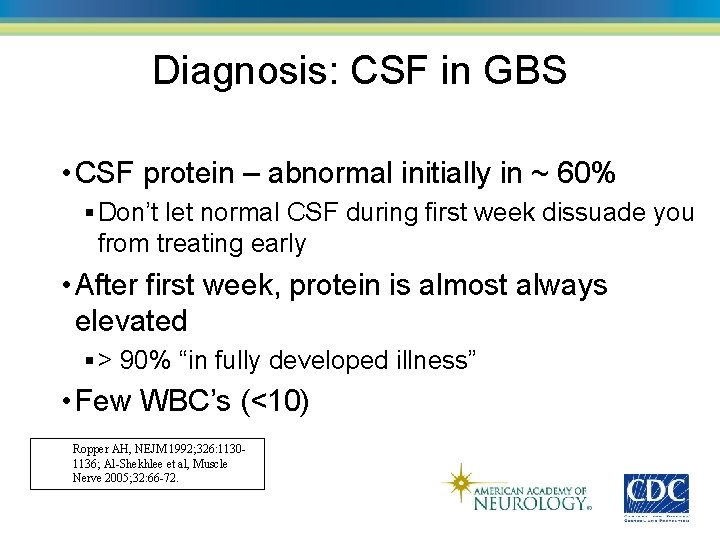
Diagnosis: CSF in GBS • CSF protein – abnormal initially in ~ 60% § Don’t let normal CSF during first week dissuade you from treating early • After first week, protein is almost always elevated § > 90% “in fully developed illness” • Few WBC’s (<10) Ropper AH, NEJM 1992; 326: 11301136; Al-Shekhlee et al, Muscle Nerve 2005; 32: 66 -72.
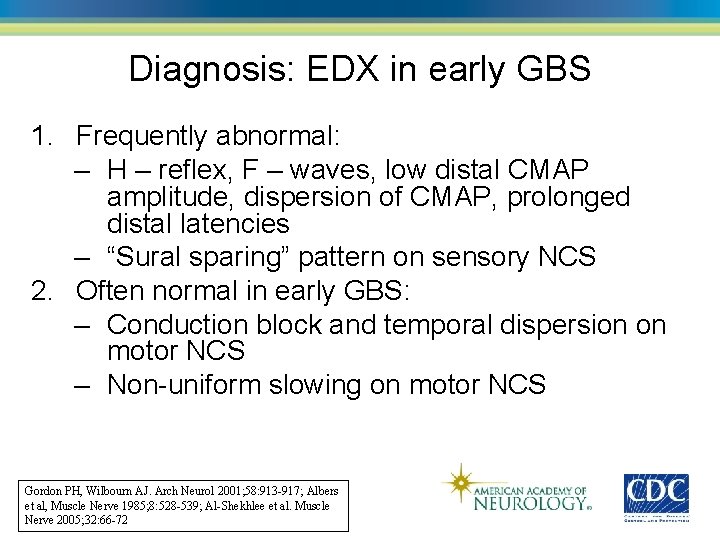
Diagnosis: EDX in early GBS 1. Frequently abnormal: – H – reflex, F – waves, low distal CMAP amplitude, dispersion of CMAP, prolonged distal latencies – “Sural sparing” pattern on sensory NCS 2. Often normal in early GBS: – Conduction block and temporal dispersion on motor NCS – Non-uniform slowing on motor NCS Gordon PH, Wilbourn AJ. Arch Neurol 2001; 58: 913 -917; Albers et al, Muscle Nerve 1985; 8: 528 -539; Al-Shekhlee et al. Muscle Nerve 2005; 32: 66 -72
Pathogenic events of early GBS 1. Otherwise trivial infection
1. Otherwise trivial infection Jacobs BC, Rothbarth PH, van der Meche FG, et al. Neurology 1998; 51: 1110 -1115.
Pathogenic events of early GBS 1. Otherwise trivial infection 2. Molecular mimicry with humoral response
Pathogenic events of early GBS 1. Otherwise trivial infection 2. Molecular mimicry with humoral response 3. Complement activation • • MAC damages Schwann cell myelin MAC damages terminal axons 4. Macrophage-mediated myelin stripping
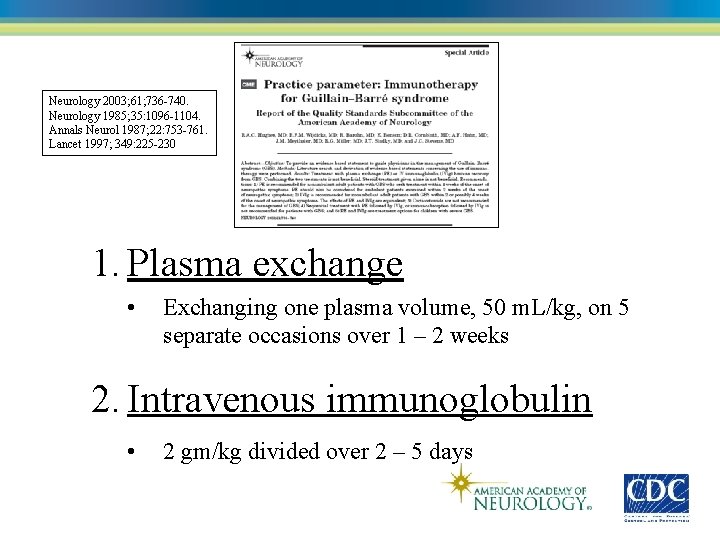
Neurology 2003; 61; 736 -740. Neurology 1985; 35: 1096 -1104. Annals Neurol 1987; 22: 753 -761. Lancet 1997; 349: 225 -230 1. Plasma exchange • Exchanging one plasma volume, 50 m. L/kg, on 5 separate occasions over 1 – 2 weeks 2. Intravenous immunoglobulin • 2 gm/kg divided over 2 – 5 days
Immunotherapy: additional considerations 1. Duration of disease • ~ efficacy demonstrated in RCTs in first ~ 4 weeks of illness 2. Severity of disease • Most trials show efficacy for non-ambulating patients Seminars Neurol 3. Temporal evolution • 2008; 28: 152 -167 i. e. how active is it? i. e. what will tomorrow bring? – Vital capacity, walking status
Remember supportive care 1. 2. 3. 4. 5. Mechanical ventilation Dysautonomia DVT prophylaxis Pain management Issues following acute care hospitalization Rehabilitation 2. Persistent disability and fatigue 1. Seminars Neurol 2008; 28: 152 -167
Outline 1. Overview of Guillain-Barre Syndrome (GBS) 2. Influenza vaccine and GBS 3. VAERS
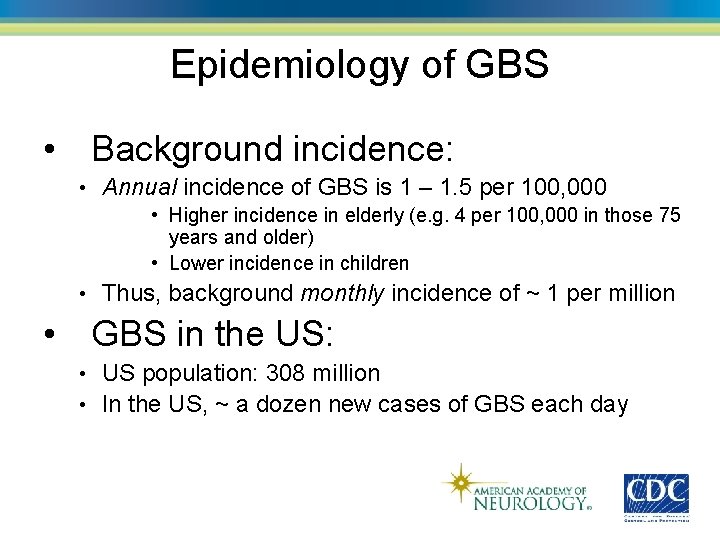
Epidemiology of GBS • Background incidence: • Annual incidence of GBS is 1 – 1. 5 per 100, 000 • Higher incidence in elderly (e. g. 4 per 100, 000 in those 75 years and older) • Lower incidence in children • Thus, background monthly incidence of ~ 1 per million • GBS in the US: • US population: 308 million • In the US, ~ a dozen new cases of GBS each day
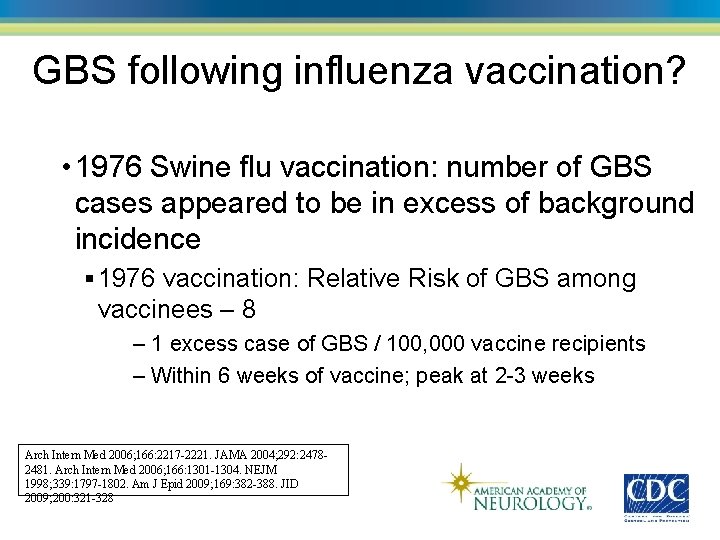
GBS following influenza vaccination? • 1976 Swine flu vaccination: number of GBS cases appeared to be in excess of background incidence § 1976 vaccination: Relative Risk of GBS among vaccinees – 8 – 1 excess case of GBS / 100, 000 vaccine recipients – Within 6 weeks of vaccine; peak at 2 -3 weeks Arch Intern Med 2006; 166: 2217 -2221. JAMA 2004; 292: 24782481. Arch Intern Med 2006; 166: 1301 -1304. NEJM 1998; 339: 1797 -1802. Am J Epid 2009; 169: 382 -388. JID 2009; 200: 321 -328
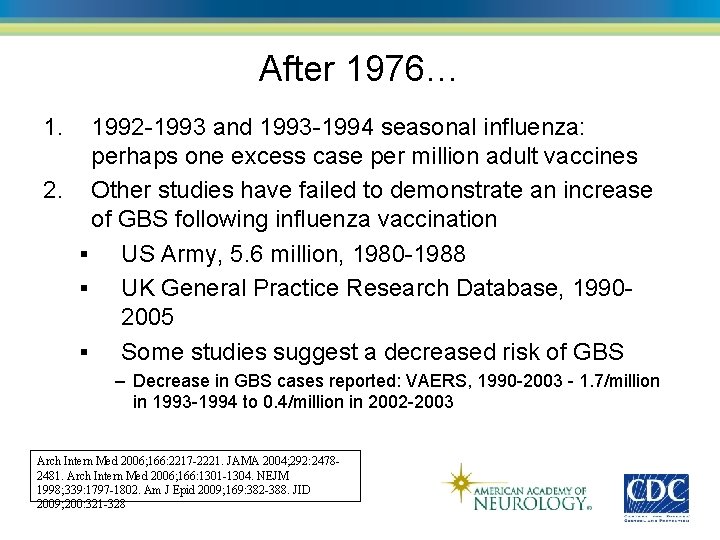
After 1976… 1. 1992 -1993 and 1993 -1994 seasonal influenza: perhaps one excess case per million adult vaccines 2. Other studies have failed to demonstrate an increase of GBS following influenza vaccination § US Army, 5. 6 million, 1980 -1988 § UK General Practice Research Database, 19902005 § Some studies suggest a decreased risk of GBS – Decrease in GBS cases reported: VAERS, 1990 -2003 - 1. 7/million in 1993 -1994 to 0. 4/million in 2002 -2003 Arch Intern Med 2006; 166: 2217 -2221. JAMA 2004; 292: 24782481. Arch Intern Med 2006; 166: 1301 -1304. NEJM 1998; 339: 1797 -1802. Am J Epid 2009; 169: 382 -388. JID 2009; 200: 321 -328
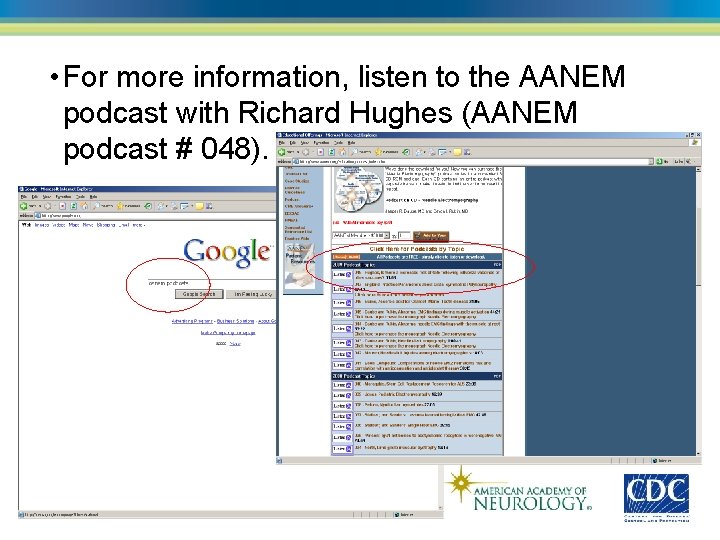
• For more information, listen to the AANEM podcast with Richard Hughes (AANEM podcast # 048).
. . . So Why The Concern? ? • Partial “swine” origin of 2009 A/H 1 N 1 virus—first since 1976 • Could vaccine against 2009 H 1 N 1 virus lead to similar increased GBS risk? § Improvements in influenza vaccine manufacturing § 2009 H 1 N 1 vaccine manufactured the same as seasonal flu vaccine • Surveillance being conducted out of “abundance of caution”
Outline 1. Overview of Guillain-Barre Syndrome (GBS) 2. Influenza vaccine and GBS 3. VAERS
VAERS: Background • US postlicensure vaccine safety surveillance § Receives voluntary reports of adverse events following immunization § Co-managed by CDC and FDA • Receives ~23, 000 reports per year (2005 -2008 average) • Data publicly available • Healthcare providers are encouraged to report clinically significant adverse events after vaccination § Anyone can submit a report to VAERS
VAERS Strengths • Can detect very rare adverse events • Generates hypotheses § Helps identify new and/or rare adverse events following immunization § Helps determine if further investigations are needed • Monitors trends of previously reported adverse events • Monitors vaccine lot safety
VAERS Limitations • Passive surveillance; therefore, risk of underreporting • Stimulated reporting due to media attention • Possibly incomplete and inaccurate data on report form • Lack of availability of denominator data § No information on number of persons vaccinated • VAERS generally cannot determine if an adverse event was coincidental or caused by a vaccine
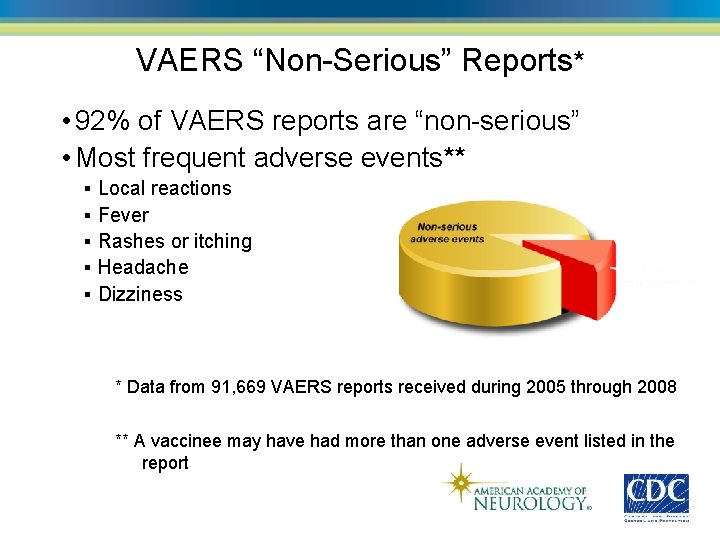
VAERS “Non-Serious” Reports* • 92% of VAERS reports are “non-serious” • Most frequent adverse events** § Local reactions § Fever § Rashes or itching § Headache § Dizziness * Data from 91, 669 VAERS reports received during 2005 through 2008 ** A vaccinee may have had more than one adverse event listed in the report
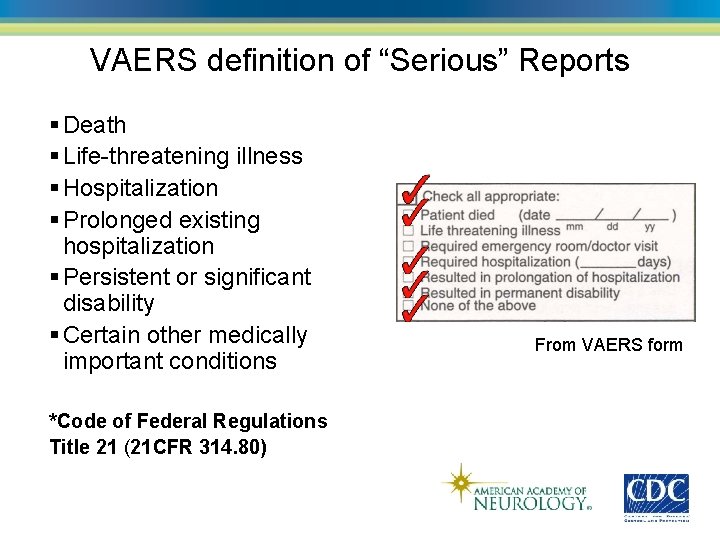
VAERS definition of “Serious” Reports § Death § Life-threatening illness § Hospitalization § Prolonged existing hospitalization § Persistent or significant disability § Certain other medically important conditions *Code of Federal Regulations Title 21 (21 CFR 314. 80) From VAERS form
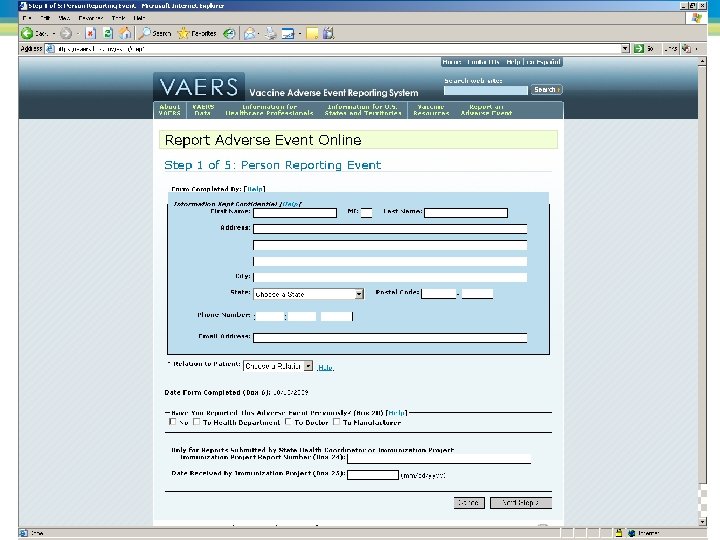
What to Report • Report any clinically significant adverse event following immunization (www. vaers. hhs. gov) –Adverse event of concern to the healthcare provider or vaccinee/caregiver or other VAERS reporter –The National Childhood Vaccine Injury Act of 1986 mandates that healthcare providers report specific adverse events that occur after immunization for some vaccines. * - *The National Childhood Vaccine Injury Act does not apply to 2009 H 1 N 1 vaccines
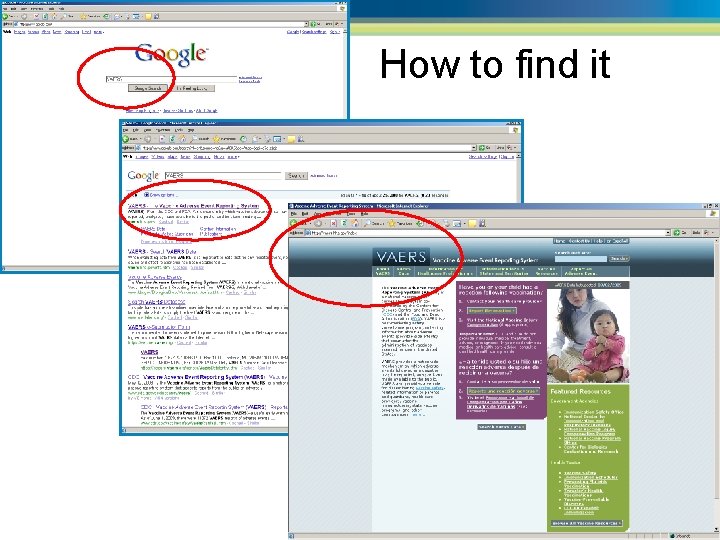
How to find it
Form, if faxing
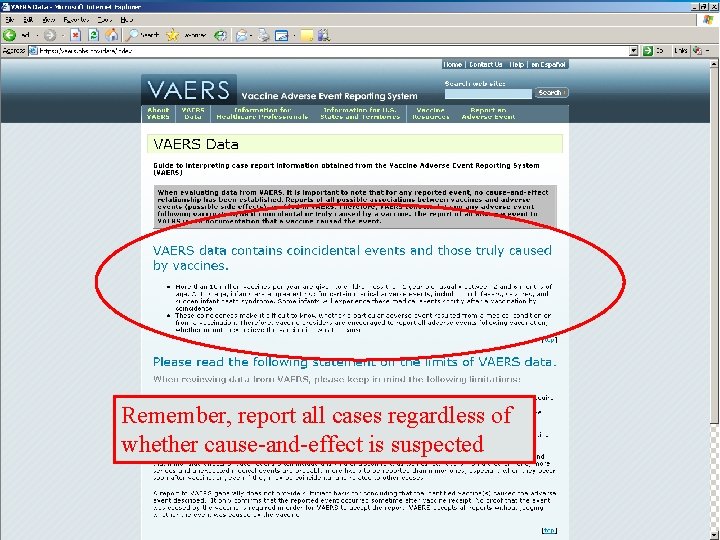
Remember, report all cases regardless of whether cause-and-effect is suspected
VAERS Follow-up • Follow-up conducted for reports of serious adverse events or for vaccines/adverse events designated for enhanced surveillance • Letter sent to reporters to check recovery status for all reports with “no” or “unknown” recovery listed on initial VAERS form (60 days and 1 year)
Analysis of 2009 H 1 N 1 VAERS reports • CDC and FDA have primary responsibility for analysis • Assess for signals for new or unexpected adverse events of concern • Review individual reports for serious adverse events § Additional information available from follow-up medical records and autopsy reports
Emerging Infections Program • CDC is engaging in active surveillance for GBS in 10 Emerging Infections Program (EIP) states § Collecting ALL new GBS cases, regardless of previous vaccination • Surveillance Officers for each of the 10 EIP areas of surveillance will be in contact with neurologists in those areas § Physicians are strongly encouraged to take these calls/read these emails • Some states may have additional mandated reporting requirements § Your EIP Surveillance Officer will advise you on your local reporting requirements * Metro areas only ^ all state except NYC § California § Colorado* § Connecticut § Georgia* § Maryland § Minnesota § New Mexico § New York^ § Oregon* § Tennessee
Neurologists in EIP Sites • Few, time-limited tasks that are being requested from neurologists participating in the EIP reporting system § Each practice should identify a point of contact (POC) within their practice (either themselves, a practice manager or nurse manager) § If they have not already heard from your POC, EIP sites will be contacting that POC weekly to confirm that no new GBS cases have been diagnosed § You might be asked to answer a few brief follow-up or clarification questions on cases reported
Thank you. Questions? Comments?
- Slides: 45