
Guiding Art Experiences Stages of Art Skill Development

- Slides: 25
Guiding Art Experiences
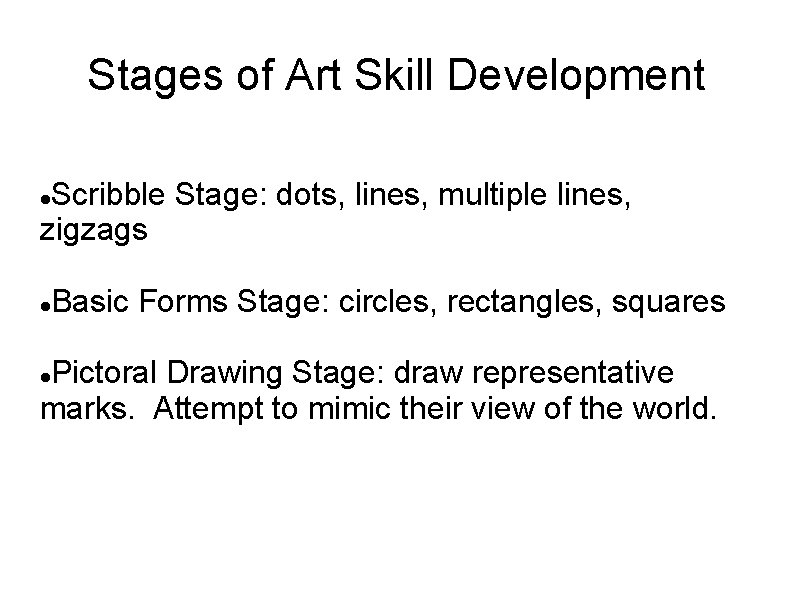
Stages of Art Skill Development Scribble Stage: dots, lines, multiple lines, zigzags Basic Forms Stage: circles, rectangles, squares Pictoral Drawing Stage: draw representative marks. Attempt to mimic their view of the world.
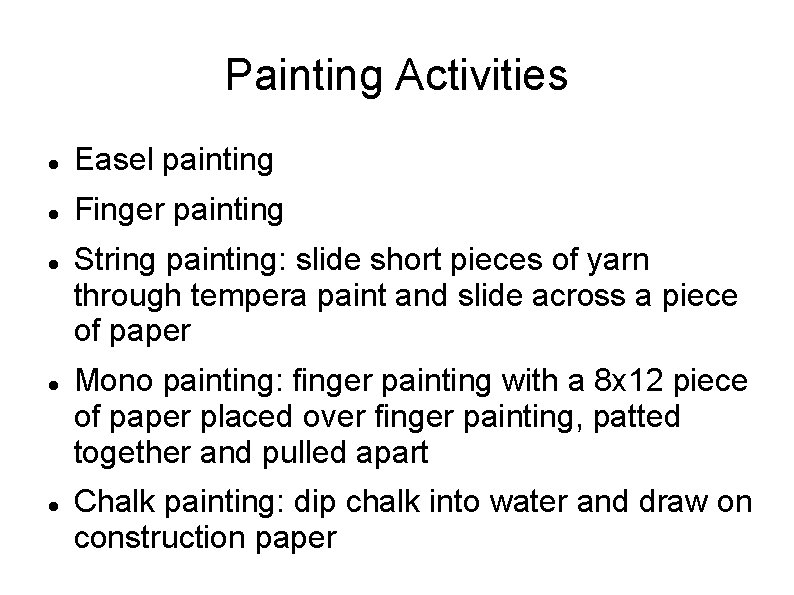
Painting Activities Easel painting Finger painting String painting: slide short pieces of yarn through tempera paint and slide across a piece of paper Mono painting: finger painting with a 8 x 12 piece of paper placed over finger painting, patted together and pulled apart Chalk painting: dip chalk into water and draw on construction paper
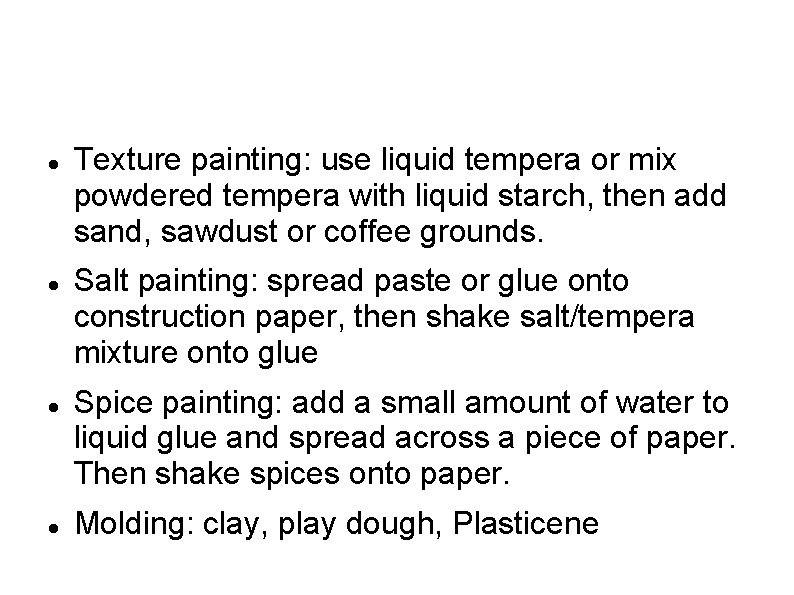
Texture painting: use liquid tempera or mix powdered tempera with liquid starch, then add sand, sawdust or coffee grounds. Salt painting: spread paste or glue onto construction paper, then shake salt/tempera mixture onto glue Spice painting: add a small amount of water to liquid glue and spread across a piece of paper. Then shake spices onto paper. Molding: clay, play dough, Plasticene
Cutting Collages Can use aluminum foil, buttons, candy wrappers, gift wrap, greeting cards, seeds, sequins, etc.
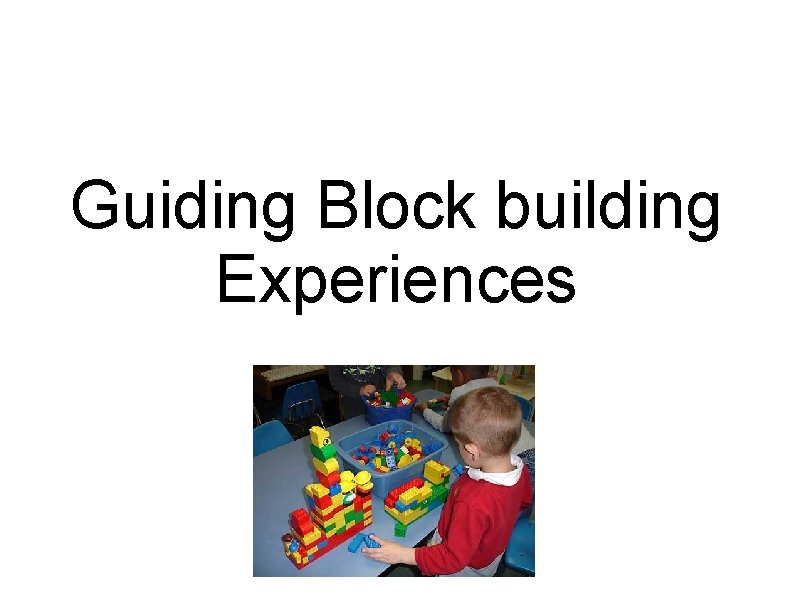
Guiding Block building Experiences
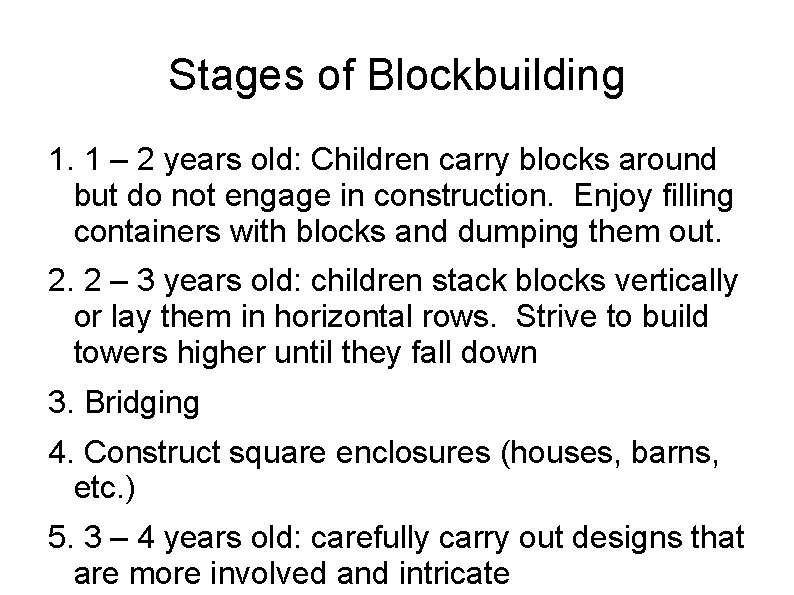
Stages of Blockbuilding 1. 1 – 2 years old: Children carry blocks around but do not engage in construction. Enjoy filling containers with blocks and dumping them out. 2. 2 – 3 years old: children stack blocks vertically or lay them in horizontal rows. Strive to build towers higher until they fall down 3. Bridging 4. Construct square enclosures (houses, barns, etc. ) 5. 3 – 4 years old: carefully carry out designs that are more involved and intricate
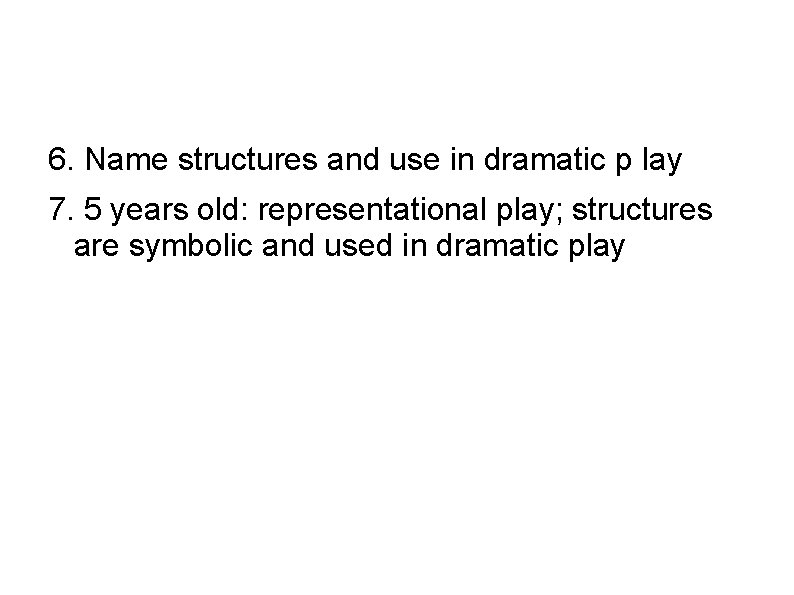
6. Name structures and use in dramatic p lay 7. 5 years old: representational play; structures are symbolic and used in dramatic play
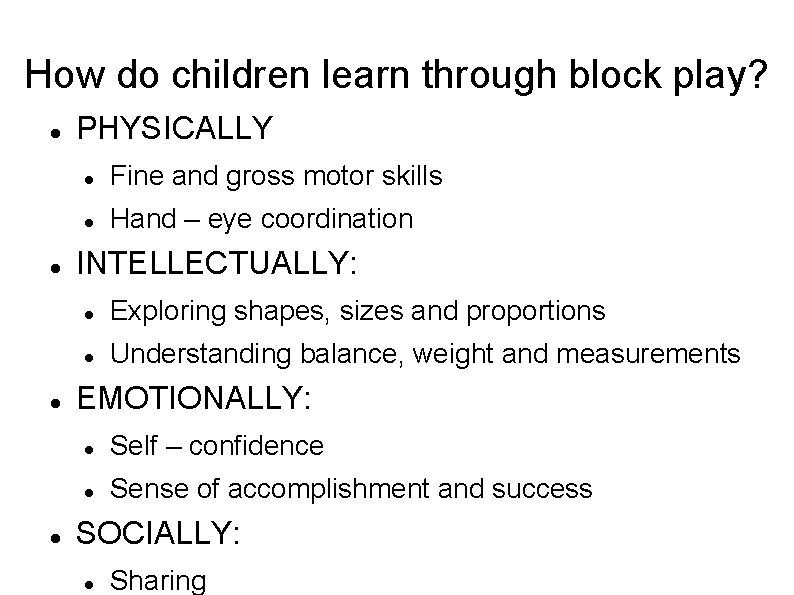
How do children learn through block play? PHYSICALLY Fine and gross motor skills Hand – eye coordination INTELLECTUALLY: Exploring shapes, sizes and proportions Understanding balance, weight and measurements EMOTIONALLY: Self – confidence Sense of accomplishment and success SOCIALLY: Sharing
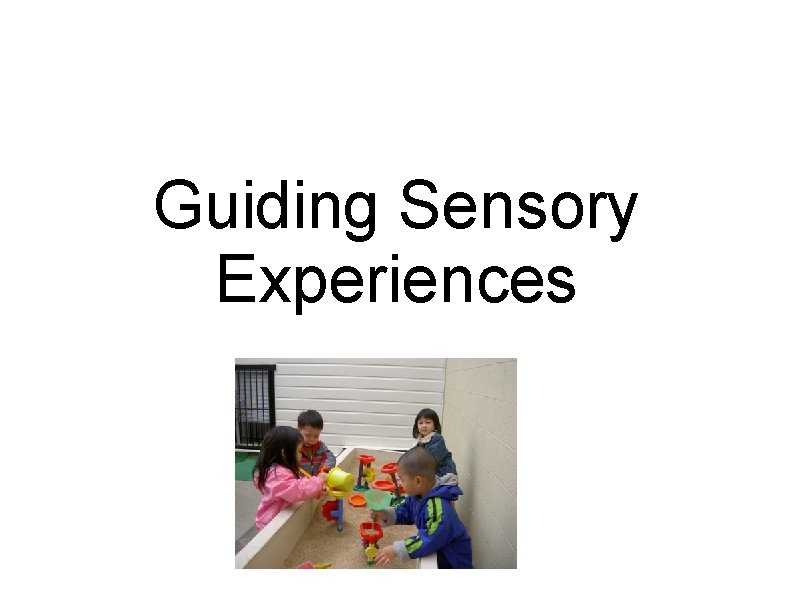
Guiding Sensory Experiences
Sand play Moist sand can be used to pack molds and cans Create sand castles Moist is preferable to dry sand because it cannot get in the eyes, shoes and hair as easily Place near water source Water play Water tables, plastic bins, laundry tubs, wading pools Promotes mathematics, social skills, problem solving skills Water cycle, chemistry (ice/snow/water)
Woodworking Hammering Use of carpentry tools
Guiding Storytelling Experiences
Why is storytelling important? Helps children understand the world in which they live Understand other people Deevelop a positive attitude toward books Develop listening skills Build correct concepts of objects and form new ideas Increase their vocabulary Associate written and spoken words
Understand that print carries meaning Develop an appreciation of printed words Learn the difference between everyday conversation and written language Understand that letters can be capital or small Develop a desire to read Learn that people read from left to right across a page
Books as a source of stories Picture books: single words or simple sentences and simple plots Storybooks: family life stories, animal stories, fairy tales Peter Rabbit, Little Bear Family life stories: contain theme of social understanding; children in these stories often have problems My Dog is Lost, Will I Have a Friend? Animal Stories: animals have some human qualities Little Brown Bear, Nothing but Cats
Fairy tales: have a theme of achievement Three Billy Goats, Cinderella, Three Little Pigs
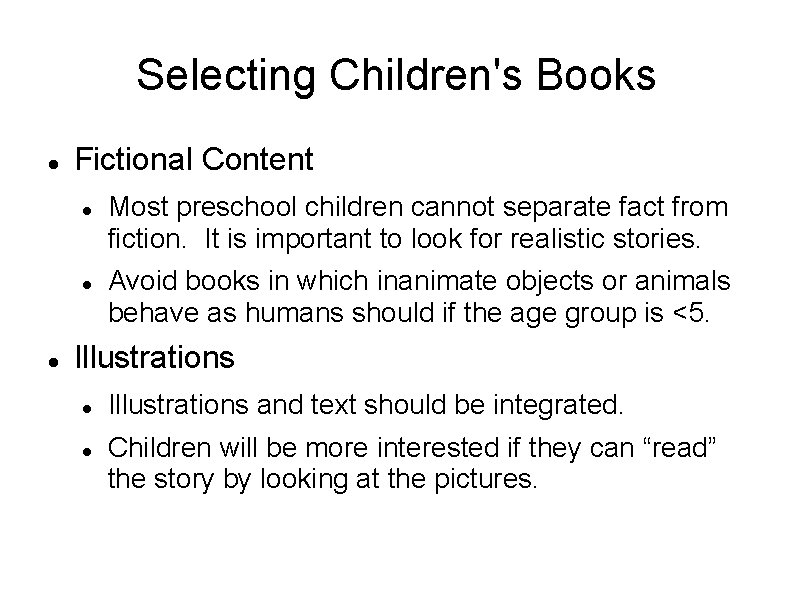
Selecting Children's Books Fictional Content Most preschool children cannot separate fact from fiction. It is important to look for realistic stories. Avoid books in which inanimate objects or animals behave as humans should if the age group is <5. Illustrations and text should be integrated. Children will be more interested if they can “read” the story by looking at the pictures.
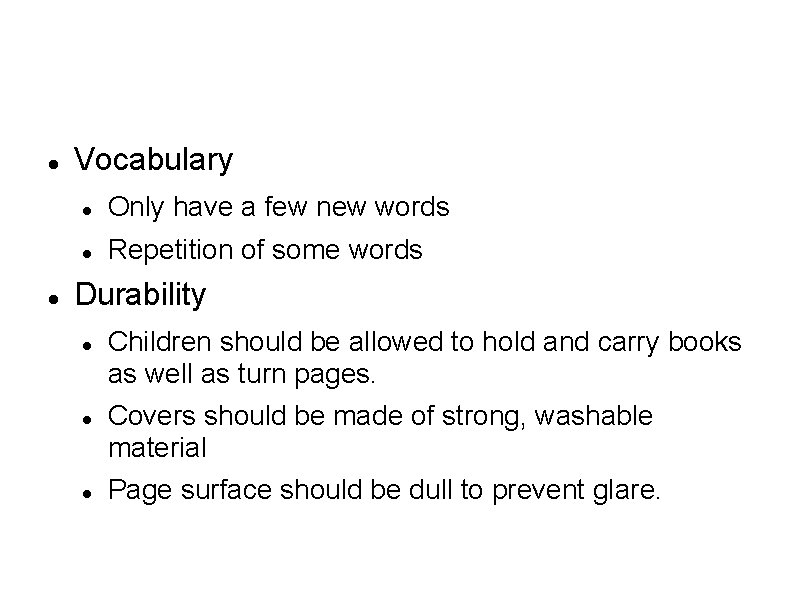
Vocabulary Only have a few new words Repetition of some words Durability Children should be allowed to hold and carry books as well as turn pages. Covers should be made of strong, washable material Page surface should be dull to prevent glare.
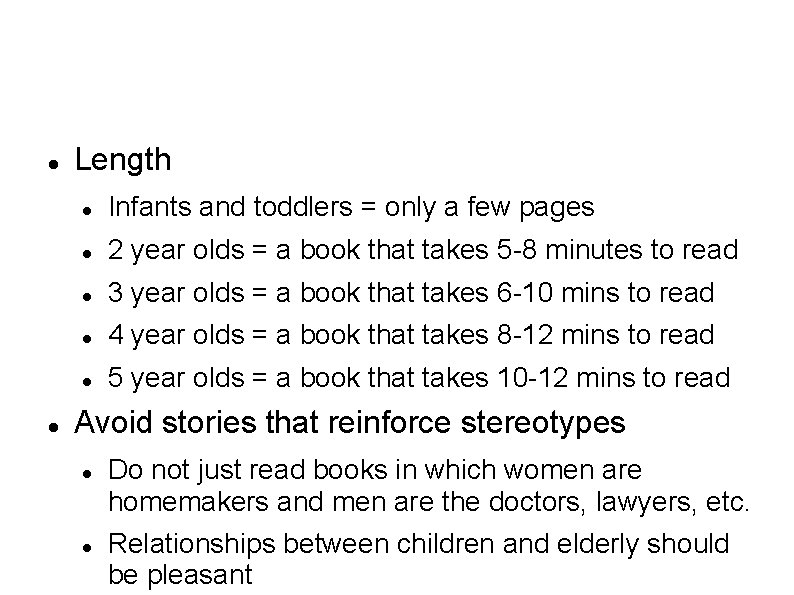
Length Infants and toddlers = only a few pages 2 year olds = a book that takes 5 -8 minutes to read 3 year olds = a book that takes 6 -10 mins to read 4 year olds = a book that takes 8 -12 mins to read 5 year olds = a book that takes 10 -12 mins to read Avoid stories that reinforce stereotypes Do not just read books in which women are homemakers and men are the doctors, lawyers, etc. Relationships between children and elderly should be pleasant
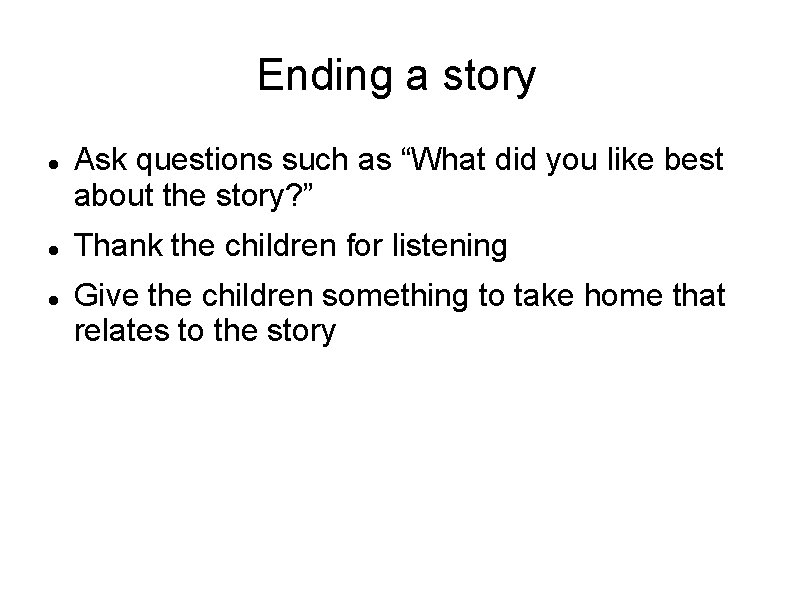
Ending a story Ask questions such as “What did you like best about the story? ” Thank the children for listening Give the children something to take home that relates to the story
Vary your storytelling Draw and tell: draw on a chalkboard as the story is being told Puppets Felt boards: uses characters and props cut of felt and placed on a felt background. Props are moved around as story is told.
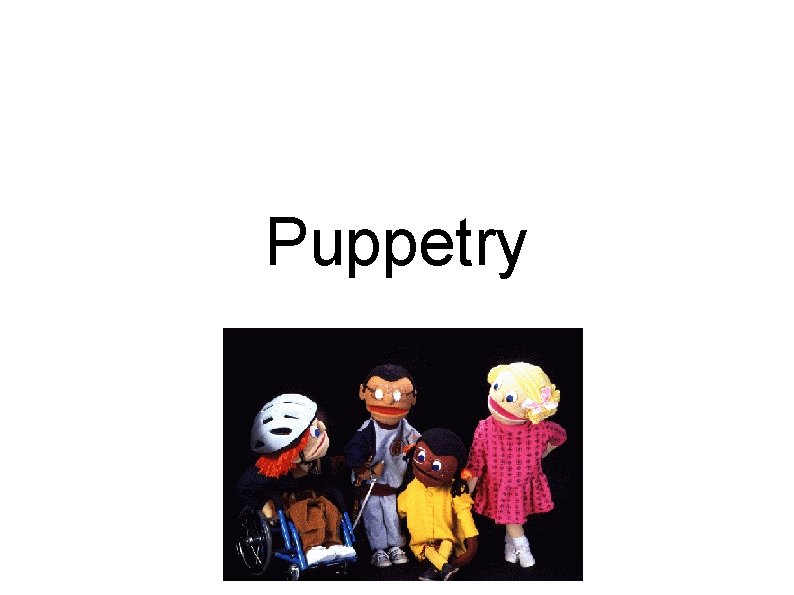
Puppetry
Types of Puppets Hand puppets Mascot puppets “Me” puppets made out of the child's own hands
Materials for making puppets Terry cloth Paper towel tubes Velvet Boxes Felt Envelopes Wooden spoons Ribbons Gloves Buttons Socks Foam balls Hats Construction paper Tongue depressors Mittens Paper bags