
Guidelines Maps and Competencies for Clinical Supervision in

- Slides: 32
Guidelines, Maps, and Competencies for Clinical Supervision in Health Service Psychology: Multicultural Supervision Diversity e Diversity BY JERRY BUCHANAN
Goals: 1) To utilize a supervisory map for training supervisees. 2) To examine a Multidimensional Ecological Comparative Framework designed for describing supervision and psychotherapy as cultural encounters. 3) To critique role plays of a Caucasian supervisor and a Latina therapist/supervisee dealing with a Latino/ Latina family. 4) To construct supervisor/therapist maps to describe and address critical issues in supervision.
Just so you know… Emic 1) I am very interested in multicultural supervision, but I do not consider myself an expert. 2) Experientially, the more I learn the less I seem to know. 3) I will examine the issues from an etic perspective, by attempting to talk about what I think matters and looking at things from outside the situation. 4) I hope to create opportunities for a dialogue with you, particularly those of you who have an emic knowledge of how things work from an insider’s perspective. 5) The most important thing I hope to share is an understanding of the attitudes that are most constructive for engaging in these exchanges in a positive way. Etic
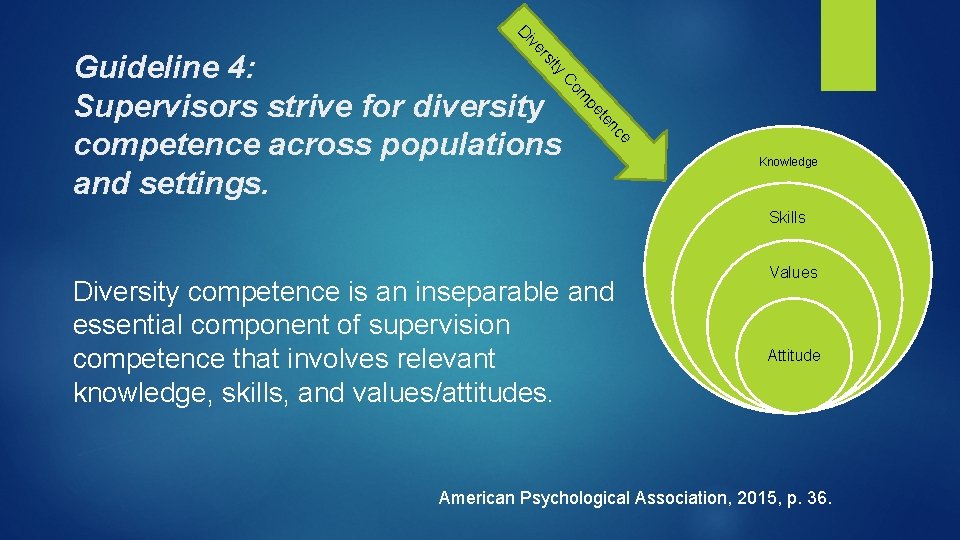
rs ve Di ity Guideline 4: Supervisors strive for diversity competence across populations and settings. m Co t pe e c en Knowledge Skills Diversity competence is an inseparable and essential component of supervision competence that involves relevant knowledge, skills, and values/attitudes. Values Attitude American Psychological Association, 2015, p. 36.
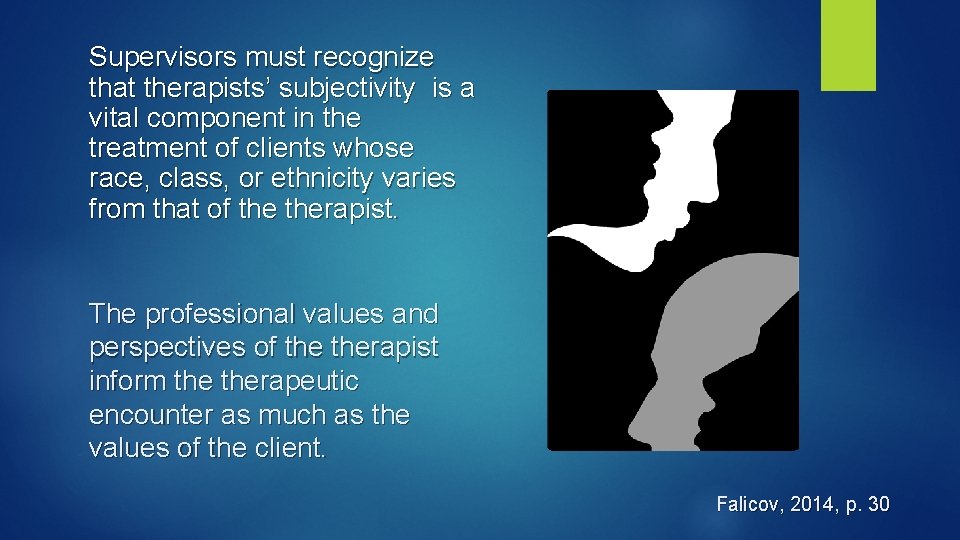
Supervisors must recognize that therapists’ subjectivity is a vital component in the treatment of clients whose race, class, or ethnicity varies from that of therapist. The professional values and perspectives of therapist inform therapeutic encounter as much as the values of the client. Falicov, 2014, p. 30
“A clinician’s level of cultural responsiveness has a direct impact on how cultural factors are addressed clinically. ” (Gallardo and Gomez, 2015, p. 174)
The therapist and supervisor must approach the clinical relevance cultural issues as a balancing of risks between two errors: of 2) Overestimating and magnifying the importance of culture at the expense of failing to recognize dysfunctional individual or family processes. 1) Underestimating the impact of culture and incorrectly attributing dysfunction to a pattern that is normative in the individual’s of family’s culture, or Falicov, 2014, p. 31
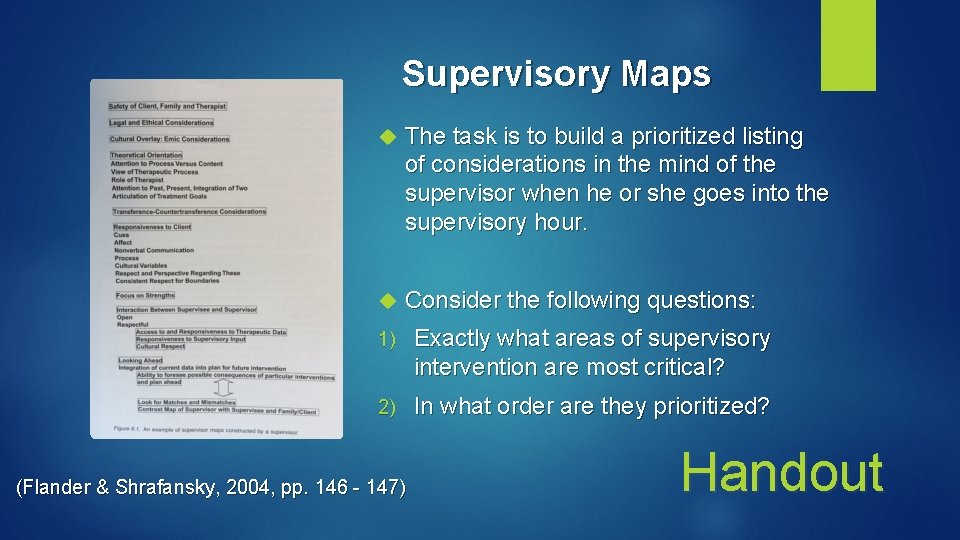
Supervisory Maps The task is to build a prioritized listing of considerations in the mind of the supervisor when he or she goes into the supervisory hour. Consider the following questions: 1) Exactly what areas of supervisory intervention are most critical? 2) In what order are they prioritized? (Flander & Shrafansky, 2004, pp. 146 - 147) Handout
Supervisee/Superisor Maps In addition, the supervisee/trainee constructs his or her own map. Then the supervisor and the supervisee compare maps to discuss discrepancies and how they affect the supervisory relationship, therapeutic relationship, and treatment outcome. (Flander & Shrafansky, 2004, pp. 146 - 147)
Contrasting priorities may exist for issues of safety, pragmatics, ethics, and legalities, or many other considerations, many of which may be seen through the prism of diversity. Highlighting and discussing personal views adds perspective and enhances communication. These discussions are supplemental to discussions in the dimensions of culture using the frameworks of Falicov and Hays. This technique is also useful in assisting a problematic trainee to address the substantial differences in approach to a particular client’s situation. (Flander & Shrafansky, 2004, pp. 146 - 147)
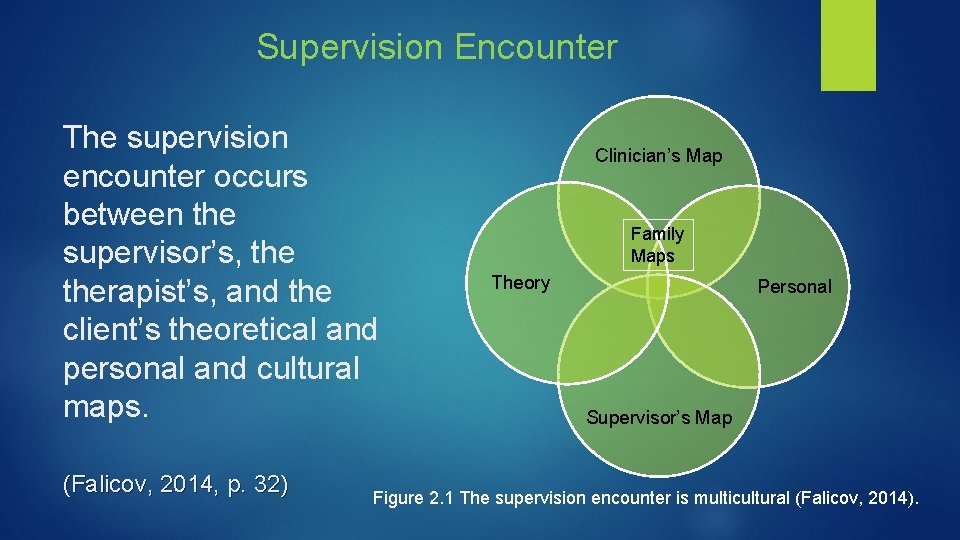
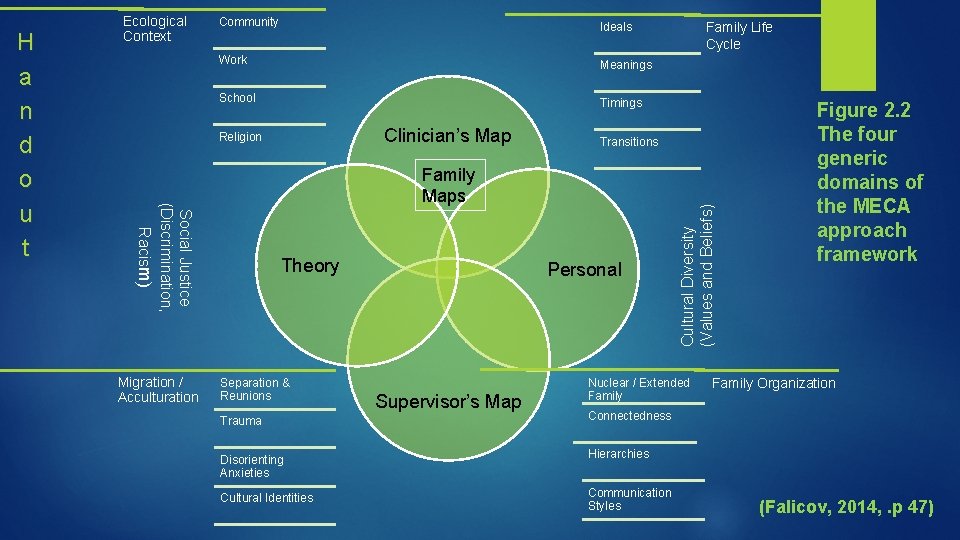
Supervision Encounter The supervision encounter occurs between the supervisor’s, therapist’s, and the client’s theoretical and personal and cultural maps. (Falicov, 2014, p. 32) Clinician’s Map Family Maps Theory Personal Supervisor’s Map Figure 2. 1 The supervision encounter is multicultural (Falicov, 2014).
Multidimensional Ecological Comparative Framework 1) Contains a comprehensive definition of culture 2) Offers a method for making meaningful comparisons 3) Makes room for multiple and evolving cultural narratives MECA Framework (Falicov, 2014, p. 38)
The definition of culture is multidimensional and complex “Culture is those sets of shared world views, meanings, and adaptive behaviors derived from simultaneous membership and participation in a variety of contexts, such as language; rural, urban, or suburban setting; race, ethnicity, and socioeconomic status; age, gender, sexual orientation, religion, disability, nationality; employment, education and occupation, political ideology, stage of migration/acculturation, partaking of similar historical moments and ideologies. ” (Falicov, 2014, p. 38)
Cultural Humility Cultural humility, more accurately than the concept of cultural competence, captures the reality that the client is uniquely qualified to educate therapist about his or her multiculturalism, that is his or her membership in multiple cultural groups and life stressors, which in turn affects treatment priorities. (Falicov, 2014, p. 33. ) Emic knowledge
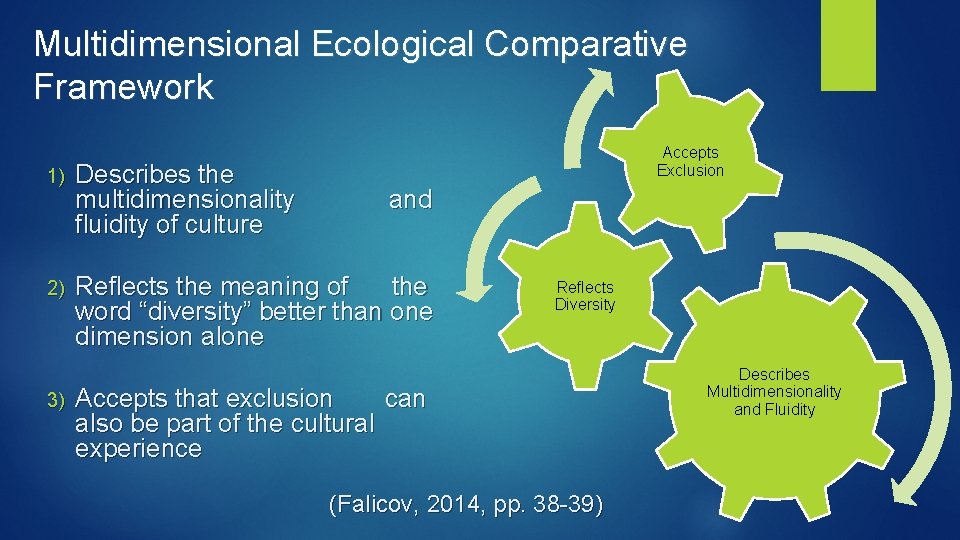
Multidimensional Ecological Comparative Framework Accepts Exclusion 1) Describes the multidimensionality fluidity of culture 2) Reflects the meaning of the word “diversity” better than one dimension alone 3) and Reflects Diversity Accepts that exclusion can also be part of the cultural experience (Falicov, 2014, pp. 38 -39) Describes Multidimensionality and Fluidity
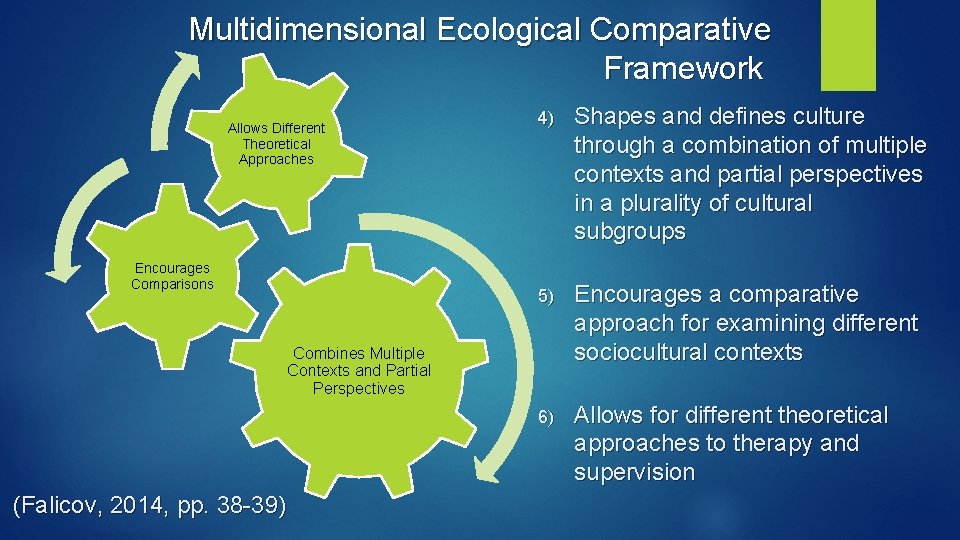
Multidimensional Ecological Comparative Framework Allows Different Theoretical Approaches Encourages Comparisons 4) Shapes and defines culture through a combination of multiple contexts and partial perspectives in a plurality of cultural subgroups 5) Encourages a comparative approach for examining different sociocultural contexts 6) Allows for different theoretical approaches to therapy and supervision Combines Multiple Contexts and Partial Perspectives (Falicov, 2014, pp. 38 -39)
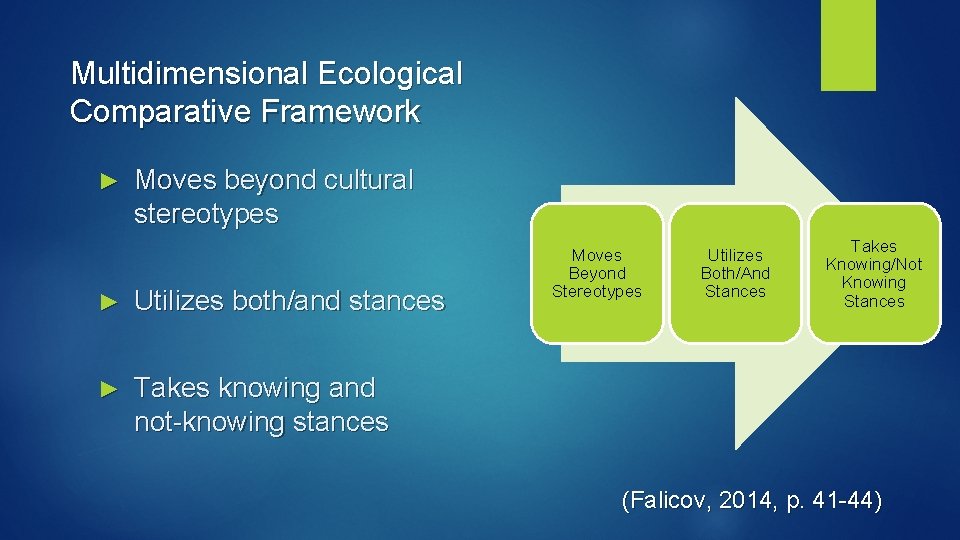
Multidimensional Ecological Comparative Framework ► Moves beyond cultural stereotypes ► Utilizes both/and stances ► Takes knowing and not-knowing stances Moves Beyond Stereotypes Utilizes Both/And Stances Takes Knowing/Not Knowing Stances (Falicov, 2014, p. 41 -44)
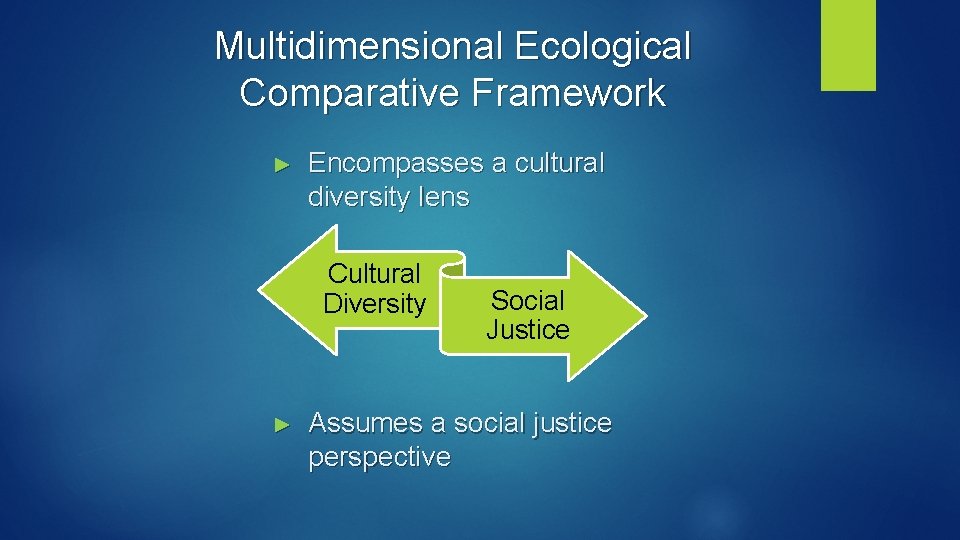
Multidimensional Ecological Comparative Framework ► Encompasses a cultural diversity lens Cultural Diversity ► Social Justice Assumes a social justice perspective
Ecological Niches and Cultural Borderlands “Each person has a culture comprising a number of collective identities - groups of belonging, participation, and identification that make up his or her ecological niche (Falicov, 2014, p. 39). “Each person’s ecological niche shares cultural borderlands, or zones of overlap of similarities and differences with others by virtue of race, ethnicity, religion, occupation, or social class (Falicov, 2014, p. 40). ”
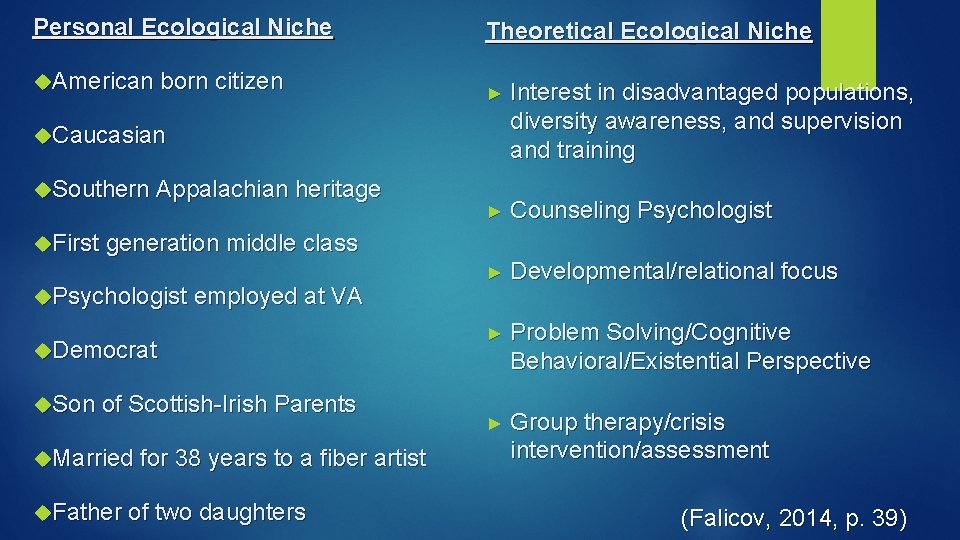
Personal Ecological Niche American born citizen Theoretical Ecological Niche ► Interest in disadvantaged populations, diversity awareness, and supervision and training ► Counseling Psychologist ► Developmental/relational focus ► Problem Solving/Cognitive Behavioral/Existential Perspective ► Group therapy/crisis intervention/assessment Caucasian Southern Appalachian heritage First generation middle class Psychologist employed at VA Democrat Son of Scottish-Irish Parents Married for 38 years to a fiber artist Father of two daughters (Falicov, 2014, p. 39)
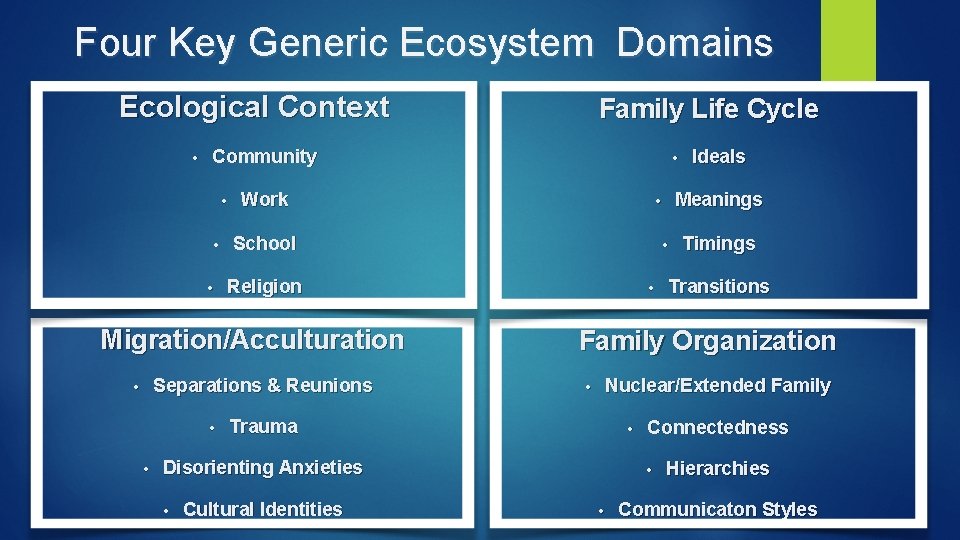
Four Key Generic Ecosystem Domains Ecological Context • Community • • • Religion • Transitions Nuclear/Extended Family • Trauma Cultural Identities Timings Family Organization • Disorienting Anxieties • Ideals Meanings • School Separations & Reunions • • Work Migration/Acculturation • Family Life Cycle Connectedness • • Hierarchies Communicaton Styles
Community Ideals Work Meanings School Timings Migration / Acculturation Transitions Family Maps Theory Separation & Reunions Personal Supervisor’s Map Family Life Cycle Cultural Diversity (Values and Beliefs) Clinician’s Map Religion Social Justice (Discrimination, Racism) H a n d o u t Ecological Context Nuclear / Extended Family Trauma Connectedness Disorienting Anxieties Hierarchies Cultural Identities Communication Styles Figure 2. 2 The four generic domains of the MECA approach framework Family Organization (Falicov, 2014, . p 47)
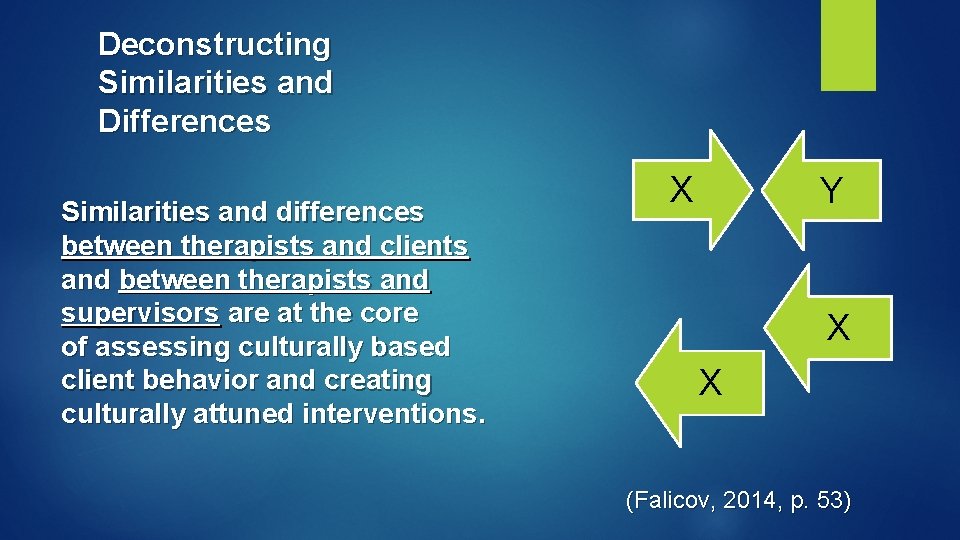
Deconstructing Similarities and Differences Similarities and differences between therapists and clients and between therapists and supervisors are at the core of assessing culturally based client behavior and creating culturally attuned interventions. X Y X X (Falicov, 2014, p. 53)
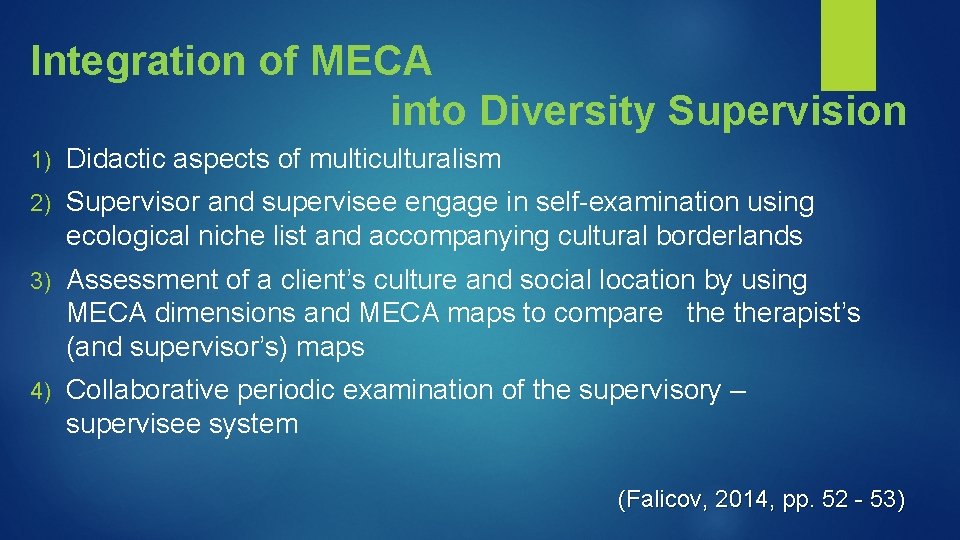
Integration of MECA into Diversity Supervision 1) Didactic aspects of multiculturalism 2) Supervisor and supervisee engage in self-examination using ecological niche list and accompanying cultural borderlands 3) Assessment of a client’s culture and social location by using MECA dimensions and MECA maps to compare therapist’s (and supervisor’s) maps 4) Collaborative periodic examination of the supervisory – supervisee system (Falicov, 2014, pp. 52 - 53)
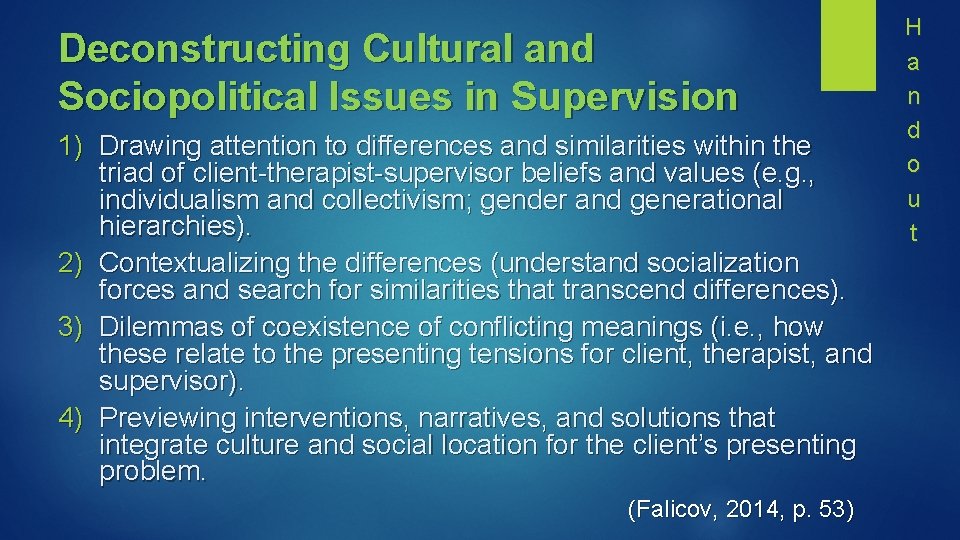
Deconstructing Cultural and Sociopolitical Issues in Supervision 1) Drawing attention to differences and similarities within the triad of client-therapist-supervisor beliefs and values (e. g. , individualism and collectivism; gender and generational hierarchies). 2) Contextualizing the differences (understand socialization forces and search for similarities that transcend differences). 3) Dilemmas of coexistence of conflicting meanings (i. e. , how these relate to the presenting tensions for client, therapist, and supervisor). 4) Previewing interventions, narratives, and solutions that integrate culture and social location for the client’s presenting problem. (Falicov, 2014, p. 53) H a n d o u t
Latino/Latina Case Study Latinos are the fastest growing racial/ethnic minority group in the U. S. In the past decade, they have increased by 43% and currently make up 16% of the total population. Based on 2011 Census data, projections suggest that Latinos will make up 25% of the total U. S. population by 2050. (Villatoro, Morales & May, 2014, p. 353)
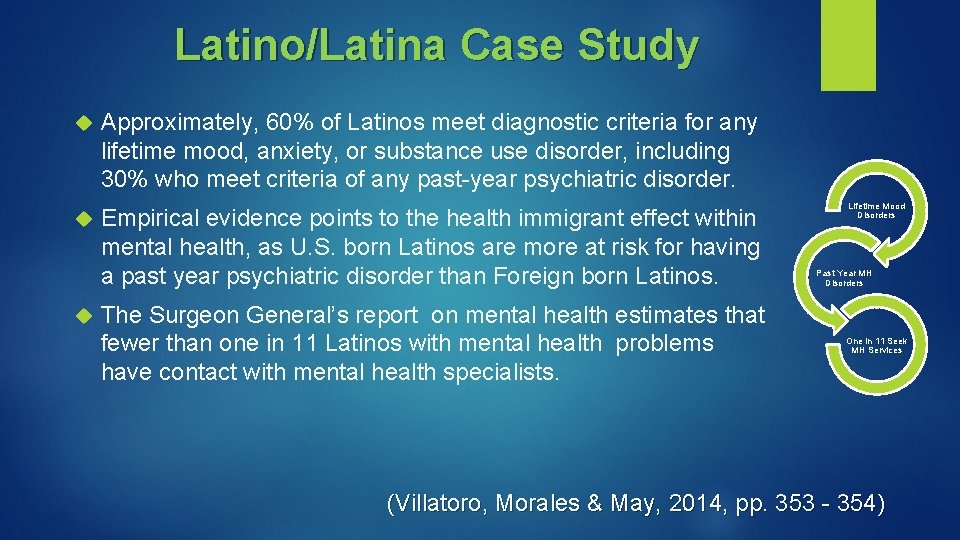
Latino/Latina Case Study Approximately, 60% of Latinos meet diagnostic criteria for any lifetime mood, anxiety, or substance use disorder, including 30% who meet criteria of any past-year psychiatric disorder. Empirical evidence points to the health immigrant effect within mental health, as U. S. born Latinos are more at risk for having a past year psychiatric disorder than Foreign born Latinos. The Surgeon General’s report on mental health estimates that fewer than one in 11 Latinos with mental health problems have contact with mental health specialists. Lifetime Mood Disorders Past Year MH Disorders One in 11 Seek MH Services (Villatoro, Morales & May, 2014, pp. 353 - 354)
Instructions Maps – Session 4 SUPERVISOR 2 SUPERVISEE / THERAPIST FAMILY Therapist Client Supervisor Create three focus groups. Break into groups of 4 -5 people. Select a recorder. Identify critical issues for supervisor / therapist / family maps and determine priority for each. Construct a supervisor / supervisee / family response for what needs to happen. Engage in interactive discussion between the 3 groups to identify major matches and mismatches.
Discussion Sit comfortably. Noticing Client/Family Breathing Supervisee/Therapist Focusing Supervisor 1 Waiting Supervisor 2 Emotional Inquiry Cognitive Inquiry Writing Discussion Three Representative Groups: (Young, 2003)
ACA 2012 Supervision Video 1. wmv https: //www. youtube. com/watch? v=7 yx. Pkk. Snm. Dk&feature=em-share_video_user By Dr. Zoila Tovar Blank A psychology faculty member at Chandler – Gilbert Community College Video Published on Mar 19, 2012 For Latino-Centered Supervision Competencies Supervision Role Play At American Counseling Association Annual Convention (March 2012)
ACA 2012 Supervision Video 2. wmv https: //www. youtube. com/watch? v=Tcwxfjg. U 3 lg&feature=em-share_video_user Wa tch ses By Dr. Zoila Tovar Blank 4 a sio A psychology faculty member at Chandler – Gilbert Communitynd ns 5 College Video Published on Mar 19, 2012 For Latino-Centered Supervision Competencies Supervision Role Play At American Counseling Association Annual Convention (March 2012)
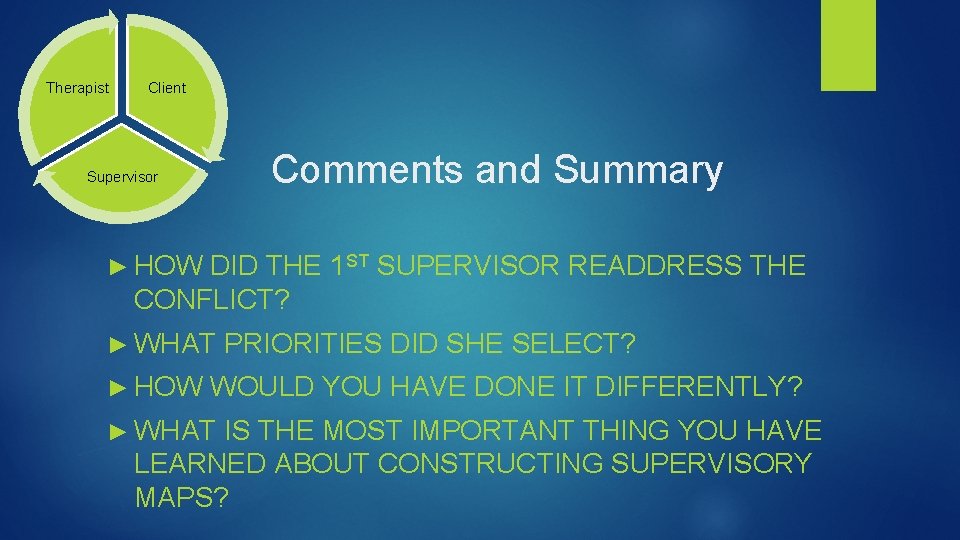
Therapist Client Comments and Summary Supervisor ► HOW DID THE 1 ST SUPERVISOR READDRESS THE CONFLICT? ► WHAT ► HOW PRIORITIES DID SHE SELECT? WOULD YOU HAVE DONE IT DIFFERENTLY? ► WHAT IS THE MOST IMPORTANT THING YOU HAVE LEARNED ABOUT CONSTRUCTING SUPERVISORY MAPS?