
Guidelines for the Management of Severe Traumatic Brain
Guidelines for the Management of Severe Traumatic Brain Injury Rachel Garvin, MD July 28, 2017 Neuroscience Grand Rounds

Traumatic Brain Injury • TBI contributes to 30% of injury related deaths in the US • 90% of total cost of TBI are related to severe TBI • Falls are the leading cause of TBI • People over age 65 have highest morbidity/mortality
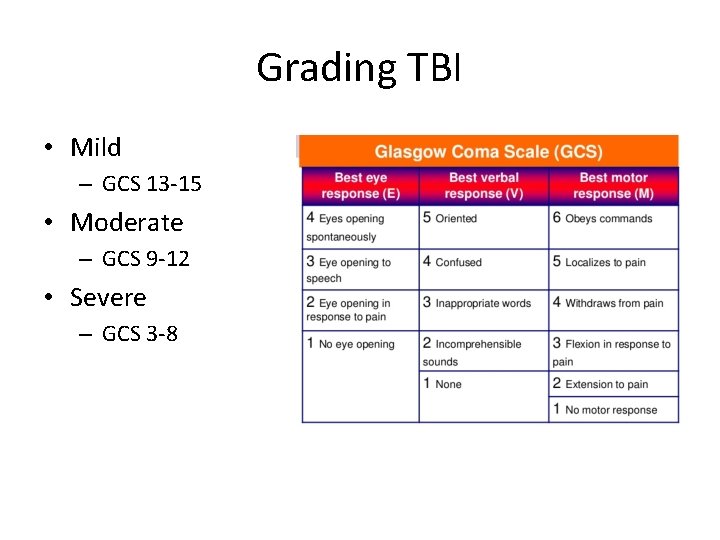
Grading TBI • Mild – GCS 13 -15 • Moderate – GCS 9 -12 • Severe – GCS 3 -8
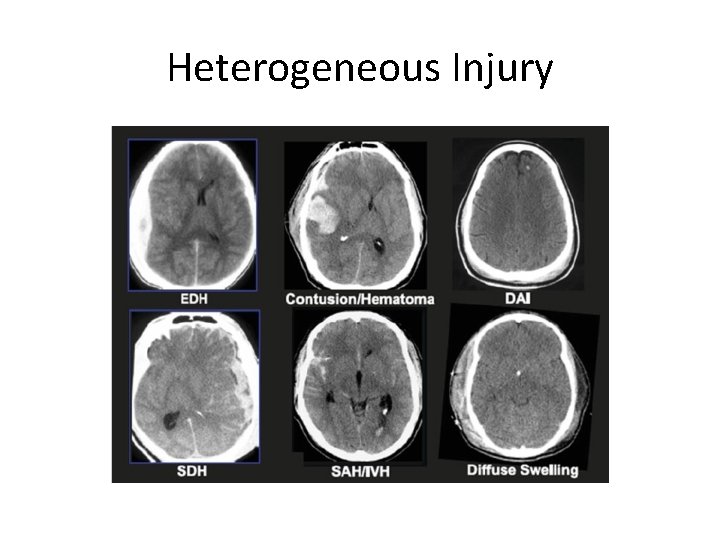
Heterogeneous Injury
Perceived TBI Management
Current Issues with Research • Difficulty establishing effectiveness of interventions • Standardizing clinical management • Relevant outcome measures and time to follow up
A Word About Guidelines • • Guidelines are recommendations Where do the recommendations come from? What is the quality of the evidence? Know why.
Brain Trauma Foundation • Founded in 1986 to support TBI research • First EB guidelines published 1995 • Six additional TBI guidelines – Severe TBI – Peds Severe TBI – Early Prognosis in Severe TBI – Surgical Management of TBI – Pre-hospital TBI Management – Field Management of Combat TBI
4 th edition 2016 • Previous guidelines 2007 • Brain Trauma Evidence-Based Consortium (BTEC) • 18 topics discussed • Out of 189 publications reviewed, 5 class 1 • 94 new studies since last publication • Recommendations, not a protocol
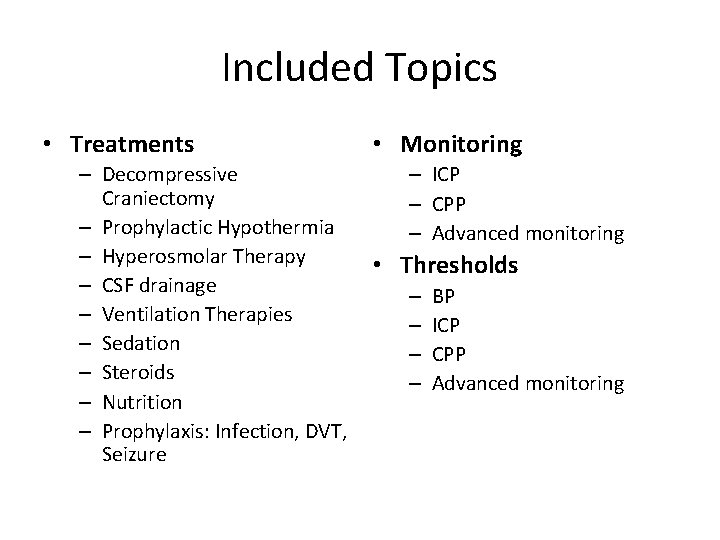
Included Topics • Treatments – Decompressive Craniectomy – Prophylactic Hypothermia – Hyperosmolar Therapy – CSF drainage – Ventilation Therapies – Sedation – Steroids – Nutrition – Prophylaxis: Infection, DVT, Seizure • Monitoring – ICP – CPP – Advanced monitoring • Thresholds – – BP ICP CPP Advanced monitoring
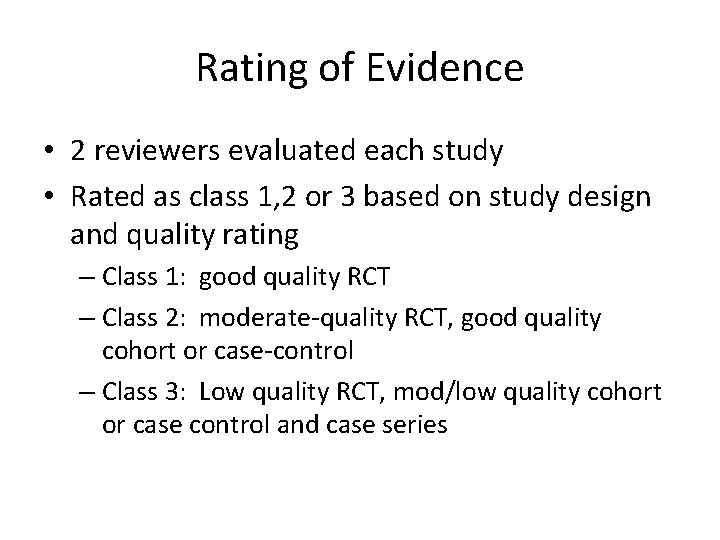
Rating of Evidence • 2 reviewers evaluated each study • Rated as class 1, 2 or 3 based on study design and quality rating – Class 1: good quality RCT – Class 2: moderate-quality RCT, good quality cohort or case-control – Class 3: Low quality RCT, mod/low quality cohort or case control and case series
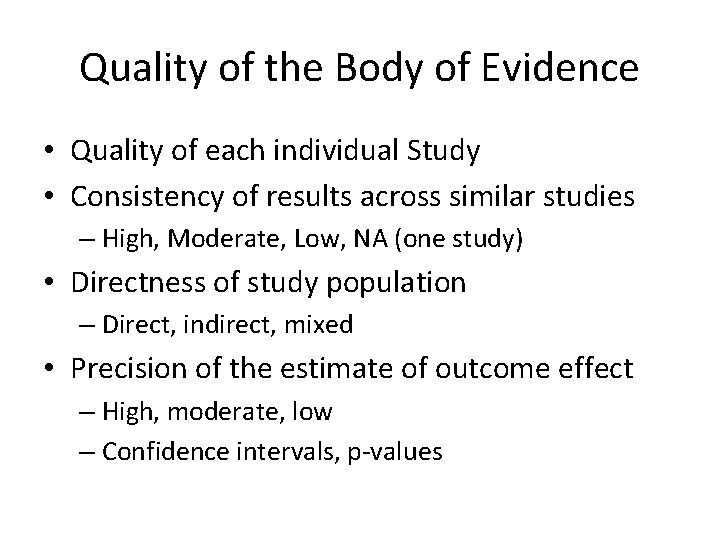
Quality of the Body of Evidence • Quality of each individual Study • Consistency of results across similar studies – High, Moderate, Low, NA (one study) • Directness of study population – Direct, indirect, mixed • Precision of the estimate of outcome effect – High, moderate, low – Confidence intervals, p-values
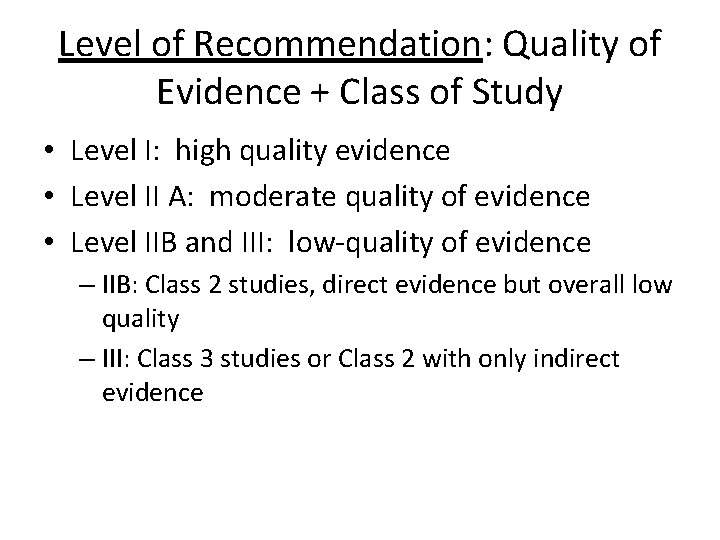
Level of Recommendation: Quality of Evidence + Class of Study • Level I: high quality evidence • Level II A: moderate quality of evidence • Level IIB and III: low-quality of evidence – IIB: Class 2 studies, direct evidence but overall low quality – III: Class 3 studies or Class 2 with only indirect evidence
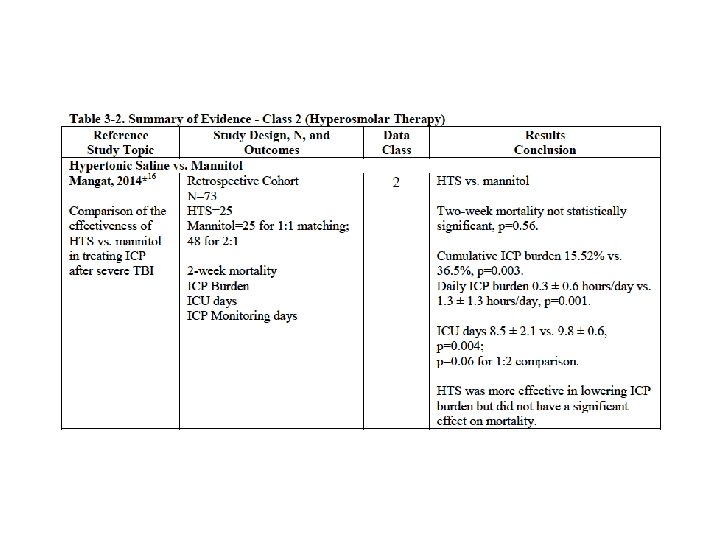
Hyperosmolar Therapy • No specific recommendations due to insufficient evidence • Previous recs – Mannitol works but watch for hypotension – Only use mannitol if patient is herniating • Focus was on comparative effectiveness of different hyperosmolar agents
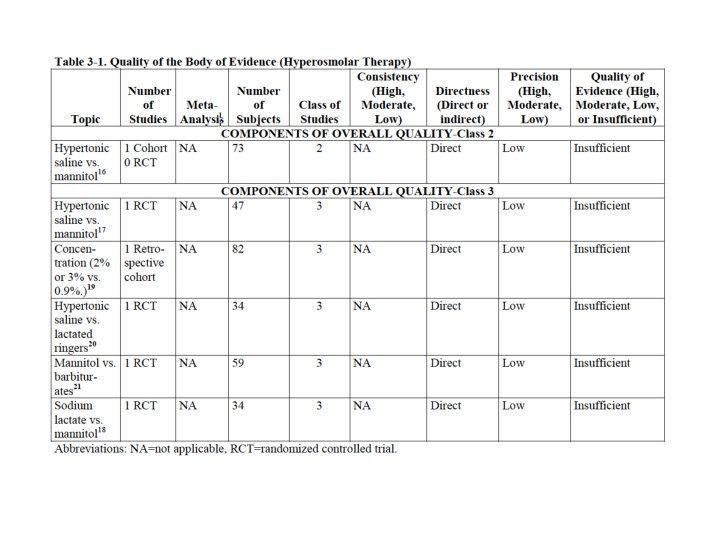
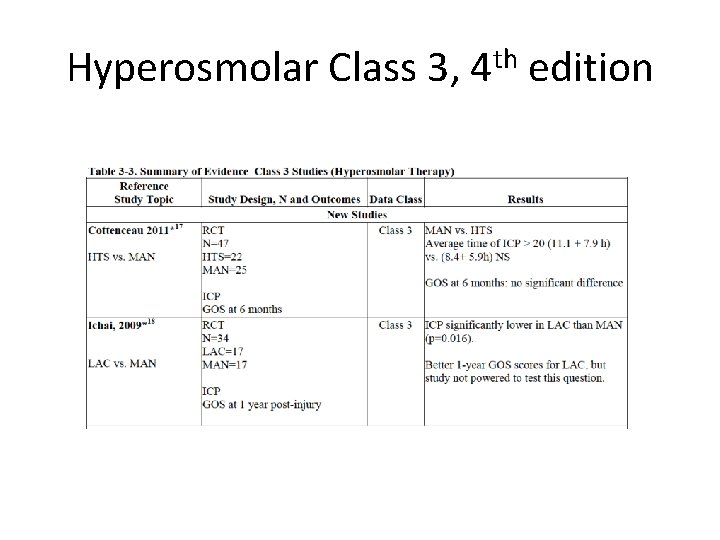
Hyperosmolar Class 3, 4 th edition
CSF Drainage • Closed for ICP monitoring vs open for drainage • Level III recommendations: – Continuous drainage for GCS <6 during first 12 hours – Continuous drainage may be more effective in lowering ICP
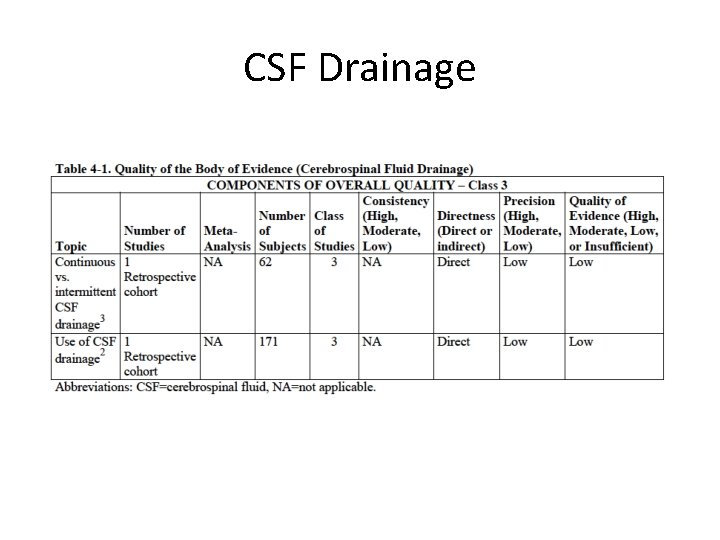
CSF Drainage
Decompressive Craniectomy • Level IIA Recommendations: – Bifrontal not recommended to improve 6 month outcomes in: • Diffuse injury • ICP >20 for >15 minutes in 1 hour period refractory to first-tier tx – If you are going to do a FTP DHC, do a large one, not small • Shown to decrease mortality and improve outcomes
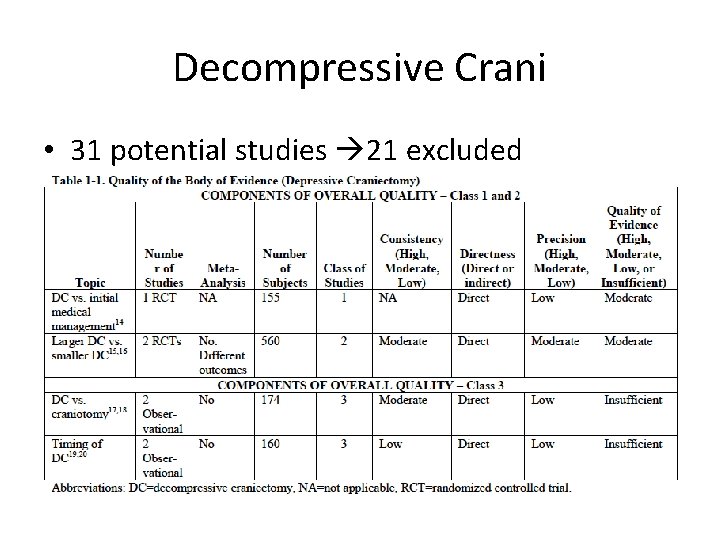
Decompressive Crani • 31 potential studies 21 excluded
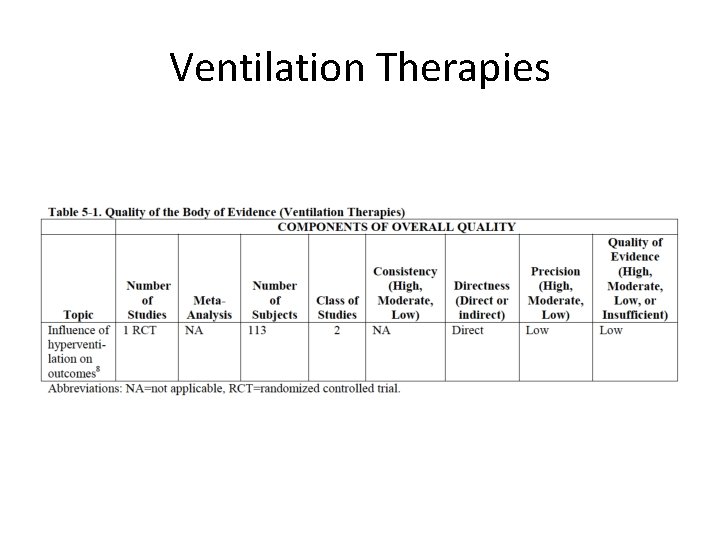
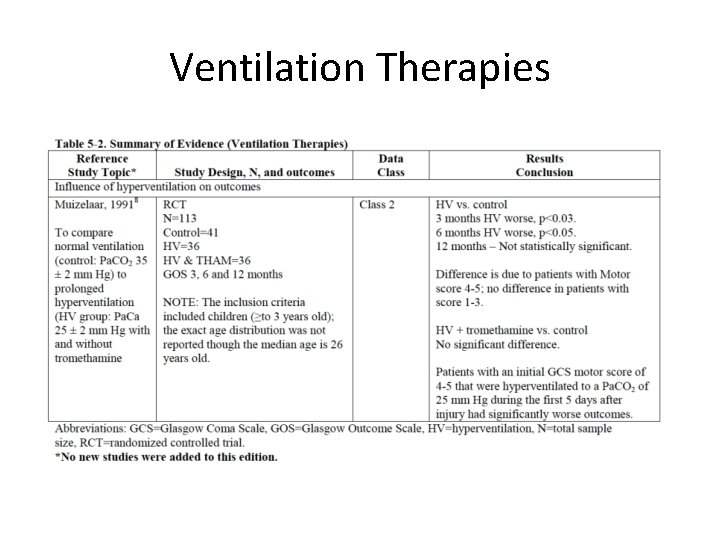
Ventilation Therapies • Pa. CO 2 strongest determinant of cerebral blood flow linear response within a range • 3 rd edition recs not carried over • IIB Recommendation: – Prophylactic hyperventilation with Pa. CO 2 <25 not recommended
Ventilation Therapies
Ventilation Therapies
Sedation • No changes from 3 rd edition • Level IIB Recommendations: – Can use barbiturates to control ICP refractory to other medical treatments but not recommended to burst suppress – Propofol can be used to control ICP but not to improve outcomes
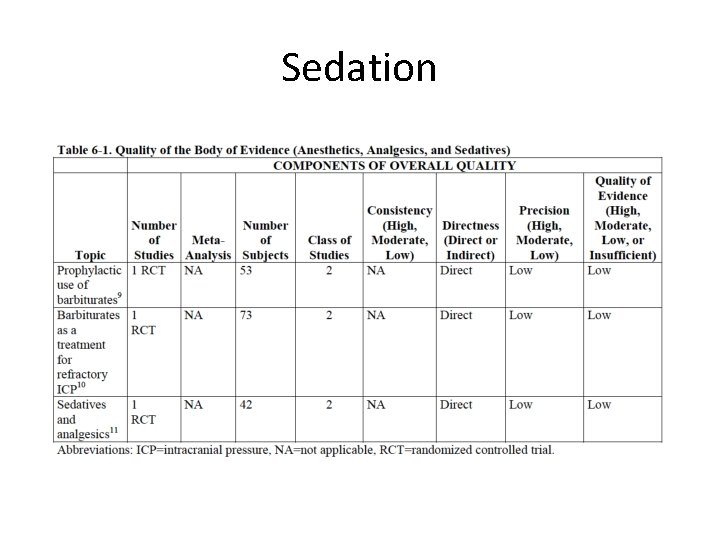
Sedation
Therapeutic Hypothermia • Level IIB Recommendation: – Prophylactic tx NOT recommended • Most new studies were class 3 • Conflicting evidence on treatment • Hypo vs normothermia: – 1 class 1 and 3 class 2 from U. S. no benefit – 3 class 2 (China/Japan) benefit
Seizure Prophylaxis • Level IIA Recommendation – Phenytoin not recommended to prevent late PTS – Can consider to prevent early PTS • No new recommendations from 3 rd edition • Levetiracetam: – 1 class 2 vs phenytoin – 1 class 3 vs phenytoin
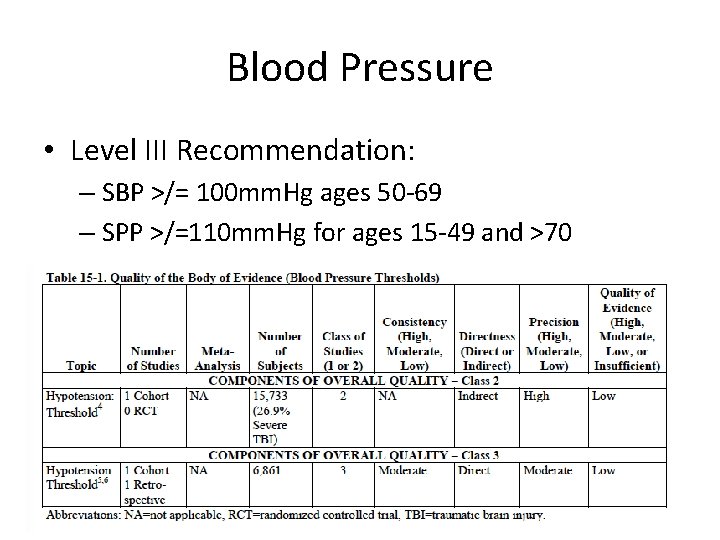
Blood Pressure • Level III Recommendation: – SBP >/= 100 mm. Hg ages 50 -69 – SPP >/=110 mm. Hg for ages 15 -49 and >70
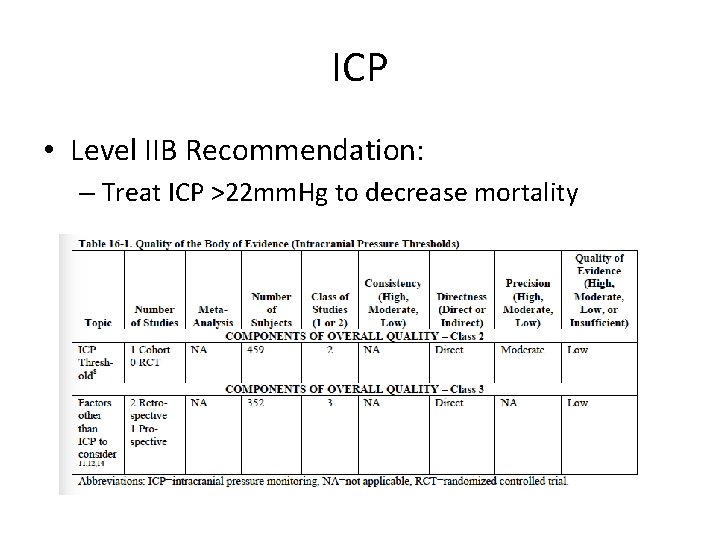
ICP • Level IIB Recommendation: – Treat ICP >22 mm. Hg to decrease mortality
CPP • Level IIB Recommendation: – Maintain CPP 60 -70 • Level III Recommendation: – Avoid pushing CPP >70
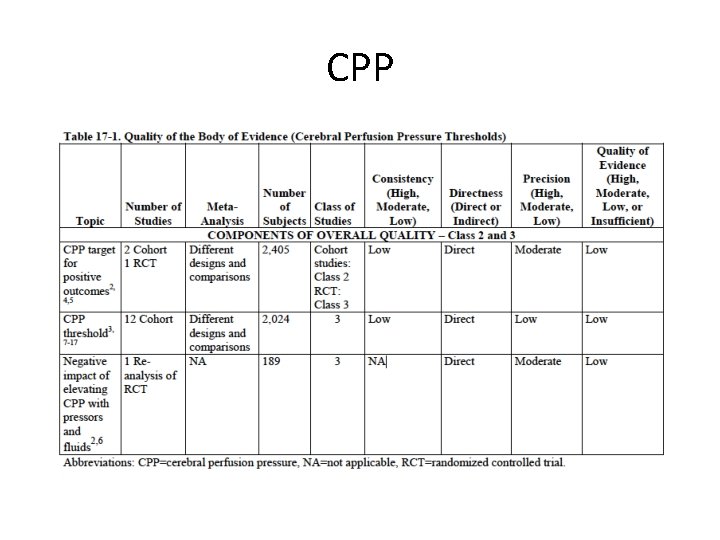
CPP
Summary • One Level I recommendation • Mainly level IIB • Further research is still needed • Use guidelines along with treatment specific for each patient
Food for thought…
- Slides: 34