
Guidelines for the Management of Kidney Transplant Recipients












- Slides: 61
Guidelines for the Management of Kidney Transplant Recipients
“…renal physiologists have abandoned the sick in order to pursue complicated and specious theorems in ivory towers …” -- Homer W. Smith, 1950
What are guidelines?
“Systematically developed statements to assist practitioner and patient decisions about appropriate health care for specific clinical circumstances. ” --Institute of Medicine
Guidelines are not …
Commandments
Codes of Conduct Elizabeth: Wait! You have to take me to shore. According to the Code of the Order of the Brethren. . . Barbossa: First, your return to shore was not part of our negotiations nor our agreement so I must do nothing. And secondly, you must be a pirate for the pirate's code to apply and you're not. And thirdly, the code is more what you'd call "guidelines" than actual rules. Welcome aboard the Black Pearl, Miss Turner.
Guidelines Are NOT: v. Standards of care v. Performance measures
Why do we need guidelines?
“If you don't know where you are going, you will wind up somewhere else. ” --Yogi Berra
Reasons for Guidelines v The volume of evidence is too great for clinicians to know v Clinicians cannot be expected to judge study quality v Disclosing the lack of evidence can stimulate research
What makes a good guideline good?
Characteristics of Good Guidelines v. Multidisciplinary development v. Systematic review v. Graded recommendations R Grilli, et al. Lancet 2000; 355: 103
Guideline Controversies
Guideline Controversies v. Conflicts of interest w. Avoid w. Full disclosure v. Recommendations with little/no evidence w. Avoid w. Full disclosure
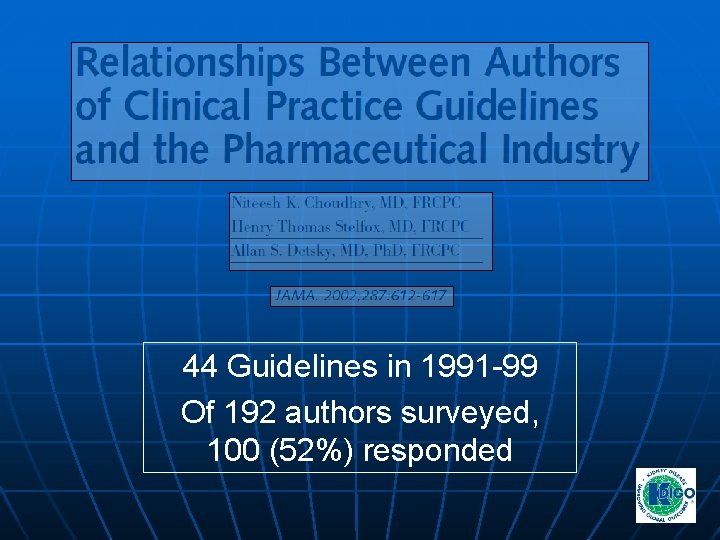
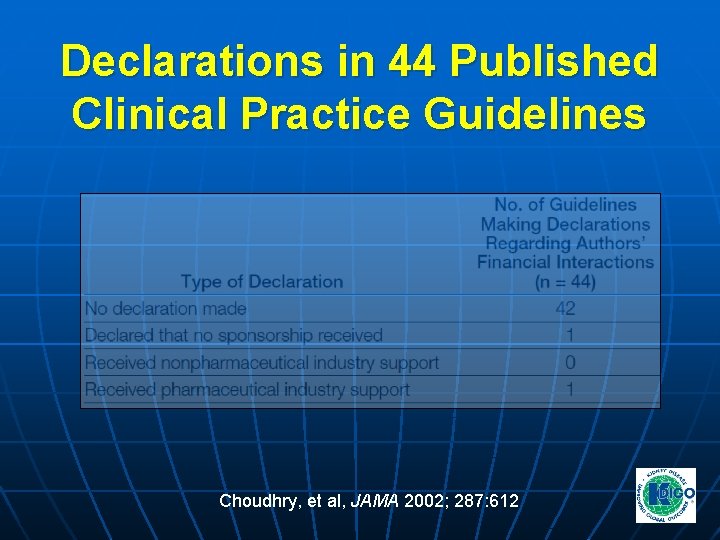
44 Guidelines in 1991 -99 Of 192 authors surveyed, 100 (52%) responded
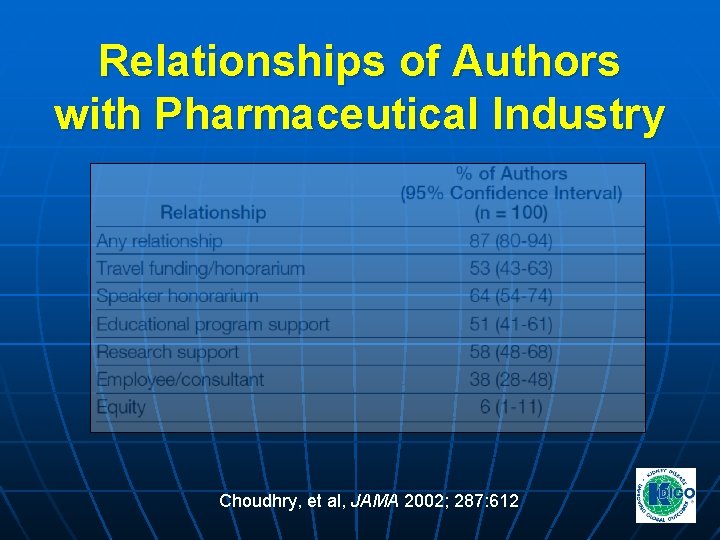
Relationships of Authors with Pharmaceutical Industry Choudhry, et al, JAMA 2002; 287: 612
Declarations in 44 Published Clinical Practice Guidelines Choudhry, et al, JAMA 2002; 287: 612
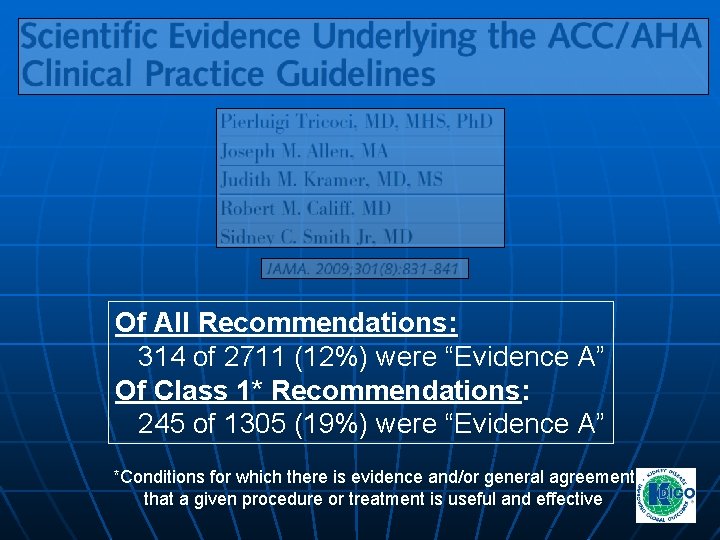
Of All Recommendations: 314 of 2711 (12%) were “Evidence A” Of Class 1* Recommendations: 245 of 1305 (19%) were “Evidence A” *Conditions for which there is evidence and/or general agreement that a given procedure or treatment is useful and effective
What will make guidelines better?
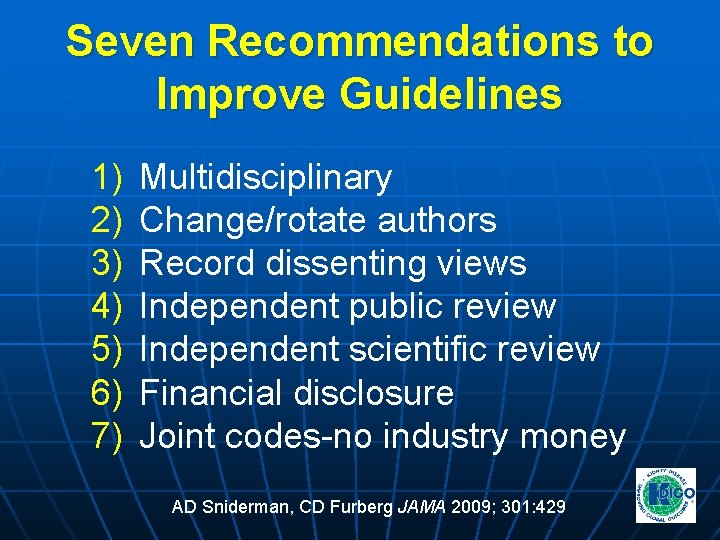
Seven Recommendations to Improve Guidelines 1) 2) 3) 4) 5) 6) 7) Multidisciplinary Change/rotate authors Record dissenting views Independent public review Independent scientific review Financial disclosure Joint codes-no industry money AD Sniderman, CD Furberg JAMA 2009; 301: 429
What is KDIGO?
KDIGO Pronounced: Kay · Dee´· Go Not: Kay · Die´· Go
Kidney Disease Improving Global Outcomes (KDIGO) www. kdigo. org
KDIGO Mission Statement To improve the care and outcomes of kidney disease patients worldwide by promoting coordination, collaboration, and integration of initiatives to develop and implement clinical practice guidelines.
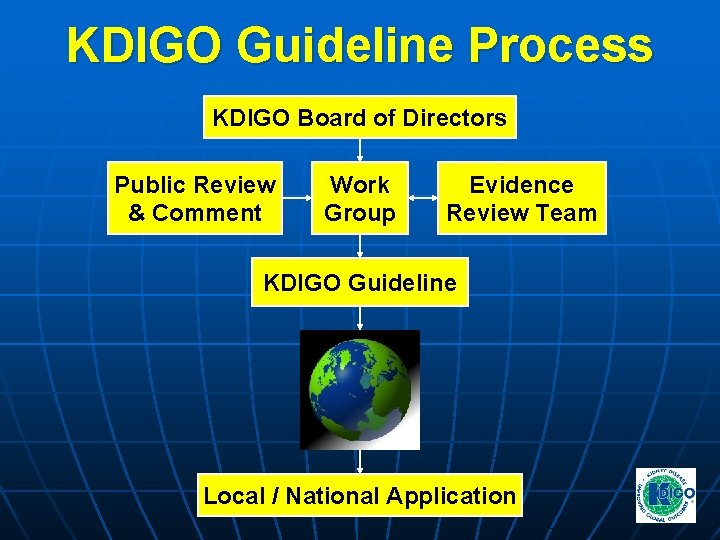
KDIGO Guideline Process KDIGO Board of Directors Public Review & Comment Work Group Evidence Review Team KDIGO Guideline Local / National Application
Core Principles of KDIGO Guideline Development v Evidence-based methods w. Grade evidence w. Grade recommendations v Multidisciplinary work groups w. Appropriate expertise w. International representation v Independent work groups v Openness & transparency w. Public review
Why do we need KDIGO transplant guidelines?
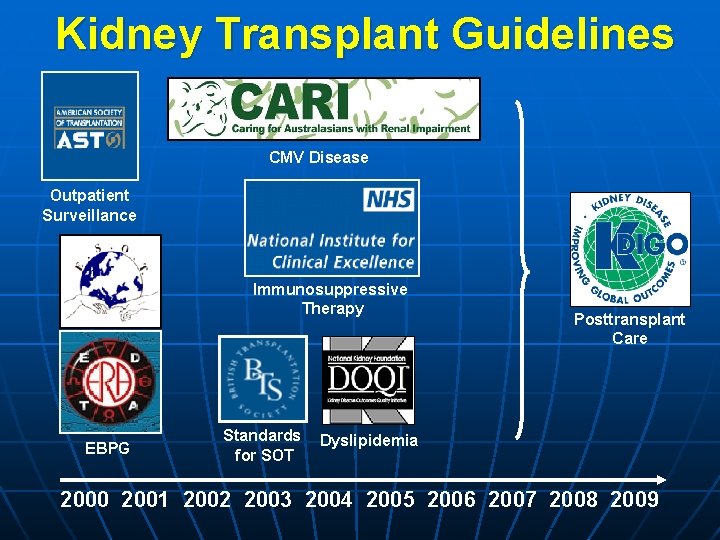
Kidney Transplant Guidelines CMV Disease Outpatient Surveillance Immunosuppressive Therapy EBPG Standards for SOT Posttransplant Care Dyslipidemia 2000 2001 2002 2003 2004 2005 2006 2007 2008 2009
Rationale v. Encourage transplant worldwide by: w Defining minimum standards w Removing misconceptions and barriers v. Improve patient care by encouraging: w Evidence-based practice w Research, when evidence is poor
Scope v. Post-transplant w Does not include pre-transplant w Does not include donor issues v. Aspects unique to transplant w Immunosuppressive w Focus on prevention medications
Target Audience v. Caregivers w Physicians w Nurses w Coordinators w Pharmacists
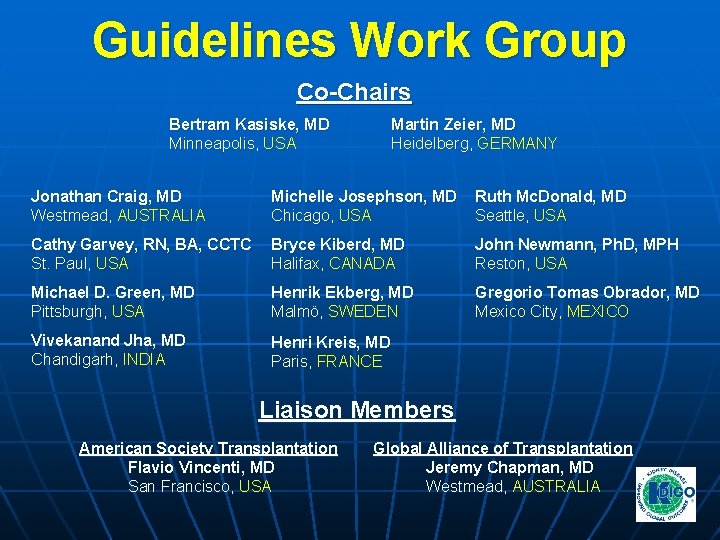
Guidelines Work Group Co-Chairs Bertram Kasiske, MD Minneapolis, USA Martin Zeier, MD Heidelberg, GERMANY Jonathan Craig, MD Westmead, AUSTRALIA Michelle Josephson, MD Chicago, USA Ruth Mc. Donald, MD Seattle, USA Cathy Garvey, RN, BA, CCTC St. Paul, USA Bryce Kiberd, MD Halifax, CANADA John Newmann, Ph. D, MPH Reston, USA Michael D. Green, MD Pittsburgh, USA Henrik Ekberg, MD Malmö, SWEDEN Gregorio Tomas Obrador, MD Mexico City, MEXICO Vivekanand Jha, MD Chandigarh, INDIA Henri Kreis, MD Paris, FRANCE Liaison Members American Society Transplantation Flavio Vincenti, MD San Francisco, USA Global Alliance of Transplantation Jeremy Chapman, MD Westmead, AUSTRALIA
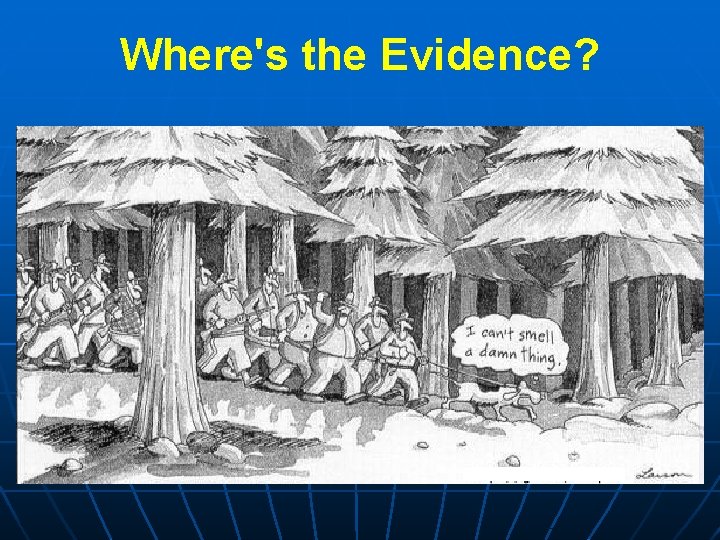
Where's the Evidence?
Evidence Review Team Tufts-New England Medical Center Evidence-Based Practice Center Boston, MA Joseph Lau, MD, Director Ethan Balk, MD, MPH, Associate Director Katrin Uhlig, MD, MS, Program Director, Nephrology Martin Wagner, MD, Fellow Gowri Raman, MD, Research Associate Samuel Abariga, MD, MS, Research Associate Amy Earley, BS, Research Assistant
KDIGO Recommendation Grading Uhlig K, et al. Kidney Int 2006; 70: 2058
Grades of Recommendation Assessment, Development, and Evaluation (GRADE) Guyatt GH, et al. BMJ 2008; 336: 924 http: //www. gradeworkinggroup. org/
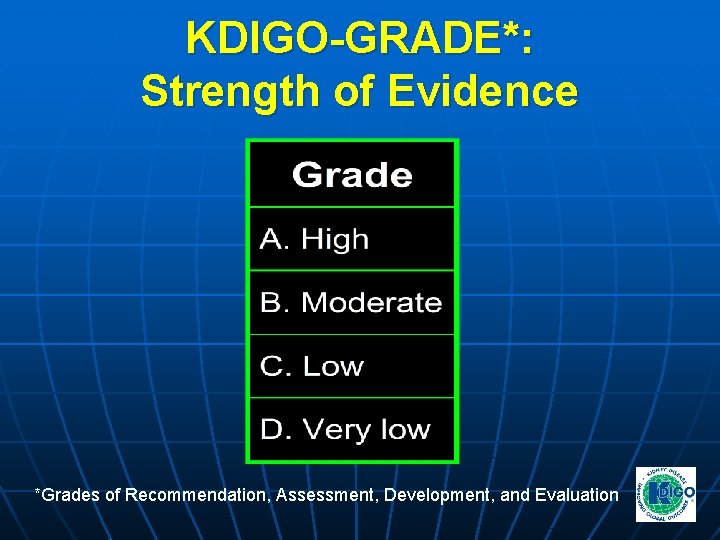
KDIGO-GRADE*: Strength of Evidence *Grades of Recommendation, Assessment, Development, and Evaluation
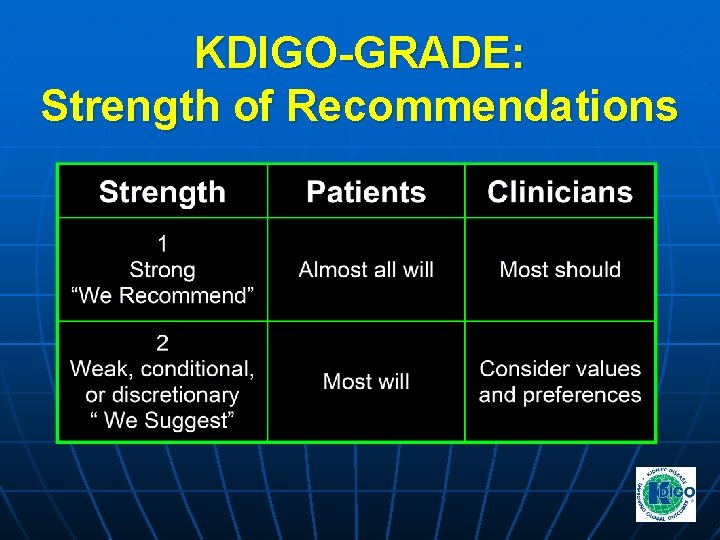
KDIGO-GRADE: Strength of Recommendations
KDIGO-GRADE: Recommendations Not Graded v “Motherhood and apple pie” v Not sufficiently specific to allow application of evidence v Not subjected to formal review
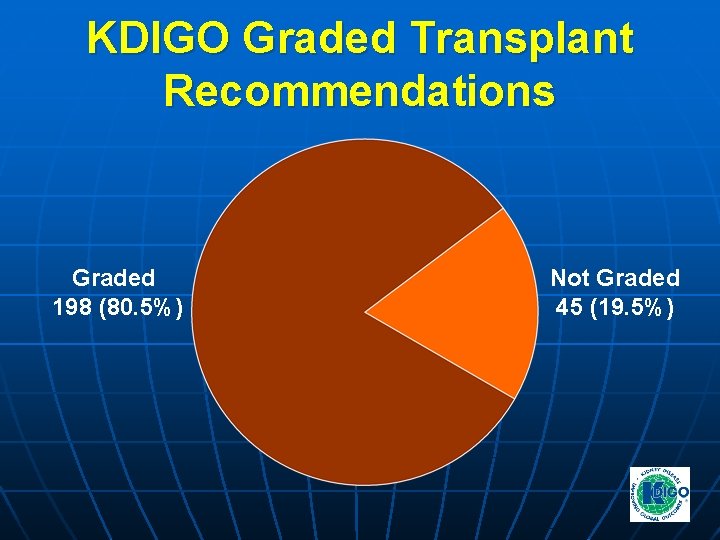
KDIGO Graded Transplant Recommendations Graded 198 (80. 5%) Not Graded 45 (19. 5%)
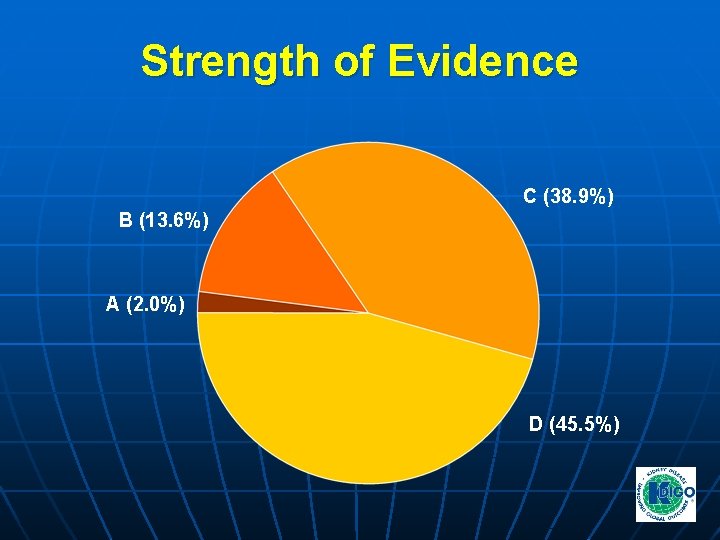
Strength of Evidence C (38. 9%) B (13. 6%) A (2. 0%) D (45. 5%)
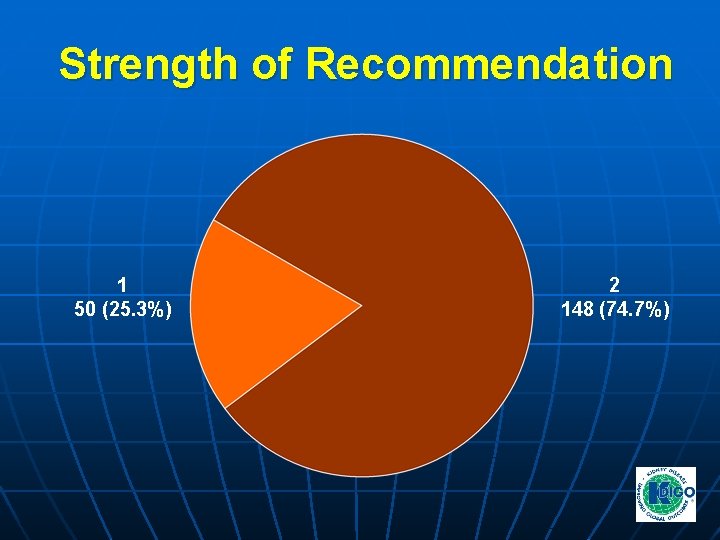
Strength of Recommendation 1 50 (25. 3%) 2 148 (74. 7%)
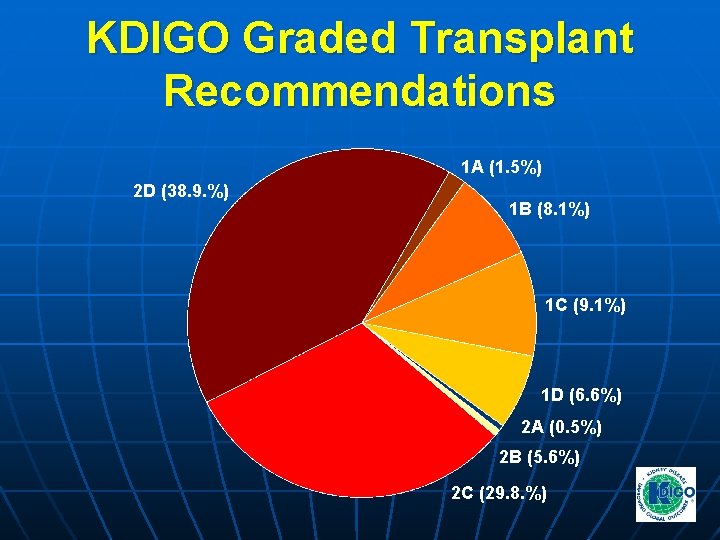
KDIGO Graded Transplant Recommendations 1 A (1. 5%) 2 D (38. 9. %) 1 B (8. 1%) 1 C (9. 1%) 1 D (6. 6%) 2 A (0. 5%) 2 B (5. 6%) 2 C (29. 8. %)
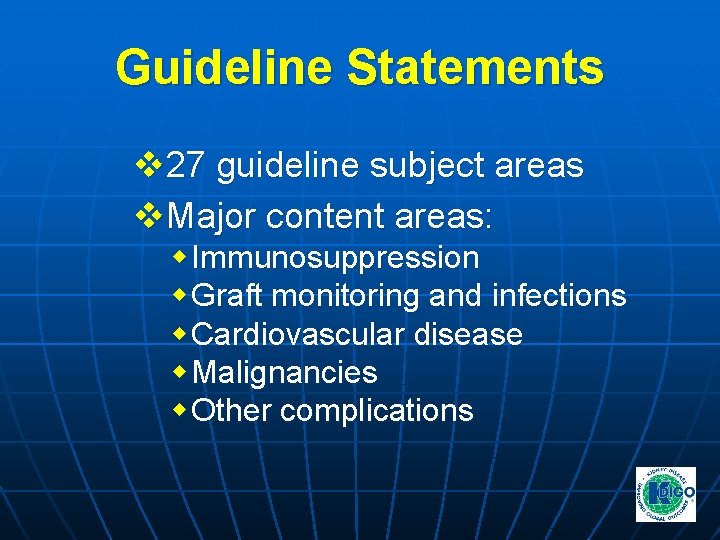
Guideline Statements v 27 guideline subject areas v. Major content areas: w Immunosuppression w Graft monitoring and infections w Cardiovascular disease w Malignancies w Other complications
Should we use “induction” with a biological agent?
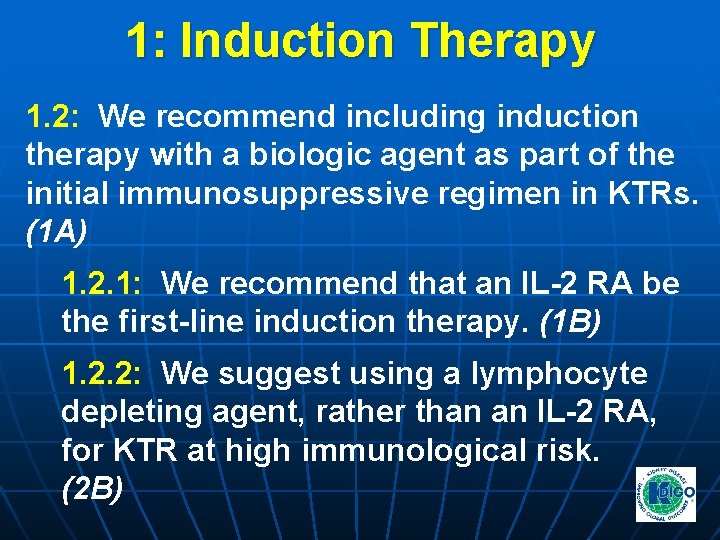
1: Induction Therapy 1. 2: We recommend including induction therapy with a biologic agent as part of the initial immunosuppressive regimen in KTRs. (1 A) 1. 2. 1: We recommend that an IL-2 RA be the first-line induction therapy. (1 B) 1. 2. 2: We suggest using a lymphocyte depleting agent, rather than an IL-2 RA, for KTR at high immunological risk. (2 B)
What is the best maintenance immunosuppressive medication regimen?
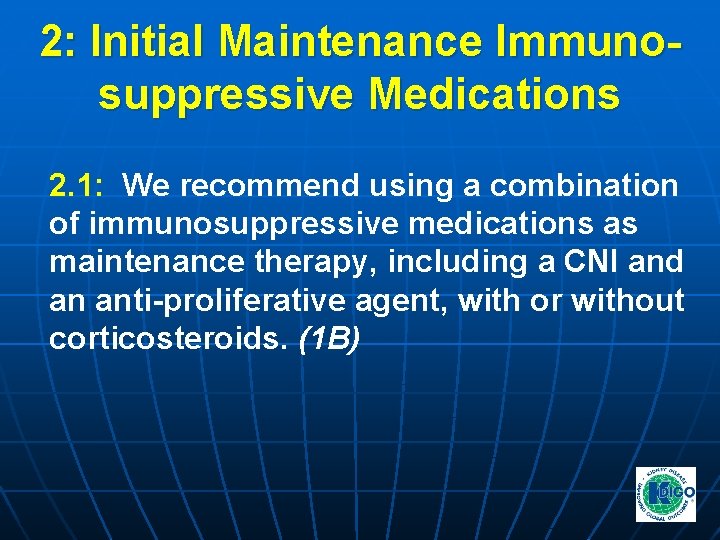
2: Initial Maintenance Immunosuppressive Medications 2. 1: We recommend using a combination of immunosuppressive medications as maintenance therapy, including a CNI and an anti-proliferative agent, with or without corticosteroids. (1 B)
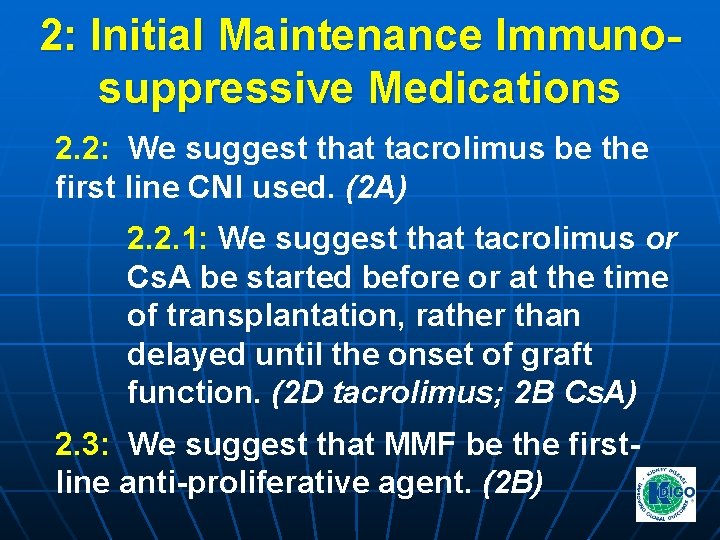
2: Initial Maintenance Immunosuppressive Medications 2. 2: We suggest that tacrolimus be the first line CNI used. (2 A) 2. 2. 1: We suggest that tacrolimus or Cs. A be started before or at the time of transplantation, rather than delayed until the onset of graft function. (2 D tacrolimus; 2 B Cs. A) 2. 3: We suggest that MMF be the firstline anti-proliferative agent. (2 B)
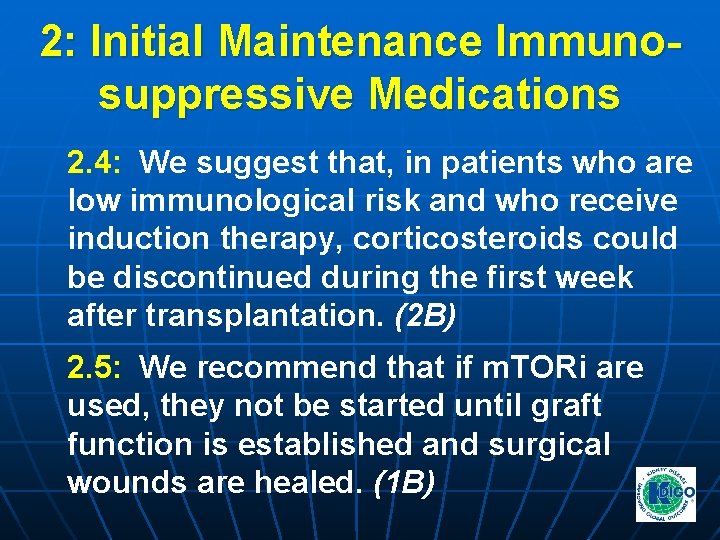
2: Initial Maintenance Immunosuppressive Medications 2. 4: We suggest that, in patients who are low immunological risk and who receive induction therapy, corticosteroids could be discontinued during the first week after transplantation. (2 B) 2. 5: We recommend that if m. TORi are used, they not be started until graft function is established and surgical wounds are healed. (1 B)
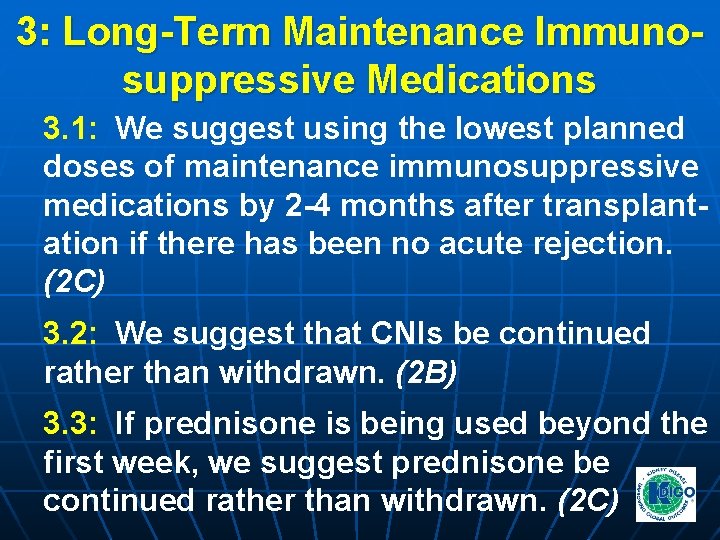
3: Long-Term Maintenance Immunosuppressive Medications 3. 1: We suggest using the lowest planned doses of maintenance immunosuppressive medications by 2 -4 months after transplantation if there has been no acute rejection. (2 C) 3. 2: We suggest that CNIs be continued rather than withdrawn. (2 B) 3. 3: If prednisone is being used beyond the first week, we suggest prednisone be continued rather than withdrawn. (2 C)
Can we perform more transplants by reducing medication cost?
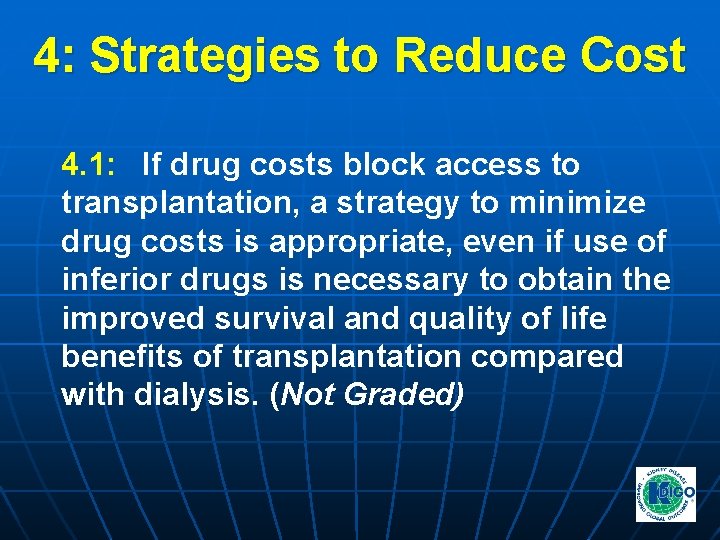
4: Strategies to Reduce Cost 4. 1: If drug costs block access to transplantation, a strategy to minimize drug costs is appropriate, even if use of inferior drugs is necessary to obtain the improved survival and quality of life benefits of transplantation compared with dialysis. (Not Graded)
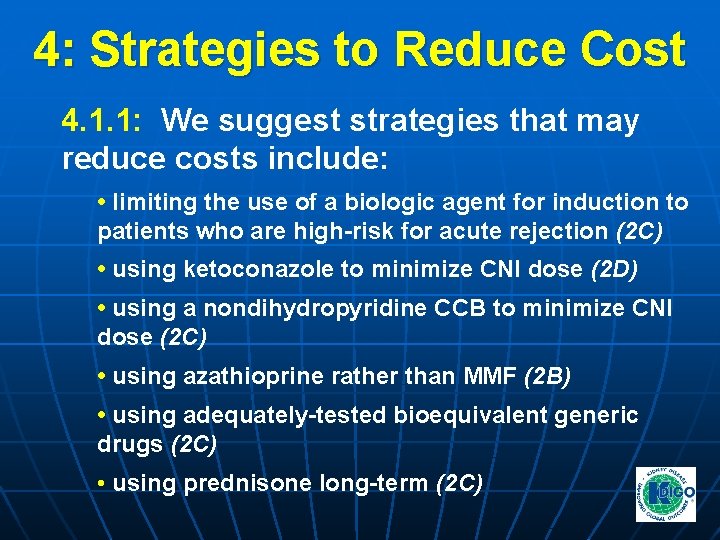
4: Strategies to Reduce Cost 4. 1. 1: We suggest strategies that may reduce costs include: • limiting the use of a biologic agent for induction to patients who are high-risk for acute rejection (2 C) • using ketoconazole to minimize CNI dose (2 D) • using a nondihydropyridine CCB to minimize CNI dose (2 C) • using azathioprine rather than MMF (2 B) • using adequately-tested bioequivalent generic drugs (2 C) • using prednisone long-term (2 C)
13. 2: CMV Prophylaxis 13. 2. 1: CMV prophylaxis: We recommend that KTRs (except when donor and recipient both have negative CMV serologies) receive chemoprophylaxis for CMV infection with oral ganciclovir or valganciclovir for at least 3 months after transplantation, (1 B) and for 6 weeks after treatment with a T-cell-depleting antibody. (1 C)
13. 3: EBV and PTLD 13. 3. 1: We suggest monitoring high-risk (donor EBV seropositive/recipient seronegative) KTRs for EBV by NAT (2 C): … 13. 3. 2: We suggest that EBV-seronegative patients with an increaseing EBV load have immunosuppressive medication reduced. (2 D)
13. 3: EBV and PTLD 13. 3. 3: We recommend that patients with EBV disease, including PTLD, have a reduction or cessation of immunosuppressive medication. (2 D)
KDIGO® Guidelines: Care of the Kidney Transplant Recipient
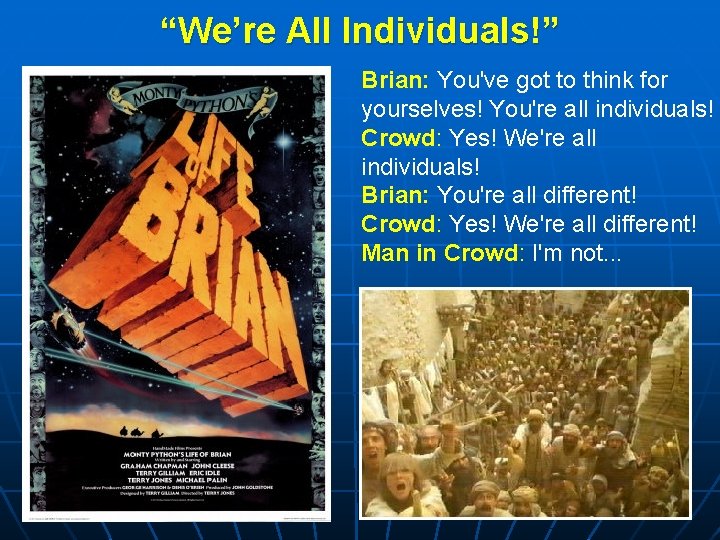
“We’re All Individuals!” Brian: You've got to think for yourselves! You're all individuals! Crowd: Yes! We're all individuals! Brian: You're all different! Crowd: Yes! We're all different! Man in Crowd: I'm not. . .