
Guidelines for Teaching the Holocaust Head Heart Hands






- Slides: 31
Guidelines for Teaching the Holocaust
Head…. . Heart…. . Hands…. .
Rationale Why? 1. Your students (background knowledge, geographic settings, culture, etc. ) 2. The Holocaust/Genocide 3. In this unit/course 4. Now (at this age, at this time in history, etc. ) 5. With this resource (book, film, handout, website, etc. )
Guidelines for teaching the Holocaust (http: //www. ushmm. org) 1. Define the Holocaust. 2. Do not teach or imply that the Holocaust was inevitable. 3. Avoid simple answers to complex questions. 4. Strive for precision of language. 5. Strive for balance in establishing whose perspective informs your study of the Holocaust. 6. Avoid comparisons of pain. 7. Do not romanticize history. 8. Contextualize the history. 9. Translate statistics into people. 10. Make responsible methodological choices
1. Define the Holocaust
3. Avoid Simple Answers to Complex Questions
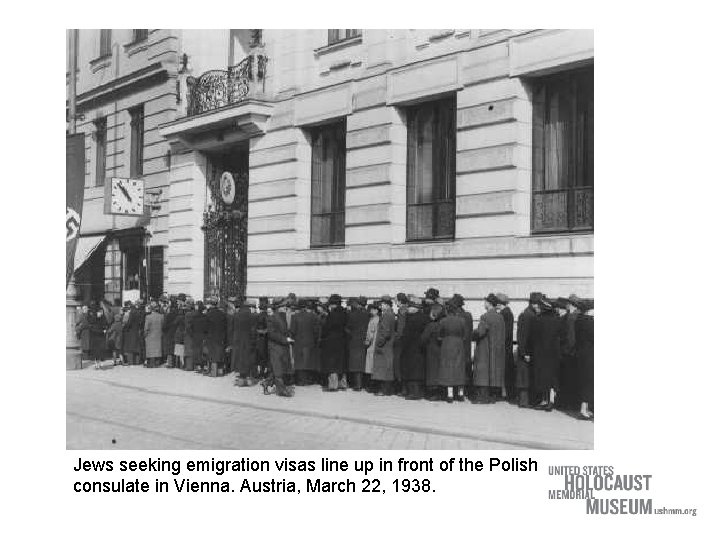
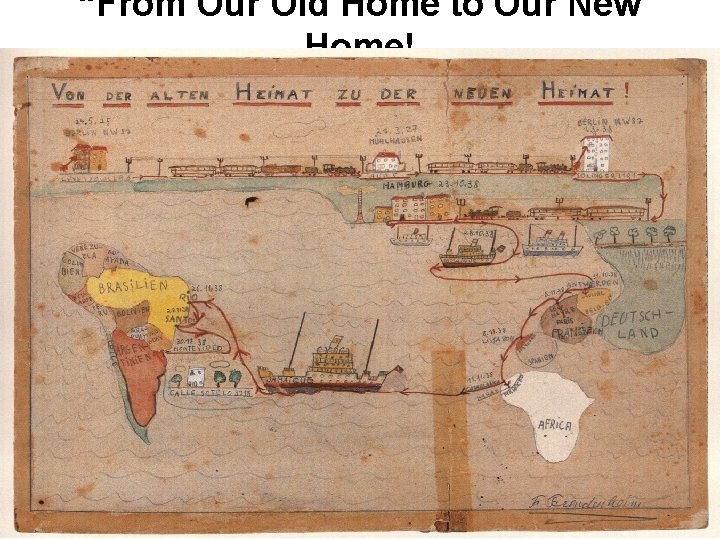
Why didn’t the Jews just leave?
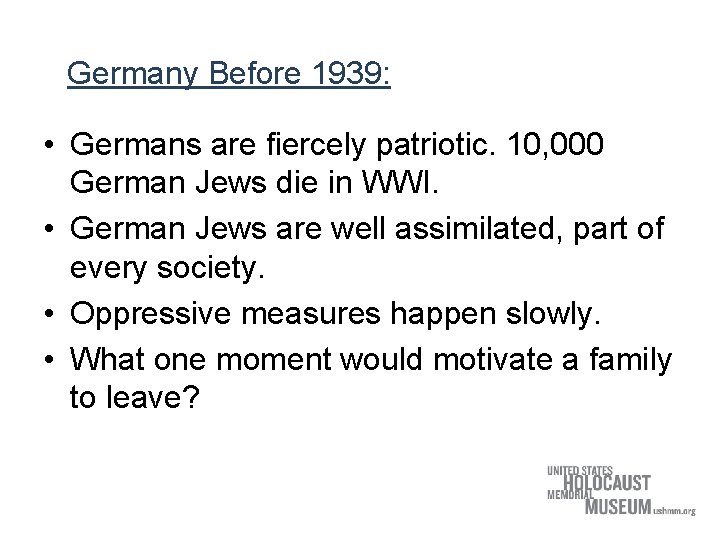
Germany Before 1939: • Germans are fiercely patriotic. 10, 000 German Jews die in WWI. • German Jews are well assimilated, part of every society. • Oppressive measures happen slowly. • What one moment would motivate a family to leave?
Jews seeking emigration visas line up in front of the Polish consulate in Vienna. Austria, March 22, 1938.
“From Our Old Home to Our New Home!
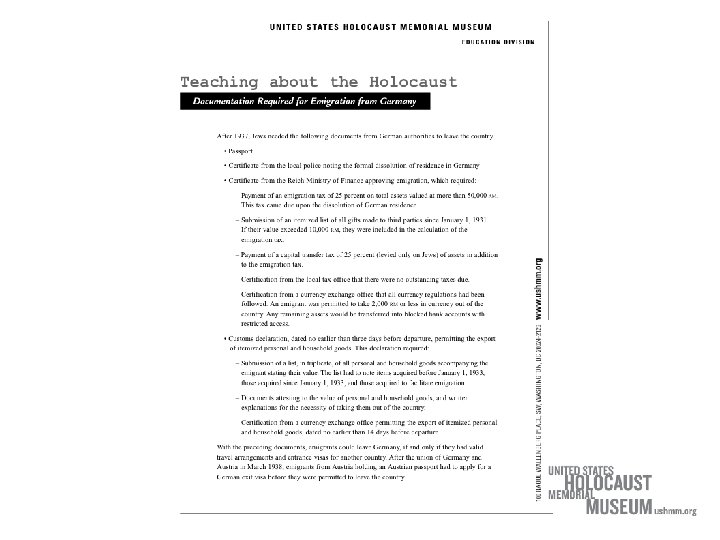
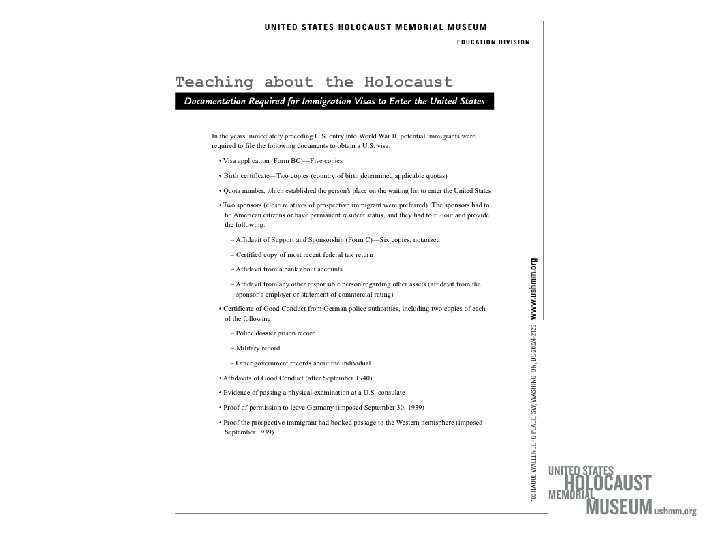
How did so many of them manage to leave?
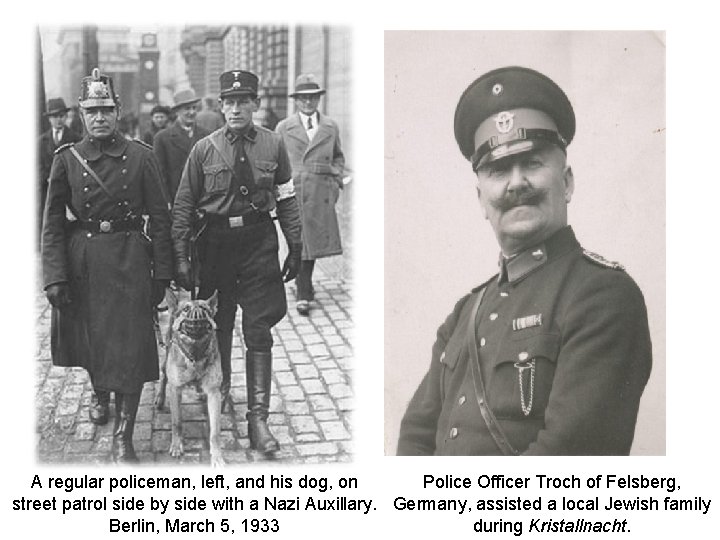
5. Strive for balance in whose perspective informs your study of the Holocaust.
A regular policeman, left, and his dog, on Police Officer Troch of Felsberg, street patrol side by side with a Nazi Auxillary. Germany, assisted a local Jewish family Berlin, March 5, 1933 during Kristallnacht.
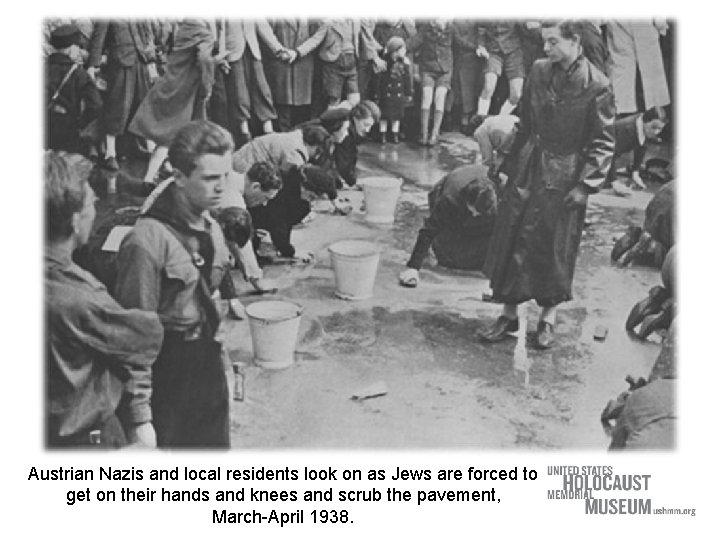
Austrian Nazis and local residents look on as Jews are forced to get on their hands and knees and scrub the pavement, March-April 1938.
Questions to consider about a resource: • • • Why was this resource created? Who wrote/created it? Who is the intended audience? Are there any biases present? How has the information been used to interpret various events?
7. Do not romanticize history.
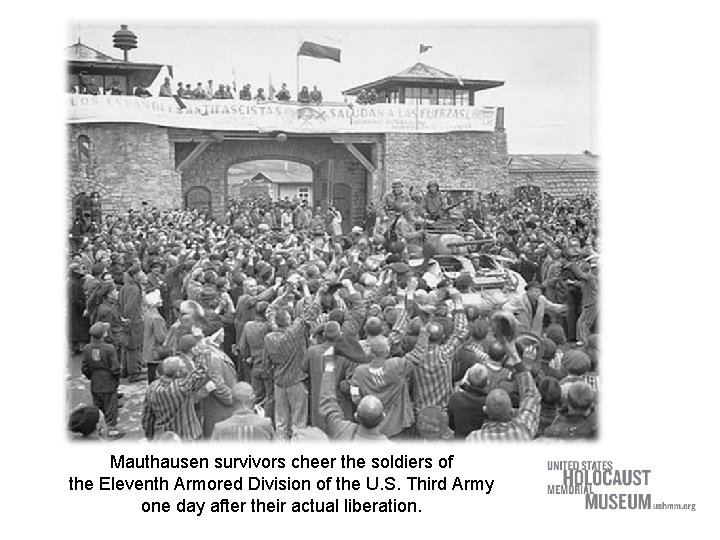
Mauthausen survivors cheer the soldiers of the Eleventh Armored Division of the U. S. Third Army one day after their actual liberation.
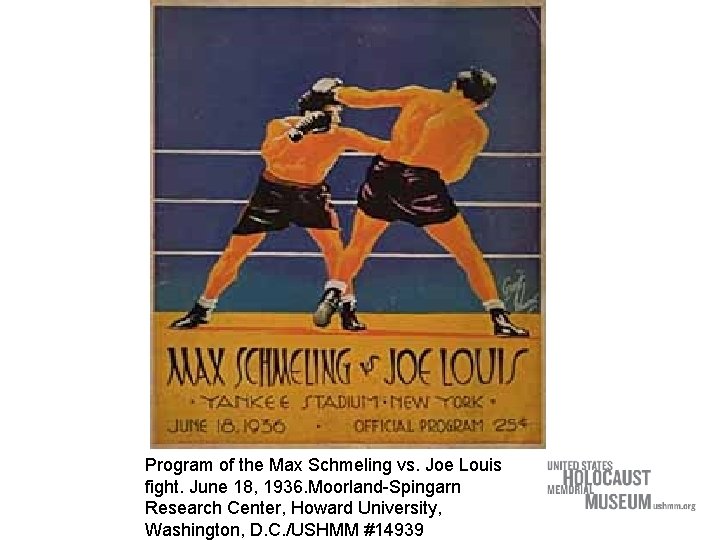
Program of the Max Schmeling vs. Joe Louis fight. June 18, 1936. Moorland-Spingarn Research Center, Howard University, Washington, D. C. /USHMM #14939
10. Make responsible methodological choices.
Be cautious about: activities, exercises, images, and texts that exploit students’ emotional vulnerability, perpetrate historical inaccuracies, or that disrespect the victims themselves.
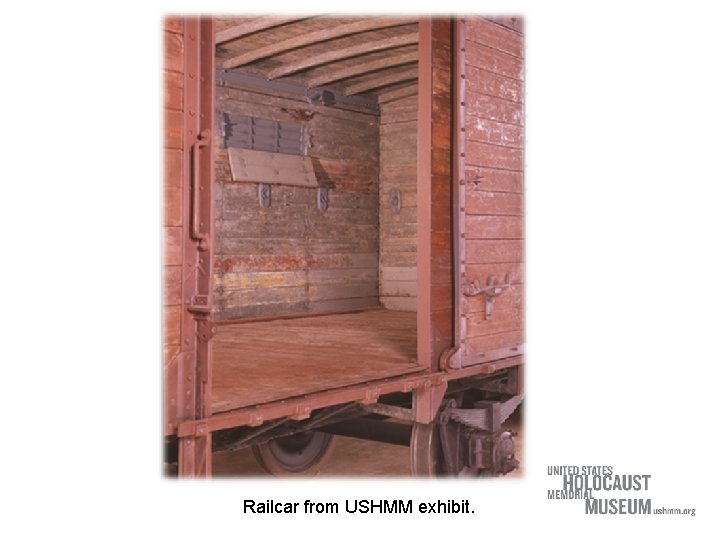
Railcar from USHMM exhibit.
Instead, use… • Survivor testimony • Primary sources, including maps, documents, photographs, and articles • Historically accurate texts, literature, and films • Media literacy skills to help students deconstruct and critically analyze text, photos, and film
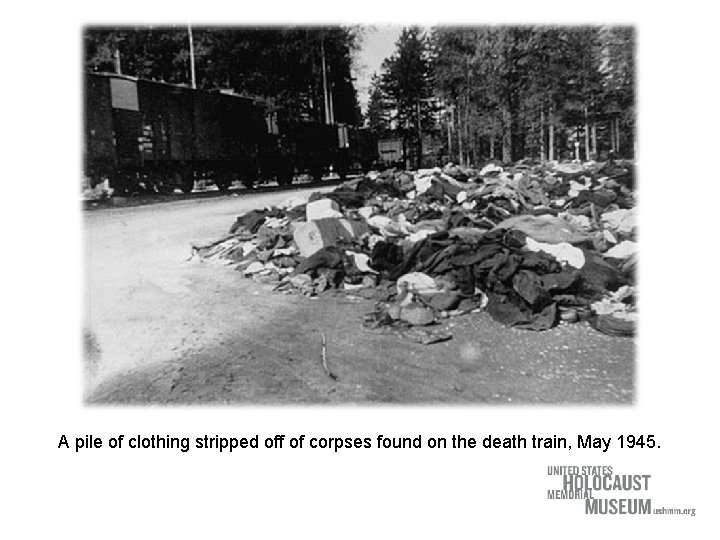
A pile of clothing stripped off of corpses found on the death train, May 1945.
Case Study: The Boy in the Striped Pajamas
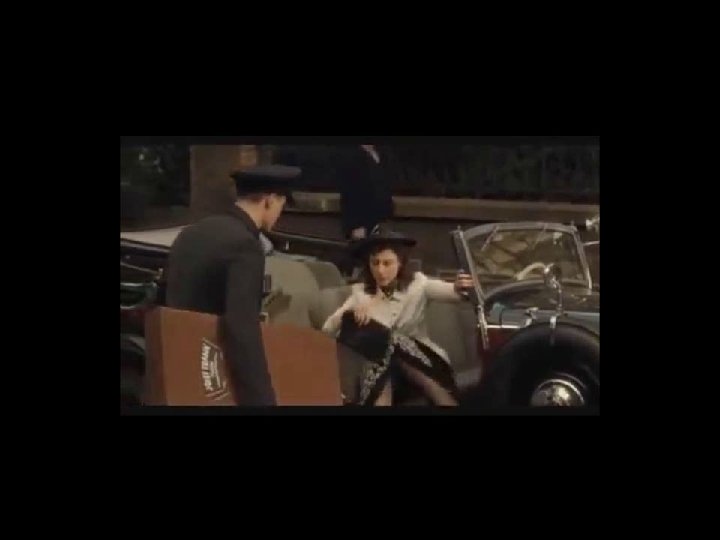
Case Study: Schindler’s List