
Guidelines for Perioperative Cardiovascular Evaluation for Noncardiac Surgery

- Slides: 39
Guidelines for Perioperative Cardiovascular Evaluation for Noncardiac Surgery* A Report of the American College of Cardiology/American Heart Association. Task Force on Practice Guidelines *Eagle KA, Brundage BH, Chaitman, BR et al: Circulation 1996; 93: 1278 -1317 and JACC 1996; 27: 910 -948. November, 1998 Council on Clinical Cardiology © 1998 American Heart Association, Inc. All rights reserved. Unauthorized use prohibited.
Committee on Post Graduate Education, Council on Clinical Cardiology, American Heart Association Prepared by: Jamie Conti, MD Forrester Lee, MD November, 1998 Council on Clinical Cardiology
Purpose of Preoperative Evaluation ¤ ¤ ¤ Evaluate patient’s current medical status. Provide clinical risk profile. Provide recommendations for management of cardiac risk over entire perioperative period. November, 1998 Council on Clinical Cardiology
Role of the Consultant ¤ ¤ ¤ Review available patient data, history and physical examination. Communicate severity and stability of patient’s cardiovascular status. Determine if patient in optimal medical condition, given context of surgical illness. November, 1998 Council on Clinical Cardiology
General Approach to the Patient ¤ ¤ November, 1998 History Physical Examination Comorbid Diseases ¤ Pulmonary ¤ Diabetes Mellitus ¤ Renal Impairment ¤ Hematologic Disorders Ancillary Studies Council on Clinical Cardiology
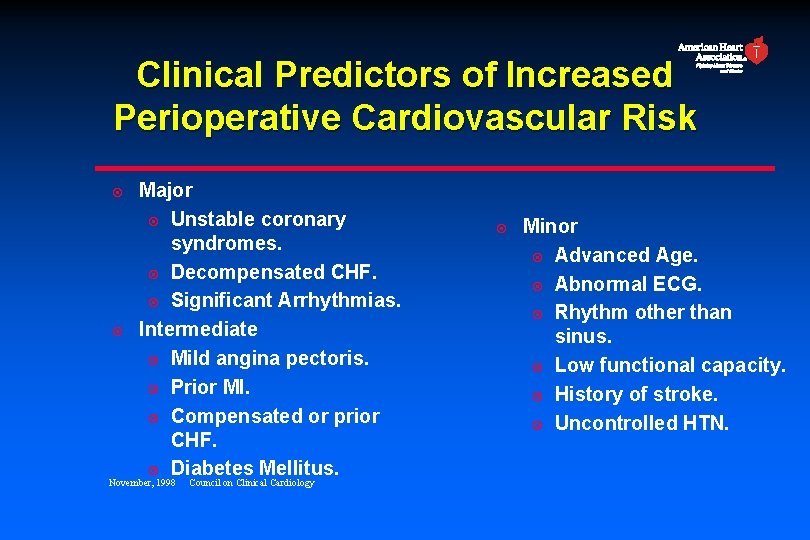
Clinical Predictors of Increased Perioperative Cardiovascular Risk ¤ ¤ Major ¤ Unstable coronary syndromes. ¤ Decompensated CHF. ¤ Significant Arrhythmias. Intermediate ¤ Mild angina pectoris. ¤ Prior MI. ¤ Compensated or prior CHF. ¤ Diabetes Mellitus. November, 1998 Council on Clinical Cardiology ¤ Minor ¤ Advanced Age. ¤ Abnormal ECG. ¤ Rhythm other than sinus. ¤ Low functional capacity. ¤ History of stroke. ¤ Uncontrolled HTN.
Disease Specific Approaches ¤ ¤ ¤ Coronary Artery Disease (CAD). ¤ Patients with known CAD. ¤ Patients with major risk factors for CAD. Hypertension. Congestive Heart Failure. Valvular Heart Disease. Arrhythmias and Conduction Defects. Pulmonary Vascular Disease. November, 1998 Council on Clinical Cardiology
Type of Surgery ¤ ¤ Urgency. High surgical risk: ¤ Aortic and other major vascular. ¤ Peripheral vascular. ¤ Anticipated prolonged surgical procedures associated with large fluid shifts and/or blood loss. November, 1998 Council on Clinical Cardiology
Type of Surgery ¤ Intermediate surgical risk: • Carotid endarterectomy. • Head and neck surgery. • Intraperitoneal and intrathoracic, orthopedic and prostate surgery. November, 1998 Council on Clinical Cardiology
Type of Surgery ¤ November, 1998 Low surgical risk: • Endoscopic and superficial procedures. • Cataract surgery. • Breast surgery. Council on Clinical Cardiology
Supplemental Preoperative Evaluation ¤ Noninvasive resting left ventricular function: ¤ Risk of complications greatest with EF<35%. November, 1998 Council on Clinical Cardiology ¤ Recommendations ¤ Class I: Poorly controlled CHF. ¤ Class II: Prior CHF or dyspnea of unknown etiology. ¤ Class III: Routine test without prior CHF.
Assessment of Risk for Coronary Artery Disease and Functional Capacity (1) ¤ Goal: ¤ Provide objective measure of functional capacity. ¤ Identify presence of preoperative myocardial ischemia or cardiac arrhythmias. ¤ Estimate perioperative cardiac risk and longterm prognosis. November, 1998 Council on Clinical Cardiology
Assessment of Risk for Coronary Artery Disease and Functional Capacity (2) Specific Approaches: ¤ Exercise stress testing. ¤ Nonexercise stress testing: ¤ Dobutamine stress echocardiography. ¤ Dipyridamole/adenosine thallium testing. ¤ Ambulatory electrocardiographic monitoring. November, 1998 Council on Clinical Cardiology ¤
Assessment of Risk for Coronary Artery Disease and Functional Capacity (3) ¤ Recommendations: ¤ Test of choice is exercise ECG testing. ¤ Provides estimate of functional capacity. ¤ Detects myocardial ischemia. November, 1998 Council on Clinical Cardiology
Implications of Risk Assessment Strategies on Costs ¤ ¤ November, 1998 Proposed benefit: ¤ Identifying unsuspected CAD. ¤ Decreasing morbidity/mortality. Risk: ¤ Morbidity/mortality from test. ¤ Cost of screening. ¤ Cost of treatment. Council on Clinical Cardiology
Preoperative Therapy (1) ¤ Recommendation: Preoperative CABG ¤ Patients with prognostic high risk coronary anatomy in whom long-term outcome would likely be improved. ¤ Noncardiac elective surgical procedure of high or intermediate risk. November, 1998 Council on Clinical Cardiology
Preoperative Therapy (2) ¤ Recommendation: Preoperative Coronary Angioplasty. ¤ No randomized clinical trials documenting decreased incidence of perioperative cardiac events. ¤ No prospective studies to determine optimal period of delay. November, 1998 Council on Clinical Cardiology
Preoperative Therapy (3) ¤ ¤ ¤ Recommendations: Medical Therapy. Few randomized trials. Preliminary studies suggest B-blockers reduce perioperative ischemia and may reduce risk of MI and death. November, 1998 Council on Clinical Cardiology
Preoperative Therapy with BBlockers ¤ ¤ ¤ Class I. B-blockers required in recent past to control symptoms of angina; patients with symptomatic arrhythmias or hypertension. Class II. Preoperative assessment identifies untreated hypertension, known coronary disease, or major risk factors for coronary disease. Class III. Contraindications to B-blockade. November, 1998 Council on Clinical Cardiology
Preoperative Valve Surgery ¤ ¤ November, 1998 Valvular heart disease severe enough to warrant surgical treatment should have valve surgery before elective noncardiac surgery. Patients with severe mitral or aortic stenosis who require urgent noncardiac surgery may benefit from catheter balloon valvuloplasty. Council on Clinical Cardiology
Preoperative Intensive Care (1) ¤ ¤ Goal ¤ Optimize and augment oxygen delivery in patients at high risk. Hypothesis ¤ Indices derived from pulmonary artery catheter and invasive blood pressure monitoring can be used to maximize oxygen delivery, which leads to reduction in organ dysfunction. November, 1998 Council on Clinical Cardiology
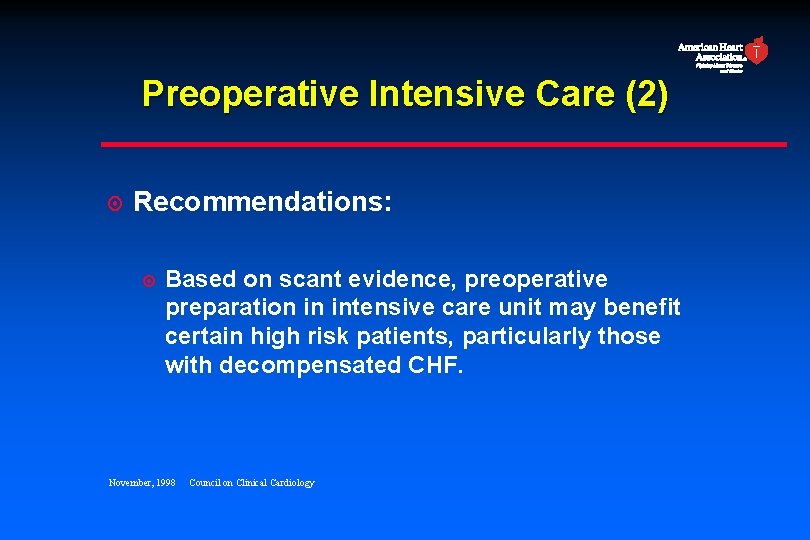
Preoperative Intensive Care (2) ¤ Recommendations: ¤ Based on scant evidence, preoperative preparation in intensive care unit may benefit certain high risk patients, particularly those with decompensated CHF. November, 1998 Council on Clinical Cardiology
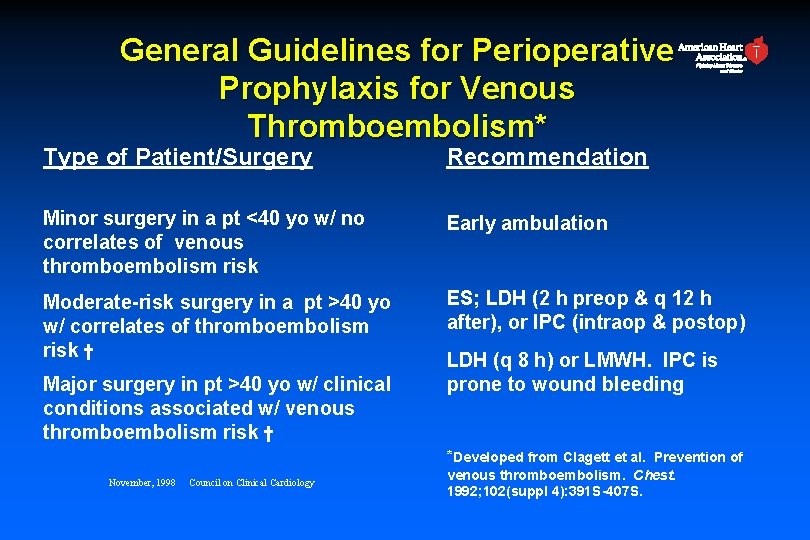
General Guidelines for Perioperative Prophylaxis for Venous Thromboembolism* Type of Patient/Surgery Recommendation Minor surgery in a pt <40 yo w/ no correlates of venous thromboembolism risk Early ambulation Moderate-risk surgery in a pt >40 yo w/ correlates of thromboembolism risk † ES; LDH (2 h preop & q 12 h after), or IPC (intraop & postop) Major surgery in pt >40 yo w/ clinical conditions associated w/ venous thromboembolism risk † LDH (q 8 h) or LMWH. IPC is prone to wound bleeding *Developed from Clagett et al. Prevention of November, 1998 Council on Clinical Cardiology venous thromboembolism. Chest. 1992; 102(suppl 4): 391 S-407 S.
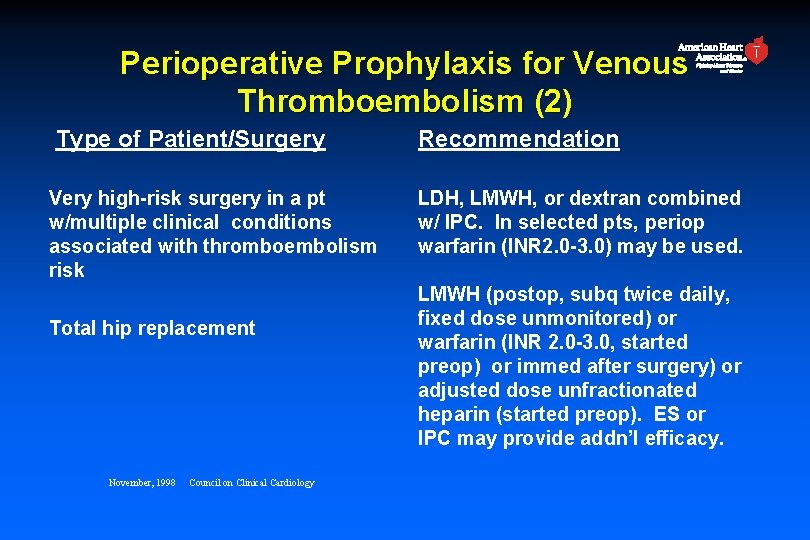
Perioperative Prophylaxis for Venous Thromboembolism (2) Type of Patient/Surgery Very high-risk surgery in a pt w/multiple clinical conditions associated with thromboembolism risk Total hip replacement November, 1998 Council on Clinical Cardiology Recommendation LDH, LMWH, or dextran combined w/ IPC. In selected pts, periop warfarin (INR 2. 0 -3. 0) may be used. LMWH (postop, subq twice daily, fixed dose unmonitored) or warfarin (INR 2. 0 -3. 0, started preop) or immed after surgery) or adjusted dose unfractionated heparin (started preop). ES or IPC may provide addn’l efficacy.
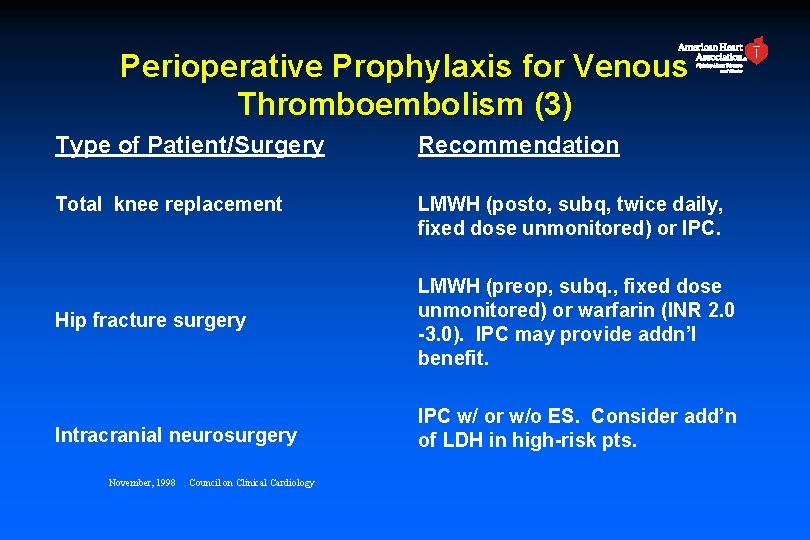
Perioperative Prophylaxis for Venous Thromboembolism (3) Type of Patient/Surgery Recommendation Total knee replacement LMWH (posto, subq, twice daily, fixed dose unmonitored) or IPC. Hip fracture surgery LMWH (preop, subq. , fixed dose unmonitored) or warfarin (INR 2. 0 -3. 0). IPC may provide addn’l benefit. Intracranial neurosurgery IPC w/ or w/o ES. Consider add’n of LDH in high-risk pts. November, 1998 Council on Clinical Cardiology
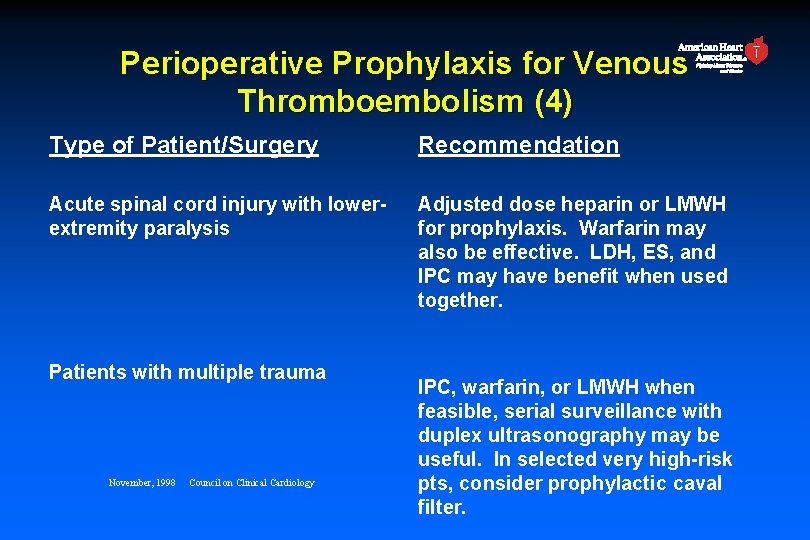
Perioperative Prophylaxis for Venous Thromboembolism (4) Type of Patient/Surgery Recommendation Acute spinal cord injury with lowerextremity paralysis Adjusted dose heparin or LMWH for prophylaxis. Warfarin may also be effective. LDH, ES, and IPC may have benefit when used together. Patients with multiple trauma November, 1998 Council on Clinical Cardiology IPC, warfarin, or LMWH when feasible, serial surveillance with duplex ultrasonography may be useful. In selected very high-risk pts, consider prophylactic caval filter.
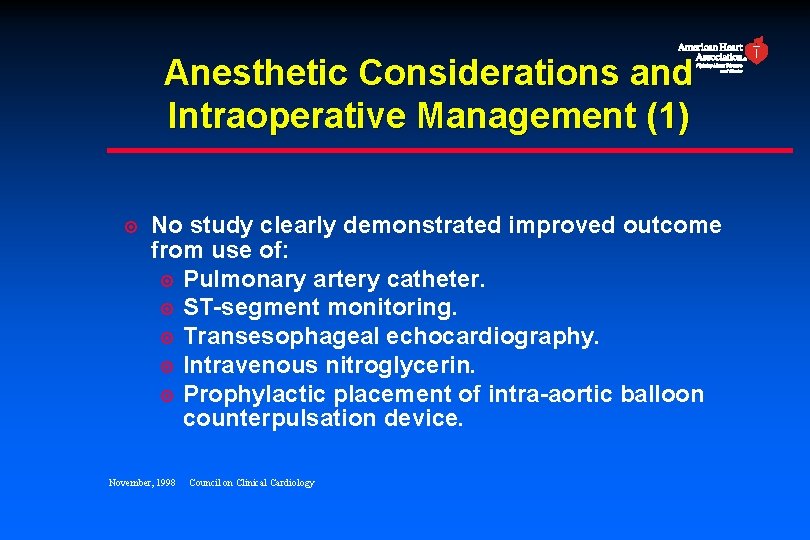
Anesthetic Considerations and Intraoperative Management (1) ¤ No study clearly demonstrated improved outcome from use of: ¤ Pulmonary artery catheter. ¤ ST-segment monitoring. ¤ Transesophageal echocardiography. ¤ Intravenous nitroglycerin. ¤ Prophylactic placement of intra-aortic balloon counterpulsation device. November, 1998 Council on Clinical Cardiology
Anesthetic Considerations and Intraoperative Management (2) ¤ Choice of anesthetic and intraoperative monitoring best left to discretion of anesthesia care team. November, 1998 Council on Clinical Cardiology
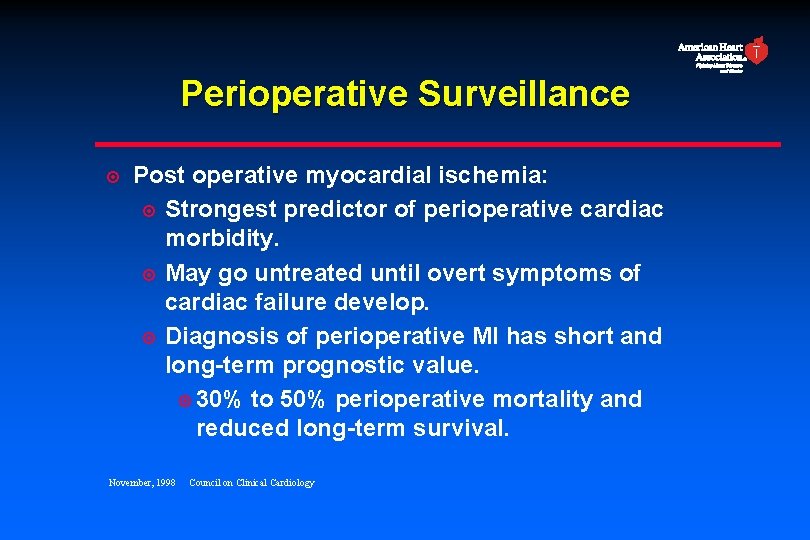
Perioperative Surveillance ¤ Post operative myocardial ischemia: ¤ Strongest predictor of perioperative cardiac morbidity. ¤ May go untreated until overt symptoms of cardiac failure develop. ¤ Diagnosis of perioperative MI has short and long-term prognostic value. ¤ 30% to 50% perioperative mortality and reduced long-term survival. November, 1998 Council on Clinical Cardiology
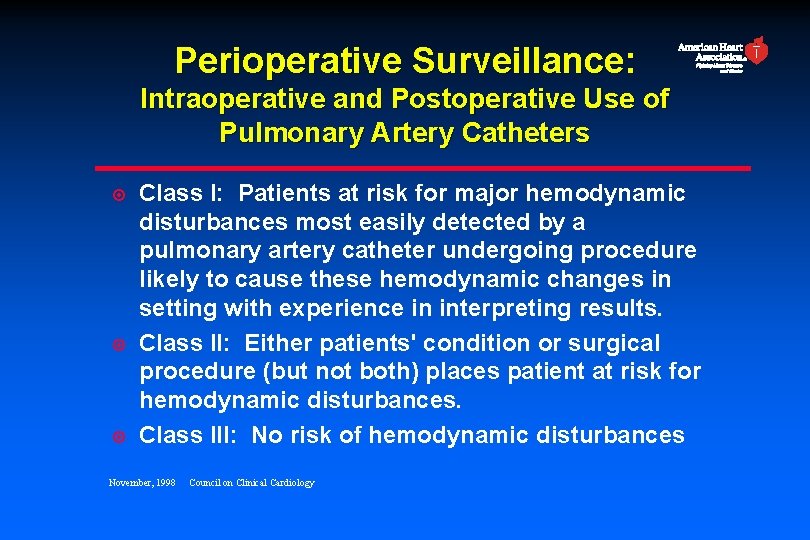
Perioperative Surveillance: Intraoperative and Postoperative Use of Pulmonary Artery Catheters ¤ ¤ ¤ Class I: Patients at risk for major hemodynamic disturbances most easily detected by a pulmonary artery catheter undergoing procedure likely to cause these hemodynamic changes in setting with experience in interpreting results. Class II: Either patients' condition or surgical procedure (but not both) places patient at risk for hemodynamic disturbances. Class III: No risk of hemodynamic disturbances November, 1998 Council on Clinical Cardiology
Perioperative Surveillance: Potential Myocardial Infarction (1) ¤ Patients without evidence of CAD: ¤ Surveillance restricted to those who develop perioperative signs of cardiovascular dysfunction. November, 1998 Council on Clinical Cardiology
Perioperative Surveillance: Potential Myocardial Infarction (2) ¤ Patients with known or suspected CAD: ¤ ECGs at baseline, immediately after procedure, and daily x 2 days. ¤ Measurements of cardiac enzymes best reserved for patients at high risk or who demonstrate ECG or hemodynamic evidence of cardiovascular dysfunction. November, 1998 Council on Clinical Cardiology
Perioperative Surveillance: Arrhythmia/Conduction Disease (1) ¤ Often due to remedial noncardiac problems: ¤ Infection. ¤ Hypotension. ¤ Metabolic derangements. ¤ Hypoxia. November, 1998 Council on Clinical Cardiology
Perioperative Surveillance: Arrhythmia/Conduction Disease (2) ¤ ¤ Cardioversion not recommended until precipitating causes corrected or modified. Electrical cardioversion for supraventricular or ventricular arrhythmias causing hemodynamic compromise. November, 1998 Council on Clinical Cardiology
Postoperative Therapy/Future Management ¤ Assessment and management of risk factors for: ¤ CAD. ¤ Heart failure. ¤ Hypertension. ¤ Stroke. ¤ Other cardiovascular disease. November, 1998 Council on Clinical Cardiology
Conclusions (1) ¤ Successful perioperative evaluation and management of high-risk cardiac patients undergoing noncardiac surgery requires careful teamwork and communication between surgeon, anesthesiologist, primary care physician, and consultant. November, 1998 Council on Clinical Cardiology
Conclusions (2) ¤ Indications for further cardiac testing and treatments are the same as in the nonoperative setting, but timing is dependent on several factors, including: ¤ The urgency of the noncardiac surgery. ¤ Patient-specific risk factors. ¤ Surgery-specific considerations. November, 1998 Council on Clinical Cardiology
Conclusions (3) ¤ Use of both noninvasive and invasive preoperative testing should be limited to circumstances in which the results of the tests clearly affect patient management. November, 1998 Council on Clinical Cardiology
Conclusions (4) ¤ The consultant best serves the patient by making recommendations aimed at: ¤ Lowering immediate perioperative cardiac risk. ¤ Assessing need for subsequent postoperative risk stratification and interventions directed to modify coronary risk factors. November, 1998 Council on Clinical Cardiology © 1998 American Heart Association, Inc. All rights reserved. Unauthorized use prohibited.