
Guided Math Session 4 Small Group Instruction HOMEWORK


- Slides: 16
Guided Math – Session 4 Small Group Instruction
HOMEWORK OPTION 1: Plan and teach a small group and answer the following questions: 1. How did you decide who will be in the group? What data did you use? 2. What concept, skill or procedure were you focusing on? 3. What kind of instruction did you use? How did you teach the concept or skill? 4. Did you use or let your students use manipulatives? 5. What was the result of the teaching?
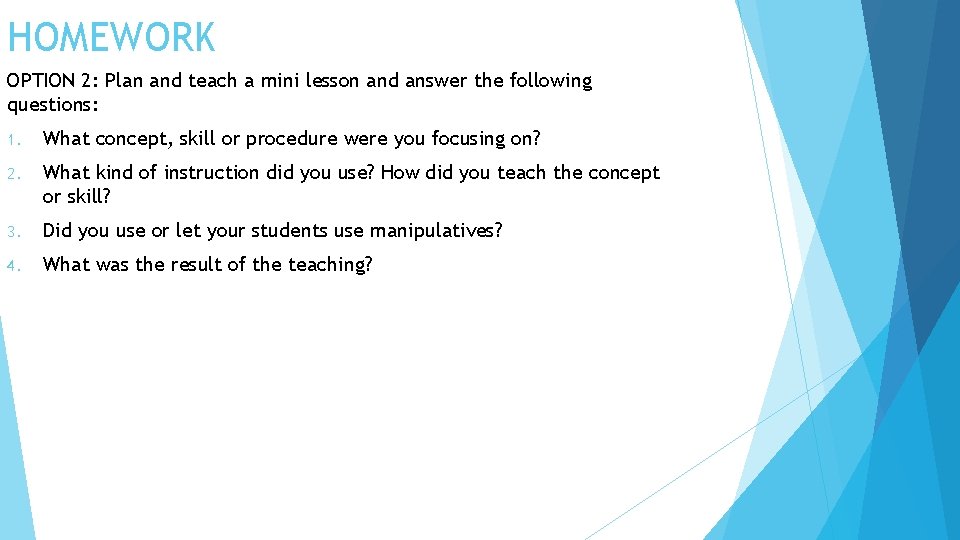
HOMEWORK OPTION 2: Plan and teach a mini lesson and answer the following questions: 1. What concept, skill or procedure were you focusing on? 2. What kind of instruction did you use? How did you teach the concept or skill? 3. Did you use or let your students use manipulatives? 4. What was the result of the teaching?
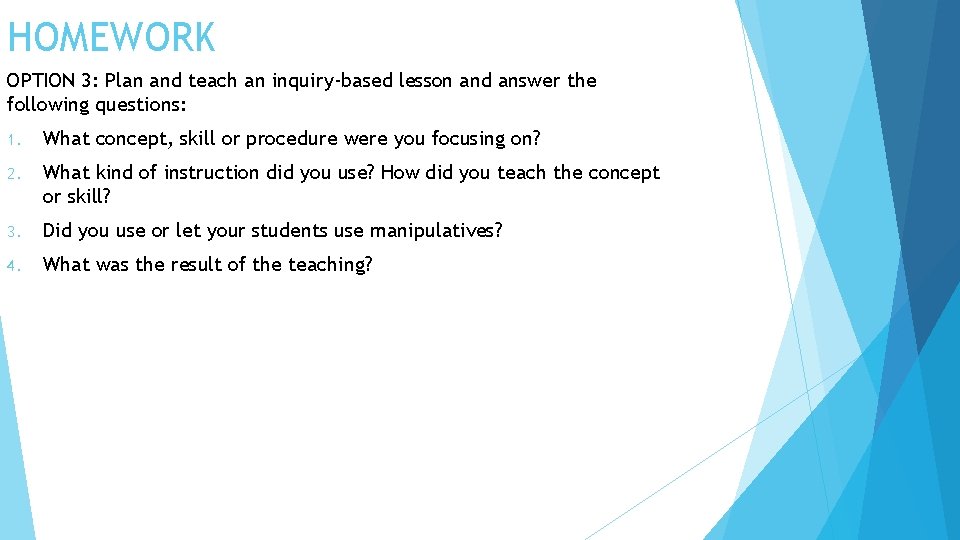
HOMEWORK OPTION 3: Plan and teach an inquiry-based lesson and answer the following questions: 1. What concept, skill or procedure were you focusing on? 2. What kind of instruction did you use? How did you teach the concept or skill? 3. Did you use or let your students use manipulatives? 4. What was the result of the teaching?
Essential Questions ● How do guided math groups help us to differentiate instruction in meaningful ways so that we can reach all learners? ● How do you determine groups?
What data do you use to form groups? ● Data Collection
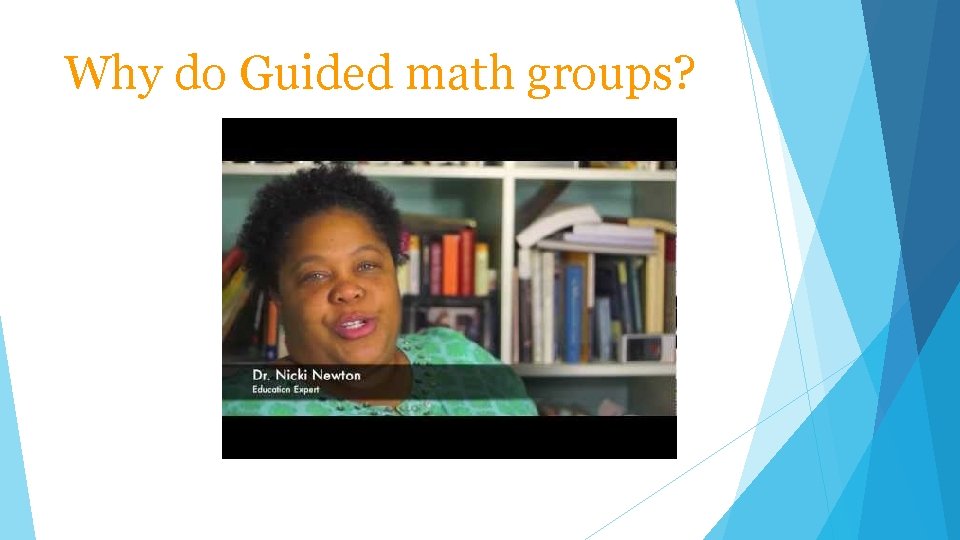
Why do Guided math groups?
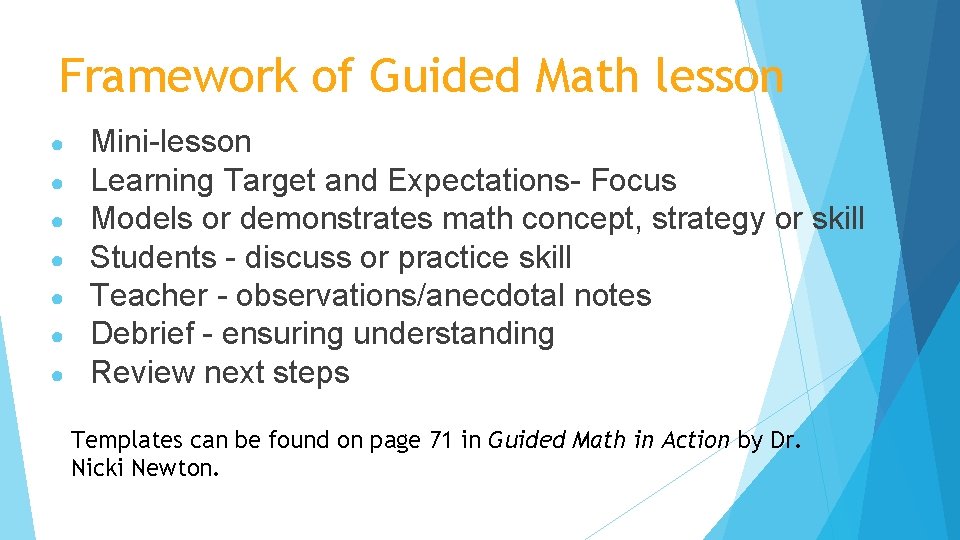
Framework of Guided Math lesson ● ● ● ● Mini-lesson Learning Target and Expectations- Focus Models or demonstrates math concept, strategy or skill Students - discuss or practice skill Teacher - observations/anecdotal notes Debrief - ensuring understanding Review next steps Templates can be found on page 71 in Guided Math in Action by Dr. Nicki Newton.
Shoulder Partner - what does “teaching for conceptual understanding” look like? ● Write your ideas on the post-its and discuss at your table.
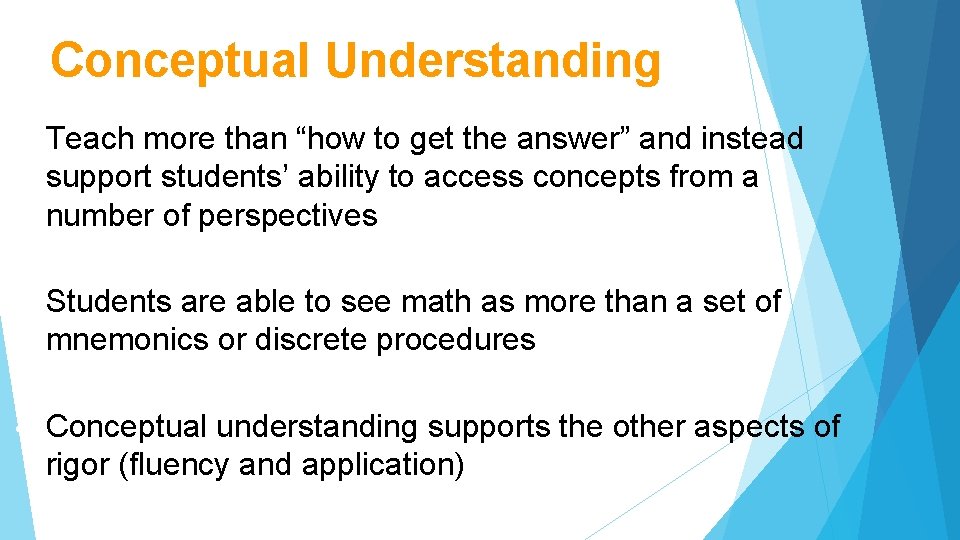
Conceptual Understanding • Teach more than “how to get the answer” and instead support students’ ability to access concepts from a number of perspectives • Students are able to see math as more than a set of mnemonics or discrete procedures • Conceptual understanding supports the other aspects of rigor (fluency and application)
Critical Components Critical Component videos - 5 th grade example
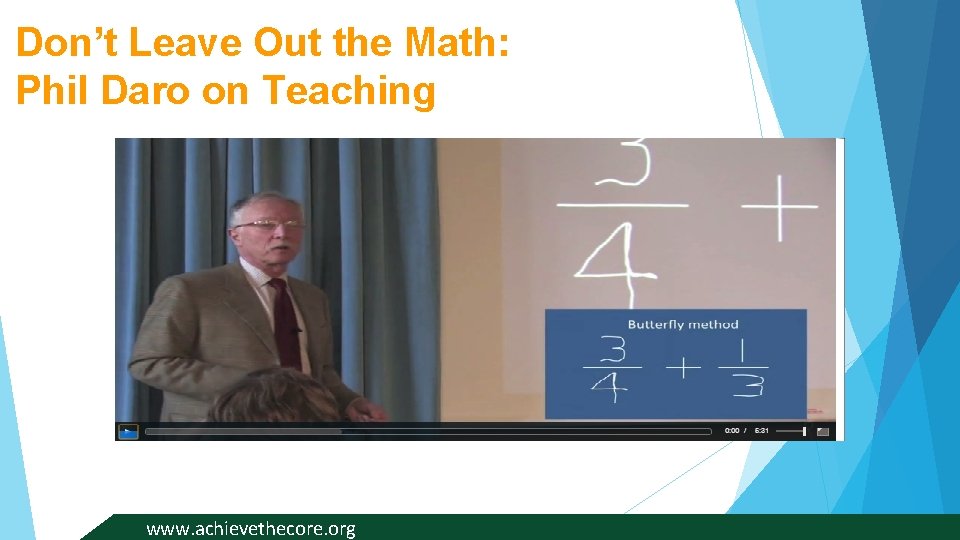
Don’t Leave Out the Math: Phil Daro on Teaching www. achievethecore. org 12
Resource Websites You. Cubed Howard County Math Sites (K-6)
HOMEWORK OPTION 1: Plan and teach a small group and answer the following questions: 1. How did you decide who will be in the group? What data did you use? 2. What concept, skill or procedure were you focusing on? 3. What kind of instruction did you use? How did you teach the concept or skill? 4. Did you use or let your students use manipulatives? 5. What was the result of the teaching?
HOMEWORK OPTION 2: Plan and teach a mini lesson and answer the following questions: 1. What concept, skill or procedure were you focusing on? 2. What kind of instruction did you use? How did you teach the concept or skill? 3. Did you use or let your students use manipulatives? 4. What was the result of the teaching?
HOMEWORK OPTION 3: Plan and teach an inquiry-based lesson and answer the following questions: 1. What concept, skill or procedure were you focusing on? 2. What kind of instruction did you use? How did you teach the concept or skill? 3. Did you use or let your students use manipulatives? 4. What was the result of the teaching?