
Guide tube system Integration Workshop CERN 6 10
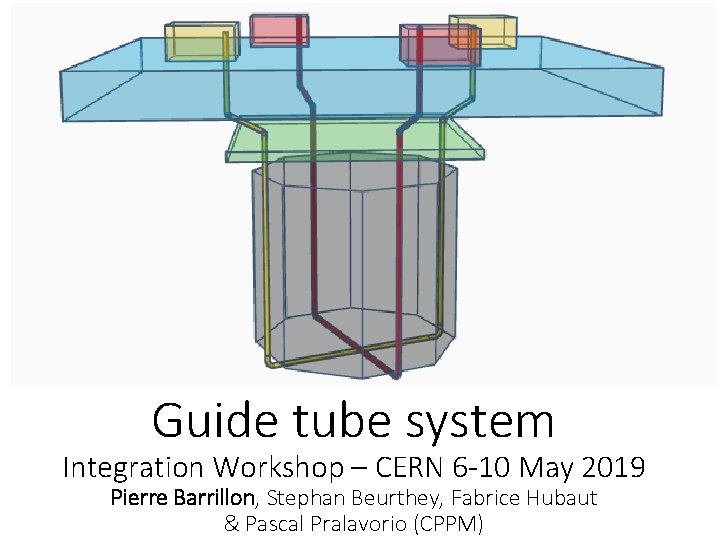
Guide tube system Integration Workshop – CERN 6 -10 May 2019 Pierre Barrillon, Stephan Beurthey, Fabrice Hubaut & Pascal Pralavorio (CPPM)
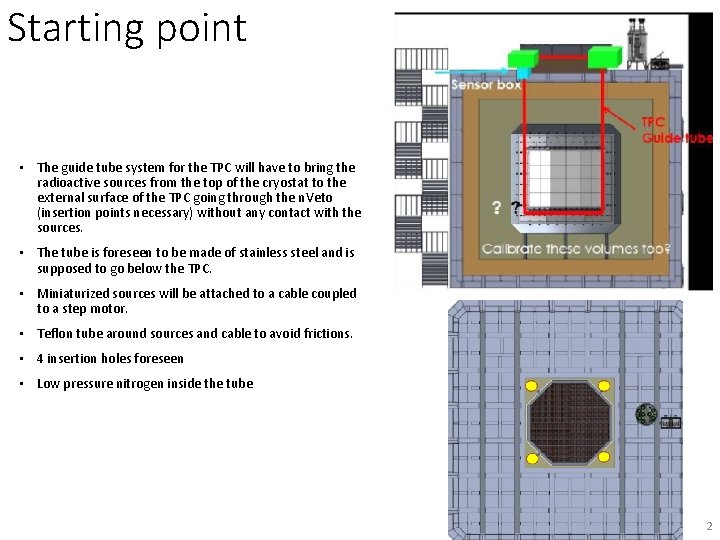
Starting point • The guide tube system for the TPC will have to bring the radioactive sources from the top of the cryostat to the external surface of the TPC going through the n. Veto (insertion points necessary) without any contact with the sources. • The tube is foreseen to be made of stainless steel and is supposed to go below the TPC. • Miniaturized sources will be attached to a cable coupled to a step motor. • Teflon tube around sources and cable to avoid frictions. • 4 insertion holes foreseen • Low pressure nitrogen inside the tube 2
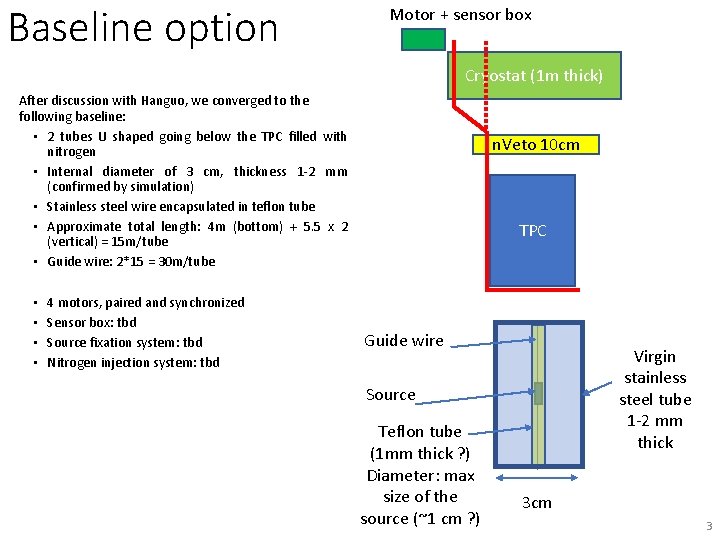
Baseline option Motor + sensor box Cryostat (1 m thick) After discussion with Hanguo, we converged to the following baseline: • 2 tubes U shaped going below the TPC filled with nitrogen • Internal diameter of 3 cm, thickness 1 -2 mm (confirmed by simulation) • Stainless steel wire encapsulated in teflon tube • Approximate total length: 4 m (bottom) + 5. 5 x 2 (vertical) = 15 m/tube • Guide wire: 2*15 = 30 m/tube • • 4 motors, paired and synchronized Sensor box: tbd Source fixation system: tbd Nitrogen injection system: tbd n. Veto 10 cm TPC Guide wire Virgin stainless steel tube 1 -2 mm thick Source Teflon tube (1 mm thick ? ) Diameter: max size of the source (~1 cm ? ) 3 cm 3
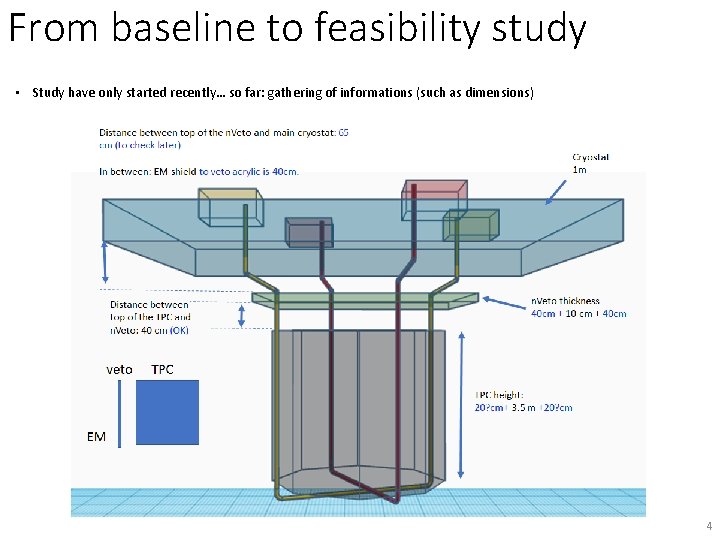
From baseline to feasibility study • Study have only started recently… so far: gathering of informations (such as dimensions) 4
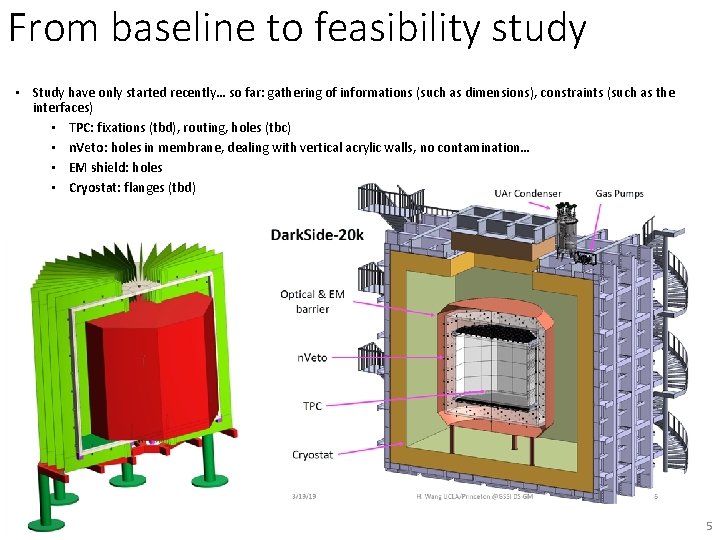
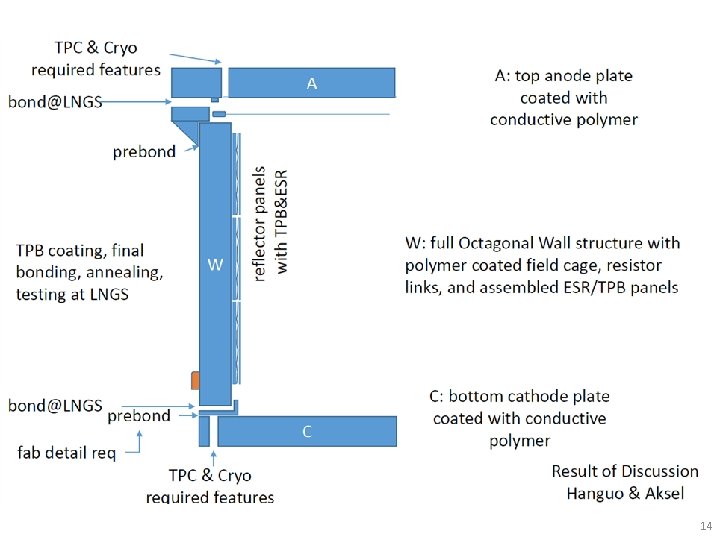
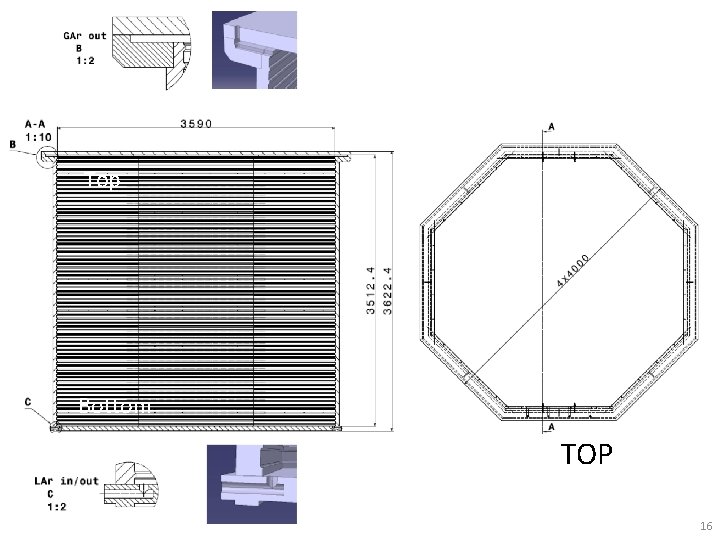
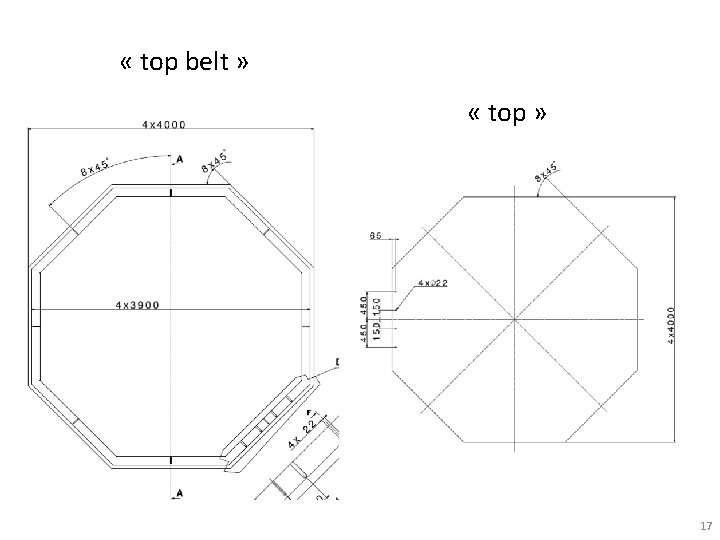
From baseline to feasibility study • Study have only started recently… so far: gathering of informations (such as dimensions), constraints (such as the interfaces) • TPC: fixations (tbd), routing, holes (tbc) • n. Veto: holes in membrane, dealing with vertical acrylic walls, no contamination… • EM shield: holes • Cryostat: flanges (tbd) 5
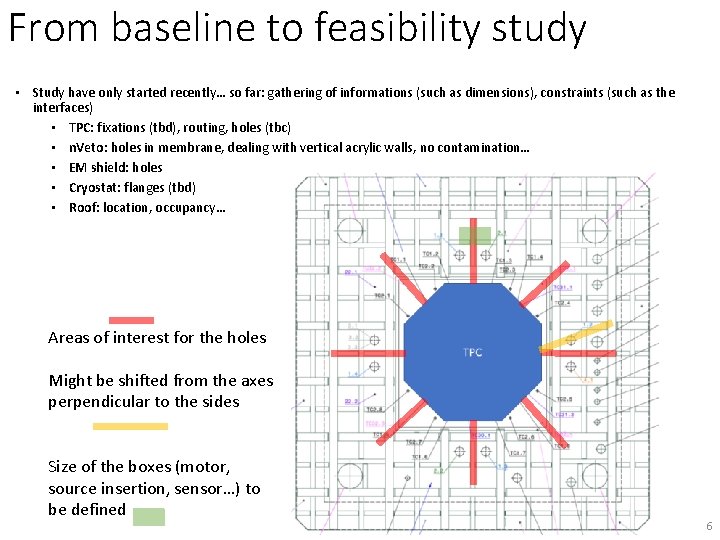
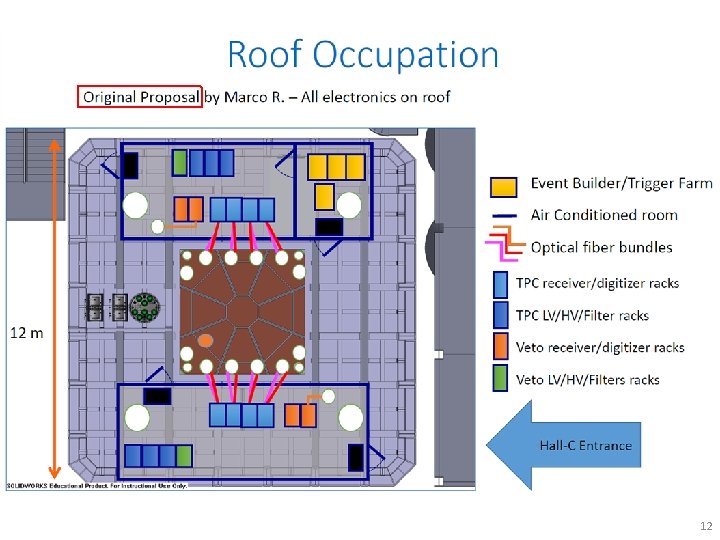
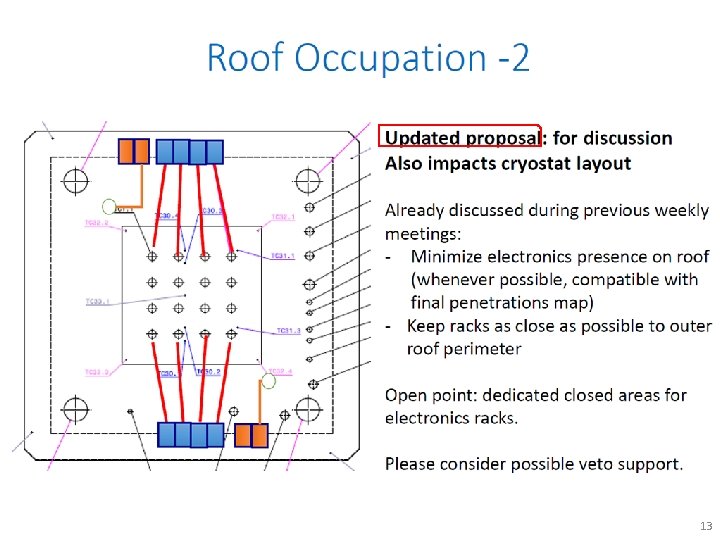
From baseline to feasibility study • Study have only started recently… so far: gathering of informations (such as dimensions), constraints (such as the interfaces) • TPC: fixations (tbd), routing, holes (tbc) • n. Veto: holes in membrane, dealing with vertical acrylic walls, no contamination… • EM shield: holes • Cryostat: flanges (tbd) • Roof: location, occupancy… Areas of interest for the holes Might be shifted from the axes perpendicular to the sides Size of the boxes (motor, source insertion, sensor…) to be defined 6
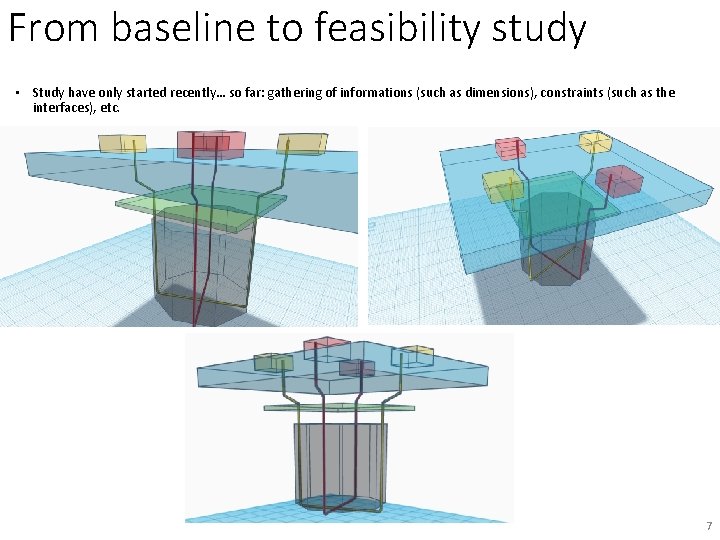
From baseline to feasibility study • Study have only started recently… so far: gathering of informations (such as dimensions), constraints (such as the interfaces), etc. 7
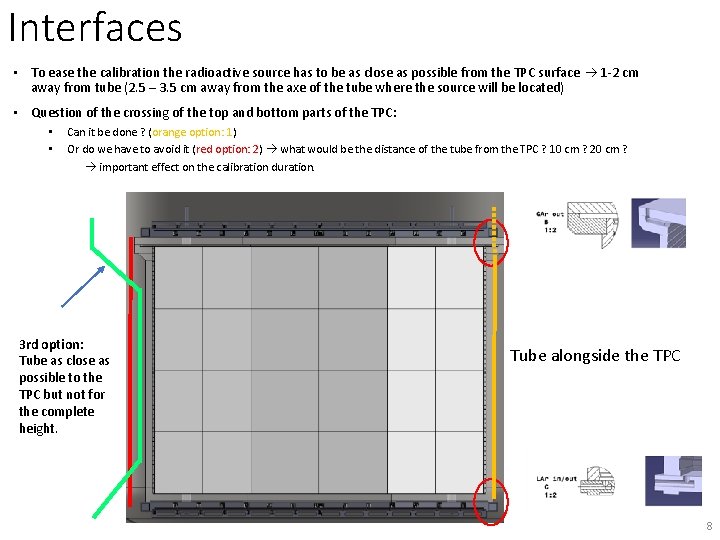
Interfaces • To ease the calibration the radioactive source has to be as close as possible from the TPC surface 1 -2 cm away from tube (2. 5 – 3. 5 cm away from the axe of the tube where the source will be located) • Question of the crossing of the top and bottom parts of the TPC: • • Can it be done ? (orange option: 1) Or do we have to avoid it (red option: 2) what would be the distance of the tube from the TPC ? 10 cm ? 20 cm ? important effect on the calibration duration. 3 rd option: Tube as close as possible to the TPC but not for the complete height. Tube alongside the TPC 8
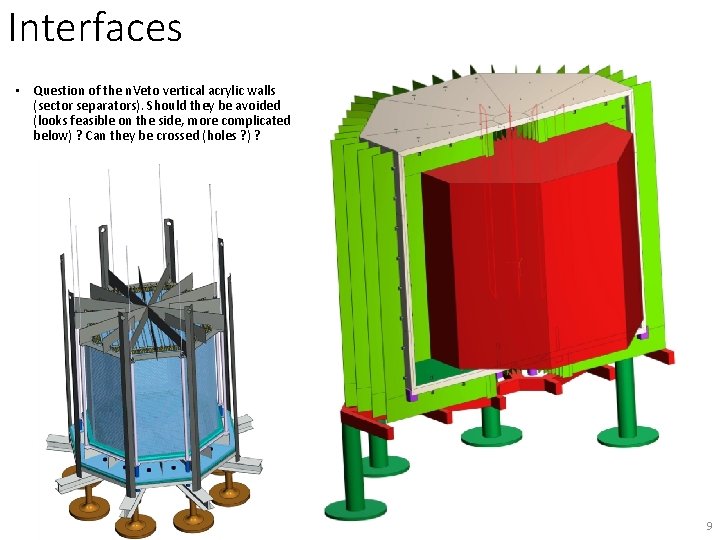
Interfaces • Question of the n. Veto vertical acrylic walls (sector separators). Should they be avoided (looks feasible on the side, more complicated below) ? Can they be crossed (holes ? ) ? 9
Back-up slides 10
11
12
13
14

15
Top Bottom TOP 16
« top belt » « top » 17
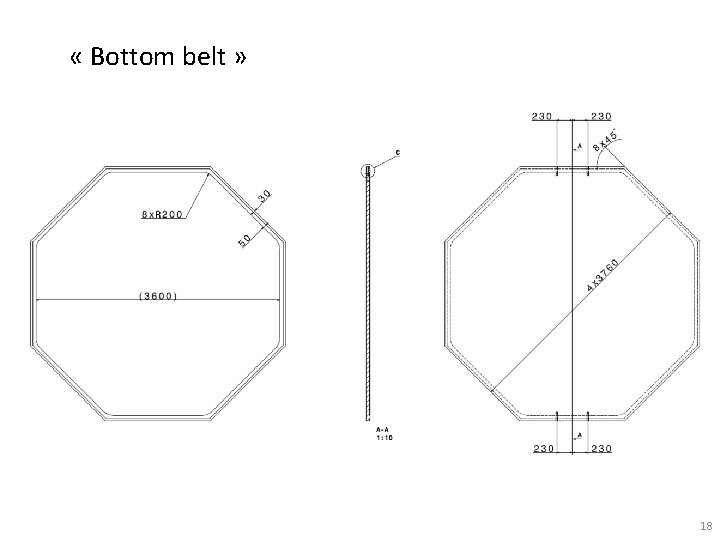
« Bottom belt » 18
- Slides: 18