
Guide to the ECVS Board Examination Introduction The
Guide to the ECVS Board Examination
Introduction The aim of the Exam Committee is to compile an exam that assesses whether candidates achieve the required minimum standard, as determined by the College, in order to be certified as ECVS Diplomates. Candidates should demonstrate a safe and logical approach to a broad range of cases in soft tissue surgery, orthopaedics and neurology. The exam is not designed to catch you out, nor to expect you to demonstrate the same skill set as a Diplomate with many years of experience.
Overview • • Resources • Examination Guide • Reading Lists The ECVS Exam • Case-based Exam • Practical Exam • Multiple Choice Questions Exam • • • Preparing for and sitting the ECVS Exam Before the Exam Technique Common Pitfalls Time Keeping • Marking and Pass Score Setting • Case-based and Practical Exam • MCQ Exam • Exam platform Q-examiner • Housekeeping • Keyboards • Unethical Behaviour • During the Exam

Resources
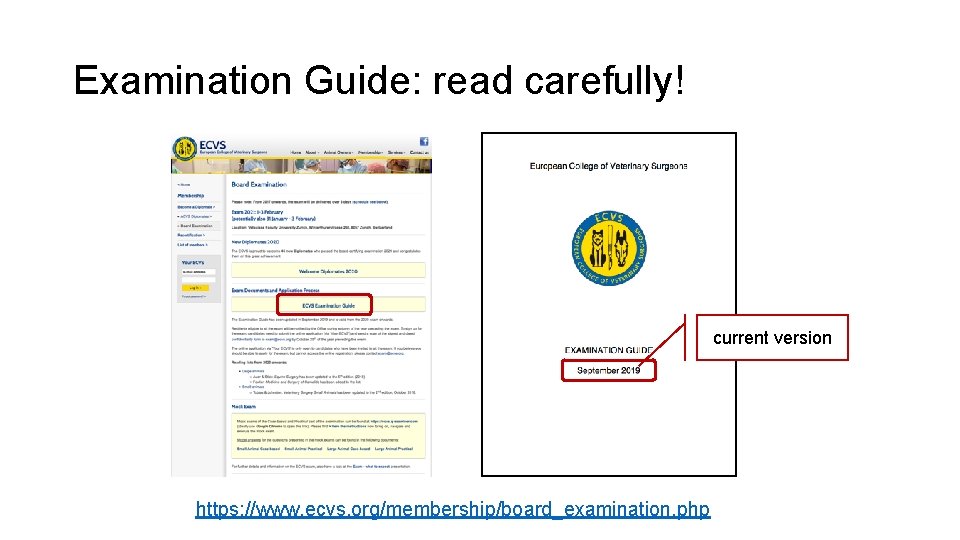
Examination Guide: read carefully! current version https: //www. ecvs. org/membership/board_examination. php
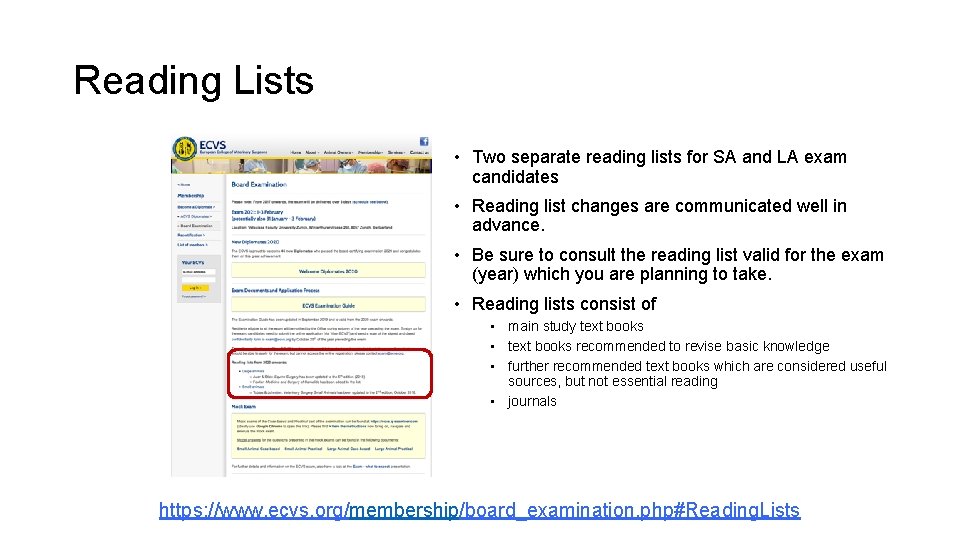
Reading Lists • Two separate reading lists for SA and LA exam candidates • Reading list changes are communicated well in advance. • Be sure to consult the reading list valid for the exam (year) which you are planning to take. • Reading lists consist of • main study text books • text books recommended to revise basic knowledge • further recommended text books which are considered useful sources, but not essential reading • journals https: //www. ecvs. org/membership/board_examination. php#Reading. Lists
The ECVS Exam
Case Based Exam AIM: To test whether a candidate can follow a case from start to finish, making sensible choices for the patient at each stage (prior to / during / after surgery). FORMAT: 6 cases with 10 questions each (= 60 questions), delivered in 2 sessions SA: 3 soft tissue cases, 2 orthopaedic cases, 1 neurology case LA: 3 soft tissue and 3 orthopaedic cases, of which 1 or 2 are food animal cases Radiological images, laboratory findings and intra-operative photographs may be provided for your information. Candidates are free to start the cases in their own preferred order. A case can be stopped at any time and returned to later. Candidates are responsible for their own time management! NB: You can only see the next question in a case, not beyond that. To move through the case, a question needs to be answered and the answer saved in order to be able to move on. All answers are final once saved and cannot be edited later as new information will be given as the case progresses. DURATION: Two 2 -hour exam sessions, separated by a 30 minute break.
Practical Exam AIM: To test interpretation and recognition skills FORMAT: 15 scenarios with 4 questions each (= 60 questions), delivered in 2 sessions occasionally, a scenario may have 3 or 5 questions, but the total remains 60 SA: 8 soft tissue, 5 orthopaedic and 2 neurology scenarios LA: 5 orthopaedic, 3 alimentary, 2 respiratory, 2 urogenital, 1 special senses, 1 integument, 1 instrument of which 3 will be food animal scenarios Videos, radiological images, intra-operative photographs or laboratory data may be provided to augment the scenario. Candidates can navigate through the scenarios in one session entirely freely. All questions can be viewed from the beginning and started, stopped, returned to in any order at any time. Answers can be edited until the end of the session. Candidates are responsible for their own time management! DURATION: Two 2 -hour sessions with a short comfort break between
Multiple Choice Questions (MCQ) Exam AIM: to assess knowledge of the relevant medical literature, both text books and journals (of the last 5 years) FORMAT: 100 questions, each with a question stem and 4 answer choices (correct answer + 3 distractors) 10 -20% of the questions are of a general nature (e. g. anatomy, physiology), the rest is species specific. The LA exam contains up to 20% food animal questions. The order of the questions is randomised for each candidate. The order of the answer choices is randomised for each candidate. There is entirely free navigation throughout the exam. All questions can be viewed from the beginning. Answers can be edited until the end of the exam. Candidates are responsible for their own time management! DURATION: One continuous 5 -hour session. Candidates can leave when finished.

Preparing for and sitting the ECVS Exam • The following slides are meant as advice. There are no strict rules how to prepare for an exam. You will receive a lot of advice but what works for one person may not work for another. • Nothing can replace the interaction with your supervisor(s) and mentors!
Before the Exam • Start your preparation early. This is not an exam you can cram for. • Develop a regular study routine. • Make an accurate and achievable plan to cover the material that needs to be reviewed. • Maintaining good mental and physical health is invaluable when studying and should be part of the routine. • Remember for the case based and the practical, the questions are based on real-life cases rather than just book knowledge. • Practice mock questions
Before the Exam • Give yourself plenty of time to travel to the exam location and orient yourself in the city. • Allow plenty of time to get to the exam hall. The exam will start promptly and will not wait for you. • Guidance on what materials can be brought into the exam hall is detailed in the examination guide and in this presentation (Housekeeping).
Exam Technique Take your time to read the question and think about what you are being asked - the time allocated for each exam session is designed to allow you more than enough time to answer the questions. If the question asks you to BE SPECIFIC this usually relates to: • using correct anatomical localisation (e. g. medial coronoid process rather than elbow, grade 3 left laryngeal hemiplegia rather than laryngeal hemiplegia or naming a specific axial pattern flap rather than saying skin flap) • ensure you state the affected side e. g. LEFT or RIGHT • using the correct and precise terminology, e. g. implants or a procedure • detailing suture material or pattern, if the question requests this
Exam Technique If a specific number of answers is requested, only that number of answers will be reviewed. If we ask for THREE items and you list more than three, only the first three will be marked, even if the correct answer appears further down the list. Write your answers in a logical way: • This will increase the likelihood of you delivering a correct answer. • Do not simply write for the sake of writing. • A list means a list – no explanation is required. • Avoid the use of abbreviations, unless they are in very common use.
Exam Technique Wherever possible, use generic names for drugs and sutures etc. rather than trade names. The language of the ECVS examination is English and thus you should answer in English. If you do not know the occasional precise word in English, you can write it in your native language, and we will do our best to understand your meaning. A maximum number of characters is set for each answer. This number is indicated underneath the answer box. You can write more than the indicated maximum and your full answer will be visible to the Exam Committee, but the character count can significantly help you to judge whether a single term, a short sentence or a longer, essay-style answer is expected.
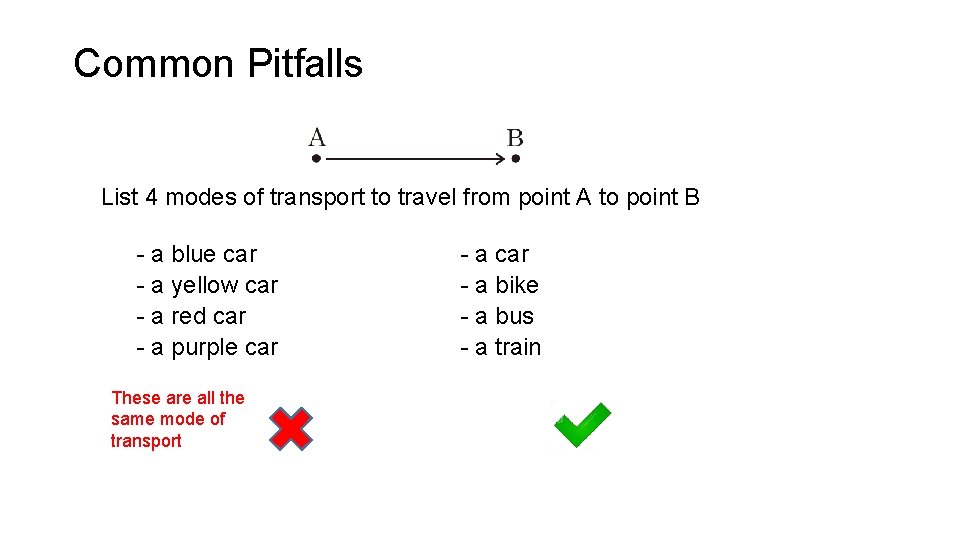
Common Pitfalls List 4 modes of transport to travel from point A to point B - a blue car - a yellow car - a red car - a purple car These are all the same mode of transport - a car - a bike - a bus - a train
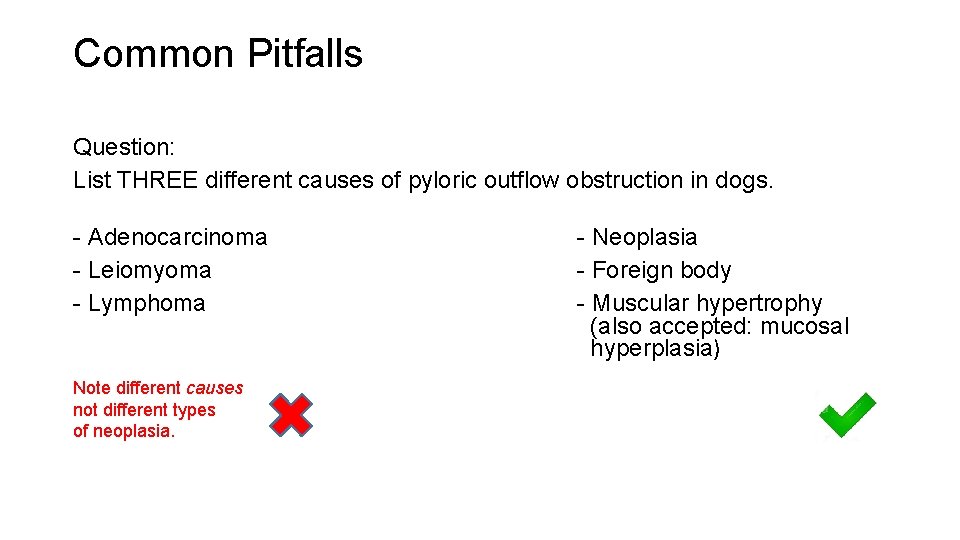
Common Pitfalls Question: List THREE different causes of pyloric outflow obstruction in dogs. - Adenocarcinoma - Leiomyoma - Lymphoma Note different causes not different types of neoplasia. - Neoplasia - Foreign body - Muscular hypertrophy (also accepted: mucosal hyperplasia)
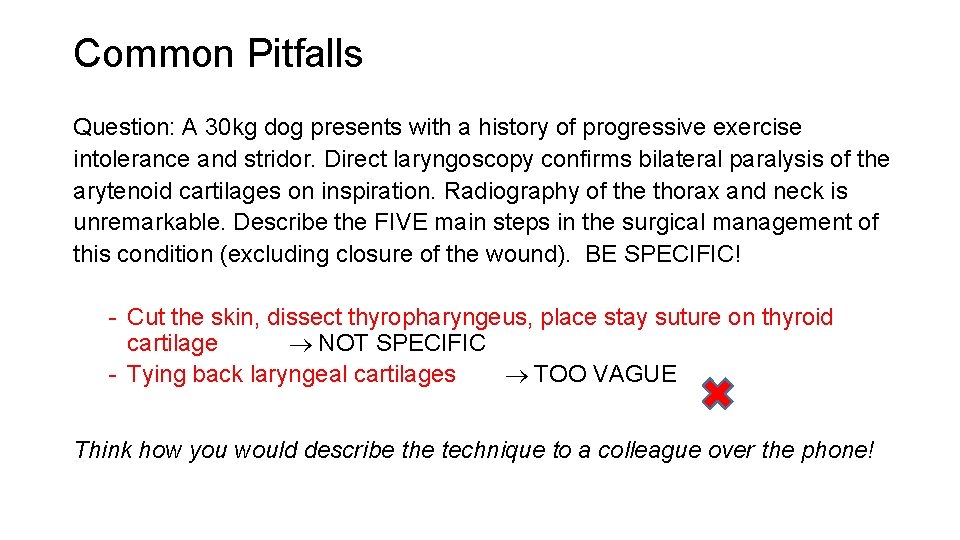
Common Pitfalls Question: A 30 kg dog presents with a history of progressive exercise intolerance and stridor. Direct laryngoscopy confirms bilateral paralysis of the arytenoid cartilages on inspiration. Radiography of the thorax and neck is unremarkable. Describe the FIVE main steps in the surgical management of this condition (excluding closure of the wound). BE SPECIFIC! - Cut the skin, dissect thyropharyngeus, place stay suture on thyroid cartilage NOT SPECIFIC - Tying back laryngeal cartilages TOO VAGUE Think how you would describe the technique to a colleague over the phone!
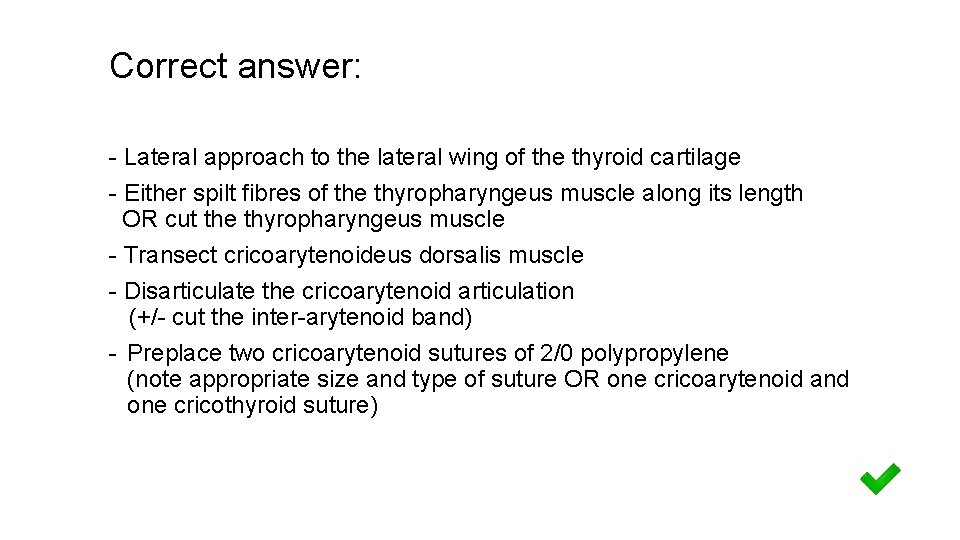
Correct answer: - Lateral approach to the lateral wing of the thyroid cartilage - Either spilt fibres of the thyropharyngeus muscle along its length OR cut the thyropharyngeus muscle - Transect cricoarytenoideus dorsalis muscle - Disarticulate the cricoarytenoid articulation (+/- cut the inter-arytenoid band) - Preplace two cricoarytenoid sutures of 2/0 polypropylene (note appropriate size and type of suture OR one cricoarytenoid and one cricothyroid suture)
Time-Keeping You are responsible for your own time keeping! Each of the questions carries the same number of points and although you may find some questions easier than others, you should not spend too much time on one question to the detriment of others. • Time calls will be made at set points through the examination and there will also be a clock visible on your lap-top screen. • You will not be allowed to leave the exam hall in the last 15 minutes of any examination session.
Marking and Pass Score Setting
How the Exam is marked: • Candidate identities are blinded to the examiners until after the marking process is entirely completed. Only candidate numbers are used to identify individuals. • For each part of the exam, the candidate will receive a PASS or FAIL result. • The case-Based and practical exams are marked using the PASS/BORDERLINE/FAIL method
Case-based and Practical Exam In the first step, each candidate’s entire script for that part of the exam is independently reviewed by at least 3 examiners. • Each examiner allocates each script a grade of either CLEAR PASS, BORDERLINE or CLEAR FAIL, depending on whether they feel the candidate does or does not meet the standards of the minimally qualified candidate (CLEAR PASS or CLEAR FAIL), or if they feel that no clear decision can be reached (BORDERLINE). Each examiner protocols the thoughts involved in the decision-making process on one sheet per candidate. o This process takes in to account any decisions which have been made which could be considered dangerous for the patient. • Once 3 examiners have reached the same grade for a script, this grade becomes the final grade for this candidate for this part. In this step, each script will be reviewed by at least 3 and up to 5 examiners. o If 3 examiners do not agree on the grade, a 4 th examiner will assess the script. o If there still are no 3 matching grades, a 5 th examiner will assess the script. o If a decision is still not reached after assessment by all five examiners, the candidate will enter the borderline group.
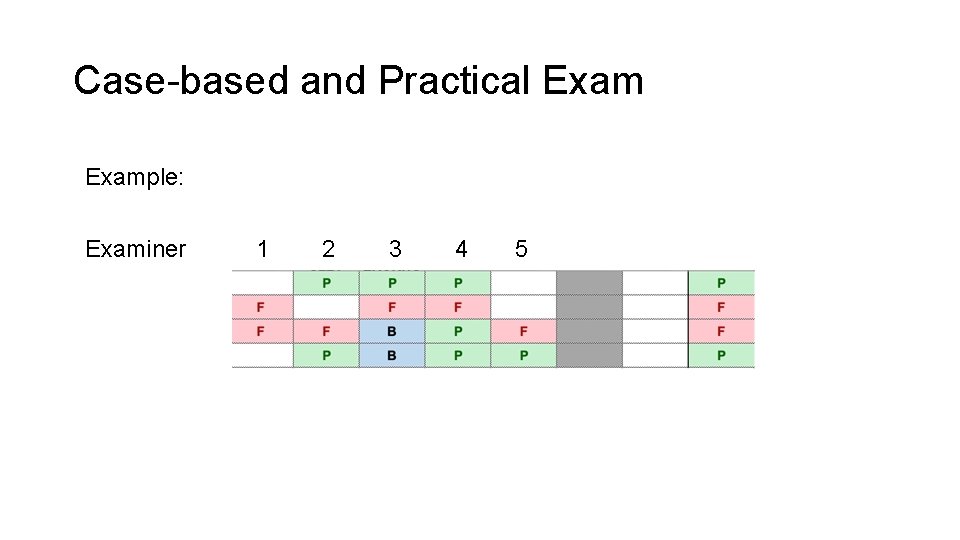
Case-based and Practical Example: Examiner 1 2 3 4 5
Case-based and Practical Exam In the second step, all scripts in the BORDERLINE grouped are then marked numerically by 2 examiners independently. • If the 2 examiners agree on the number of points to be given for an answer, the candidate’s answer get this many points. • If the 2 examiners do not allocate the same points, these differences are discussed. Either the number of points are aligned following this discussion, or the examiners “agree to disagree”, in which case the candidate’s answer receives the average between these two scores.
Case-based and Practical Exam • All individual questions carry the same number of points (2 points per question). • There is no negative marking in the numerical marking. This means points are not deducted for a wrong answer. • Fractional scoring is in place for some questions. This means that you need to achieve at least half of the correct answers to an individual question in order to achieve any points. • Only full points are given (0, 1 or 2) • No half points are given.
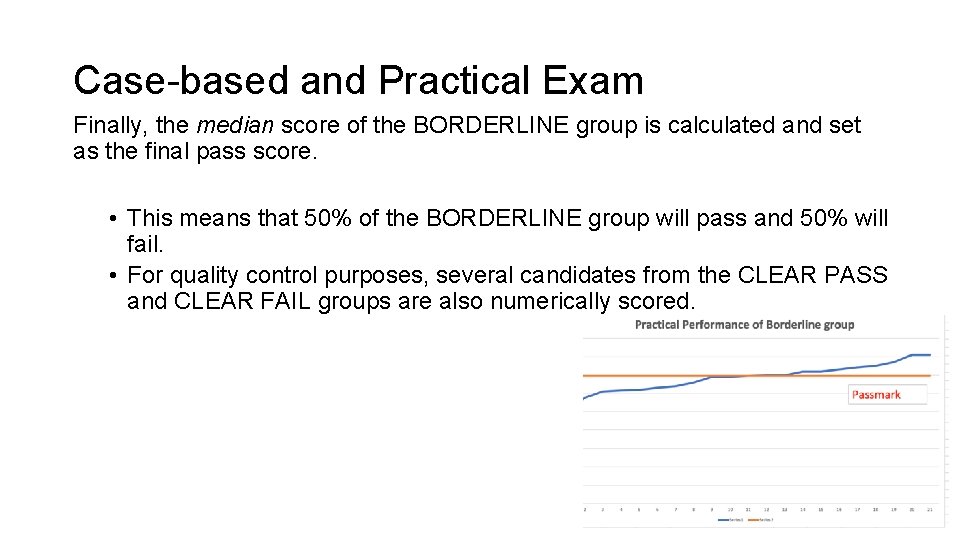
Case-based and Practical Exam Finally, the median score of the BORDERLINE group is calculated and set as the final pass score. • This means that 50% of the BORDERLINE group will pass and 50% will fail. • For quality control purposes, several candidates from the CLEAR PASS and CLEAR FAIL groups are also numerically scored.
MCQ Exam The Hofstee method is used to set the pass mark for the MCQ part of the exam: • The minimum and maximum failure rates for the examination are pre-determined, as well as what the minimum and maximum percentage pass mark score should be. • These rates and percent scores are projected onto the actual score distribution to derive a final pass mark.
Exam Platform Q-examiner
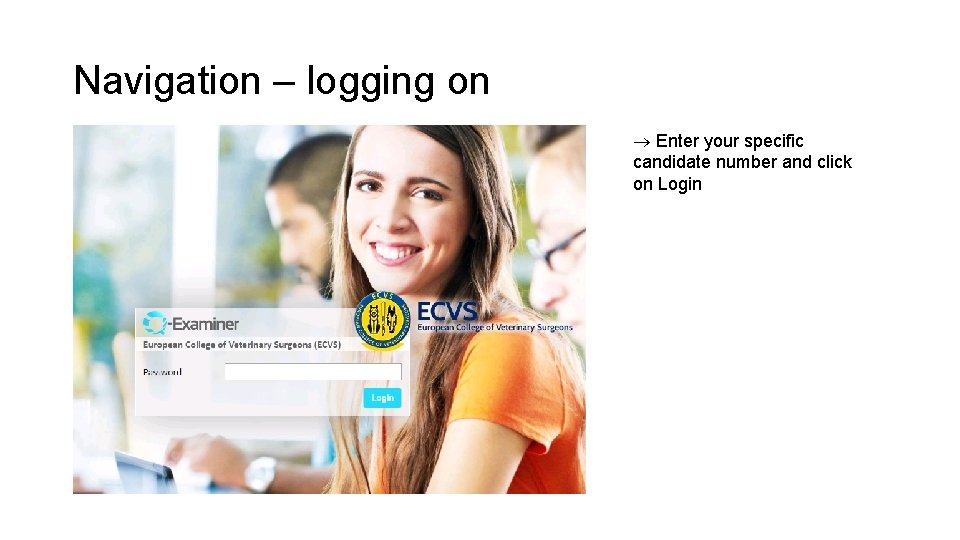
Navigation – logging on Enter your specific candidate number and click on Login
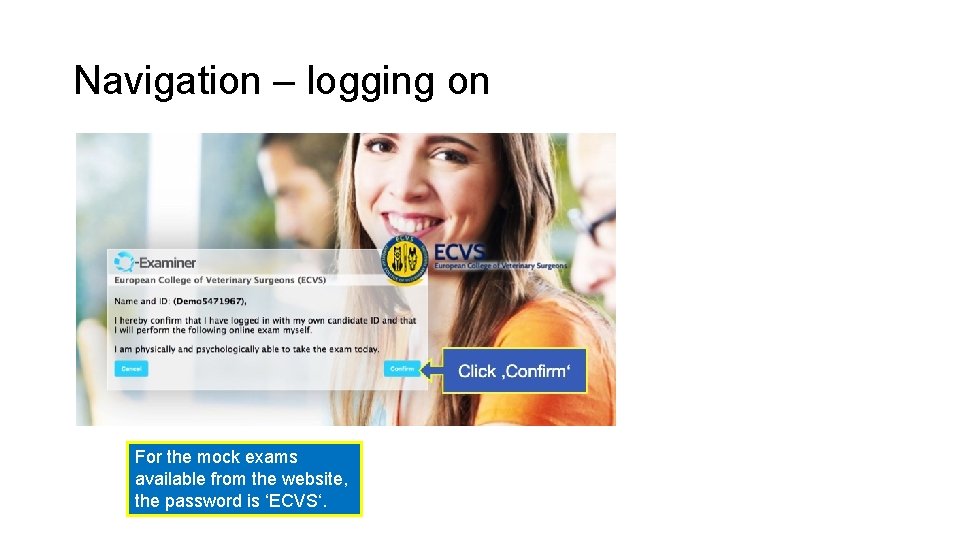
Navigation – logging on For the mock exams available from the website, the password is ‘ECVS‘.
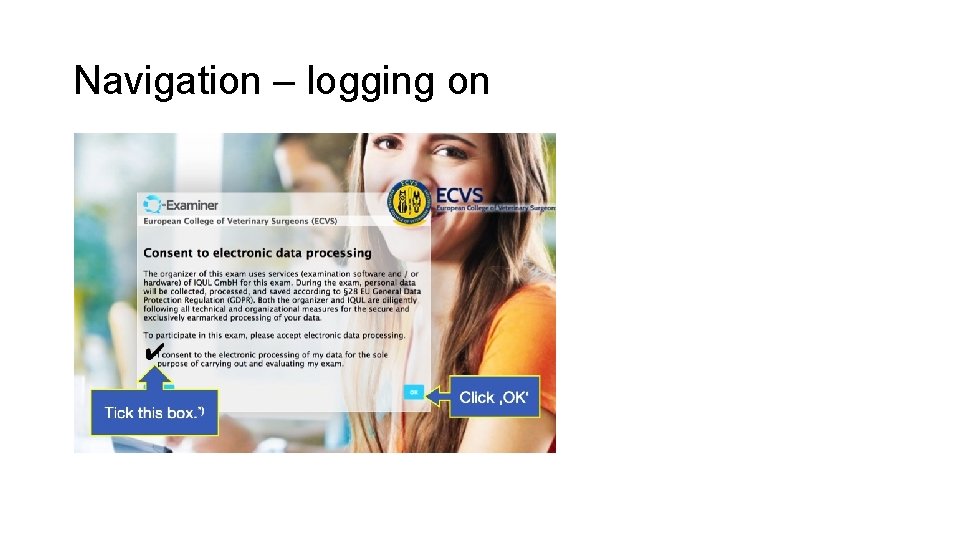
Navigation – logging on
Navigating the Case-Based examination
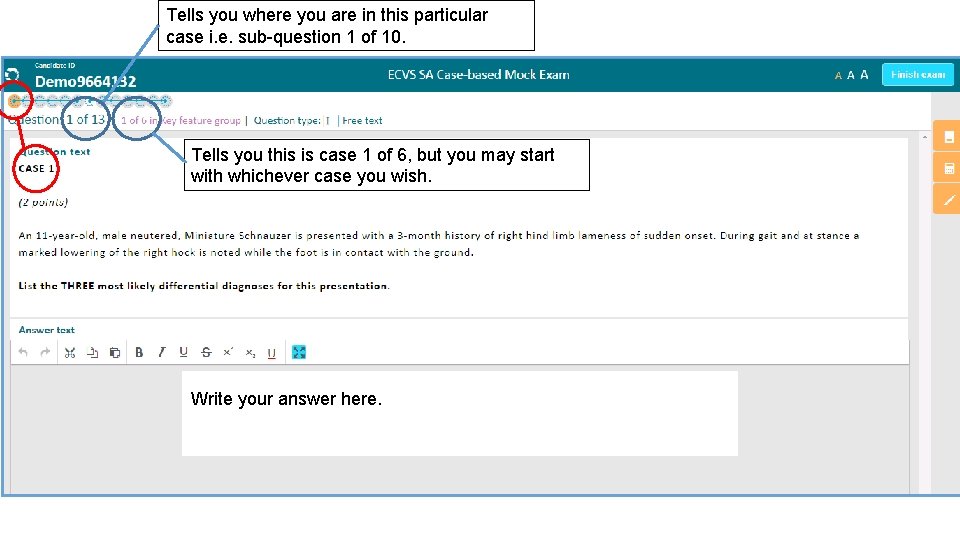
Tells you where you are in this particular case i. e. sub-question 1 of 10. Tells you this is case 1 of 6, but you may start with whichever case you wish. Write your answer here.
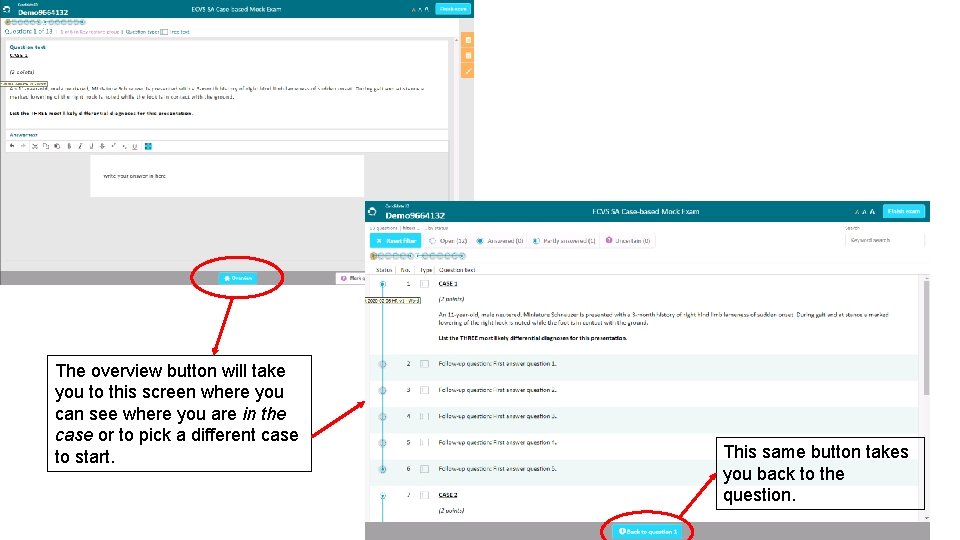
The overview button will take you to this screen where you can see where you are in the case or to pick a different case to start. This same button takes you back to the question.
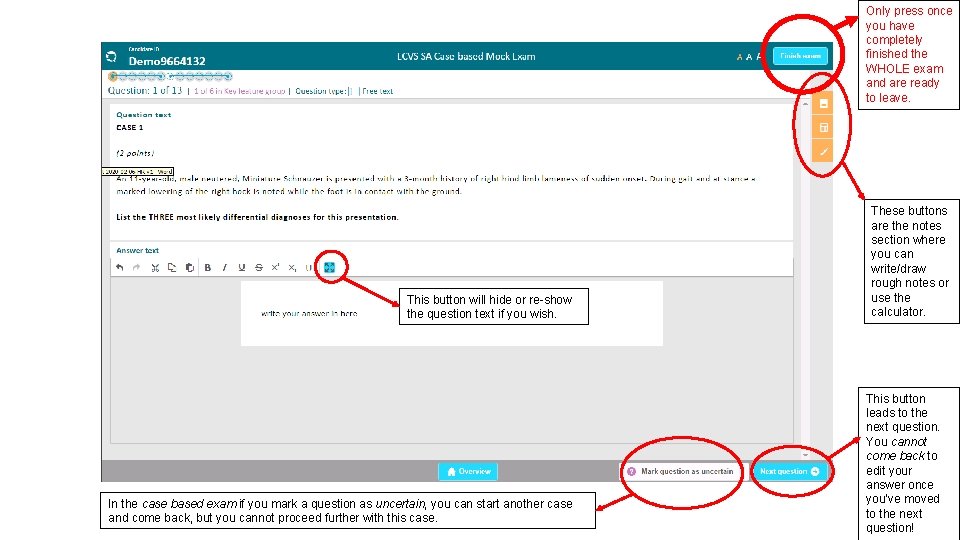
Only press once you have completely finished the WHOLE exam and are ready to leave. This button will hide or re-show the question text if you wish. In the case based exam if you mark a question as uncertain, you can start another case and come back, but you cannot proceed further with this case. These buttons are the notes section where you can write/draw rough notes or use the calculator. This button leads to the next question. You cannot come back to edit your answer once you’ve moved to the next question!
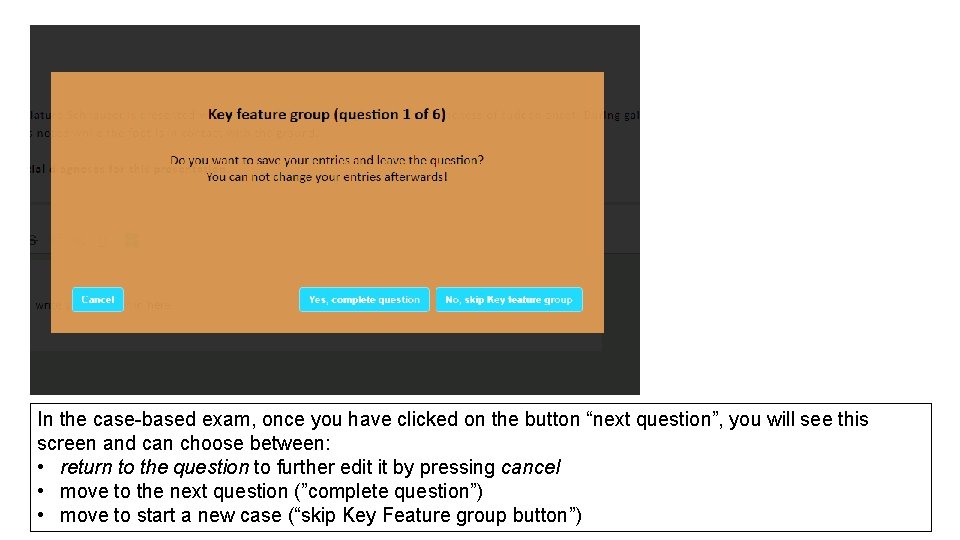
In the case-based exam, once you have clicked on the button “next question”, you will see this screen and can choose between: • return to the question to further edit it by pressing cancel • move to the next question (”complete question”) • move to start a new case (“skip Key Feature group button”)
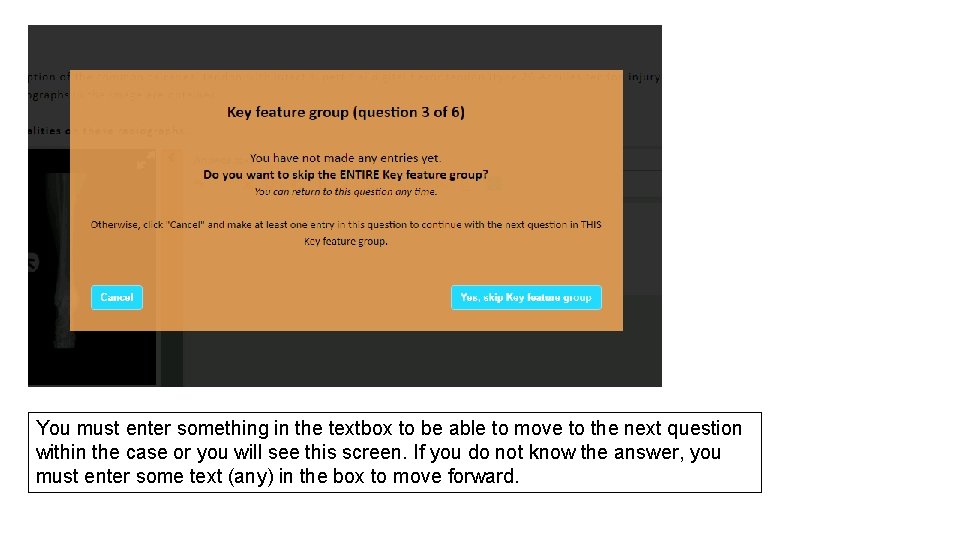
You must enter something in the textbox to be able to move to the next question within the case or you will see this screen. If you do not know the answer, you must enter some text (any) in the box to move forward.
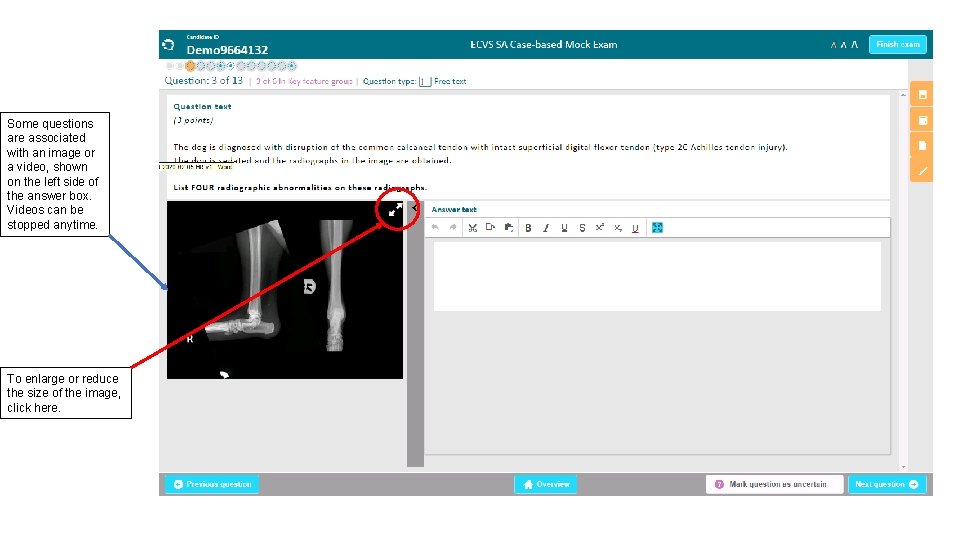
Some questions are associated with an image or a video, shown on the left side of the answer box. Videos can be stopped anytime. To enlarge or reduce the size of the image, click here.
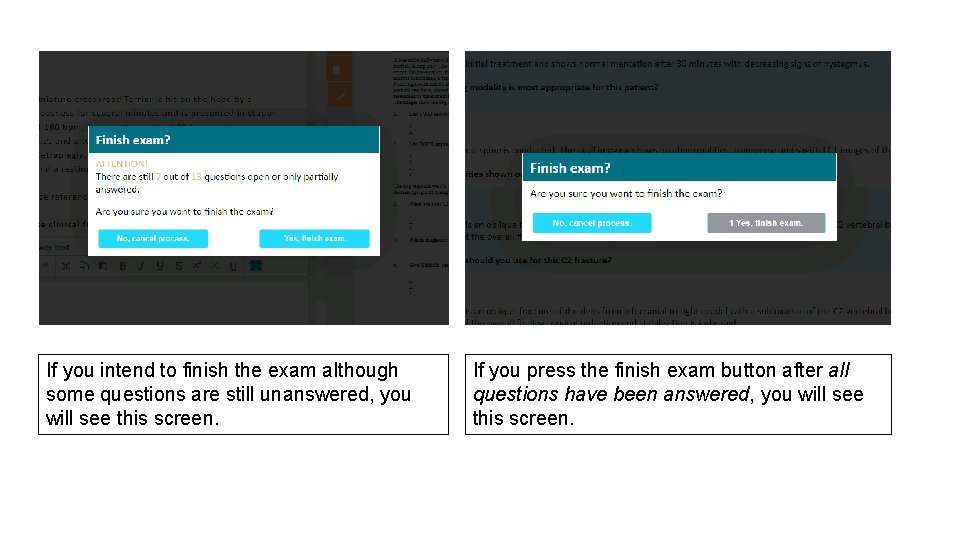
If you intend to finish the exam although some questions are still unanswered, you will see this screen. If you press the finish exam button after all questions have been answered, you will see this screen.
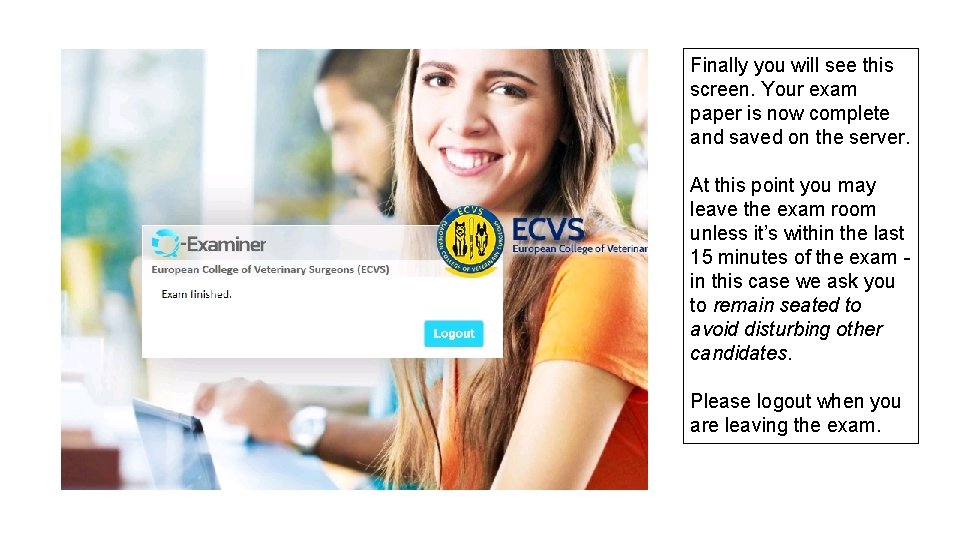
Finally you will see this screen. Your exam paper is now complete and saved on the server. At this point you may leave the exam room unless it’s within the last 15 minutes of the exam in this case we ask you to remain seated to avoid disturbing other candidates. Please logout when you are leaving the exam.
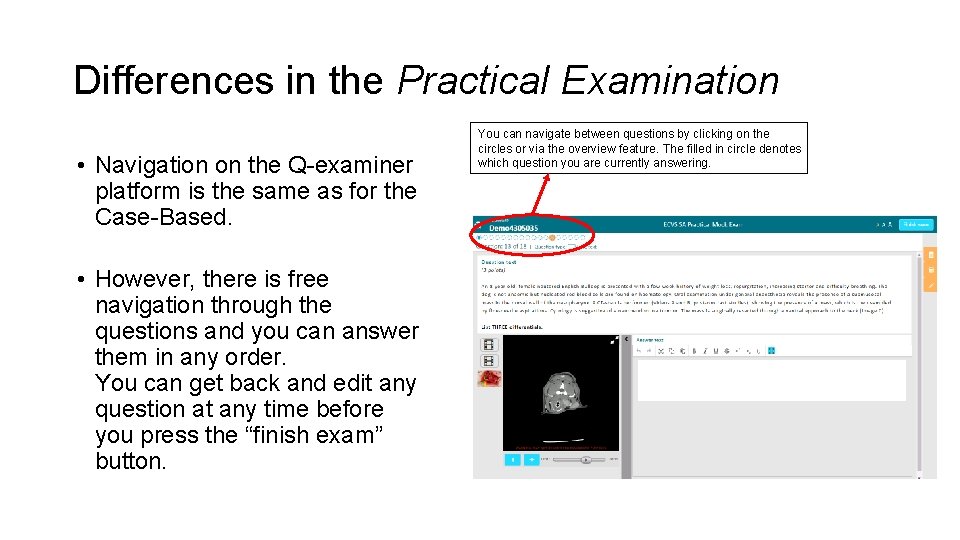
Differences in the Practical Examination • Navigation on the Q-examiner platform is the same as for the Case-Based. • However, there is free navigation through the questions and you can answer them in any order. You can get back and edit any question at any time before you press the “finish exam” button. You can navigate between questions by clicking on the circles or via the overview feature. The filled in circle denotes which question you are currently answering.
Housekeeping
Housekeeping: Keyboards • Computers will be set-up with a QWERTY keyboard (English) by default. • Candidates are not allowed to bring individual keyboards, but as far as possible ECVS will provide different language keyboards. The available choice will be communicated to the candidates in the registration form. Candidates who prefer a different keyboard (other than QWERTY) need to indicate their choice when signing up for the exam. • Candidates cannot choose any keyboards other than those offered by ECVS, and there is no guarantee that keyboard orders received after the registration deadline can be accommodated.
Housekeeping: Unethical Behaviour • The ECVS Board and Examination Committees take any unethical behaviour very seriously. • Any suspicious behaviour, either before, during or after the exam could lead to suspension of that candidate from that examination or any subsequent examinations. • Candidates are spaced out over the exam room in order to prevent viewing of other screens, but please do not attempt to view other candidates’ screens. • Do not attempt to communicate with other candidates in any way during the examination.
Housekeeping: During the Exam What to bring to the exam: • your candidate number • ear plugs (single ones, not to be connected by a cord etc. ) • a language dictionary (which will be checked by an examiner prior the exam) • water (drinks and snacks will be provided) • pencils and paper will be provided (for your personal notes during the exam, these will not be marked and cannot be taken out of the exam hall) • a face mask (if required)
Housekeeping: During the Exam What not to bring into the exam hall: • bags • coats • your mobile phone • i. Pads, smart watches and similar devices • your own keyboard • any head coverings or hats aside from those worn for religious reasons • any notes
Housekeeping: During the exam • If you need help with your computer, if you have a query about a question or need to go to the bathroom, please raise your hand an invigilator will help you. • You may need to wait a few moments, if the invigilator is helping another candidate. • The technical team who are responsible for the computer hardware will be present during the examination to deal with any computer issues. • You can leave the exam hall when you have finished the exam but not during the final 15 minutes of each session. You need to sign out when you leave the exam hall at the end of a session.
Summary
Summary • You will have worked hard during your residency to prepare for this exam: so try to stay calm and do not panic! • Do take the opportunity to visit the mock examination (accessed from the ECVS website) to familiarise yourself with the format and type of questions and the Q-examiner platform! • Read the questions thoroughly and think about what you are being asked for. • The Exam Committees and the ECVS office are here to help, but please do give us as much notice as possible, if you need assistance. We wish you the very best of luck for your exam!
- Slides: 51