
Guide to performing an Eye Exam with an
- Slides: 10
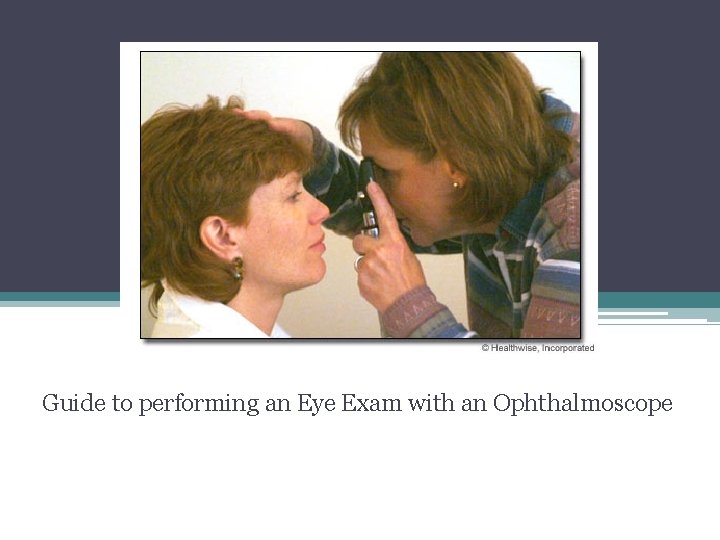
Guide to performing an Eye Exam with an Ophthalmoscope
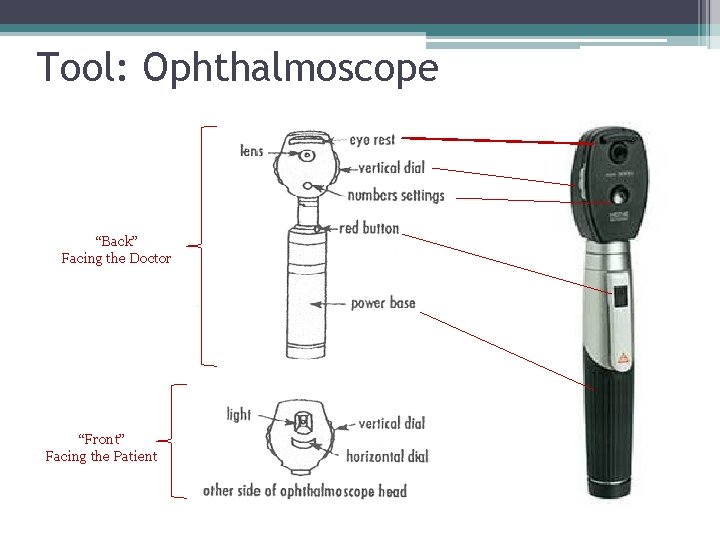
Tool: Ophthalmoscope “Back” Facing the Doctor “Front” Facing the Patient
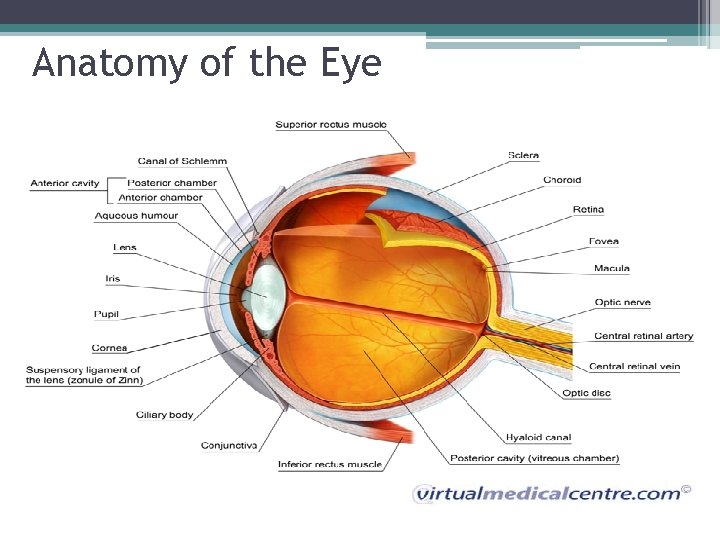
Anatomy of the Eye
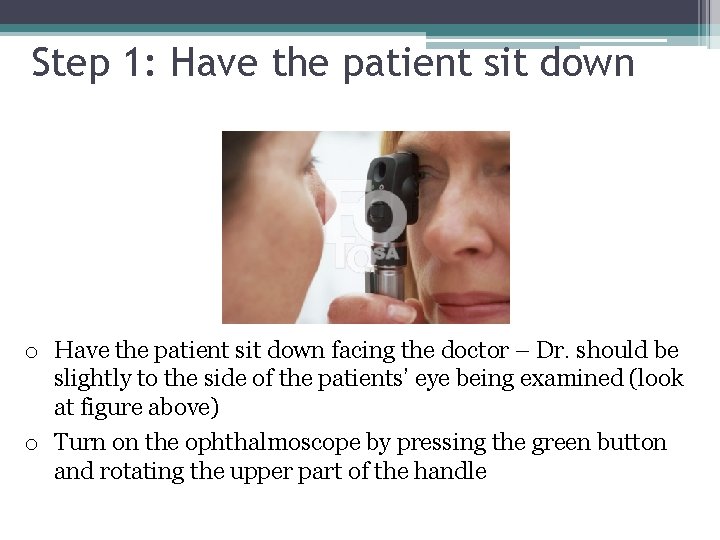
Step 1: Have the patient sit down o Have the patient sit down facing the doctor – Dr. should be slightly to the side of the patients’ eye being examined (look at figure above) o Turn on the ophthalmoscope by pressing the green button and rotating the upper part of the handle
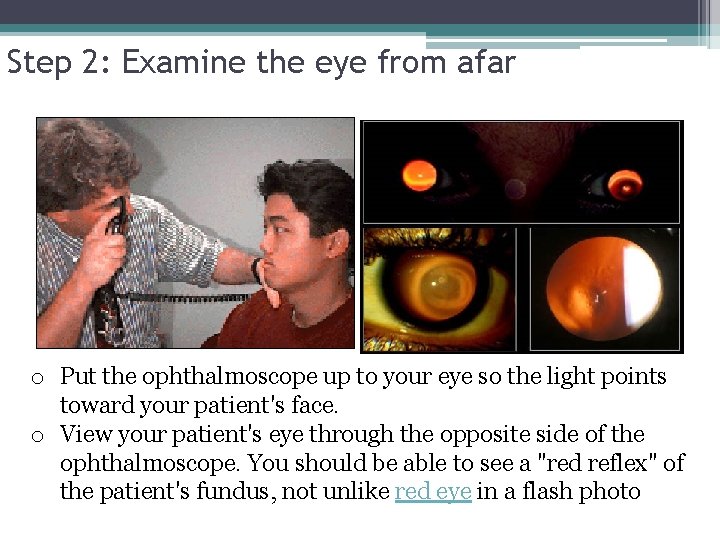
Step 2: Examine the eye from afar o Put the ophthalmoscope up to your eye so the light points toward your patient's face. o View your patient's eye through the opposite side of the ophthalmoscope. You should be able to see a "red reflex" of the patient's fundus, not unlike red eye in a flash photo
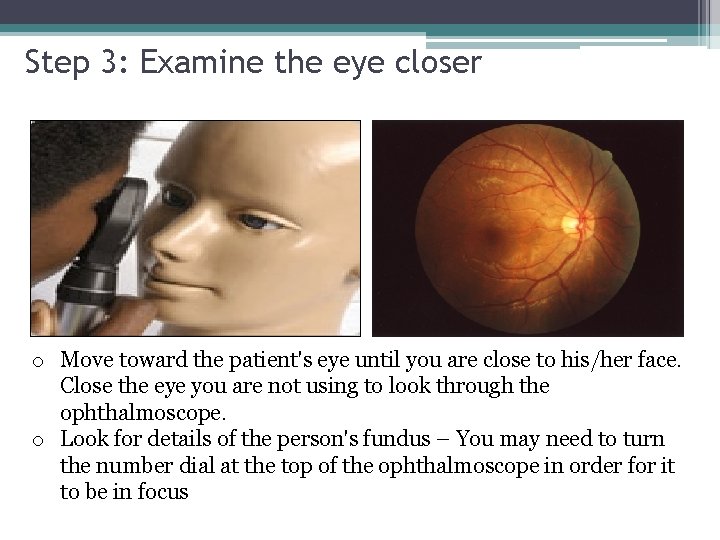
Step 3: Examine the eye closer o Move toward the patient's eye until you are close to his/her face. Close the eye you are not using to look through the ophthalmoscope. o Look for details of the person's fundus – You may need to turn the number dial at the top of the ophthalmoscope in order for it to be in focus
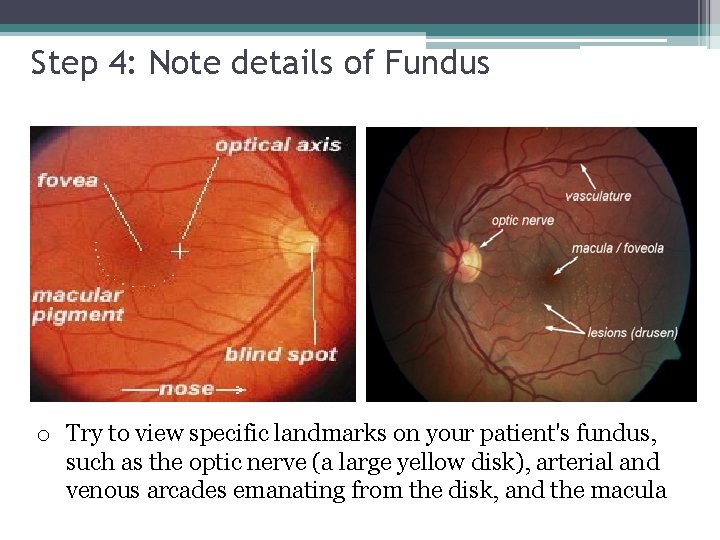
Step 4: Note details of Fundus o Try to view specific landmarks on your patient's fundus, such as the optic nerve (a large yellow disk), arterial and venous arcades emanating from the disk, and the macula
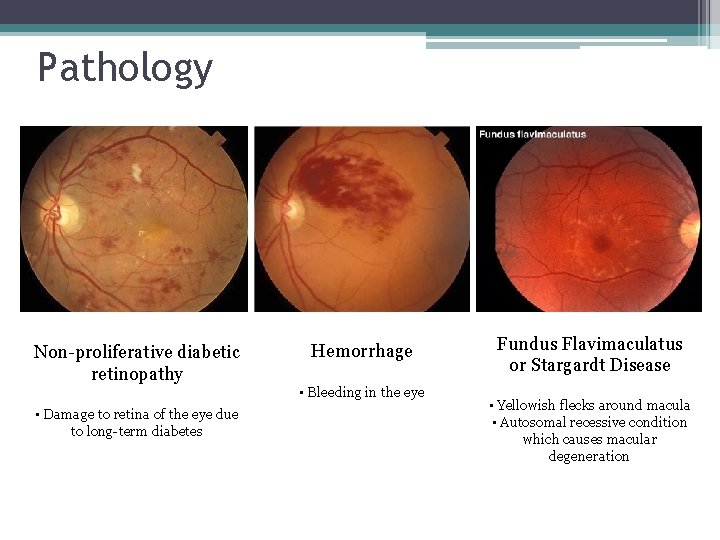
Pathology Non-proliferative diabetic retinopathy • Damage to retina of the eye due to long-term diabetes Hemorrhage • Bleeding in the eye Fundus Flavimaculatus or Stargardt Disease • Yellowish flecks around macula • Autosomal recessive condition which causes macular degeneration
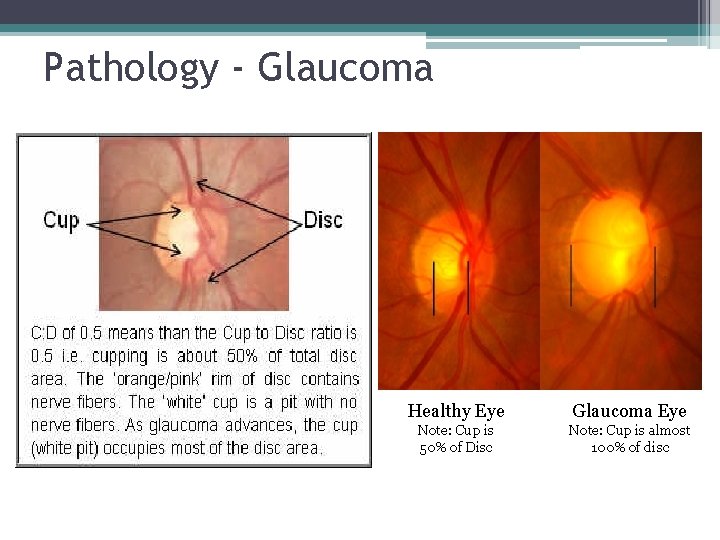
Pathology - Glaucoma Healthy Eye Glaucoma Eye Note: Cup is 50% of Disc Note: Cup is almost 100% of disc
Repeat, if Necessary