
Guide to Annotating Materials Penspencils 3 colors one
- Slides: 8
Guide to Annotating
• Materials • Pens/pencils (3 colors– one for each focus) • Highlighters • Colored pencils • Post-its • Whatever makes you happy
• This annotating has 3 focuses • Text-to-self/world • Text-to-meaning • Text-to-style
Text-to-Self/World Engage with the text as a reader. What about this piece do you believe in? What about this text are you doubting? You bring a unique experience to the text. Comments Experiences Connections Random associations
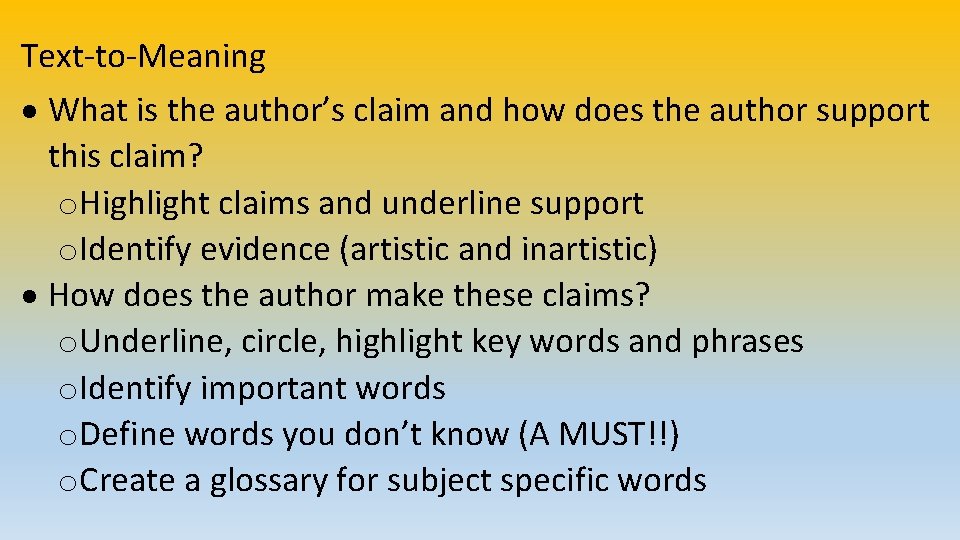
Text-to-Meaning What is the author’s claim and how does the author support this claim? o. Highlight claims and underline support o. Identify evidence (artistic and inartistic) How does the author make these claims? o. Underline, circle, highlight key words and phrases o. Identify important words o. Define words you don’t know (A MUST!!) o. Create a glossary for subject specific words
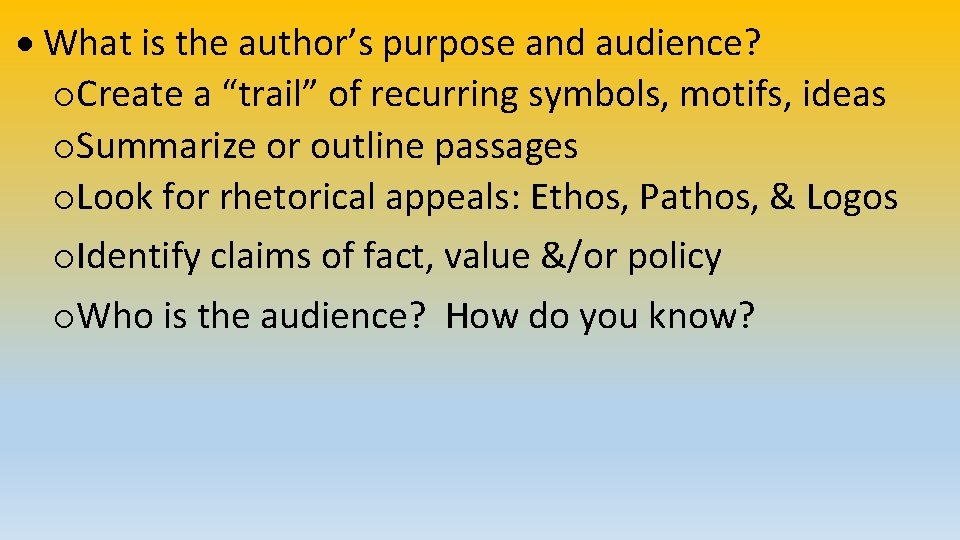
What is the author’s purpose and audience? o. Create a “trail” of recurring symbols, motifs, ideas o. Summarize or outline passages o. Look for rhetorical appeals: Ethos, Pathos, & Logos o. Identify claims of fact, value &/or policy o. Who is the audience? How do you know?
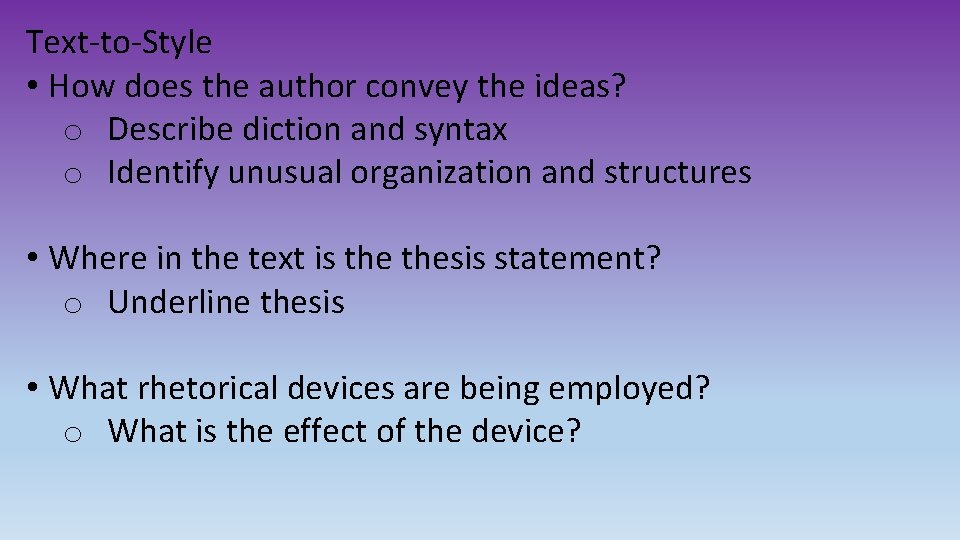
Text-to-Style • How does the author convey the ideas? o Describe diction and syntax o Identify unusual organization and structures • Where in the text is thesis statement? o Underline thesis • What rhetorical devices are being employed? o What is the effect of the device?
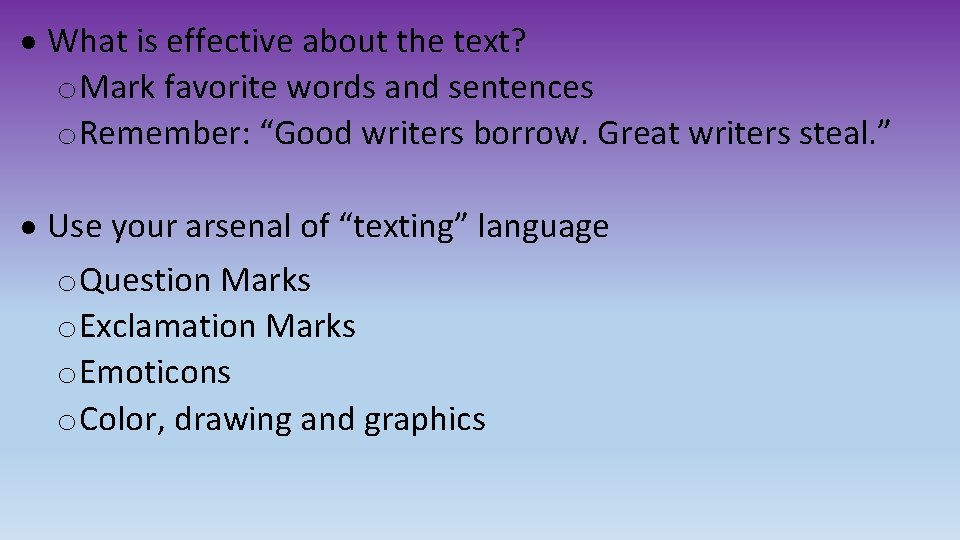
What is effective about the text? o. Mark favorite words and sentences o. Remember: “Good writers borrow. Great writers steal. ” Use your arsenal of “texting” language o. Question Marks o. Exclamation Marks o. Emoticons o. Color, drawing and graphics