
Guidance for the Assessment and Remediation of PFAS
- Slides: 26
Guidance for the Assessment and Remediation of PFAS in BC CSAP Workshop October 2019 1
Overview • • • 2 Introduction - PFAS of focus in BC Regulatory Framework Potential Sources Laboratory Analysis Site Investigation Considerations Remediation Considerations
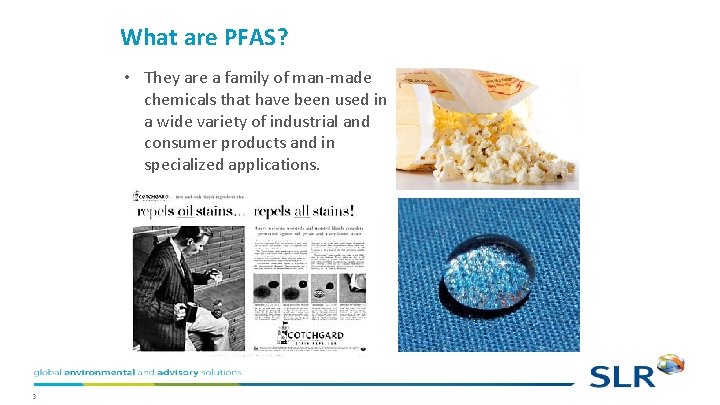
What are PFAS? • They are a family of man-made chemicals that have been used in a wide variety of industrial and consumer products and in specialized applications. 3
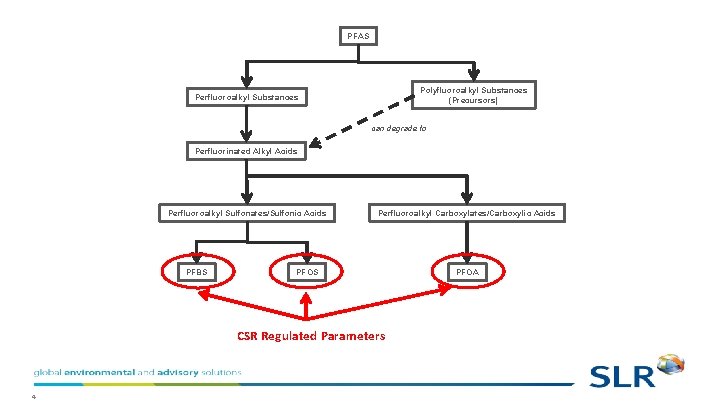
PFAS Polyfluoroalkyl Substances (Precursors) Perfluoroalkyl Substances can degrade to Perfluorinated Alkyl Acids Perfluoroalkyl Sulfonates/Sulfonic Acids PFBS Perfluoroalkyl Carboxylates/Carboxylic Acids PFOS CSR Regulated Parameters 4 PFOA
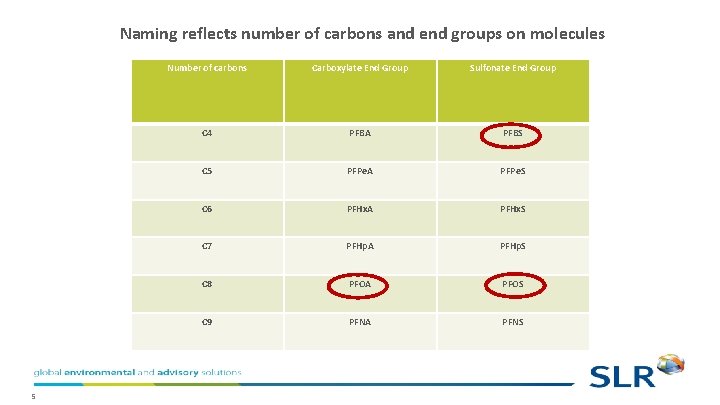
Naming reflects number of carbons and end groups on molecules 5 Number of carbons Carboxylate End Group Sulfonate End Group C 4 PFBA PFBS C 5 PFPe. A PFPe. S C 6 PFHx. A PFHx. S C 7 PFHp. A PFHp. S C 8 PFOA PFOS C 9 PFNA PFNS
Perfluoroalkyl Acids (PFAAs) • Persistent – fully fluorinated part doesn’t break down in nature (no biodegradation, no volatilization) • Bioaccumulative – some PFAS accumulate in tissues of higher trophic level biota • Toxic – known human and ecological health effects • Mobile – generally in anion form, contaminant plumes can be large 6
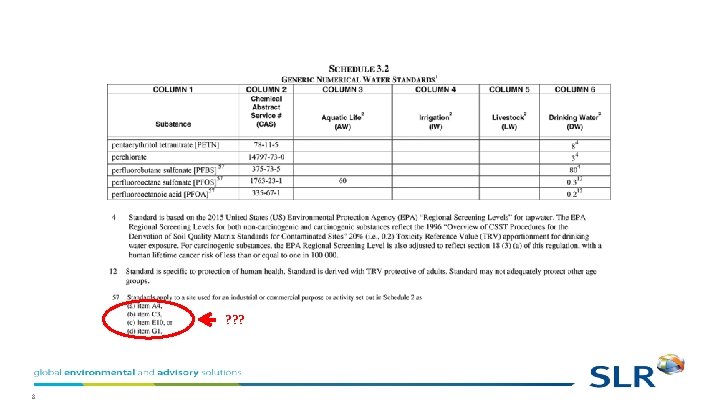
Provincial Regulatory Framework BC Contaminated Sites Regulation – November 2017 • PFBS: soil (human soil ingestion), groundwater (drinking water) • PFOA: groundwater (drinking water) • PFOS: soil (full matrix), groundwater (aquatic life and drinking water) 7
9
10
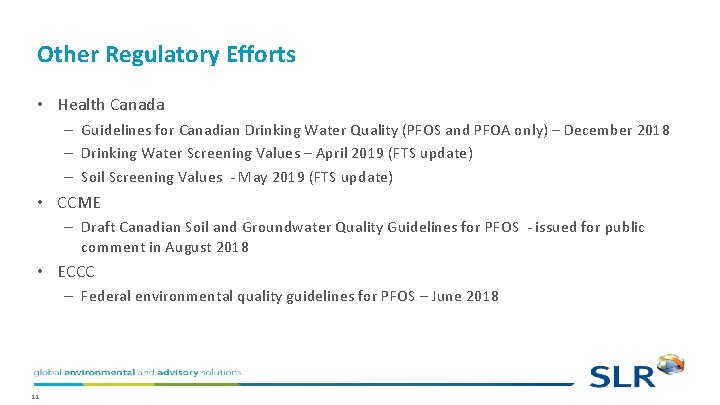
Other Regulatory Efforts • Health Canada – Guidelines for Canadian Drinking Water Quality (PFOS and PFOA only) – December 2018 – Drinking Water Screening Values – April 2019 (FTS update) – Soil Screening Values - May 2019 (FTS update) • CCME – Draft Canadian Soil and Groundwater Quality Guidelines for PFOS - issued for public comment in August 2018 • ECCC – Federal environmental quality guidelines for PFOS – June 2018 11
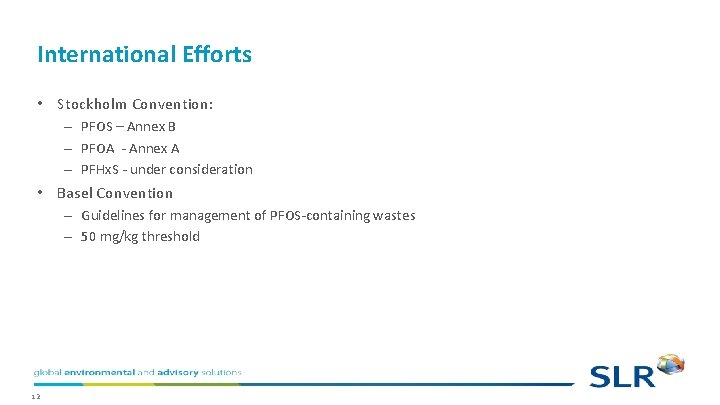
International Efforts • Stockholm Convention: – PFOS – Annex B – PFOA - Annex A – PFHx. S - under consideration • Basel Convention – Guidelines for management of PFOS-containing wastes – 50 mg/kg threshold 12
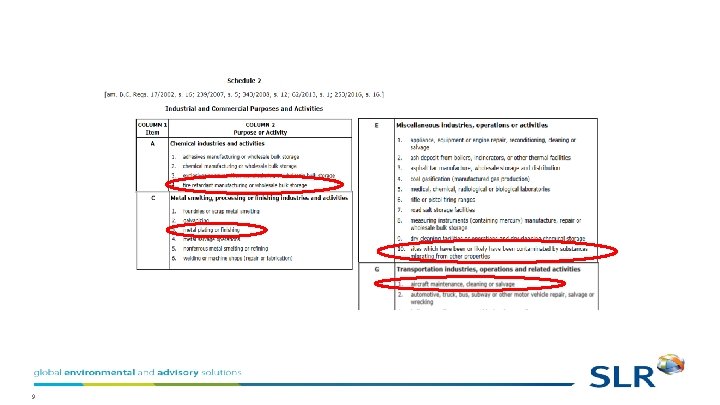
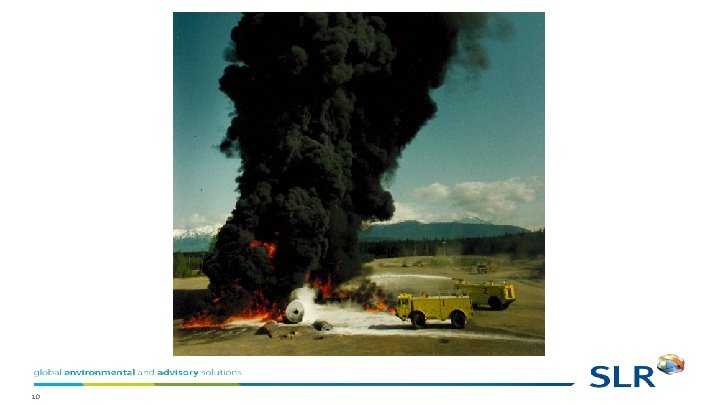
Schedule 2 Sources • AFFF (& other fluorine-containing foams) – Equipment test locations (daily, weekly, monthly, annual) – Emergency vehicle filling and maintenance areas, fire halls/stations – AFFF bulk storage, drum disposal areas and charged suppression systems – Crash sites and fuel spills – Flammable liquid fires (e. g. fuel storage tanks, fuelling areas) 13
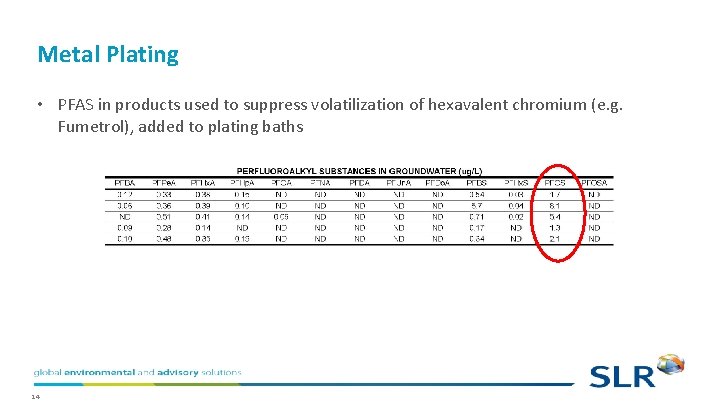
Metal Plating • PFAS in products used to suppress volatilization of hexavalent chromium (e. g. Fumetrol), added to plating baths 14
Aviation Hydraulic Fluids • PFAS used to prevent corrosion and fires • Limited information on PFAS content and type of PFAS potentially present in aviation hydraulic fluids 15
Sources not listed under the CSR • • 16 Landfills Wastewater treatment facilities Wastewater lagoons Biosolids application areas
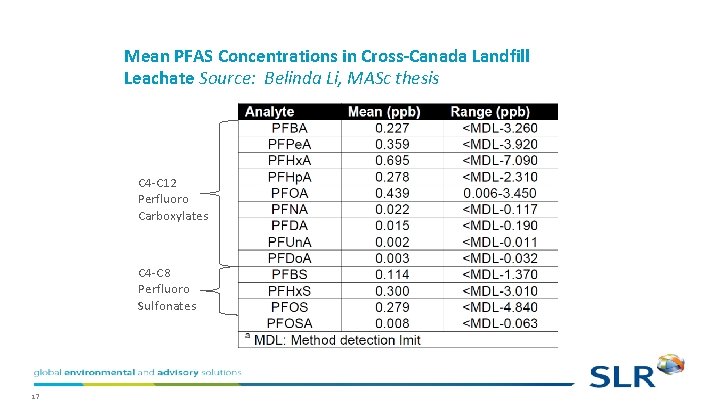
Mean PFAS Concentrations in Cross-Canada Landfill Leachate Source: Belinda Li, MASc thesis C 4 -C 12 Perfluoro Carboxylates C 4 -C 8 Perfluoro Sulfonates 17
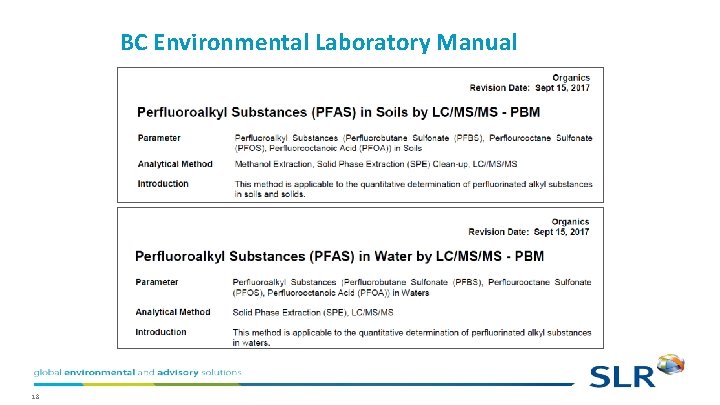
BC Environmental Laboratory Manual 18
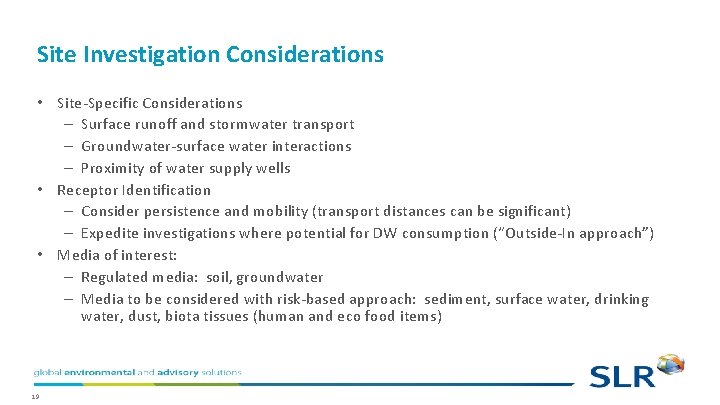
Site Investigation Considerations • Site-Specific Considerations – Surface runoff and stormwater transport – Groundwater-surface water interactions – Proximity of water supply wells • Receptor Identification – Consider persistence and mobility (transport distances can be significant) – Expedite investigations where potential for DW consumption (“Outside-In approach”) • Media of interest: – Regulated media: soil, groundwater – Media to be considered with risk-based approach: sediment, surface water, drinking water, dust, biota tissues (human and eco food items) 19
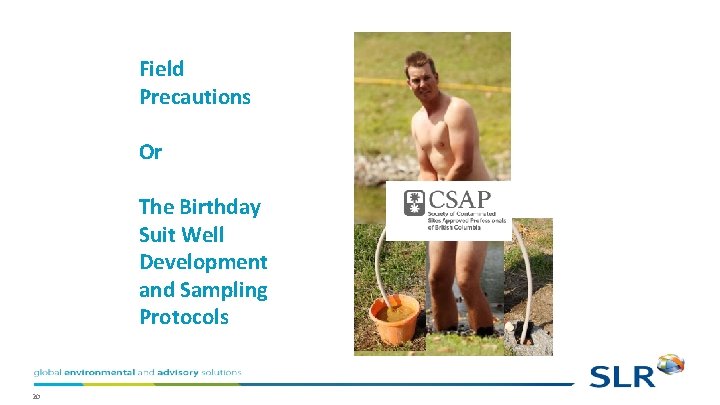
Field Precautions Or The Birthday Suit Well Development and Sampling Protocols 20
Field Precautions • • • 21 Materials to avoid Acceptable materials Water sources for investigation programs Equipment Decontamination Other Field Considerations
QA/QC • Blanks • And more blanks 22
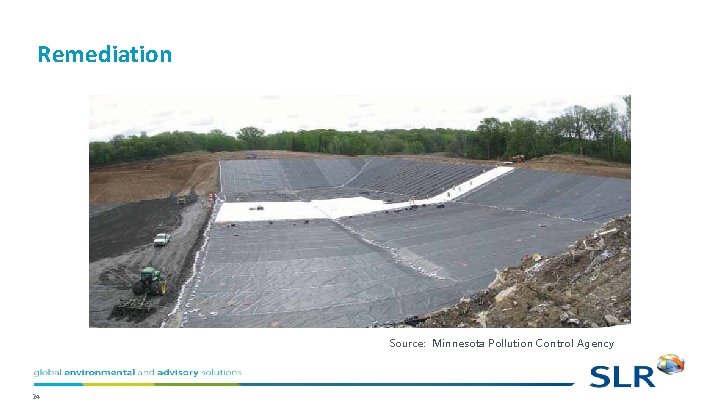
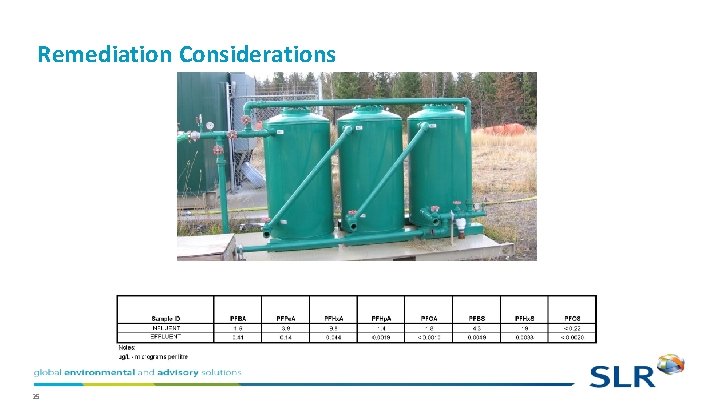
Remediation • • • 23 Resists biodegradation Resists photolysis, hydrolysis Destroyed at ~1000˚C Non-volatile Large dissolved phase groundwater plumes Sorption, solubility differences
Remediation Source: Minnesota Pollution Control Agency 24
Remediation Considerations 25
Thank You! • Ian Mitchell, SLR Consulting (Canada) Ltd. – imitchell@slrconsulting. com – 250. 413. 4712 • Lindsay Paterson, SLR Consulting (Canada) Ltd. – lpaterson@slrconsulting. com – 778. 760. 1786 26