
Guaran Aquifer System A resource shared by Argentina
Guaraní Aquifer System A resource shared by Argentina, Brasil, Paraguay and Uruguay Geohydrologic Research Group (GIG) Engeneering and Water Resources Faculty “El Litoral” National University Santa Fe, Argentina Dra. Ofelia Tujchneider

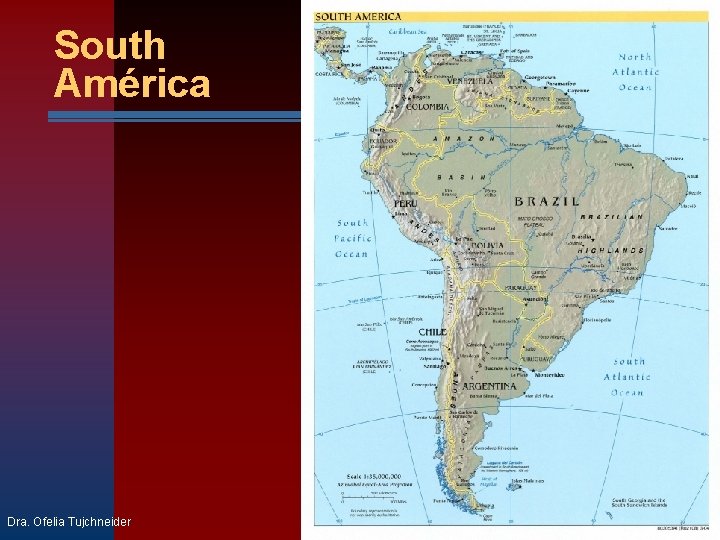
The Guaraní Aquifer System (SAG) is one of the most important fresh groundwater reservoirs of the world, due to its extension (1, 200, 000 km 2) and its volume (40, 000 km 3). Its domain is shared by four countries: Argentina, Brasil, Paraguay and Uruguay, which use this resource for different purposes. Dra. Ofelia Tujchneider
South América Dra. Ofelia Tujchneider
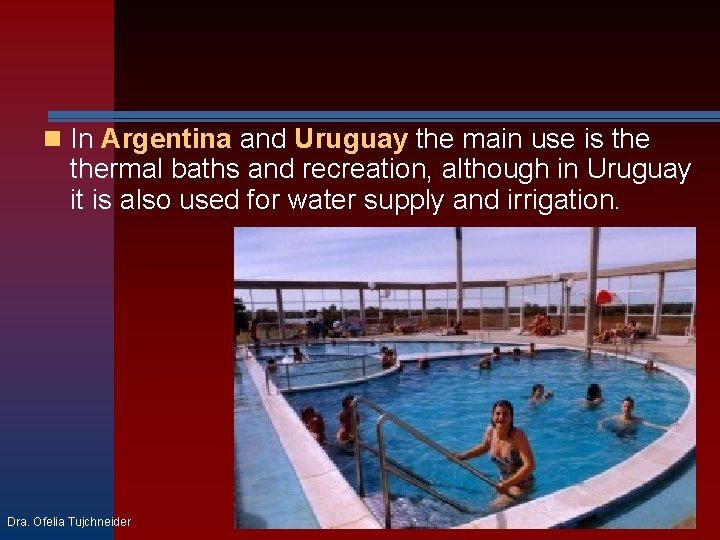
In Argentina and Uruguay the main use is thermal baths and recreation, although in Uruguay it is also used for water supply and irrigation. Dra. Ofelia Tujchneider
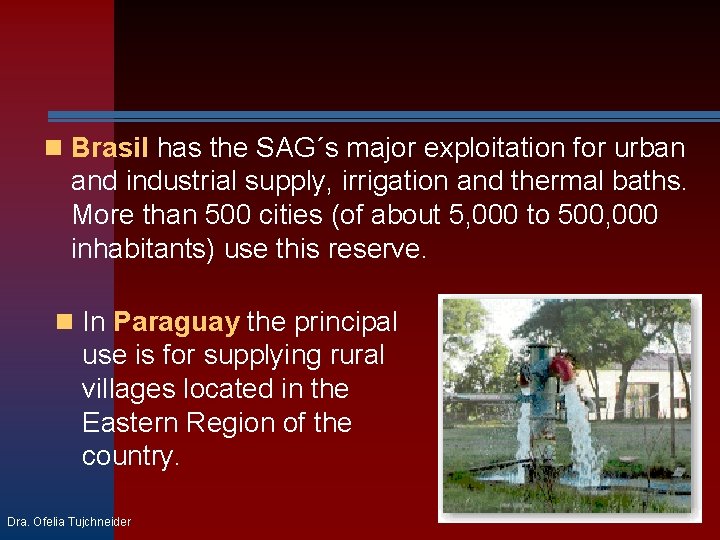
Brasil has the SAG´s major exploitation for urban and industrial supply, irrigation and thermal baths. More than 500 cities (of about 5, 000 to 500, 000 inhabitants) use this reserve. In Paraguay the principal use is for supplying rural villages located in the Eastern Region of the country. Dra. Ofelia Tujchneider
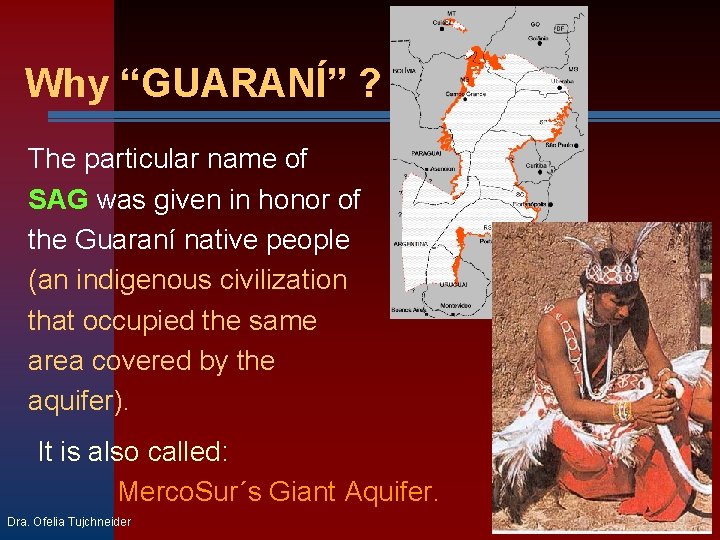
Why “GUARANÍ” ? The particular name of SAG was given in honor of the Guaraní native people (an indigenous civilization that occupied the same area covered by the aquifer). It is also called: Merco. Sur´s Giant Aquifer. Dra. Ofelia Tujchneider
In 1996, the GIG worked together with the University of the Republic (Uruguay) in the Program: Regional Aquifers in Latin America Guaraní Aquifer System Project Supported by the Canadian International Research Centre for the Development (CIID). Dra. Ofelia Tujchneider
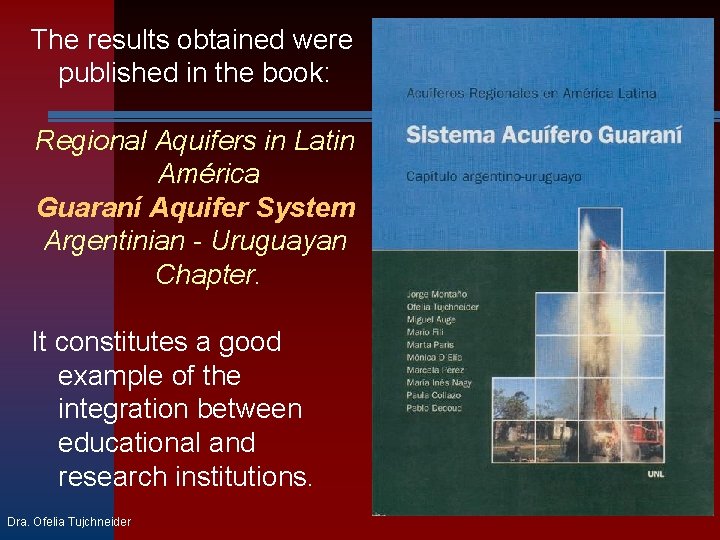
The results obtained were published in the book: Regional Aquifers in Latin América Guaraní Aquifer System Argentinian - Uruguayan Chapter. It constitutes a good example of the integration between educational and research institutions. Dra. Ofelia Tujchneider
GUARANI AQUIFER SYSTEM The SAG is a huge transboundary groundwater reserve, that presents different characteristics (geological, hydraulic, hydrochemical, thermal) in its whole basin extension. Dra. Ofelia Tujchneider
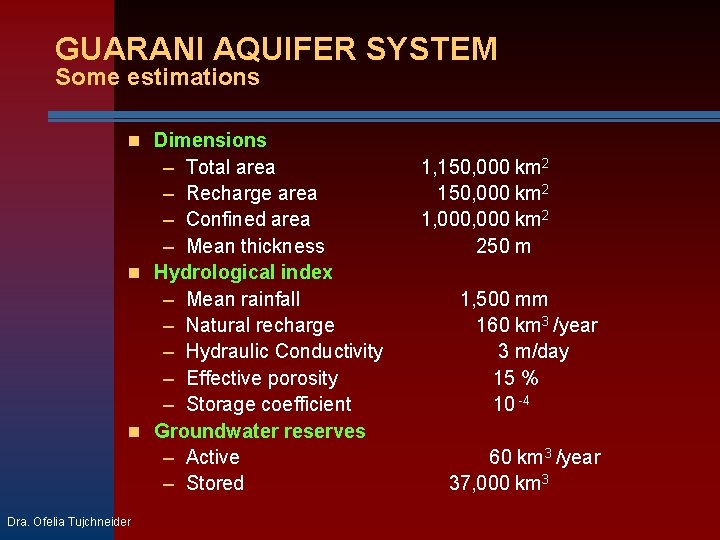
GUARANI AQUIFER SYSTEM Some estimations Dimensions – Total area 1, 150, 000 km 2 – Recharge area 150, 000 km 2 – Confined area 1, 000 km 2 – Mean thickness 250 m Hydrological index – Mean rainfall 1, 500 mm – Natural recharge 160 km 3 /year – Hydraulic Conductivity 3 m/day – Effective porosity 15 % – Storage coefficient 10 -4 Groundwater reserves – Active 60 km 3 /year – Stored 37, 000 km 3 Dra. Ofelia Tujchneider
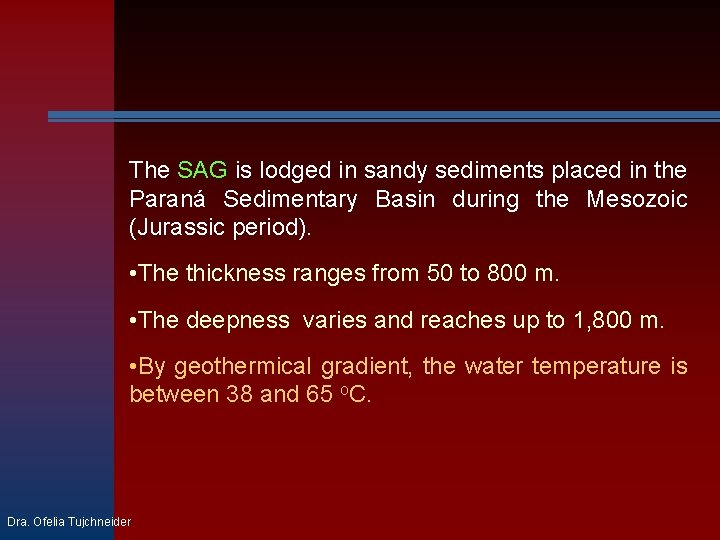
The SAG is lodged in sandy sediments placed in the Paraná Sedimentary Basin during the Mesozoic (Jurassic period). • The thickness ranges from 50 to 800 m. • The deepness varies and reaches up to 1, 800 m. • By geothermical gradient, the water temperature is between 38 and 65 o. C. Dra. Ofelia Tujchneider
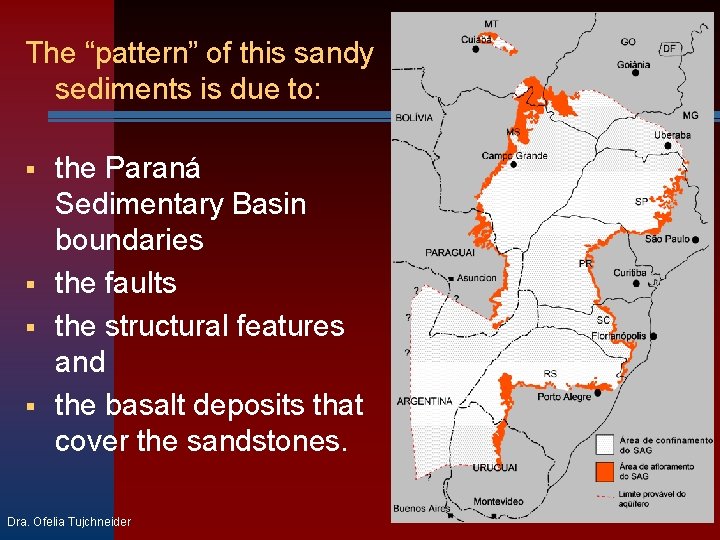
The “pattern” of this sandy sediments is due to: § § the Paraná Sedimentary Basin boundaries the faults the structural features and the basalt deposits that cover the sandstones. Dra. Ofelia Tujchneider
This sedimentary basin shows the effects of several deformation fases which have caused a complex tectonical structure. This structure domains almost the whole lithological sequence. Nevertheless, there is a great lack of information and research about the influence of this structural pattern in relation with the SAG´s groundwater flow. Dra. Ofelia Tujchneider
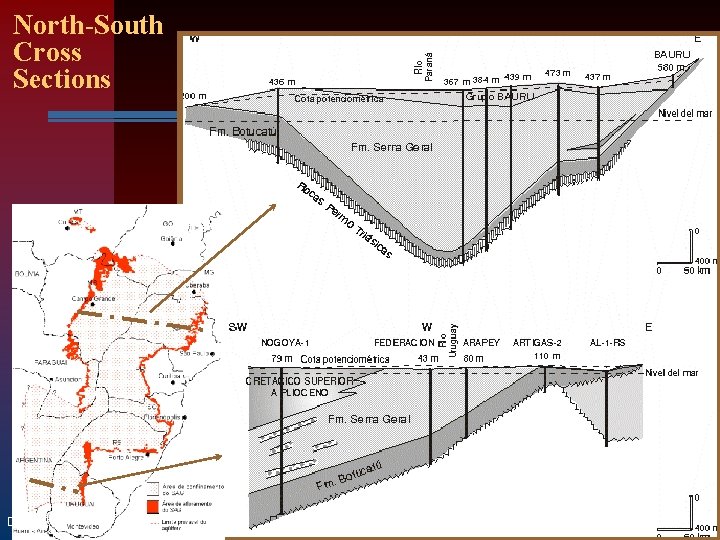
North-South Cross Sections Dra. Ofelia Tujchneider
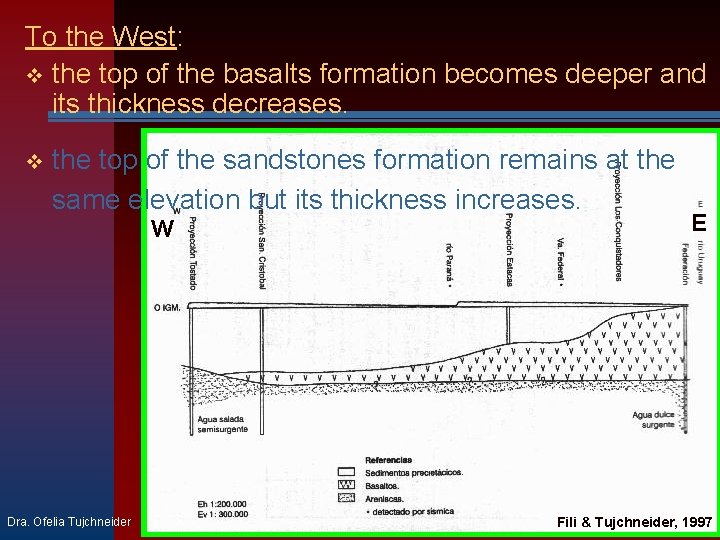
To the West: v the top of the basalts formation becomes deeper and its thickness decreases. v the top of the sandstones formation remains at the same elevation but its thickness increases. W Dra. Ofelia Tujchneider E Fili & Tujchneider, 1997
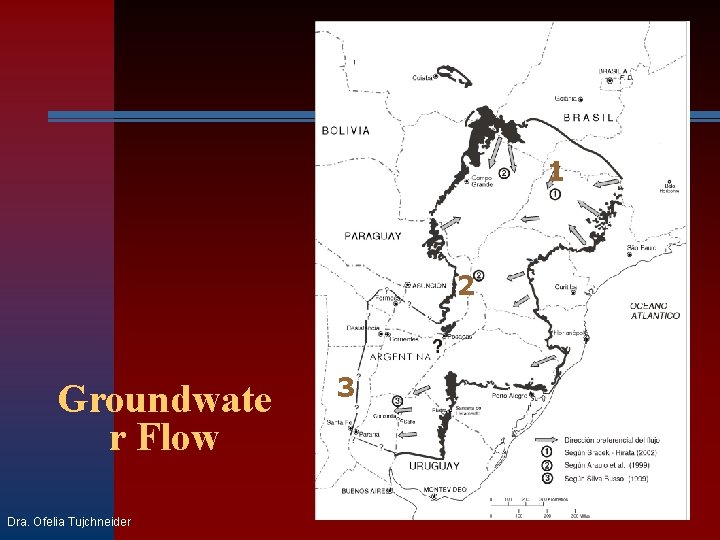
1 2 Groundwate r Flow Dra. Ofelia Tujchneider 3
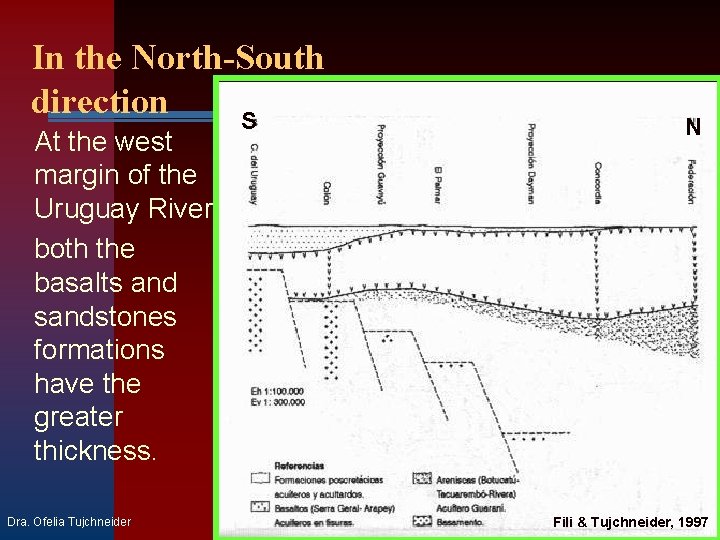
In the North-South direction S At the west margin of the Uruguay River, both the basalts and sandstones formations have the greater thickness. Dra. Ofelia Tujchneider N Fili & Tujchneider, 1997
Hydrochemical Characteristics In general, groundwater has a good quality. The average salinity is about 300 mg/l. Calcium bicarbonate groundwater type prevails in the recharge zones. Sodium bicarbonate groundwater type is present in the confining zones. In the S-W border of the basin, groundwater is sodium chloride and has high salinity –that was shown in wells drilled below basalts of Guichón and Paso Ullestie, Uruguay and Villa Elisa, Argentina. Dra. Ofelia Tujchneider
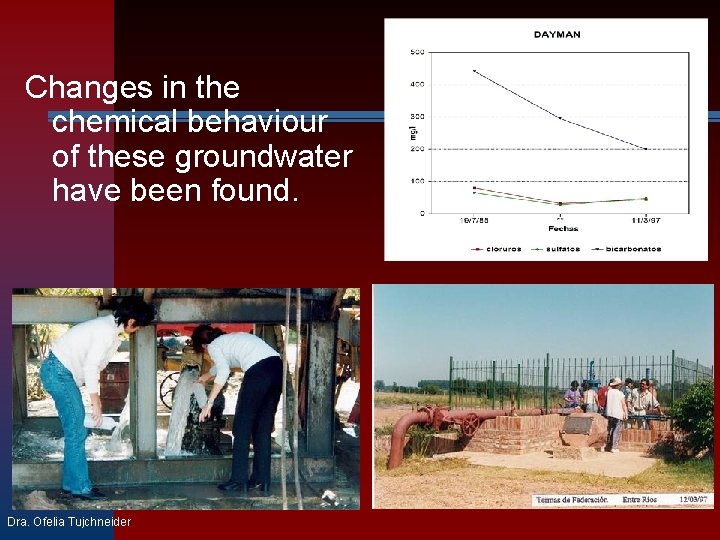
Changes in the chemical behaviour of these groundwater have been found. Dra. Ofelia Tujchneider
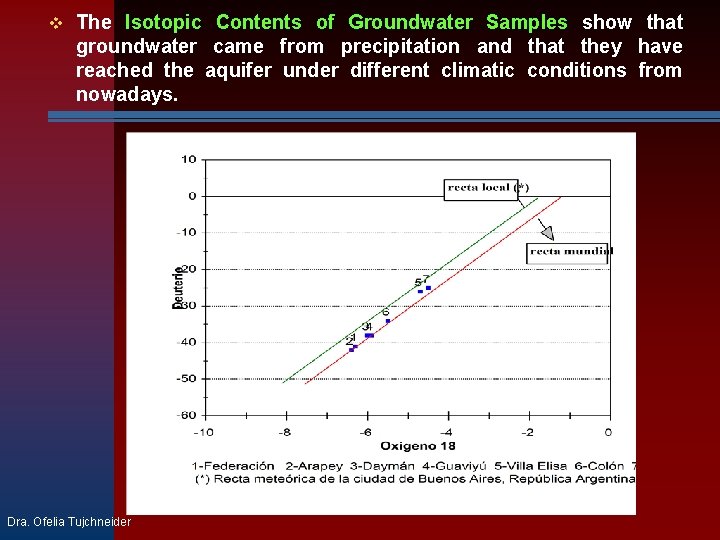
v The Isotopic Contents of Groundwater Samples show that groundwater came from precipitation and that they have reached the aquifer under different climatic conditions from nowadays. Dra. Ofelia Tujchneider
Geothermal resources Groundwater temperature of Guaraní Aquifer System is variable and it is due to the deepness of the reservoir. The geothermal gradient is defined as the deepness of the vertical displacement from the surface to the inside of earth, in which the temperature increases 1ºC. Dra. Ofelia Tujchneider
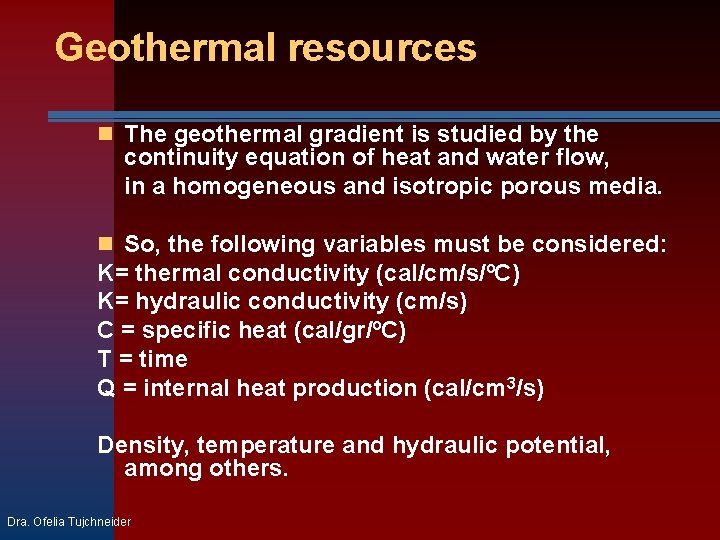
Geothermal resources The geothermal gradient is studied by the continuity equation of heat and water flow, in a homogeneous and isotropic porous media. So, the following variables must be considered: K= thermal conductivity (cal/cm/s/ºC) K= hydraulic conductivity (cm/s) C = specific heat (cal/gr/ºC) T = time Q = internal heat production (cal/cm 3/s) Density, temperature and hydraulic potential, among others. Dra. Ofelia Tujchneider
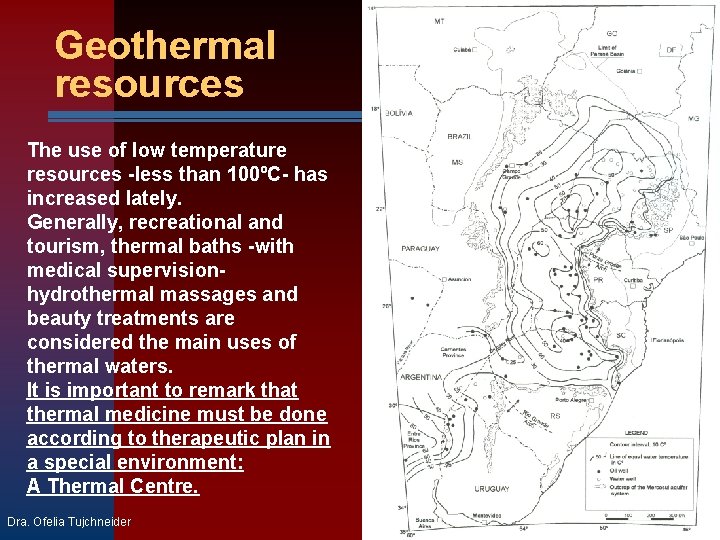
Geothermal resources The use of low temperature resources -less than 100ºC- has increased lately. Generally, recreational and tourism, thermal baths -with medical supervisionhydrothermal massages and beauty treatments are considered the main uses of thermal waters. It is important to remark that thermal medicine must be done according to therapeutic plan in a special environment: A Thermal Centre. Dra. Ofelia Tujchneider
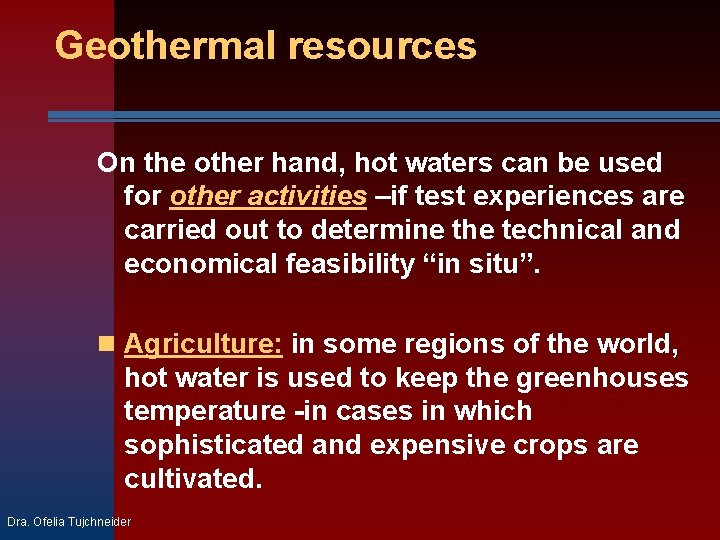
Geothermal resources On the other hand, hot waters can be used for other activities –if test experiences are carried out to determine the technical and economical feasibility “in situ”. Agriculture: in some regions of the world, hot water is used to keep the greenhouses temperature -in cases in which sophisticated and expensive crops are cultivated. Dra. Ofelia Tujchneider
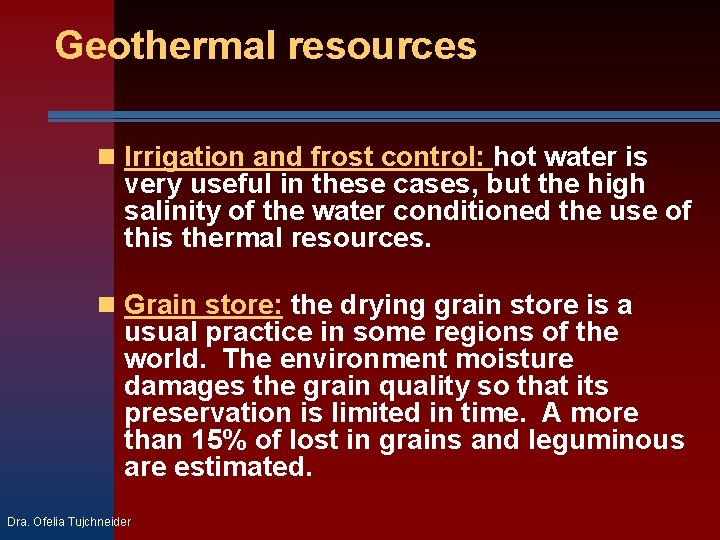
Geothermal resources Irrigation and frost control: hot water is very useful in these cases, but the high salinity of the water conditioned the use of this thermal resources. Grain store: the drying grain store is a usual practice in some regions of the world. The environment moisture damages the grain quality so that its preservation is limited in time. A more than 15% of lost in grains and leguminous are estimated. Dra. Ofelia Tujchneider
Geothermal resources Wood drying: the water content of wood influenced its physics and mechanical properties. The drying procedure reduces the moisture, the wood keeps its dimensions and shapes permanently and it will be less exposed to insects. In order to avoid fissures in wood, temperature must be maintained between 40 to 46 ºC into the heater. Dra. Ofelia Tujchneider
Geothermal resources Drying and dehydration of vegetables and fruits: they are common practices in thermal areas. Air conditioning: This includes the heating and cooling processes. This practice uses heat pumps which are able to do both heating and cooling. Dra. Ofelia Tujchneider
Geothermal resources Culture of aquatic organisms: The controlled breeding of exotic aquatic species -of great value and demand in the market- is possible by means of keeping the optimum temperature of water in an artificial way. Dra. Ofelia Tujchneider
For the SAG´s sustainable management, it is important. . . Knowing more about: • Reservoir geometry • Recharge areas • Recharge quantification • Hydrogeochemical evolution • Vulnerability of the system and • Risk situations. Dra. Ofelia Tujchneider
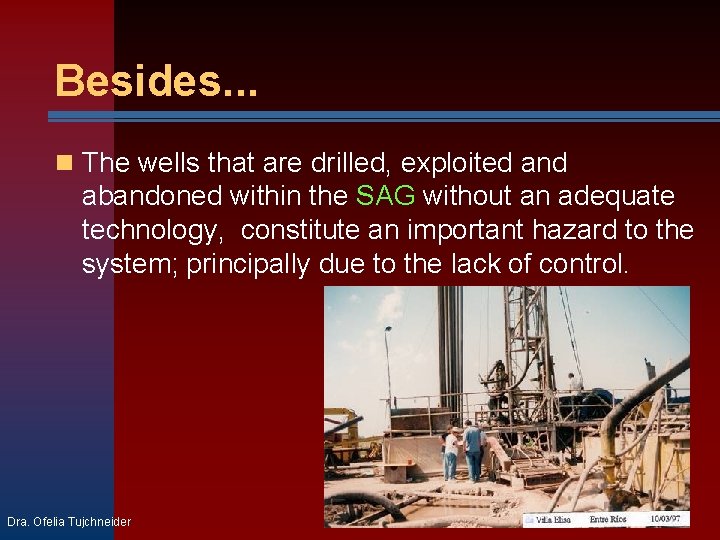
Besides. . . The wells that are drilled, exploited and abandoned within the SAG without an adequate technology, constitute an important hazard to the system; principally due to the lack of control. Dra. Ofelia Tujchneider
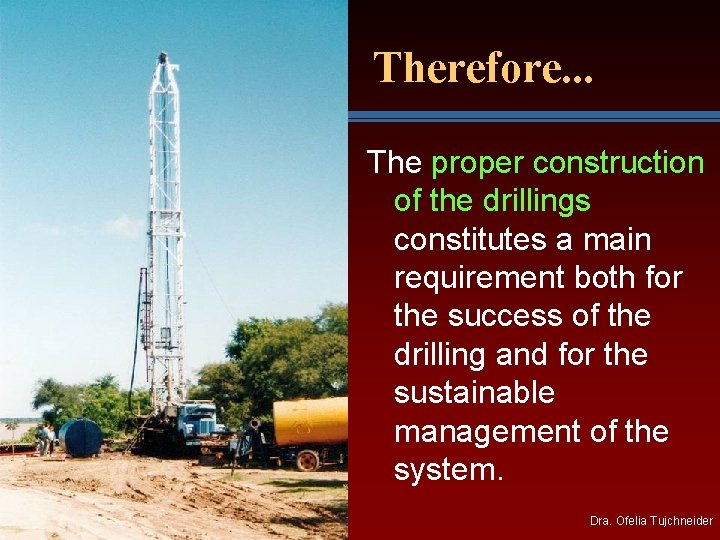
Therefore. . . The proper construction of the drillings constitutes a main requirement both for the success of the drilling and for the sustainable management of the system. Dra. Ofelia Tujchneider
Principal features of the SAG: v Shared Aquifer System (4 countries) v Its potentialities (reserves) v Its differential characteristics v The need of increasing the knowledge and v Its sustainable management Dra. Ofelia Tujchneider
Led up to. . . Project: Environmental Protection and Sustainable Development of the Guaraní Aquifer System WB – OAS - GEF Dra. Ofelia Tujchneider
Components included in the Project: 1. 2. 3. 4. 5. 6. Expansion of the knowledge Development of a joint management program Public and stakeholders participation Monitoring, evaluation and dissemination Development of management and mitigation measures in Hot Spots Assessment of the geothermal energy potentials Dra. Ofelia Tujchneider
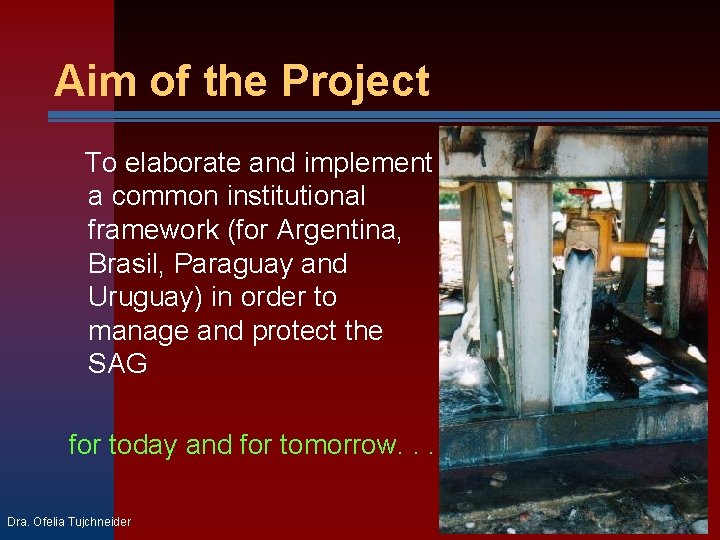
Aim of the Project To elaborate and implement a common institutional framework (for Argentina, Brasil, Paraguay and Uruguay) in order to manage and protect the SAG for today and for tomorrow. . . Dra. Ofelia Tujchneider
Geohydrological Research Group Ofelia TUJCHNEIDER Marta PARIS Dra. Ofelia Tujchneider Marcela PEREZ Mónica D´ELIA UNIVERSIDAD NACIONAL DEL LITORAL Facultad de Ingeniería y Ciencias Hídricas TE-FAX: +54 -342 -4 575 244 (46) (int. 150) E-mail: gig@fich 1. unl. edu. ar Santa Fe - Argentina
- Slides: 36