
GTECH 361 Lecture 04 Referencing Data to Real

- Slides: 59
GTECH 361 Lecture 04 Referencing Data to Real Locations
Today’s Content n Two types of coordinate systems n Geographic n Projected
Today’s Objectives n n n n name two types of coordinate systems identify components of each type of coordinate system assign coordinate system information to a dataset display units for a data frame and measure distances on a map explain what a map projection is list the major categories of map projections list spatial properties that may be distorted when different map projections are applied change the map projection for a data frame and describe its effects
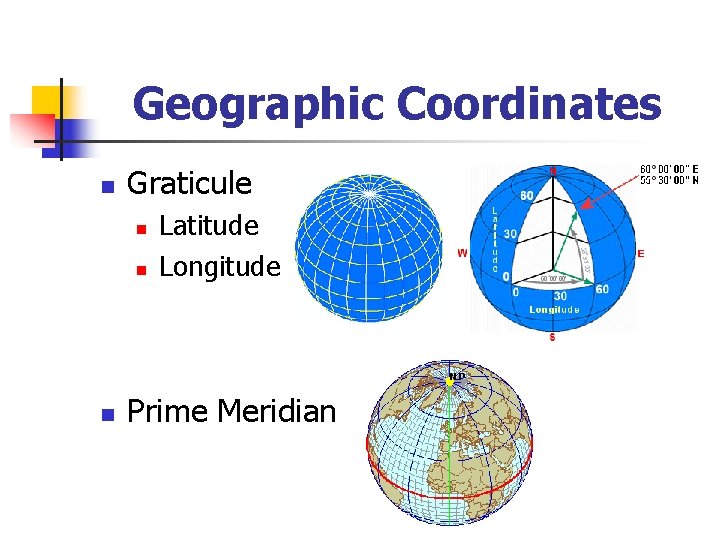
Geographic Coordinates n Graticule n n n Latitude Longitude Prime Meridian
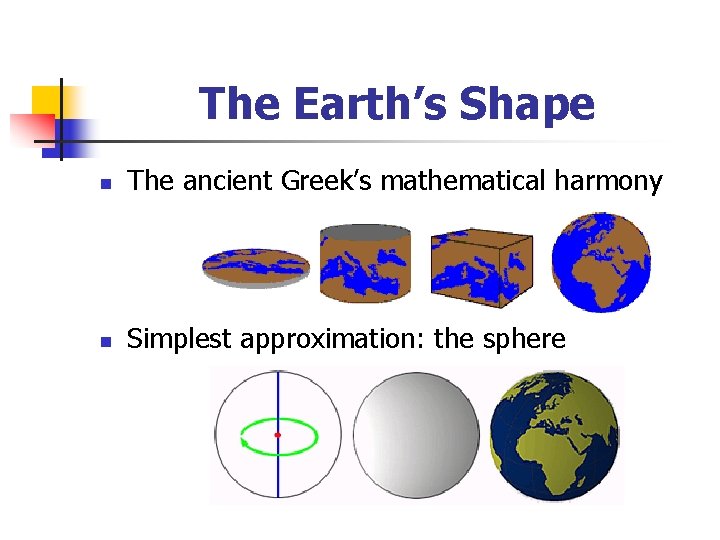
The Earth’s Shape n The ancient Greek’s mathematical harmony n Simplest approximation: the sphere
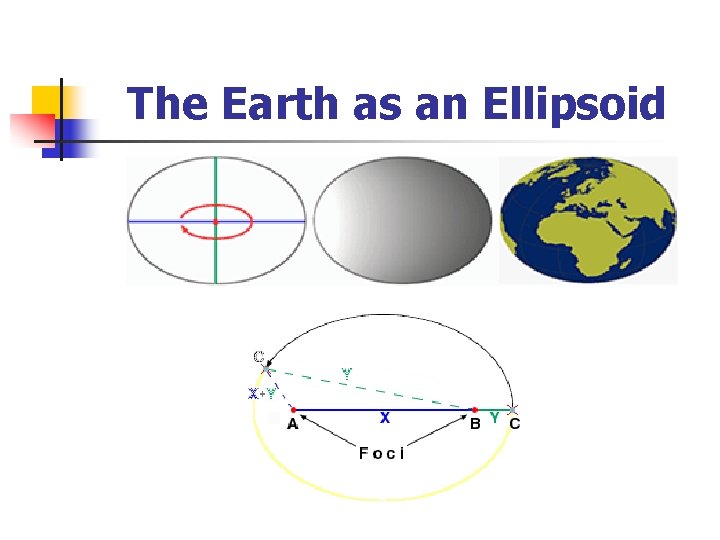
The Earth as an Ellipsoid
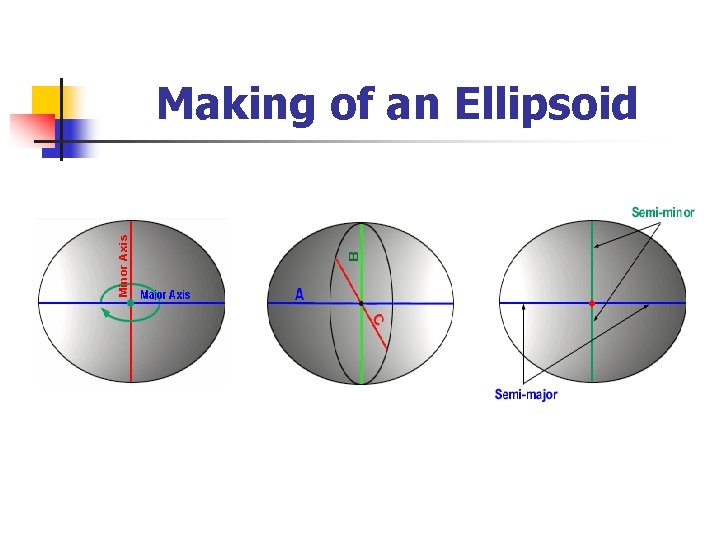
Making of an Ellipsoid
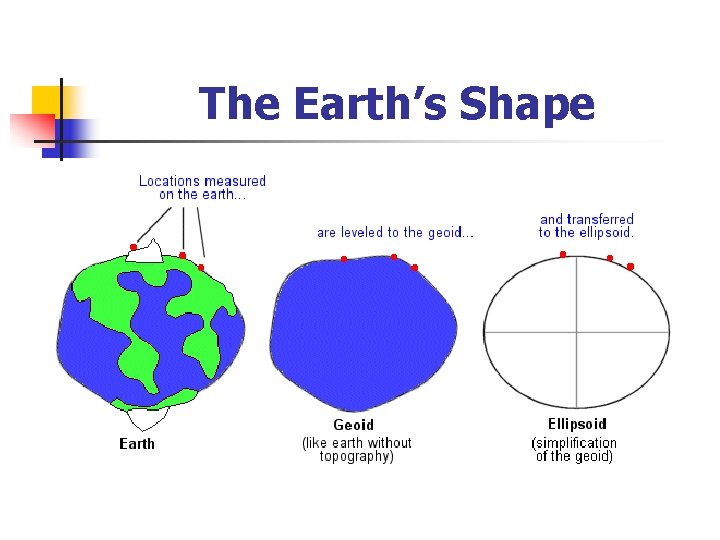
The Earth’s Shape
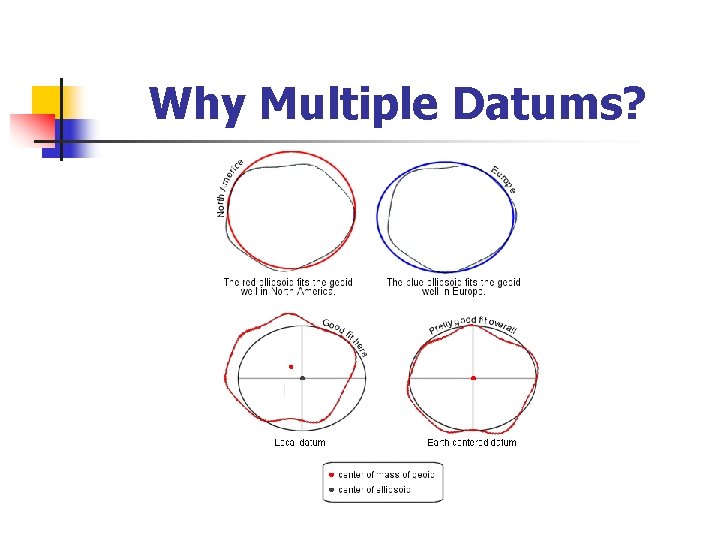
Why Multiple Datums?
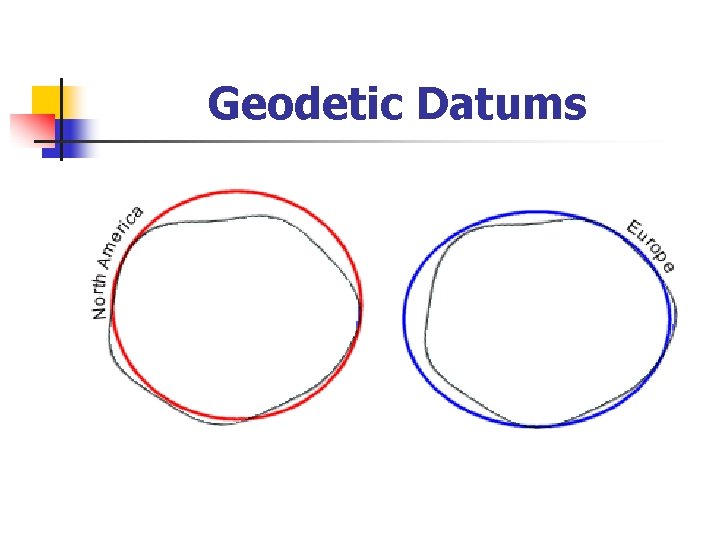
Geodetic Datums
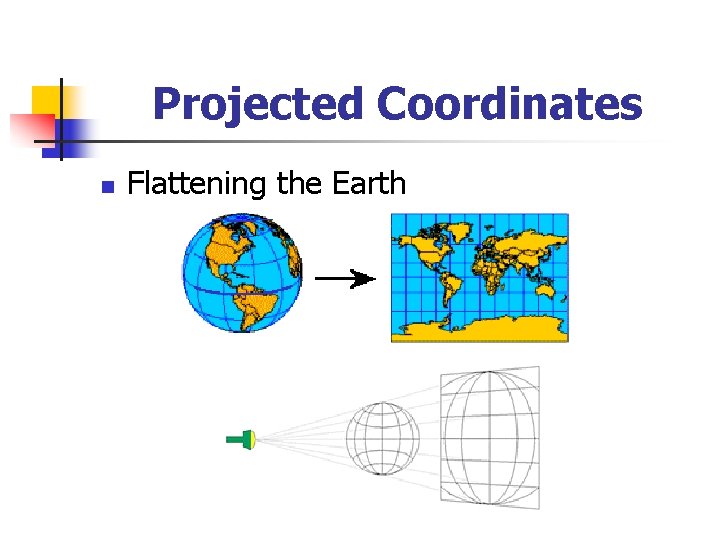
Projected Coordinates n Flattening the Earth
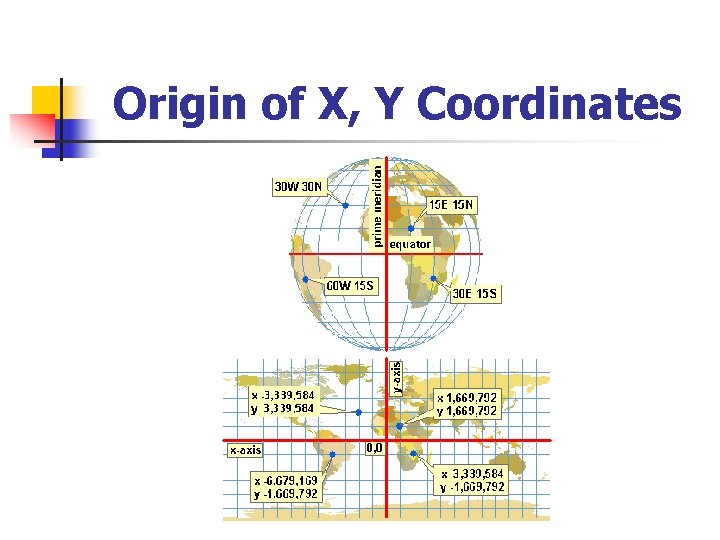
Origin of X, Y Coordinates
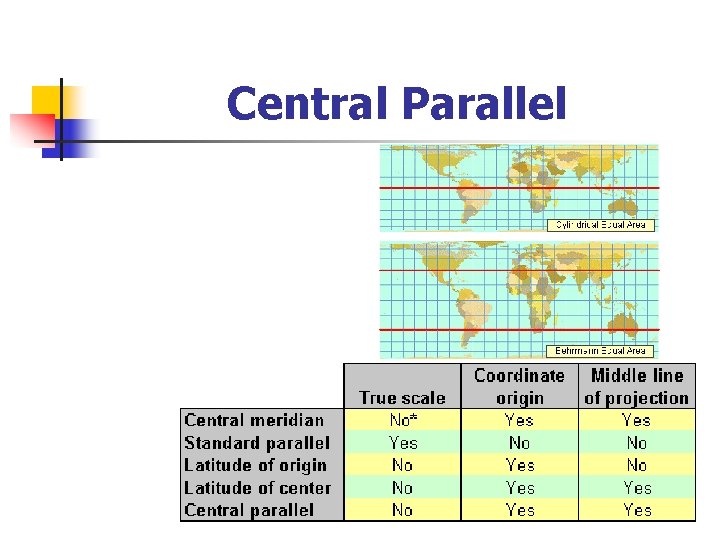
Central Parallel
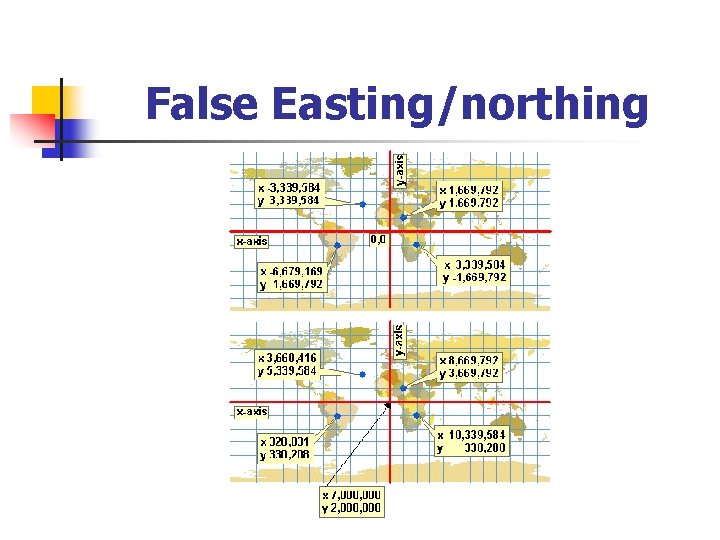
False Easting/northing
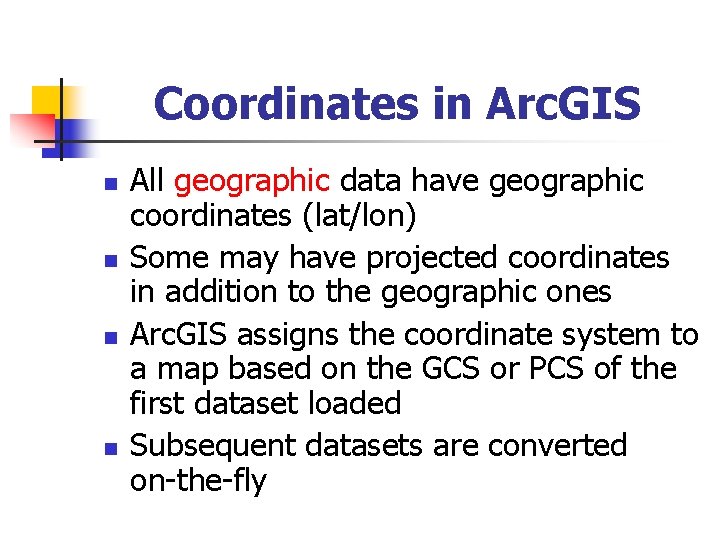
Coordinates in Arc. GIS n n All geographic data have geographic coordinates (lat/lon) Some may have projected coordinates in addition to the geographic ones Arc. GIS assigns the coordinate system to a map based on the GCS or PCS of the first dataset loaded Subsequent datasets are converted on-the-fly
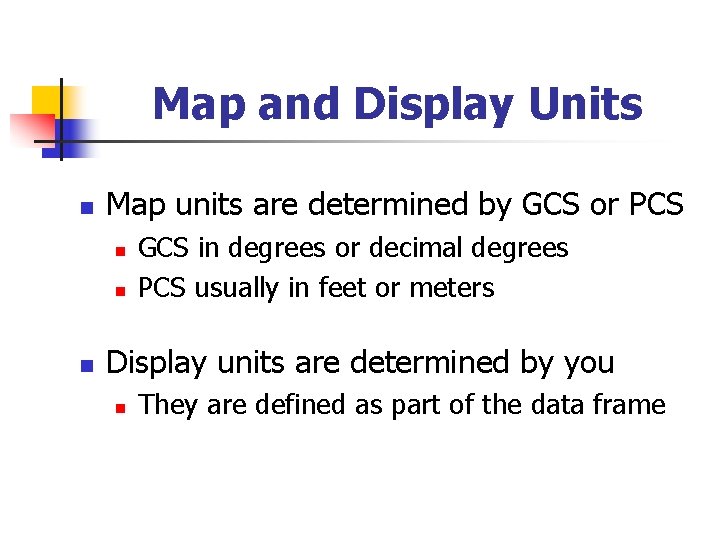
Map and Display Units n Map units are determined by GCS or PCS n n n GCS in degrees or decimal degrees PCS usually in feet or meters Display units are determined by you n They are defined as part of the data frame
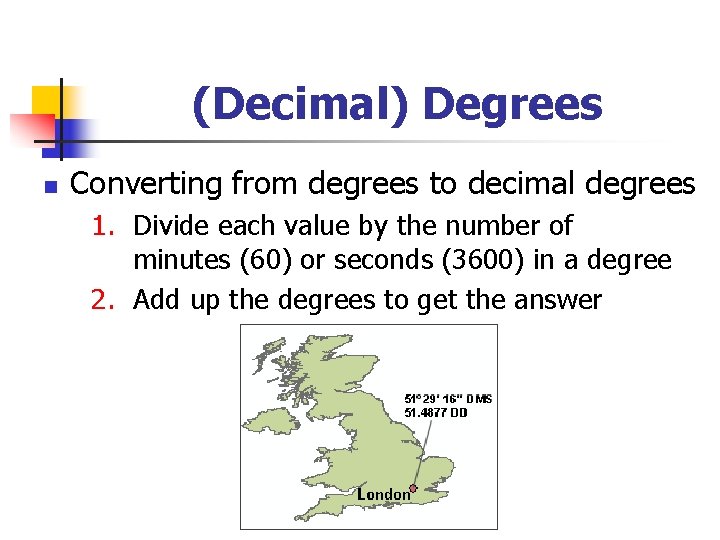
(Decimal) Degrees n Converting from degrees to decimal degrees 1. Divide each value by the number of minutes (60) or seconds (3600) in a degree 2. Add up the degrees to get the answer
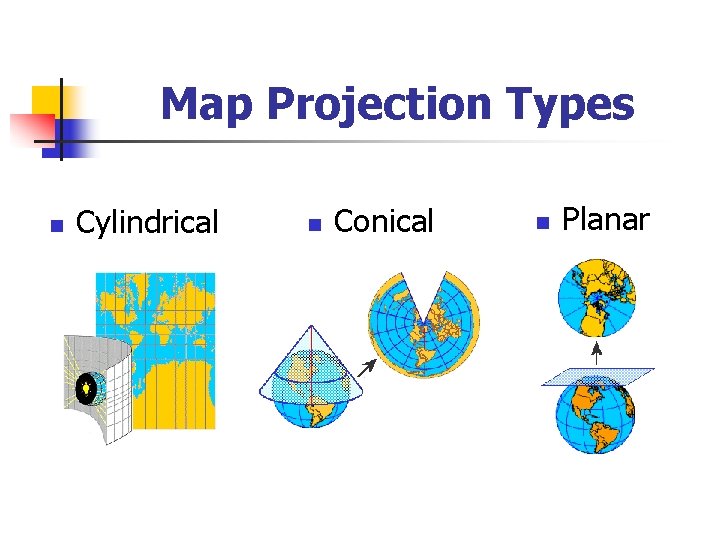
Map Projection Types n Cylindrical n Conical n Planar
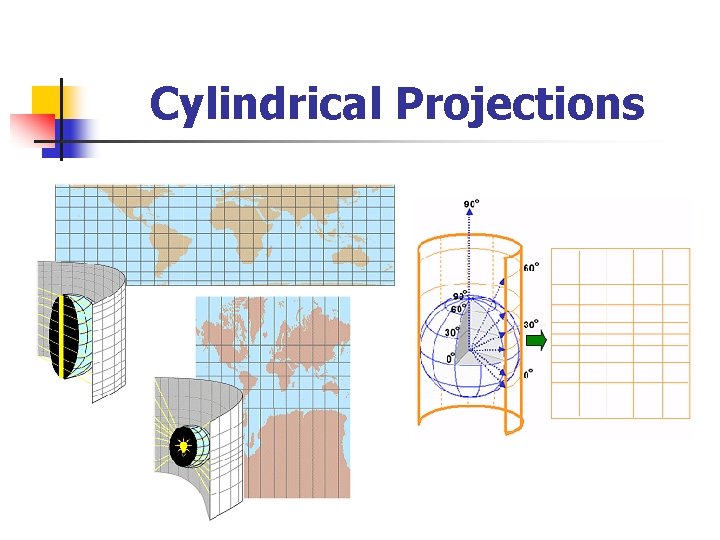
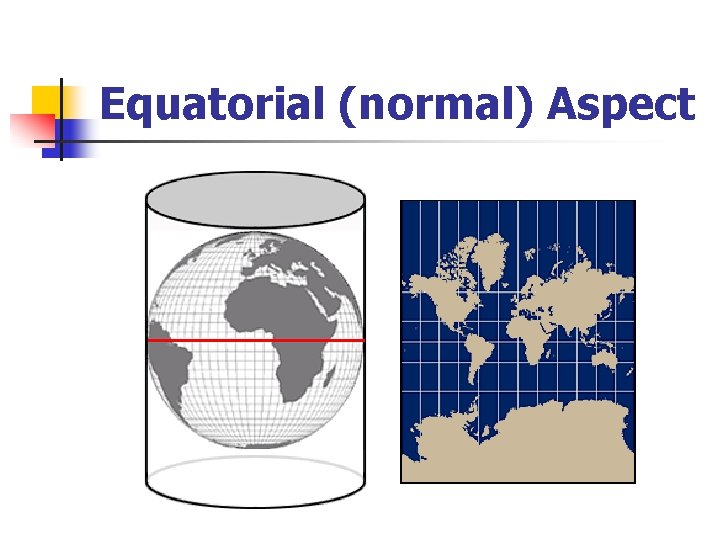
Cylindrical Projections
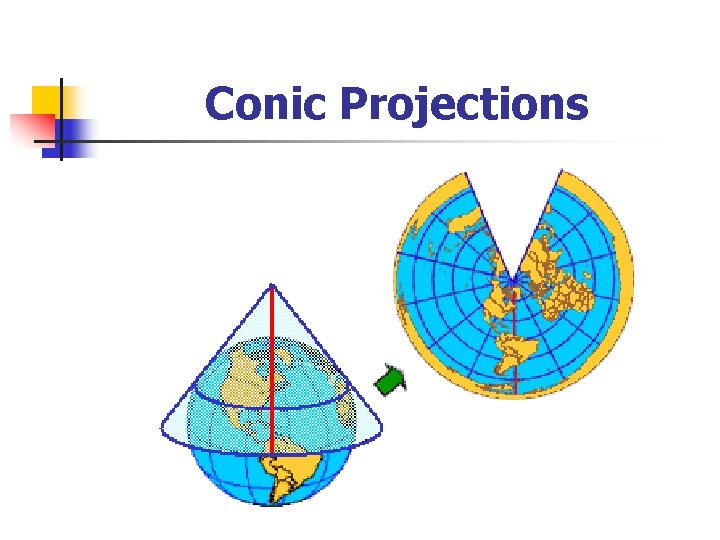
Conic Projections
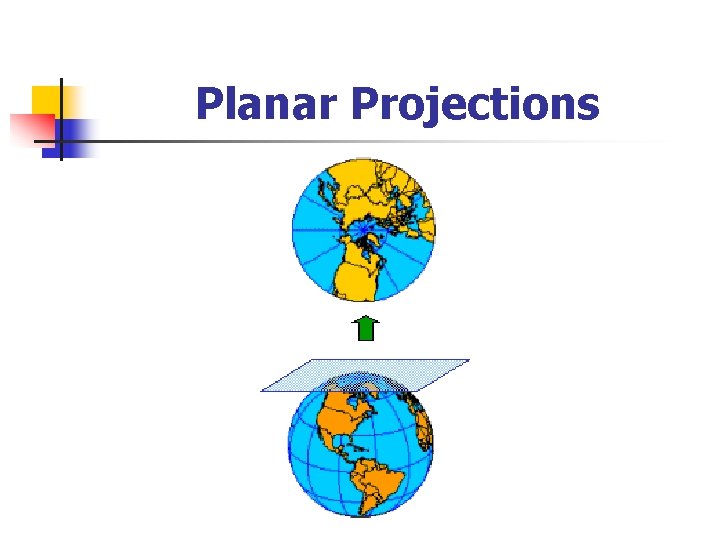
Planar Projections
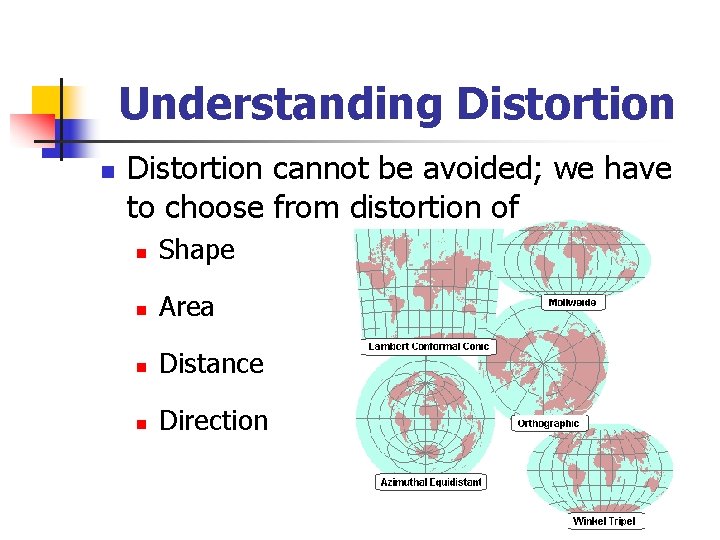
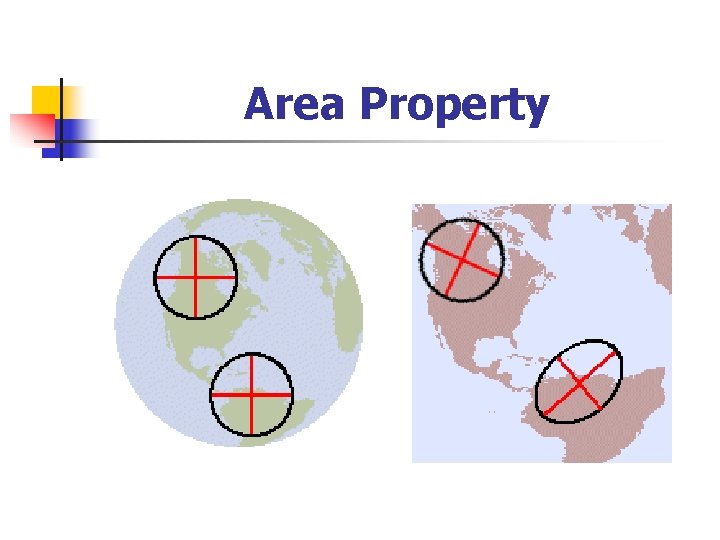
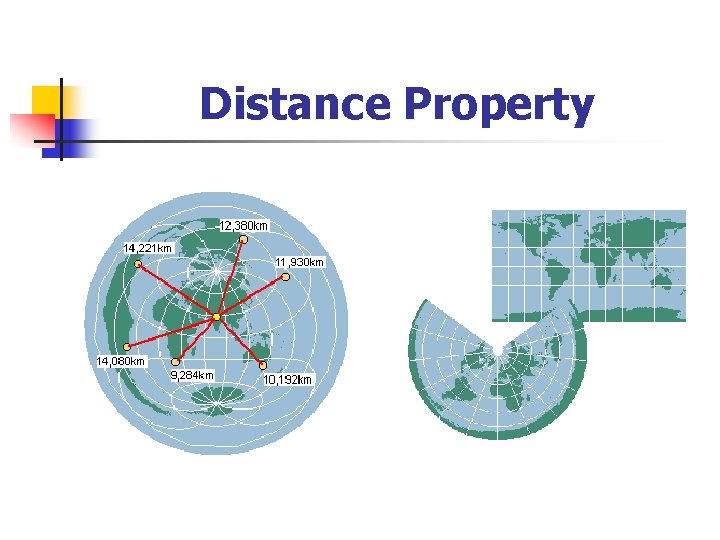
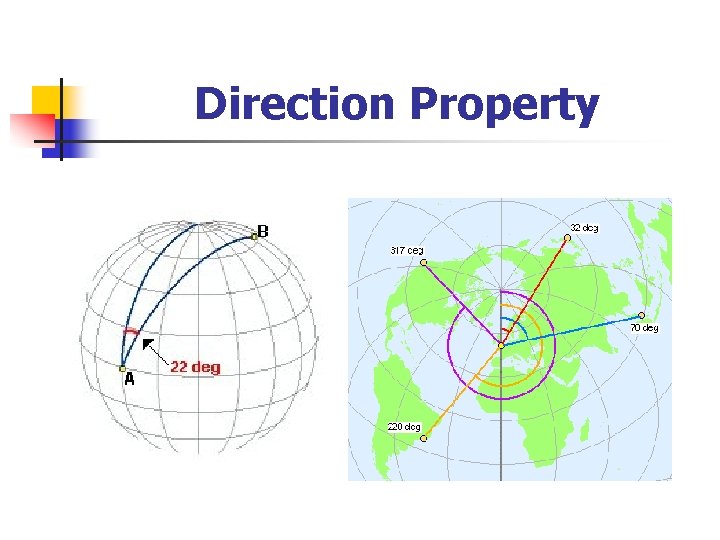
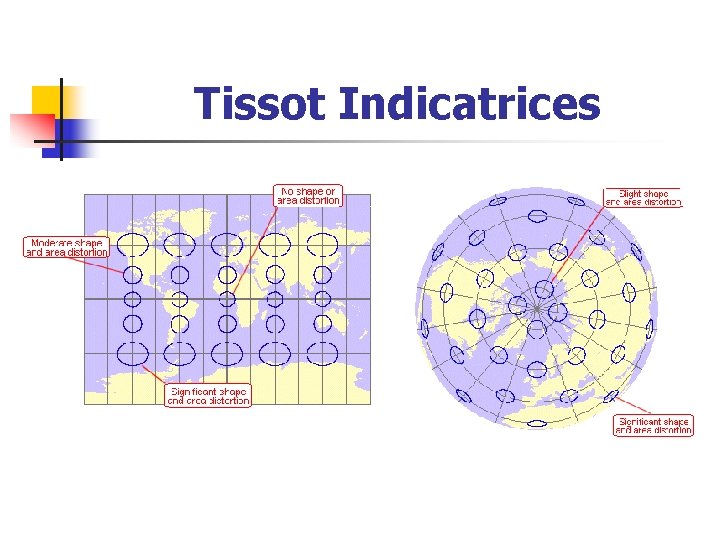
Understanding Distortion n Distortion cannot be avoided; we have to choose from distortion of n Shape n Area n Distance n Direction
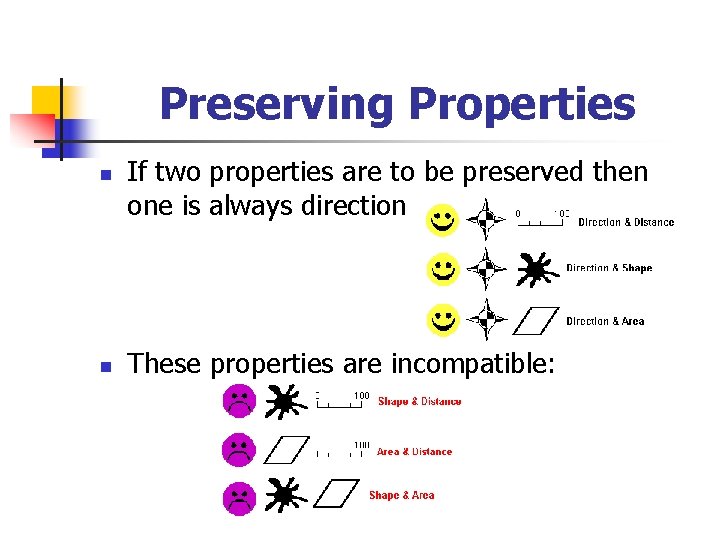
Preserving Properties n n If two properties are to be preserved then one is always direction These properties are incompatible:
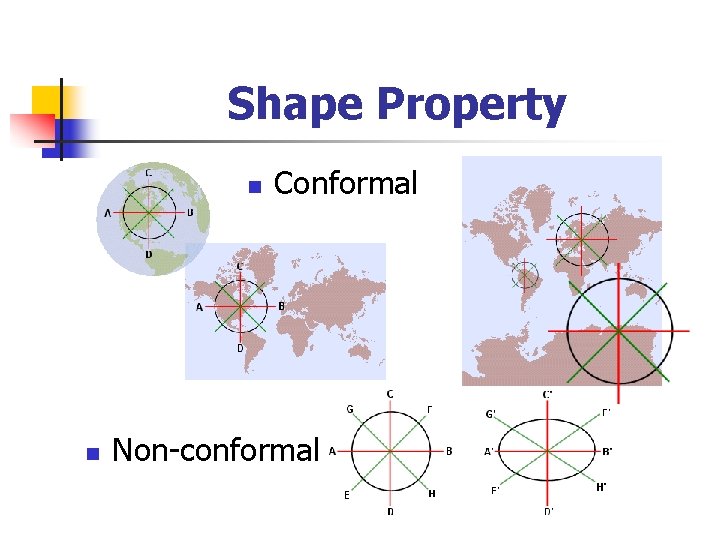
Shape Property n n Conformal Non-conformal
Area Property
Distance Property
Direction Property
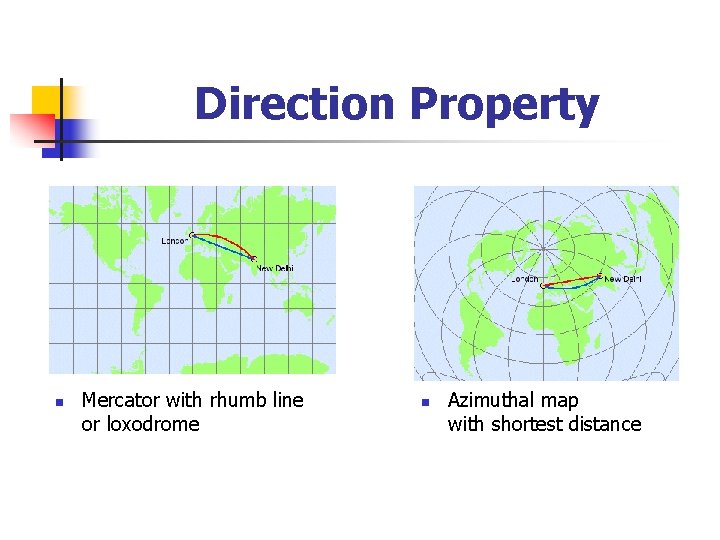
Direction Property n Mercator with rhumb line or loxodrome n Azimuthal map with shortest distance
Tissot Indicatrices
Equatorial (normal) Aspect
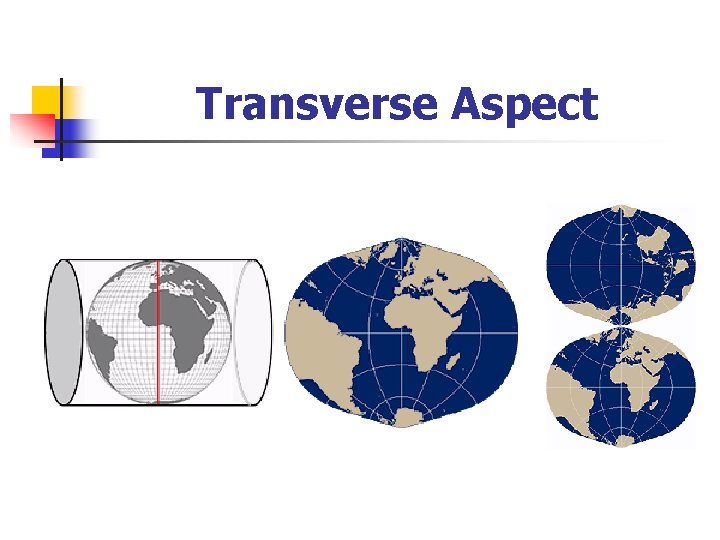
Transverse Aspect
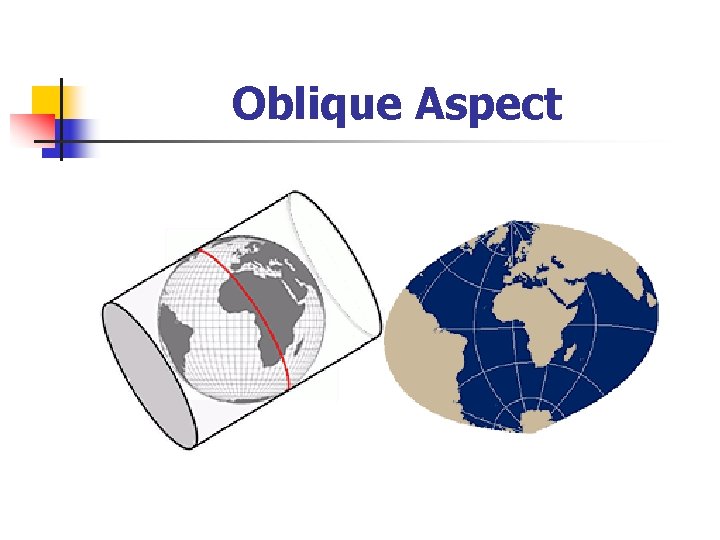
Oblique Aspect
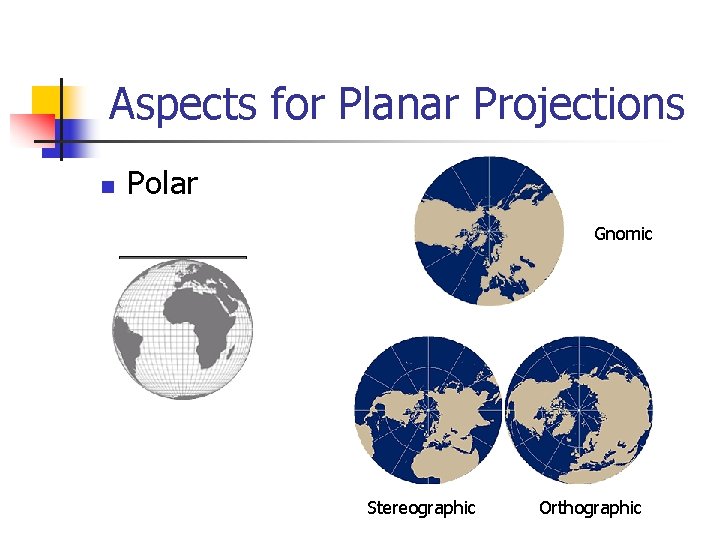
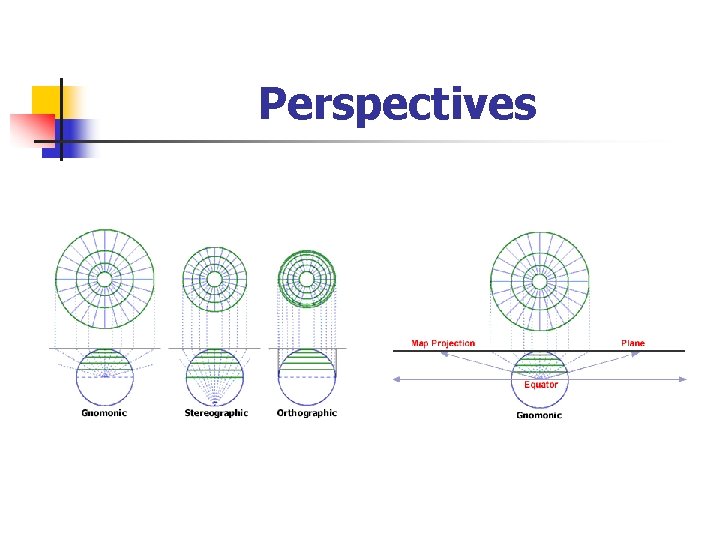
Aspects for Planar Projections n Polar Gnomic Stereographic Orthographic
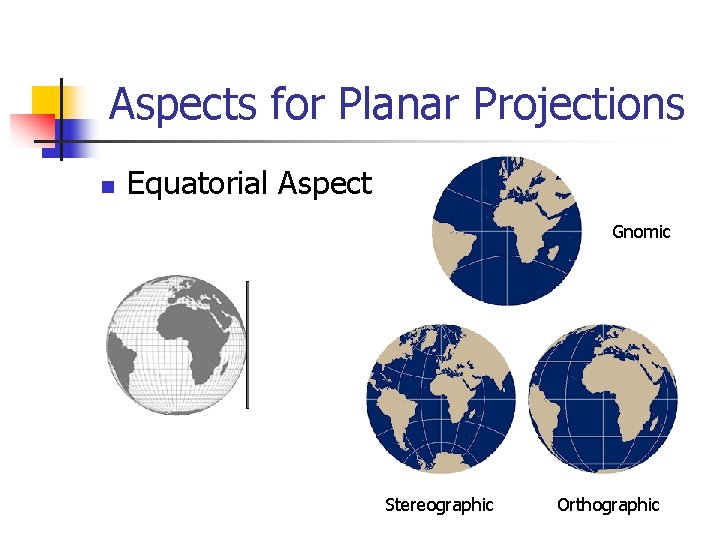
Aspects for Planar Projections n Equatorial Aspect Gnomic Stereographic Orthographic
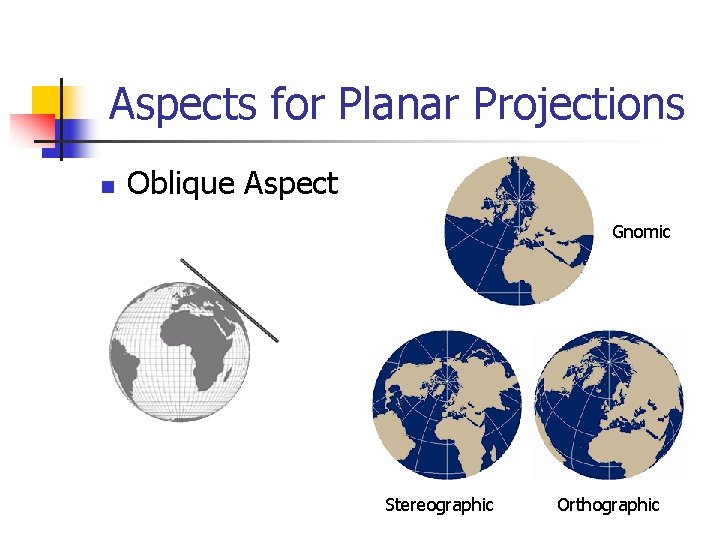
Aspects for Planar Projections n Oblique Aspect Gnomic Stereographic Orthographic
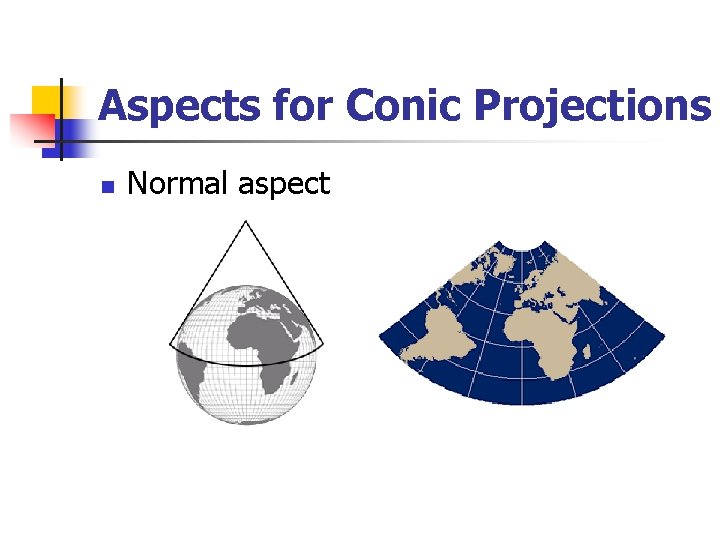
Aspects for Conic Projections n Normal aspect
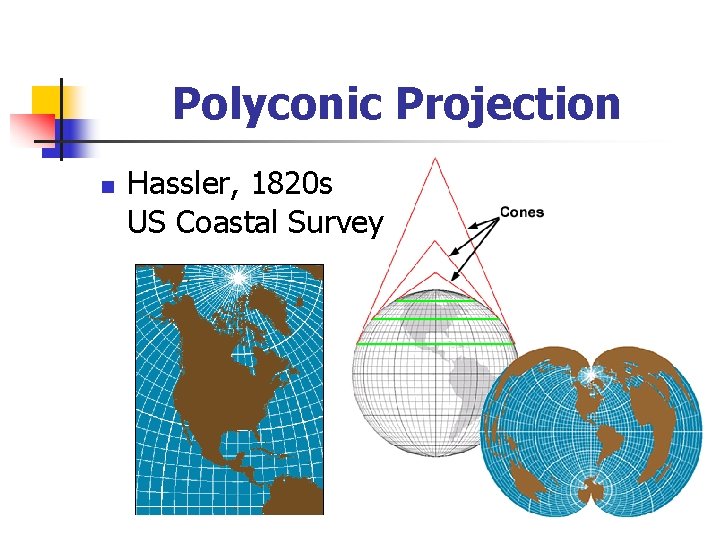
Polyconic Projection n Hassler, 1820 s US Coastal Survey
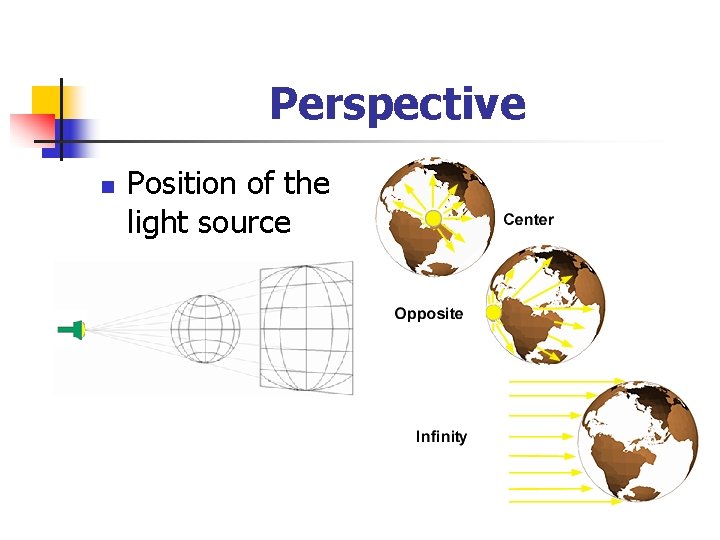
Perspective n Position of the light source
Perspectives
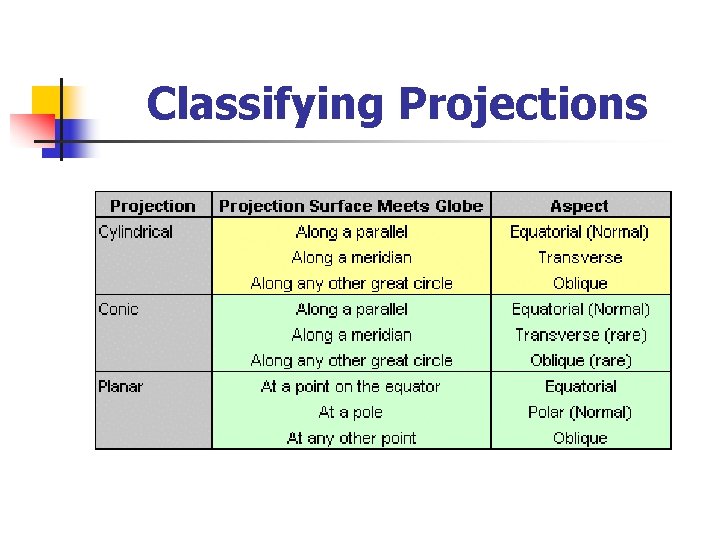
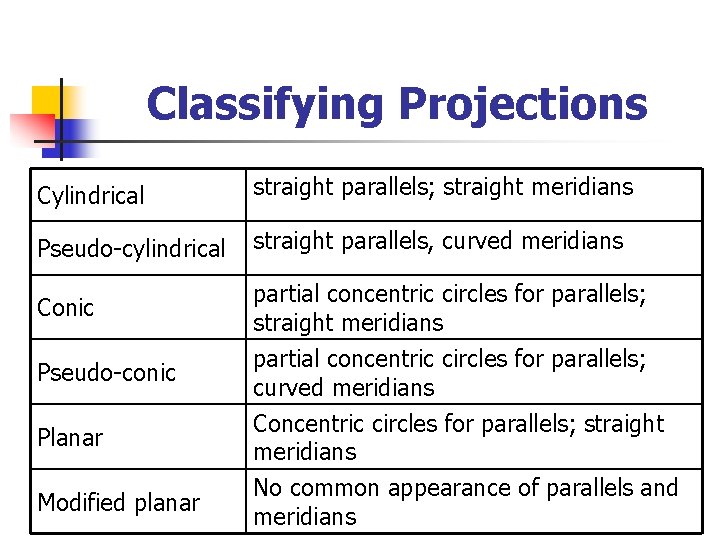
Classifying Projections
Classifying Projections Cylindrical straight parallels; straight meridians Pseudo-cylindrical straight parallels, curved meridians Conic partial concentric circles for parallels; straight meridians Pseudo-conic Planar Modified planar partial concentric circles for parallels; curved meridians Concentric circles for parallels; straight meridians No common appearance of parallels and meridians
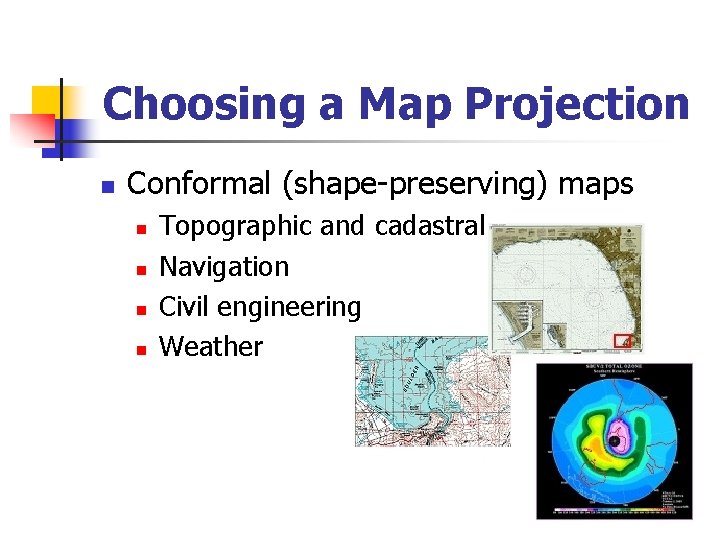
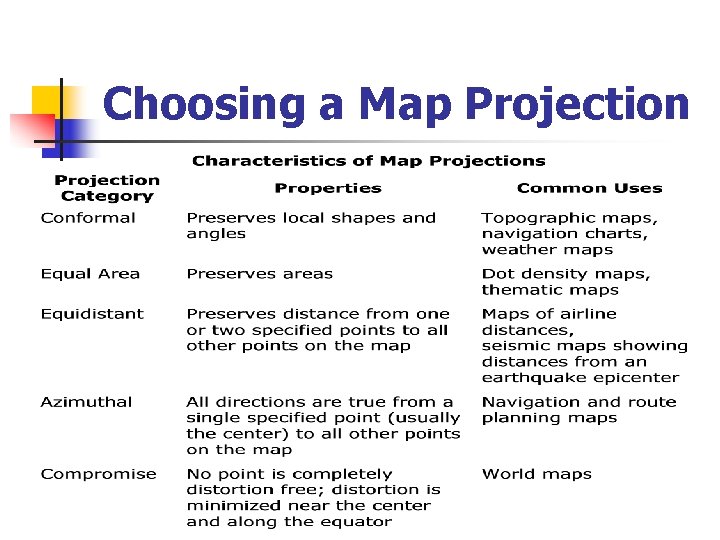
Choosing a Map Projection n Conformal (shape-preserving) maps n n Topographic and cadastral Navigation Civil engineering Weather
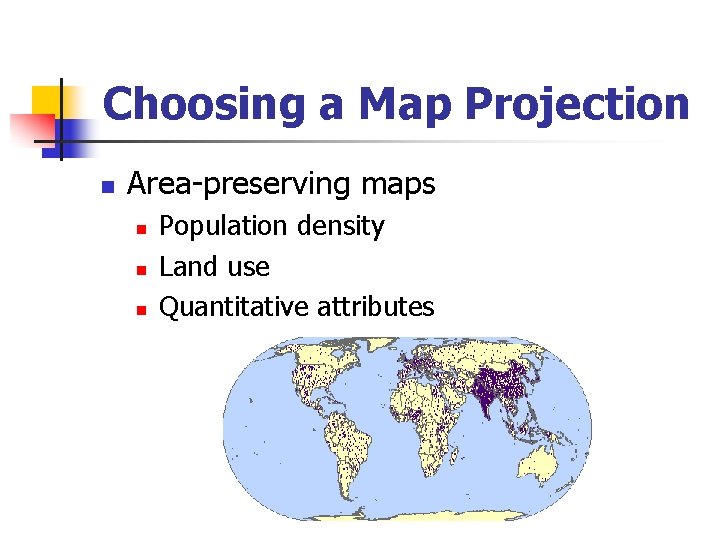
Choosing a Map Projection n Area-preserving maps n n n Population density Land use Quantitative attributes
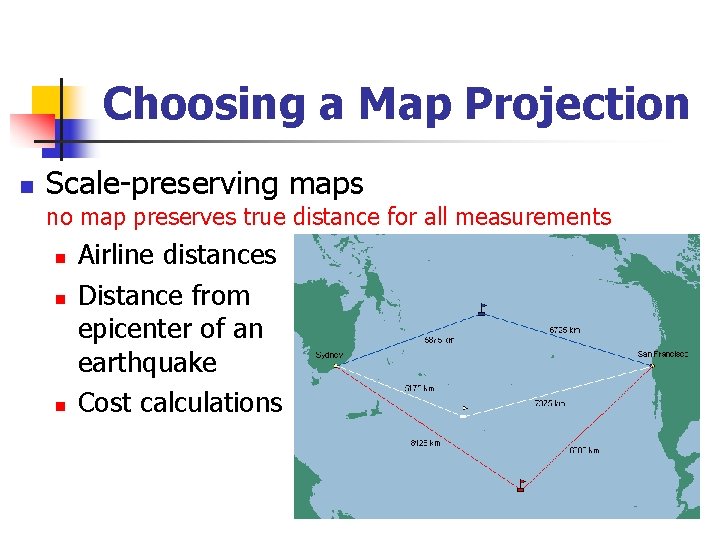
Choosing a Map Projection n Scale-preserving maps no map preserves true distance for all measurements n n n Airline distances Distance from epicenter of an earthquake Cost calculations
Choosing a Map Projection
Components of a GCS n An angular unit of measure n A prime meridian n A datum, which includes a spheroid
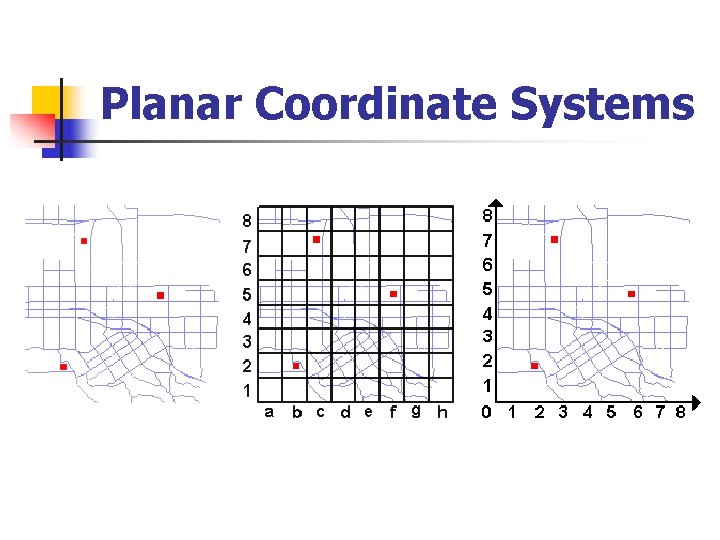
Planar Coordinate Systems
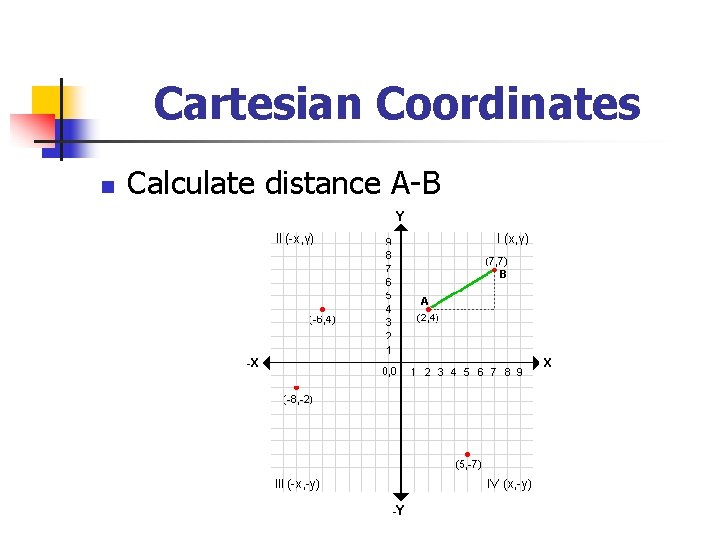
Cartesian Coordinates n Calculate distance A-B
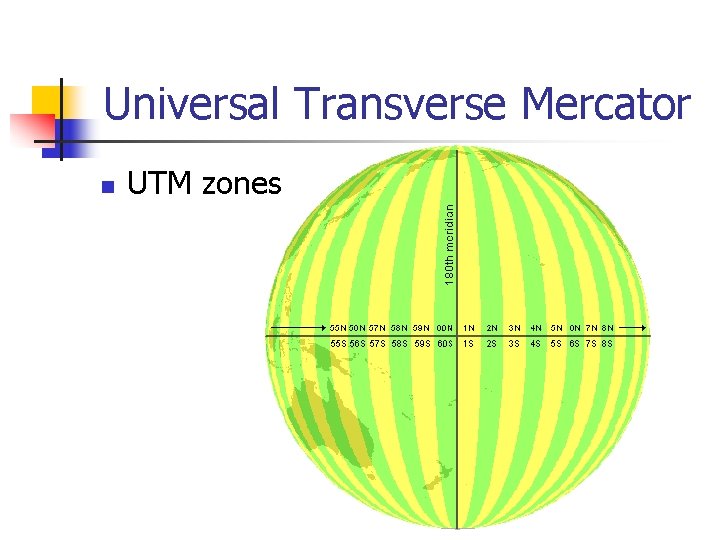
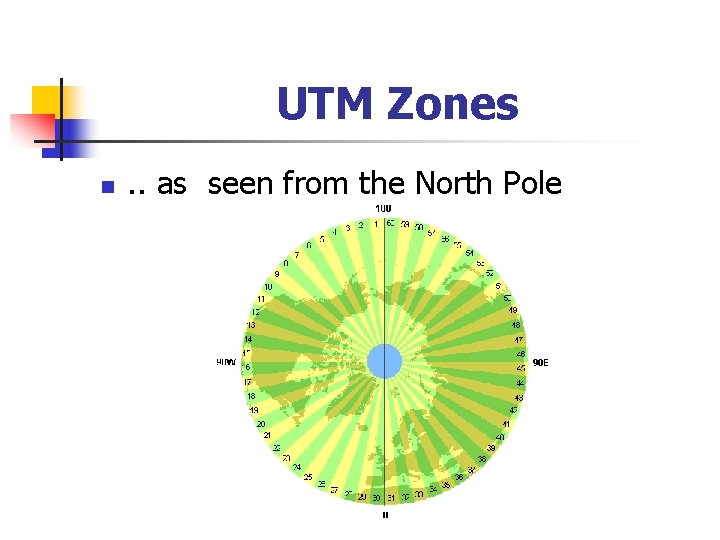
Universal Transverse Mercator n UTM zones
UTM Zones n . . as seen from the North Pole
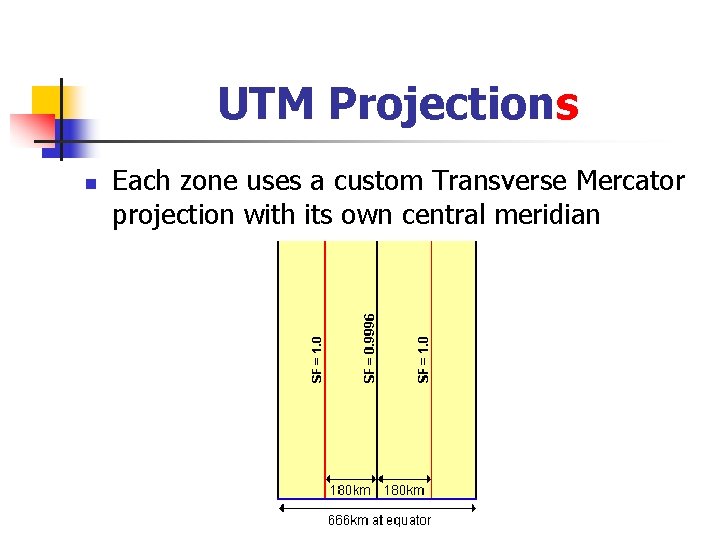
UTM Projections n Each zone uses a custom Transverse Mercator projection with its own central meridian
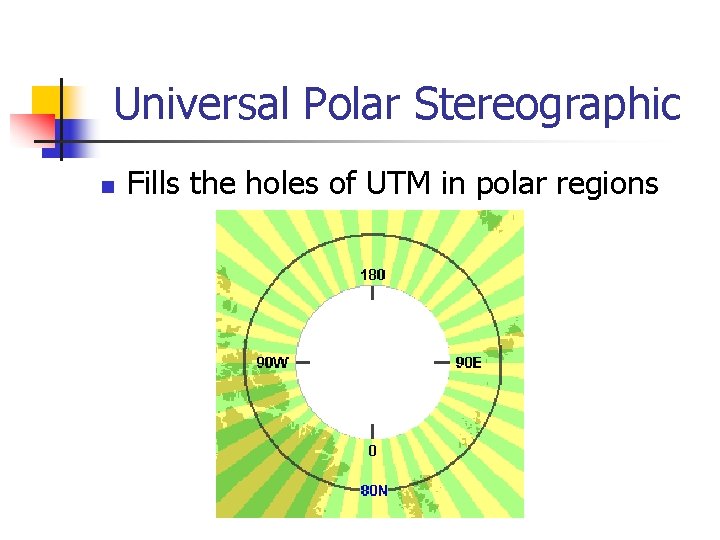
Universal Polar Stereographic n Fills the holes of UTM in polar regions
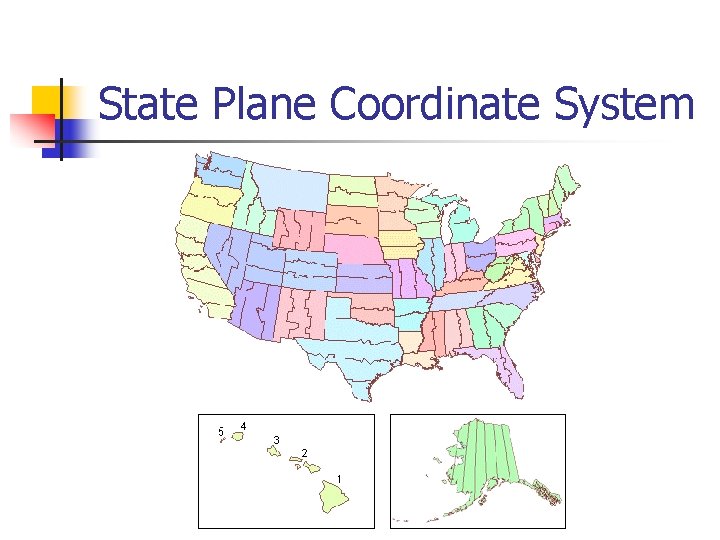
State Plane Coordinate System
SPC n n N-S zones use Transverse Mercator E-W zones use Lambert Conformal Conic Maximal scale error is 1: 10, 000 NAD 27 or NAD 83 datum
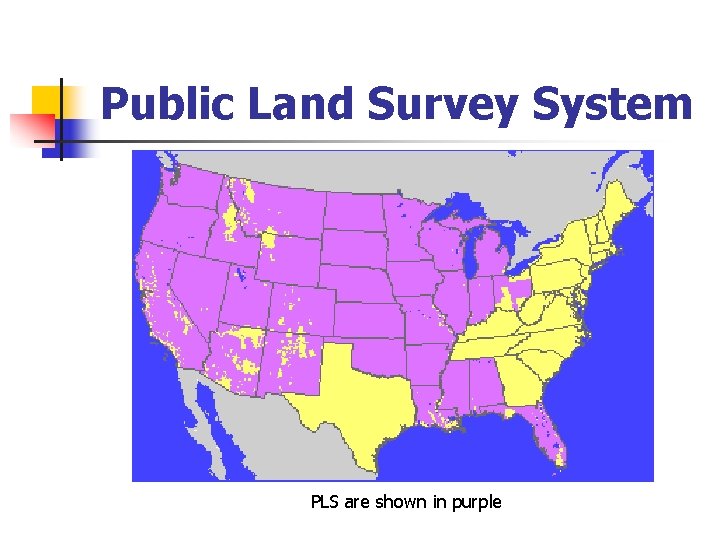
Public Land Survey System PLS are shown in purple
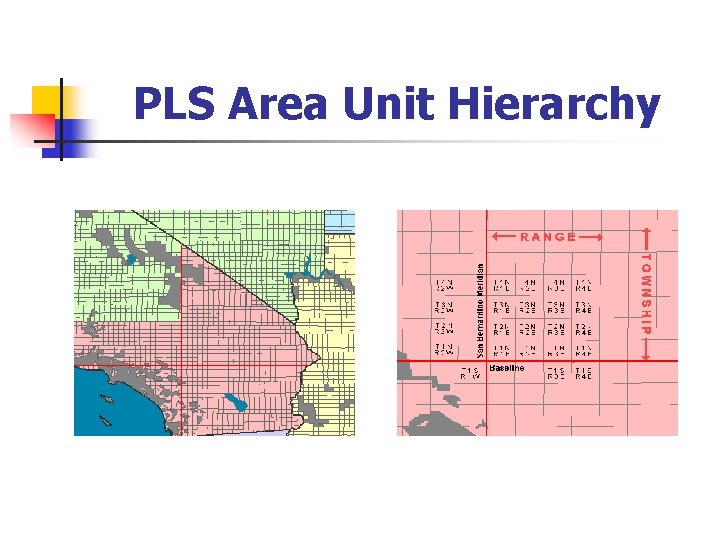
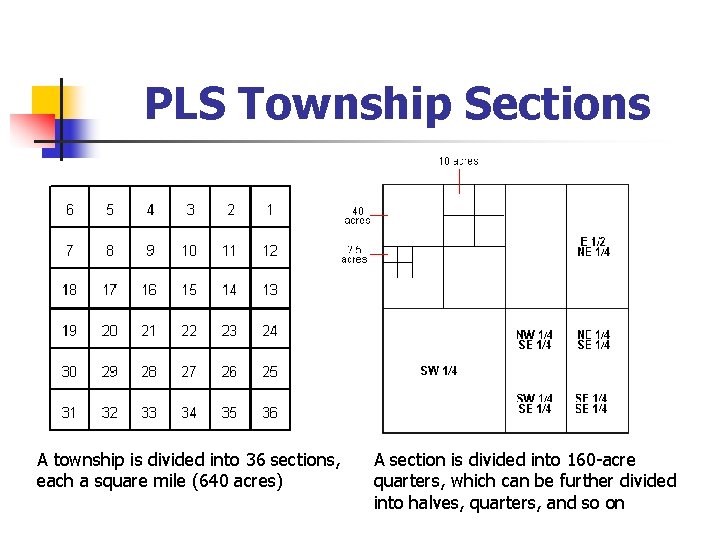
PLS n n n It is used to locate areas, not points It is not rigorous enough for spatial analysis like the calculation of distance or direction It is not a grid imposed on a map projection (a system invented in a room), but lines measured on the ground by surveyors
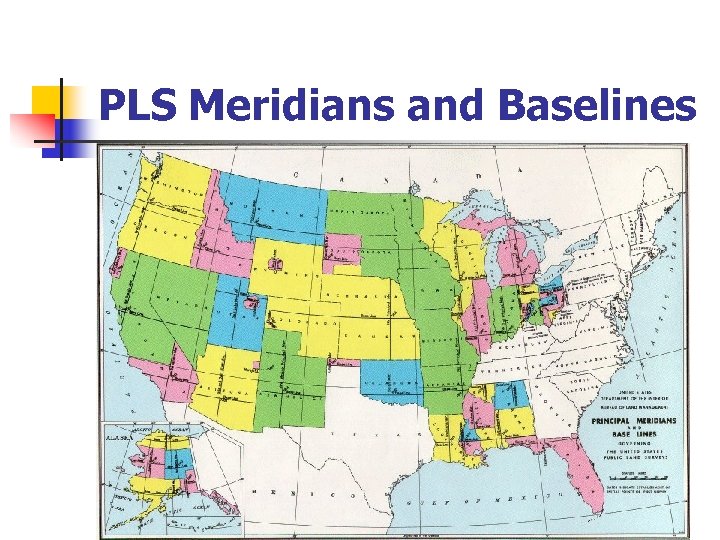
PLS Meridians and Baselines
PLS Area Unit Hierarchy
PLS Township Sections A township is divided into 36 sections, each a square mile (640 acres) A section is divided into 160 -acre quarters, which can be further divided into halves, quarters, and so on