
GSN is composed of 152 stations 129 Core
- Slides: 7
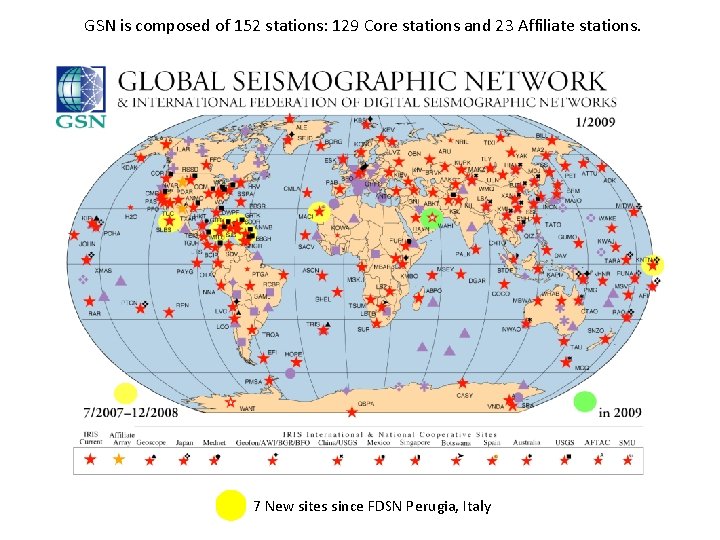
GSN is composed of 152 stations: 129 Core stations and 23 Affiliate stations. Global Seismographic Network 7 New sites since FDSN Perugia, Italy
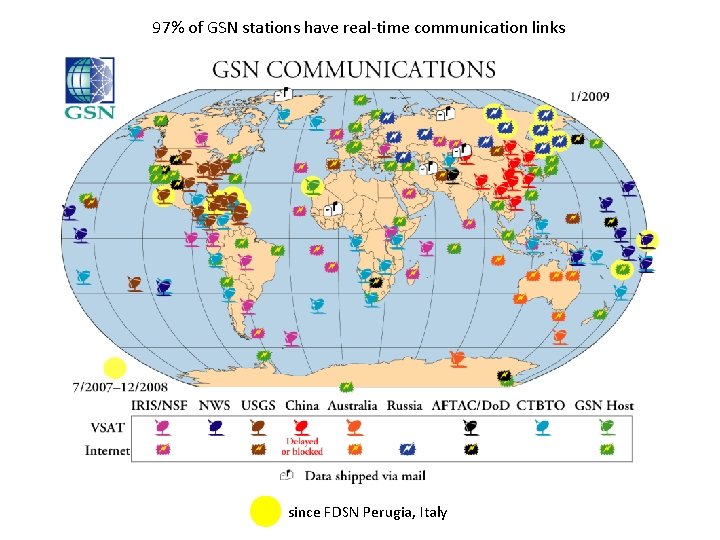
97% of GSN stations have real-time communication links GSN Telemetry since FDSN Perugia, Italy
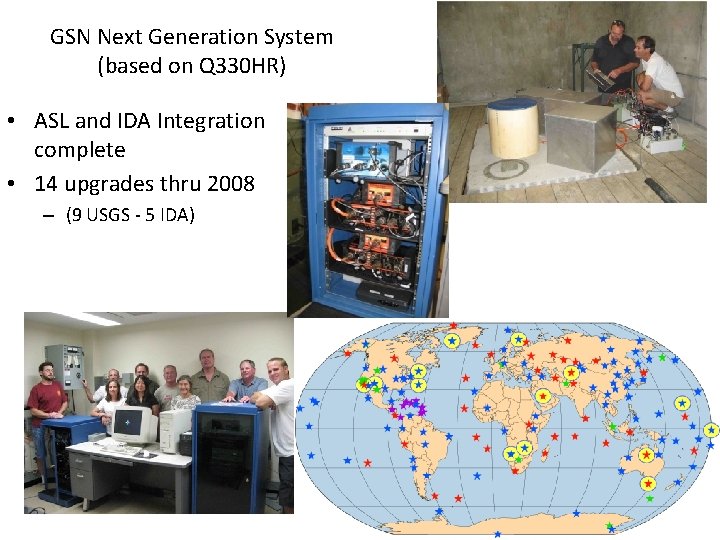
GSN Next Generation System (based on Q 330 HR) • ASL and IDA Integration complete • 14 upgrades thru 2008 – (9 USGS - 5 IDA)
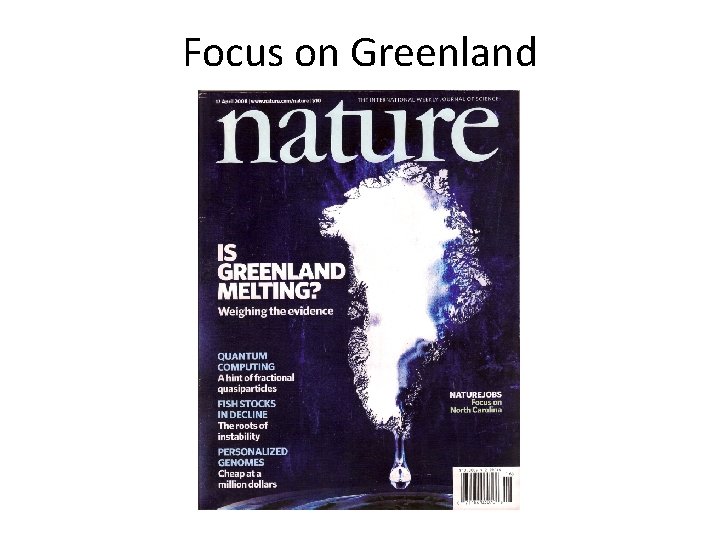
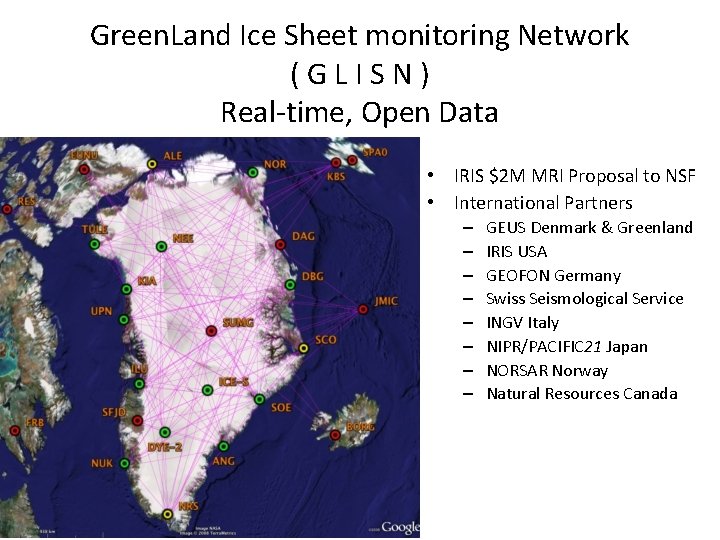
Focus on Greenland
Green. Land Ice Sheet monitoring Network (GLISN) Real-time, Open Data • IRIS $2 M MRI Proposal to NSF • International Partners – – – – GEUS Denmark & Greenland IRIS USA GEOFON Germany Swiss Seismological Service INGV Italy NIPR/PACIFIC 21 Japan NORSAR Norway Natural Resources Canada
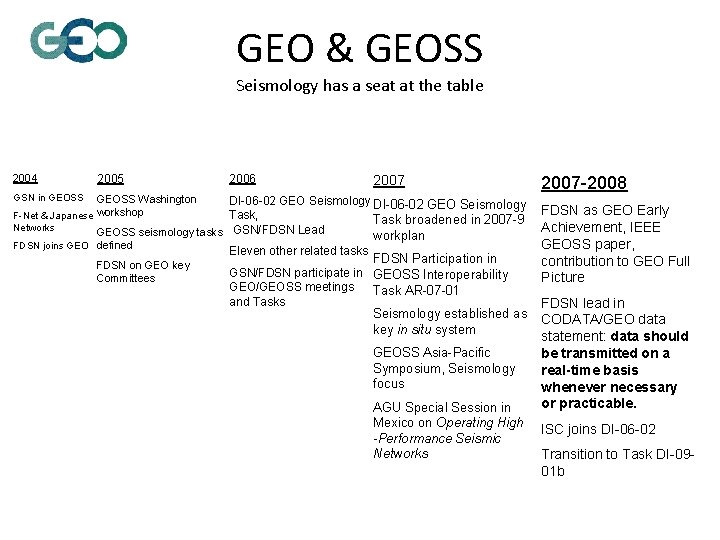
GEO & GEOSS Seismology has a seat at the table 2004 2005 GSN in GEOSS DI-06 -02 GEO Seismology Task, Task broadened in 2007 -9 GEOSS seismology tasks GSN/FDSN Lead workplan 2006 2007 GEOSS Washington F-Net & Japanese workshop Networks FDSN joins GEO defined FDSN on GEO key Committees Eleven other related tasks FDSN Participation in GSN/FDSN participate in GEOSS Interoperability GEO/GEOSS meetings Task AR-07 -01 and Tasks Seismology established as key in situ system GEOSS Asia-Pacific Symposium, Seismology focus AGU Special Session in Mexico on Operating High -Performance Seismic Networks 2007 -2008 FDSN as GEO Early Achievement, IEEE GEOSS paper, contribution to GEO Full Picture FDSN lead in CODATA/GEO data statement: data should be transmitted on a real-time basis whenever necessary or practicable. ISC joins DI-06 -02 Transition to Task DI-0901 b
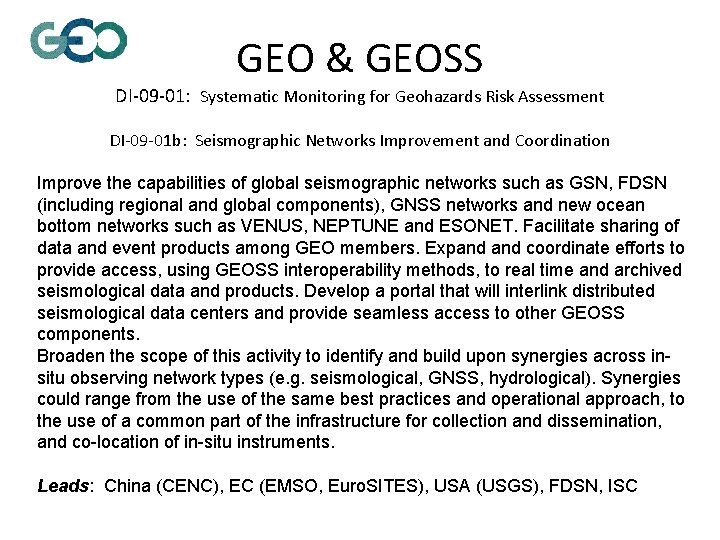
GEO & GEOSS DI-09 -01: Systematic Monitoring for Geohazards Risk Assessment DI-09 -01 b: Seismographic Networks Improvement and Coordination Improve the capabilities of global seismographic networks such as GSN, FDSN (including regional and global components), GNSS networks and new ocean bottom networks such as VENUS, NEPTUNE and ESONET. Facilitate sharing of data and event products among GEO members. Expand coordinate efforts to provide access, using GEOSS interoperability methods, to real time and archived seismological data and products. Develop a portal that will interlink distributed seismological data centers and provide seamless access to other GEOSS components. Broaden the scope of this activity to identify and build upon synergies across insitu observing network types (e. g. seismological, GNSS, hydrological). Synergies could range from the use of the same best practices and operational approach, to the use of a common part of the infrastructure for collection and dissemination, and co-location of in-situ instruments. Leads: China (CENC), EC (EMSO, Euro. SITES), USA (USGS), FDSN, ISC