
Growth Patterns of the Neurocentral Synchondrosis in Immature
- Slides: 20
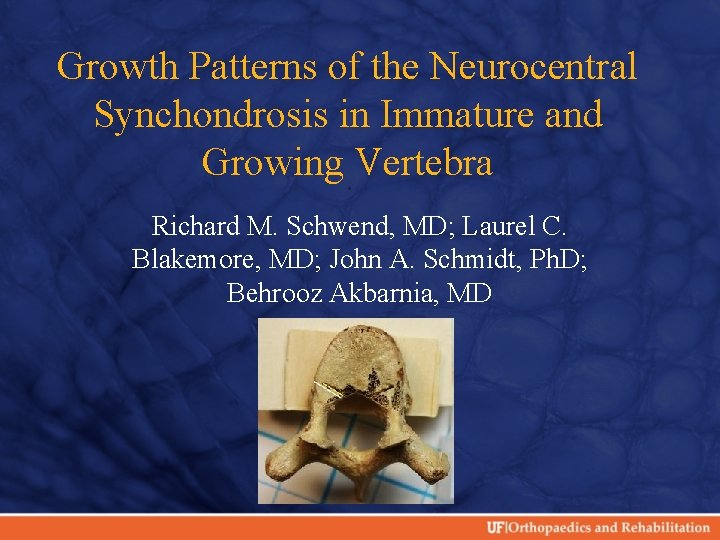
Growth Patterns of the Neurocentral Synchondrosis in Immature and Growing Vertebra Richard M. Schwend, MD; Laurel C. Blakemore, MD; John A. Schmidt, Ph. D; Behrooz Akbarnia, MD
Disclosures • • • Richard M. Schwend MD § K 2 M Research Support § POSNA BOD § Project Perfect World BOD § Miracle Feet Medical Advisory Board § AAP Executive Committee, COM, PPC John Schmidt Ph. D § K 2 M research support Laurel Blakemore MD § K 2 M Research Support, Board of Surgical Advisors, Consulting Agreement § SRS Board of Directors, member at large § Associate Editorial Board Julie Reigrut MS § K 2 M Research Support Behrooz Akbarnia MD. § K 2 M Research support to institution and royalties. § De. Puy Synthes grants to institutions royalties. § Ellipse technology grants to institution, consultant stock. § K Spine consultant, stock
• Acknowledgments: This project received research funding from K 2 M Inc. • We also acknowledge assistance from Lyman Jellema, Curator, Physical Anthropology, Hamann-Todd Osteological Collection, the Cleveland Museum of Natural History, 1 Wade Oval Drive, Cleveland OH 44106. 216 231 4600 X 3276
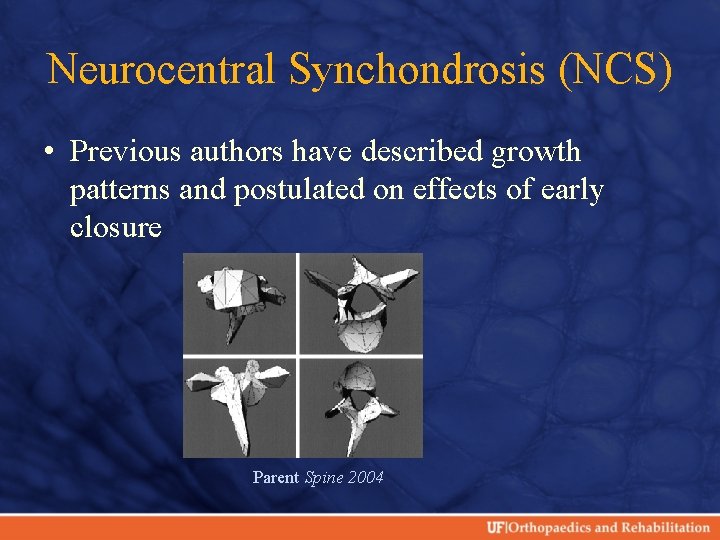
Neurocentral Synchondrosis (NCS) • Previous authors have described growth patterns and postulated on effects of early closure Parent Spine 2004
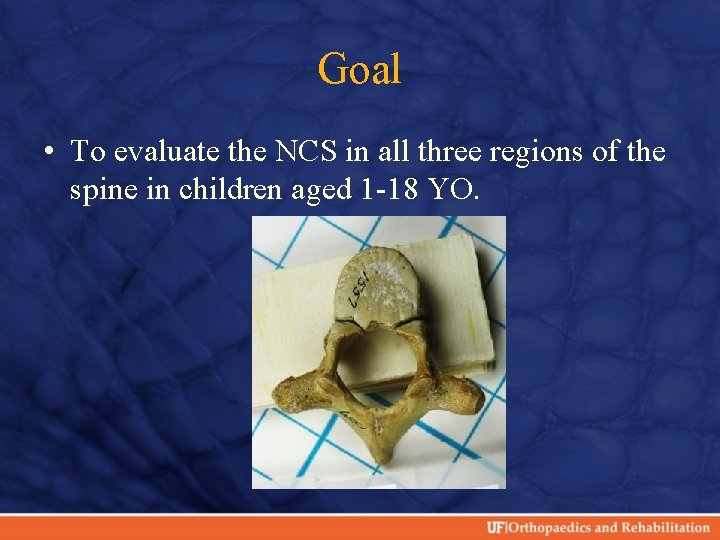
Goal • To evaluate the NCS in all three regions of the spine in children aged 1 -18 YO.
• Hamann-Todd Osteological Collection provided the bones of 32 complete pediatric cadaveric osteologic specimens aged 1 -18 years (ages 2 and 9 missing from series) • 733 vertebral body specimens
Vertebra and Rib Analysis • 6226 individual photographs of all vertebral bodies and ribs were obtained from these specimens. Quantitative measurements were taken with image analysis software and were analyzed. • 32, 000 separate measurements were analyzed.
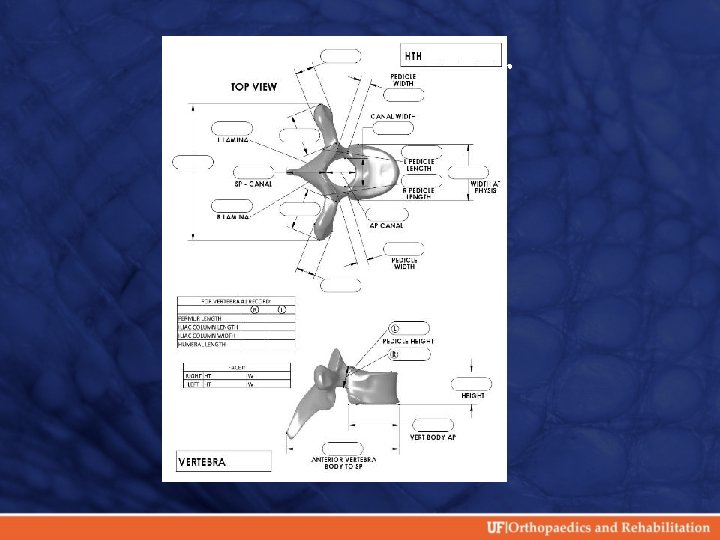
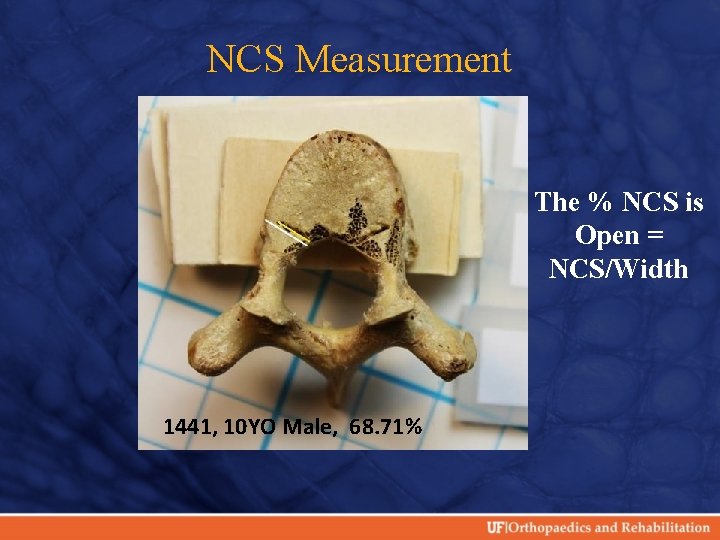
NCS Measurement • left and right sides of each NCS along with the actual width of the pedicle at same location were measured. • Dividing NCS by the pedicle width and multiplying by 100 gives the percentage open of the growth plate
Thoracic and Lumbar
NCS Measurement The % NCS is Open = NCS/Width 1441, 10 YO Male, 68. 71%
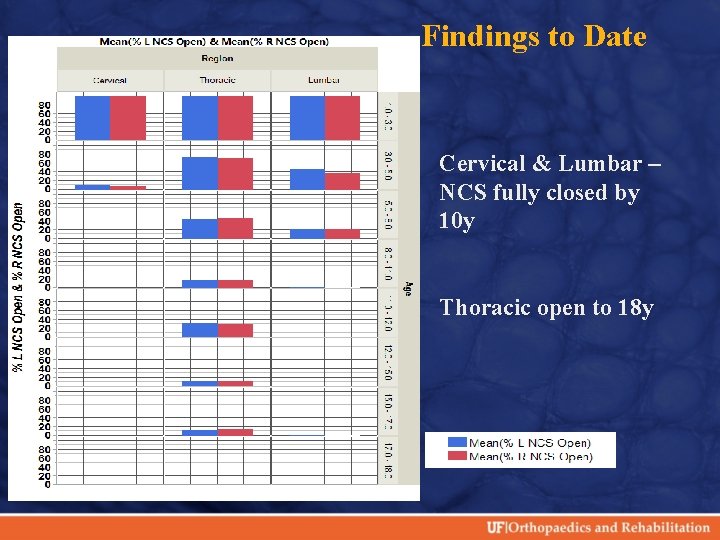
Different Spine Regions Behaved Differently • Cervical: § By 5 y the cervical spine has virtually closed with only 10% of the NCS remaining. • Lumbar: § is still nearly 50% open at 5 y and closed by 10 y.
Different Spine Regions Behaved Differently • Thoracic § only 25 % closed at 5 y and remains open through 17 y. • t-testing showed that there was no difference between the left and right NCS data.
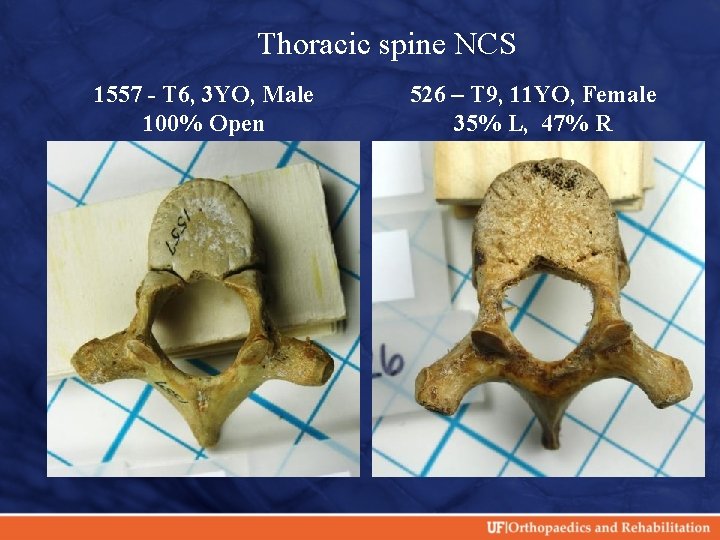
Thoracic spine NCS 1557 - T 6, 3 YO, Male 100% Open 526 – T 9, 11 YO, Female 35% L, 47% R
Findings to Date Cervical & Lumbar – NCS fully closed by 10 y Thoracic open to 18 y
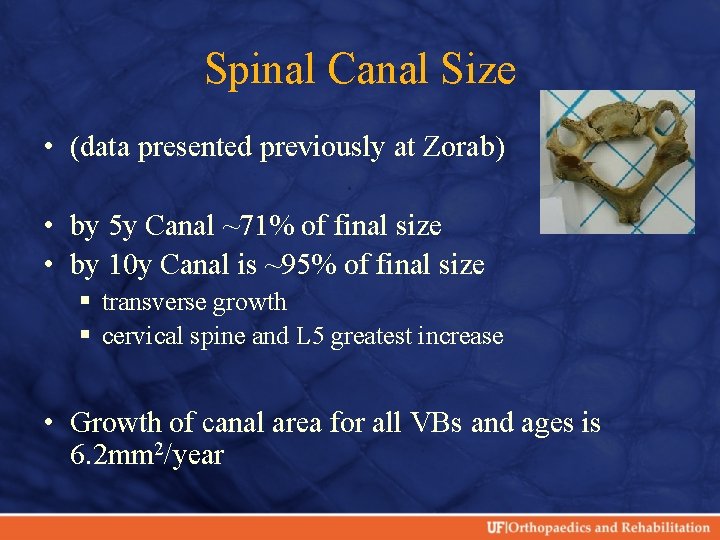
Spinal Canal Size • (data presented previously at Zorab) • by 5 y Canal ~71% of final size • by 10 y Canal is ~95% of final size § transverse growth § cervical spine and L 5 greatest increase • Growth of canal area for all VBs and ages is 6. 2 mm 2/year
Other studies • Maat Spine 1996 § 2 pediatric cadaveric specimens- considered NCS fused by age 6 • Yamakazi JPO 1998 § MRI 91 pts –thoracic NCS closed at 11 -16 yrs • Cannadell Rev Med Univ Navarra 1974 § cadaveric- fused 11 -14 yrs
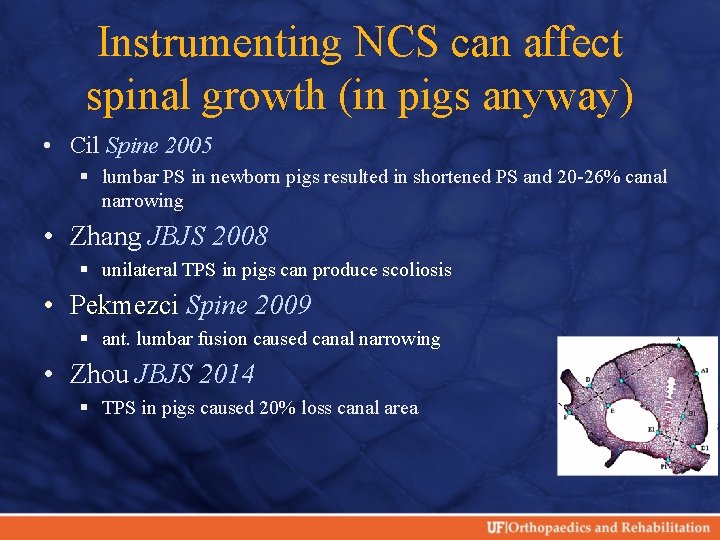
Instrumenting NCS can affect spinal growth (in pigs anyway) • Cil Spine 2005 § lumbar PS in newborn pigs resulted in shortened PS and 20 -26% canal narrowing • Zhang JBJS 2008 § unilateral TPS in pigs can produce scoliosis • Pekmezci Spine 2009 § ant. lumbar fusion caused canal narrowing • Zhou JBJS 2014 § TPS in pigs caused 20% loss canal area
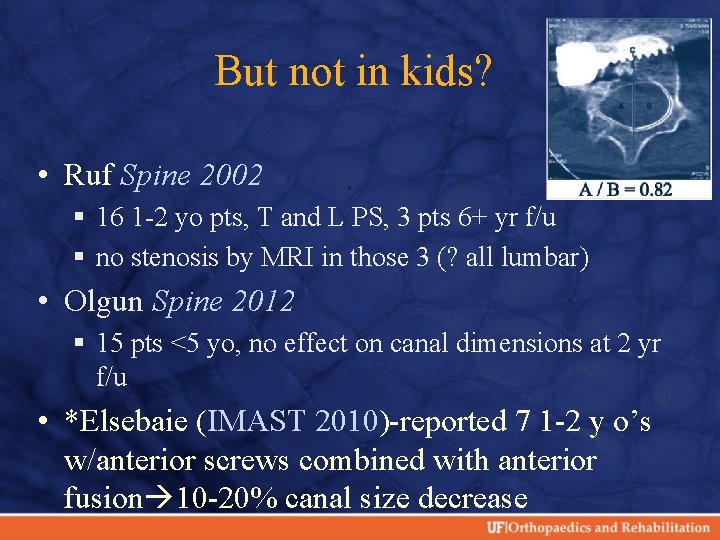
But not in kids? • Ruf Spine 2002 § 16 1 -2 yo pts, T and L PS, 3 pts 6+ yr f/u § no stenosis by MRI in those 3 (? all lumbar) • Olgun Spine 2012 § 15 pts <5 yo, no effect on canal dimensions at 2 yr f/u • *Elsebaie (IMAST 2010)-reported 7 1 -2 y o’s w/anterior screws combined with anterior fusion 10 -20% canal size decrease
Conclusions • NCS closes later in the thoracic spine then in other regions • the implications for treatment of spinal deformity in children are still not understood
Thank You