
Growth of the American LABOR MOVEMENT Unit VI
Growth of the American LABOR MOVEMENT Unit VI – Industrial Age
Essential Question: How did rapid mechanization in industrial and agriculture American society transform the United States and bring it into the modern age? Students can: • Discern how did industrialization change Americans’ lives during the Gilded years? • Evaluate how and why did Americans struggle over the power and purpose of government? Agenda for Today • Welcome to the Homestead • Tactics of Labor vs. Industrialist • Strike out Homework: • Debate Prep • Quiz on the Gilded Age, Friday 1/31
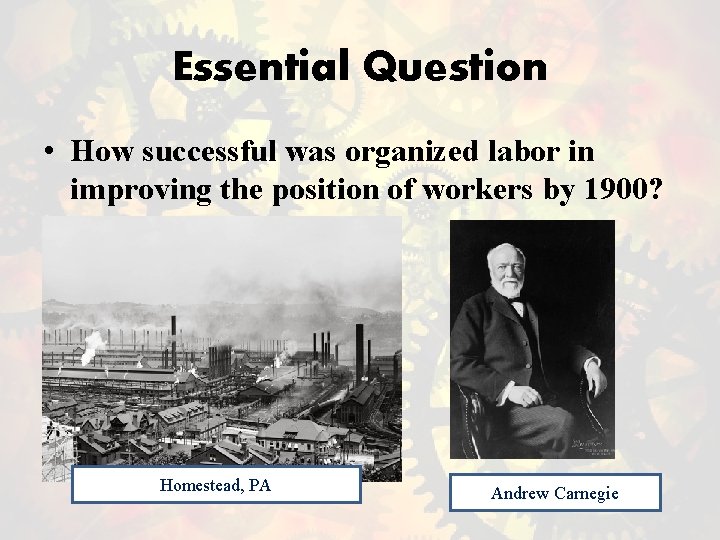
Essential Question • How successful was organized labor in improving the position of workers by 1900? Homestead, PA Andrew Carnegie
CONDITIONS FOR WORKERS • • Expanding Middle Class Wage earners and real wages women in labor force standard of living increasing Working conditions Attempts to Improve Conditions for Workers: • Child labor laws Prevent wage • Chinese Exclusion Act (1882) suppression • Alien Labor Contract Law (1885)

Shifts in Labor Force
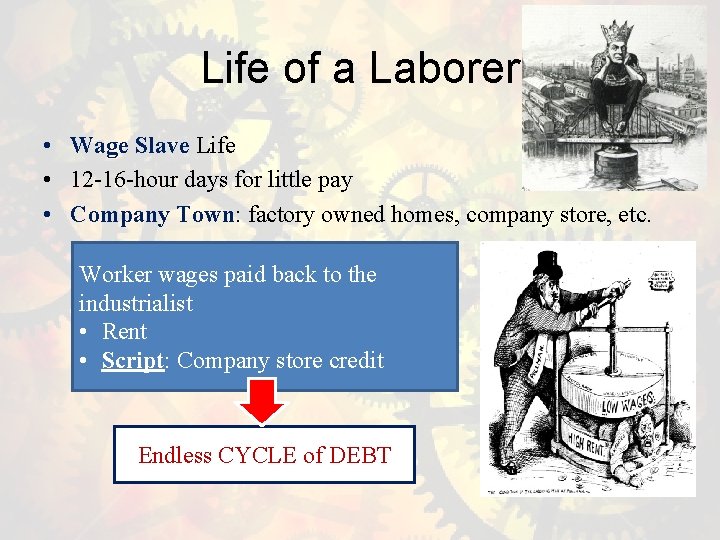
Life of a Laborer • Wage Slave Life • 12 -16 -hour days for little pay • Company Town: factory owned homes, company store, etc. Worker wages paid back to the industrialist • Rent • Script: Company store credit Endless CYCLE of DEBT
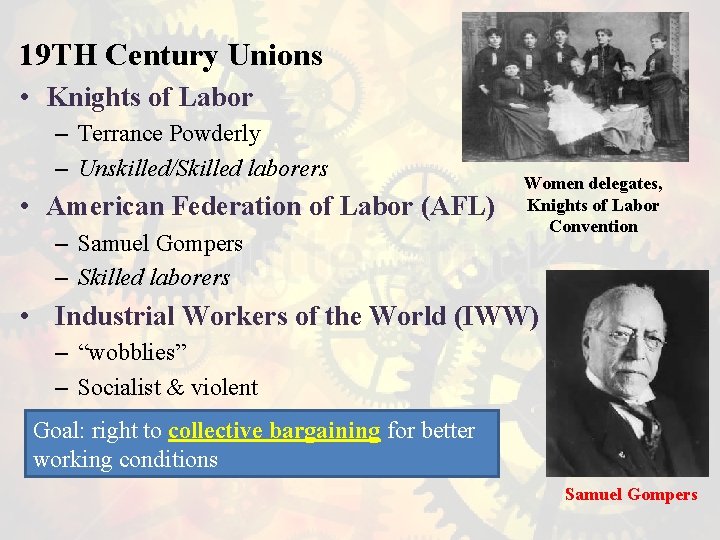
19 TH Century Unions • Knights of Labor – Terrance Powderly – Unskilled/Skilled laborers • American Federation of Labor (AFL) – Samuel Gompers – Skilled laborers Women delegates, Knights of Labor Convention • Industrial Workers of the World (IWW) – “wobblies” – Socialist & violent Goal: right to collective bargaining for better working conditions Samuel Gompers
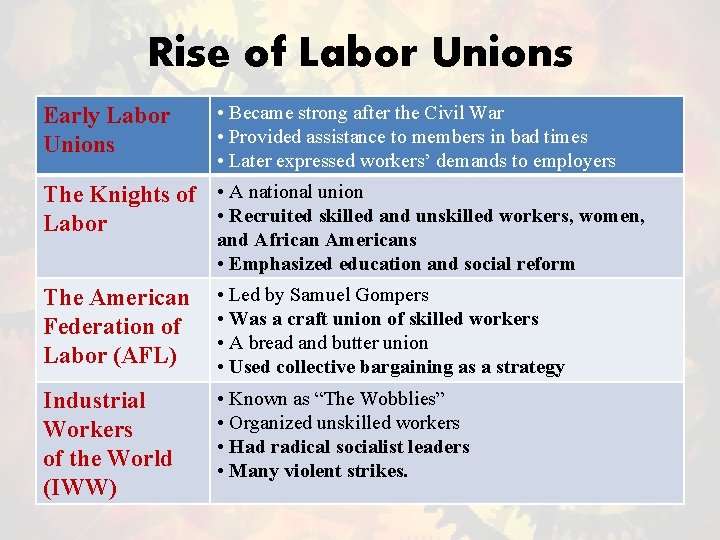
Rise of Labor Unions Early Labor Unions • Became strong after the Civil War • Provided assistance to members in bad times • Later expressed workers’ demands to employers The Knights of • A national union • Recruited skilled and unskilled workers, women, Labor and African Americans • Emphasized education and social reform The American Federation of Labor (AFL) • Led by Samuel Gompers • Was a craft union of skilled workers • A bread and butter union • Used collective bargaining as a strategy Industrial Workers of the World (IWW) • Known as “The Wobblies” • Organized unskilled workers • Had radical socialist leaders • Many violent strikes.
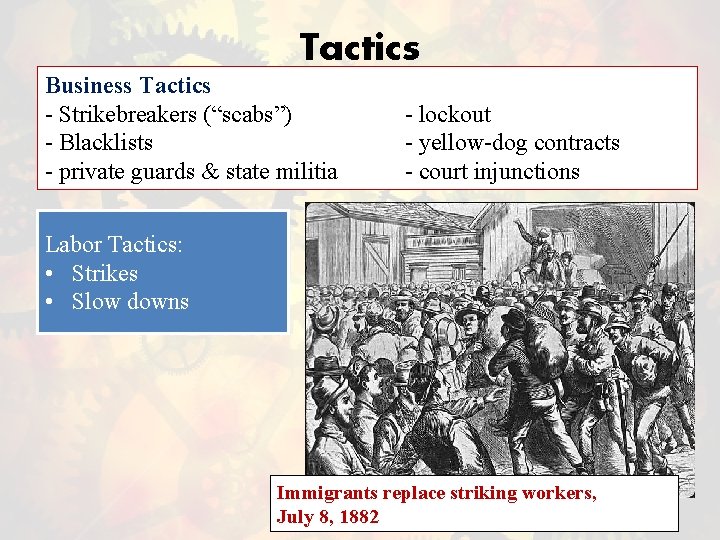
Tactics Business Tactics - Strikebreakers (“scabs”) - Blacklists - private guards & state militia - lockout - yellow-dog contracts - court injunctions Labor Tactics: • Strikes • Slow downs Immigrants replace striking workers, July 8, 1882
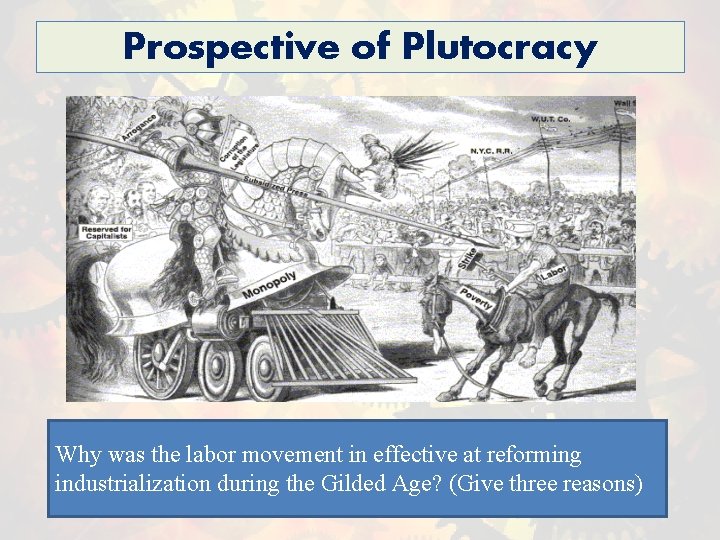
Prospective of Plutocracy Why was the labor movement in effective at reforming industrialization during the Gilded Age? (Give three reasons)
American Dream “Give me your tired, your poor, Your huddled masses yearning to breathe free, The wreteched refuse of your teeming shores Send these, the homeless, tempest-toss, to me: I lift my lamp beside the golden door” - Emma Lazarus - Who has bettered achieve the American dream that the U. S. was founded upon? - Support your conclusions through three historic facts
14 th Amendment, US Constitution • Section 1. • All persons born or naturalized in the United States, and subject to the jurisdiction thereof, are citizens of the United States and of the state wherein they reside. No state shall make or enforce any law which shall abridge the privileges or immunities of citizens of the United States; nor shall any state deprive any person of life, liberty, or property, without due process of law; nor deny to any person within its jurisdiction the equal protection of the laws. • Section 5. • The Congress shall have power to enforce, by appropriate legislation, the provisions of this article.
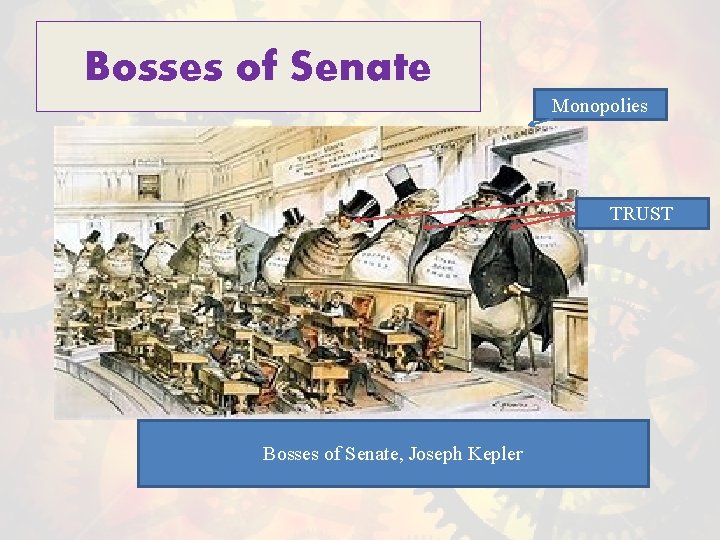
Bosses of Senate Monopolies TRUST Bosses of Senate, Joseph Kepler
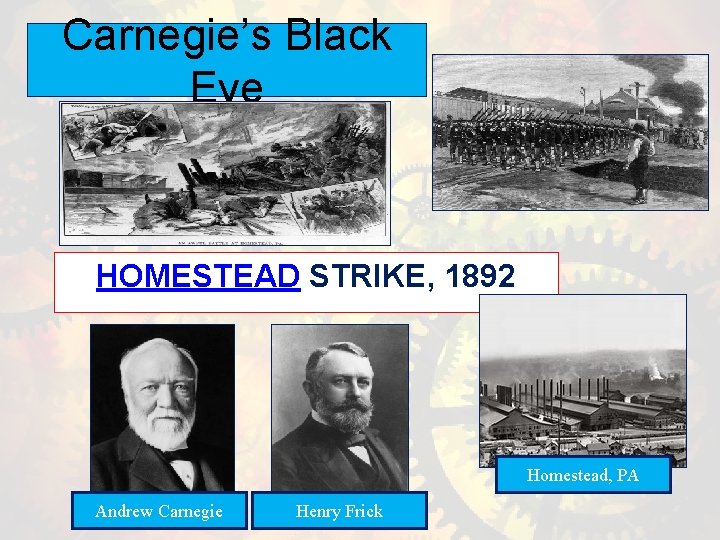
Carnegie’s Black Eye HOMESTEAD STRIKE, 1892 Homestead, PA Andrew Carnegie Henry Frick
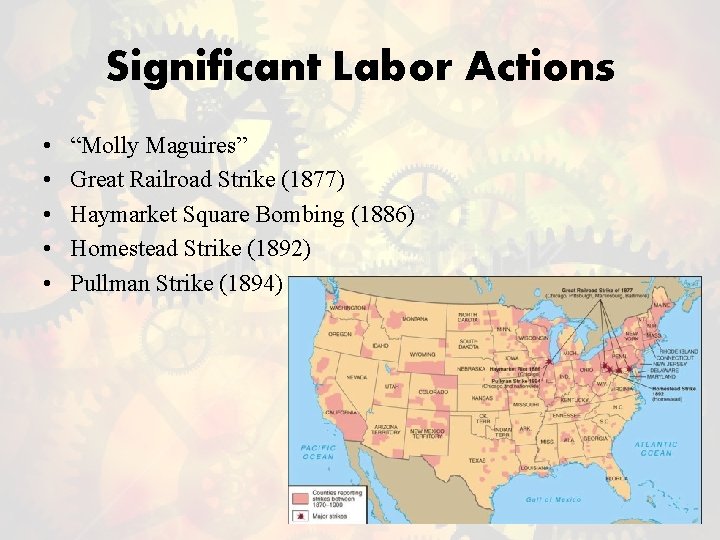
Significant Labor Actions • • • “Molly Maguires” Great Railroad Strike (1877) Haymarket Square Bombing (1886) Homestead Strike (1892) Pullman Strike (1894)
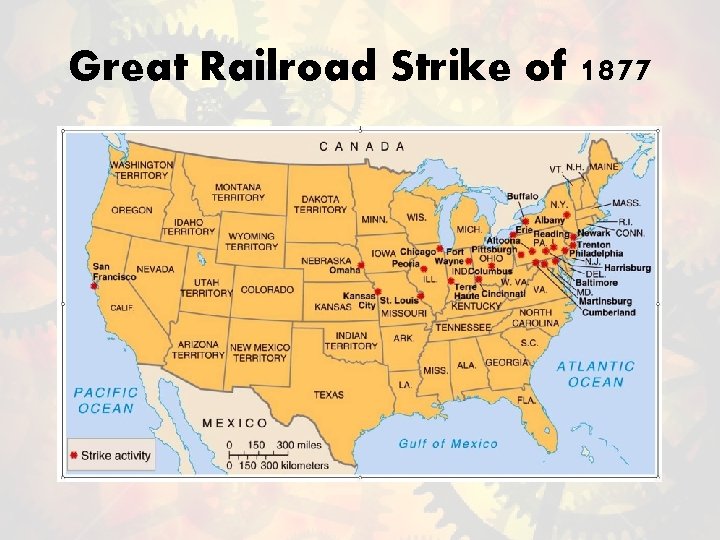
Great Railroad Strike of 1877
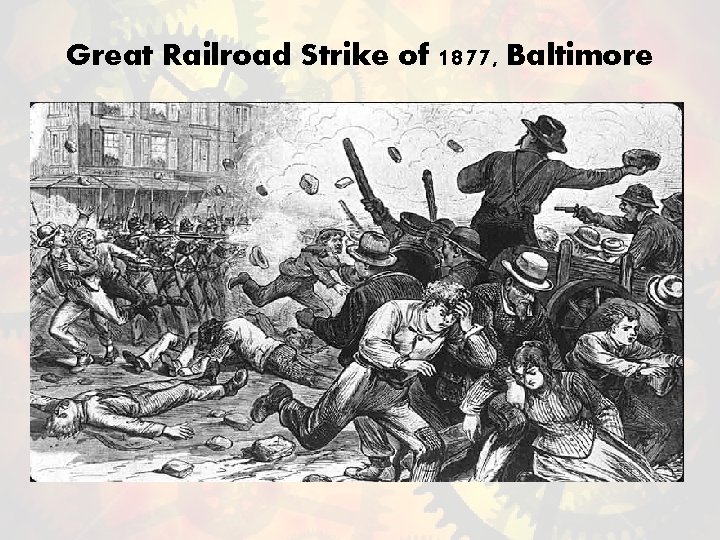
Great Railroad Strike of 1877, Baltimore
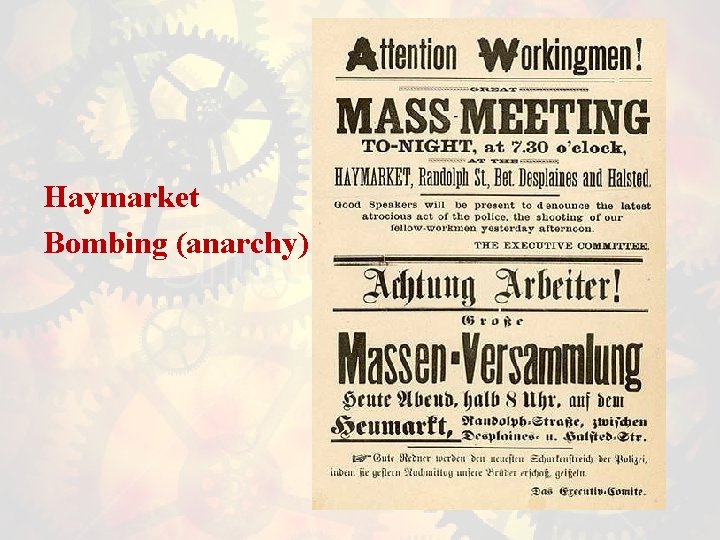
Haymarket Bombing (anarchy)
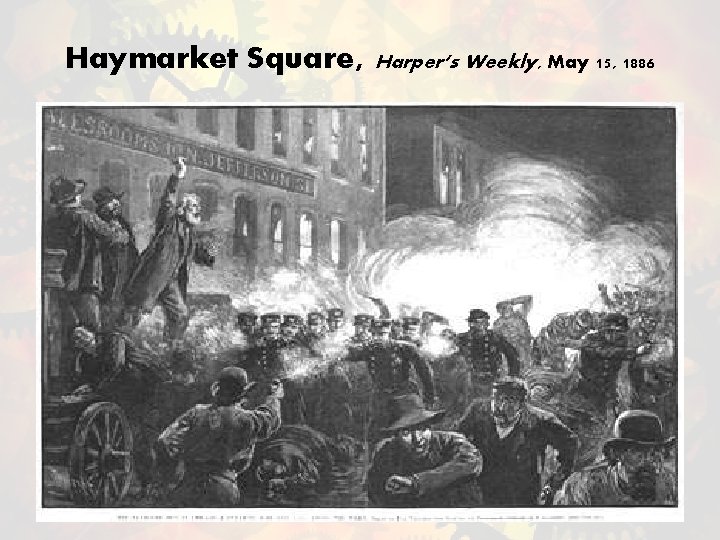
Haymarket Square, Harper’s Weekly, May 15, 1886
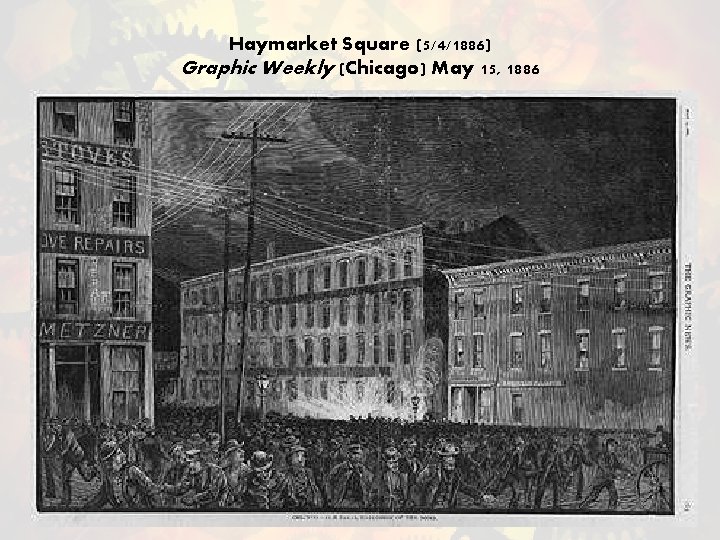
Haymarket Square (5/4/1886) Graphic Weekly (Chicago) May 15, 1886
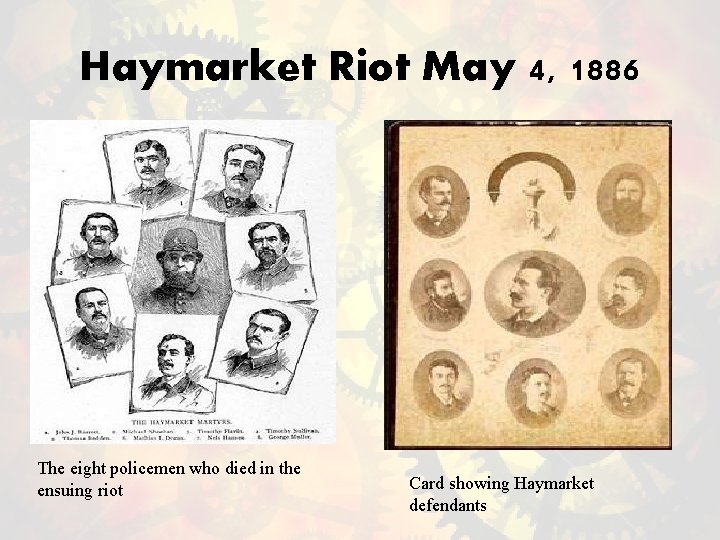
Haymarket Riot May 4, 1886 The eight policemen who died in the ensuing riot Card showing Haymarket defendants
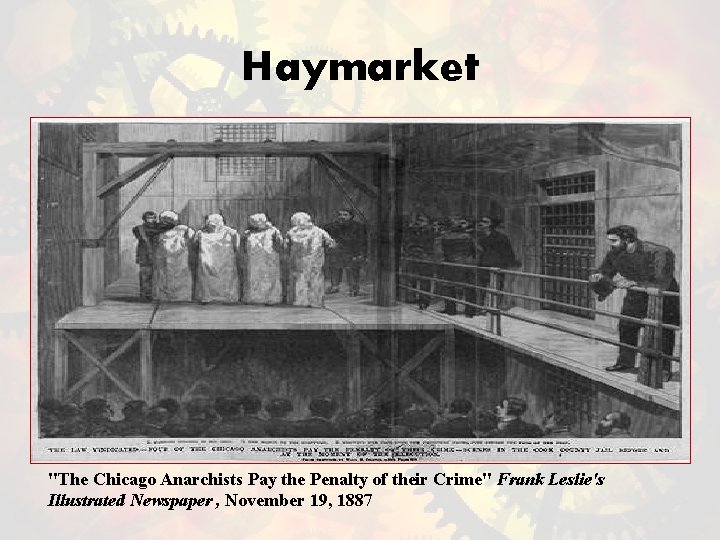
Haymarket "The Chicago Anarchists Pay the Penalty of their Crime" Frank Leslie's Illustrated Newspaper , November 19, 1887

Carnegie Mill, Homestead PA
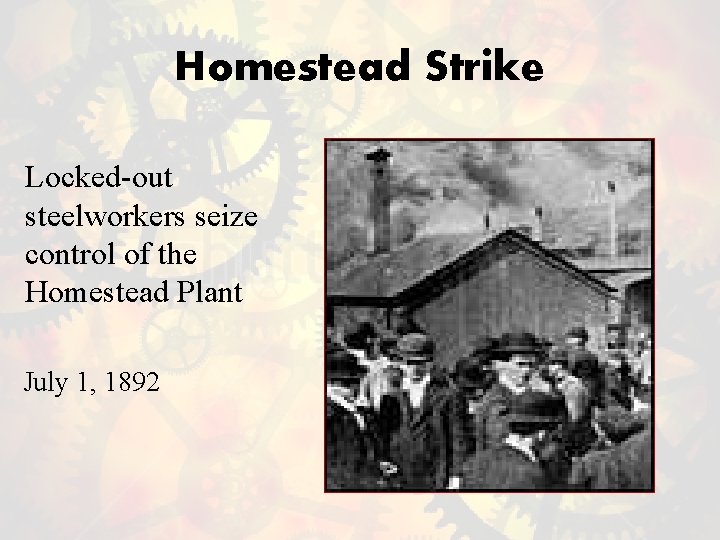
Homestead Strike Locked-out steelworkers seize control of the Homestead Plant July 1, 1892
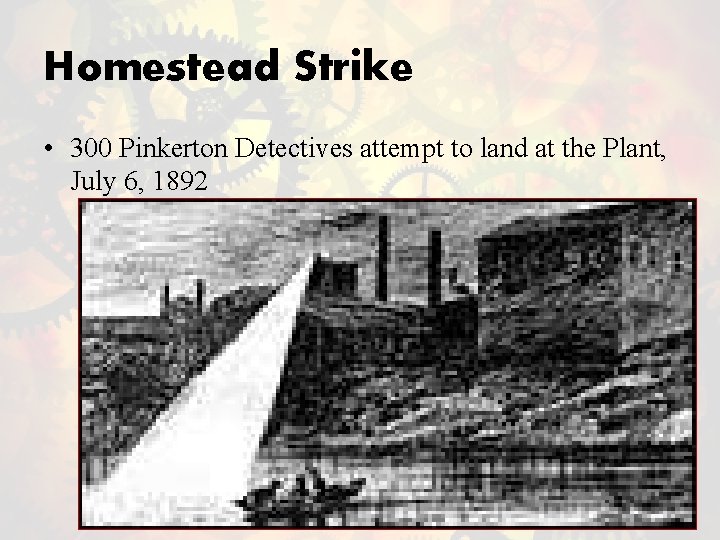
Homestead Strike • 300 Pinkerton Detectives attempt to land at the Plant, July 6, 1892
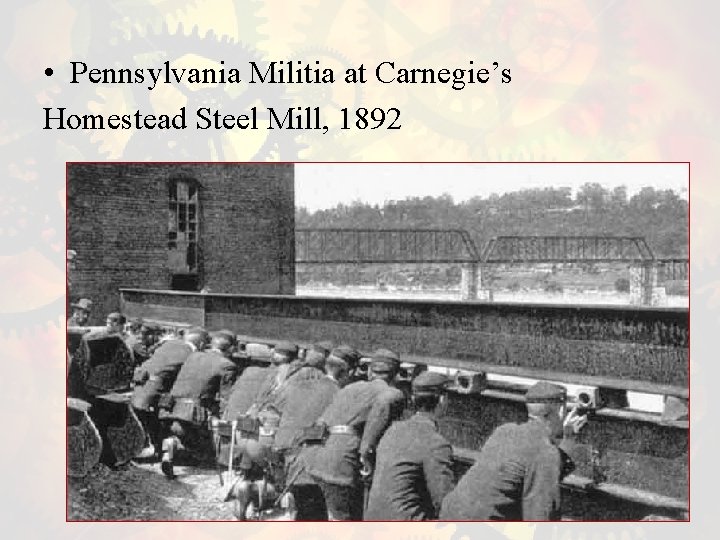
• Pennsylvania Militia at Carnegie’s Homestead Steel Mill, 1892
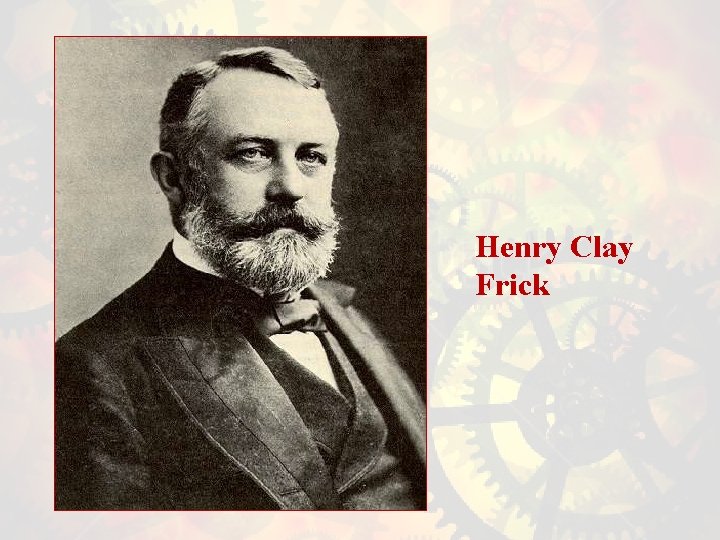
Henry Clay Frick
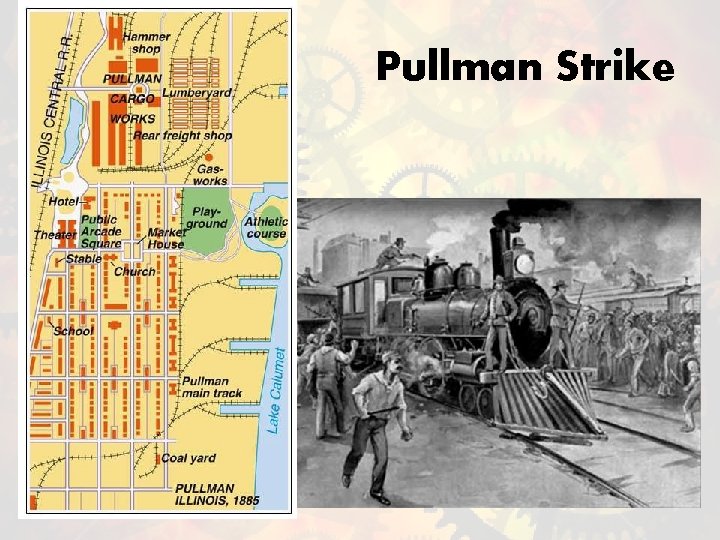
Pullman Strike
Reasons for Early Labor Failures • Court rulings (In re Debs 1895) • Power of Industry (Robber Barons) • Weakness of Unions – lacked unity, financial resources • Availability of cheap labor (immigration) • Government support of Industry (Great RR Strike & Pullman Strike) • Violence and Association in public’s mind with subversion of order (Haymarket Square Riot)
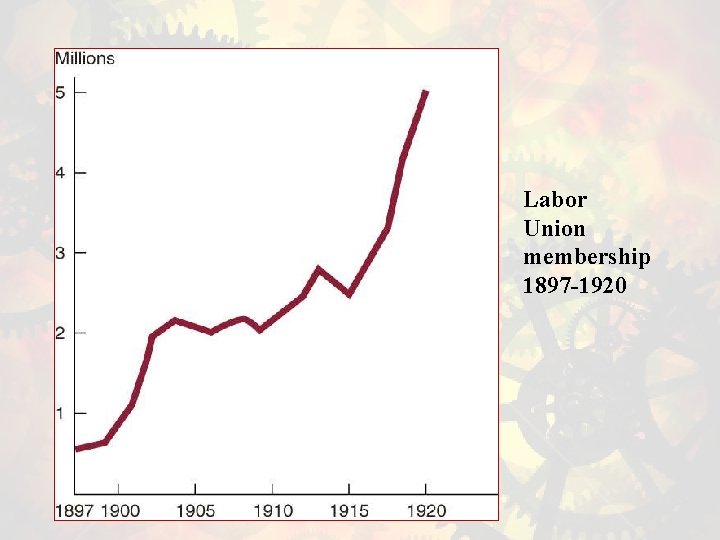
Labor Union membership 1897 -1920
- Slides: 30