
Growth Mindset Information Discussion Evening Ben Ellis Thank
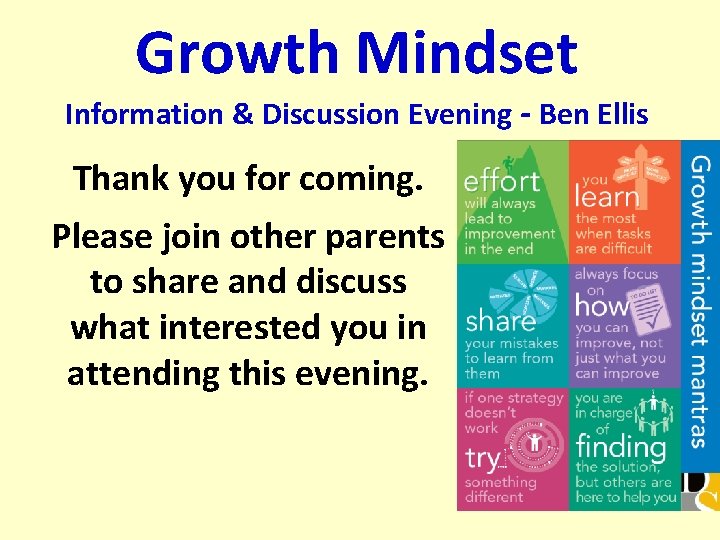
Growth Mindset Information & Discussion Evening - Ben Ellis Thank you for coming. Please join other parents to share and discuss what interested you in attending this evening.
Aims: • To understand what is meant by a growth mindset • To understand the evidence that it makes a difference • To explore how we can help our children to develop a growth mindset
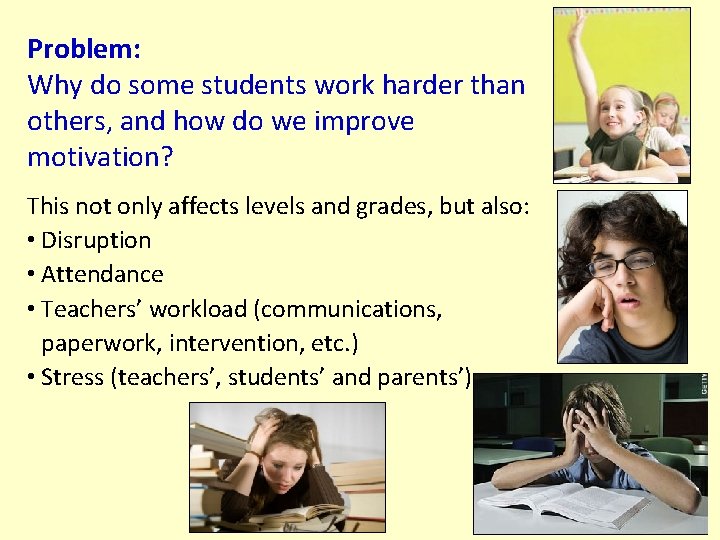
Problem: Why do some students work harder than others, and how do we improve motivation? This not only affects levels and grades, but also: • Disruption • Attendance • Teachers’ workload (communications, paperwork, intervention, etc. ) • Stress (teachers’, students’ and parents’)
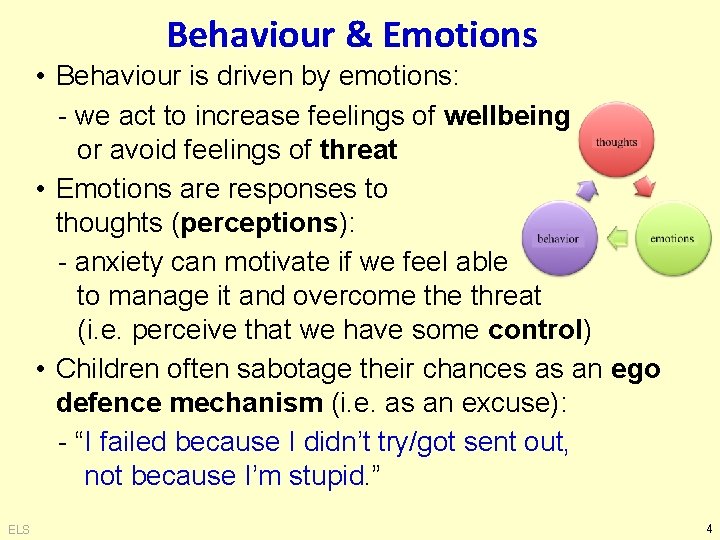
Behaviour & Emotions • Behaviour is driven by emotions: - we act to increase feelings of wellbeing or avoid feelings of threat • Emotions are responses to thoughts (perceptions): - anxiety can motivate if we feel able to manage it and overcome threat (i. e. perceive that we have some control) • Children often sabotage their chances as an ego defence mechanism (i. e. as an excuse): - “I failed because I didn’t try/got sent out, not because I’m stupid. ” ELS 4
Mindset After observing and interviewing many people, psychologist Carol Dweck came up with a hypothesis: Some people think you are born with a certain amount of talent, and you can’t change it. This makes them think: • Effort will not change how well I do. • If I make a mistake or I have to make an effort, that must show that I’m no good at this. • I should hide my mistakes and not be seen to make an effort. This is known as a Fixed ELS Mindset. 5
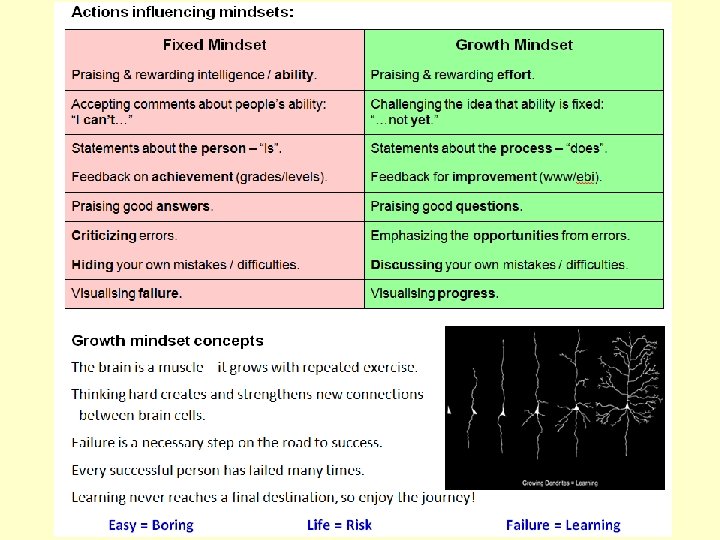
Mindset But no matter what the circumstances, some people keep on trying hard and don’t give up: These people believe that your ability can improve with effort, whatever your starting point. This makes them think: • Effort is the key to improvement. • If I make a mistake or I have to make an effort, that must show that I’m learning. • I should think about and share my mistakes so I get feedback to help me improve. This is known as a Growth ELS Mindset. 6
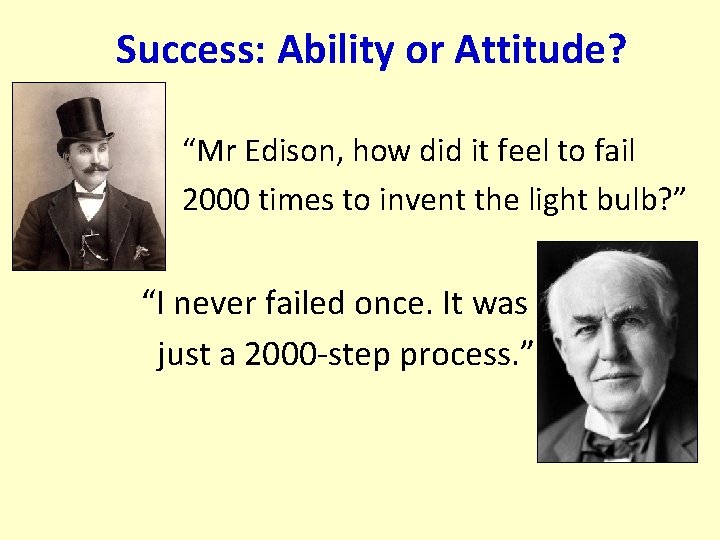
Success: Ability or Attitude? “Mr Edison, how did it feel to fail 2000 times to invent the light bulb? ” “I never failed once. It was just a 2000 -step process. ”
Carol S. Dweck, Psychologist: ‘IQ tests can measure current skills, but nothing can measure someone's potential. It is impossible to tell what people are capable of in the future if they catch fire and apply themselves. ’
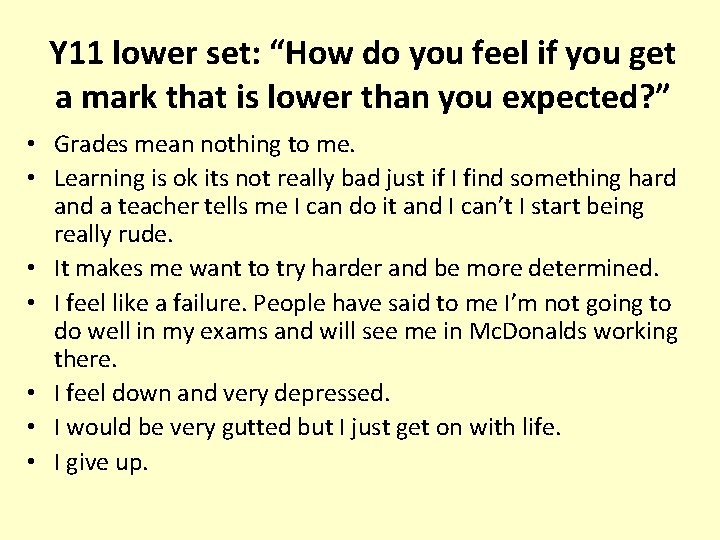
Y 11 lower set: “How do you feel if you get a mark that is lower than you expected? ” • Grades mean nothing to me. • Learning is ok its not really bad just if I find something hard and a teacher tells me I can do it and I can’t I start being really rude. • It makes me want to try harder and be more determined. • I feel like a failure. People have said to me I’m not going to do well in my exams and will see me in Mc. Donalds working there. • I feel down and very depressed. • I would be very gutted but I just get on with life. • I give up.
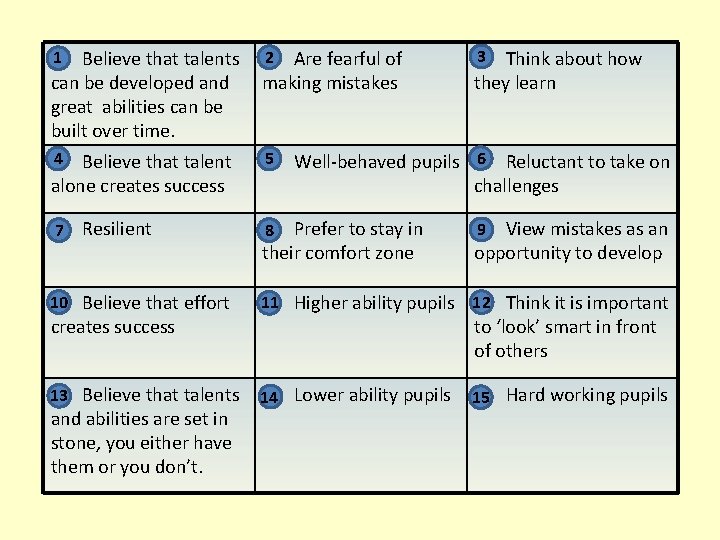
2 1 Believe that talents Are fearful of can be developed and making mistakes great abilities can be built over time. 3 Think about how they learn 4 Believe that talent alone creates success 6 5 Well-behaved pupils Reluctant to take on challenges Resilient 7 Prefer to stay in 8 their comfort zone 10 Believe that effort 11 Higher ability pupils 12 Think it is important creates success Believe that talents 14 Lower ability pupils 13 and abilities are set in stone, you either have them or you don’t. 9 View mistakes as an opportunity to develop to ‘look’ smart in front of others Hard working pupils 15
Growth Mindset Fixed Mindset
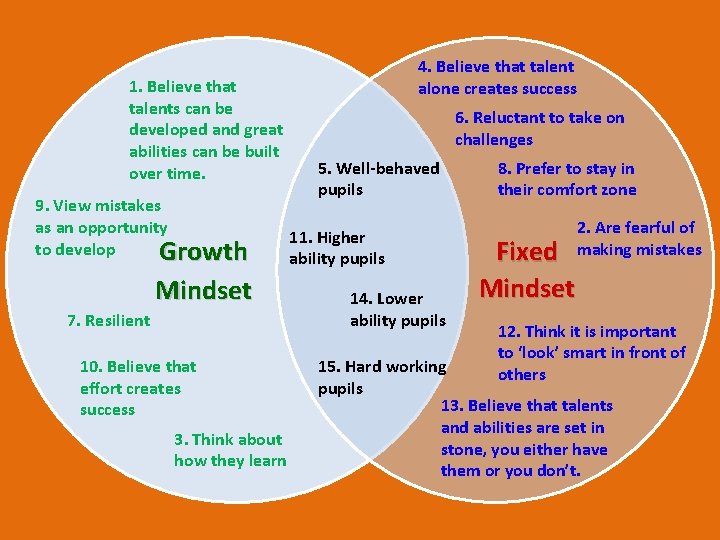
1. Believe that talents can be developed and great abilities can be built over time. 9. View mistakes as an opportunity to develop Growth Mindset 7. Resilient 10. Believe that effort creates success 3. Think about how they learn 4. Believe that talent alone creates success 6. Reluctant to take on challenges 5. Well-behaved pupils 11. Higher ability pupils 14. Lower ability pupils 8. Prefer to stay in their comfort zone Fixed Mindset 2. Are fearful of making mistakes 12. Think it is important to ‘look’ smart in front of others 15. Hard working pupils 13. Believe that talents and abilities are set in stone, you either have them or you don’t.
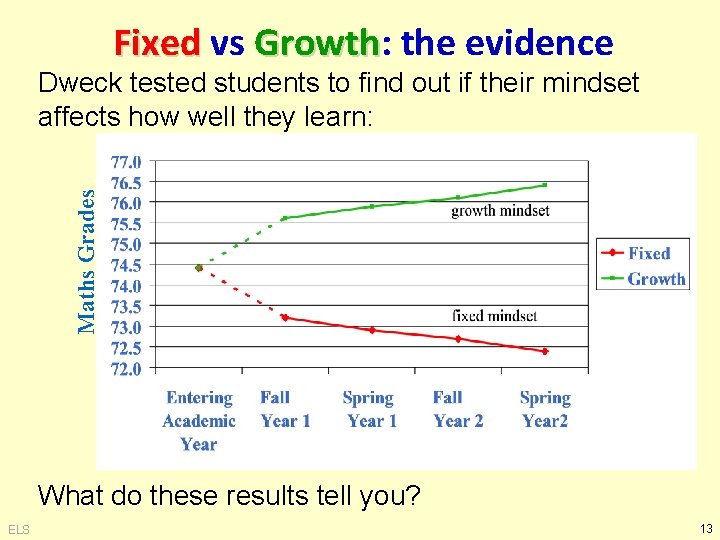
Fixed vs Growth: the evidence Maths Grades Dweck tested students to find out if their mindset affects how well they learn: What do these results tell you? ELS 13
So what can we do to help our children develop a growth mindset?
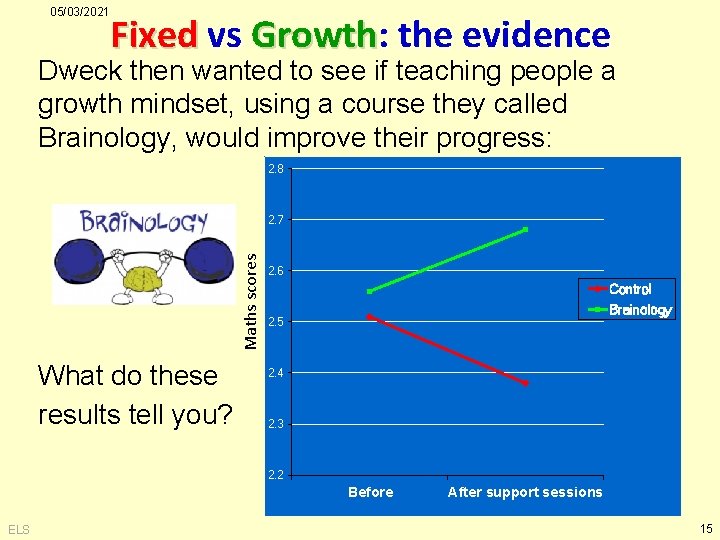
05/03/2021 Fixed vs Growth: the evidence Dweck then wanted to see if teaching people a growth mindset, using a course they called Brainology, would improve their progress: 2. 8 Maths scores 2. 7 What do these results tell you? 2. 6 Control Brainology 2. 5 2. 4 2. 3 2. 2 Before ELS After support sessions 15
The Brainology course shows children the evidence that intelligence/ability can change: https: //www. youtube. com/watch? v=Wt. KJr. B 5 r. OKs It is important for you to remind them that the brain is like a muscle – it has to be strained to grow. Ask them what they found challenging at school today, and how they could make easy tasks more challenging, e. g. explain it to someone who is finding it harder, explain how/why, ask related questions…
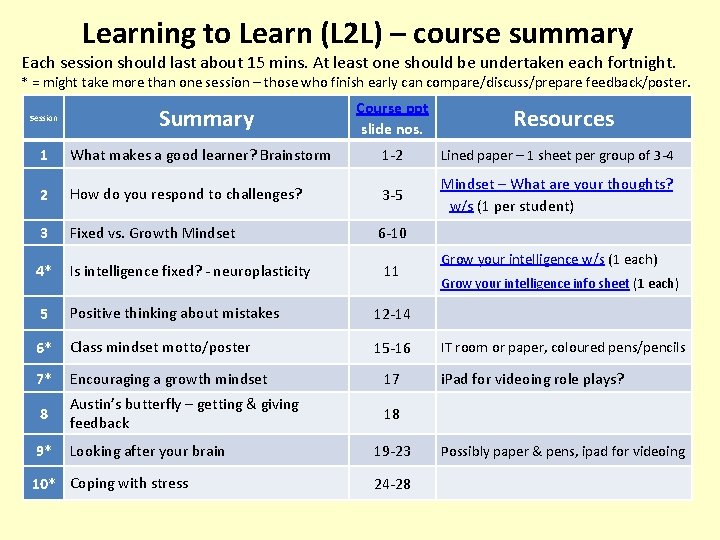
Learning to Learn (L 2 L) – course summary Each session should last about 15 mins. At least one should be undertaken each fortnight. * = might take more than one session – those who finish early can compare/discuss/prepare feedback/poster. Session Summary Course ppt slide nos. Resources 1 What makes a good learner? Brainstorm 1 -2 Lined paper – 1 sheet per group of 3 -4 2 How do you respond to challenges? 3 -5 Mindset – What are your thoughts? w/s (1 per student) 3 Fixed vs. Growth Mindset 6 -10 4* Is intelligence fixed? - neuroplasticity 5 Positive thinking about mistakes 12 -14 6* Class mindset motto/poster 15 -16 IT room or paper, coloured pens/pencils 7* Encouraging a growth mindset 17 i. Pad for videoing role plays? 8 Austin’s butterfly – getting & giving feedback 18 9* Looking after your brain 10* Coping with stress 11 Grow your intelligence w/s (1 each) Grow your intelligence info sheet (1 each) 19 -23 Possibly paper & pens, ipad for videoing 24 -28
What else can parents and teachers do? The effect of praise on mindset http: //www. youtube. com/watch? v=TTXr. V 0_3 Uj. Y
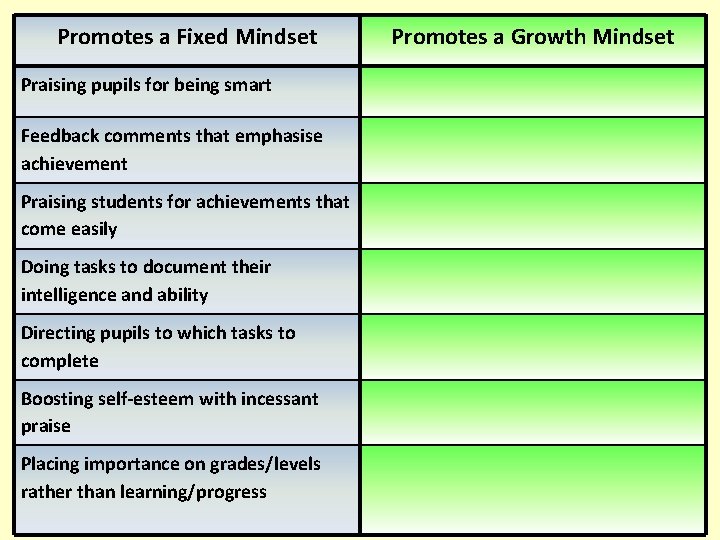
Promotes a Fixed Mindset Praising pupils for being smart Feedback comments that emphasise achievement Praising students for achievements that come easily Doing tasks to document their intelligence and ability Directing pupils to which tasks to complete Boosting self-esteem with incessant praise Placing importance on grades/levels rather than learning/progress Promotes a Growth Mindset
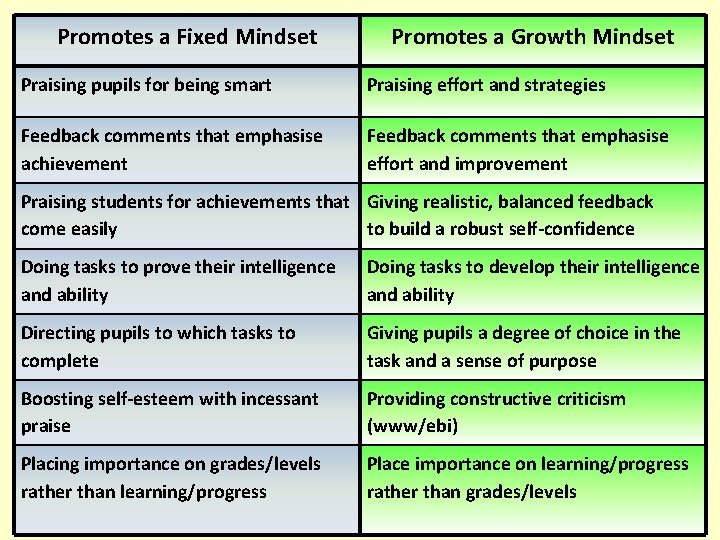
Promotes a Fixed Mindset Promotes a Growth Mindset Praising pupils for being smart Praising effort and strategies Feedback comments that emphasise achievement Feedback comments that emphasise effort and improvement Praising students for achievements that Giving realistic, balanced feedback come easily to build a robust self-confidence Doing tasks to prove their intelligence and ability Doing tasks to develop their intelligence and ability Directing pupils to which tasks to complete Giving pupils a degree of choice in the task and a sense of purpose Boosting self-esteem with incessant praise Providing constructive criticism (www/ebi) Placing importance on grades/levels Place importance on learning/progress rather than grades/levels
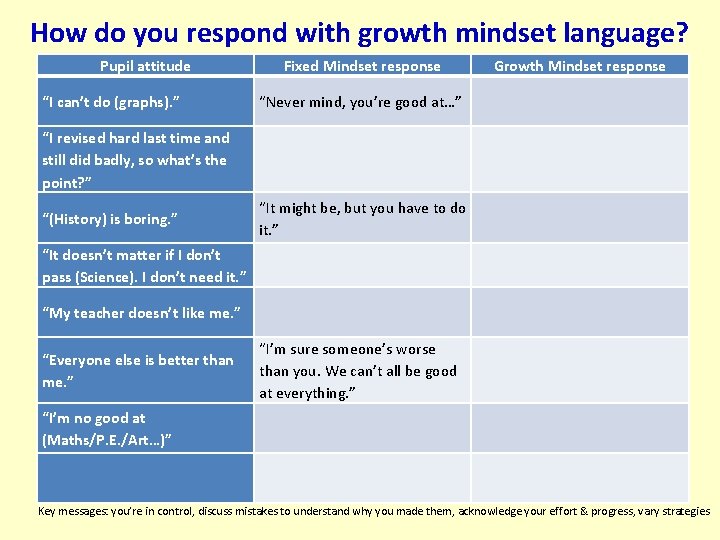
How do you respond with growth mindset language? Pupil attitude Fixed Mindset response Growth Mindset response “I can’t do (graphs). ” “Never mind, you’re good at…” “I revised hard last time and still did badly, so what’s the point? ” “(History) is boring. ” “It might be, but you have to do it. ” “It doesn’t matter if I don’t pass (Science). I don’t need it. ” “My teacher doesn’t like me. ” “Everyone else is better than me. ” “I’m no good at (Maths/P. E. /Art…)” “I’m sure someone’s worse than you. We can’t all be good at everything. ” Key messages: you’re in control, discuss mistakes to understand why you made them, acknowledge your effort & progress, vary strategies
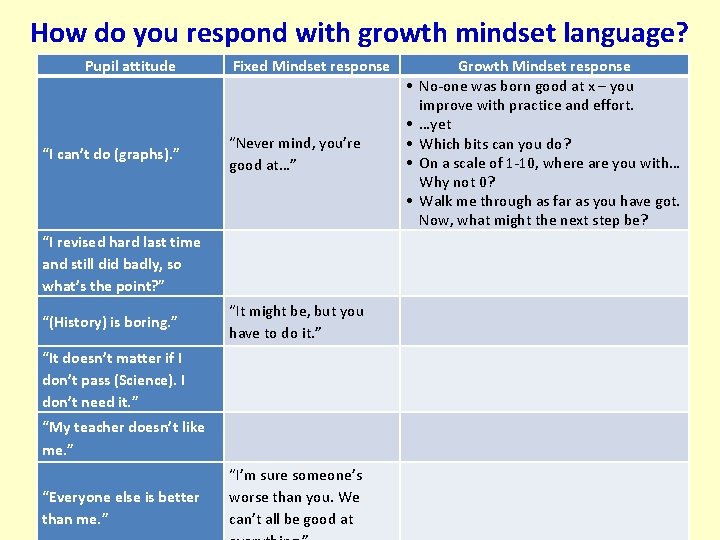
How do you respond with growth mindset language? Pupil attitude Fixed Mindset response • “I can’t do (graphs). ” “Never mind, you’re good at…” • • “I revised hard last time and still did badly, so what’s the point? ” “(History) is boring. ” “It might be, but you have to do it. ” “It doesn’t matter if I don’t pass (Science). I don’t need it. ” “My teacher doesn’t like me. ” “Everyone else is better than me. ” “I’m sure someone’s worse than you. We can’t all be good at Growth Mindset response No-one was born good at x – you improve with practice and effort. …yet Which bits can you do? On a scale of 1 -10, where are you with… Why not 0? Walk me through as far as you have got. Now, what might the next step be?
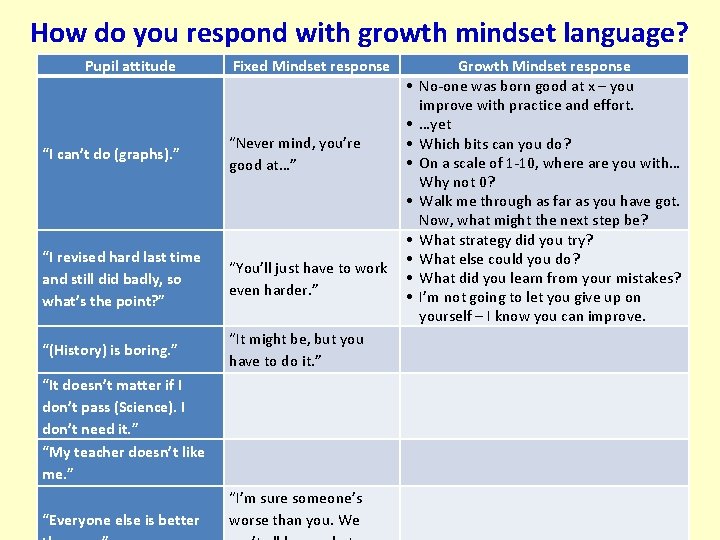
How do you respond with growth mindset language? Pupil attitude Fixed Mindset response • “I can’t do (graphs). ” “Never mind, you’re good at…” • • “I revised hard last time and still did badly, so what’s the point? ” “(History) is boring. ” “It doesn’t matter if I don’t pass (Science). I don’t need it. ” “My teacher doesn’t like me. ” “Everyone else is better • • “You’ll just have to work • even harder. ” • “It might be, but you have to do it. ” “I’m sure someone’s worse than you. We Growth Mindset response No-one was born good at x – you improve with practice and effort. …yet Which bits can you do? On a scale of 1 -10, where are you with… Why not 0? Walk me through as far as you have got. Now, what might the next step be? What strategy did you try? What else could you do? What did you learn from your mistakes? I’m not going to let you give up on yourself – I know you can improve.
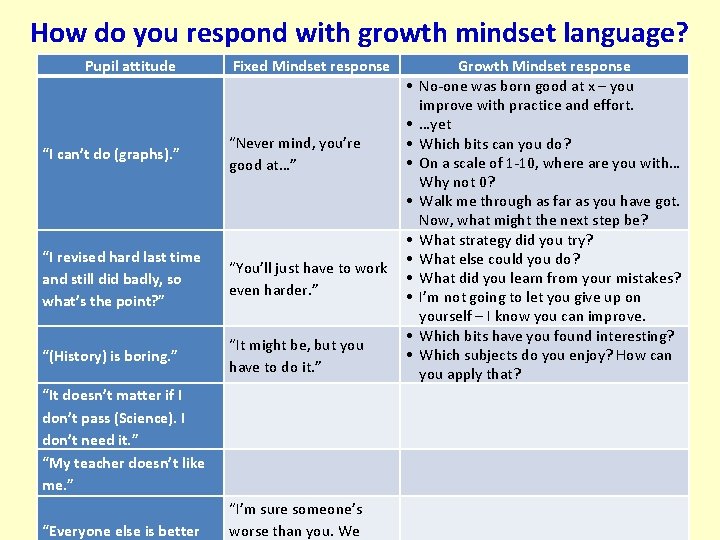
How do you respond with growth mindset language? Pupil attitude Fixed Mindset response • “I can’t do (graphs). ” “Never mind, you’re good at…” • • “I revised hard last time and still did badly, so what’s the point? ” “(History) is boring. ” “It doesn’t matter if I don’t pass (Science). I don’t need it. ” “My teacher doesn’t like me. ” “Everyone else is better • • “You’ll just have to work • even harder. ” • “It might be, but you have to do it. ” “I’m sure someone’s worse than you. We • • Growth Mindset response No-one was born good at x – you improve with practice and effort. …yet Which bits can you do? On a scale of 1 -10, where are you with… Why not 0? Walk me through as far as you have got. Now, what might the next step be? What strategy did you try? What else could you do? What did you learn from your mistakes? I’m not going to let you give up on yourself – I know you can improve. Which bits have you found interesting? Which subjects do you enjoy? How can you apply that?
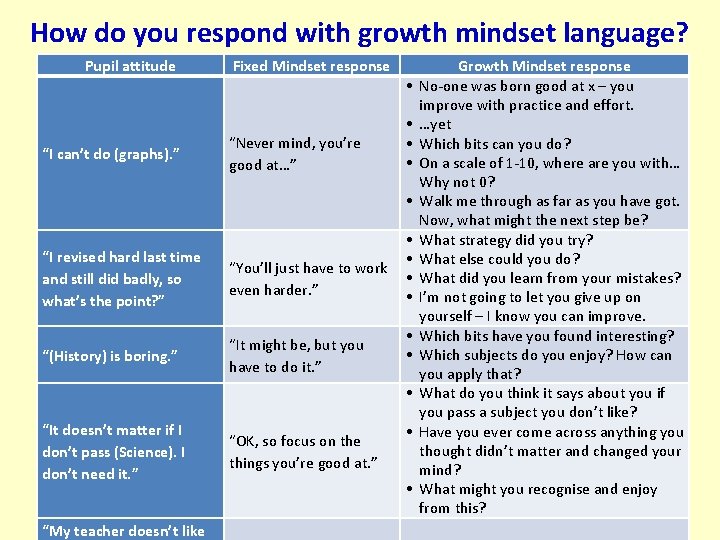
How do you respond with growth mindset language? Pupil attitude Fixed Mindset response • “I can’t do (graphs). ” “Never mind, you’re good at…” • • “I revised hard last time and still did badly, so what’s the point? ” “(History) is boring. ” • • “You’ll just have to work • even harder. ” • “It might be, but you have to do it. ” • • • “It doesn’t matter if I don’t pass (Science). I don’t need it. ” “My teacher doesn’t like “OK, so focus on the things you’re good at. ” • • Growth Mindset response No-one was born good at x – you improve with practice and effort. …yet Which bits can you do? On a scale of 1 -10, where are you with… Why not 0? Walk me through as far as you have got. Now, what might the next step be? What strategy did you try? What else could you do? What did you learn from your mistakes? I’m not going to let you give up on yourself – I know you can improve. Which bits have you found interesting? Which subjects do you enjoy? How can you apply that? What do you think it says about you if you pass a subject you don’t like? Have you ever come across anything you thought didn’t matter and changed your mind? What might you recognise and enjoy from this?
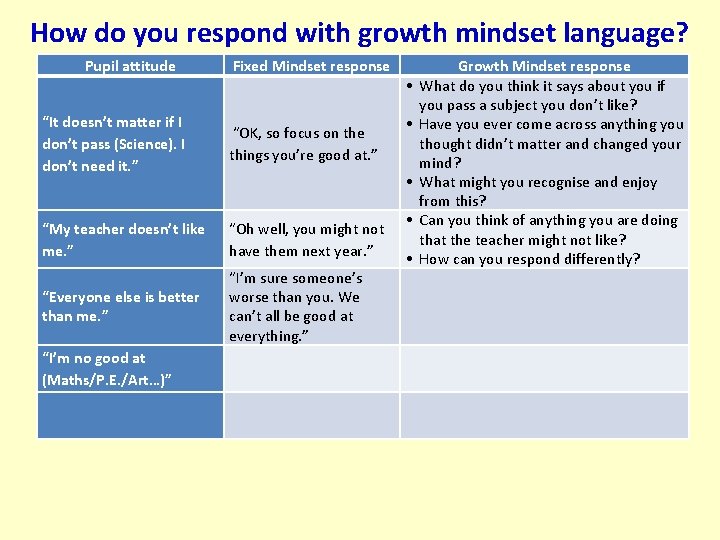
How do you respond with growth mindset language? Pupil attitude Fixed Mindset response • “It doesn’t matter if I don’t pass (Science). I don’t need it. ” “OK, so focus on the things you’re good at. ” “My teacher doesn’t like me. ” “Oh well, you might not have them next year. ” “Everyone else is better than me. ” “I’m sure someone’s worse than you. We can’t all be good at everything. ” “I’m no good at (Maths/P. E. /Art…)” • • Growth Mindset response What do you think it says about you if you pass a subject you don’t like? Have you ever come across anything you thought didn’t matter and changed your mind? What might you recognise and enjoy from this? Can you think of anything you are doing that the teacher might not like? How can you respond differently?
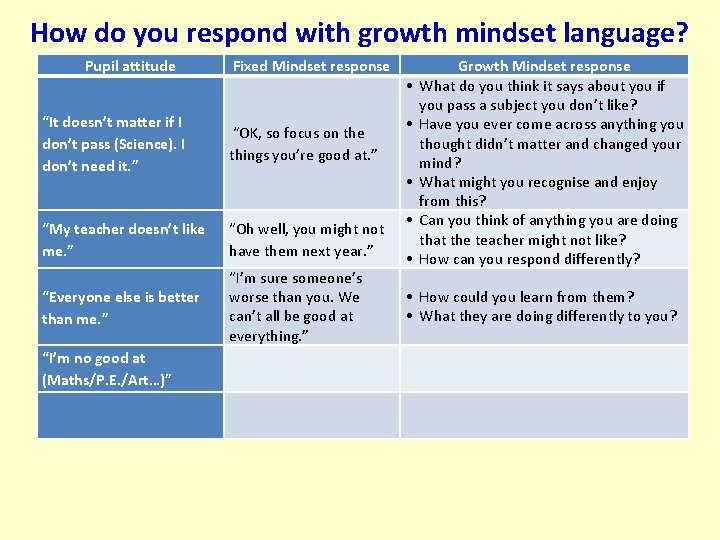
How do you respond with growth mindset language? Pupil attitude Fixed Mindset response • “It doesn’t matter if I don’t pass (Science). I don’t need it. ” “OK, so focus on the things you’re good at. ” “My teacher doesn’t like me. ” “Oh well, you might not have them next year. ” “Everyone else is better than me. ” “I’m sure someone’s worse than you. We can’t all be good at everything. ” • “I’m no good at (Maths/P. E. /Art…)” • • • Growth Mindset response What do you think it says about you if you pass a subject you don’t like? Have you ever come across anything you thought didn’t matter and changed your mind? What might you recognise and enjoy from this? Can you think of anything you are doing that the teacher might not like? How can you respond differently? • How could you learn from them? • What they are doing differently to you?
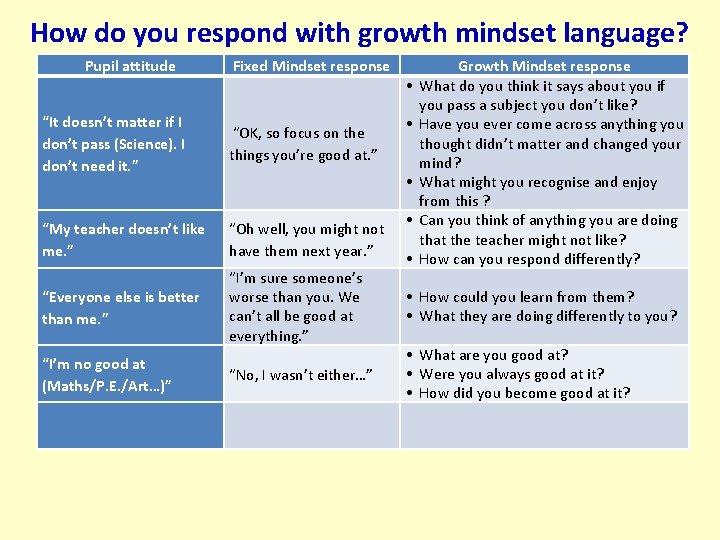
How do you respond with growth mindset language? Pupil attitude Fixed Mindset response • “It doesn’t matter if I don’t pass (Science). I don’t need it. ” “OK, so focus on the things you’re good at. ” “My teacher doesn’t like me. ” “Oh well, you might not have them next year. ” “Everyone else is better than me. ” “I’m sure someone’s worse than you. We can’t all be good at everything. ” • • “I’m no good at (Maths/P. E. /Art…)” “No, I wasn’t either…” • • Growth Mindset response What do you think it says about you if you pass a subject you don’t like? Have you ever come across anything you thought didn’t matter and changed your mind? What might you recognise and enjoy from this ? Can you think of anything you are doing that the teacher might not like? How can you respond differently? • How could you learn from them? • What they are doing differently to you? • What are you good at? • Were you always good at it? • How did you become good at it?
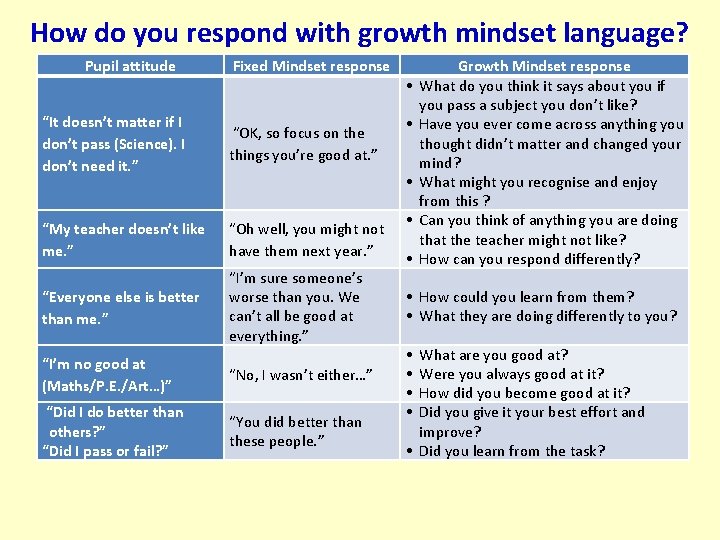
How do you respond with growth mindset language? Pupil attitude Fixed Mindset response • “It doesn’t matter if I don’t pass (Science). I don’t need it. ” “OK, so focus on the things you’re good at. ” “My teacher doesn’t like me. ” “Oh well, you might not have them next year. ” “Everyone else is better than me. ” “I’m sure someone’s worse than you. We can’t all be good at everything. ” • • “I’m no good at (Maths/P. E. /Art…)” “No, I wasn’t either…” “Did I do better than others? ” “Did I pass or fail? ” “You did better than these people. ” • • Growth Mindset response What do you think it says about you if you pass a subject you don’t like? Have you ever come across anything you thought didn’t matter and changed your mind? What might you recognise and enjoy from this ? Can you think of anything you are doing that the teacher might not like? How can you respond differently? • How could you learn from them? • What they are doing differently to you? • • What are you good at? Were you always good at it? How did you become good at it? Did you give it your best effort and improve? • Did you learn from the task?
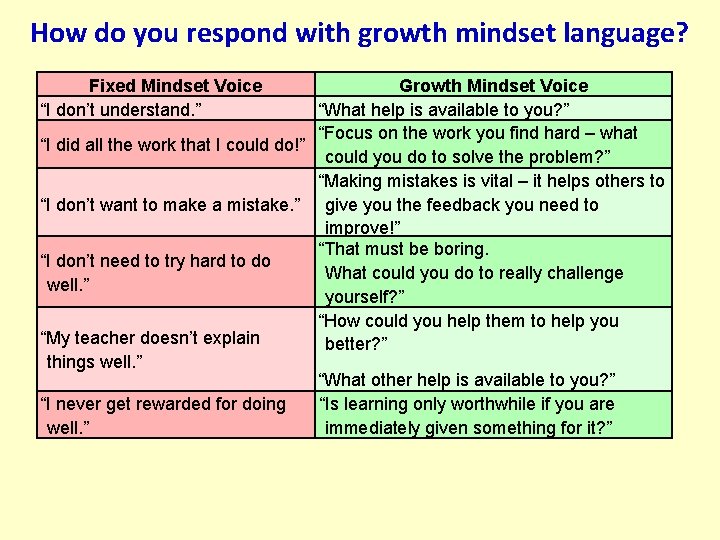
How do you respond with growth mindset language? Fixed Mindset Voice “I don’t understand. ” Growth Mindset Voice “What help is available to you? ” “Focus on the work you find hard – what “I did all the work that I could do!” could you do to solve the problem? ” “Making mistakes is vital – it helps others to “I don’t want to make a mistake. ” give you the feedback you need to improve!” “That must be boring. “I don’t need to try hard to do What could you do to really challenge well. ” yourself? ” “How could you help them to help you “My teacher doesn’t explain better? ” things well. ” “What other help is available to you? ” “I never get rewarded for doing “Is learning only worthwhile if you are well. ” immediately given something for it? ”
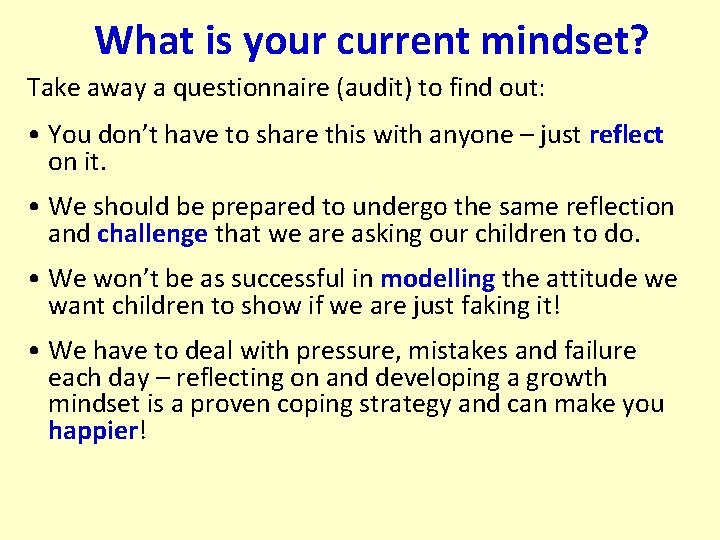
What is your current mindset? Take away a questionnaire (audit) to find out: • You don’t have to share this with anyone – just reflect on it. • We should be prepared to undergo the same reflection and challenge that we are asking our children to do. • We won’t be as successful in modelling the attitude we want children to show if we are just faking it! • We have to deal with pressure, mistakes and failure each day – reflecting on and developing a growth mindset is a proven coping strategy and can make you happier!
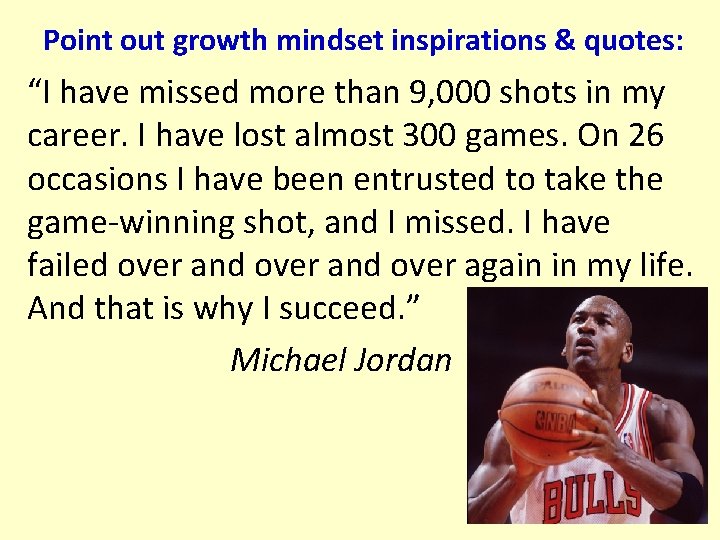
Point out growth mindset inspirations & quotes: “I have missed more than 9, 000 shots in my career. I have lost almost 300 games. On 26 occasions I have been entrusted to take the game-winning shot, and I missed. I have failed over and over again in my life. And that is why I succeed. ” Michael Jordan
Action Plan What will you do to encourage your child to develop a growth mindset?
I hope you have found this useful and encouraging. I’m always happy to receive feedback (what went well & even better if…!). Feel free to speak to me or email me if you have feedback / further questions: ELS@dorothystringer. co. uk Good luck, Ben Ellis
- Slides: 35