
Growth Mindset Attribution Theory EDU 330 Educational Psychology
Growth Mindset & Attribution Theory EDU 330: Educational Psychology Dr. Daniel Moos, Ph. D
Fixed Mindset �Fixed Mindset: Intelligence is fixed �Leads students to want to “look smart” and a tendency to…. Avoid challenges (could negatively affect selfimage if fail) Give up easily in the face of failure/obstacles See effort as fruitless (you are either “dumb” or “smart”) Interpret negative feedback as personal criticism
Growth Mindset �Growth Mindset: Intelligence can be developed �Leads to students to want to learn and a tendency to…. Embrace challenges (self-image not affected by failure) See effort as something as necessary to develop View negative feedback as constructive criticism
Strategies to Support Growth Mindset (1)Establish high expectations (2)Create a risk-tolerant learning zone. (3)Give feedback that focuses on process
![“[my best experiences was]losing my first national chess championship because it helped me avoid](http://slidetodoc.com/presentation_image_h2/3fb4b31812a181b399906b4263e4279d/image-5.jpg "“[my best experiences was]losing my first national chess championship because it helped me avoid")
“[my best experiences was]losing my first national chess championship because it helped me avoid many of the psychological traps” Josh Waitzkin (Chess player who turned his focus on finding success in other domains) Translation to the classroom?
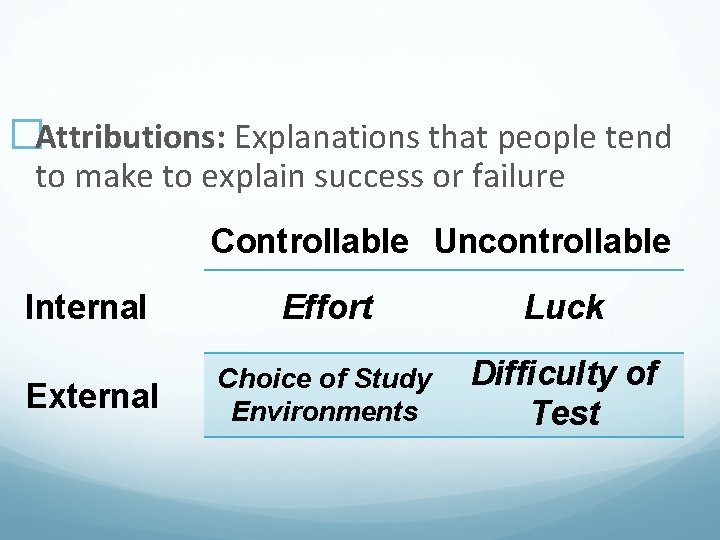
�Attributions: Explanations that people tend to make to explain success or failure Controllable Uncontrollable Internal Effort Luck External Choice of Study Environments Difficulty of Test
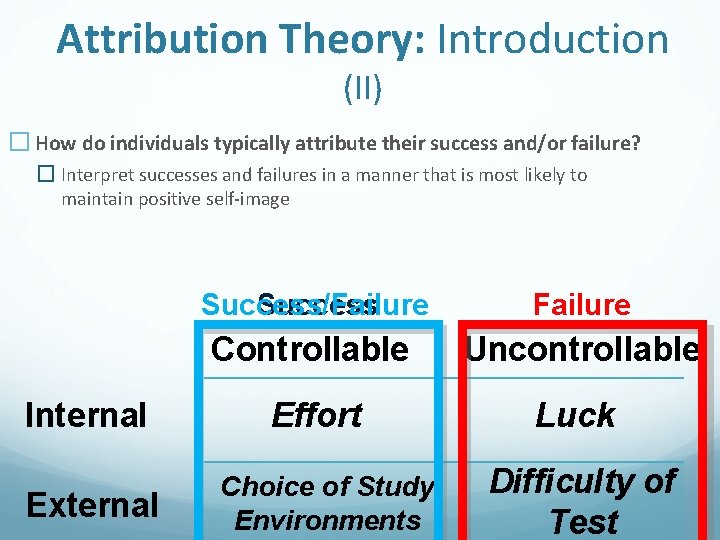
Attribution Theory: Introduction (II) � How do individuals typically attribute their success and/or failure? � Interpret successes and failures in a manner that is most likely to maintain positive self-image Internal External Success/Failure Success Failure Controllable Uncontrollable Effort Luck Choice of Study Environments Difficulty of Test
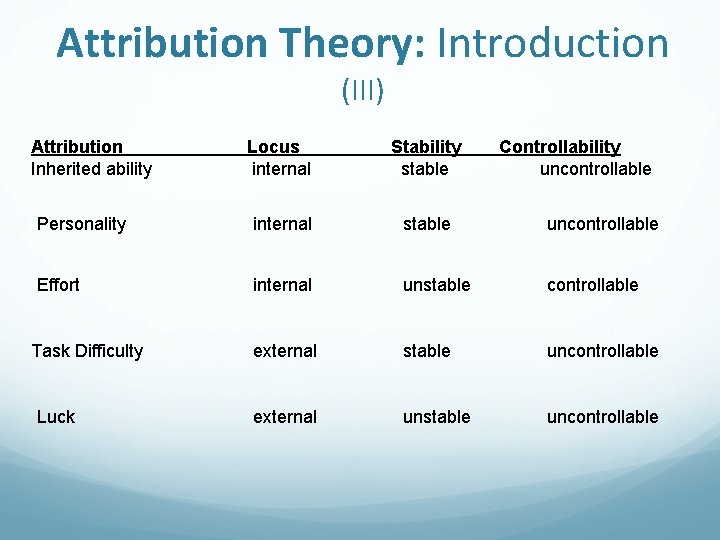
Attribution Theory: Introduction (III) Attribution Inherited ability Locus internal Stability stable Personality internal stable uncontrollable Effort internal unstable controllable external stable uncontrollable external unstable uncontrollable Task Difficulty Luck Controllability uncontrollable
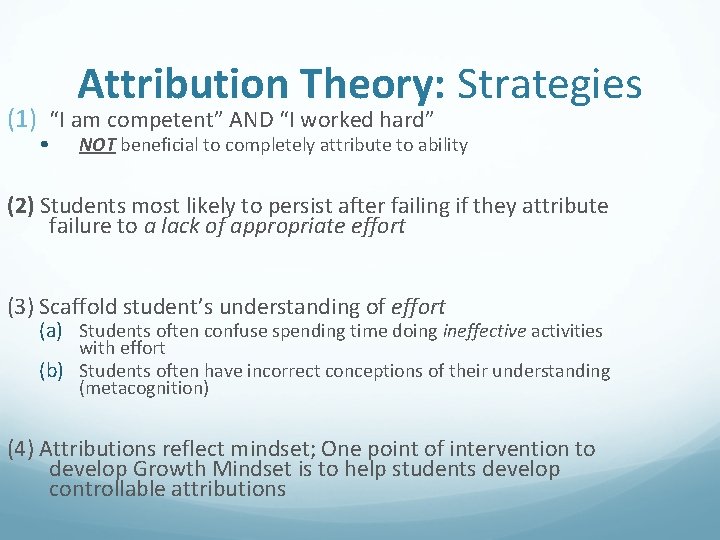
Attribution Theory: Strategies (1) “I am competent” AND “I worked hard” • NOT beneficial to completely attribute to ability (2) Students most likely to persist after failing if they attribute failure to a lack of appropriate effort (3) Scaffold student’s understanding of effort (a) Students often confuse spending time doing ineffective activities with effort (b) Students often have incorrect conceptions of their understanding (metacognition) (4) Attributions reflect mindset; One point of intervention to develop Growth Mindset is to help students develop controllable attributions
- Slides: 9