
Growth Mind Set Aims and Objectives Define growth
Growth Mind. Set • • • Aims and Objectives Define ‘growth mindset’ and its impact on learning Define the properties which promote and detract from a growth mindset Work through examples of how to embed a growth mindset.
Growth Mindset What’s one of them then?
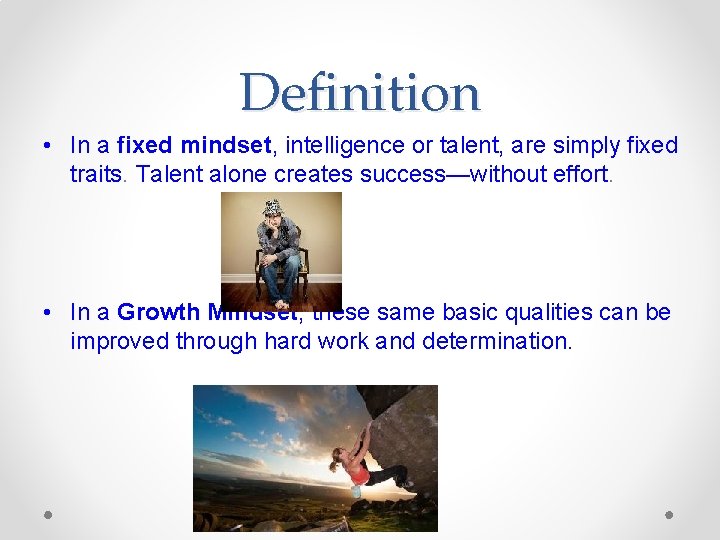
Definition • In a fixed mindset, intelligence or talent, are simply fixed traits. Talent alone creates success—without effort. • In a Growth Mindset, these same basic qualities can be improved through hard work and determination.
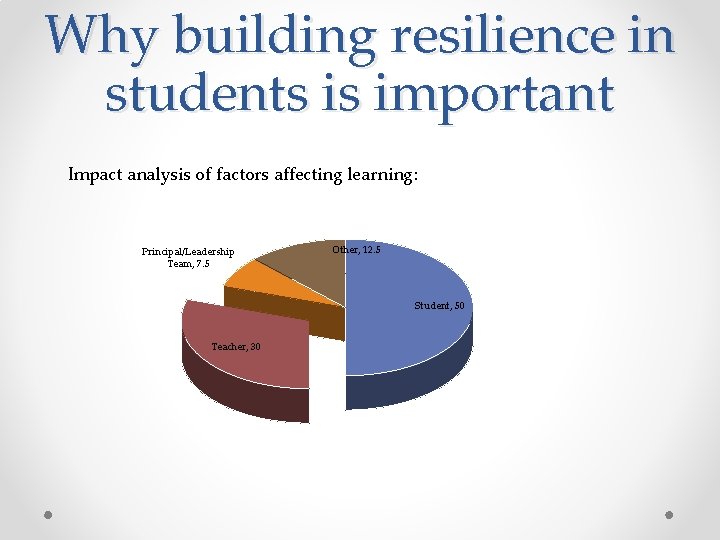
Why building resilience in students is important Impact analysis of factors affecting learning: Principal/Leadership Team, 7. 5 Other, 12. 5 Student, 50 Teacher, 30
Characteristics of a Growth Mind-Set?
What are the Characteristics of a Growth Mind-Set? • • • Resilience Moral Compass Sense of Purpose Avoiding Procrastination Seeing ability as something which can be substantially improved
Group Activity • In your groups discuss the answers to the quiz and fill out the sheets.
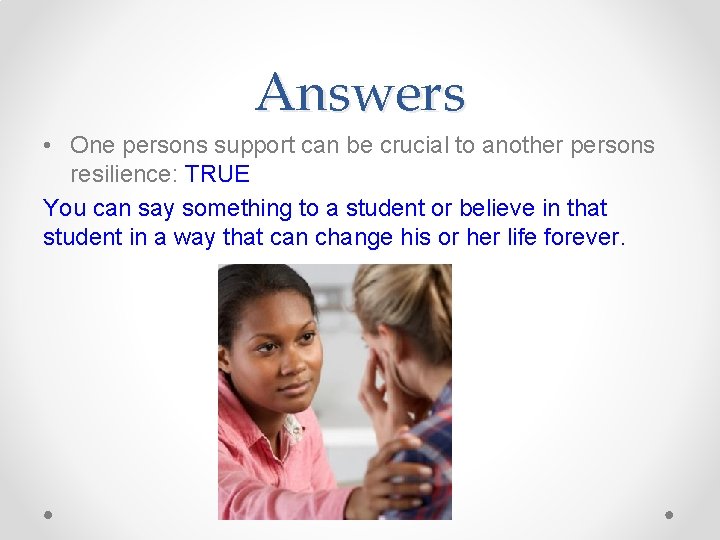
Answers • One persons support can be crucial to another persons resilience: TRUE You can say something to a student or believe in that student in a way that can change his or her life forever.
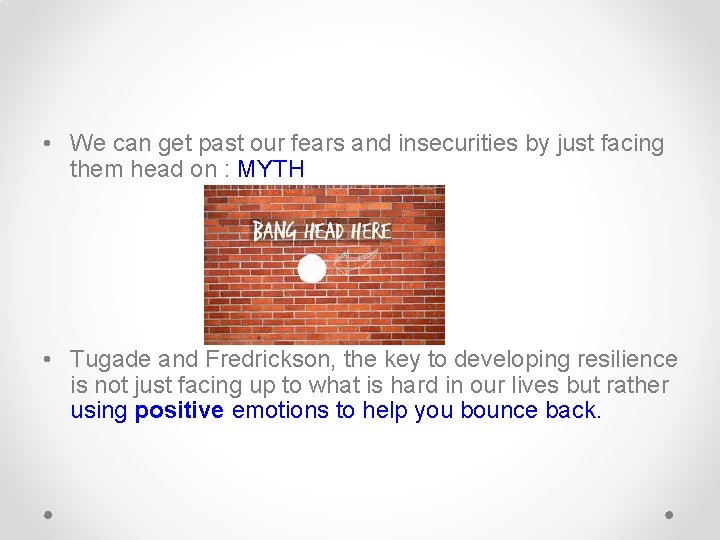
• We can get past our fears and insecurities by just facing them head on : MYTH • Tugade and Fredrickson, the key to developing resilience is not just facing up to what is hard in our lives but rather using positive emotions to help you bounce back.
• Students resilience is effected by your beliefs : TRUE • If you believe in the capacity of all individuals to demonstrate resilience, you won't give up on them. Your actions, words, and behaviors will project that message and will awaken and foster resilience in your students.
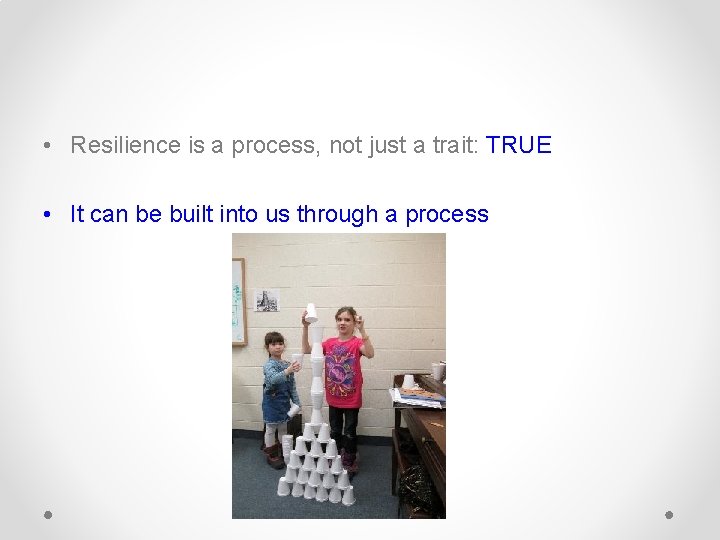
• Resilience is a process, not just a trait: TRUE • It can be built into us through a process
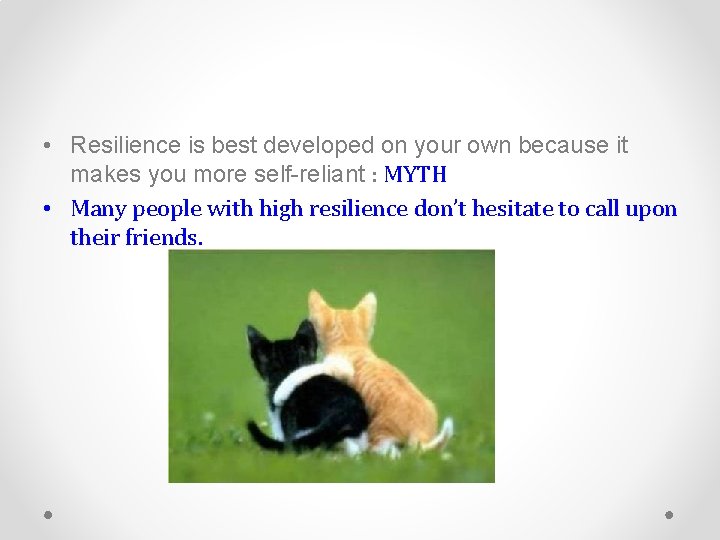
• Resilience is best developed on your own because it makes you more self-reliant : MYTH • Many people with high resilience don’t hesitate to call upon their friends.
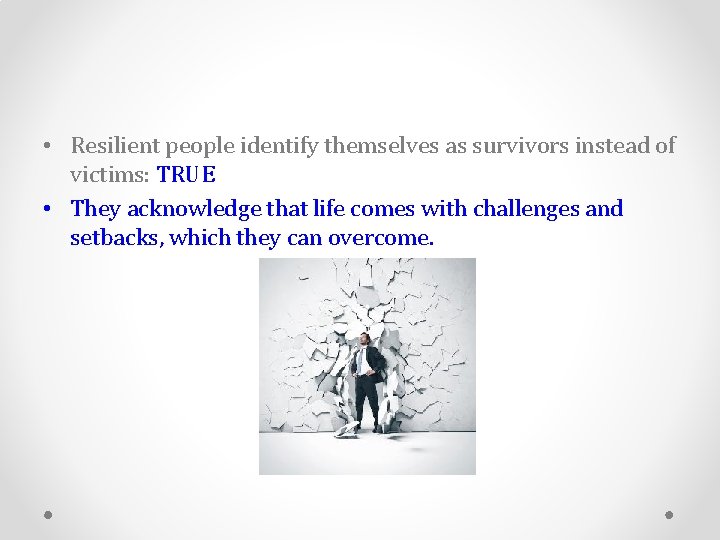
• Resilient people identify themselves as survivors instead of victims: TRUE • They acknowledge that life comes with challenges and setbacks, which they can overcome.
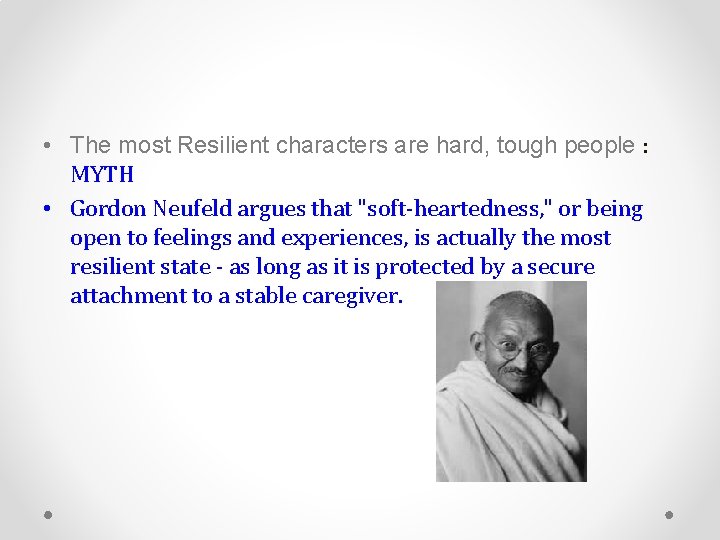
• The most Resilient characters are hard, tough people : MYTH • Gordon Neufeld argues that "soft-heartedness, " or being open to feelings and experiences, is actually the most resilient state - as long as it is protected by a secure attachment to a stable caregiver.
• Most people make it despite exposure to severe risk: • TRUE • Close to 70 percent of youth from high-risk environments overcome adversity and achieve good outcomes.
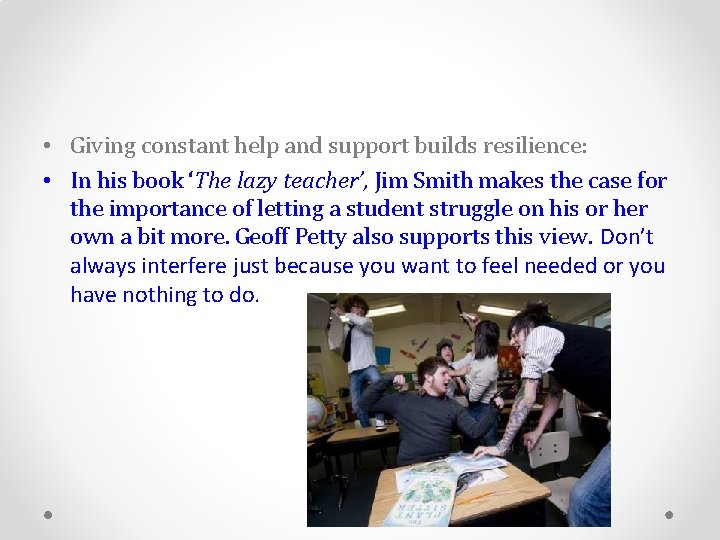
• Giving constant help and support builds resilience: • In his book ‘The lazy teacher’, Jim Smith makes the case for the importance of letting a student struggle on his or her own a bit more. Geoff Petty also supports this view. Don’t always interfere just because you want to feel needed or you have nothing to do.
• Humour helps build resilience: TRUE • Laughter and joking is a defence mechanism, which allows students to cope with setbacks. It can also promote lateral thinking.
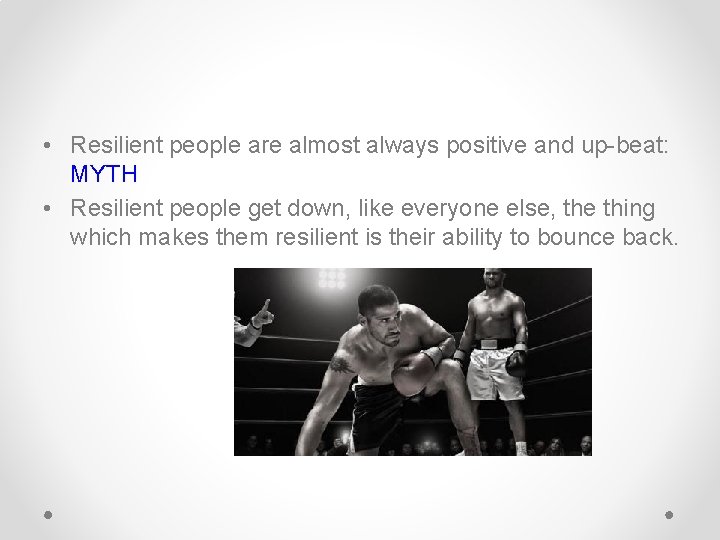
• Resilient people are almost always positive and up-beat: MYTH • Resilient people get down, like everyone else, the thing which makes them resilient is their ability to bounce back.
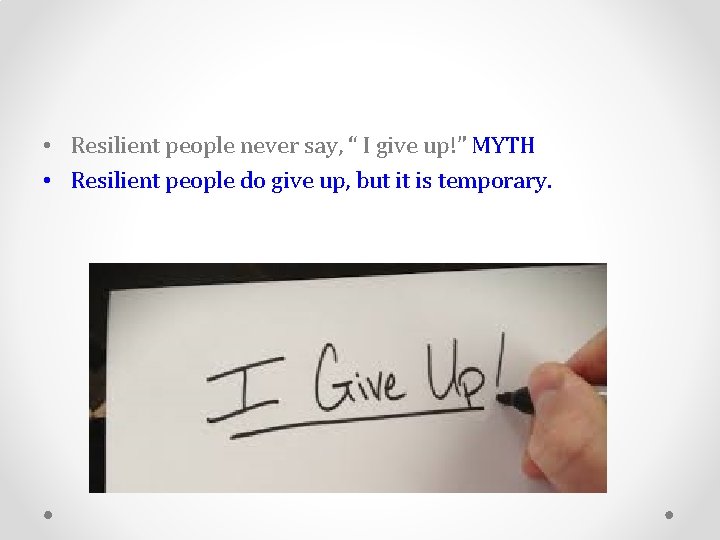
• Resilient people never say, “ I give up!” MYTH • Resilient people do give up, but it is temporary.
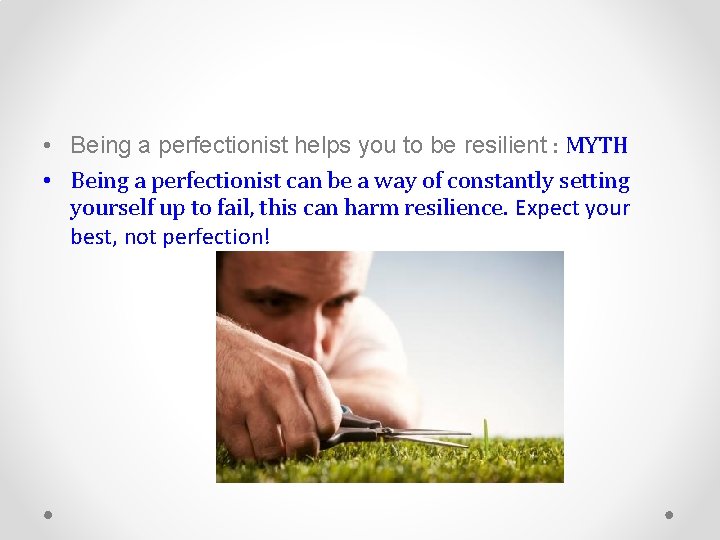
• Being a perfectionist helps you to be resilient : MYTH • Being a perfectionist can be a way of constantly setting yourself up to fail, this can harm resilience. Expect your best, not perfection!
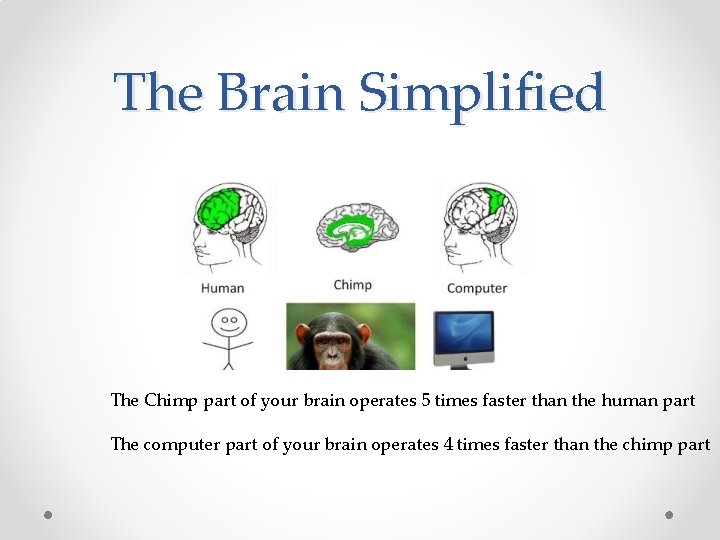
The Brain Simplified The Chimp part of your brain operates 5 times faster than the human part The computer part of your brain operates 4 times faster than the chimp part

The Chimp • Dr Stephen Peters ‘The Chimp Paradox’ • Your chimp is the primate in you; it reacts 5 times faster than your human brain and makes decisions based on instant emotions and desires: • Example: “This is a frustrating game. I’ll smash it!” • Rubics cube
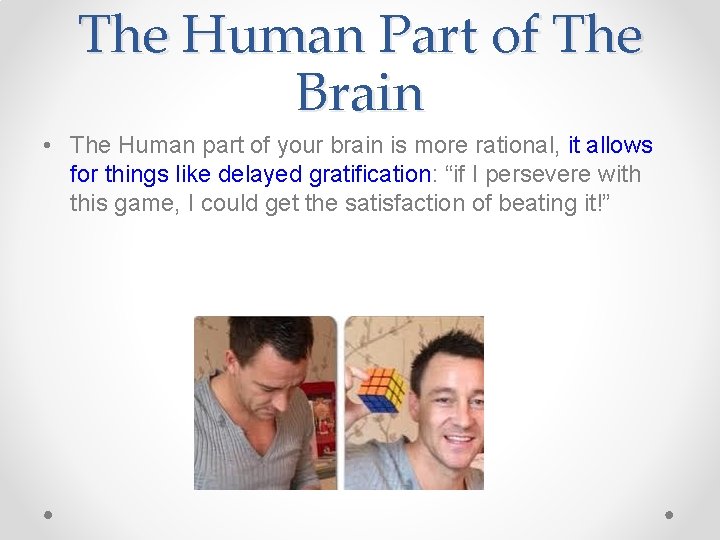
The Human Part of The Brain • The Human part of your brain is more rational, it allows for things like delayed gratification: “if I persevere with this game, I could get the satisfaction of beating it!”
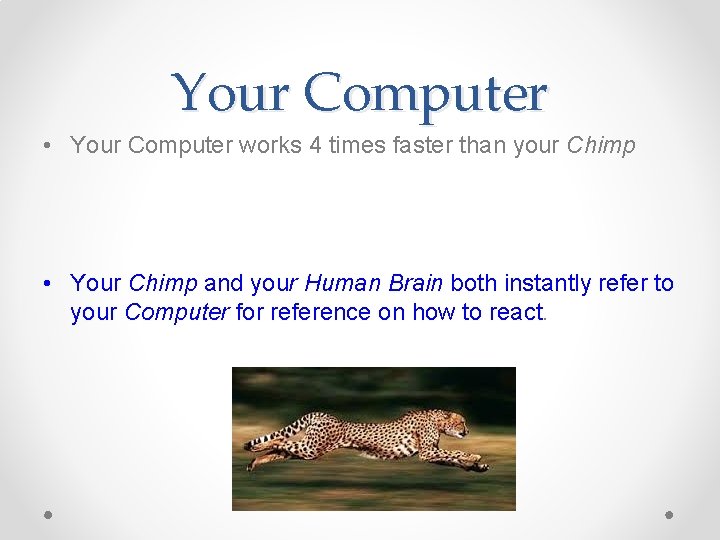
Your Computer • Your Computer works 4 times faster than your Chimp • Your Chimp and your Human Brain both instantly refer to your Computer for reference on how to react.
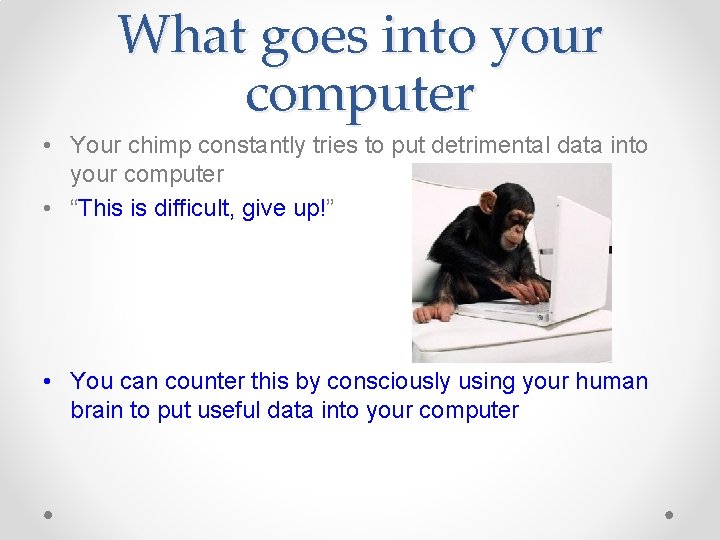
What goes into your computer • Your chimp constantly tries to put detrimental data into your computer • “This is difficult, give up!” • You can counter this by consciously using your human brain to put useful data into your computer
• In your groups list as many things as possible your chimp might put into your computer when you are finding a task difficult.
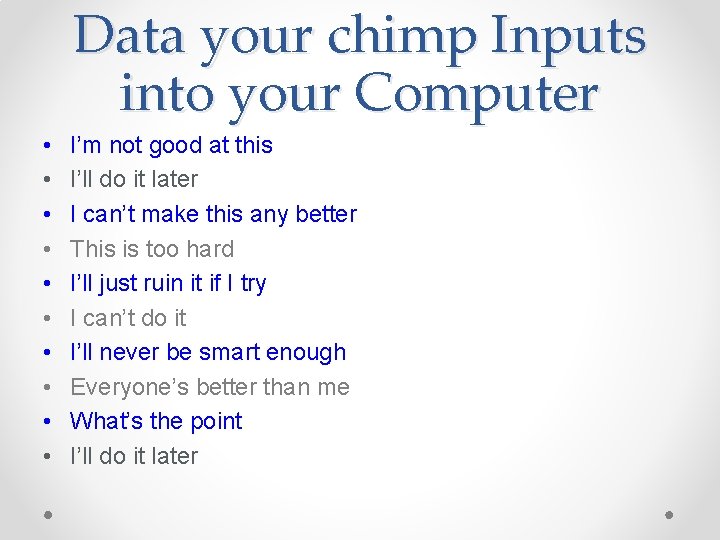
Data your chimp Inputs into your Computer • • • I’m not good at this I’ll do it later I can’t make this any better This is too hard I’ll just ruin it if I try I can’t do it I’ll never be smart enough Everyone’s better than me What’s the point I’ll do it later
• In your groups list as many things as possible you might put into your computer to counteract your chimp.
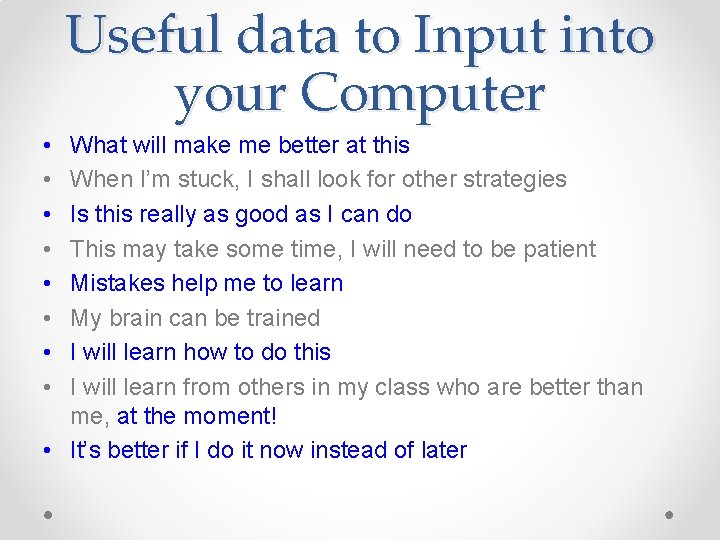
Useful data to Input into your Computer • • What will make me better at this When I’m stuck, I shall look for other strategies Is this really as good as I can do This may take some time, I will need to be patient Mistakes help me to learn My brain can be trained I will learn how to do this I will learn from others in my class who are better than me, at the moment! • It’s better if I do it now instead of later
Stephen Peters in his own words • https: //www. youtube. com/watch? v=R-KI 1 D 5 NPJs • From 11: 10
Carol Dwek Video • Watch the following video and write down any points you think are interesting • https: //www. youtube. com/watch? v=hii. Ee. MN 7 vb. Q
Carol Dwek Video • When we praise kids for the processes they engage in, their hard-work, their strategies, their focus, their perseverance. They learn to challenge their thinking, they learn resilience. • “Praising talent, praising intelligence, makes them vulnerable. ” • “The neurons in their brains, could form stronger connections, and over time they could become smarter. ” • “When educators create environments with a growth mindset steeped in yet, equality can happen. ”
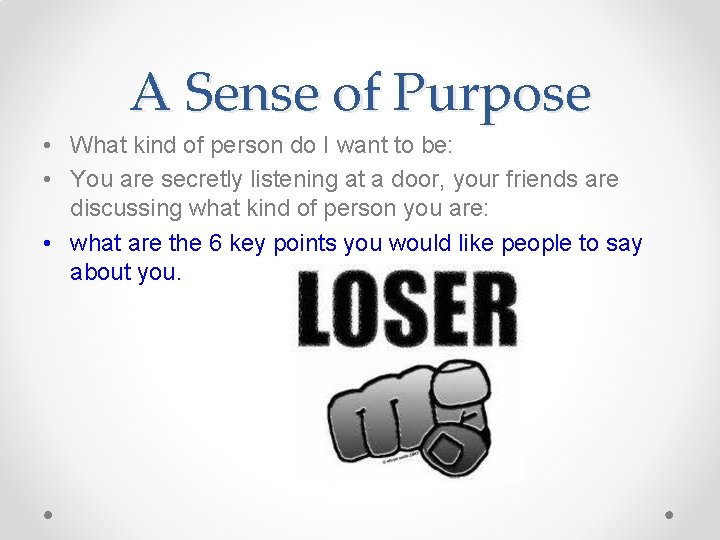
A Sense of Purpose • What kind of person do I want to be: • You are secretly listening at a door, your friends are discussing what kind of person you are: • what are the 6 key points you would like people to say about you.
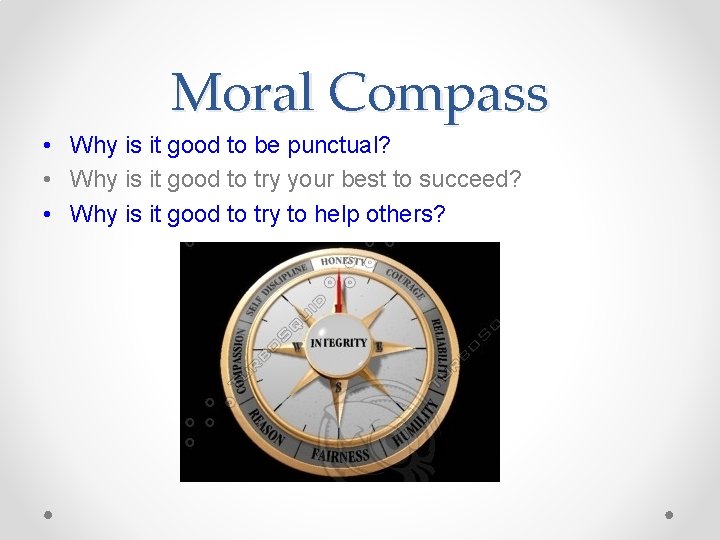
Moral Compass • Why is it good to be punctual? • Why is it good to try your best to succeed? • Why is it good to try to help others?
Banish the lazy voice • https: //www. youtube. com/watch? v=g 7 v 25 d. Kwr. A 0 • • 5: 00 – 6: 10
Always Remmember • ‘A journey of a thousand miles starts with a single step. ’ ( Chairman moa) • I have learned that success is to be measured not so much by the position that one has reached in life as by the obstacles overcome while trying to succeed. (Booker, T, Washington)
Useful resources • If I asked you to go outside and run 26 miles right now, could you do it? Probably not! • If I train you for a year to gradually build your stamina and muscles, is it possible you could do it then? Probably • Your brain works in exactly the same way as your body, you can build stamina (concentration) and Muscle strength (Smartness and talent)
• Use the banish the lazy voice video • https: //www. youtube. com/watch? v=g 7 v 25 d. Kwr. A 0 • and get off the escalator videohttps: //www. youtube. com/watch? v=Vr. SUe_m 19 FY • Use the Carol Dwek Video • https: //www. youtube. com/watch? v=hii. Ee. MN 7 vb. Q • Famous Failureshttps: //www. youtube. com/watch? v=U 0 l. Gc. ESi. LW M
Thank You
- Slides: 39