
Growth Development Cell Reproduction Why do cells have

- Slides: 39
Growth & Development Cell Reproduction
Why do cells have to divide?
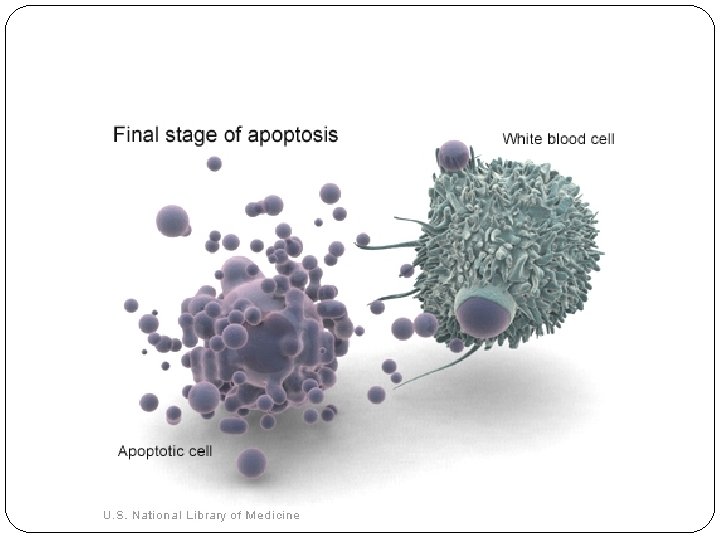
2 Reasons – 1. 2. cells To grow Replace old/damaged/dead
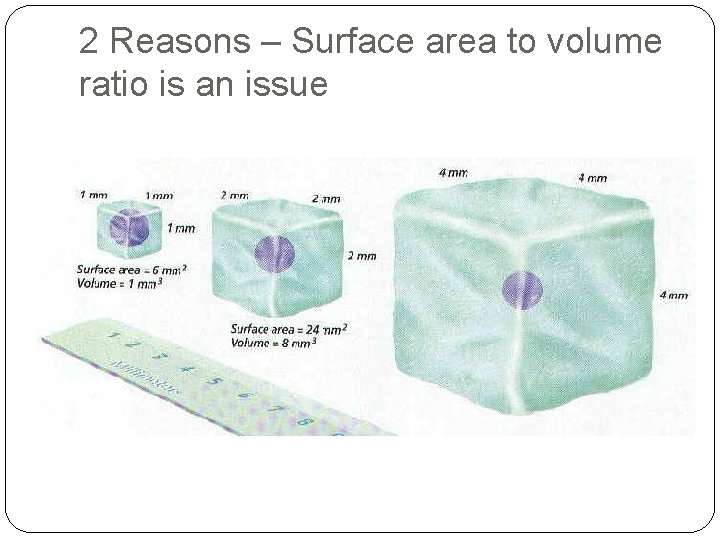
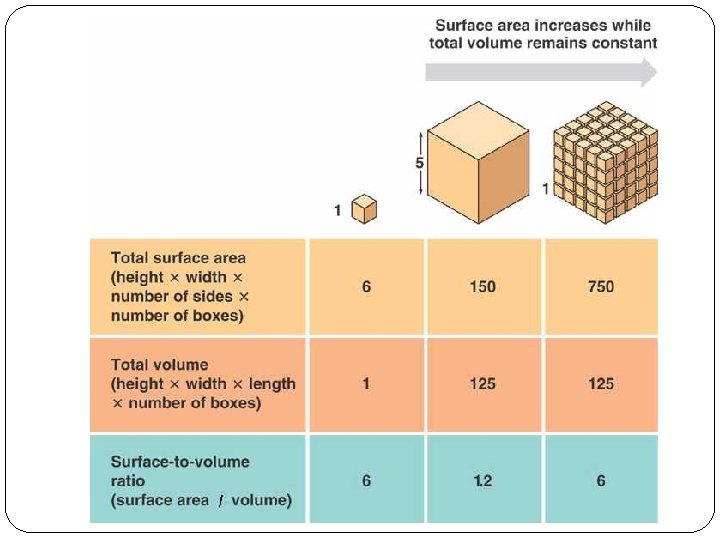
2 Reasons – Surface area to volume ratio is an issue
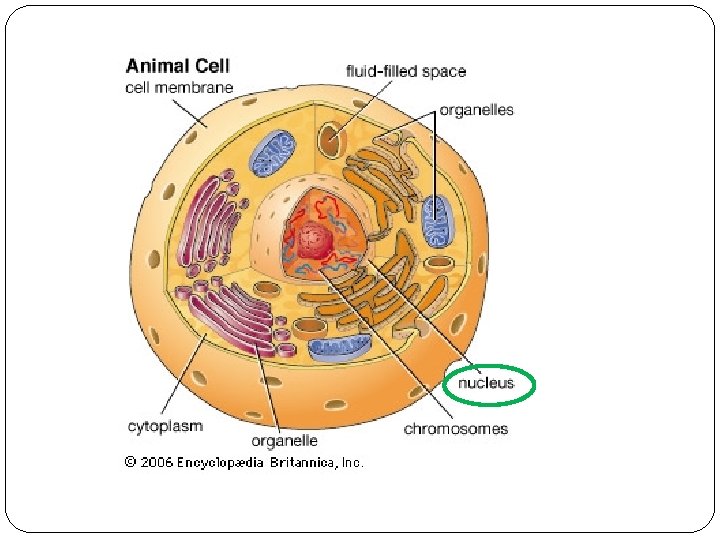
What is the most important part of the cell that has to be divided?
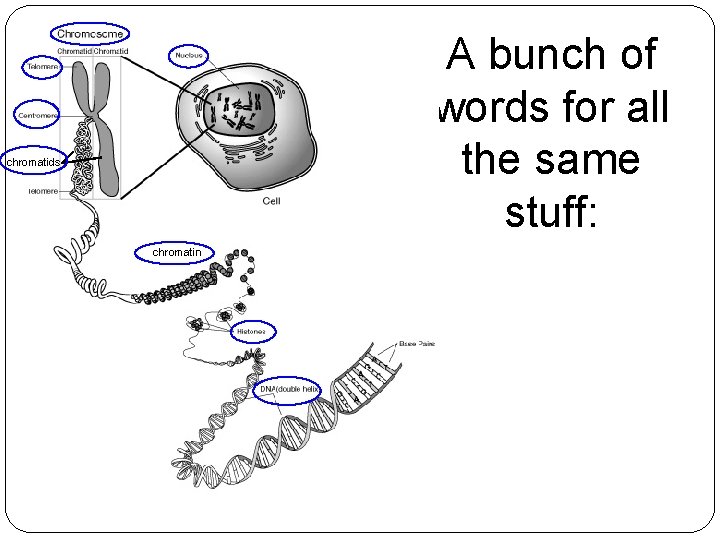
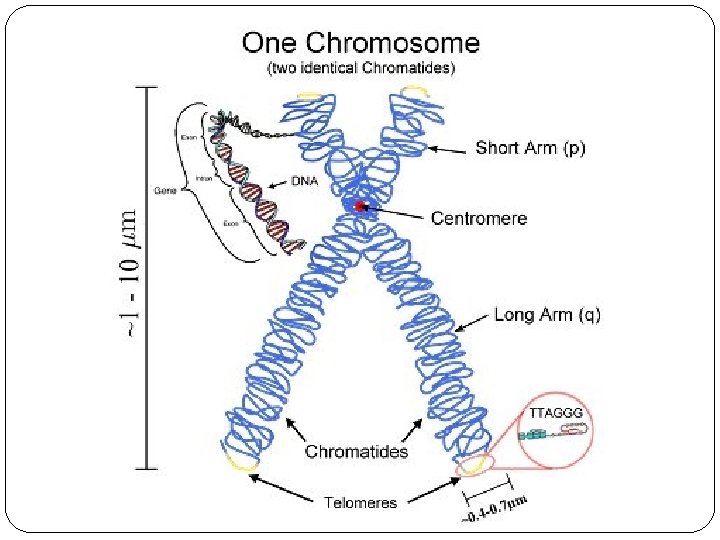
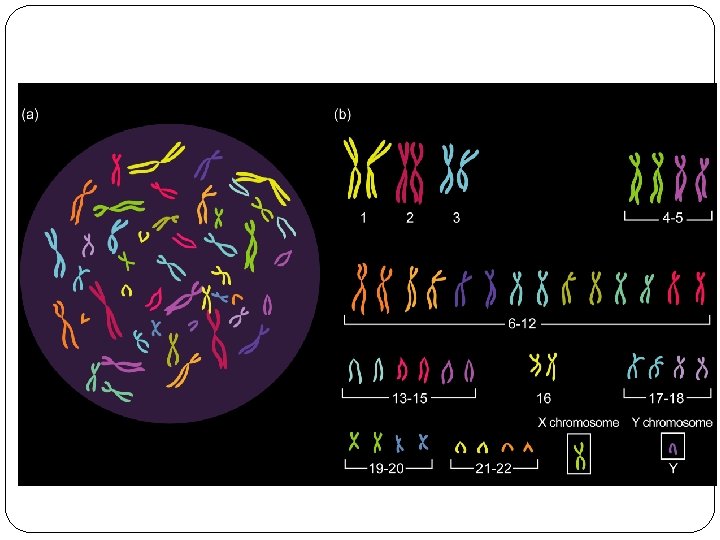
A bunch of words for all the same stuff: chromatids chromatin Chromatin
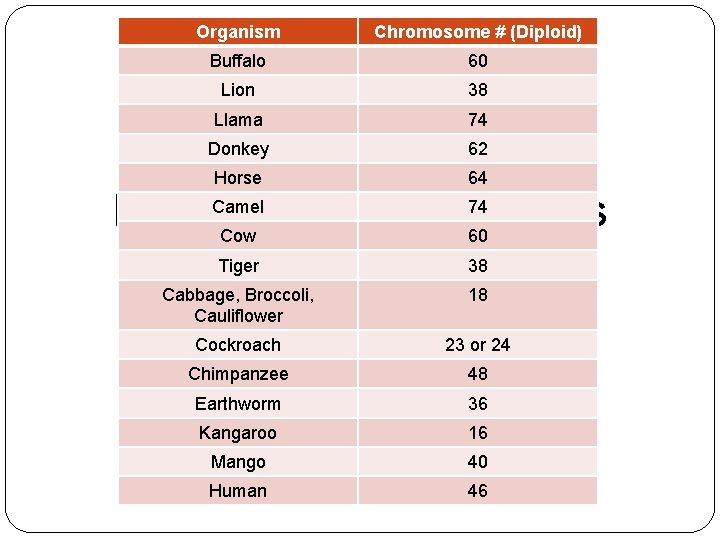
Organism Chromosome # (Diploid) Buffalo 60 Lion 38 Llama 74 Donkey 62 Horse 64 Camel 74 How many chromosomes Cow 60 Tiger 38 do we have? Cabbage, Broccoli, 18 Cauliflower Cockroach 23 or 24 Chimpanzee 48 Earthworm 36 Kangaroo 16 Mango 40 Human 46
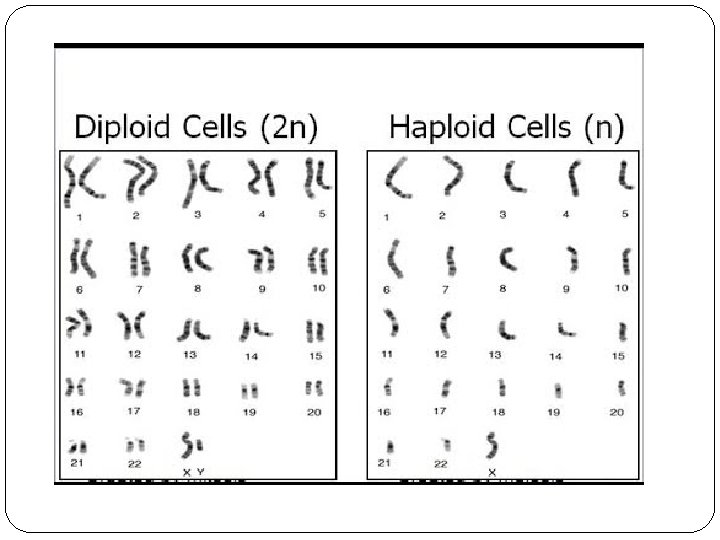
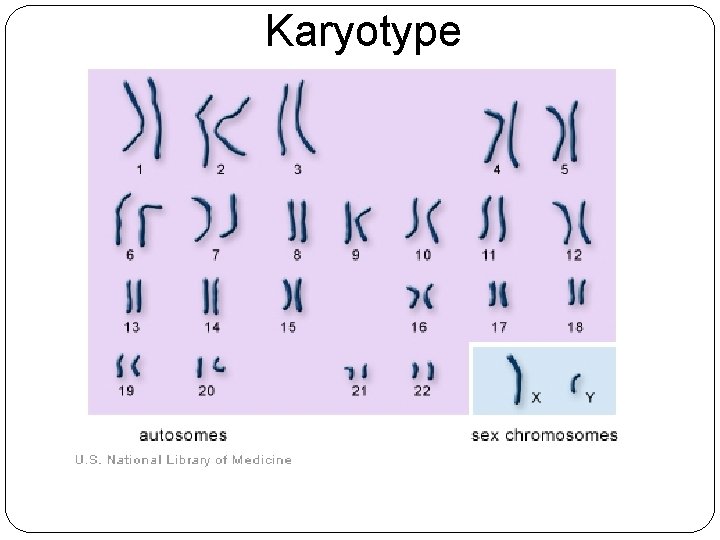
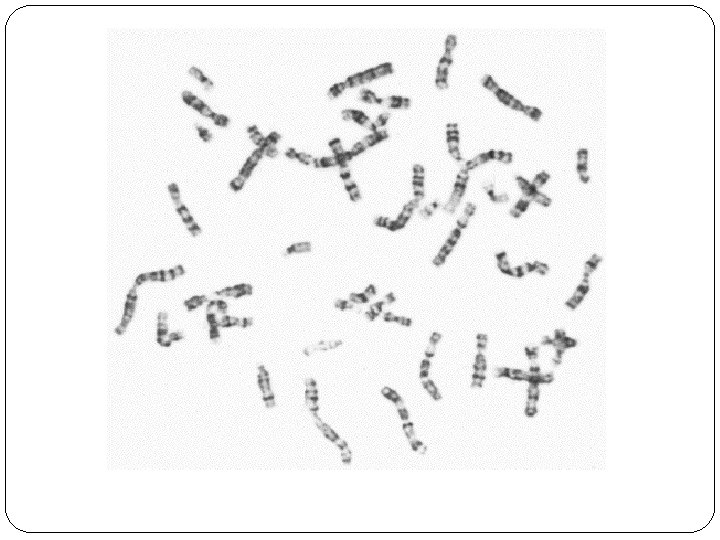
Karyotype
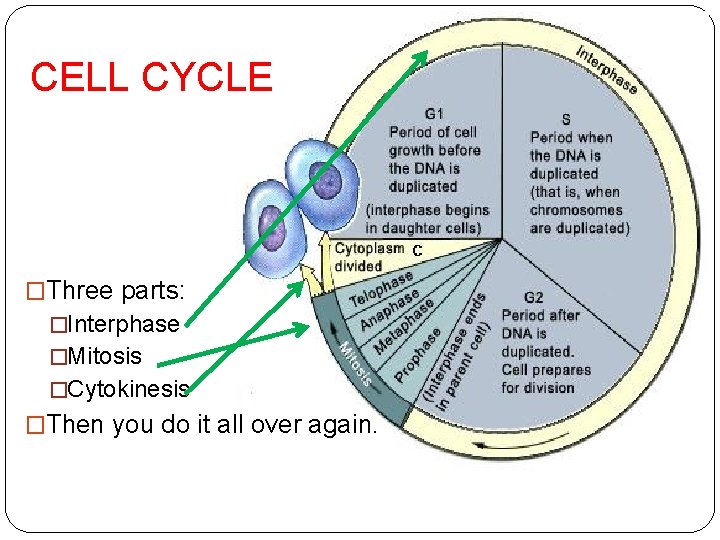
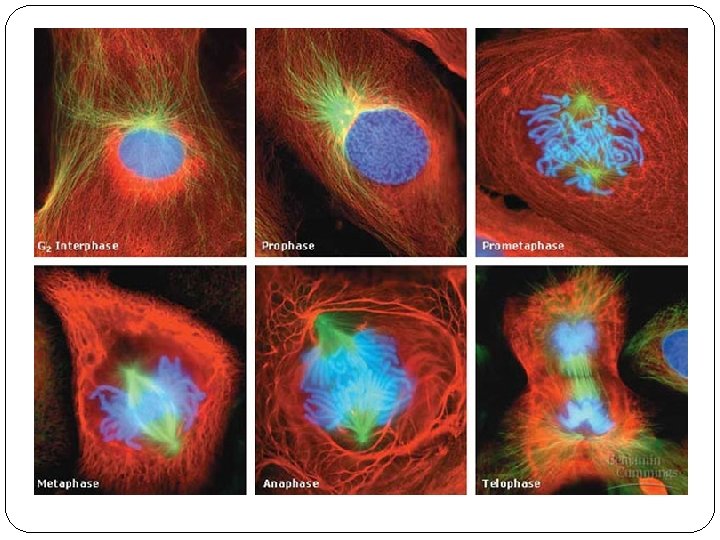
CELL CYCLE �Three parts: �Interphase �Mitosis �Cytokinesis �Then you do it all over again.
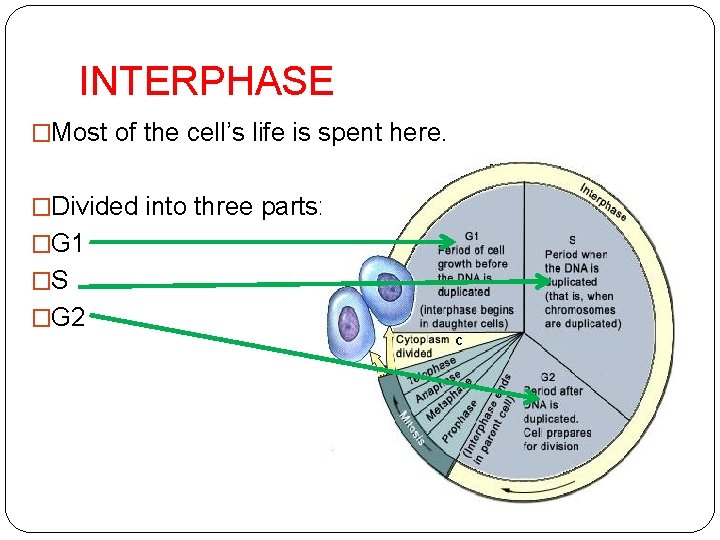
INTERPHASE �Most of the cell’s life is spent here. �Divided into three parts: �G 1 �S �G 2
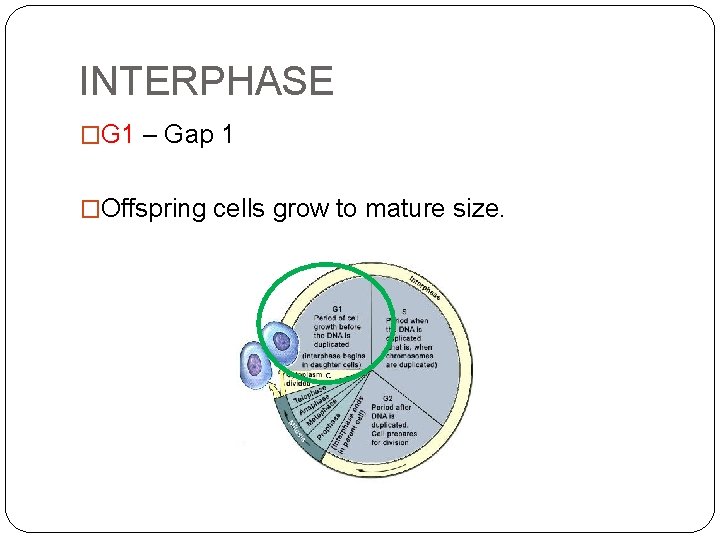
INTERPHASE �G 1 – Gap 1 �Offspring cells grow to mature size.
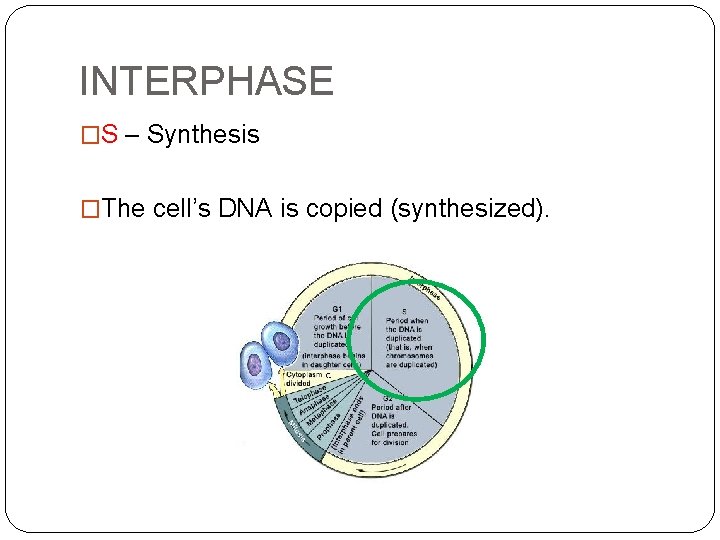
INTERPHASE �S – Synthesis �The cell’s DNA is copied (synthesized).
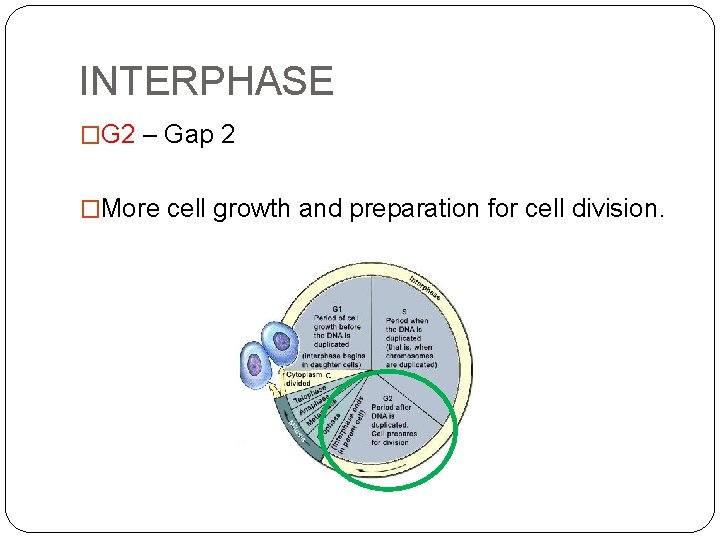
INTERPHASE �G 2 – Gap 2 �More cell growth and preparation for cell division.
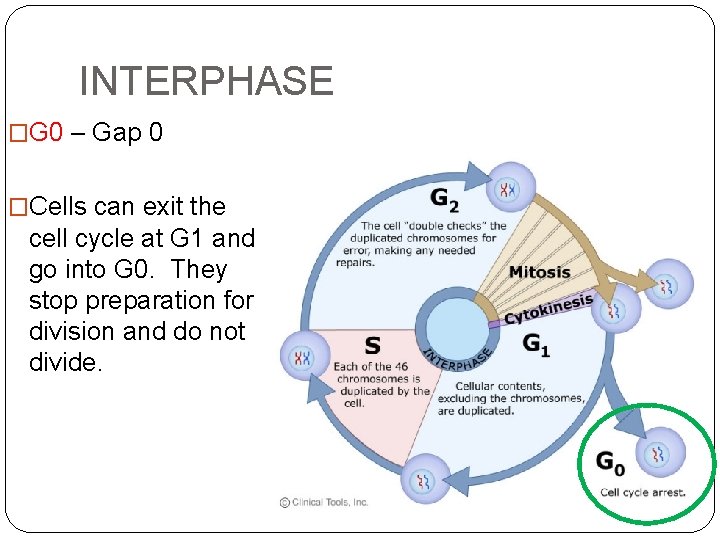
INTERPHASE �G 0 – Gap 0 �Cells can exit the cell cycle at G 1 and go into G 0. They stop preparation for division and do not divide.
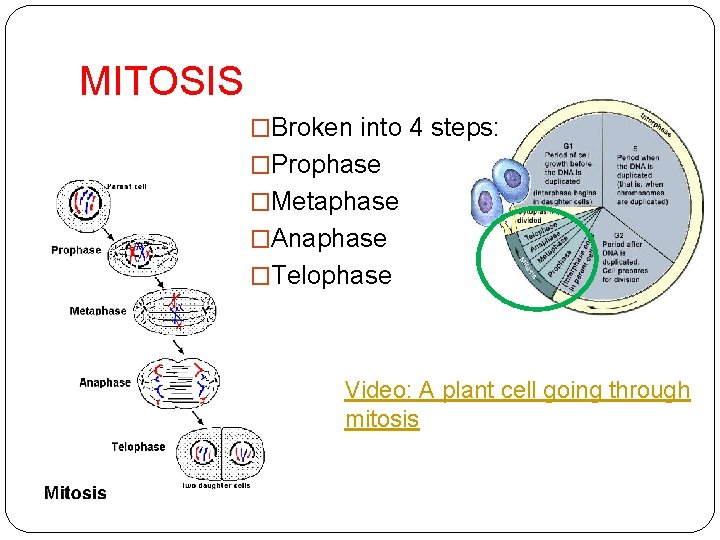
MITOSIS �Broken into 4 steps: �Prophase �Metaphase �Anaphase �Telophase Video: A plant cell going through mitosis
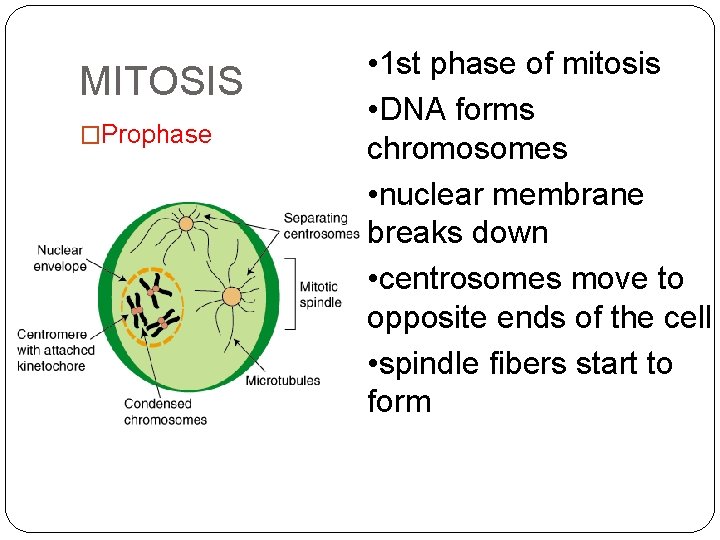
MITOSIS �Prophase • 1 st phase of mitosis • DNA forms chromosomes • nuclear membrane breaks down • centrosomes move to opposite ends of the cell • spindle fibers start to form
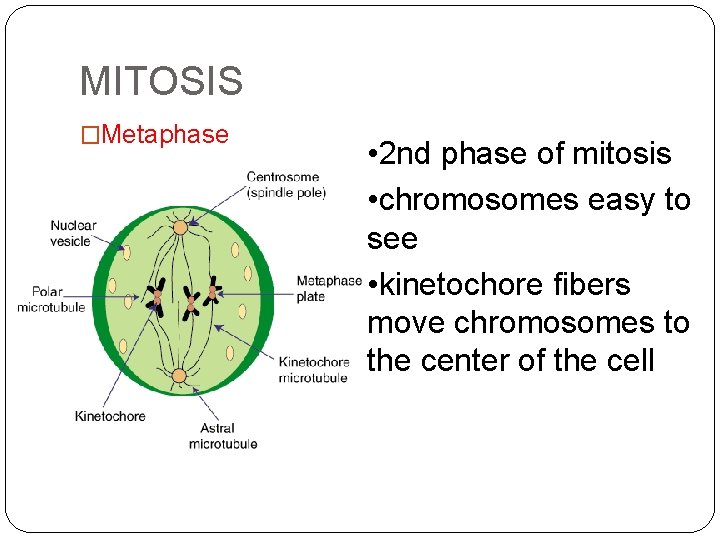
MITOSIS �Metaphase • 2 nd phase of mitosis • chromosomes easy to see • kinetochore fibers move chromosomes to the center of the cell
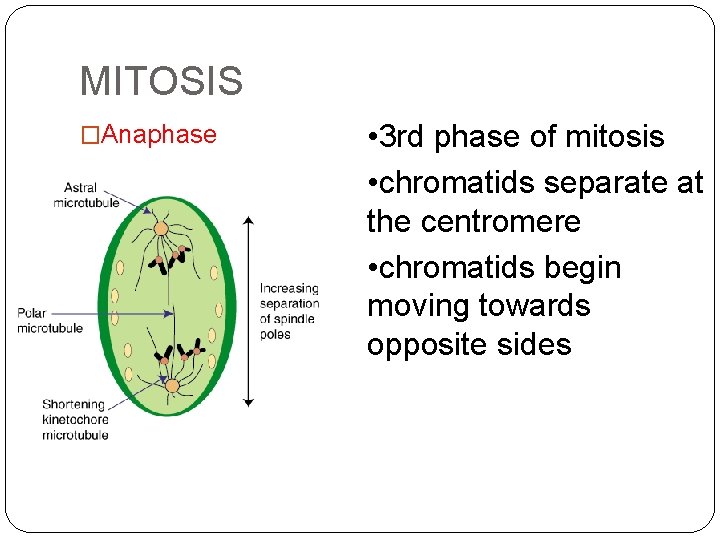
MITOSIS �Anaphase • 3 rd phase of mitosis • chromatids separate at the centromere • chromatids begin moving towards opposite sides
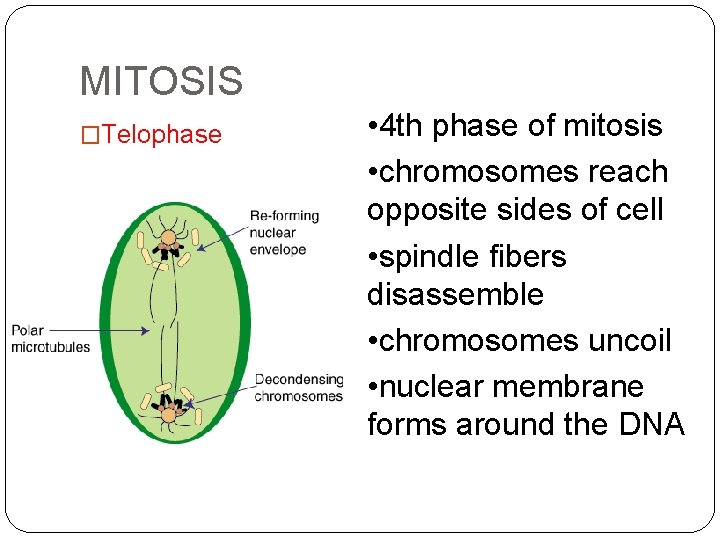
MITOSIS �Telophase • 4 th phase of mitosis • chromosomes reach opposite sides of cell • spindle fibers disassemble • chromosomes uncoil • nuclear membrane forms around the DNA
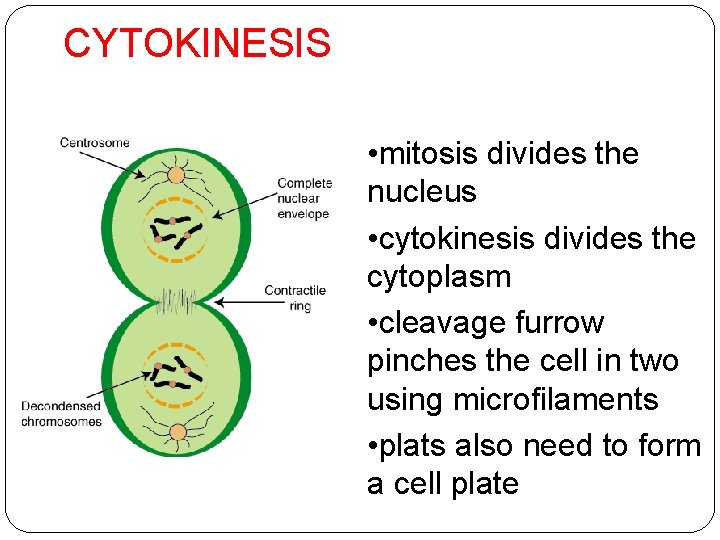
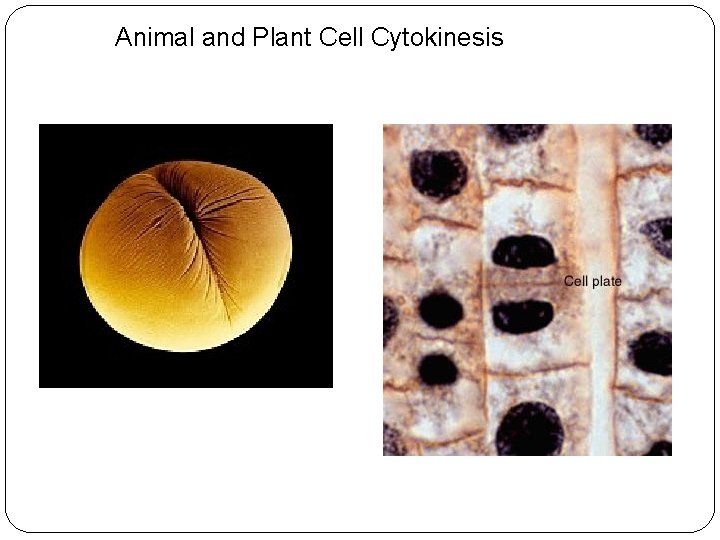
CYTOKINESIS • mitosis divides the nucleus • cytokinesis divides the cytoplasm • cleavage furrow pinches the cell in two using microfilaments • plats also need to form a cell plate
Animal and Plant Cell Cytokinesis
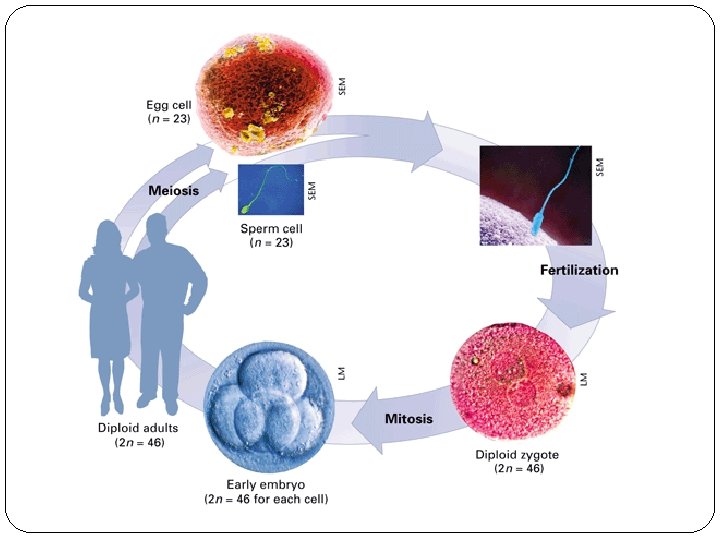
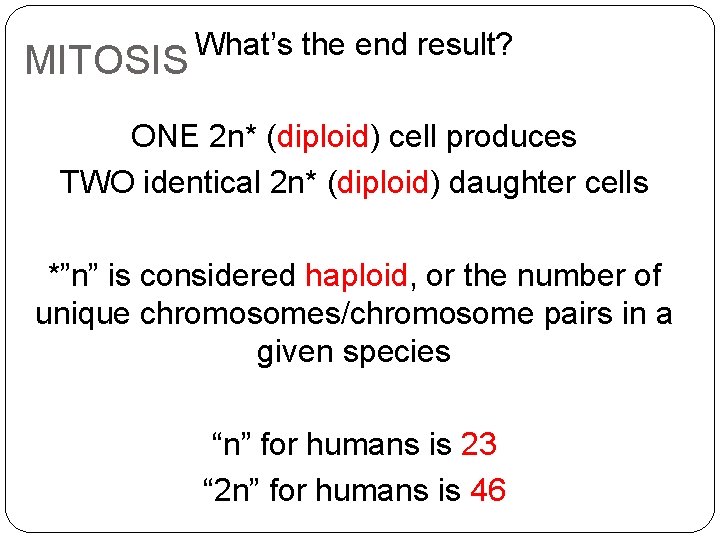
MITOSIS What’s the end result? ONE 2 n* (diploid) cell produces TWO identical 2 n* (diploid) daughter cells *”n” is considered haploid, or the number of unique chromosomes/chromosome pairs in a given species “n” for humans is 23 “ 2 n” for humans is 46
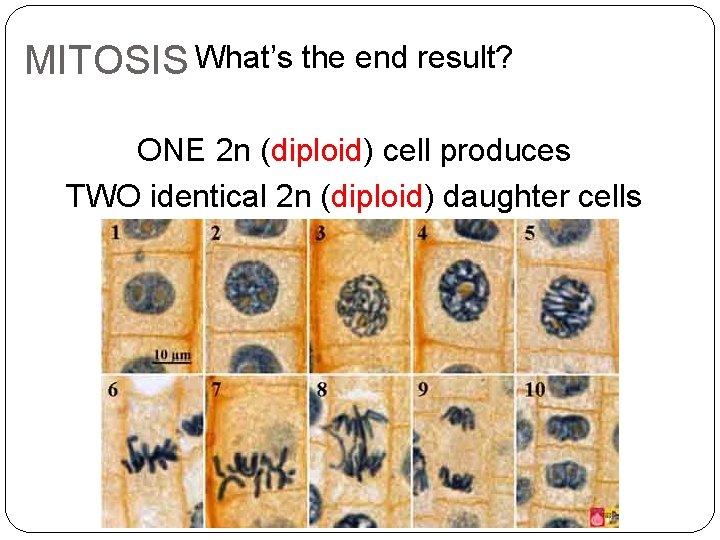
MITOSIS What’s the end result? ONE 2 n (diploid) cell produces TWO identical 2 n (diploid) daughter cells
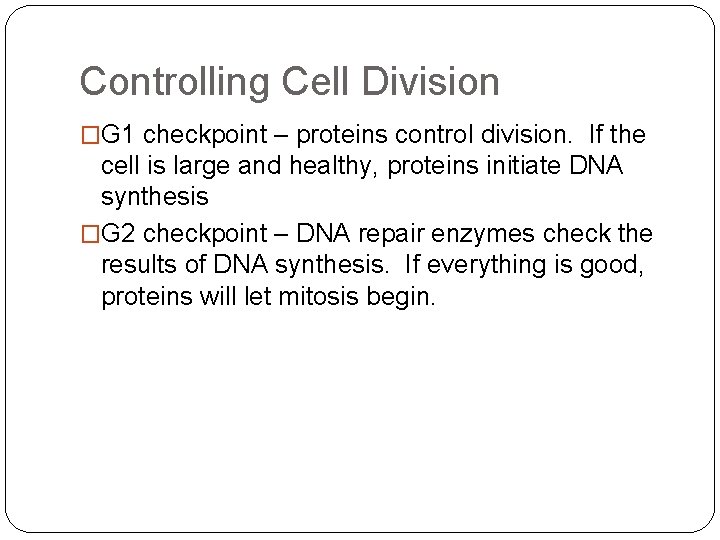
Controlling Cell Division �G 1 checkpoint – proteins control division. If the cell is large and healthy, proteins initiate DNA synthesis �G 2 checkpoint – DNA repair enzymes check the results of DNA synthesis. If everything is good, proteins will let mitosis begin.
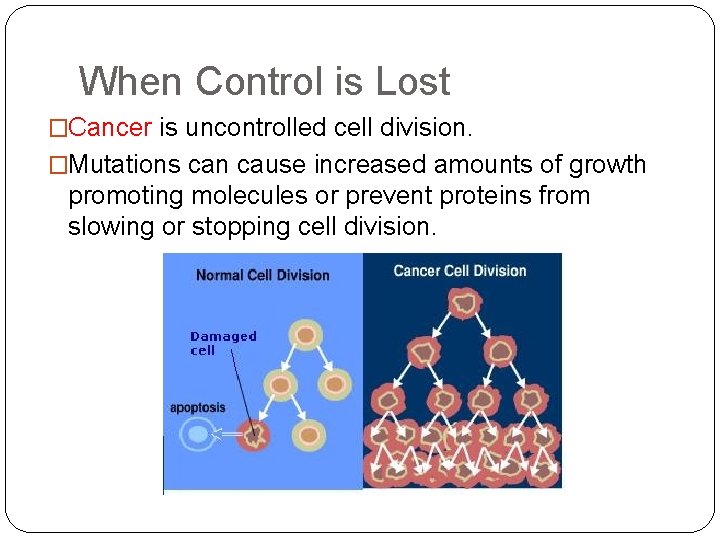
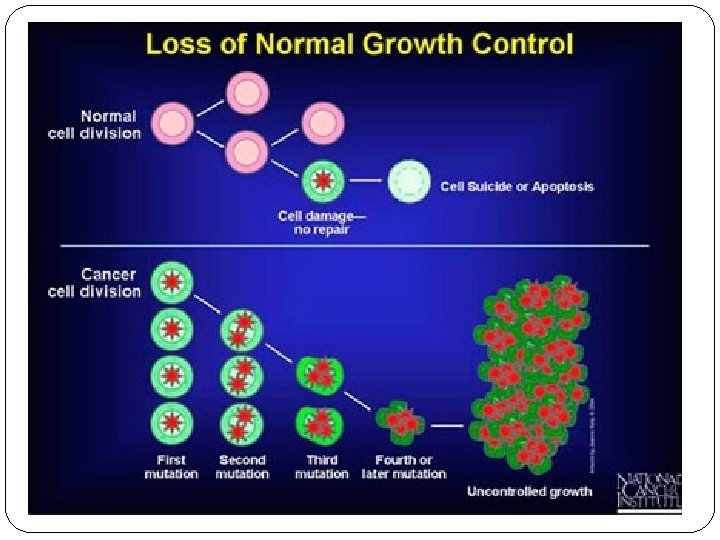
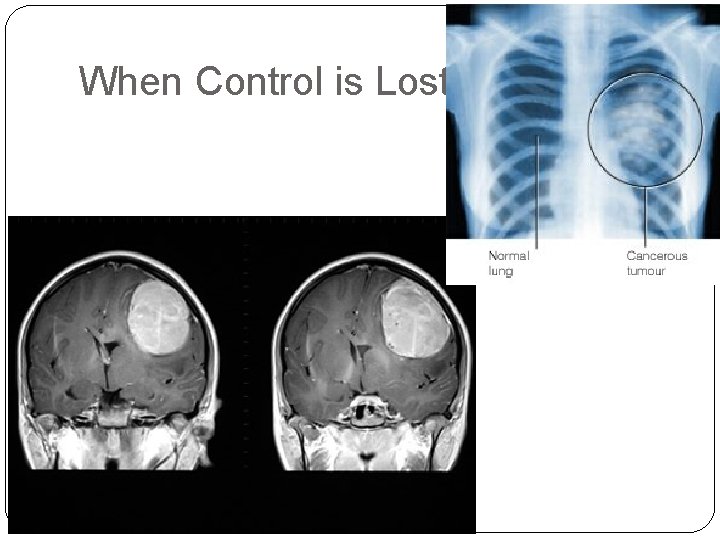
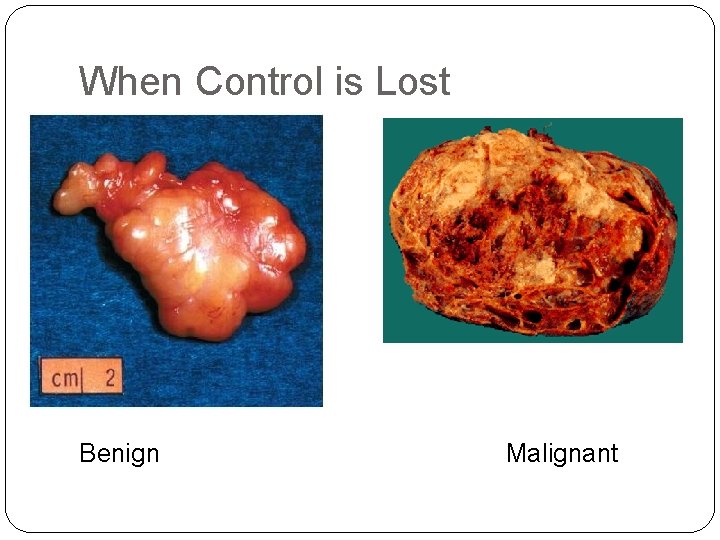
When Control is Lost �Cancer is uncontrolled cell division. �Mutations can cause increased amounts of growth promoting molecules or prevent proteins from slowing or stopping cell division.
When Control is Lost
When Control is Lost Benign Malignant