
Growth Decay Using exponential functions Growth and Decay
- Slides: 15
Growth & Decay
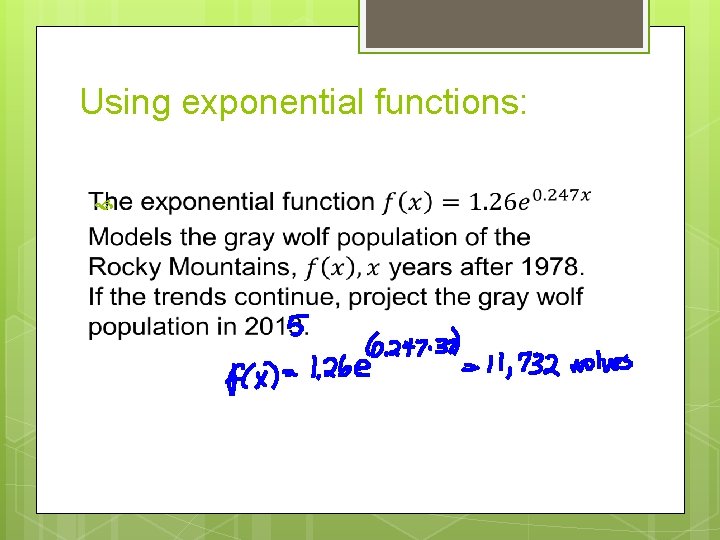
Using exponential functions:
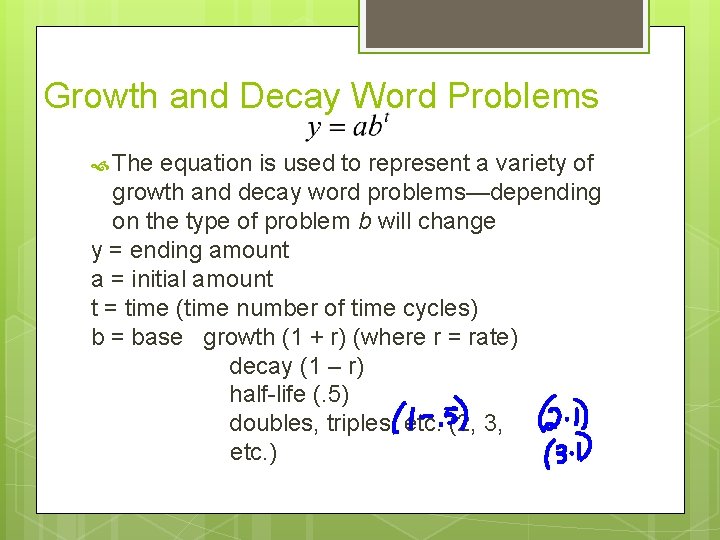
Growth and Decay Word Problems The equation is used to represent a variety of growth and decay word problems—depending on the type of problem b will change y = ending amount a = initial amount t = time (time number of time cycles) b = base growth (1 + r) (where r = rate) decay (1 – r) half-life (. 5) doubles, triples, etc. (2, 3, etc. )
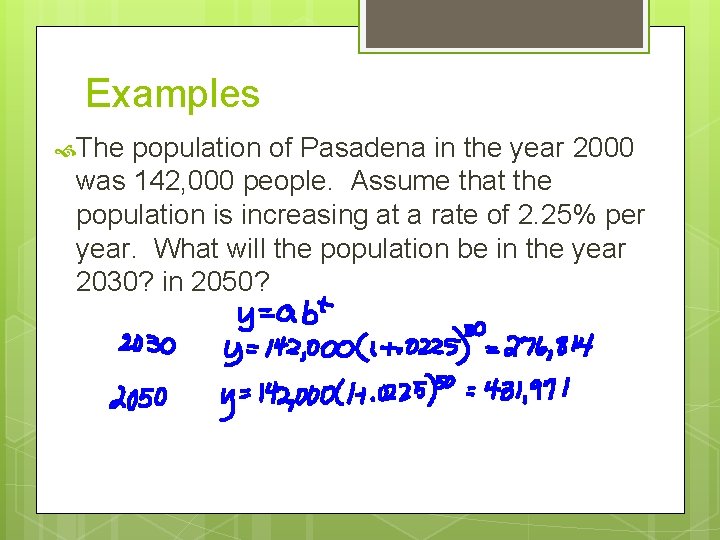
Examples The population of Pasadena in the year 2000 was 142, 000 people. Assume that the population is increasing at a rate of 2. 25% per year. What will the population be in the year 2030? in 2050?
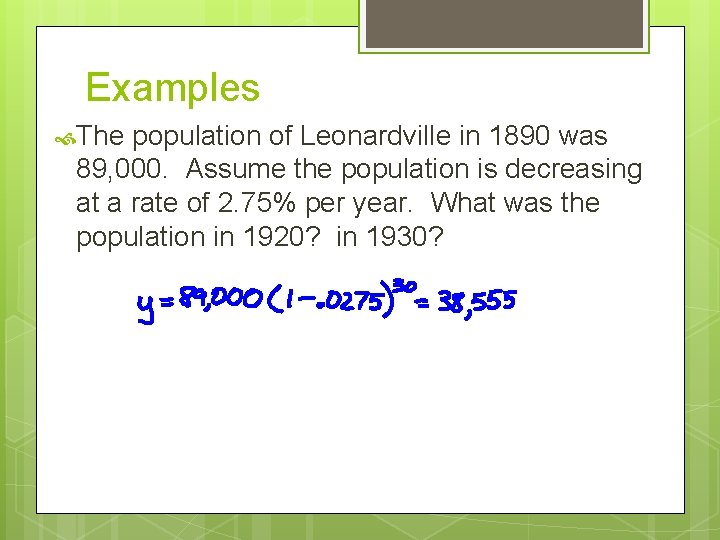
Examples The population of Leonardville in 1890 was 89, 000. Assume the population is decreasing at a rate of 2. 75% per year. What was the population in 1920? in 1930?
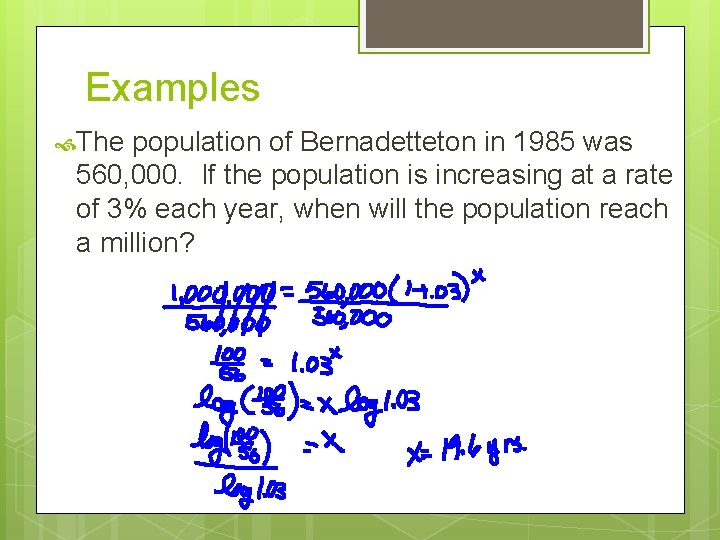
Examples The population of Bernadetteton in 1985 was 560, 000. If the population is increasing at a rate of 3% each year, when will the population reach a million?
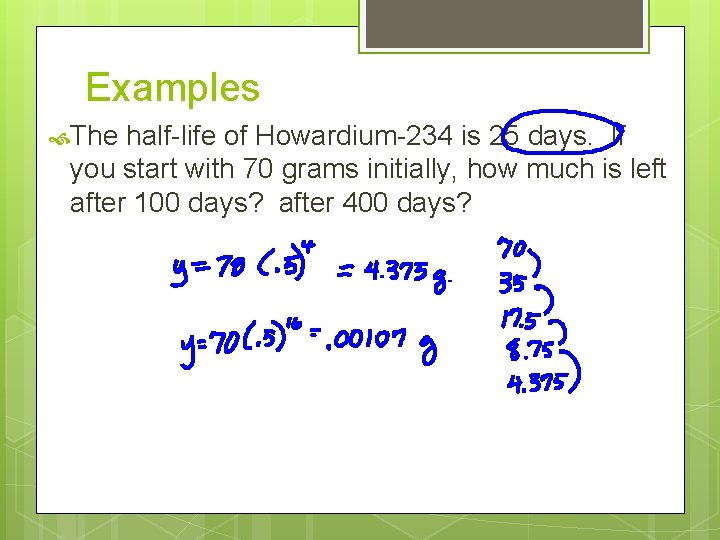
Examples The half-life of Howardium-234 is 25 days. If you start with 70 grams initially, how much is left after 100 days? after 400 days?
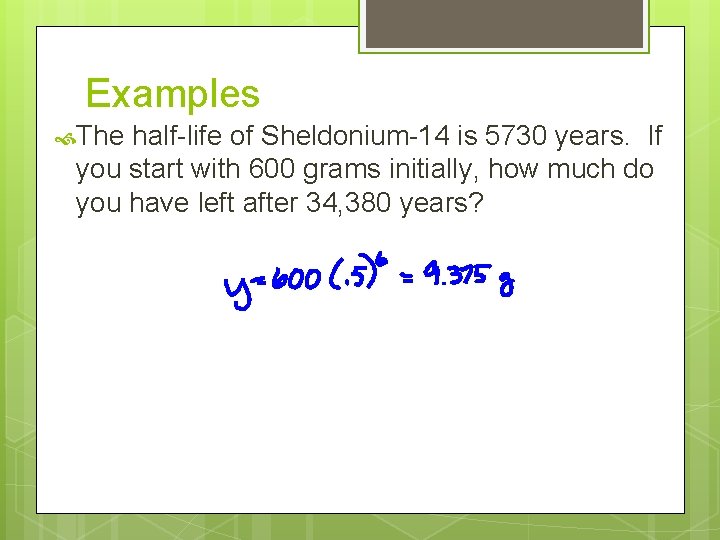
Examples The half-life of Sheldonium-14 is 5730 years. If you start with 600 grams initially, how much do you have left after 34, 380 years?
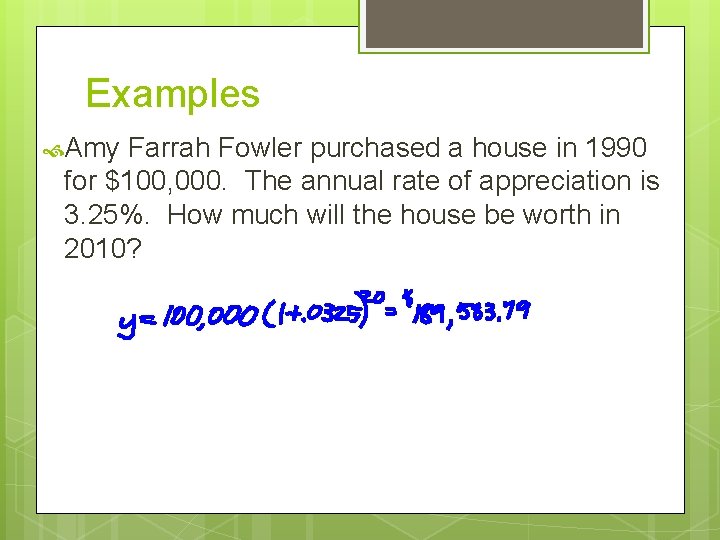
Examples Amy Farrah Fowler purchased a house in 1990 for $100, 000. The annual rate of appreciation is 3. 25%. How much will the house be worth in 2010?
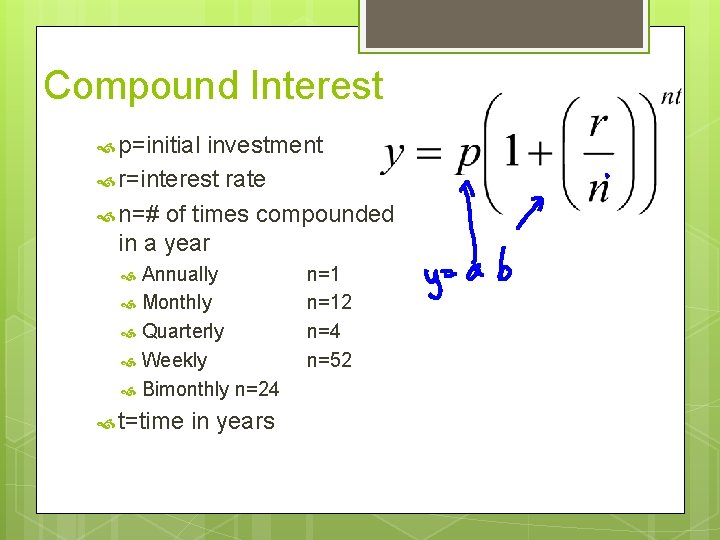
Compound Interest p=initial investment r=interest rate n=# of times compounded in a year Annually Monthly Quarterly Weekly Bimonthly n=24 t=time in years n=12 n=4 n=52
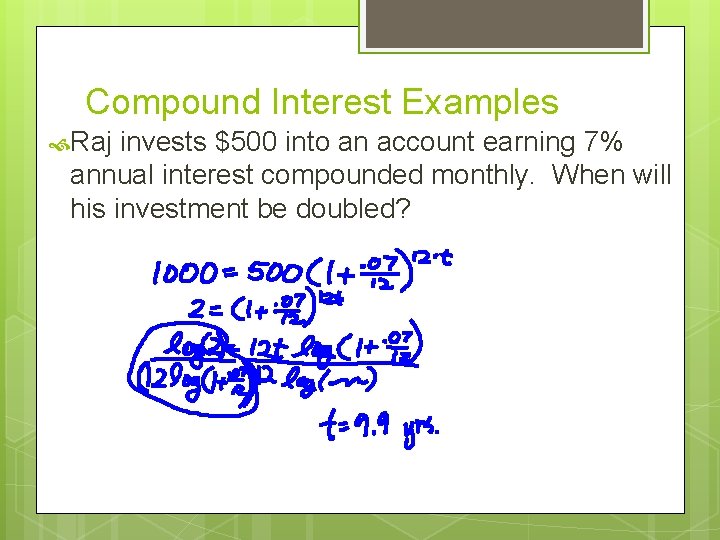
Compound Interest Examples Raj invests $500 into an account earning 7% annual interest compounded monthly. When will his investment be doubled?
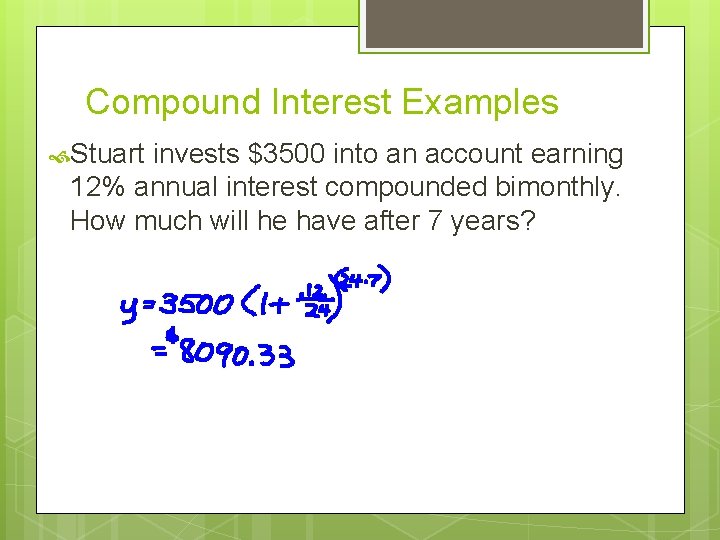
Compound Interest Examples Stuart invests $3500 into an account earning 12% annual interest compounded bimonthly. How much will he have after 7 years?
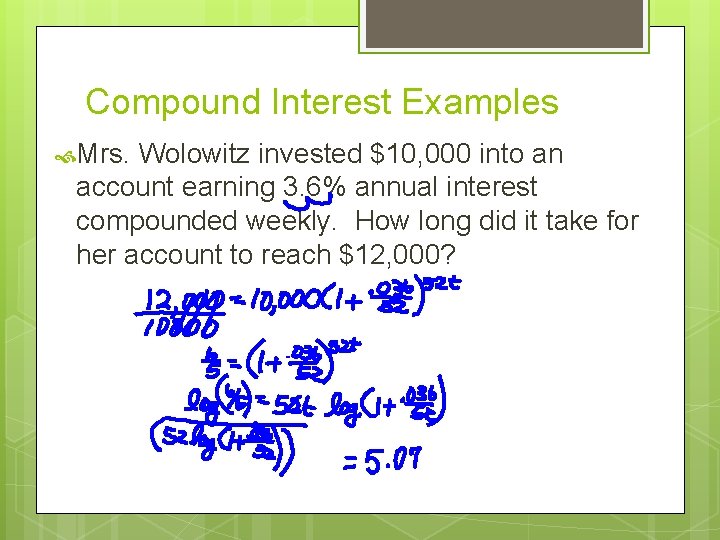
Compound Interest Examples Mrs. Wolowitz invested $10, 000 into an account earning 3. 6% annual interest compounded weekly. How long did it take for her account to reach $12, 000?
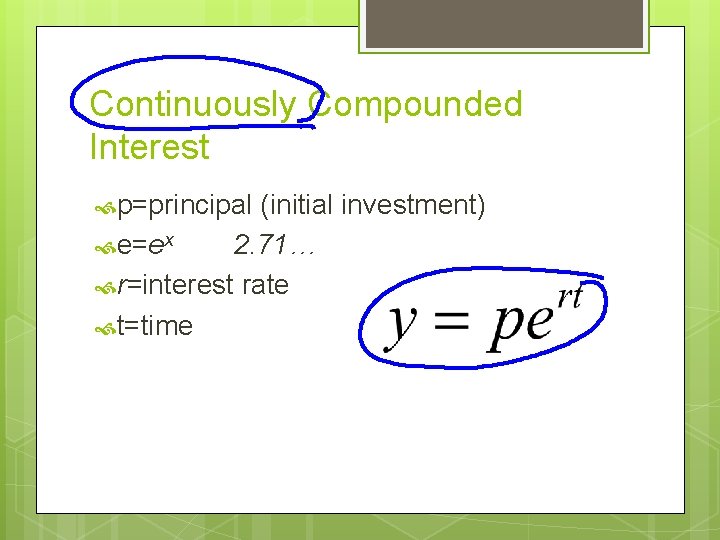
Continuously Compounded Interest p=principal (initial investment) e=ex 2. 71… r=interest rate t=time
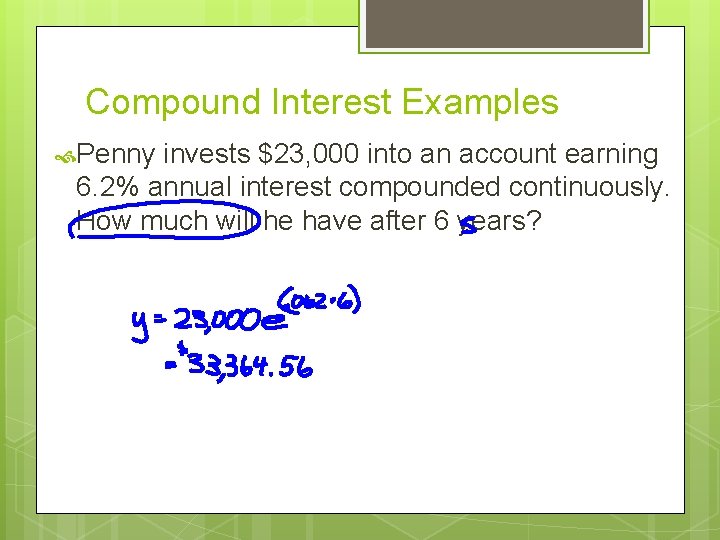
Compound Interest Examples Penny invests $23, 000 into an account earning 6. 2% annual interest compounded continuously. How much will he have after 6 years?